Bruce Pennington
-
Posts
14,510 -
Joined
-
Last visited
-
Days Won
175
Content Type
Profiles
Forums
Events
Store
Downloads
Gallery
Everything posted by Bruce Pennington
-
Any hope for a translation? @SteveM @uwe @k morita and anyone else?
-

Collection of photos from WWII smith's
Bruce Pennington replied to Itomagoi's topic in Military Swords of Japan
Adding a photo from the site, for the future when the auction goes dead. There are several, so I hope I grabbed the right ones!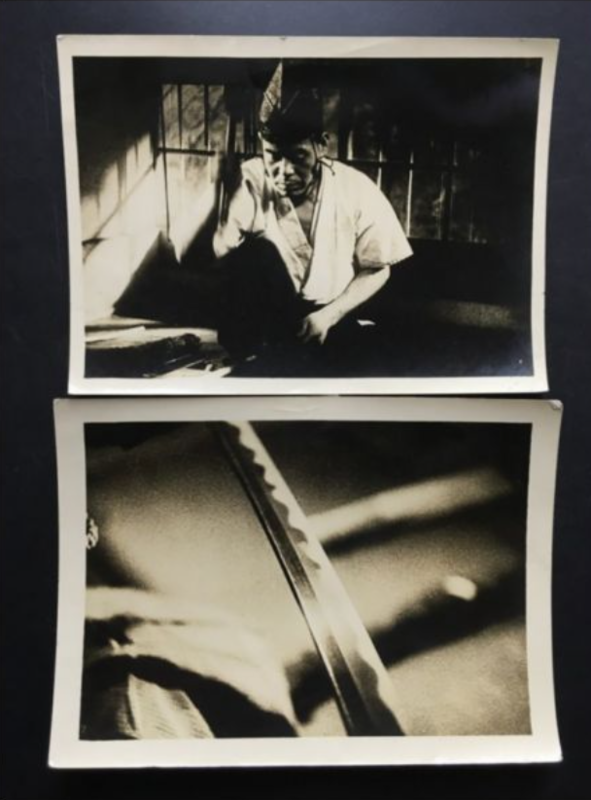
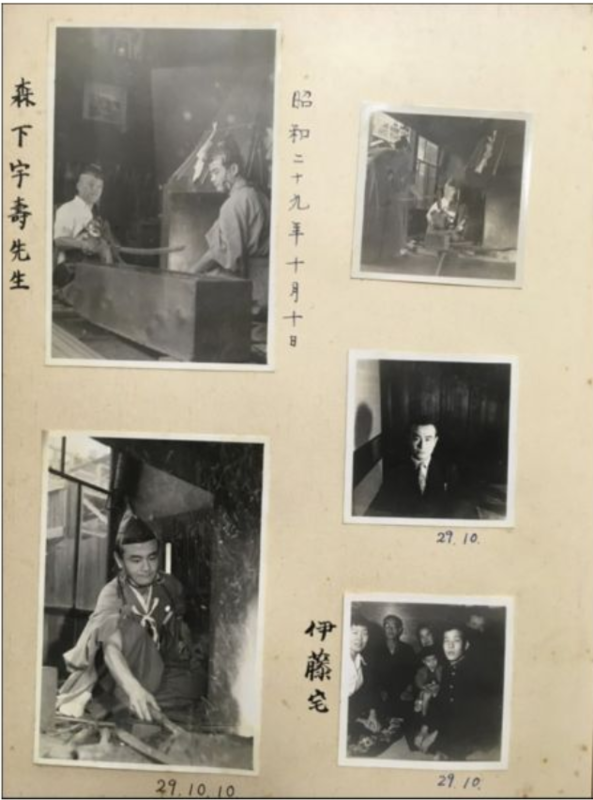
-
Ebay mantetsu - did I mess up?
Bruce Pennington replied to RobCarter3's topic in Military Swords of Japan
I knew I'd seem a mysterious stamp on a Mantetsu mune before - Autumn 1942 YA 702 Koa Isshin has the Nan stamp too! Have to run, but will post photos or link when I can. Update: It's a gunto owned by Edokko on Gunboards. The Nan is poorly struck with only the horizontal lines showing, the outer edges missing. It also bears the W/M stamp:


-
Ebay mantetsu - did I mess up?
Bruce Pennington replied to RobCarter3's topic in Military Swords of Japan
HA! Love it Stephen! And LOOK what we have here! A "Nan" stamp on the mune of a '42 Koa Isshin!!! Doesn't that toss a monkey-wrench twist into the SMR Mantetsu story! The "YA" line was the last pure '42 line, with the MA line overlapping '42 & '43. Yet, we don't see any Nan stamped blades showing up until 3 lines later with the '43 FU line, but not on Koa Isshin. The year was mixed with both Koa and non-Koa blades, with the Nan on the non-Koa blades. This is something to contemplate. Any thoughts @Kiipu @BANGBANGSAN? PS: Rob, There are a few good sources for catching up on your Mantetsu gunto, but our article on them summarizes them all: SMR - The Mantetsu Blade
-
Help identifying NCO Katana
Bruce Pennington replied to Martin Boniface's topic in Military Swords of Japan
The whole rig is a Type 98 Japanese Army officer sword (gunto) in field, or combat saya. I really love this site for learning all the various types: http://ohmura-study.net/900.html Look here for care and cleaning: http://www.japaneseswordindex.com/care.htm -
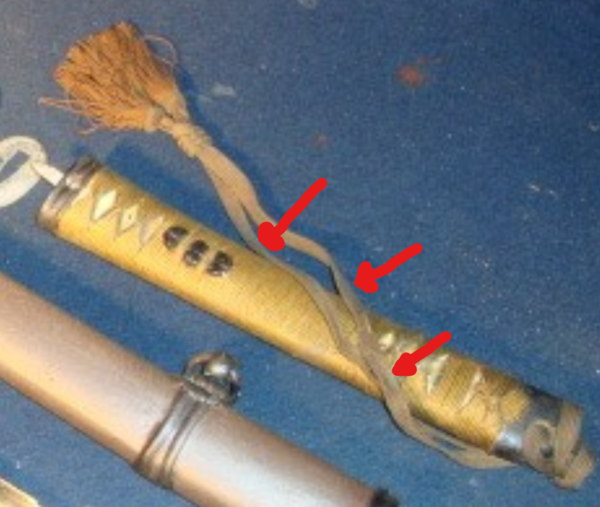
For discussion purpose, not doubting your items, if I were discovering some of these on my own, via the web, I wouldn't file them. Looking closely, you can sometimes see faded blue, meaning the whole tassel is an extremely faded brown/blue. What do you think about this latest one?
-
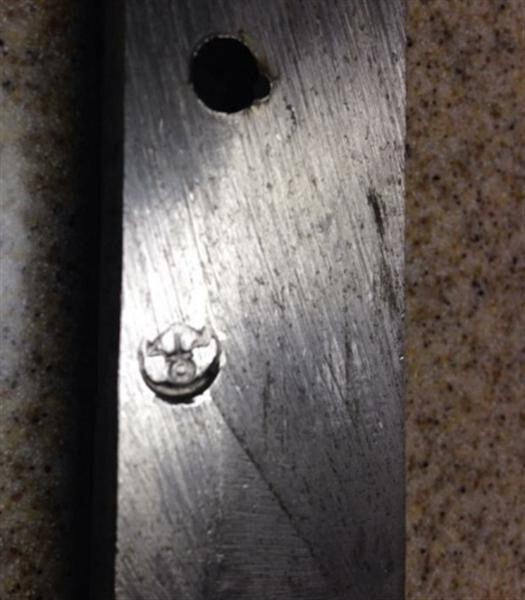
Yes, it's the one I used for the intro photo for the Mysterious Naval Landing Sword article. I just never had it recorded in my files! @Jcstroud prompted me about it and I got the photos from my old AF buddy through an email. Here's the whole sword and upside-down anchor.

.thumb.jpg.f47cd578e8391eedb28a58944f48487e.jpg)
-
@Brian Any chance of getting the Nao variant added to the "Kanji used in names" page? You've got 2 versions there already, but not this one, and I've seen this a couple of times, or 3, on gunto.
-
Well, this is going to be one for the record books! Calling all translation experts!
-
chippy seki-to mei got me beat
Bruce Pennington replied to lonely panet's topic in Translation Assistance
I have 3 of his showa-stamped blades on file now. 4 (now 5) with large seki stamps. I only have 1 of his star-stamped blades recorded. -
Looks like the craftsman was making it like it was hand-carved out of stone. I admit, on first glance I thought "Hm, kind of crude and ugly" but after taking a close look, there's an incredible amount of detail in there!!!
-
Interesting one, in that it has very fine streaked rain pattern underneath.
-
How to remove Ashi from Type 98 Saya
Bruce Pennington replied to Minseito1941's topic in Military Swords of Japan
I've seen a good number of ashi in this condition and have wondered the same thing. I've never been able to figure out a way to get them off. -
You guys gave me something to search, and sure enough, I have one posted by Mal Cox as Kanenao. It's that extra vertical stroke on the left side of the 'nao' that throws me off. Thanks everyone!


-
This topic is discussed all over the place as folks post their swords, but I'd like a dedicated thread we can refer to. I've come across a penultimate example of the style on this Wehrmacht-award Thread. This gunto was clearly (now in 2023) an NCO blade that was bought by an officer and fitted out appropriately for his use. About the shortage: https://www.warrelic...blades-gunto-688110/ About buying 95s: "1937 Officers had to make do with Type 95 NCO swords due to a worsening shortage The only shortage problem that Ohmura-san’s site refers to is the long ago case of 1931/32 when shortages of officer swords required the arsenal to sell prototype type 91 NCO swords to officers. He failed to notice that by 1937 new officers found that they could not get hold of any swords to complete their outfits as per regulations. So in desperation, they turned to the arsenal, asking that they be allowed to purchase the Type 95 NCO swords as a substitute. On 29th July 1937, their request was granted and it was agreed to let them buy Type 95s at a price of 33 Yen a piece. They were to fill in the private purchase application forms as provided in the July 1937 memo and apply to Kokura or the Tokyo Arsenal directly with the money. Not only officers in the field, but also vets back home were allowed to buy these NCO swords. The army thus ended up with many officers equipped with the wrong swords. Here is the July 1937 application for officers to purchase their Type 95 NCO swords. Part one was the request to buy and the other sheet was a note promising to pay the 33 Yen by the date to be designated by the arsenal. One required the unit commander’s signature and signet or when one was a veteran, that of the regimental district commander. We now know there were a couple of severe sword shortages during the war and, thanks to Nick Komiya's records work, we now know that officers were allowed to buy, even rent, NCO swords for their use. We have, for years, assumed these blades were re-fitted post-war by collectors, but the matching numbers "71" on the nakago and the fittings confirm this was a wartime rig. Only NCO blades bore serial numbers, just to clear up some of the older discussion points." Source: Authorization to Buy Type 95s You can see the rig was made this way, with "71" stamped on the nakago as well as on the fittings. Also, for research purposes, note the triple "W". The OP doesn't show the whole gunto, or the saya, but describes them as standard Type 98 in his first post.


-
Help identifying NCO Katana
Bruce Pennington replied to Martin Boniface's topic in Military Swords of Japan
Martin, Good summary. I'm no fittings expert, so I would defer to your in-hand observations. We see many WWII era blades in civil fittings, so it wouldn't surprise me if this had been fitted out in civil fittings and later re-fitted for the war. The variety of war fittings never seem to end, so anything is possible. -
Bingo! Exact same smith and mei. Thanks Jean, I guess I did get one right for a change.
-
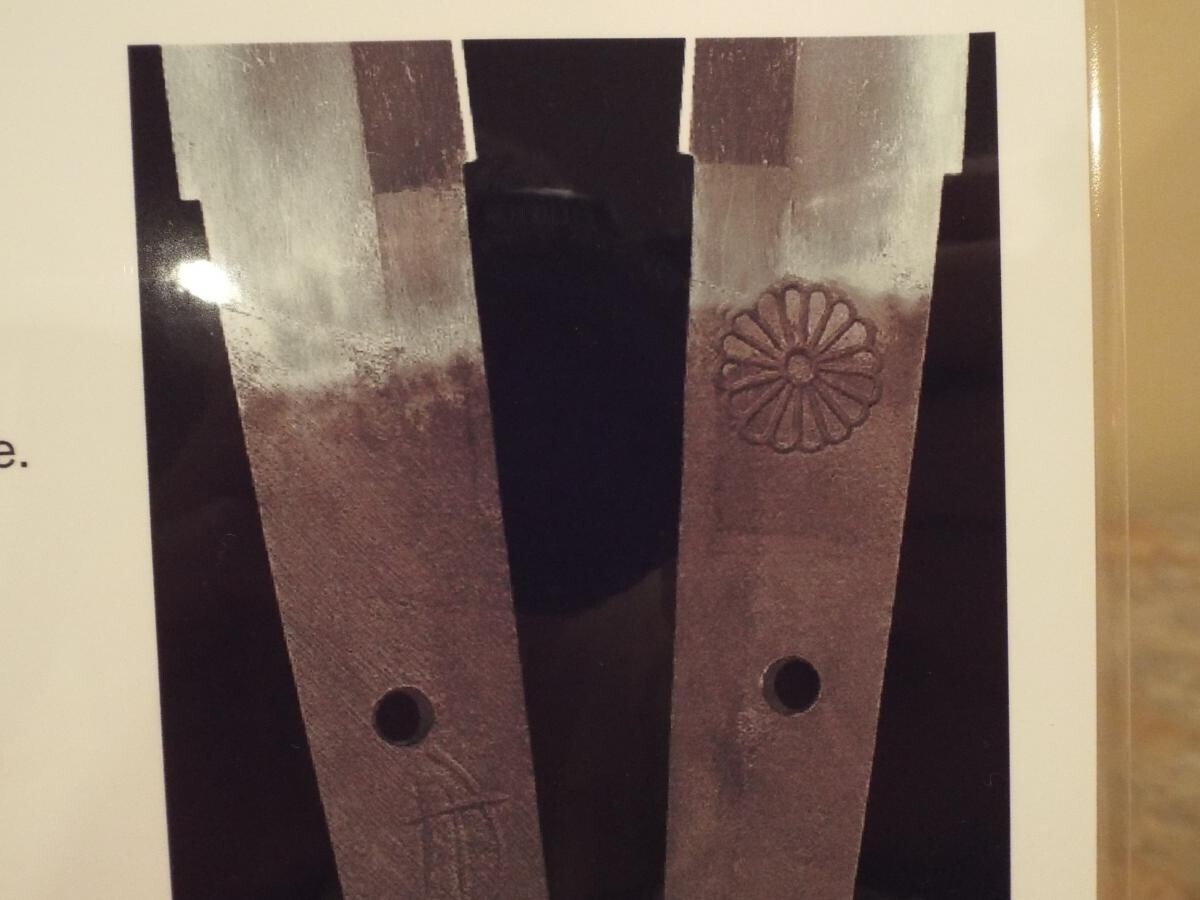
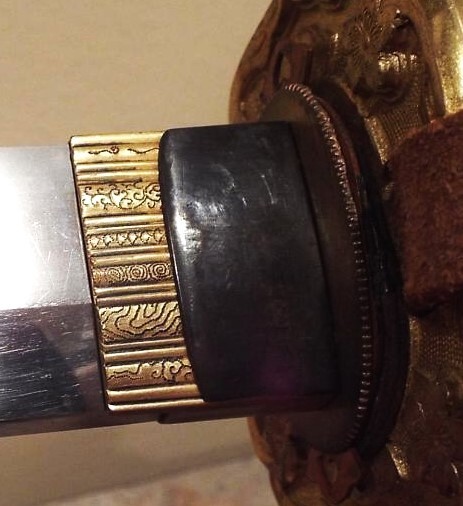
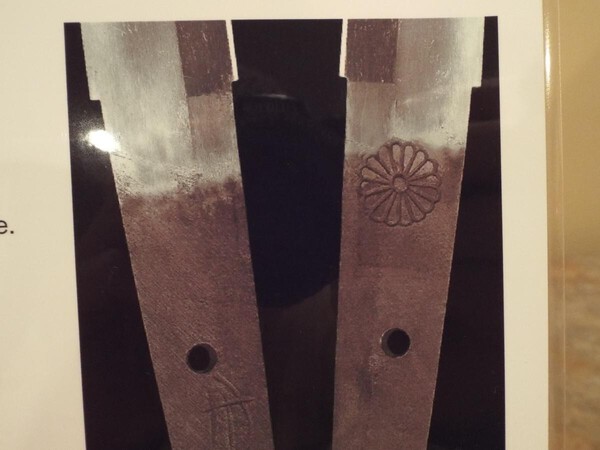
An interesting one on a WWII re-fitted sword with an Edo/Kanbun era Kanemichi blade, with Kiku, posted by Bob C at this Wehrmacht-awards Thread. The discussion says that some of the design originated in Greece, then to China, then to Japan. If you're unable to see the images on the W-A thread, the kiku with mei is posted on this NMB Thread.
-
Seki Inspection Tag On Combat Saya.
Bruce Pennington replied to mauser99's topic in Military Swords of Japan
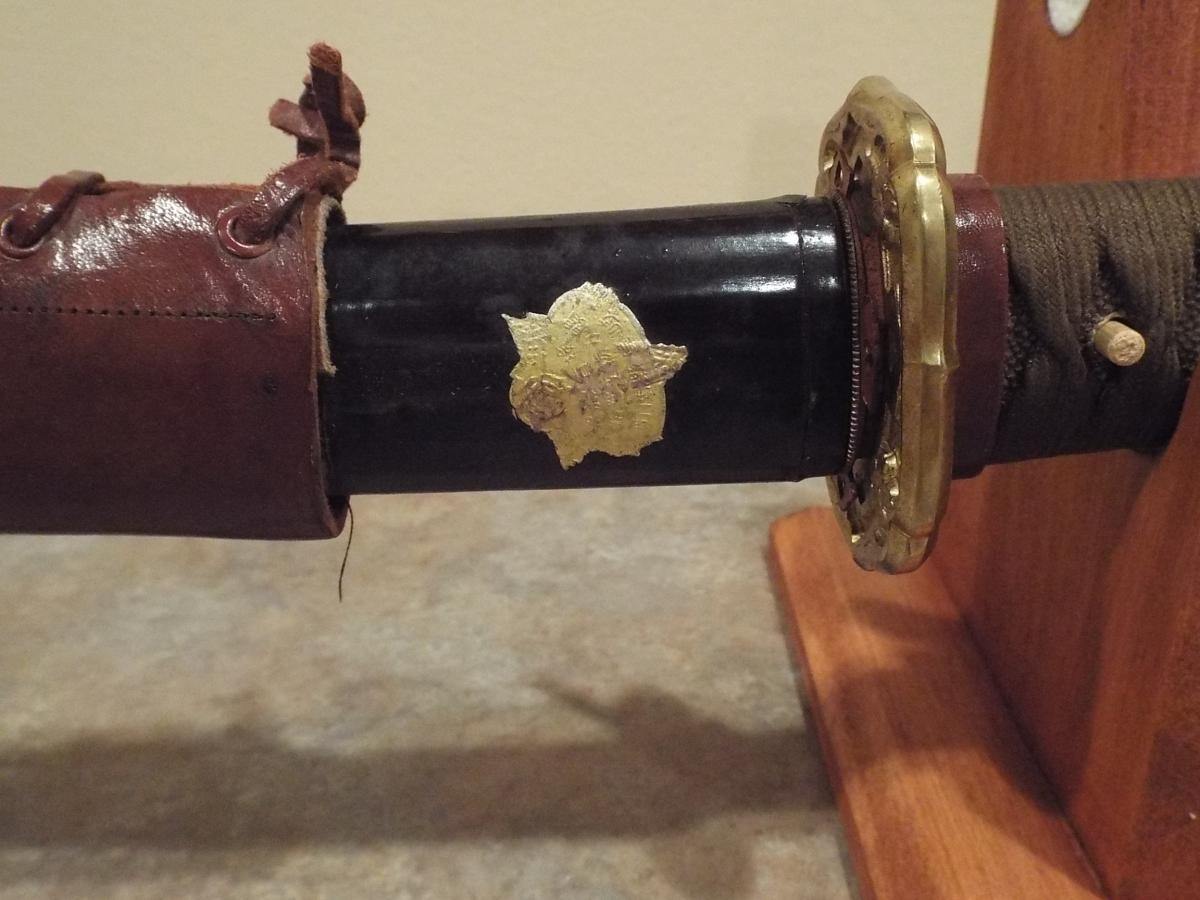
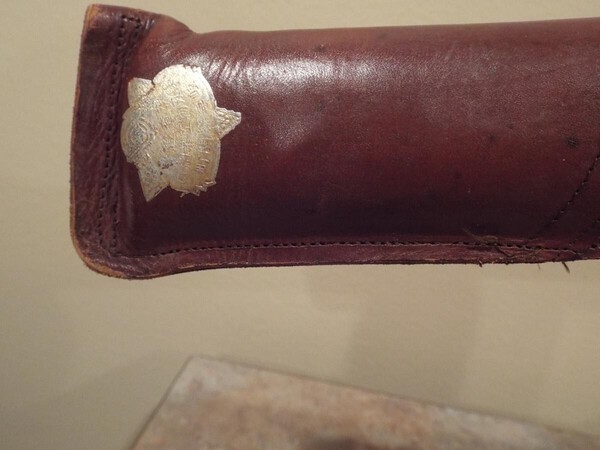
I wish we knew more about the Seki Cutlery Manufacturers Association. They had stamps for blades and labels for fittings (or was it for the whole completed rig?). To back up Neil's - @IJASWORDS - point, this rig highlights that the stickers are not relegated to low quality, late-war gunto. Here is an Edo/Kanbun era, Kiku bearing, Kanemichi blade in wooden saya and leather cover. This one has the label on the leather drag!!! and inside on the saya itself. Found on this Wehrmacht-awards Thread, posted by Bob C. Scroll through to the second page to get the rest of the photos and discussion.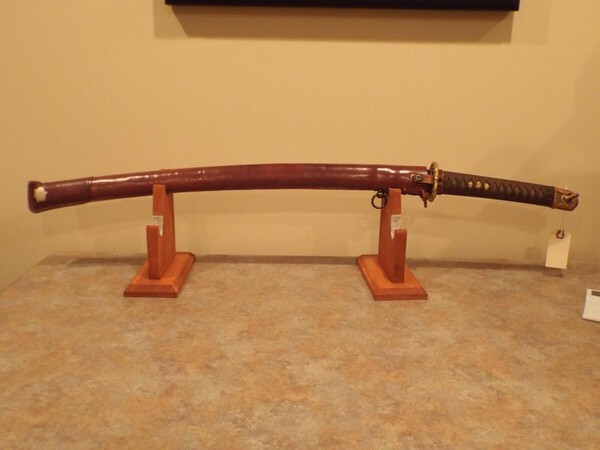


-
Dang! Thought I had one right for a change. I had a 50/50 chance on the kin/kane, and I had a nagging feeling the "michi" was wrong, but had forgotten that version of "nao" existed. Thanks buddy!
-
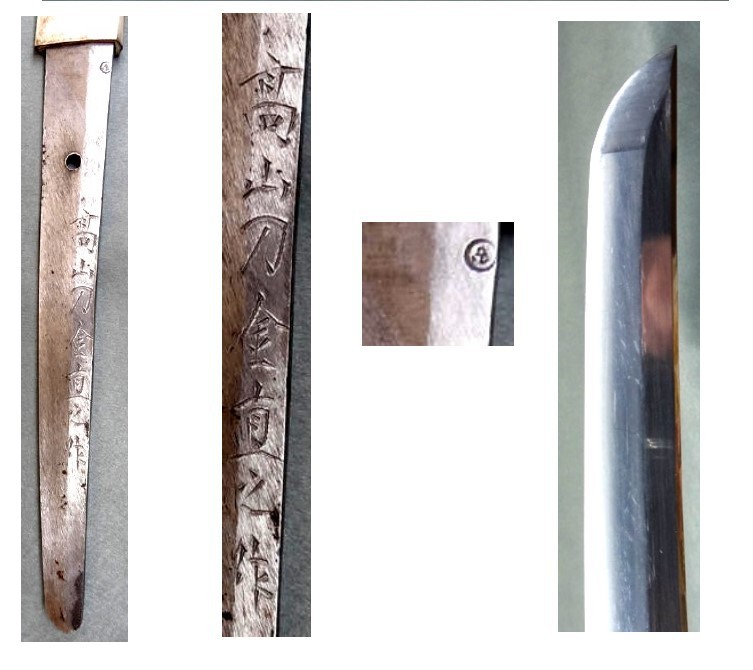
Guys, is this "Takayama-to Kinmichi kore saku" ?

.jpg.325dac57c86e3b562d3b225b8d84534e.jpg)
-
Nlf Gunto Discussion
Bruce Pennington replied to Bruce Pennington's topic in Military Swords of Japan
After searching my emails for the original message my friend sent me, I couldn't find more photos, but I did find an update on the Iwo Jima claim. He added: "My mom claimed he got it at Okinawa during the war, but I sometimes doubt that story. He was at Okinawa, but as far as know, only offshore (as a ship captain). At some point I'm going to research that more through deck log archives. But I do know that from 1950 to 1952 he was stationed in Tokyo working for Gen. MacArthur. He would have a very good opportunity to get one of those "souvenir" swords then." Sorry for the misleading original post. I suspect his '50-'52 tour in Tokyo might account for the acquisition of this souvenir! -
Yes, certainly could be the case for all 3 blades, and statistically speaking, the odds are for this option. I filed them as having no date, noting the late war fittings for tracking purposes.
-
Thanks Thomas. I suspected the stamp was too deep to be on a steel fuchi. Just never ran into such a set up before. Still learning!
-
Interesting Type 95 posted on this Wehrmacht-awards Thread. It's a Tokyo 1st 95 with a poorly stamped Ijima shop stamp. The fuchi SEEMS to be steel, but I remember @Kiipu mentioning that the Tokyo arsenal didn't stamp steel fuchi. The close-up might show that the fuchi is actually brass/copper and was painted black. What do you guys think







.jpg.ce9403784d257d41ac02c1b352bd0f39.jpg)