SteveM
-
Posts
4,384 -
Joined
-
Last visited
-
Days Won
98
Content Type
Profiles
Forums
Events
Store
Downloads
Gallery
Everything posted by SteveM
-
Kunihiro 國廣
-
Hello Marcin, There are several smiths listed in Markus Sesko Swordsmith Index with that name, making swords in that time period. The inscription on your sword is "Masakiyo of Ishikawa Sekishū made this", and none of the entries in Markus Sesko's index mention anything about "Ishikawa", so it might be difficult/impossible to pinpoint which of the ones in his index, if any, are your swordsmith. It is also possible that the smith who made your sword is not listed in any index (an "unlisted smith", or, in Japanese, meikan more). It happens occasionally. The other paper doesn't mention any names for your koshirae. To be exact, the maker of the wooden "scabbard" part would never be mentioned. The makers of the metal parts would normally be mentioned if there is a mei on them. Your tsuba has the name Gotō Teijō (後藤程乗) on it, but the tsuba is a fake (replica) and the name on it is a forgery. The paper mentions that the tsuba for this koshirae should be a brass tsuba with an image of a dragon in clouds. The dragon tsuba has been removed, and replaced with the fake Gotō Teijo tsuba that is now on your koshirae. The dragon tsuba was probably sold off separately a long time ago. This is one of the reasons that old papers aren't to be trusted.
-
Very nice. The red stamp at the top is 店 (shop) inside a circle.
-
Giordy has some good advice. I completely agree with the recommendation to avoid problematic swords, and instead look into buying a low-end-but-certified sword. And avoid ebay. There are several dealers on this site who probably have such a sword in their stocks. I think the wine analogy is a good one. If you want to learn about wine, you don't need to buy the most expensive bottle in the shop, or even a mid-range bottle. But you do need to buy a bottle that isn't broken or corked or way past its vintage date. So avoid swords that are broken, chipped, grinded, sanded, rusted to the point where you can't see anything, etc... These swords have nothing to teach you, and are just a pointless waste of money. A koshirae is nice to have, but not necessary. (The sword should come with a plain "shirasaya" scabbard for storage). Koshirae are a different area of study, and aren't essential to learning about sword basics. Usually you end up studying koshirae one way or another, but it isn't mission-critical that your first sword comes complete with a koshirae. Gimei is a topic unto itself, but there can be very good swords that have false signatures on them. But this starts to get into the "deep end" of the pool. I would stick to the shallow end before diving head first, because the shallow end has a lot of important lessons. The shallow end is where you learn the skills to go deeper. When you buy a junk sword you waste money and time that could better be spent on studying something that can actually help you. Now this is really getting deeper, but if you have the time and the patience, this article is well worth reading.
-
Looks like 豊島様 (Toyoshima-sama)
-
Interesting find on jauce
SteveM replied to Ilovekatana's topic in Auctions and Online Sales or Sellers
The appraiser is supposedly Hon'ami Kōtoku (1554-1619). The second Masamune to show up on NMB in a week. Lucky times, indeed. -
There are a ton in Japan. https://www.nipponto...swords3/KY327932.htm https://www.seiyudo.com/ka-098107.htm https://asahitoken.j.../token-B/B072_I.html https://www.e-sword....1410_1034syousai.htm https://ikedaart.net/?pid=166139265 https://www.seiyudo.com/wa-08034.htm
-
Here's another one I ran across. https://eirakudo.sho...D=1&classby=Category
-
The piece isn't signed, I guess? And, is it possible to get a better shot of the head of the figure?
-
What exactly do I have? I'm stumped!
SteveM replied to Onigoroshi's topic in General Nihonto Related Discussion
宗明鐫之 would be my guess as well. No idea about the other side. -
Hello Joseph, This is the same group that issued the paper that is being discussed in this old thread below. (The paper in your post is dated 1975).
-
Help translate WWII sword and surrender tag
SteveM replied to max426's topic in Translation Assistance
Kanetatsu. Same guy as below. (Jan beat me to it). Tag says (1st photo): Bequest of NOMURA Kyu (may have the given name wrong) Ceremonial sword (2nd photo) Hekikai-gun, Anjō-chō ōaza Sasame (this is an address of a location in Anjō city, present-day Aichi prefecture) 野村四郎 出 from NOMURA Shirō -
Muromachi period signed Katana
SteveM replied to Drips's topic in General Nihonto Related Discussion
Here's your man for any restoration questions in Oz. https://touken-togishi.com/ -
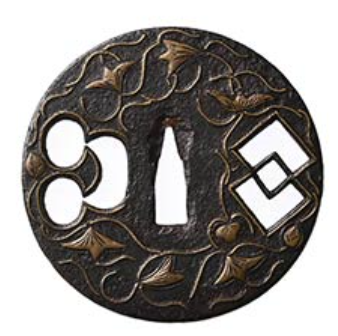
It says 葵透 無銘 江戸中期作 鉄地透 清勁平明 佳作 平成二年水無月 素心鑑(印) Aoi Sukashi Unsigned, mid-Edo period. Iron, sukashi Clear, strong, and unpretentious. Fine work. June, 1990 Soshinkan (Sasano's art name) "Fine Work" is the lowest grade of Sasano's three-tier grading system. Fine → Superb → Masterpiece. Lowest doesn't mean bad in his case. He wouldn't have bothered writing a hakogaki for a bad tsuba. If I remember the price correctly, and given that we are several decades past the time when Haynes was discussing, you don't need to worry about having overpaid for the piece. This is a good work, and the price was good, and regardless of the attribution on the box, both tsuba and box are nice things to have. Check out the site below for even more information. The author of that site (I think he is a poster here as well) translates 佳作 as "Beautiful Work" which is a good translation as well. 佳 literally means "beautiful" or "good". Forget about "honorable mention". Machine translation often barfs up misleading translations. https://tsubakansho....sano-senseis-grades/
-
古極? Old attribution of ? 正?延?
-
Nobody seems to be taking the bait, so I'll toss in my opinion. My guess is that the house of Gotō represented the finest metalworkers of the day, and so perhaps analogous to Hermes or Jaeger-LeCoultre or Romanee Conti or some other ultra high-end brand. So just as Hermes doesn't indulge in "fast fashion", and Jaeger-LeCoultre doesn't dabble in LCD quartz watches, the Gotō prided themselves in high-end soft metalwork, and didn't indulge in common iron-work. Maybe they thought it was something left to the garden variety ironworkers. Plus, as they dominated the minting of currency, their access to precious metals gave them a huge advantage in decorative metals, whereas iron was far more easily obtainable, and therefore a bit difficult to stand out among the crowd of ironworkers. I'm sure there would have been an appreciative market for their iron work, had they gone in that direction, but the house name and the tradition have a value that they didn't dare play with. Of course some brands do offer "second label" stuff - which can be successful and can also be unsuccessful. But if you are purveyor to the daimyo, and protected by the shogunate, you probably don't need to explore new markets.
-
Must be 信虎 (Nobutora), using a variant of 虎 One of these https://glyphwiki.or...anki02_u864e-var-001
-
You get in touch with an agent in Japan who can handle the process. Someone like Robert Hughes (see below). He has to import the blade and get it legally registered in Japan. Then he has to reserve a spot in the next shinsa. Then, after shinsa, he has to collect the sword and get an export permit it so that he can send it back to you. If you have any detailed question, he can help you out.
-
"Kinai" is written on the outside of the lid. It isn't shown in this picture. (I have seen this box before). I wouldn't like to argue with Sasano sensei, but you may get another attribution if you sent this to shinsa today.
-
Wakayama lists 4 Munehide. Two are Myōchin artists (Tosa and Oshū) which I rejected out of hand. The other two are both Iwamoto artists. By default I'm guessing this tsuba is from one of the Iwamoto Munehide artists. OR, the mei could be a forgery, or this smith could be missing from Wakayama (meikan more).
-
宗栄作 Munehide-saku (Made by Munehide). There are at least 4 artists who signed as Munehide. This looks like it is Munehide from the Iwamoto school (early 1800s).
-
Yes, Someya Tomonobu. Yours should have had a gold inlay seal under the signature, but its fallen off. The met has one with similar signature. https://www.metmuseu...lection/search/25711 Should be 染谷知信 (they have a typo of 友信).
- 1 reply
-
- 2
-

-
Translation help with Kicho papered Shimosaka wakizashi
SteveM replied to Lexvdjagt's topic in Translation Assistance
It says Shimosaka, but the "Shimo" character has been altered into a "Masa" character. So 下坂 → 正坂 This was done (supposedly) because the connotations of the combination of 下+坂 were thought to be unlucky, and potentially insulting to the rulers of the time. Shimosaka, when deconstructed, can be read as "going downhill" or even "the fall of Osaka". So the theory is that the owners would have the kanji character altered to a less objectionable character. The paper doesn't identify the specific maker any further than "Shimosaka".- 1 reply
-
- 4
-
-
How long are you visiting? If you are going for around 2 weeks, I wouldn't bother with Nagoya. Apologies to all the Nagoya fans out there, but for me Nagoya is a speed bump on the way to Kyoto. The Nagoya castle is a post-war, concrete and steel reconstruction, so slightly disappointing. Nagano is quite a trek for not much payoff, unless you like mountain climbing and skiing. The exception might be Matsumoto, which is a 2-3 hour train ride from Shinjuku Station. Matsumoto has one of the few remaining original castles in Japan, and it is a very grand castle. So, consider it if you have a lot of time to kill, or are a castle buff. Tokyo: Japanese Sword Museum near Ryogoku Station. Also close to the Edo Tokyo Museum, which is closed for renovations until 2025. Also the area where Tokyo Sumo arena is located. In Ginza, you can hit Ginza Choshuya (high-end sword shop) and Token Shibata (mid-range sword shop) and Ginza Seiyudo (mid-range sword shop). They are near the center of Ginza, and within walking distance of each other as long as the weather is nice and you've got good walking shoes. The walking around Ginza can be an enjoyable event in itself. Also there should be some swords on display at the Tokyo National Museum near Ueno. Ueno can also be an enjoyable destination, especially around the Ameyoko-cho shopping arcade. Nikko is an excellent day-trip from Tokyo, and in addition to the shrine, which is one of the finest in Japan (if not the finest), there is the Nikko Toshogu Museum, which houses a lot of artifacts from the Tokugawa family (including some swords if my memory serves me well). Nikko is also a quaint city, and there are a couple of antique shops on the high street. Lots of walking and stair-climbing. Kanazawa - a lovely city with a nice castle. Not quite the grand towering castle that Matsumoto has, but rather a low-lying fortress kind of castle. Two nice geisha districts. Well, they were once "tea houses", but now they are converted into shops, but they still retain the old atmosphere. There is also a famous temple, associated with ninja (Myoryu-ji). Normally one would stay in Kanazawa and maybe make a side trip to the Noto Peninsula, which I would recommend without reservation, but obviously the earthquake has done serious damage to the Noto area, so you would have to watch for updates to see when Noto is ready to accommodate visitors again. Some are saying Noto wants visitors right away, because they need the revenue to get back on their feet, but...check the internet for updates. Noto is famous for lacquerware (Wajima city, specifically). Kyoto - what can be said about Kyoto? A beautiful city with so many cultural landmarks per square mile, it is difficult to summarize. Nijo castle would be a must. Again, not a towering castle, but more of a low-lying estate. Kiyomizu-dera, Kinkaku-ji, Ginkaku-ji, Sanjusangendo, Ryoanji, Arashiyama...its all worth seeing. Then, from Kyoto you can visit Fushimi-inari taisha, Horyu-ji, and Nara. All are within a short train ride from Kyoto station. Kyoto is worth spending time in - and I would make it my base for explorations into Nara, Osaka, Himeji, and maybe even into Hiroshima. Osaka is an hour train ride from Kyoto. Osaka has a castle, but it, like Nagoya, is a modern reconstruction. I don't know Osaka very well. I've never done too much sightseeing there. From Osaka, Himeji is about an hour away (less if you go by Shinkansen). Himeji has the best, most well-preserved castle in Japan. Osafune (of Bizen Osafune fame) is about a 2.5 hour train ride from Kyoto, and well worth seeing for the sword museum and sword-related craft displays. To get to Osafune, you have to change trains at Okayama, which has a castle (modern reconstruction, but some original buildings/walls) but it is also worth seeing. Hiroshima - less than an hour from Okayama by Shinkansen. Atom bomb museum, and a castle (reconstruction) not too far from the museum. Hiroshima also famous for its food culture. Hiroshima also has one of the most picturesque shrines in Japan, Miyajima. It is slightly far from central Hiroshima, but well worth visiting. It is a popular tourist destination on an island just off Hiroshima, so the connections and frequency of the boats/trains make it a relatively easy trip.