Ford Hallam
-
Posts
3,091 -
Joined
-
Days Won
78
Content Type
Profiles
Forums
Events
Store
Downloads
Gallery
Everything posted by Ford Hallam
-

Another sad passing - Nikolaos Othonos
Ford Hallam replied to Brian's topic in General Nihonto Related Discussion
Sad news indeed. -
True elegance and style cannot be regulated by prescriptions and rules nor is the slavish adherence to rules a sign of cultured refinement, it's merely an indication of a willingness to conform. Good taste is the last refuge of the artist.
-
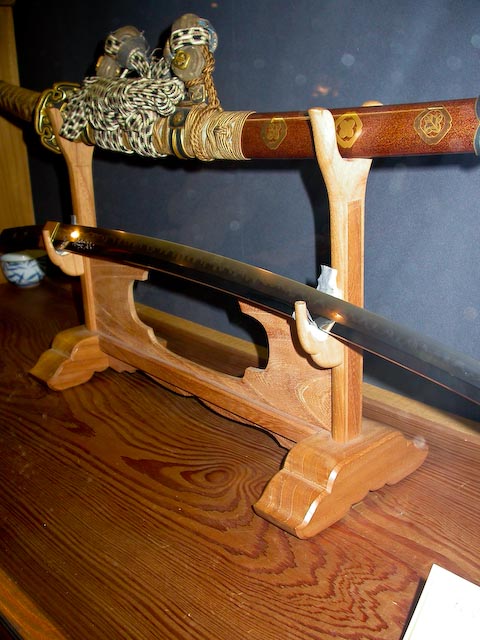
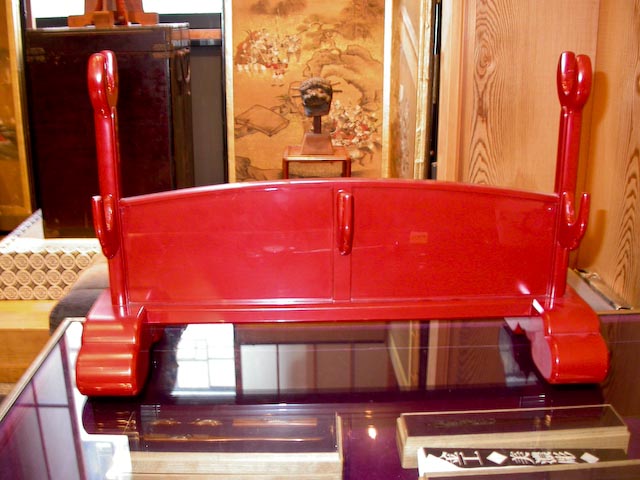
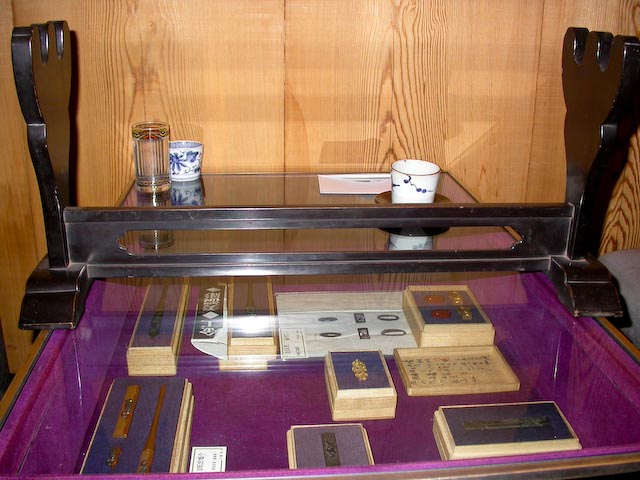
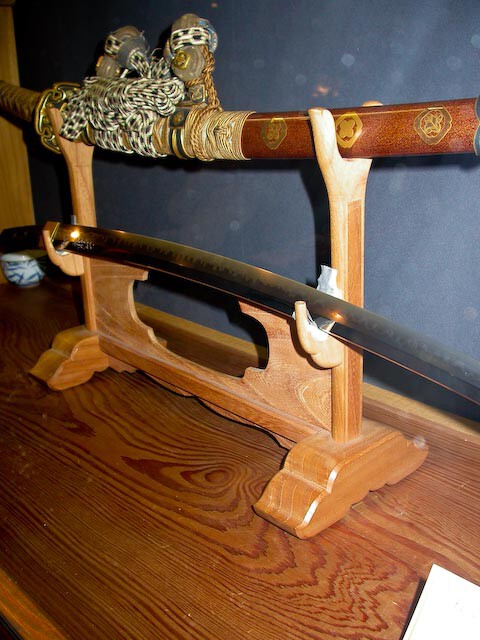
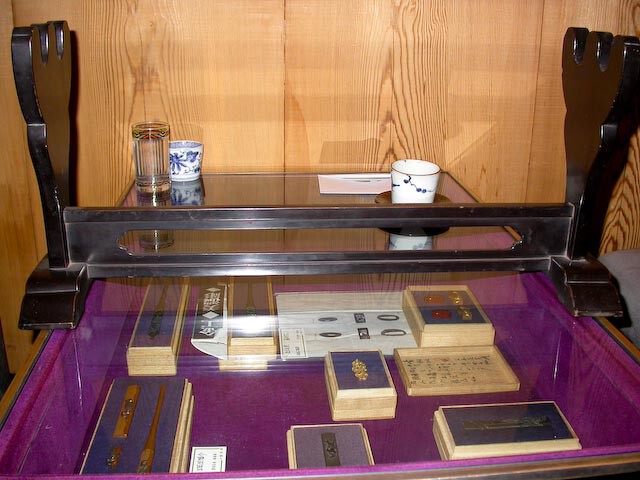
I took some photos of a few interesting katana kake in Tokyo a little while ago. Some of you may recognise where I was. You can see some more images in this Picasa gallery here I took these images to show the fine construction details.

-
Chemical analysis results
Ford Hallam replied to Adrian S's topic in General Nihonto Related Discussion
Merci beaucoup, Jacques. C'est apprécié. -
I'd promised myself I'd keep out of this....but integrity demands a reply and... I'd be mortified if I was ever relegated to that gallery.... As a self proclaimed critical thinker in this hallowed field with the deserved, if only local, reputation for being something of a heretic, I must state unapologetically that I applaud all challenges to the status quo. Having said that it must be stressed that ideas, once they are presented into the public sphere, may be quite naturally subject to scrutiny and critique without any reserve. Any new or radical idea must prove itself in this uncompromising arena. This is not a matter where etiquette or reserve ought to demanded or expected. Ideas survive only by means of their veracity, their truth. This communal effort by our community ought not to be seen as quite so individualistic but perhaps more a matter of us all combining our collective understanding and insight to gradually move towards a clearer appreciation of the totality of this subject we're all so enamoured of. respectfully, fh
-
Hi Geraint Long time no see baby Kyle is 19 in January anyway, your tsuba strikes me as a late "revival" style piece. The gently undulating surface and the way the edge has apparently been so carefully and sensitively worked so as to suggest age to in line with Bakamatsu aesthetics as expressed to varying degrees by artists like Ichijo, Natasuo and Funada Ikkin et al. The silver wire inlay is, I think, a further attempt to suggest age in the way the inlay is incomplete. What gives it away as being contrived is the way we can clearly see some areas where the wire is supposed to have disappeared but no empty groove remains yet in other areas this exactly what we see. I don't think we should try and read too much into the "design" of the silver, therefore, as I think the impression was merely meant to evoke antiquity... and perhaps a bit of mystery. In this it's at least partly successful methinks As to the possibility it was originally intended for a tachi I'd of expected to some evidence of a much wider nakago-ana where the present ha-machi would be positioned. Just my thought of it, for what it's worth. And the very best wishes for a blessed Christmas to all the Wilton clan. regards, Ford p.s. Do you still fancy a shakudo tsuba of grapes and vine leaves? :D
-
Hi Adrian, As I said, I don't have the background knowledge to critique your essay. I did indeed mean Dr. Homma and by reference I referred to the lack thereof in your bibliography. If you have been basing some of your work on his research it ought correctly to be reference and acknowledged in the bibliography. This is usual scholarly practice, is it not? Having said that the following are the 3 times you mention him; None of these quotes are actually anything to do with his own research on Masamune but are simply specific points you've taken to build you own theory while ignoring the bulk of what he has to say. This is not really referencing his theories at all. Referencing his thesis would involve a considered appraisal and critique of it. I'm happy to make copies of the articles I mentioned and I'll forward them to you shortly. As for what you may have heard about his real thoughts on the matter I can't possibly comment on hearsay. The article was published posthumously though so I had rather thought that it was his final statement on the matter. However, as I said, what struck me most was the final paragraph of your conclusion where you describe Masamune's workmanship thus; "his outlandish and rugged style". I think you may well be on your own in seeing it that way. :? Regards, Ford
-
Not being sufficiently versed in the background to the material your thesis explores, Adrian, I am unqualified to comment on your conclusions other than to say I'm quite shocked that you characterise Masamune's workmanship as being "outlandish and rugged". This would seem to fly in the face of how he has been regarded by scholars and connoisseurs of the sword for generations. Further, your bibliography is somewhat scant and although I noted previously your disdain for the late Dr Hamma's scholarship I would have though at least some reference to his studies might have provided a balanced appraisal of what we might reasonably conjecture. Certainly some reference to the many literary sources he cites would not have been amiss I think. I assume you are aware of and have studied the results of his studies as were published in the English NBTHK journals vol 52 through to 59.
-
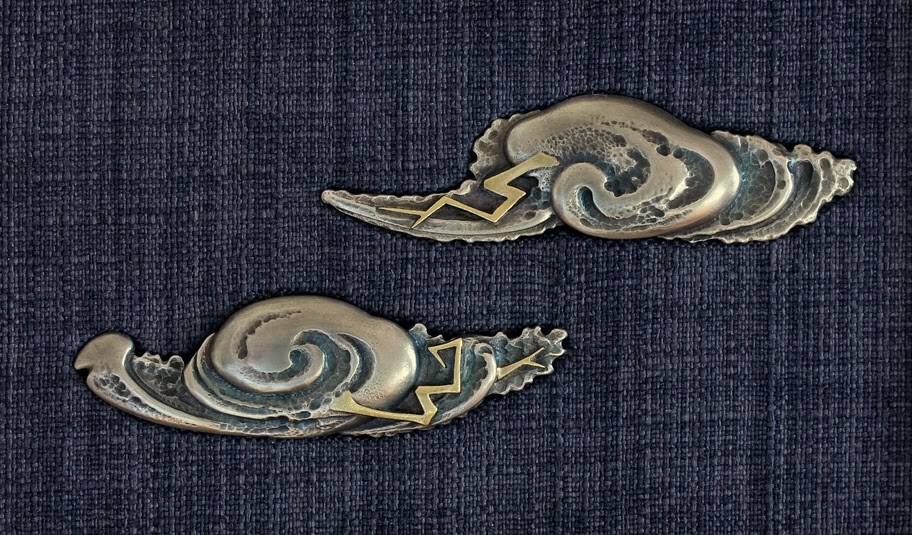
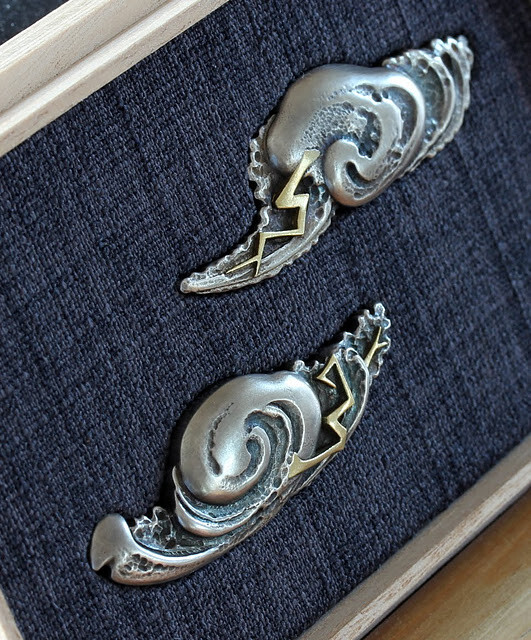
Than you kindly, Gentlemen Glad you appreciate the pieces and the exposition of how they were made. Sadly Daimyo are a bit scarce nowadays but I have been fortunate to have been supported by some real princes.
-
Thanks very much, Chuck. It's always a pleasure to know I've managed to exceed a patron's expectations. I'll keep pushing my boundaries.
-
:D
-
Sorry I can't add anything of use....but an image search for Koyori was "interesting!
-
Paul, you may see it as confrontational but I merely see my approach in these sorts of discussion as being perfectly in line with normal debating procedure. If someone voices an opinion that I disagree with surely I'm entitled to engage with that view and to challenge it? I can assure you my temperature remains quite balmy but if others are offended when their opinions are challenged I'd rather suggest that that remains their problem...don't you think? Anyway, you're probably right. I prefer to keep my thinking on these matters critical and rigorous so I'll keep them to myself in future. regards, Ford
-
Adrian, I didn't say your sources are imaginary. I merely pointed out that if your refer to those sources it doesn't add much to the discussion if you don't identify those sources. Whether or not Dr Honma's scholarly work is correct or not is irrelevant. My objection was to the way you didn't bother to provide any specific criticisms, backed up with your own research. You resorted to calling his academic work into question by referring to an entirely different matter. By all means critique his work but don't lower the debate by attacking the man's integrity. You weaken your own credibility by resorting to that sort of tactic. By your own admission you're evidently "no lightweight" in respect of researching Masamune so I'm certain you'll be able to demonstrate convincingly where Dr Honma went wrong.
-
But you go too far with this underhand implication; To try and undermine the man's academic integrity by implying that he was somehow responsible for serious criminal wrongdoing is a pretty dirty trick in my opinion, made worse by the fact that he is not around to defend himself. That's the sort of tactic politicians use and I'm appalled that you'd stoop so low as to try it on here.
-
To be absolutely blunt I am immediately very sceptical when anyone claims to have privileged information, from their special relationships in Japan, and where these authorities remain anonymous. This claim is heard far too frequently on this forum and is used inevitably to silence critics and to claim ultimate authority in a debate. If new archaeological and scientific data has come to light and it appears to provide information that calls for a revaluation of existing theories then we should absolutely explore the matter. I'm very intrigued now as to what such new research can add to the Masamune enigma. You claim that in this thread you've only stated opinions that are echoing the views of more eminent Japanese scholars yet on a couple of occasions you preface your comments thus; If these thoughts are not your own perhaps it would have been in the interests of clarity to have said so and to quote your sources.
-
Dear Adrian, my apologies if it seemed I was directing my comments solely at you. I wasn't particularly thinking of your analysis research project. What I was criticising is the general tendency to create possible "answers" for questions based on absolutely no relevant information at all. I will remind you of the lengthy and ultimately futile discussion we recently engaged in regarding the use of borax. The whole matter started because someone ( you said you couldn't remember where you read it ) claimed it was introduced by the Portuguese in the mid 16th cent. etc. What followed was a protracted struggle to force this invention to fit what we could uncover. This sort of "cart before the horse" methodology is absolutely the antithesis of scientific and scholarly thinking. Developing working models, or theories, based on the available data is a perfectly respectable and intelligent approach in any field of research and study. Simply making stuff up out of thin air is not. However when you say; I have absolutely no problem with well researched or reasoned theories and you may not be the only non-Japanese to be able to access material from the source. Presenting this material in English is most welcome but it would be respectful, I would suggest, to cites one's sources and to make it absolutely clear what aspects of an argument or hypothesis is drawn from other authorities and which parts are one's own speculations or conclusions. This is simply good academic practice.
-
I have to agree wholeheartedly with Adam. However, when we claim the right to question the opinions of previous authorities we must ask ourselves by what expertise and understanding do we pose our questions. In my own field of expertise I find myself increasingly unable to engage in intelligent debate with interested parties simply because there is such a poor comprehension of the bare essentials in terms of metal craftsmanship and artistry. A discussion as to the authenticity, by non-Japanese students, of various blades purported to have been made by the the most legionary and revered sword-smith (and by this I refer to the essential illiteracy of non-Japanese students with reference to primary sources) must be seen by serious scholars in Japan as being misguided to say the least. Everyone is entitled to their opinions but no-one is automatically entitled to having those opinions being taken seriously. Just because we don't know all the answers doesn't give speculators the right to start simply making stuff up. That way madness lies. The problem with speculation, as we've seen on a number of occasions, is that in no time at all it is regurgitated as being fact. Speculation is best kept for those times when conversation is lubricated with one's narcotic of choice. Serious scholastic discussion ought to concentrate on that which can be reliably regarded as fact or verifiable. I would respectfully suggest that this forum decide as a matter of policy which approach it wishes to endorse. Ford
-
-
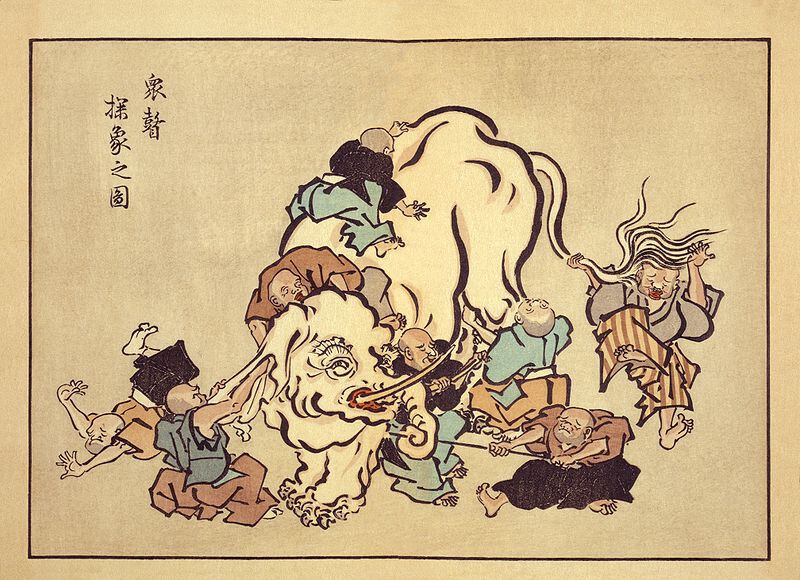
Rich Turner and I would both disagree with that assessment. This is Rich's description; I'm assuming you're suggesting the ginger motif is actually the kanji for longevity. This is obviously not so. A brief perusal of the ginger/myoga motif as used in sukashi tsuba designs will confirm this. In fact if you look closely at the myoga on Rich's tsuba you'll see the chiselled detailing of the plant that further confirms what it is.
-
I would have doubts, myself, about these being bonji because Siddham characters are not symmetrical at all. In fact they are very much asymmetrical.
-
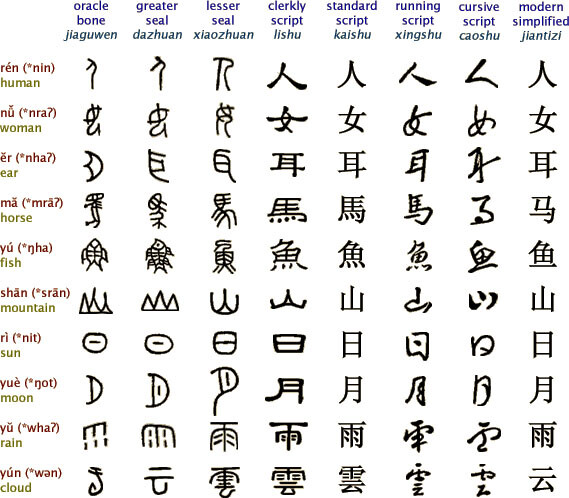
I wouldn't refer to these as stylised kanji Kanji ultimately evolved from these, much earlier, forms. These are archaic Chinese characters, possibly the earliest type, those found oracle bones. This chart illustrates the sort of evolution the earlier forms went through to ultimately become what we recognise as kanji. This is probably the most comprehensive site on-line dealing with the development of written Chinese. A bit of detective work and the "hidden" meaning of the characters on the tsuba might be revealed.
-
Thank you kindly, Pete
-
Chemical analysis results
Ford Hallam replied to Adrian S's topic in General Nihonto Related Discussion
Hi Adrian, that's quite remarkable . Tidy result in this respect. You'll have to be careful now....they'll (not really sure who "they" are) be sending ninja's after you too now -
Chemical analysis results
Ford Hallam replied to Adrian S's topic in General Nihonto Related Discussion
Hi Chris I thought about that but from I can make of the differences in the analysis' on the various parts of the blades I'd not be all that confidant myself to make such a absolute call.