Ford Hallam
-
Posts
3,091 -
Joined
-
Days Won
78
Content Type
Profiles
Forums
Events
Store
Downloads
Gallery
Everything posted by Ford Hallam
-

The Digital Shinsa...its around the corner
Ford Hallam replied to Adrian S's topic in General Nihonto Related Discussion
Sorry David, I don't buy it. Go and sit on your cushion...in the corner, facing the wall -
The Digital Shinsa...its around the corner
Ford Hallam replied to Adrian S's topic in General Nihonto Related Discussion
Really? Suggesting that someone's interpretation of something might be inapplicable or inaccurate is not in anyway the same as saying they are lying. As a practising Buddhist I would have thought that distinction would have been obvious to you. :? -
Just thinking further about the practice of taking heads on the battle field (I have absolutly no interest in WWII atrocities and abberations myself :? ) As Piers has pointed out this practice of head taking was almost inevitably practised on already slain foes. This being the case it might be somewhat troublesome to arrange a corpse for a neat decapitation under such battle field conditions, especially using a regular sword. A short, recurved blade would allow for a far more controllable and efficient job to be performed. The other objection that might be raised would be the contamination of the sword by being defiled by a dead body. Dead bodies being considered "unclean" in Shinto theology. One might assume this issue, as it relates to actual battle, is ameliorated by the fact that the opponent isn't actually dead in the instant the blade delivers the fatal blow. A bit pedantic perhaps but that's theology for you . So it may be considered quite reasonable that blades just for use on corpses were in use. How then might we rationalise their relative scarcity now though? Swords have always been considered repositories for Kami and various other benevolent or malevolent energies. As such there is a strong feeling in Japan, even today, that blades are not simply inanimate objects and folk tales abound of "cursed" or "possessed" blades inflicting harm on their unwitting keepers or simply being bad luck to have around. In this atmosphere it would be surprising that a blade made with the express purpose of beheading dead warriors would be all that welcome an addition to any household. In addition, we should note that the blade used by a kaishakunin to terminate an act of seppuku is also thereafter considered to be defiled. This is why it is inevitably a blade that belongs to the victim and not the kaishakunin's own blade. One would also ask what happens to the actual tanto or wakizashi that the principle used. We rarely, if ever, see blades with that unfortunate history. Certainly, this fact is not usually advertised. Anyway, this is all merely some rumination on the matter on my part but if nothing else it may provide a little more nuanced understanding of the broader issue. I've been suffering with severe flu for the last 2 weeks so perhaps I've have had too much time to ruminate of late As an interesting add-on I would mention a moment in the film Gohatto where respects are being paid to a fallen comrade by members of the Shinsengumi. What caught my eye was that fact that the tsuka of the one sword that was visible in the scene was covered with a tube of white paper. When I asked of my teacher what this signified he explained that it was because the samurai did not want to risk contaminating their swords while performing funeral rites.
-
The Digital Shinsa...its around the corner
Ford Hallam replied to Adrian S's topic in General Nihonto Related Discussion
It doesn't suggest he's lying at all. All it would imply is that the observation that he saw borax present didn't actually mean it was used in processing tamahagane. Your attempt to frame my criticism in this way is not helpful at all. It distorts the discussion in a really dishonest way and to merely create unnecessary discord. In any case, going though a number of analysis of antique blades (yes, there are actually quite a few such published scientific papers in the public domain) I can find no hint or trace of borax in any of them. Perhaps instead of simply hypothesising the various gentleman who object so vehemently to my criticism of this silly idea should do some actual research into the subject and thereby educate themselves as to the evidence on the subject. When I get a chance on the week-end I will upload a number of pdf files of these research and analysis' that I've referred to. I trust there will be some members who will take the time to consider the evidence for themselves. -
The Digital Shinsa...its around the corner
Ford Hallam replied to Adrian S's topic in General Nihonto Related Discussion
Brian, the issue isn't about flux per se. It's about borax....so perhaps a better title would be "This whole hypothesis is a load of old borax" -
The Digital Shinsa...its around the corner
Ford Hallam replied to Adrian S's topic in General Nihonto Related Discussion
Adrian yes, the article is quite old but the point regarding the use of borax not being needed to work watetsu remains. Why use a flux that is know to cause problems with watetsu when it's not needed? Anyway, I'll stop wasting my time trying to provide reasoned analysis of this theory as it's clear you've already decided that the stuff was, and is, an integral part of the process even though the original notion regarding the Portuguese has been shown to be completely erroneous. Now you are intent on making the idea stick regardless of a complete lack of any corroborating evidence. As the expressing goes; "exceptional claims require exception proof" I await some proof of your assertion. Thinking about the presence of borax in certain smith forges it occurs to me that as many smiths today struggle to make a living just making swords so that it's common for they to take on work as tool makers and blacksmiths. This work would obviously not be in watetsu and would therefore quite reasonably require the use of borax etc. In the meantime, I'll go and have a chat with some practising swordsmiths and see what they feel about using borax and tamahagane. regards to all, Ford -
The Digital Shinsa...its around the corner
Ford Hallam replied to Adrian S's topic in General Nihonto Related Discussion
I thought Pierre's explanation as to the problems associated with using borax made it clear it's use with tamahagane material was avoided. Ash and clay slurry is a flux of sorts but we're specifically trying to learn if borax was used in the past...are we not? -
The Digital Shinsa...its around the corner
Ford Hallam replied to Adrian S's topic in General Nihonto Related Discussion
An interesting comment from one of Japan, most famous metal specialist companies; Hitachi Metals. Are we to assume the presence of borax indicates the use of modern western style processed steel....curious -
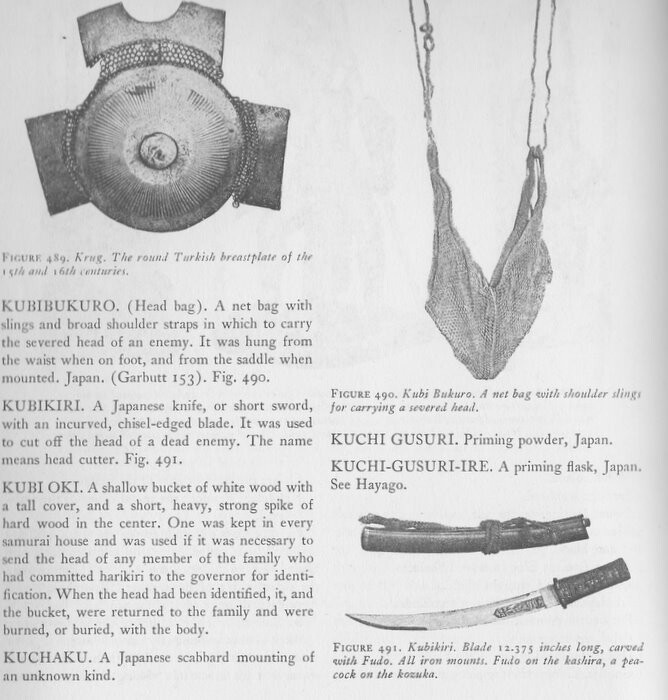
Hi Chris, you're correct to suggest that we still have no definitive proof of the intended use of the blade I showed. However, what I think we have demonstrated is that the nata type blade is almost certainly not a blade intended for such a gruesome purpose. That the taking of heads was a significant part of the battle field is also an establish and documented fact. Specialised blades for that purpose, however rare, are therefore reasonably to be expected. Perhaps, as a result of this brief "examination" of the matter more examples will slowly become evident. I've found an online translation of the Tanki Yoriaku Hi Ko Ben by Hayakawa Kyuukei which was written 1735. It does mention, along with an illustration, the use of the kubibukuro as being fairly standard. Sadly there is no mention of the elusive kubi-kiri but I think we've already established that it was unlikely to have been common. Perhaps there are references to this term (kubi-kiri) in other early reference works. One assumes Garbutt found it somewhere. The translation I linked to makes for interesting reading in other respects too. The continual mention of what looks best is very revealing, I thought. Very self conscious it would seem. :D
-
The Digital Shinsa...its around the corner
Ford Hallam replied to Adrian S's topic in General Nihonto Related Discussion
David, it matters if we're serious about attempting to build an accurate and reliable impression of the subject matter at hand. If we simply allow unsubstantiated and unwarranted speculation to season the debate we may as well not bother. The very fact that this notion regarding the Portuguese and borax has been "floating around for some time", unexamined nor challenged, proves my point. To quote my signature line; "Rigorous reasoning from inapplicable assumptions yields the world's most durable nonsense." As to the usefulness of the proposed database of analysis' I think it may be of some help in defining particular groups that had distinct working process, and thereby consistent metallurgical results, but I doubt any more specific pointers such as material origin or individual smiths will be discernible. I say this in light of the fairly dramatic changes and alterations any raw material inevitable undergoes when being processed and worked to a finished artefact. The essay I referred to earlier, in Science and the Past, makes this point very forcefully. regards, Ford -
Morning Ed whew ...I thought for a moment I was losing my touch . Glad to have been able to redress that momentary laxness on my part I think the whole nata story has somehow got insinuated into the actual military history aspect of the matter and has inevitable, and quite correctly, led many to dismiss the nata as a serious head removing tool. We can imagine how, for someone with purely commercial interests, selling a gardening tool as a Samurai decapitating dagger would be an appealing option but it has got in the way of reaching a better understanding of the reality of the matter. I absolutely agree about needing a few more examples, and we'll keep loking now we have an idea what they look like (ie; NOT like a hatchet :lol: ) but I suspect they are, nowadays, a real rarity for the reasons I outlined. Perhaps European and US public collections might yield some further examples. Just to add to the source I referenced. The "head bag", and I assume the actual blade, were cited from a Matt Garbutt and an article he presented to the Japan Society, in London. It was published in their "Transactions" 1914. This gentleman seems to have been quite an early authority having translated the following book; Tanki Yoriaku Hi Ko Ben by Hayakawa Kyuukei 1735 in 1911. Sadly the link to the translation is broken but I suspect it's out there.
-
The Digital Shinsa...its around the corner
Ford Hallam replied to Adrian S's topic in General Nihonto Related Discussion
Morning Adrian, I apologise if I've seemed unfair in criticising the borax hypothesis. I was merely try to engage in a healthy and robust examination of the notion. I certainly didn't intend to make you feel you needed to keep other theories secret as a result. With regard to the following; That Chis made this claim hardly proves that borax was introduced in the pre-Edo period at all nor does it actually prove that borax is a significant constituent part of the process today for that matter, he didn't state he'd seen it used in processing tamahagane (perhaps he can confirm or clarify what exactly he did observe) and Pierre's comments regarding the problems that raises casts serious doubt on that particular application. As someone who actually trained as a smith I tend to take his experience quite seriously. Obviously Chris' observations as presented thus far contradict Pierre's ... . ...so perhaps it would be wise to seek the views of a few more contemporary smiths. As for the "Portuguese Theory" I think we've demonstrated quite clearly that it was a case of completely unfounded invention that was concocted in complete ignorance of any real facts or evidence. Anyway, moving on... I think you'll find the essay I mentioned in "Science and the past" to be of very real interest dealing as it does with the complications of attempting to analyse metal alloys and such in an attempt to determine a source. regards, Ford -
The Digital Shinsa...its around the corner
Ford Hallam replied to Adrian S's topic in General Nihonto Related Discussion
Adrian, whether the Chinese could have supplied borax is not sufficient reason to assert they did. In addition you seem to have overlooked the testimony of actual swordsmiths and the reality of what happens to tatara steel when borax is used. There is no need to suppose borax was used by Japanese smiths in the past given what we know of their use of ash and clay slurries as a flux. It seems to me that at this point, it having been demonstrated that the Portuguese did not introduce borax to Japan, and it seems unlikely any other Europeans did either, you are looking for another likely suspect for something we have no proof of actually having happened. This is just very poor reasoning and just serves to further cloud an already misty past. I'm honestly not trying to be nasty here but seriously, we can't just assert things on the basis of it being possible. We need to ask if it was probable and what actual evidence for the claim exists. As for the rest of your testing I await the results with interest. regards, Ford p.s. You still haven't indicated where this theory regarding borax and the Portuguese came from.... -
Ed I feel awful to have let you down so terribly....it's a good thing I don't have a kubi-kiri to hand, who knows what I might be driven to in my abject shame. Here's a scan of the example I referenced. Of interest are the other items mentioned, the handy net for carrying the severed head and the odd bucket with spike for sending disgraced heads to the authorities. The point I was making was that there was a distinctly different blade to the nata that was described as a "head cutter". That the example I cited had a horimono of Fudo-myoo on it indicated, to me at least, that this wasn't some gardening implement. A nata, as I understand it is a sort elongated cleaver, a hatchet. We know taking heads on the battle field in pre-Edo Japan was commonplace so a specialised blade for this purpose seems reasonable. That it's not something that is discussed in "polite company" (although that shouldn't count given present audience :lol: ) is also understandable I think. These particular blades would inevitably have been viewed with some disgust, as being unclean in the Shinto context, after having been used for their apparent purpose so it's hardly surprising we don't see many extant examples nor any references to them. We know of actual manuals that detail how to properly display heads taken in battle. Is it such a stretch to suppose they devised a more practical blade for the job? I don't think this need be regarded as a "tall tale"...unless we're intent on whitewashing samurai history. I'm at a loss as to why you would think the idea of taking heads is a Western misconception It was how the warriors claimed their rewards after doing battle service. I hardly think they were all that squeamish about the practice back then. Having now looked at the example on Dr Steins site, where he notes that; I would suggest that his assessment of the example he shows is correct. I can't imagine that one being particularly useful for decapitation...unless we're talking about dead flowers. The example I show, on the other hand, does seem to be somewhat more functional in appearance. The rarest of examples brought to you by me....I do try :lol:
-
The Digital Shinsa...its around the corner
Ford Hallam replied to Adrian S's topic in General Nihonto Related Discussion
Hi John that's the thing that struck me also. Of all the many film (and there seem to be loads on youtube now) that show the making of true Nihonto by Japanese smiths one doesn't see borax in evidence. It might be "hidden" in the clay and ash slurry that's used as a protective flux but my sources deny this and for the reasons Pierre explained. Can we now discount this "borax introduction" idea, now, as being unlikely and unsupported by the historical evidence? Occam's razor would seem to indicate we should. regards, fh -
The Digital Shinsa...its around the corner
Ford Hallam replied to Adrian S's topic in General Nihonto Related Discussion
Interesting bit of historical background there, John. It does seem to put the kibosh on the notion that the Portuguese introduced borax into Japan in the 17th cent. It might be argued that the Dutch might have brought it to Japan, although given it's evident value in Europe it would seem unnecessary for traders to risk dragging the stuff half way round the world to when there was clearly a ready and lucrative captive market in Europe. I found this article on borax also. This is from the article; -
The Digital Shinsa...its around the corner
Ford Hallam replied to Adrian S's topic in General Nihonto Related Discussion
Hmm, interesting. We actually had a discussion about this on the iron brush a while back. I asked Pierre Nadeau for his input. This is essentially what he added to the discussion. Other Western smiths have noted that the use of borax in forge welding results in a whitish interface at the weld face. I suppose I ought to ask some more Japanese smiths. I'll be back. -
The Digital Shinsa...its around the corner
Ford Hallam replied to Adrian S's topic in General Nihonto Related Discussion
Adrian, I've heard this theory that the Portuguese introduced borax into Japan, and this was then used by swordsmiths etc, a few times in recent years. Do you have any references that actually demonstrate this to be a fact or do you know who first proposed this notion? As far as I understand swordsmiths in Japan today don't rely on borax so I'm wondering where this idea comes from. One would think that if it was such a helpful addition to traditional forging processes it would still be a part of the craft. regards, Ford -
The Digital Shinsa...its around the corner
Ford Hallam replied to Adrian S's topic in General Nihonto Related Discussion
Hi Adrian For a good overview of the use this sort of analysis and it's use in terms of dating and source etc I would recommend "Science and the Past" edited by Sheridan Bowman. The various essays are written by members of the British Museum's Dept. of Scientific Research. In particular, Chapter 6, Tracing to Source by Michael Hughes goes into some fascinating detail on the subject of this type of analysis. regards, fh -
Just to add a little something with regard to "head-cutters". On pp. 394 of Stone's Glossary is an entry for Kubikiri and a photograph of 12.37 inch blade. It's a strongly curved tanto type blade but with the edge on what would usually be the mune. The first third of the tip is sharp on the other side also. It features a horimono of Fudo-myo (not the patron deity of gardeners as far as I know) I know I've seen others so it seems that these specialist blades were indeed made. I think there's one in Ian Bottomly's book too.
-
Hi Adam I don't know the stuff but would be very hesitant about using any commercially available soaps who's composition I didn't know. Reading the material you linked to and following up on Limonene it does seem to be quite a usefull clearer/solvent but I'd want to conduct some careful test on it before recommending it's use. Conservation Resources supply a number of fine soaps that are approved for museum use (they also supply Renaissance wax and silica gel ) and the Green dish washing up liquid by Procter & Gamble, fairy liquid, is safe.
-
evidently....
-
Henry I suggested a paint strip hot-air gun not a blow torch. I also suggested that it be used to heat the piece to the point it uncomfortable to touch with the bare hand. that would be around 70 degrees at the most. How you've managed to then reach the conclusion that "a blowtorch and paint stripper will set any tsuba right " is beyond me. I can hardly be held responsible for your inability to comprehend plain English now can I. I say one thing and you "digest" something else....can't help you there, I'm afraid. As for what I've suggested being used inappropriately by others, perhaps, there's no accounting for the inability of people to make sensible decisions and to take instruction. As a matter of fact I did take your post as being very insulting. I don't tend to waste my time trying to help people gain a better understanding of the work and how to best care for it as a joke and your "ranting" smiley did nothing to make me feel you were being in the least humorous. I have no problem with people disagreeing with my take on things but at least have the courtesy to try to accurately understand what I'm saying before you spout off from your armchair. As for quoting Richard on restoration, I've commented on the matter further and in a little more nuance manner than the usual unconsidered fashion. fh
-
Hi Brian I thought "too hot to touch with a bare hand" was fairly self explanatory. I doubt anything more than 100 degrees C would be considered comfortable...probably a bit less. At that sort of temperature there is absolutely no effect on any oxides that make up patina. In fact, the neashi on the backs of menuki were routinely soft soldered in place after patination had been completed and the temperature to do soft soldering is in the 200 to 300 degree C range. The usual metals we encounter in sword fittings cannot be melted below 700 degrees C at the minimum. Sahari is an exception but in that case you still need to get the whole piece to beyond the melting point before you can effect the inlay. As for using paint stripper, it doesn't effect patina at all. It will only remove wax, varnish and other paint-like applications. Obviously I wouldn't recommend using it on organic inlays or lacquer. Richard, In principle I would tend to agree that things are often best left alone but if we use the analogy of a painting I think there are many situations where the judicious removal of accumulated grime can significantly enhance the work and present it in a way that the artistry and intentions of the maker are more clearly visible to enjoy. I don't entirely accept the argument that leaving grime and rust on pieces is appropriate just because it's part of it's history at all. This particular shibboleth is, I feel, a somewhat spurious interpretation and appreciation of shibui, wabi and sabi. I don't really think "crud" can tell us anything of any real use at all. There is no way to date the grime in any meaningful way, it's really just a conceit to suggest that if it looks convincingly old therefore it is. Even degrees of corrosion are dependent on the conditions the piece as endured in it's life-time and as this is generally unknown we're back where we started in terms of assessing age based on the metals appearance. Anyway, any restoration or cleaning must be carefully judged according to the piece and it's age. I don't think anyone was arguing for everything to be shiny and new. I appreciate your recommendation though I can't prove it beyond any doubt but as to waxing soft metal fittings just consider; even the most minute droplet of spittle on an unprotected shakudo patina will develop a small green spot in a day or two. It being so vulnerable in this way it seems inconceivable to me that waxing wasn't de rigueur from the earliest times. What I would say too, is that un-waxed patinae are simply not as deeply coloured. I can't say I've ever seen old pieces that suggest they were never waxed. I suppose we all make our assessments based on our own understanding of the materials and processes regards, Ford Perhaps I really should keep my thoughts to myself, every time I offer something it seems to open a can of worms. p.s. Richard, the 2 items you show pretty much make my point about judging the age of pieces by what you think they should look like. You actually have no firm reference point to work from nor any solid basis to assert what the lacquer looked like when it was made. How do you really know it didn't have the lacquer removed like that when it was first made? You can't know. Actually, the fact that the applied mimi is a different metal (shinchu, and it would have been more expensive than plain copper) rather argues that the pieces was intended to exhibit more colour variation from the start. Yet your interpretation is that it's been over zealously cleaned of lacquer.
-
Not a joke, Henry. I'm not sure what why you think this is dangerous I gather you think I don't know what I doing or suggesting..... Perhaps you ought to put me straight instead of using insulting smilies.