
Soshin
-
Posts
2,939 -
Joined
-
Last visited
-
Days Won
3
Content Type
Profiles
Forums
Events
Store
Downloads
Gallery
Everything posted by Soshin
-
Hi Everyone, I once had a Onin tsuba I was told was taken off a destroyed World War 2 sword. The tsuba is no longer in my collection and is for sale on Grey's website. I don't have any proof of the story but the person telling me the had no reason to lie. Yours truly, David Stiles
-
Hi Lance, Nice tsuba and fuchi-gashiwa set you have here. It a good example of late Edo Period Kinko workmanship. Is it part of a larger koshirae? I would also recommend getting Haynes Index. It is really helpful in the identification of signed tosogu. I use it a fair amount even though I don't focus my collection on schools that sign their work. Yours truly, David Stiles
-
Hi Mark, I am not aware of the story behind the design of the kashira but I feel the fuchi is not original to the set. From the photos the detail of the design and the inlay workmenship on the fuchi is better. The mei of your fuchi is signed nicely as well. Someone butting together the koshirae of your Nihonto likely placed fuchi and kashira together. I also noticed that the inside surface of fuchi opening has been filed likely to fit a new nakago of a different thickness. Yours truly, David Stiles
-
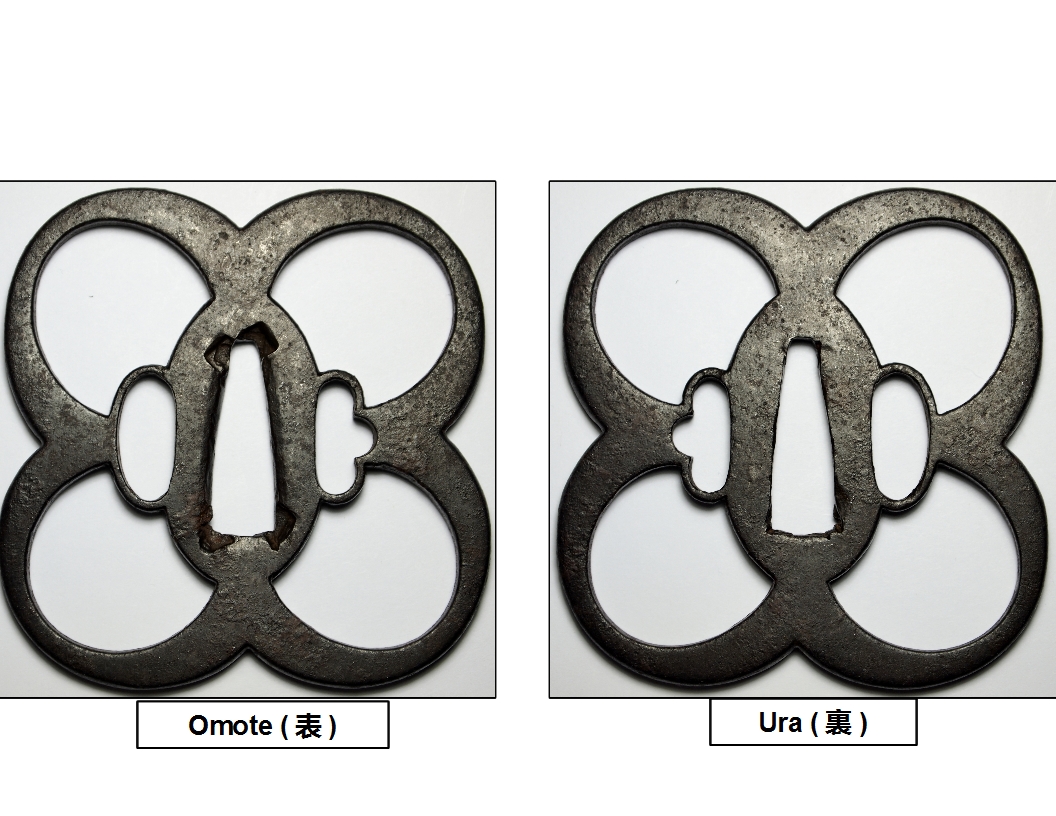
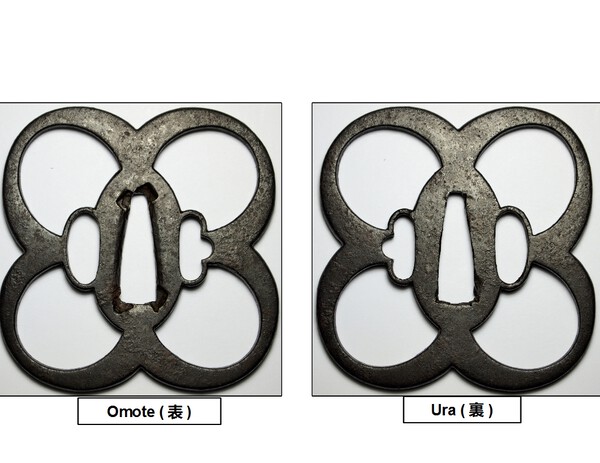
Hi Everyone, I wanted to start a topic thread about the kantei of a tsuba I have in my collection for a while. I remember purchasing it off of the NMB two years ago at a fair price. I will post some photos of the tsuba and would like to requested feedback to facilitate discussion about the tsuba. If you offer an attribution in terms of age and group/school/location of production please follow up with the reasoning for the attribution. I will then in about a week post my own kentei conclusions about the tsuba. This is a informal kantei as I haven't submitted this tsuba for shinsa and don't have an official judgement. Please let me know if you have any questions or require additional photos. Basic Information About Tsuba: Material: Iron (tetsu 鉄) Size: 7.7✕ 7.5 cm, 4.5 mm at rim (diagonally length is 9.0 cm because of the odd shape) Signature: mumei (無銘) Shape: Kawari mokko-gata (変り木瓜形) Openings: Ryohitsu ana (両櫃孔) Surface Finish: Migaki Ji (磨地) My Observations: The shape of the kage-sukashi (影絵透) design is of a single stylized butterfly (cho 蝶) or a family crest (kamon 家紋). The surface is smooth (migaki ji 磨地) with a dark brownish black in color patina (sabi 寂) with some rust pitting in places. The rim (mimi 耳) show a few tekkotsu (鉄骨) but none of the surface of the tsuba. The thickness at the rim is uniform along the other parts of the tsuba. The shape of the Kogai-hitsu ana (笄櫃穴) has a late Muromachi period (室町時代) shape. Yours truly, David Stiles

-
 Hi Thierry, Thank you so much for posting a notice about these two exhibitions. I am a fan of Hiroshige wonderful work but was not aware of the connection with Van Gogh. Yours truly, David Stiles
 -
New Tampa show
Soshin replied to Stephen's topic in Sword Shows, Events, Community News and Legislation Issues
Hi Everyone, I will be bring some tsuba for show and tell. :D One will be the Momoyama Period Namban that Curran has already requested me to bring it is discussed in the following NMB topic tread: http://www.militaria.co.za/nmb/viewtopic.php?f=2&t=13927. I will also bring this other tsuba that was discussed on the NMB: http://www.militaria.co.za/nmb/viewtopic.php?f=2&t=13176. These two tsuba will be for discussion only. Please send me a PM if you would like to see anything else I have talked about on NMB or is listed on my website. I may bring a few additional tsuba that I might be willing to trade for something nice I find at the show. I am looking forward to the Tampa show next year. Yours truly, David Stiles -
Hi Everyone, Did my homework this weekend and determined that Higo and Awa Hirata schools are just different branches of the same Hirata family that originated in Kyoto and worked in a Kyo-Shoami style. The branch of the family that worked first in Tango and later Higo provinces was the Tadaoki line and the branch of the family that worked in Awa was the Fujitaka line. Both schools work exclusively for their respective Daimyo families. The sources of the information is Tsuba An Aesthetic Study by K. Torigoye and R. E. Haynes and Tsuba by G. D. Murtha. Yours truly, David Stiles
-
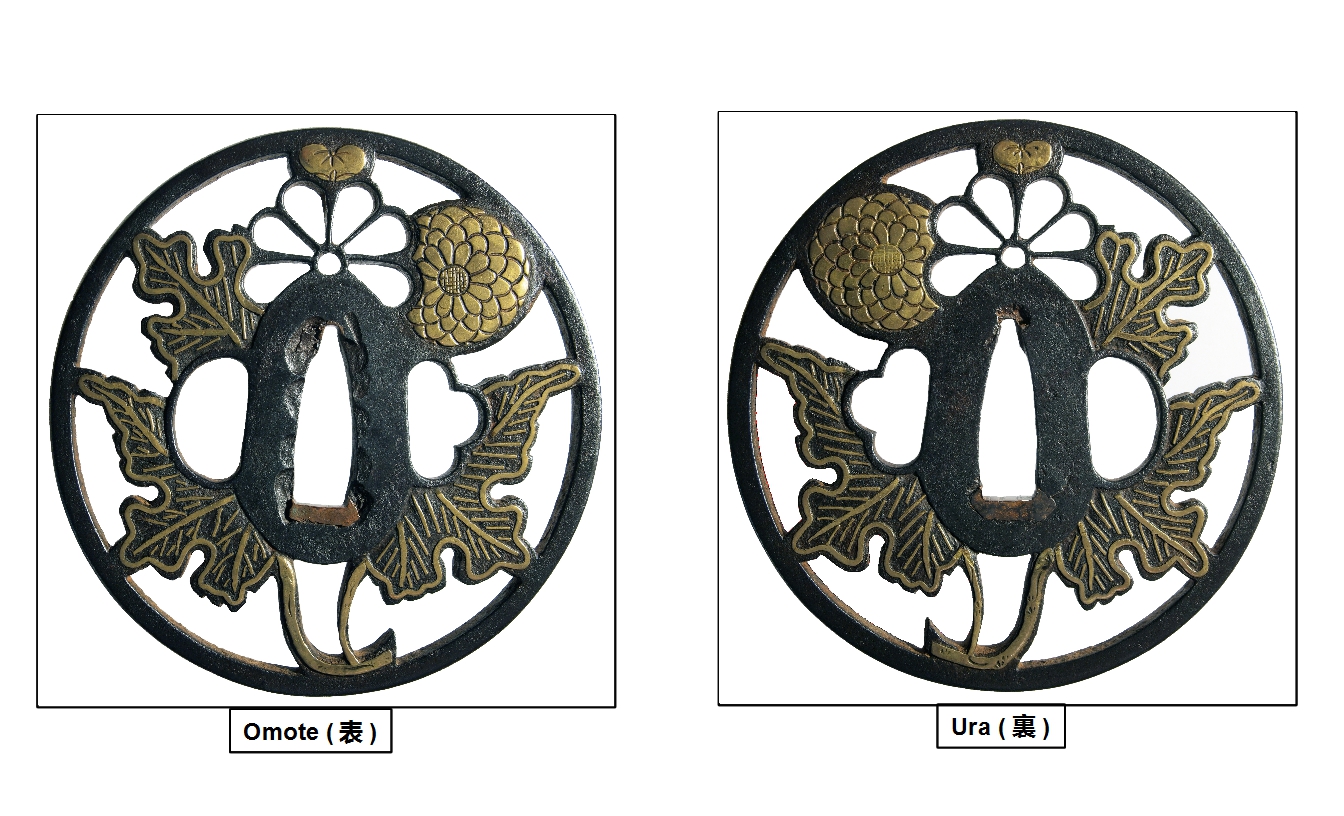
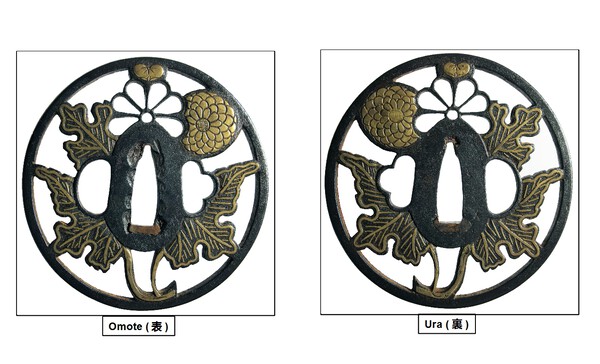
Hi Everyone, I just want to updated this topic. Here are some new photos I did of this tsuba using better lighting and focus. They are of higher resolution so you will need to click the link below. This helps with seeing some more of the details of the brass inlays. The photos came out really nice. :D Please enjoy feel free to comment. Questions about the the Hirata family in Awa Province. Did they have any connection with the famous Hirata family located in Higo during the Edo Period? I just noticed that the reading (ひらた) and the Kanji characters themselves are the same (平田). I know that the Hirata family was directly employed by the Daimyo of Awa Province much like the Hirata family in Higo were directly employed by Daimyo of Higo Province. Yours truly, David Stiles
-
Hi Ford, Thanks for sharing such a wonderful kozuka. Truly a fine work of art. :D Yours truly, David Stiles
-
Hi Matt L., You can submit the whole tanto koshirae to NBTHK shinsa. Here is a link with more information: http://www.touken.or.jp/english/shinsa_fees.html. Here is a quick list of things I can think of off the top of my head. Please anyone feel free to add to it if I have missed any. 1. All of the major pieces (menuki, fuchi-gashira, tsuba, kogatana, and kozuka) of the koshirea need to be antique and made before 1868. 2. Be in good condition without flaws, fire or major rust damage. 3. All of the signatures of the major pieces (outlined above) must be authentic for it to pass. 4. If one pieces fails the three above points the whole koshirae fails. Alternative approach would be just to submit a signal major piece of the koshirae (ex. tsuba). All of the first three above points still apply. I hope you find the information helpful. Yours truly, David Stiles
-
Hi Mike Y., Where can Fukushi sensei book be purchased if you live in the USA? Do you have it for sale at your website or can you buy the book at the NBTHK Japanese Sword Museum in Tokyo? Please don't say that it can only be purchased on Yahoo Auctions Japan. :lol: I love that Umetada Myoju tsuba on the cover. I currently have a nice photo of that tsuba from one of my issues of NBTHK monthly magazine. Yours truly, David Stiles
-
Hi John L. and Henry W., Relax my hypothesis about the Christian cross design isn't even testable and it isn't a big deal. I often see copied western designs done in European influenced Namban tsuba. Many of these copied designs are not identical to European original and have a fair amount of stylistic or nonsensical changes to them. One of my favorite is the nonsensical Indo-Arabic numbers and Roman letters across the bottom of some Namban tsuba. To me they almost look like very imaginative serial numbers. :lol: The Japanese artist likely making my tsuba might have seen a Christian Cross on the fabric or clothes of visiting Portuguese or Spanish or among other imported European art (Namban-e) and just incorporated the design into the Namban tsuba he was making. Likely thinking that having such a cool European style symbol would be nice for a Namban tsuba. None of these ideas are testable but in my opinion but still fun to think about. Yours truly, David Stiles
-
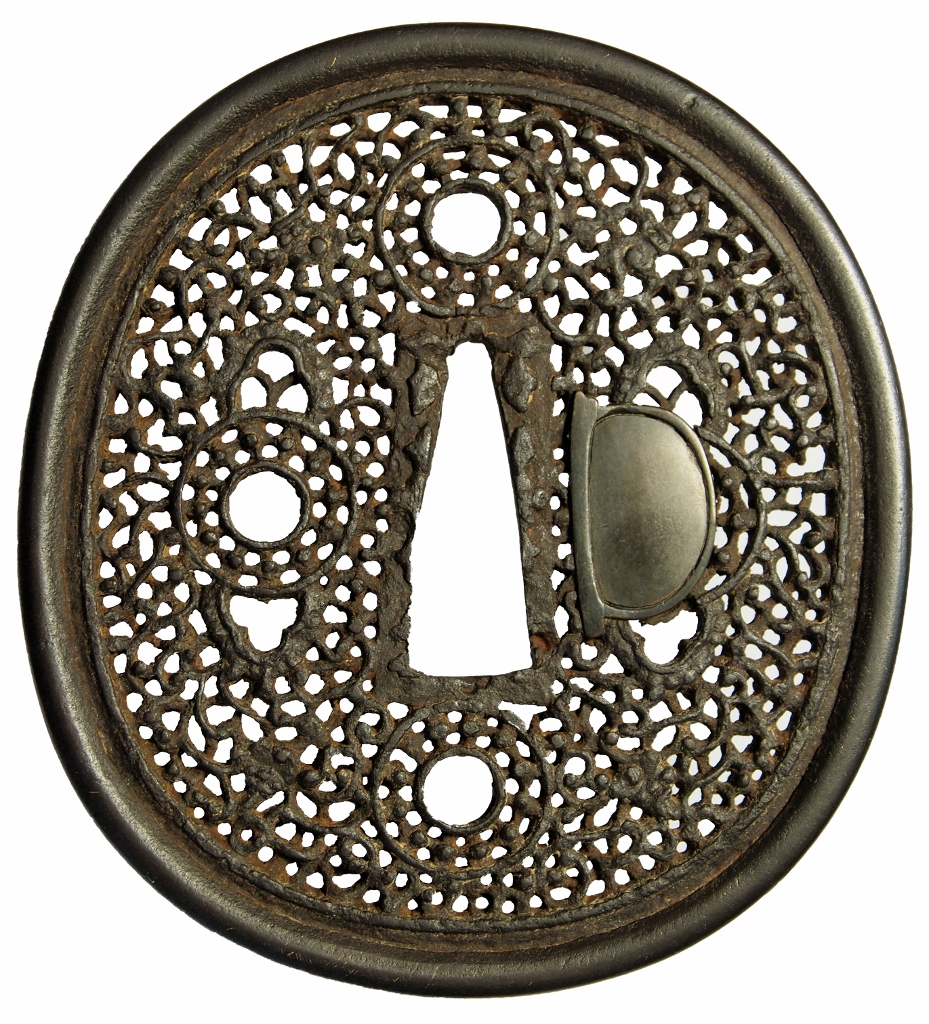
Hi Curren, No problem I can bring the tsuba to the Florida Show next February for you and anyone else to have a look at. I enjoy playing show and tell. I would consider this tsuba a keeper for my collection. I don't see my tastes changing all that much in terms of tosogu. Next year I will likely submit it to NBTHK shinsa as It is one of the best tsuba in my collection and is likely my best chance for my first Tokubetsu Hozon papered tsuba. Did some searching on the Internet last night and found the following early examples of Namban work from a Japanese dealer's website. 1. http://www.finesword.co.jp/sale/kodougu/htm/1051_2000/1351_1400/1390/k1390.htm Comments: This tsuba is without shinsa paper. The dealer thinks this tsuba dates to the early Edo Period. The circular holes are filled with mother-of-pearl (Jp. Raden). Notice the large size of this tsuba over 8.0 cm. I think this is characteristic of many early Namban tsuba. 2. http://www.finesword.co.jp/sale/kodougu/htm/1051_2000/1451_1500/1475/k1475.htm Comments: This tsuba is also without shinsa paper. The dealer thinks this tsuba dates to Momoyama Period. Looking at it it looks much younger then my tsuba in terms of the iron and the condition of the inlays. The ryo hitsu-ana doesn't look like they were added all that well. The large size of this tsuba also would indicate a earlier production. Hi Sage, The dote-mimi style can be created by either a turning back of the iron of the rim or the addition of another piece of iron of identical type. The second type of dote-mimi can also be considered a iron fukurin. For my tsuba it looks like the dote-mimi was made by another piece of iron of identical type making it also a iron fukurin. The iron fukurin in my case is original. Hi Everyone, After considering all of the elements of the design on the tsuba I think it was likely a early Christian Cross the design was likely accented with gems as John L. has suggested. Later in the Edo Period the gems were removed and the kozuka hitsu-ana was added and cross design was disrupted. This was likely during the rule of the third Tokugawa Shogun when Christianity was seriously suppressed. Below is a link to a Google images search for "early Christian Cross". Discussion and feedback about my hypothesis is always welcome. I am on vacation this week so I will have time discuss. :D http://www.google.com/search?q=early+Christian+Cross&hl=en&prmd=imvns&tbm=isch&tbo=u&source=univ&sa=X&ei=PQNrUMDwDMaG0QHo94HQBg&ved=0CDUQsAQ&biw=1366&bih=681 Yours truly, David Stiles
-
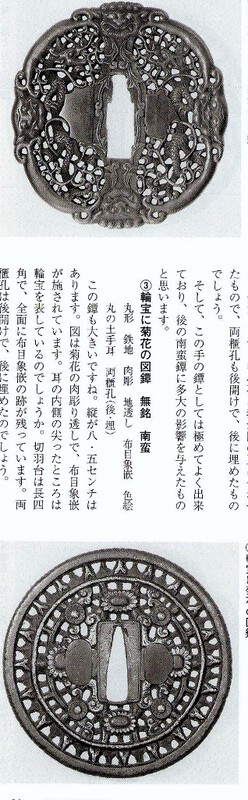
Hi John L., Here is a scan of two tsuba considered to be early Namban in the Token Bijutsu article in issue #646 which I have quoted Fukushi sensei. Who is only human and can't be a expert in all schools of tosogu. How early isn't completely sure as the descriptions of both tsuba do not directly discuss their age. The one in the upper part of the page I really like. In the description it discusses abraded zogan which is similar to what I see on my tsuba. Both examples I think have a feel of not being as old as my tsuba but I can't confirm this from looking at photographs alone. On a related note I was sent a private messaged today by a long time and distinguished collector of tosogu congratulating me on what he considers to be a fine acquisition. He also goes on to agree with John L. attribution of my tsuba as a fine rare Momoyama Period Namban tsuba. Yours truly, David Stiles
-
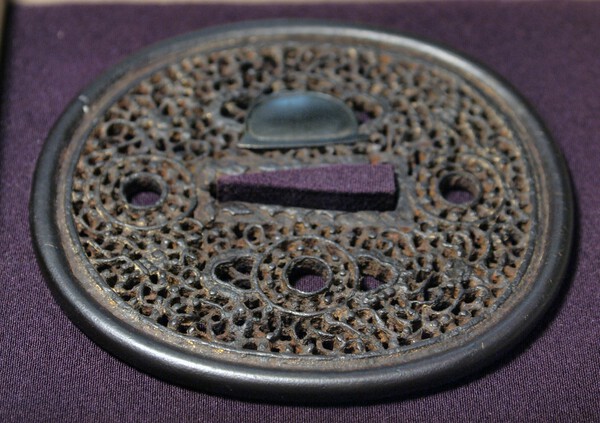
Hi Curren, Here is another photo I did upon request with my camera in hand without setting up the tripod, head, and base and setting the tsuba box on the dinner table. The thickness at the seppa-dai is 3.0 mm and the area of the plate consisting of the scroll work (i.e. arabesque) design between the seppa-dai and rim is looks thinner I would say from looking at it approximately 2.5 mm. I hope you find this additonal photo helpful. Yours truly, David Stiles
-
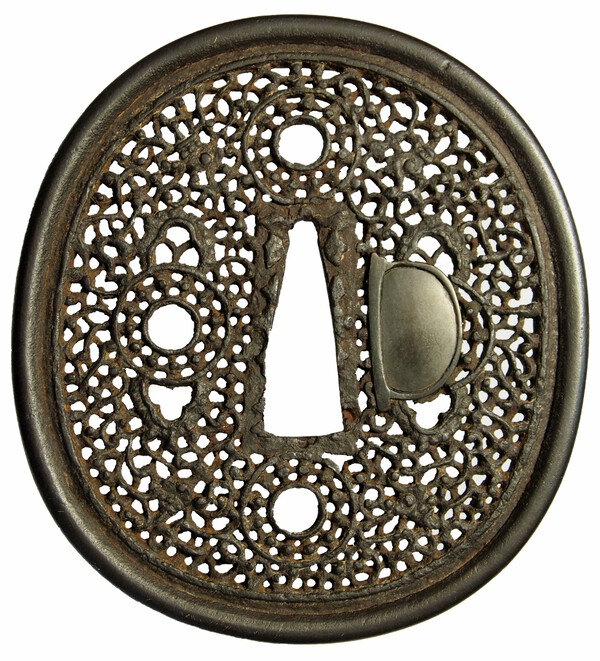
Hi Everyone, Here is the photo I did of the omote side of my new Azuchi-Momoyama Period Namban tsuba this afternoon. The measurements of the tsuba are 8.0 cm by 7.3 cm. The dote-mimi style rim has a thick at 4.0 mm. I also did more reading and have uncovered some additional informaiton about early Namban workmanship from the writings of Fukushi sensei in Token-bijutsu No. 646. Comments and questions for discussion are welcome. Thanks for reading. :D Yours truly, David Stiles
-
Hi Everyone, I also agree with Brian R.. I have a copy of Mr. Haynes book but I don't have or seen any examples with a double nakago-ana. Back to my photo work. Yours truly, David Stiles
-
Hi Everyone, The first generation Jakushi was a painter who trained in traditional Chinese style painting and later turned to making tsuba often with same Chinese style landscapes. He was located in Hizen Province during the early part of the Edo Period. He used a acid and heat technique along with some inlays to form the designs. yours truly, David Stiles
-
Hi John L., I have not seen any other tsuba outside of the book you are referring to. Sorry I can't be of any help. Yours truly, David Stiles
-
Hi John L., I noticed that Grey Doffin referred to the gold inlay as nunome on this description of the tsuba on his website. After looking at the tsuba with a hand magnifying glass. The gold inlay type is clearly nunome-zogan the crosshatching is light but apparent specificity along the edge of the dote-mimi style rim. The small amount of gold that remains looks like bright flakes of gold along a rich dark background of the iron's patina. I hope to be able to post some of my own photographs of the tsuba tomorrow. Take care everyone and have a wonderful weekend. Yours truly, David Stiles
-
Hi John L., The worn off gold inlays is I think of the nunome-zogan type but I don't remember seeing the checkerboard cross hatching of the iron plate near the gold inlays. The inlays were present on the rim and along some parts of the scroll work. I am not familiar with the other inlay type that you listed. What does it look like? After work I take another look at the tsuba. Yours truly, David Stiles
-
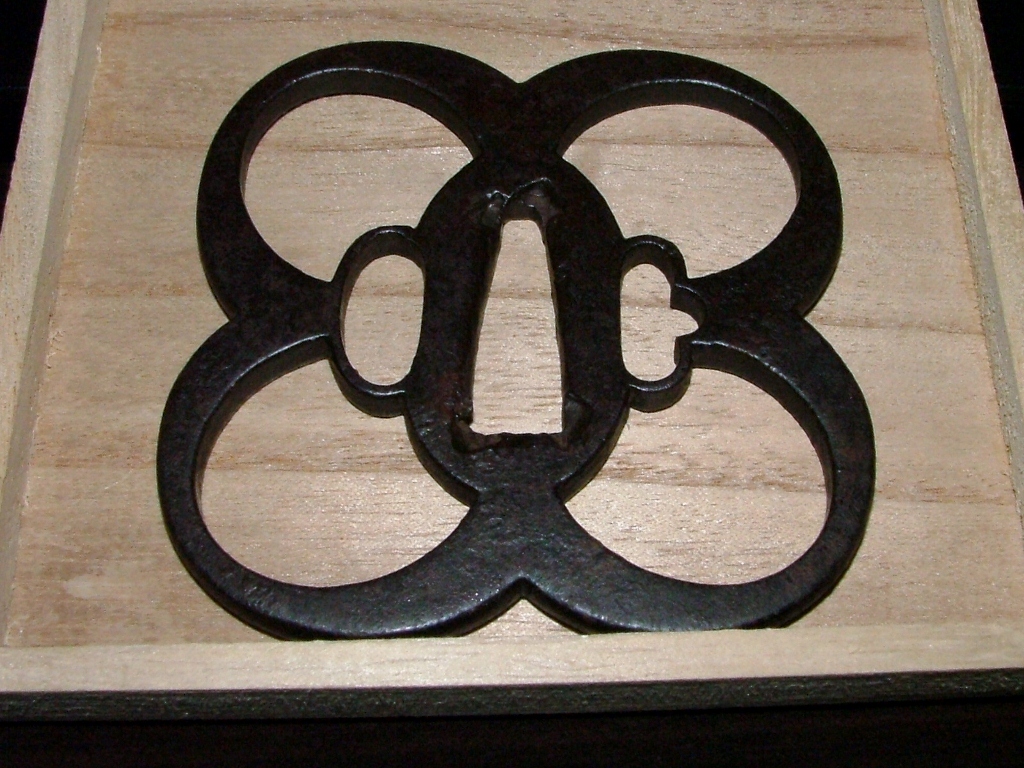
Hi Henry, I now have the tsuba in hand as it came in the mail this afternoon. Looking more at the tsuba in hand its designs are remarkable and the patina and quality of the iron is just wonderful. The very detail scroll work remind me of Arabesque seen in classical art of southern Europe of Portuguese or Spanish influence. Not much of a southern Chinese influence in the design of this tsuba. This European influence would indicate the early part of the Azuchi-Momoyama Period as the age of the tsuba having the Portuguese visiting Japan first in 1543 and the Spanish in 1584. The remains of gold inlays along the rim also gives the tsuba an even more antique appearance. Reading Skip's note about the tsuba it says "Namban, Christian Cross, Momoyama Period". Does anyone else see a Christian Cross? The cross might be in the placement of the four rings around the nakago-ana. Christian M. gave me a copy of a old article about Namban culture during the Momoyama Period. I will find it and read it. Here is some information I came across from NBTHK monthly magazine by Fukushi sensei in issue #646 about Namban tsuba. I will try to take some photos of the tsuba over the weekend when I have some free time. Take care and thanks for reading. :D Yours truly, David Stiles
-
Hi John L., You are correct I am the new owner of that tsuba. It is currently in route which is why I was not discussing it directly. My original source of information was Tsuba An Aesthetic Study which discuses the original Namban having a date circa 1500 and being made in southeastern China and imported to Japan. I was thinking this trade in original Kanton Namban tsuba were part of the increased trade between the Ashikage Shogun and mainland China. The trade facilitated by the Portuguese would have taken place during the early part of Momoyama Period. The Dutch and their East Indies Company and the English would have been late Momoyama to the early part of the Edo Period with their trade. Thanks for the additional information and references. In regards to kozuka-hitsu ana I agree it is not original to the tsuba likely added in the early part of the Edo Period. With that said the plugging of it looks to be very nicely done likely in the late Edo Period when tsuba were again being made without kogai or kozuka hitsu ana. Yours truly, David Stiles
-
Hi John L., You request reminded me of the following nice tsuba sold on Grey's website over the weekend: http://www.japaneseswordbooksandtsuba.com/store/holbrook-tsuba/h304-sumifuranaohiro. As Pete also linked to his website Grey maybe a good source of information. I am not that familiar with the collection. Sorry about not being much help. Yours truly, David Stiles
-
Hi Everyone, I am looking for some refernces with examples of very early Namban tsuba of the Muromachi Period. These would be tsuba made in China and exported to Japan. This is for a comparative study. Let me know if you have any questions. Thank you very much. Yours truly, David Stiles