Bazza
-
Posts
2,861 -
Joined
-
Last visited
-
Days Won
28
Content Type
Profiles
Forums
Events
Store
Downloads
Gallery
Everything posted by Bazza
-
These fittings were briefly discussed in this thread: viewtopic.php?f=2&t=13066 which in turn references another thread. Regards, BaZZa.
-
Evaluating the number of polishings a blade has had?
Bazza replied to CurtisR's topic in General Nihonto Related Discussion
One more thing to note is if the mihaba (mune to ha - back to cutting edge distance) narrows from a scarcely existent hamachi. Of course, this needs to be taken in conjunction with other signs. I once had a hirazukuri tanto signed Bizen Morimitsu with an Oei date. It was a Shinshinto utsushi (copy) that had been tricked up in every way. It narrowed from the nakago into the blade indicating many polishes; the mihaba narrowed from a small hamachi; the nakago itself had rust pits in an attempt to indicate great age; and finally it had a choji midare hamon that looked "right". It didn't help that the blade had been linished with all traces of hamon and hada removed (a local, post-war cleanup attempt). It took finger stones to reveal the hamon and some features of the hada. It came in nice koshirae with black lacquered scabbard with a gold lacquer signature, a nicely signed Echizen Ju, Kinai saku iron tsuba, Higo fuchigashira, and nice menuki all bound with a tsukamaki. With this koshirae the blade was a gimei clearly intended to deceive. So, in short, some indications of how many polishes a blade has had are not always to be relied upon... Bestests, BaZZa. EDIT - to correct kasane to mihaba. Apologies for misinformation. -
I'm reminded again of singed nakago.... BaZZa.
-
Derek, I've been collecting nearly 50 years and things certainly are different these days from when I started, even up to 10 or so years ago. Knowing all that has been revealed to you by way of excellent advice (polish etc etc) was apparent to me very early on. However, knowing it and finding it are two completely different things. Along the way I had numerous polishes done and bought swords already in polish. Nothing seemed "quite right" and I held back committing my best swords to polish and "the works" in Japan. It was 25 years before I sent the first one and I was completely, I mean COMPLETELY, happy with the result. So Derek, your sword has already waited decades in its centuries-old life and it doesn't matter how long it takes for you to commit it, but my candid advice is to wait as long as it takes. Meanwhile, go to sword shows wherever you can, cultivate good collectors and see swords whenever you can, and trawl the internet in your spare time to look at good examples - and read as much as you can. If you ever look like coming to Australia drop me a PM. I'm sure we can show you things to enjoy... Best wishes in your endeavors, Barry Thomas (aka BaZZa.)
-
KANEMOTO? BaZZa.
-
People do strange things, though. A friend of mine who is "into" cannon once told me he removed 16 balls from the barrel of an ancient cannon on public display somewhere in the Middle East... BaZZa.
-
ALL - for your interest. Items include Nihonto, a katana kake, kabuto, an armour, abumi, and a couple of non-Japanese matchlocks. Regards, BaZZa. Auction Catalog from Thomas Del Mar Ltd (in association with Sotheby's): Antique Arms, Armour & Militaria London, United Kingdom - June 27, 2012, 12:00 PM GMT http://www.artfact.com/catalog/searchLo ... W7EZPSBEFZ ------------------------------------------------------------------ A RARE TIBETAN MATCHLOCK MUSKET (ME MDA'), 18TH/19TH CENTURY with tapering three-stage barrel, decorated over the breech and muzzle with fine linear patterns in copper, brass and silver, the former with standing back-sight and pan, wooden full stock, the fore-end applied with shaped steel plaques over leather and pierced for a forked rest, the butt encased in leather, the forward portion applied with embossed brass and copper plaques decorated with traditional patterns, the right of the butt with a long leather cord case studded with silver nails, the left with a further long steel plaque set with red stones in raised settings, two steel sling swivels and an early leather sling 96.5cm; 38in barrel For a discussion of this type and another example previously in the collection of George Cameron Stone see D. Larocca 2006, pp. 198-209. Estimated Price: £800 - £1,200 -------------------------------------------------------------------- A RARE 60 BORE CHINESE MATCHLOCK GUN, 19TH CENTURY with very long tapering two-stage barrel retained by two slender brass bands, octagonal breech incorporating a shaped pan with no provision for a cover, rudimentary steel serpentine with bifurcated tip for match and angular trigger, highly figured hardwood half-stock, the butt fitted with a short tapering extension, inset with a shaped bone plaque about the serpentine, the trigger and over the fore-end (chipped), and with no provision for a ramrod 160.3cm; 63 1/8in barrel An identical gun is illustrated in G. C. Stone 1934, fig. 330, no. 5. Estimated Price: £600 - £1,000
-
This Week's Edo Period Corner
Bazza replied to Bugyotsuji's topic in General Nihonto Related Discussion
"Castle gun"??? - do tell more, please. What constitutes a Castle gun??? Bestests, BaZZa. -
I believe his name is Fred Geyer http://www.swordsandtsuba.com/home.html BaZZa.
-
Maurice, Very nice. I believe this is the first time I have seen a polisher's signature imbedded within nagashi. Otherwise I think all of those I've seen (very few, actually) have been the signature on a plain surface. Bestests, BaZZa.
-
I believe this is not a signature, but a representation of wood grain or something else. I once saw a beautiful imitation of mokume-style wood grain on a Naotane wakizashi. Regards, BaZZa.
-
Removable rims are briefly discussed in this NMB thread: http://www.militaria.co.za/nmb/viewtopi ... 831#p14831 Regards, BaZZa.
-
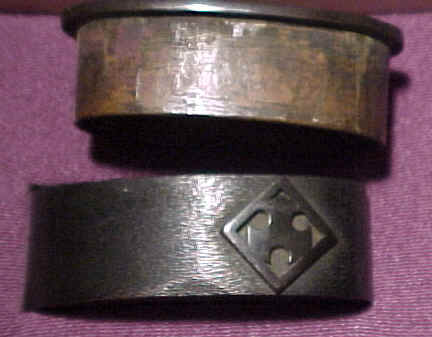
I've seen a number of fuchi modified in this way. The skill required to make and fit a close-fitting sleeve to carry a "rim" around the fuchi is considerable. I conclude from those I've seen that if the only purpose of this exercise is to put a decorative rim on, then the reason for it has to come down to "a style". It also suggests that the rim is a much later addition??? I've attached a single image got from the web some 6 years ago. I have other images I'll post if I can find them. Regards, BaZZa.

-
The trouble with hammering on silver foil, even gently with wood, is that the silver foil will most likely be damaged - a great pity if it has nice work on it. A method I have used very successfully without damage is to slowly pour a kettle of boiling water over the habaki (tang down) whilst rotating the blade. When the water is all gone take a piece of thick cloth (have it ready to hand), wrap it around the habaki, grip it tightly on the habaki, and gently (more or less...) bang the tang down on a largish block of soft wood (eg., pine in a 4 inch x 4 inch x 12 inch length). The habaki usually comes off fairly easily. If this doesn't move the habaki then one is reduced to hammering directly on it. Again, here one can still use the hot water, but use a piece of soft wood as a drift (i.e., intermediary block between the hammer and habaki). Regards, BaZZa. (aka Barry Thomas)
-
Tom, yes??? I thought you were kidding, so I put [ rabbit izumo ] into google and got a surprise. Here is an interesting blog: http://fulbrightika.blogspot.com.au/201 ... tures.html with lots of good info about Izumo, but here is the salient paragraph: ---------------------------------------------- Ookuninushi-no-mikoto (who, by the way, has about a bazillion names) had eighty brothers,* and all his brothers decided to go to woo an extremely beautiful women. They made Ookuninushi-no-mikoto carry their bags, because they were great brothers. Anyway, as they were walking along, they came across a rabbit with no fur. They told the rabbit that it should go bathe in salt water and then lie on top of a mountain and let the wind blow on it. Needless to say, the rabbit found this experience incredibly painful, and by the time Ookuninushi-no-mikoto showed up, it was crying in pain. It turned out that the reason the rabbit had no fur was because it had deceived a crocodile** into forming a bridge from another island to the mainland, by telling him that they should have a contest to see who had more relatives (and the rabbit would count the crocodile's relatives by hopping across the tops of their heads to the mainland). The crocodile realized the deception right before the rabbit made it to land and skinned the rabbit. Anyway, Ookuninushi-no-mikoto told the rabbit to wash in the river and then roll in a special kind of pollen. When the rabbit did this, its skin and fur was healed. The rabbit thanked Ookuninushi-no-mikoto and told him that he would be the one to gain the incredibly beautiful woman all his brothers were going to woo. When Ookuninushi-no-mikoto showed up with his brother's bags, the incredibly beautiful woman (who may or may not have been a princess) said, "Actually I am going to marry Ookuninushi-no-mikoto," which, needless to say, ticked off his brothers and they killed him twice, but that's another story entirely. ---------------------------------------------- So I look to have been right when I called the animal on my long ago tsuba "a well-endowed rabbit"!!! Bestests, BaZZa.
-
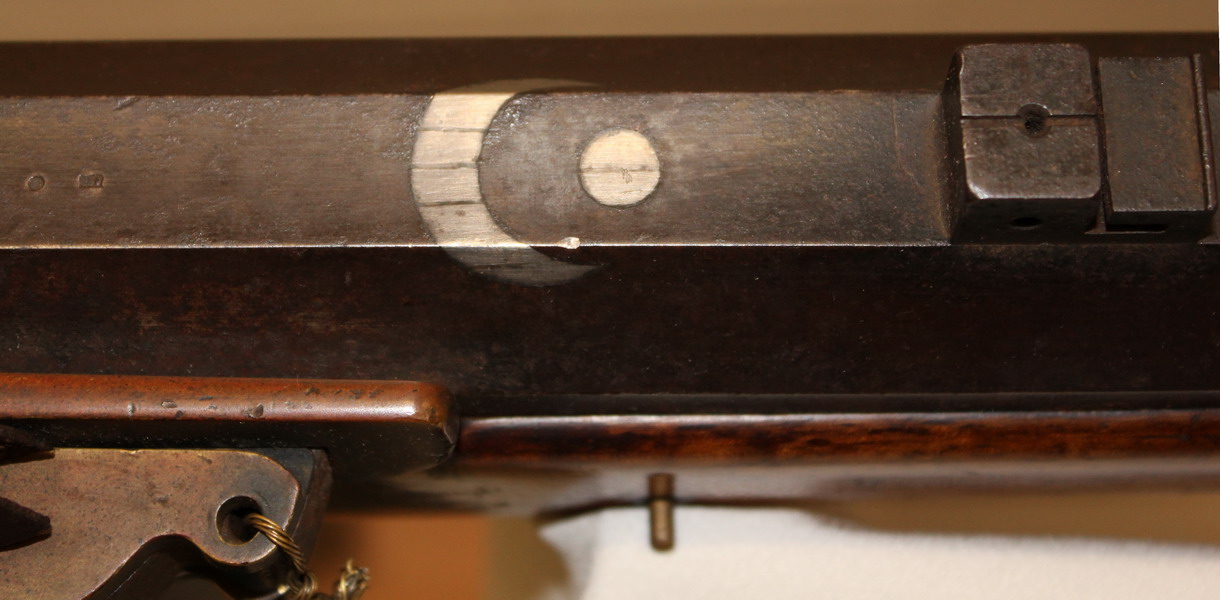
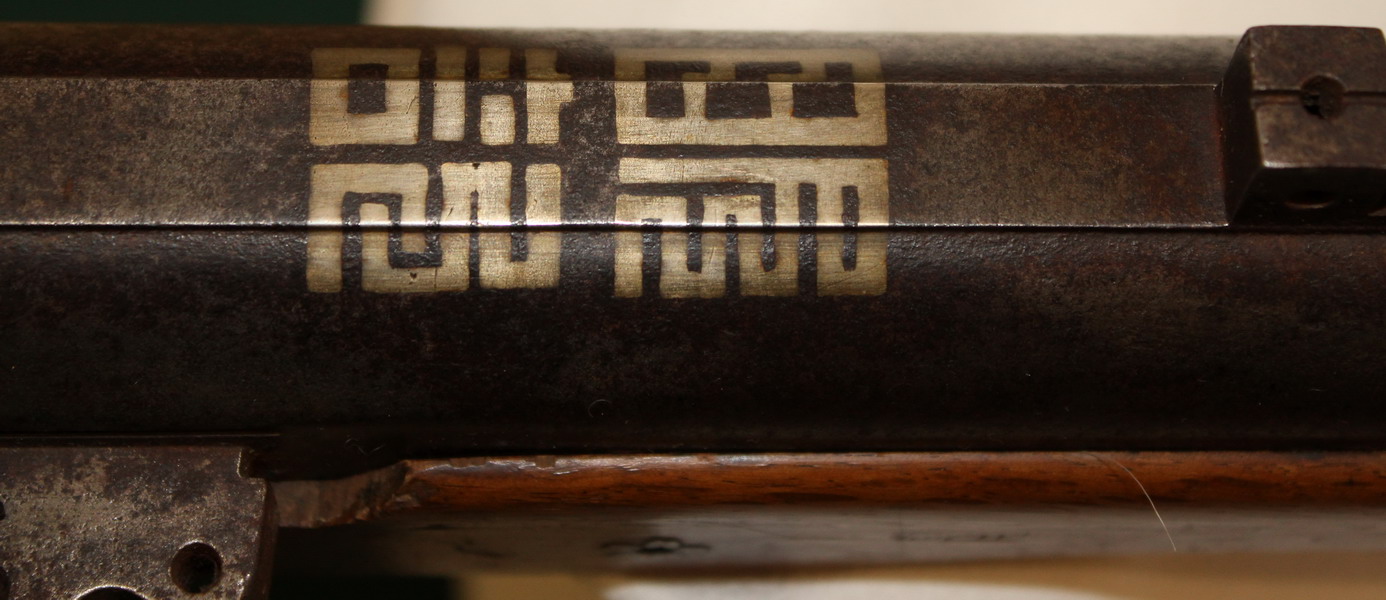
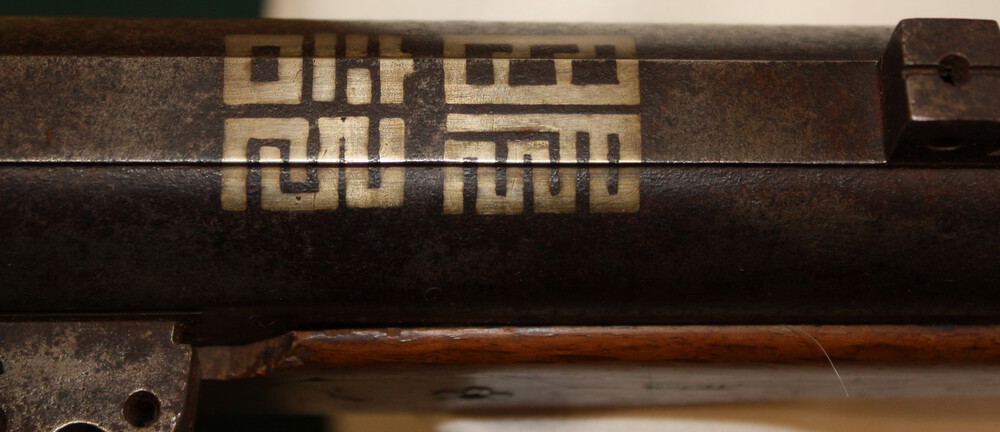
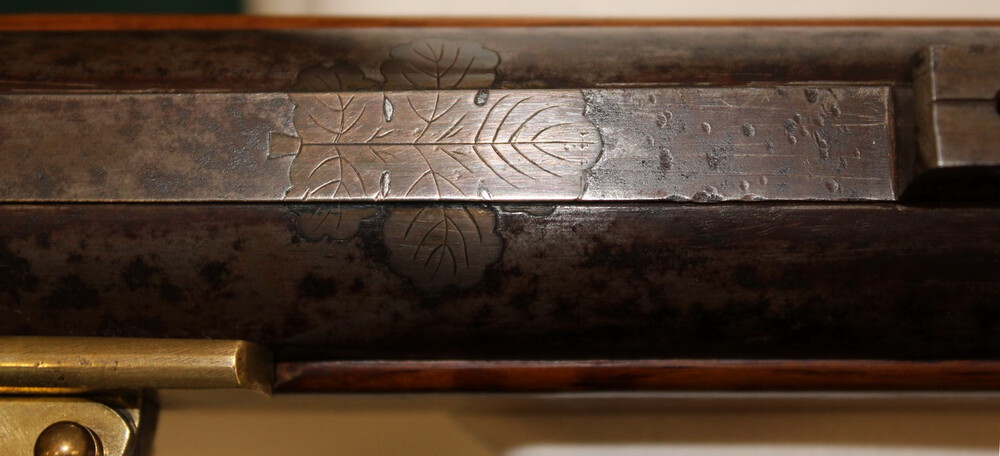
Morita san, Thank you for that tasty tidbit about the middle gun mon and possible maker. I'm about to retire for the night and will endevour to dismantle the guns tomorrow and photograph the inside mei. Please bear with me as this may take a few days due to unexpected commitments (you wouldn't believe...). Oyasumi nasai... BaZZa.
-
On rice glue - from Bazza's archive, courtesy David McDonald's experience freely passed on in July 2000 via Chris Bowen's still-running discussion list... Bestests, BaZZa. ------------------------------------------------------------------------- xxx wrote: > Hello all! > I need some advice on restoring a military mounting (nothing special AND of no artistic value!!) > Do you have any ideas how to glue some lengthwise cracks in a gunto tsuka WITHOUT removing the ito and same? Binding is very tight and original wrap, so I like to keep the antique look. > But the wood core has some lengthwise cracks and the splittet handle *moves* under binding and same if squeesed like a towel > I do not want to do the re-glueing for swinging the sword (that might be to dangerous) but to keep the mounting from falling apart. > Regards > Andreas From: David W. McDonald To: Subject: Re: How to glue a tsuka Date: Monday, July 10, 2000 1:30 PM Dear Andreas Here are two thoughts. 1. If the tsuka is very loose then you might be able to: a. If shingunto tsuka and the ito does not go through the kashira try removing the wood core, after removing the screwed in "holes" that hold the sarute, leaving ito on the same. b. If this works then use a wood glue and carefully glue up all cracks. Do not glue the two halves together. Wrap with a small cord and and let dry over night. Do not tie to tight. c. Now make some rice glue. Use cooked rice and take about 5 grams (0.5 teaspoon) and mush between two pieces of wood. I use a wooden spoon and a piece of wood that has been dished out to match the spoon. Add a little water until you have a liquid paste about like the viscosity and thickness about like warm honey. d. Use this glue to add small amount on one of the wood core pieces (one of the halves). Use your finger to wipe off glue on the inside edge of the wood core (next to the area were the wood was inletted for the nakago). e. Use the small cord to wrap the the two halves of wood core together. You might want to slide onto the nakago to make sure that it will fit. Remove from nakago and let dry over night. f. If all has gone well side wood core into same to see if it still fits. If it works then remove and slightly wet the wood core and spread a thin coat of rice glue onto wood core and then slight back into same. Add the screwed in "hole" for the sarute. g. Place onto nakago. It maybe tight and you might need to lightly tap into place with a plastic hammer. 2. If the wood core does not slide out of same or same is in two halves not a full wrap then: a. Use a thin screw driver to force open one of the cracks. Use a long thin metal spatula add wood glue. Do this for all cracks. b. Slide tsuka onto nakago until it is snug but not tight. Let set for about 5 min and then carefully remove tsuka from nakago. Let dry over night. You might want to only to one crack per day. Safer. c. clean glue off nakago. d. use thin screw driver to open up one side of the two halves of the wood core. Use rice glue (see above) and add glue as far back as you can. e. Repeat with other side of wood core. f. Slide tsuka onto nakago until it is snug but not tight. Let set for about 5 min. Then remove tsuka from sword and let dry over night. g. clean nakago Cross your fingers and see if tsuka still fits your blade. Not sure if the above is clear but if not please email me with questions. This will works some times and some times it does not. Good luck david -- David McDonald Collector of Japanese Swords and Old Iron PO Box 265 WEB page - http://www.mcn.net/~jswords email - xxx@mcn.net I do tsukamaki (wrapping of sword hilts)
-
Some 30 or more years ago I had a small copper tsuba with some kind of animal on it. The animal was identical to the one on these tsuba. I had no idea what it was, or indeed how old the tsuba was. I sent a photograph of it to Bob Haynes with my description of the animal as "an over-endowed rabbit"!! Bob replied that it was a fox. And so all these years later I see the animal again. Bob's letter and photographs of the tsuba (I sold or traded it off long ago) are deeply buried in my archive and not presently available, but I'll surely remember this thread whenever I find them again. I seem to recall Bob saying he thought my tsuba was ca1400. Again, I note that my tsuba was round with a rim and so quite different from those presented here, but I have no doubt the fox was EXACTLY the same. Regards, BaZZa.
-
And here are the three mon on the above guns:

-
Ahh, thanks for that Piers. Now. I've got some photos and I'm going to puddle around trying to attach them. These are just the display shots with self-explanatory titles. I'll try and do the bbl and stock etc inscriptions later. Regards, BaZZa.
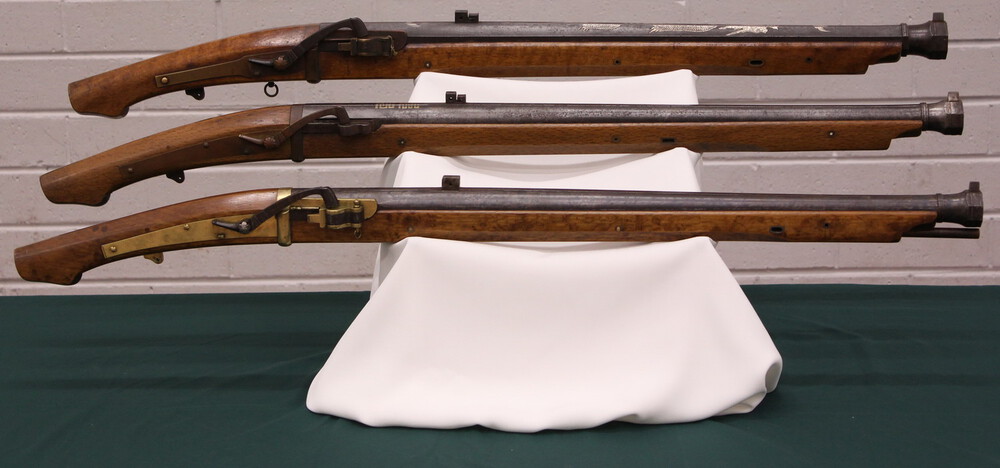
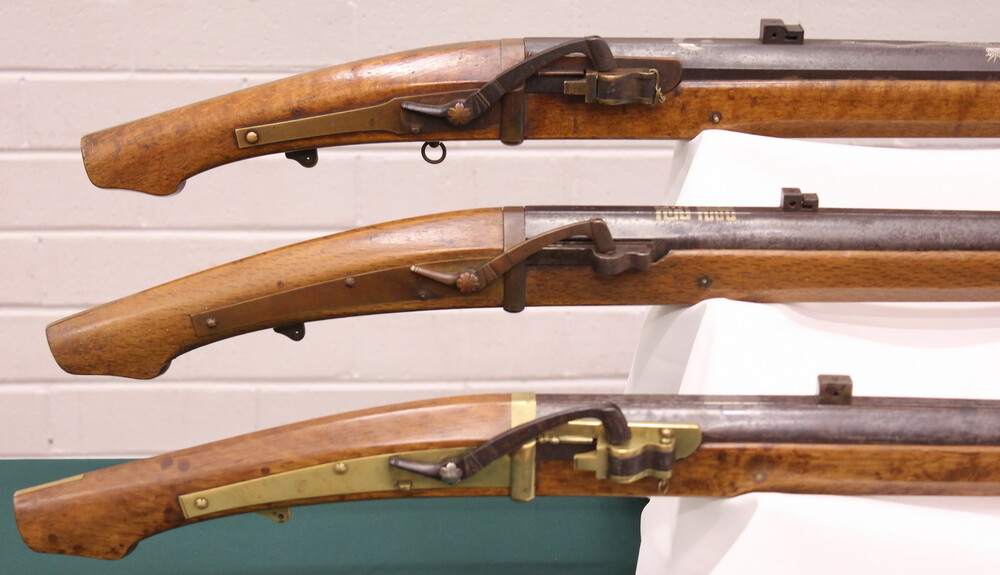
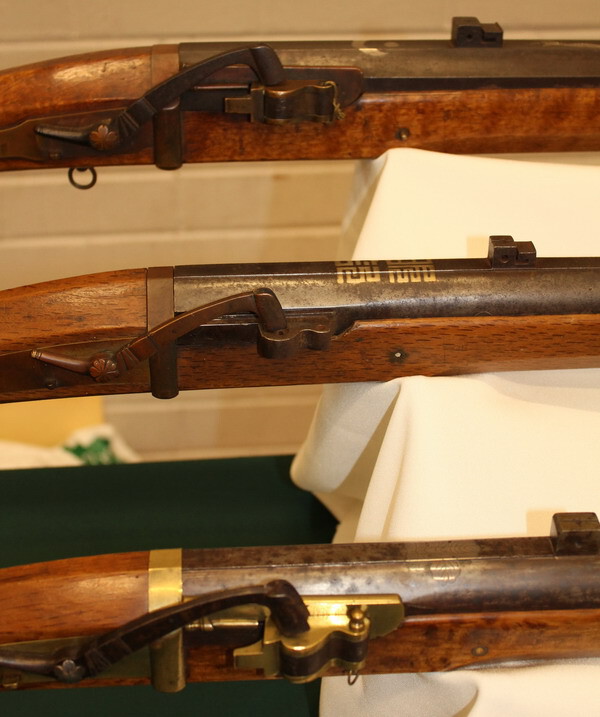


-
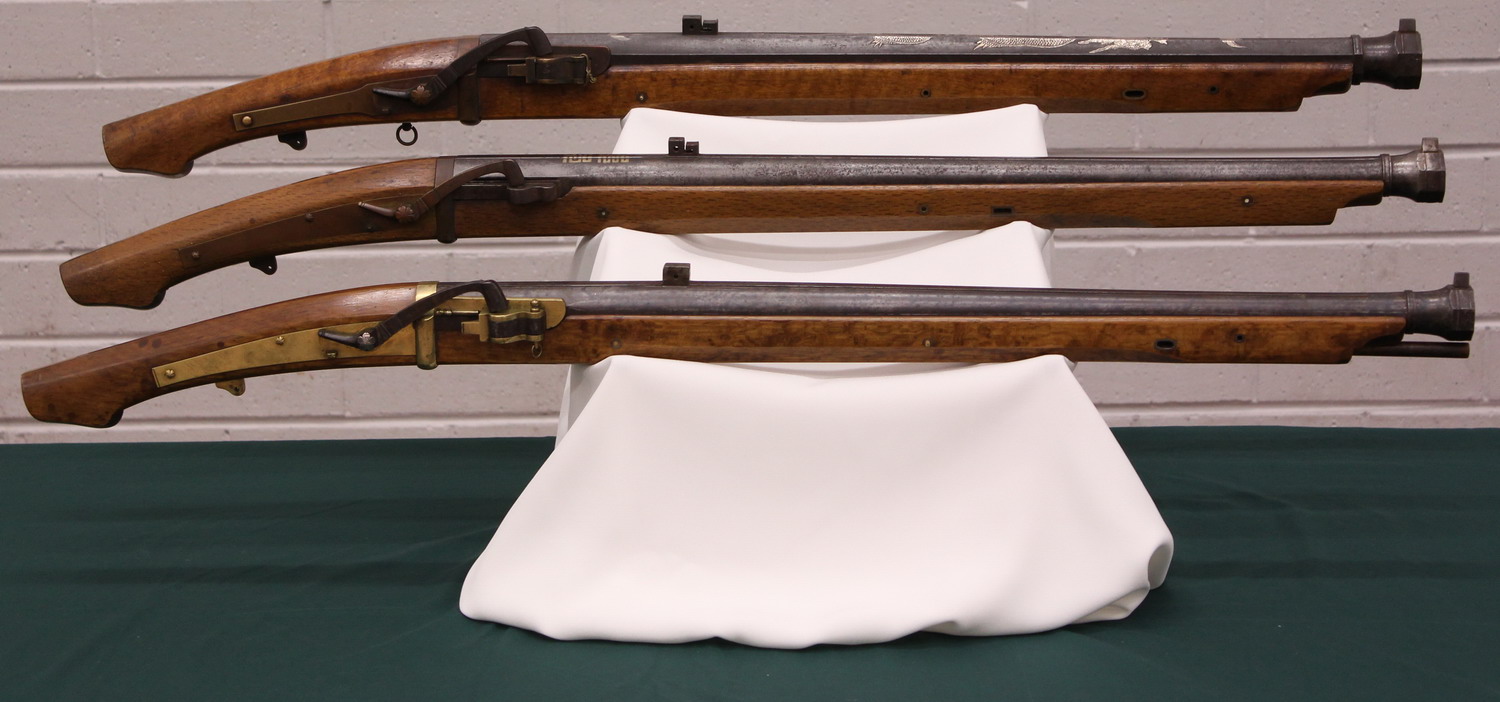
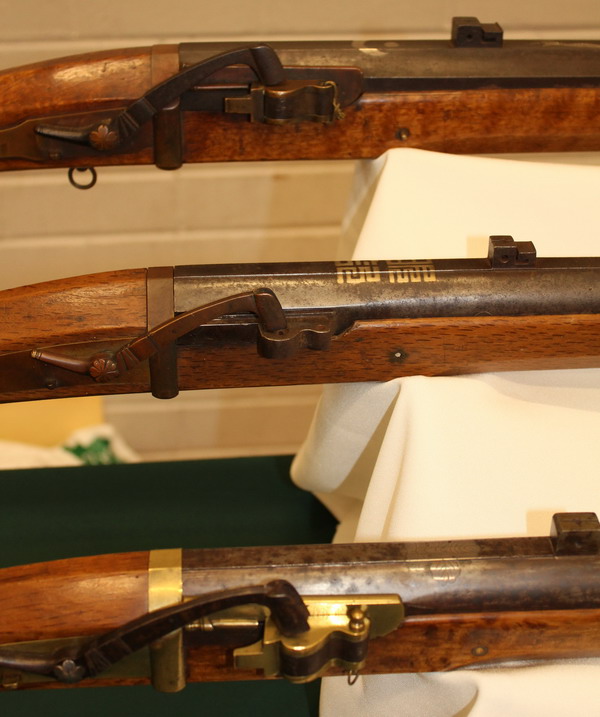
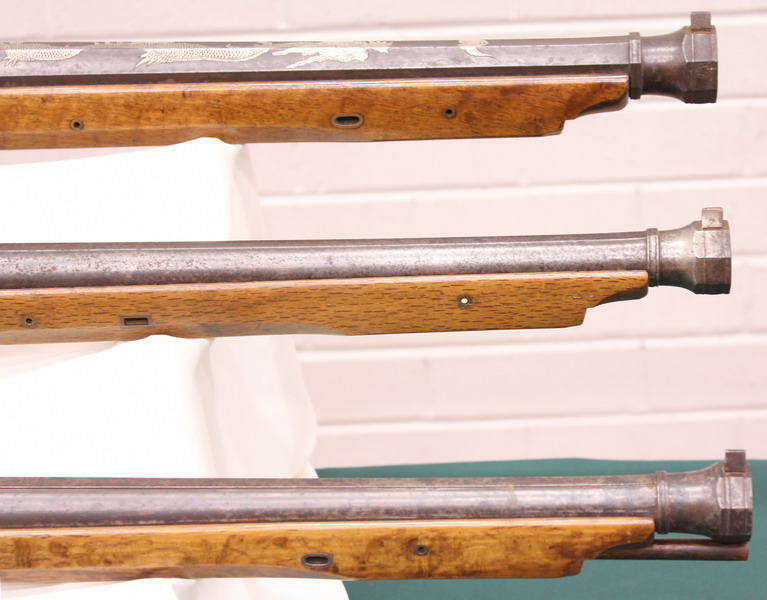
Jan, All, I've enjoyed this thread immensely. I note your teppo has a hole in the stock for the fire-cord to go through. I have only ever seen 'in my hands' one teppo with this feature and I think it is somewhat rare. Unfortunately it went to someone with more financial clout than I can muster. You mention Noda Zenshiro Kiyotaka as a gunmaker - this is none other than the famous swordsmith HANKEI - see here for a summary of his career http://www.touken.or.jp/english/translation/639.htm I'm reminded that I have three teppo I've been "gunner" present here. Two of these have the NIJU MAKIWARE ('two-wrap') inscription. I'm displaying these guns at our local antique arms meeting tomorrow night, so I'll take at least a picture of the three on stands. Bestests, BaZZa.
-
I have just come from a visit to a collecting friend and had a look through the following publication: ------------------------------------------------ YANONE - THE Japanese ARROWHEAD Compiled by John EW Pflueger 1982. ------------------------------------------------ Privately published in 5 volumes it runs to about 1,000 pages on yanone types, smith names etc etc. Does anyone know of other copies??? Regards, BaZZa.
-
Yes, FUJIWARA YOSHISADA. Possibly late Koto Bungo Takada??? Regards, BaZZa.
-
Ron, Your third and bottom yanone is not an armour piercing point - they are actually "blunter", not so pointed. Having said that I don't know what yours is, but a friend of mine would. I have a friend of decades here who has been collecting yanone for - mmm - 30 years?? He has corresponded with the late Dr Grayson and others around the world. Currently another friend has scanned in our friend's recent drawings of his own and other yanone types on 53 A3 pages. His own collection runs to about 50 points most of which he has polished himself to bring them back to life from rusted remnants. He is acutely aware of the demands of polishing and a visiting polisher from Japan nearly 20 years ago remarked that the man who polished these yanone could polish swords (at the time I had a few of my friend's polished arrowheads for viewing and appreciation). He is very demanding of himself and only turned to polishing his points when he couldn't interest a polisher in Japan to take them on. He did, however, have one yanone polished in Japan - a miniature jumomji yari, very, very nice. My friend is regrettably not computer connected, but is very keen to correspond with like-minded collectors. Anyone who is interested in contact could PM me or email me directly at warlord@iinet.net.au. Regards, BaZZa.
-
3. Now for some exchanges about the tsuba on the discussion list from June 2005. I have presented only the most illuminating contributions: -------------------------------------------- COMMENT #1 No swordsman would wear this on his sword, not to a sword fight anyway. This is something you tuck in your pocket for a “buddies” meeting. The work is similar in style to other images with the theme of women bathing or women pearl divers. Ito Shinzui was a Nihonga painter famous for his Bijinga (Beautiful women) series. If I understand the description then this might be the work of someone related to a Meiji tsubako who signed Setsukoku. The outside of the box says "Sumida-gawa no zu" or image of the Sumida river... -------------------------------------------- COMMENT #2 Ito Shinsui (1898-1972) is a well known shin-hanga (modern woodblock print) artist. Artelino gives the following short biography: Shinsui Ito learned the art of printmaking at a printing company in Tokyo from the early age of twelve. Later he studied under Kiyokata Kaburagi. He was approached by the publisher Watanabe through the mediation of his teacher Kiyokata Kaburagi and made the first bijin print in 1916. It was the beginning of a life-long cooperation between Watanabe and Shinsui Ito. The artist became one of the most appreciated Shin Hanga printmakers for bijin (beautiful women) and landscapes subjects. After World War II his contribution to the development of Japanese culture was honoured by declaring him an intangible national property and by other awards. As the seller suggests, this tsuba was probably made by someone in collaboration with Shinsui, and not by Ito Shinsui himself. It is undoubtedly a modern (i.e. 20th century) piece (i.e. not only not Edo period, but not Meiji period either), possibly done by someone undertaking formal training in the fine arts as a course or term project. -------------------------------------------- COMMENT #3 This tsuba has got to be post-WWII vintage, made for the benefit of occupying red haired orangutans, but, hey, money spends. It looks like decent metalwork, though almost entirely devoid of art. Exactly what a starving post-WWII metalworker would make for a GI with lotsa bucks (yen) to spend, a Japanese metalworker without much comprehension of the historic western aesthetic appreciation of the female form. Kinda like the early Western drawings of rhinoceros made on verbal description. Essentially, it is the tsuba equivalent of the bigtits chrome female form often seen on the rear mud flaps of big rig trucks. It is regrettable that in order to eat, real craft gets dragged down to such low levels of "art". Sigh. -------------------------------------------- The final scene in this tale is the following notice on ebay: Current bid: US $1,125.00 (Reserve not met) Ended: Jun-21-05 21:00:00 PDT Start time: Jun-14-05 21:00:00 PDT History: 32 bids (US $100.00 starting bid) High bidder: User ID kept private Item location: onomichi hirosihima, Japan --------------------------------------------------- I hope this has been of interest to the Listeros. I'll work up the kozuka I mentioned and post it later, allowing some time for any discussion about the above tsuba. Best regards, BaZZa. (aka Barry Thomas)