reinhard
-
Posts
798 -
Joined
-
Days Won
1
Content Type
Profiles
Forums
Events
Store
Downloads
Gallery
Everything posted by reinhard
-
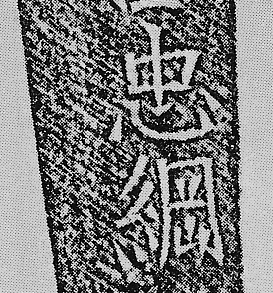
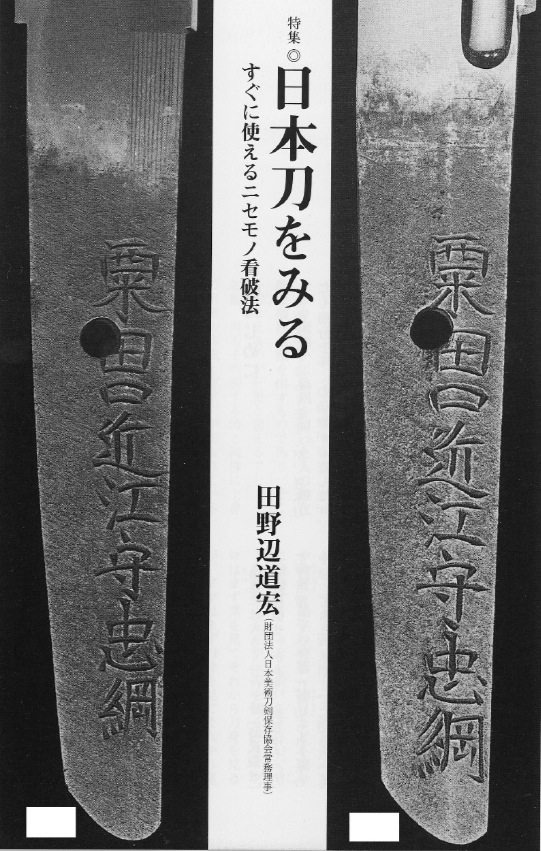
Either Reinhard got more evilish then Guido's twin *or* something doesn't work in your answer... I'm still Dr.Jekyll at the moment and therefore I will try to explain what I'm doing here. First of all, imagine yourselves at a sword-fair or in a row before an auction. You're into Osaka-ShinTo, but all you have at hand is your knowledge and maybe a little handbook. You are looking at one of the above mentioned swords and it might be made by TADATSUNA. Workmanship seems to be OK, but condition is not what it should be and its mei seems to be the most reliable source of information. I confess: I could hardly tell the difference at a moment like this. Gumanthon is absolutely right: "they are both good signatures". There are very few experts capable of telling the difference immediately without checking their library. Tanobe-san is one of them. - Going back to the examples posted: One is shoshin, one is gimei. No tricks, no games. Now I'll go down to the lab and get me some medicine. reinhard
-
This left stroke starts a little higher sometimes. For comparison a wakizashi-mei which is definitely shoshin. reinhard

-
There's a great lecture by Tanobe-san about shoshin-/gimei and mei in general in Menome antiques magazine 2/2009, including infos about (in)famous Kajibei. Strongly recommended: http://www.ribun.co.jp The following teaser (from the article mentioned above) is for investigative minds: Two nakago inscribed: Awataguchi Omi-no-Kami TADATSUNA. One is shoshin-mei, the other is gi-mei. Which one is which? and more important: why? - This is not supposed to be a lecture, just a kick for those who like it and a reminder of the difficulties jurors/collectors are sometimes confronted with. Those already familiar with the article are asked not to spoil fun for the others. reinhard

-
Interesting tsuba but unknown carver (Natsuo den ?)
reinhard replied to Marc BROQUIN's topic in Tosogu
It's a very thin line between mere craftsmanship and true art. For consideration: reinhard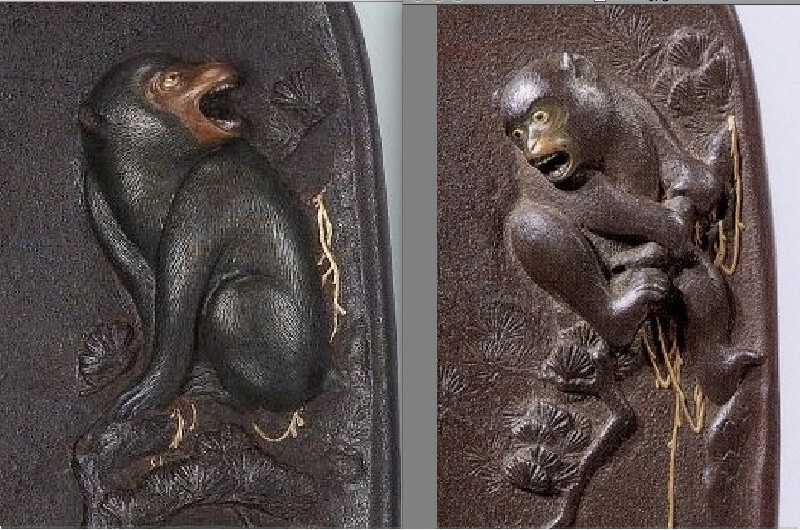
-
coming to the well again for assistance...
reinhard replied to b.hennick's topic in Translation Assistance
Barry, Mei reads: Heian (no) Ju Unsenshi SADAHIDE saku Genji gannen roku gatsu kichi jitsu "Unsenshi SADAHIDE, resident of Heian (Kyoto) made this a lucky day in 6th month of first year Genji (1864)" This SADAHIDE worked in Kyoto as well as in some other places during the end of Edo-period. He was originally from Dewa province, later he belonged to the school of Gassan SADAYOSHI in Osaka (Settsu province) and finally settled in Kyoto. reinhard -
Nengo is: Showa 18th year 7th month (=1943) reinhard
-
Interesting tsuba but unknown carver (Natsuo den ?)
reinhard replied to Marc BROQUIN's topic in Tosogu
Agree with Ford, The tsuba with several panels has a good chance of being genuine. (BTW, the others weren't mentioned in Ogawa Morihiro's book, for good reasons, I guess). The "screaming monkey" tries to meet western expectations during early Meiji-period and is lacking NATSUO's grace and dignity. The copper tsuba is an uninspired display of mere craftsmanship, slightly out of proportions and without NATSUO's unique view on a subject. This can be said of the Kwannon-design tsuba even more. reinhard -
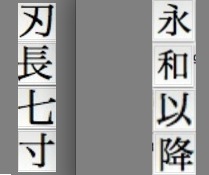
Hi Jon, The kanji in the right column you are looking for read: EI-WA: (-era, 1375 - 1379) I: prefix KO, o(riru) : (declining, later) in the left column: Ha-Nagasa: (length of cutting edge) 7 sun: (7 x 3.03cm) I can't read the rest because of low resolution of the pic. reinhard

-
Interesting tsuba but unknown carver (Natsuo den ?)
reinhard replied to Marc BROQUIN's topic in Tosogu
This is a nice tsuba, but NATSUO is definitely the wrong trace. No matter what the mei says: NATSUO's workmanship is far superior to this one. reinhard -
TAR (?), There is no way Admiral Togo parted from his own, personal side-arm just like that, not even on an important formal occasion. If he did present Mr.Bellamy with a sword, he would rather have chosen a newly made, high-quality koshirae for this important occasion, but a worn set of low quality fittings. Presenting people with old and worn objects on formal occasions was (and is) completely beyond Japanese customs. Since Japanese swords had been exported to the west by the dozens at that time, I strongly suspect your sword of not being connected to Admiral Togo (although the idea is tempting), but being part of a growing family-myth and wishful thinking. - BTW, maybe one of our Japanese friends can tell us something about the whereabouts of Admiral Togo's personal sword(s)? - The only link between your pic of Togo shrine and the fittings of your sword is "Kiku"(chrysanthemum)-crest. This is/was the crest of Imperial Japan for ages and isn't very helpful for identification. reinhard
-
Welcome to the 21st century. reinhard
-
I didn't mean to be cynical nor to discourage anybody. I'm sorry if I gave the impression. I'm not sure about this tsuba being a copy or not. There are some very tiny details making me feel uncomfortable and so does its provenance; but there was still another reason for posting. From what we see on ebay and other market-places and is discussed on this board sometimes, some people might get used to the idea of fakes always being crude and easily to detect, but for some time now there are fakes/copies/imitations of high-end antique objects on the market, which are of supreme quality, far superior to Chinese trash and very difficult to unmask. Some of these copies are of Japanese origin. - It was meant to be a fair warning too. reinhard
-
Steve, In order to analyze a tsuba like this, you have to consider: - quality - provenance - price Furthermore you should be aware of the fact, that almost everything can be copied nowadays on a very high level. Apart from crude fakes, there are hi-tec copies almost indiscernible from originals. Looking at a tsuba like yours, you better start from a negative point of view: IF it is a copy: What am I to look for in the first place? Put yourself in the position of the faker then. Since there are ways to copy outline and shape of a tsuba in every minute detail, including mei, there are parts more difficult to fake and cannot be easily copied in one operation. Final finish is more difficult to copy as well as aged colouring. Plugged hitsu-ana with "cat-scratched" surface are the nightmare of all fakers, for they must be done seperately and almost always give the fake away. Looking at your tsuba, I suspect it to be a hi-tec copy by someone, who had the original at hand for some time. This would also well relate to what I read so far in this thread before. No expertise, just a notion. reinhard
-
The signature on this sword reads from right to left: Bizen TOMONARI 56 daimago (56th in succession of (the famous) TOMONARI) Bingo Fukuyama (no) ju Yokoyama SUKENARI (Yokoyama SUKENARI = name of the smith, resident of Fukuyama in Bingo province) KAEI 5 nen 8 gatsu hi (dated KAEI era, 5th year (1852 AD), a day in 8th month) reinhard

-
Some people might be confused by Guido's lecture (at least I hope so). To give you an idea what he is talking about, I would like to show you a pic zooming into a close-up of a ko-wakizashi by Soshu HIROMITSU. Hitatsura hamon is visible, including yubashiri and tobiyaki in various forms, and ji is sprinkled by different variations of ji-nie. Original picture was taken by Mr. Fujishiro Okisato. I strongly recommend his books: "MeiTo Zukan" reinhard

-
For consideration: "Diamond-shapes" in the gaps between tsuka-ito are assymetrical, crossings are all made in the same direction and red/black paint was spilt all over the place. Does this look like genuine Japanese craftsmanship? And if not, what does it mean? reinhard
-
Need help with a translation of an older kanteisho
reinhard replied to b.hennick's topic in Translation Assistance
It is going to be very tricky cleaning these menuki. Recently added red paint on tsuka-ito was spilt over the menuki as well as black paint in order to "improve" the same (ray-skin). Fortunately these menuki are probably not by RENJO. reinhard -
Need help with a translation of an older kanteisho
reinhard replied to b.hennick's topic in Translation Assistance
Oops, didn't mean to compete Markus. Posted about the same time, which definitely is time to go to bed now for a central European . reinhard -
Need help with a translation of an older kanteisho
reinhard replied to b.hennick's topic in Translation Assistance
Origami says: (from right to left) Menuki made of gold depicting dragon made by RENJO worth 2 pieces of gold Goto shirobei (Goto mainline) dated Tenmei 5th year...(1785) Mitsumori + Kao No idea wether it is genuine or not reinhard -
Mark, This reads (right to left and top to bottom): (top) wakizashi mei Bungo (no) Ju Fujiwara (no) TOMOYUKI nagasa (length): 43.8 cm (1 shaku 1 sun 1 bu) sori (curvature): 1.1 cm (3 bu 5 rin) (bottom) katana mei Bungo (no) Kuni TOMOYUKI nagasa : 71.1 cm (2 shaku 3 sun 5 bu) reinhard
-
Moriyama-san is correct, of course. No reason to doubt his translation. reinhard
-
Mark, I see your point, but the pic starting this thread is quite different from your example. Yubashiri and tobiyaki are no flaws per se and can be part of the ToKo's style, but the blade in question shows isolated patches of core-steel. Together with open grain they indicate an worn, over-polished blade. What really worries me, is the question at the beginning: "How to remove this kind of "stain" without (having to pay for) polishing. This does not only show a fundamental lack of knowledge (which could be excused) but a strange attitude towards Nihon-To in general. What makes NMB a difficult place at times is the "trinity" of dusty armchair-experts, who never left their homes, citing from their limited (and sometimes outdated) stock of books as if it were the holy bible, semi-educated dealers with intent to keep their clients as ignorant as they are themselves, using this board as a freeware pit-stop for translation and information and trying to define terms newly, if necessary, and finally, newbies, who can't cope with the idea of Nihon-To being a more complex subject than just a romantic Samurai myth. I can well understand Guido, Ted and others, who dedicated many years or decades of their lives in order to come close of understanding Nihon-To, loosing their temper every now and then when confronted with one of the specimens mentioned above and, even worse, when members of the "trinity" try to build an unholy alliance against competence. Since ignorants are not allowed to be shot in the forehead anymore, sarcasm is is the only way left to face them. Anway, this talk will go on forever and I really wish, the knowledgeable heads on this board won't lose patience, for NMB still has a chance of being a good thing. reinhard (prepared for eternity>attachment)
-
Sometimes it takes an ass to kick butt and Guido is definitely qualified to kick the right spot for the right reason. reinhard
-
These observations are all correct, of course, but there might be another reason for these flaws. Maybe the tsuba was damaged later by extremely high temperatures during a fire, like many blades were (and whose nakago sometimes look quite similar, BTW). Overall design does fit late Choshu Hagi-style quite well. Shadows and distortion of perspective make it probably look worse than it is. - It doesn't really matter, for it is no masterpiece and the damage/flaws are irreversible, but the mei remains a nice game to play. reinhard