ChrisW
-
Posts
2,358 -
Joined
-
Last visited
-
Days Won
7
4 Followers



Recent Profile Visitors
4,836 profile views


ChrisW's Achievements






-
I'd need a closer look at it, but I am pretty sure its a legitimate item. I've seen thick gunto tsuba like that before, they're pretty rare and usually made for a blade from someone of consequence.
-
Authentic. Nice THICK gunto tsuba... those are pretty rare. Full ito wrap speaks to someone of rank. Lastly, the blade appears to be pre-war at the very least. However, the condition is not particularly great. A candidate to get a window done perhaps?
-
Price reductions since I would like to make a sale or two before a big show this weekend! 1. 28" katana in shirasaya. $2500 -> $2200 2. 19" wakizashi in substitute saya. $1800 -> $1600 3. 27" katana in partially restored gunto mounts. $2200 -> $2000 4. 23.25" o-suriage early to mid Kamakura tachi in assembled mounts. No reduction on this one! 5. 24.5" katana in remnants of WWII leather-cased mounts. $2200 -> $1900 6. 26" katana of WWII origin. $1000 -> $950 7. 17" wakizashi in American-made saya. No reduction on this one! 8. 11.25" tanto in restored mounts. $1500 -> $1300 9. 26" katana of WWII origin. $1300 -> $1100 Each item sold will still net the NMB a $50 donation. Trade values for the items are reduced by the amount of price reduction shown above, where applicable. Shipping is still $100 CONUS, and will include the original valuation insurance. Outside CONUS, shipping will be discussed and as reasonable as possible! My goal is to make sure these blades get to people who will appreciate them and to make the transfer process simple and quick. If you would like pictures of one, feel free to DM me. ~Chris Edit: You are also free to make a reasonable offer if something interests you. The worst I can do is say no!
-
Just to restate: The above photos are just to give a general idea of sugata and age. If you want more photos to help you understand the hamon, hada, and other activities, then I highly encourage you to DM me for more photos! The NMB limitations on amount and size of photos means that my phone's photos quickly run afoul of the limitations. I would be more than happy to give a prospective buyer whatever photos he wishes. If you're really interested and willing to travel here, then you can also examine any of them in person too! You're also welcome to try and haggle price with me. You'll get bonus respect points from me.
-
Yup, I confirmed its manufacture with my polisher then found a nice and fitting habaki for it! Unfortunately, my polisher bills are coming due so I need to move things if I am to afford them. If any of the other blades interest you, DM me and I'll give you a healthy discount!
-
#9 Description repeated + photo attached: 9. 26" katana of WWII origin. Mumei, no stamps. No mounts but habaki and paper tube saya. Unlike #6, this one is clearly a gendaito. It has evident particle activity in both the hamon and hada scattered about. The gunome pattern is much more orderly and well-arranged. There is no evidence of the characteristic dark shadows that one would see in showato. The blade has a nice gold-plate habaki. Condition is solid but with several nail catchers and a solid patina covering the whole blade. A Mino-Seki blade with the appropriate yasurime. Strangely two mekugi-ana, with the top one showing a rough burr that would make it unlikely to be used; my theory being that this blade was ordered for one set of mounts and then changed before final fitting to another mount set. No partial trade on this one. Asking price is $1300.

-
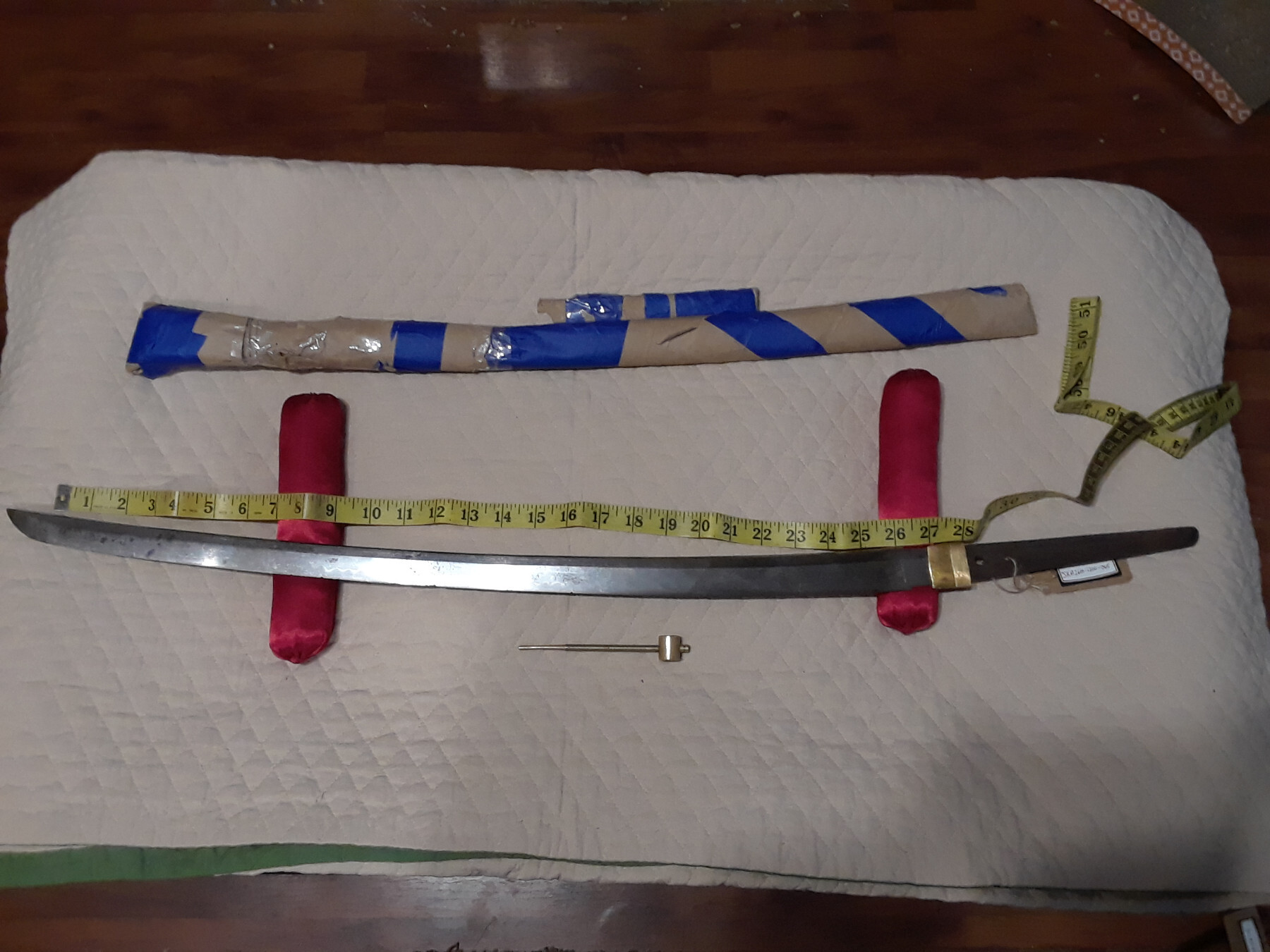
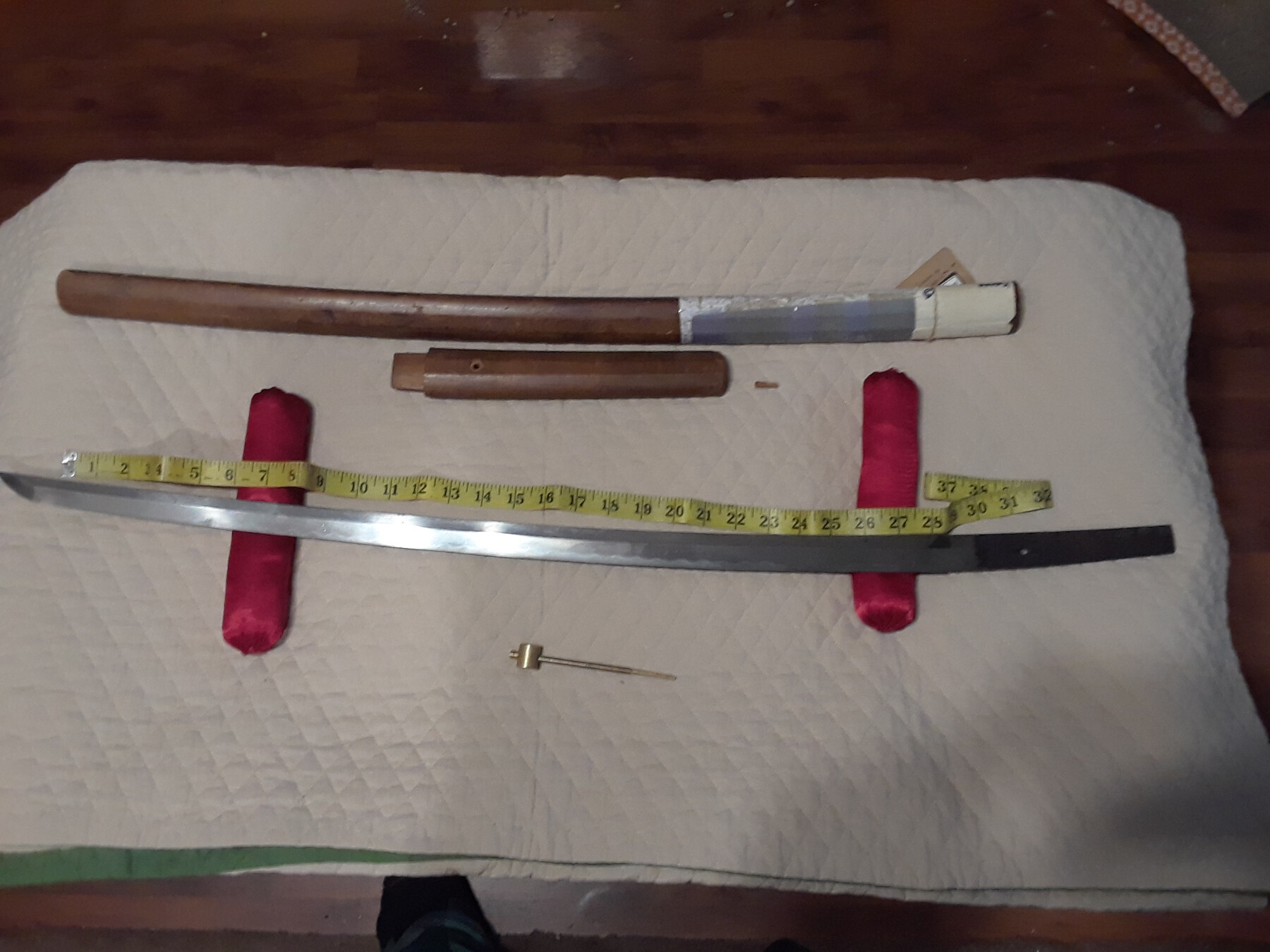
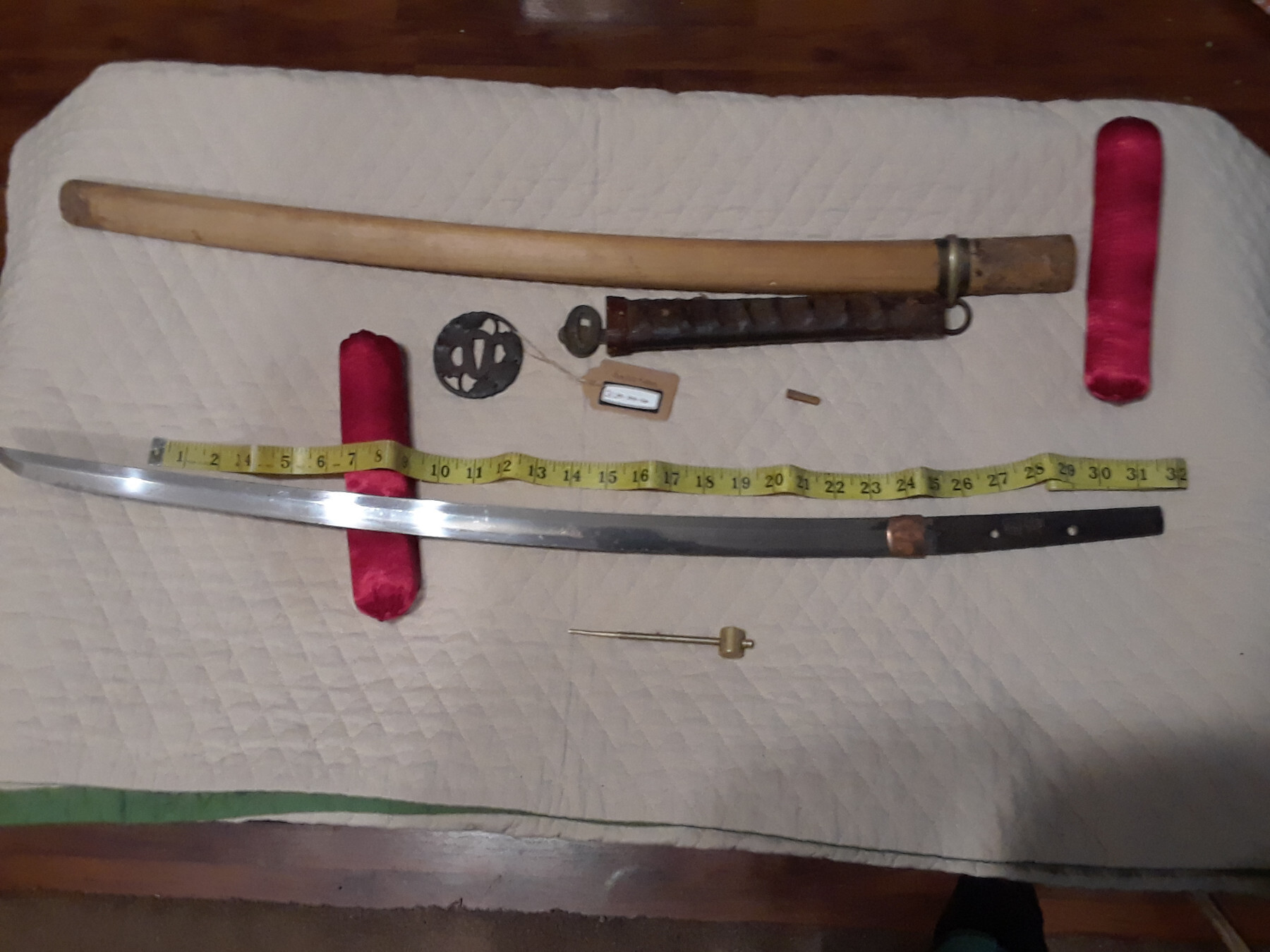
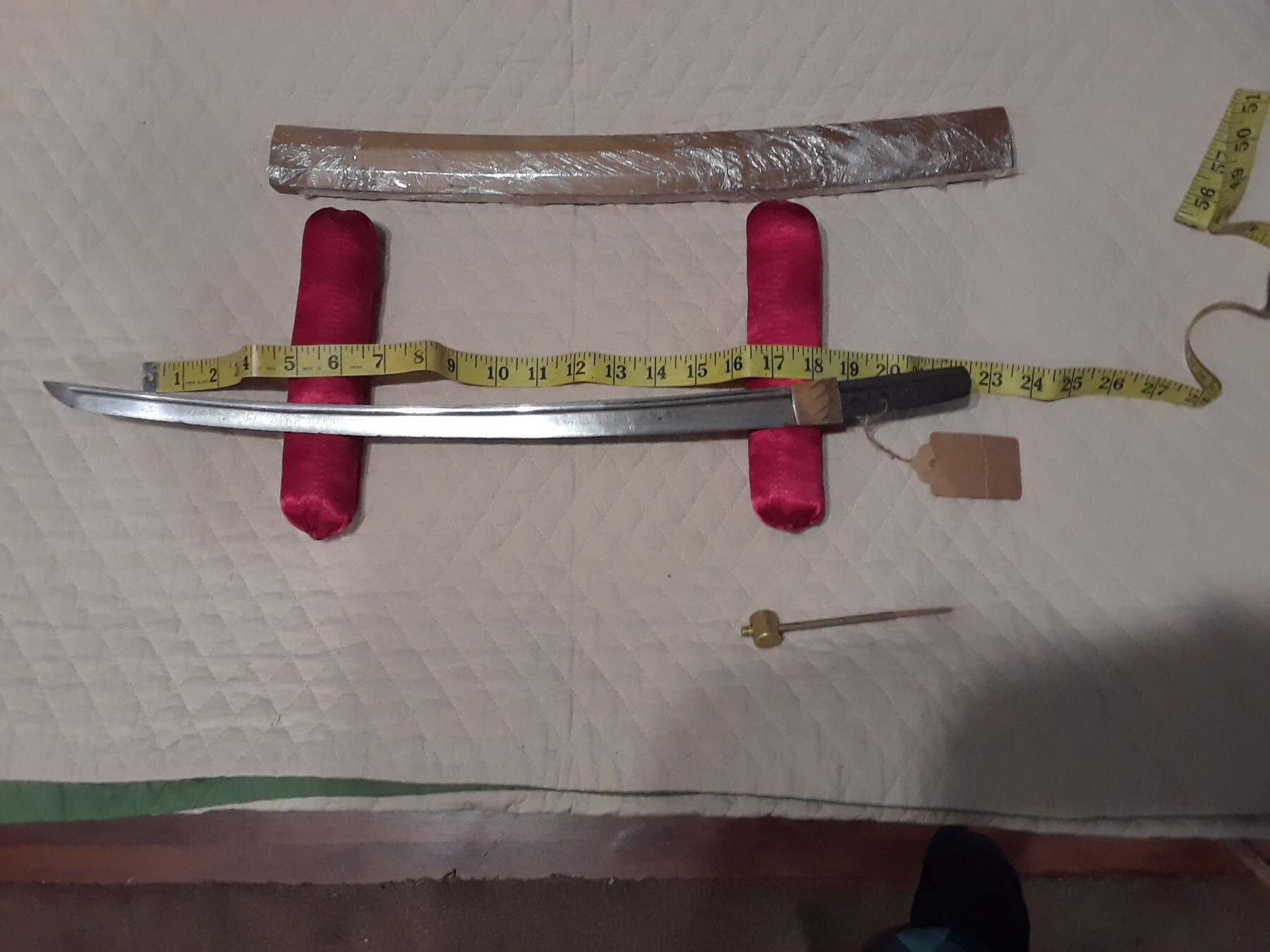
Hello fellow NMB members! In anticipation of several events and change-ups in my inventory of nihonto, I am putting these out here for sale. Prices are negotiable, I am open to fair offers, and even partial trades where indicated. If you want more pictures of a particular item, I will do my best to accommodate! Shipping/insurance will be discussed but generally CONUS will be the simplest and quickest to receive. Shipping will be USPS for CONUS and the rates are usually no more than $100 with full insurance. All swords will be 'mummified' in bubble-wrap, cardboard.. whatever I deem necessary to make sure it gets to you in the same condition that I sent it out. Out-of-country sales will depend on your local laws. All sales are final. Please use your best judgement. I'll oblige and do my best to deliver satisfactory photos and excellent shipping. None of these blades are papered, most are considered projects. They are in the condition that they were received in by me, with only gentle application of choji. They all have potential to be restored fully and will be free of fatal flaws as far as possible within my experience. Polishing, like on any project, can reveal flaws after the fact. For those, I am not responsible. If you have an opinion on a sword or believe something is in error, please DM me and I will correct it. I am not an expert, nor will I ever be. If it is about the quality of my photographs, I will do my best to get you more if that is your interest. I apologize for my usual rough-shod photography skills; there is not much I can do about that... short of getting a professional setup or a new phone; but the photos should be enough to get you an idea of sugata and condition. Again, more are available via DMs. If it is just commentary about the quality of said photos, then keep it to yourself s'il vous plait! Lastly, each sale will net the NMB a $50 donation to help our beloved NMB with its planned upgrades. To reserve a piece for purchase, please put a reply here in this thread and/or then DM me directly. First come, first served! FINALLY, without further ado: 1. 28" katana in shirasaya. Signed "Tsuda Echizen no Kami Sukehiro", would need a polish to fully appreciate. Signature is unlikely to be first generation, more likely second or third or gimei. Notare hamon, unknown hada. Appears suriage. I predicate my opinion on the mei based on the fact that it is missing the classic long osaka-yakidashi of the first generation; instead only possessing a short one that disappears into the nakago. However, I have been known to be wrong. Will consider partial trade up to $1k in value. Asking price is $2500. 2. 19" wakizashi in substitute saya. Signed "Bizen no Kami Osafune Naga[xxxx]" with the rest having been cut off. Likely to be Bizen Nagamitsu since the work seems most appropriate for him. Sleepy old polish with lots of beautiful activity visible still. Pre-1530. Haven't had a chance to do deep research on this one to narrow it down. Has a fukure/ware flaw in the spine. Suriage. No partial trade on this one. Asking price is $1800. 3. 27" katana in partially restored gunto mounts. Mumei, but likely to be Yamato. Needs a polish as previous owner acid-polished it. Gold-plate habaki, silver mon on tsuka. Blade is likely to be late 1500/early 1600's. Several pits that are unlikely to come out with a polish but still a fine blade. Ubu. Paper stock saya. Partial trade up to $500. Asking price is $2200. 4. 23.25" o-suriage early to mid Kamakura tachi in assembled mounts. Mumei. Likely to be Bizen den. Circa 1200's. Decent assembled mounts with gold-trimmed Omori fuchigashira and Namban tsuba. This is a greatly o-suriaged blade, likely having been cut down somewhere in the Muromachi period. The boshi on this one is a little thin, but still present. In recent polish. The opinions on this piece come straight from my polisher; before that, I thought it a late Muromachi/early Edo boy's blade. A rare piece to be sure. No partial trade on this one. Asking price is $3450. 5. 24.5" katana in remnants of WWII leather-cased mounts. Signed "Kunihiro". Almost certainly a gimei since nearly ANY Kunihiro is a big big name smith, with most of them working late Kamakura. The biggest name Kunihiro worked in the 1600's strangely. There is a remote possibility it is one of them, but the placement of the mei leads me to believe it is gimei. However, it is still an older blade that is likely to be late Kamakura/Muromachi. Suriage with 2 mekugi-ana. Notare hamon. Could use a polish to revive the masame hada. Has kirikomi. Nice tsuba. Partial trade up to $700. Asking price is $2200. 6. 26" katana of WWII origin. Mumei, no stamps. It is my opinion that this blade is Showato, but it does show some signs of hand-forging including a very thick particle line in the hamon. It is in a somewhat amateur-ish polish with some warping of the geometry but would make for a very fine wall hanger. A good piece to find mounts for. It is a very interesting styled gunome. Paper stock saya. No Partial trade on this one. Asking price is $1000. 7. 17" wakizashi in American-made saya. Signed "Nobukuni" - the particulars of this signature, particularly the kanji used purport it to be one of the Oei Nobukuni, which if believed to be true would make for a very nice restoration project. Two meguki-ana. It does have a Soshu-esque hamon in it and a sugata that suggests an old blade. However, there are a few areas of damage to the edge and an S-bend in the blade. Ergo... the low price on this one. No partial trade on this one. Asking price is $700. 8. 11.25" tanto in restored mounts. Mumei. Kanmuri-otoshi shape, which along with the nakago, suggests the Nambokucho era. 2 mekugi-ana. BEAUTIFUL mounts which suggest that the habaki is not original. The saya is a striped alternating shiny and matte black lacquer with horn accents. Gorgeous hand-painted red wooden grain pattern tsuka. Why they would paint the wood grain as opposed to use real wood or a veneer? Your guess is as good as mine. Rare shape would make for a fun project. Unknown school since hada is not visible. Hamon appears to be a very straight and well-executed suguha. No partial trade on this one. Asking price is $1500. 9. 26" katana of WWII origin. Mumei, no stamps. No mounts but habaki and paper tube saya. Unlike #6, this one is clearly a gendaito. It has evident particle activity in both the hamon and hada scattered about. The gunome pattern is much more orderly and well-arranged. There is no evidence of the characteristic dark shadows that one would see in showato. The blade has a nice gold-plate habaki. Condition is solid but with several nail catchers and a solid patina covering the whole blade. A Mino-Seki blade with the appropriate yasurime. Strangely two mekugi-ana, with the top one showing a rough burr that would make it unlikely to be used; my theory being that this blade was ordered for one set of mounts and then changed before final fitting to another mount set. No partial trade on this one. Asking price is $1300. (Limit hit, will upload #9 below!) Thanks for looking! ~Chris


-
Definitely a Chinese fake, the damascus patterned blade is the most obvious red flag among many many other issues.
-
At best, it is a fragment of a larger blade. At worst, a post-war souvenir piece. Either way, it has sentimental value with your family! I am leaning towards it being a souvenir piece. But if there's metal particle activity, then it might be a blade fragment.
-
Inherited Sword Captured in Burma During WW2: Looking to Learn More
ChrisW replied to CarstairsCowboy's topic in Nihonto
Though gimei, it may still be a sword meriting restoration. I would inquire with a traditionally trained togishi (Japanese sword polisher) and get their opinion on it. -
Hello Nick! I'll reach out to you in just a moment ~Chris
-
Adam Savage checks out a sword
ChrisW replied to Brian's topic in General Nihonto Related Discussion
I saw that video too! Cringed a bit when the curator demonstrated the blade's flexibility as if it were a European spring steel. I had a feeling it was Shinto Sukesada... -
Are these military or just practice replicas?
ChrisW replied to Nervous's topic in Fake Japanese Swords
After seeing the new photos and the other's opinions, I have to agree. While these examples approximate the appearance of Japanese swords, they are not Japanese made. There's too many finer details that don't quite add up as Sam pointed out. I also agree again with Sam though: appreciate them for what they are and the bond they represent with someone you care about! Treasure them and treat them gently. Such memories are precious. -
Agreed on this. The crude ito, the iron-hardware-esque menuki, simple tsuba point towards possibly Satsuma Rebellion mounts.