Bugyotsuji
-
Posts
15,004 -
Joined
-
Last visited
-
Days Won
320
Content Type
Profiles
Forums
Events
Store
Downloads
Gallery
Everything posted by Bugyotsuji
-
In the Nihonto Meikan, 国住 is read as Kunizumi. Four smiths are given, but only one seems related to 武蔵 Musashi. *However, the Nidai Kunizumi mentioned by Patrick above is listed as making yari, living in Edo at one time, Kuniyoshi Mon, and working around Ansei.
-
What do you mean by exist?
-
Chris, good luck with the gold finds. In the meantime enjoy your blades for study puposes. If gimei, it is likely that the person who cut the signature reckoned the blade was close enough to the work of a certain smith, ie that it had enough goodness in it even without a signature. This is probably what you are seeing. With a limited budget and a cool head I think you are doing the right thing, but everyone will step in and have something to say. You are doing a good job of holding your line and maintaining objectivity, IMHO. Gambare!
-
Our swords are up to 1,000 years old... hehehe
-
Brian, do you prefer it to traditional clove oil? I have a bottle of camellia oil but not used it on blades.
-
Japan Today, but the link is broken on my PC, so apologies and here goes: Ninja's textbooks, pledges passed down at descendant's home Today 06:10 am JST OTSU Textbooks detailing covert techniques used by ninja -- Japan's feudal mercenaries-- and written pledges on their secret missions were passed down for generations at the home of a ninja descendant in western Japan, according to analysis of ancient documents found there. Experts in Japanese history say the documents discovered in 2000 in Koka, Shiga Prefecture, are valuable because they prove ninjutsu techniques employed by ninja involved in such missions as espionage, sabotage and assassination were handed down to the next generations in the western Japan city. Koka and Iga in Mie Prefecture, central Japan, are widely known as the home of the two most famous ninja clans. Ninja gradually diminished in Japan's Edo period (1603-1868). Among around 150 items found in the house of 79-year-old Toshinobu Watanabe, 17 were textbooks on such subjects as how to make poison or conduct night attacks. Of the 17, four were written in the 1670s and 1680s, according to research by the Koka city government since last year. For example, one of the textbooks on poison instructed ninja to put into wells powder made by burning lizards or tiger beetles that were believed to be poisonous. Another one on sleeping medicines said enemies would fall asleep when smoke is emitted by burning powder made from insect shells or tobacco. As for ambushes at night time, ninja were recommended not to approach enemies immediately after attacking them with weapons involving fire since they might become engulfed by the smoke. The documents kept at the home of the Watanabes also showed ninja acquired various other skills such as gunnery, horse riding and magic. The 150 sets of documents also included copies of 10 pledges written between 1700 and 1829 and submitted to a local feudal domain. The papers showed the Koka ninja vowed to join the fighting in the event of an emergency in the domain and not to reveal their status as ninja even to their family members and friends as their contracts were classified. Ancestors of the Watanabes were farmers and they worked on a part-time basis as ninja under cover. Masayuki Ito, a researcher at the Koka city education board, said a person hailing from Koka managed five ninja families, including the Watanabes, and secretly concluded contracts with the domain. In peacetime, those "nonregular" ninja paid an annual visit to the Owari Domain in what is now Aichi Prefecture, central Japan, ostensibly for the purpose of gunnery instruction, he said. Yuji Yamada, a Japanese history professor at Mie University, said the documents found at Watanabe's home are "authentic historical materials" as many of them have been accurately dated and passed down in the family of ninja descendants. © KYODO
-
Does it smell right? Nicely presented! Well found.
-
Was your ancestor a mighty warlike warrior, sword in hand and ready to fight for the peace of his valley, or a huggy fluffy lover of peace at all costs? Was he willing, with no question of duty, or was he ready to serve, to do his duty completely willingly? Does willing mean he was not unwilling, ie not grudging about it? (Question of image.) It is possible to express it in Japanese but hard to keep it really short and succinct. If you are a public servant or a leader, the peace of the land might even be Wahei 和平. The willingness of the keeper of said peace can surely be implied in a number of ways within the phrase. Willingly taking up your sword to fight for peace is understandable. 自ら和平を守る "Mizukara Wahei wo Mamoru" (Putting myself forward to protect/keep the peace = I will protect the peace! = Guarding the peace whatever happens!) has a good ring to it, and sounds like a pretty cool motto IMHO.
-
Surely the reason that Koi swim up waterfalls is to become a dragon, ergo the voids are/were carp before topping the rim of the waterfall... (?)
-
Very nice. You must be super proud.
-
Try Ishiguro Naotsune to start with. 石黒直常
- 2 replies
-
- 2
-

-
- koshirae
- translation
- (and 1 more)
-
Cool. In the absence of the top brains here we plebeians pulled together and got a result!
-
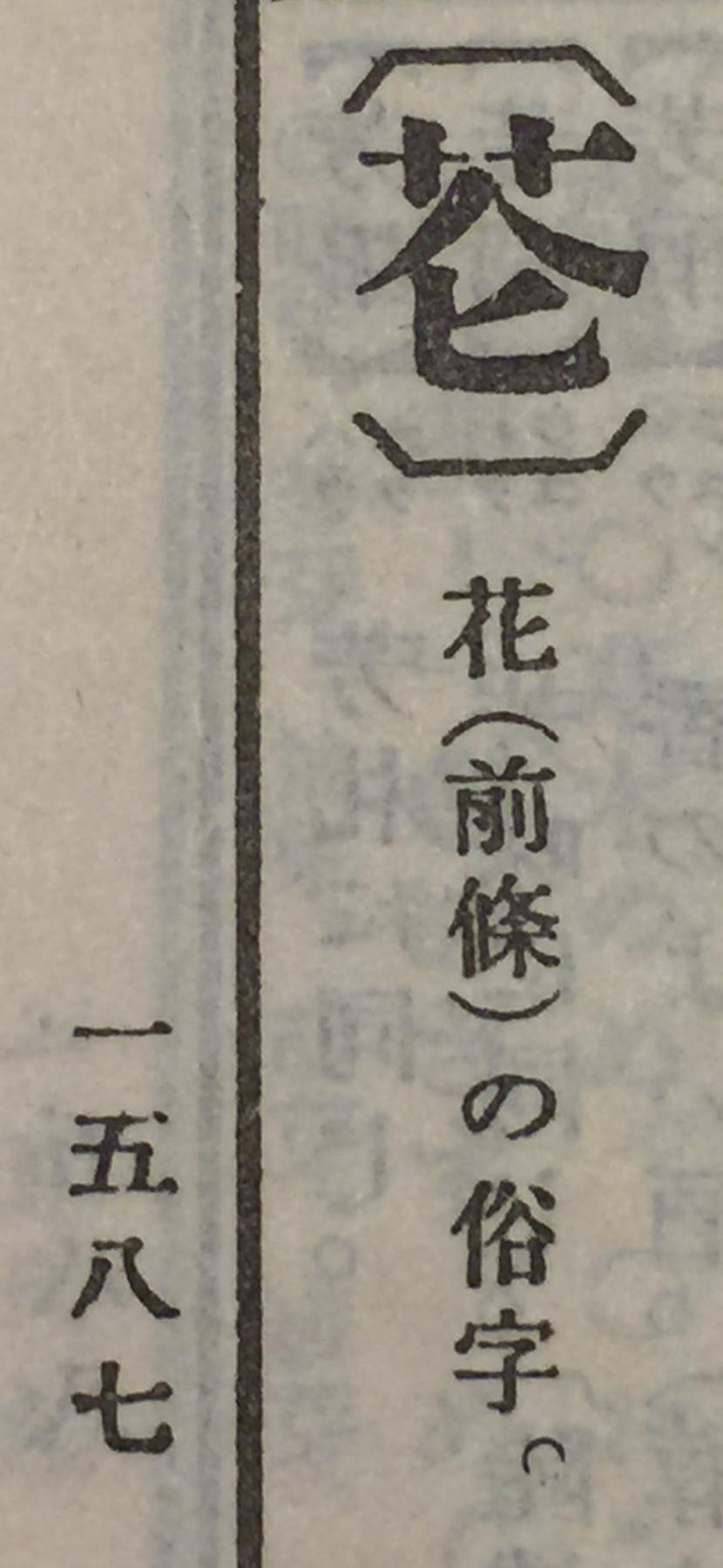
PS There was a Karyudo, 花竜洞 working in Anei in Kyoto, alternative name for Yamashita Makigawa. 山下牧川. NB See updated reading of Makigawa below
-
The first Kanji seems to be an old colloquial version of 花 Hana, which can be read Hana, Haru, Michi, or Moto in names, or Ka/Ke (or old Kuwa/Kwa).

-
Wall Calligraphy Kanji Challenge
Bugyotsuji replied to GARY WORTHAM's topic in Translation Assistance
So/Okuru and Do/Michi http://www013.upp.so-net.ne.jp/santai/jpg/0610.jpg http://www013.upp.so-net.ne.jp/santai/jpg/0751.jpg -
Wall Calligraphy Kanji Challenge
Bugyotsuji replied to GARY WORTHAM's topic in Translation Assistance
Building on a solid base like Malcolm, how about the first kanji on the right being So/Okuru 送 in which case together it could mean sending good fortune, etc. Just guessing, and if it's wrong, then no, Malcolm, who is he? (or Michi/Do 道 ?) -
That is true, Dave, but I was meaning that right after shooting a few, I can look at the finished article(s) and then run various quick size/colour/contrast/light tweaks on them, all the while playing innocently on my phone and not on a bulky camera. A couple of years ago I was with my sword teacher in the dark and badly-lit (for sword blades) Tokugawa Art Museum in Nagoya when we were pulled over and warned by a member of staff. (NBTHK members in Japan often carry monoculars and small flashlights to see into blades on display behind glass.) "No flashlights/torches please!" she hissed. After making some puzzled enquiries, we discovered that a member of the public had complained about a light source from another visitor reflected off a blade into his/her eyes, so the board of curators had come up with this easy rule, no lights of any kind.
-
OK Dave, ya got me! Perhaps what I should have said was that the camera on my xyz-phone is so much better than the trusty old 'real' Ricoh camera that I have almost completely stopped using the latter. The edit functions are intuitively great too, so that I can edit the latest shots even while walking around.
-
But not serious cameras, although my smartPhone is pretty serious. https://japantoday.com/category/national/feature-Japan-museums-abandoning-no-photos-policy
-
Nengo Handwriting Assistance Request
Bugyotsuji replied to Okiiimo's topic in Translation Assistance
Bottom kanji is Kigensetsu 紀元節 https://www.google.co.jp/search?q=kigensetsu&ie=UTF-8&oe=UTF-8&hl=en-jp&client=safari -
Yes, I could agree with that, Matt.
-
My smartPhone seems unable to open the link.
-
Uesugi Kenshin's Mountain-bird-hair Sanchomo/Yama-tori-ge
Bugyotsuji replied to Bugyotsuji's topic in Nihonto
Thanks Ted. Perhaps it would be safer for all of us to stick with Sanchomo for the time being. Mountain bird down/fluff. -
Uesugi Kenshin's Mountain-bird-hair Sanchomo/Yama-tori-ge
Bugyotsuji replied to Bugyotsuji's topic in Nihonto
Interestingly, the history of this sword is described on the linked page in the post above, including the latest efforts and devolopments in Joetsu City to raise the necessary funds to buy it back there. -
Uesugi Kenshin's Mountain-bird-hair Sanchomo/Yama-tori-ge
Bugyotsuji replied to Bugyotsuji's topic in Nihonto
"San Cho Mo" is going on display again at the Prefectural Museum from tomorrow until 21 May. http://www.pref.okayama.jp/kyoiku/kenhaku/nowExhibitions.htm Our sword society has booked a hands-on Kantei/kansho Kai in early summer with many of the museum's Kokuho and other good swords, but sadly this one being privately owned will therefore not be available for handling. PS Unable to go back and change the title to this thread, I should mention that Yamatorige should more properly be, as others have pointed out above, Yamadorige, t changing to d according to the rules of grammar. Some sword dictionaries however, say -tori, not -dori: http://meitou.info/index.php/%E5%B1%B1%E9%B3%A5%E6%AF%9B