
Jussi Ekholm
-
Posts
2,372 -
Joined
-
Last visited
-
Days Won
46
Content Type
Profiles
Forums
Events
Store
Downloads
Gallery
Everything posted by Jussi Ekholm
-
Very interesting item Ron. Definately worth researching. Unfortunately Mōgusa group is very little known as Kirill said above. There is lot of historical legend but I believe surviving authenticated Mōgusa tachi date from early Kamakura to late Kamakura. There are only a handful of signed items by Mōgusa smiths remaining and unfortunately I haven't found info or item by this smith Nagahisa yet. I think one person who might have info on this school is Wataru Hara, he has great knowledge of old schools. I remember c. 10 years ago when TheJapaneseSword had forums there used to be long thread about Mogusa school where he shared a lot of knowledge. Unfortunately that forum is now long gone, and remembering things like that makes me feel old... He uses Instagram where I reached him some years ago and I believe he might also be on Facebook (as I am not, I can't tell who uses it).
-
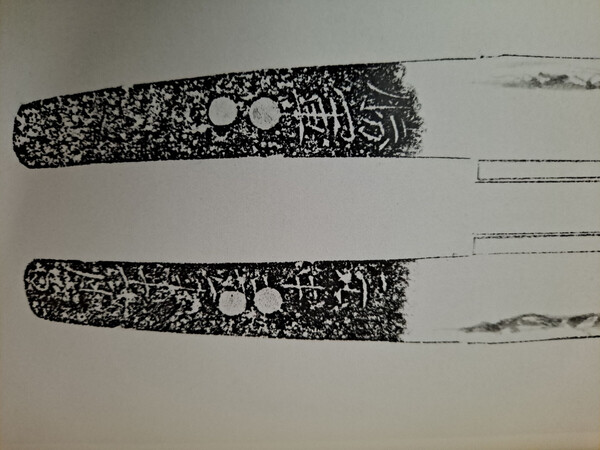
That is nice looking blade Kamil, will be interesting to see what NBTHK judges. To me it would seem more like late Muromachi, and there was Gassan smith Gunshō working around Eishō (1504 - 1521). I only have 1 example by this Eishō era Gunshō but it features somewhat similar shaped nakago. Here is an example of Muromachi signature from Fujishiro. As for the Nanbokuchō period Gunshō information on him is very difficult to find. I am so far only aware of 2 blades by the early Gunshō (軍勝). There is a katana dated 1363 and a tanto that is actually signed Shōgun (勝軍) but is judged as by Gunshō that is dated 1386. Some sources for information in Japanese of this smith are Sano Museum catalog: An Early Style of Japanese Sword, Jūyō Nado Zufu 21, Nihontō Kōza (small bit in English in Afu translations), Few Tōken Bijutsu magazines, in overall it is very difficult to find info on this particular smith. Here are the two authentic Nanbokuchō signed items. I don't understand why it turns the pictures sideways. They are differently on my phone & computer.


-
Here is a picture of the other one.
.thumb.jpg.cef1765444422b642c854a8696629b22.jpg)
-
I think there are 2 authenticated signed tanto by Niji Kunitoshi. Most famous is Jūyō Bunkazai and Meibutsu Aizen Kunitoshi (and I believe for long time this has been commonly known as the only signed one) but more recently there has been second one that passed Jūyō 61 and Tokubetsu Jūyō 25.
-
 That Sadatsuna is very nice sword, I saw it appear to Nihonto US when it came up at the beginning of the month and liked it a lot.
 -
I believe the signature is - 播磨守藤原輝広作 - Harima no Kami Fujiwara Teruhiro saku
-
Research before buying
Jussi Ekholm replied to Jussi Ekholm's topic in General Nihonto Related Discussion
I might be pain in the ass for dealers as I wont buy anything, just search the items :D On a more serious note I have great respect for western dealers that will be featured in below linked items. I met Giuseppe briefly at SAE, he does have top notch items. I have purchased the best item I own from John and he too has amazing items. And Fred has a great reputation and knowledge with special items. Likewise Ginza Choshuya & Iida Koendo are amazing dealers and they were very welcoming on my unexpected visits. There is nothing fundamentally wrong in making a package in my opinion. While I personally would focus in a sword in shirasaya, or if I want koshirae it would be extremely plain one. There is still wow factor with very nice sword combined with very nice koshirae. I dug up some interesting ones to here. A quite nice tanto by Kanemitsu was sold by Iida https://web.archive.org/web/20111009065513/http:/www.iidakoendo.com:80/info/item/a206.htm Then it very recently came up with very nice koshirae at Ginza Choshuya https://ginza.choshuya.co.jp/sale/gj/r5/002/02_kanemitsu.htm Iida had Aoe from Jūyō 29 with koshirae https://web.archive.org/web/20160401180609/http://iidakoendo.com/3281/ Later when it appeared at Aoi Art the koshirae was gone (unfortunately I cant access the page anymore) https://www.aoijapan.com/katana-mumei-aoe29th-nbthk-juyo-paper/ Iida had signed tachi by Morihisa with Koshirae https://web.archive.org/web/20170607200305/http:/iidakoendo.com:80/4632/ Then later date it was at Ginza Choshuya without a koshirae https://ginza.choshuya.co.jp/sale/gj/30h/07/04.htm Shōzando had mumei Iemori with tachi koshirae https://web.archive.org/web/20150417030611/http:/www.shouzando.com/k-iemori150207.html Chigai has the same item without koshirae http://chigaitakanoha.com/touken/cat01_item091.html Samurai Nippon had Shizu from Jūyō 51 in shirasaya (unfortunately I cant access the page anymore) https://www.samurai-nippon.net/SHOP/V-1678.html It came to Eirakudo recently with koshirae https://eirakudo.shop/token/tachikatana/detail/806809 This Kokubunji Sukekuni Jūyō 61 was in Japan in shirasaya https://page.auctions.yahoo.co.jp/jp/auction/p832546074 John had it as a nice package https://nihonto.com.au/product/juyo-token-kokubunji-sukekuni-katana/ Shōbudō had Nagamori from Jūyō 59 in shirasaya https://web.archive.org/web/20151124234919/http:/www.shoubudou.co.jp:80/nagamori100.html Giuseppe had very good Higo koshirae for it https://www.giuseppepiva.com/en/works/soden-bizen-katana Taiseido had this mumei tachi attributed for Nobukuni in shirasaya https://web.archive.org/web/20170211051415/http://taiseido.biz/cn11/cn22/pg561.html When Fred had it listed it had quite nice tachi koshirae with it https://web.archive.org/web/20210621101457/https://nihonto.com/tachi-by-genzaemon-no-jo-nobukuni-源左衛門尉信国-020518/ Eirakudo had Nariie from Jūyō 66 in shirasaya https://eirakudo.shop/token/tachikatana/detail/776407 Samurai Museum now has it with koshirae https://www.samuraimuseum.jp/shop/product/antique-Japanese-sword-katana-attributed-to-osafune-nariie-nbthk-juyo-token-certificate/ And this is an interesting mumei Enju wakizashi First time I saw it at Seiyudo in shirasaya https://web.archive.org/web/20090419155827/http:/seiyudo.com:80/WA-08123.htm Then it popped at Aoi in koshirae https://www.aoijapan.net/wakizashi-mumei-unsignedenju-school-discounted/ Then Shōzando had it in koshirae https://web.archive.org/web/20150426222248/http:/www.shouzando.com/w-enju01.html And when it was at Chigai it has been polished and is in shirasaya http://chigaitakanoha.com/touken/cat02_item073.html All this really means nothing just some fun stuff look at and nice items to view. I just personally love tracking down items, I think it is among the things I most enjoy in this sword hobby. There are some items that seem to switch hands quite often and some that never will... -
Well I just saw an item today that I've seen recently pop up for sale. Well as I do browse online sales every week that is not too weird. However I do not necessarily mean to put this dealer at bad light here as it happens quite often but I am just listing this as an example of what is quite common by dealers. Here is a signed Mino Senjuin sword that went for 200k yen at Yahoo JP in January https://buyee.jp/item/yahoo/auction/r1078348459 Here is the same sword offered by a dealer (that I personally consider geared towards western market) with koshirae added on for 1M yen. https://www.samuraimuseum.jp/shop/product/antique-Japanese-sword-katana-signed-by-mino-senjuin-nbthk-hozon-certificate/?currency=JPY Adding koshirae to make a "package" that would be more desirable is not a rare thing. However like always I would advice people approach things with research first. There are even Jūyō swords that have had multiple koshirae over somewhat recent (20 years) history. Unfortunately many Japanese dealers delete the pages after an item is sold, so at this moment I cannot link a Jūyō item that has had koshirae addon with working links now. I know that many collectors seek "the package" as in sword with koshirae that belongs to it. Just posting this that people would be aware that koshirae can often be refitted.
- 10 replies
-
- 17
-

-

-

-
Unfortunately I cannot directly answer to original question aboout construction methods and prices but I will give bit of my own insight for old mumei blades. I think soon I have been tracking swords from Heian to early Muromachi for 10 years. In general some attributions are far more desirable from financial standpoint than others. Even though the sword itself might not change anything during different attributions. In general the sword will need attribution (as high level as possible) from NBTHK to reach full financial potential. While I personally like NTHK their attributions seem to carry quite little financial value in the market. While there are some other very valuable attributions (Tanobe Sayagaki, JuBi etc), they are much rarer than NBTHK papers. In general better swords will get better attributions but there can still be very nice swords with "lower tier" attributions as the sword would be fitting to that attribution, as well as not too impressive items with "very high tier" attributions. Of course while that above comment is based on my personal taste and belief it is easy to provide data how the prices will change when you get down by down in attribution levels. And while not 100% accurate it will give some data. You shouldn't find cheap items with very good attributions, or if you do they will sell extremely fast. I do like and appreciate obscure stuff so I am glad I am not after high quality art swords.
-
There have been some very good points in posts to this thread. One thing that I will try to make is the amount of items that Japanese experts will have studied closely in hand is far superior to what 99,9% of us have/will be able to. Now as many might know I do have slight obsession with data gathering, and I will take Bizen Nagamitsu as an example here. In my references I have 203 authenticated signatures of Nagamitsu that I can pull up. I have seen signed (and authenticated) Nagamitsu items with my own eyes but I have never really studied even a single mei in person and close with time, so in reality I do not understand Nagamitsu mei well enough to really comment anything valuable. Therefore I would put my trust in NBTHK or other Japanese experts that have seen, studied and researched dozens and dozens of Nagamitsu mei.
-
FS: Tachi - Naminohira, Early Muromachi, NBTHK Hozon
Jussi Ekholm replied to Jussi Ekholm's topic in For Sale or Trade
Item is now sold. It will be shipped soon and once it has arrived safely I will make a contribution to the board. -
FS: Tachi - Naminohira, Early Muromachi, NBTHK Hozon
Jussi Ekholm replied to Jussi Ekholm's topic in For Sale or Trade
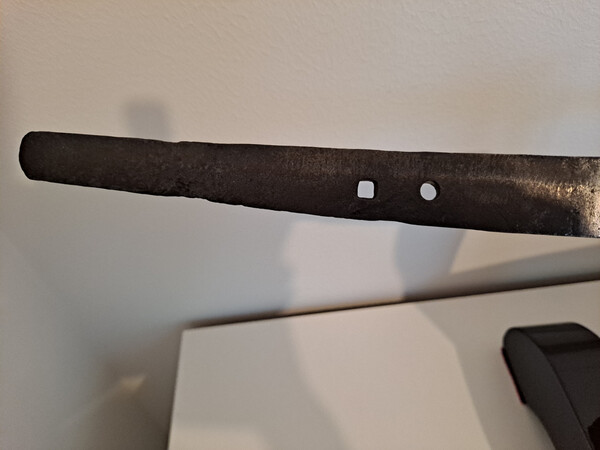
Sorry for the slow reply, here are pictures. I only have phone for taking pictures. Sword is currently under negotiation.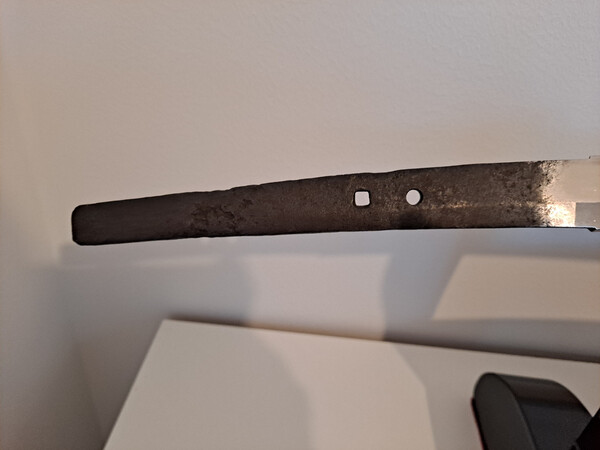
-
Condolences to family and friends.
-
Samurai with multiple Nihonto?
Jussi Ekholm replied to rematron's topic in General Nihonto Related Discussion
I believe Sakamoto Ryōma owned at least 5-7 swords. As it was many years ago when friend took me to exhibition of his in Tokyo, so I cannot remember the exact number. This was the exhibition: https://www.edo-tokyo-museum.or.jp/en/s-exhibition/special/15055/没後150年 坂本龍馬/ He is the only samurai whose several swords I have seen in person. Of course he did live at the end of Edo period and was very influential figure. So very different from earlier average samurai. -
FS: Tachi - Naminohira, Early Muromachi, NBTHK Hozon
Jussi Ekholm replied to Jussi Ekholm's topic in For Sale or Trade
Well I'll make a big cut on the price for a limited time. Price will be 5500€ until the end of May. If this doesn't sell by that time then this will be in my collection for a long time. This would mostly finance my trips to Japan in 2024 & 2025, as I currently cannot really afford to buy any items. As I'm cutting so much from the price, I cannot offer free worldwide shipping anymore (as shipping costs can be quite high), and I will need to check it case by case. I will be also at Japan Art Expo in the Netherlands in the beginning of June, if wanting to pick the item up in person. -
Quote from Markus Seskos Swordsmiths
-
Very nice find Ian, I would agree with Jacques and Michael that it shows high potential. The smith would be "Kanshō Norimitsu" dubbed by the peak period, and he is considered as the best smith of the lineage.
-
Enjoy some photos of my wakizashi and the rather unique hamon
Jussi Ekholm replied to Gimmick's topic in Nihonto
Perhaps you could post high quality on focus images of the signature and nakago? I have pretty much zero intrest in these later swords so I wont really comment anything but on quick look it could perhaps be plausible as some references have bit of variation and this sword might have bit rough history that would affect on nakago preservation. However even though pretty much all my references focus only on old swords, I think it will be quite easy to find something like at least 30+ reference signatures for Yokoyama Sukekane. -
Need double check of my translation, please.
Jussi Ekholm replied to DTM72's topic in Translation Assistance
It has been amazing to watch this evolve as members have put brains together. Unfortunately I don't know about smiths of this era but here is quote from Markus Sesko about this smith lineage adding gold, apparently 3rd and 4th gen did it. -
As Michael noted above there are actually many levels of Bunkazai in Japan. The list above has only National level (国) Bunkazai. There are also Prefecture level (県) Bunkazai and City level (市) Bunkazai. I have gone through almost all of the 47 prefectures (Tokyo and Kyoto are still in process) for Prefecture Bunkazai, and have found c. 210 swords so far that are relevant for my intrests (Heian - Early Muromachi). There are actually a lot more swords & fittings in total, probably could be close to National level in numbers as I only picked the ones relevant for my research and intrest. One problem is that for these there is often quite little info to go on. But of those items I have been able to match for certain 3 Jūyō Bijutsuhin, 3 Tokubetsu Jūyō and 18 Jūyō swords that also carry Prefecture Bunkazai prestige. The City Bunkazai list is still a work in progress for me, and I admit going through only few cities lately as I find it bit tedious and I have had much more interesting research material lately. If the list I am working from is correct there are bit over 800 cities in Japan, and so far I have managed through 187. For city Bunkazai items there is often very little info available. The items that are City Bunkazai are often not as interesting to me as higher designations. There are actually a lot of swords but so far on my own research interests I have only found c. 30 interesting swords. Out of those 30 I have been able to match 6 Jūyō swords and 1 Hozon.
-
I think I got every item in this list: There could be 1 or 2 that I missed as I searched for them. The PDF further down the thread should be the most up to date one.
-
Swords of the 47 Ronin
Jussi Ekholm replied to Utopianarian's topic in General Nihonto Related Discussion
I remember trying to figure some of the smiths out few years ago. Unfortunately it is lot of guesswork and most likely wrong in multiple cases. Would be nice to see the original Japanese source for bit better information. -
Yamanouchi Fumiharu Collection
Jussi Ekholm replied to Okan's topic in General Nihonto Related Discussion
Must be very nice collection and it is fascinating he has Satsuma focus in his collection -
It is a wonderful sword and I am eager to see your post when you are ready.
-
Sofe Designs Auction of Japanese Swords
Jussi Ekholm replied to matthewbrice's topic in Auctions and Online Sales or Sellers
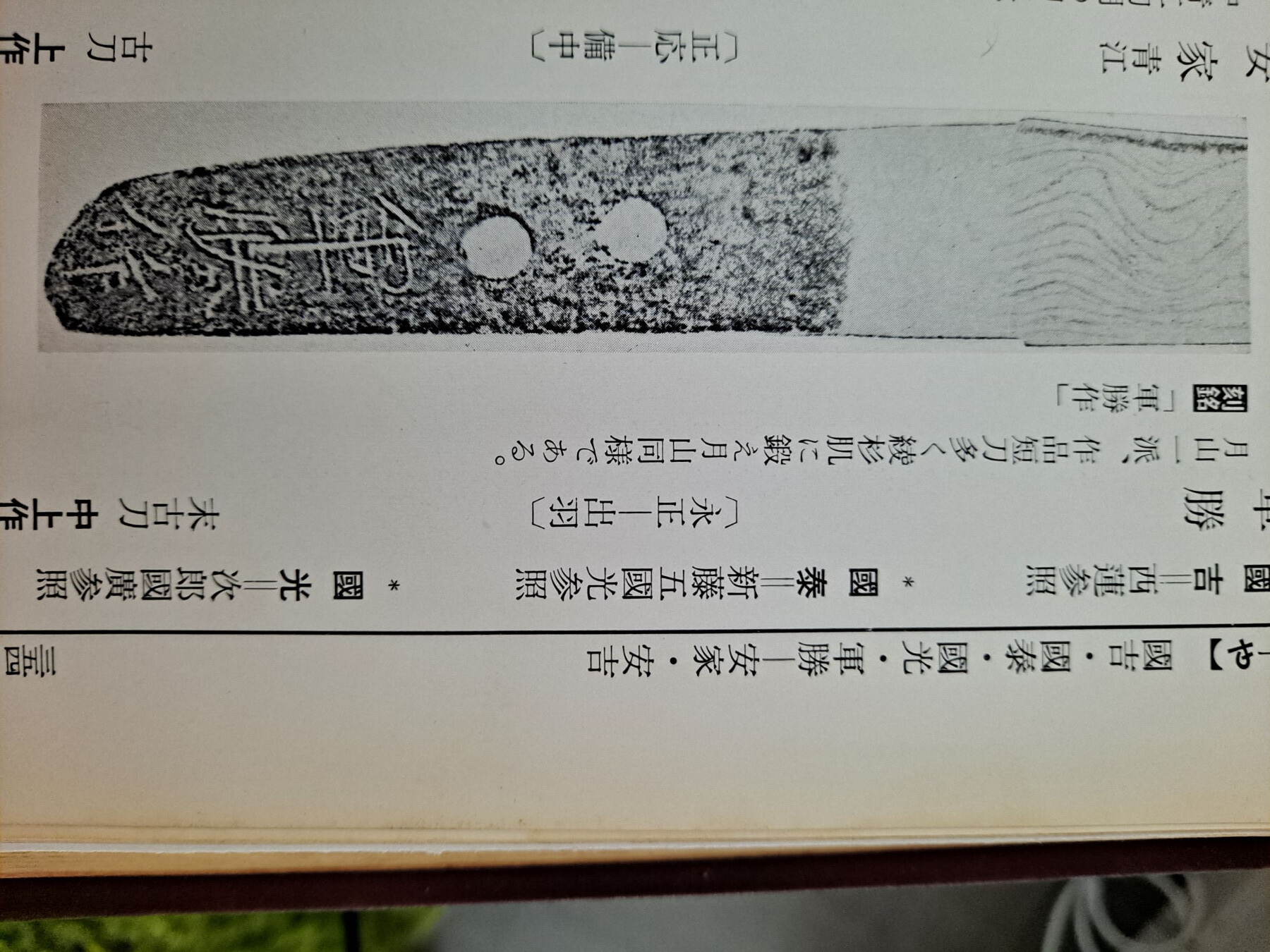
I can't afford to buy anything but I will comment on few items that I looked briefly. 142 - I believe this is signed Jumyō (寿命) and is later sword, not Kotō. 143 - I think signature is Hizen jū Yukihiro (肥前住行広) and is later sword, not Kotō. 144 - I think signature is Shigetsugu (重次) and to me it is later sword, not Kotō. 145 - This one I think is Kotō but later than the 1350 attribution. I would rather think something common like Bizen instead of quite obscure Kongōbyōe school. Signature is Morimitsu. 159 - Signed items by Sekishū Naotsuna are extremely rare, so IF the signature is genuine it should be valuable item. 163 - Quite interesting package to my eye. 169 - Signature is Bishū Osafune jūnin / Yokoyama Kōzuke no Daijō Fujiwara Sukesada (備州長船住人 / 横山上野大掾藤原祐定) if the signature is genuine sword in not Kotō. 171 - Decently interesting item due to its size 172 - I see this as possibly questionable item. 173 - Signed Chikuzen kuni jū Nobukuni Yoshinao / 1856 (筑前国住信国義直 / 安政三年八月日), the second kanji of period is written in weird form where two parts of character are underneath and not side by side, I would look into other works of this smith on how he signed. 187 - Best item in my opinion... wait it seems to be a reworked Paul Chen katana, made in China. The tsuka is from Paul Chen Tsunami Katana but I am not sure if Tsunami was ever done with hi, so they might have assembled it with other Paul Chen blade that has hi, Chinese repro tsuba and slapped on PC Tsunami tsuka on it. 210 - Sadanao (貞直) tachi is in my opinion actually the most interesting item in the lot. NBTHK attributes it to early Muromachi, unfortunately I can't read Tanobe-sensei sayagaki from the pictures provided by auction house. This smith is unknown to me but very interesting item. 212 - I'll just say I am often quite confused by NTHK, and leave it at that 217 & 218 - Quite interesting spears I admit my view is skewed as I do look only very high quality items in references and online most of the time for research (no I don't collect at that level). I think the Sadanao tachi and 2 spears are maybe the most interesting items that I saw. Granted I know pretty much nothing at all on late items so wartime stuff might be more special than the trio I am interested in. As Matthew was very open in providing list of items he has up, with quick eye I would see that many items that I see as higher quality items in the lot are from Matthew. Yasukuni & Mantetsu etc. are definately going to hit wartime collectors.


.jpg.6842b32a0de453059232c284f124b9f6.jpg)