Bruce Pennington
-
Posts
13,978 -
Joined
-
Last visited
-
Days Won
169
Content Type
Profiles
Forums
Events
Store
Downloads
Gallery
Everything posted by Bruce Pennington
-
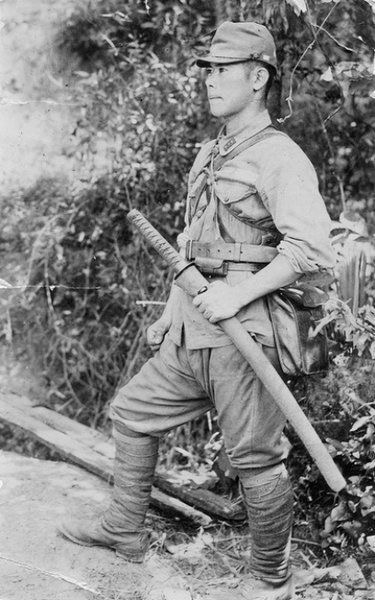
Superior private with civil sword.

-
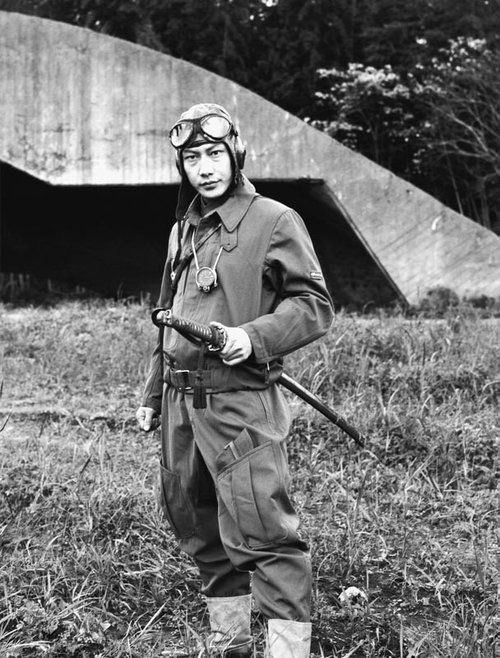
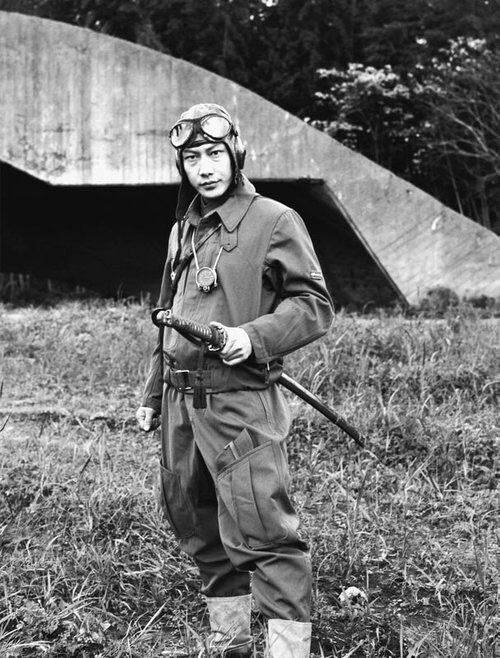
Pilot with standard length gunto:
-
That was interesting to read Ohmura's page on this, thanks Chris. He seems to claim that this configuration/pattern was a dedicated "army civilian employee" style. I wonder if that is an error in translation or if it was exactly what he meant? Other than this page, I have never seen anything or any other source calling it as such. Yet, the existance of another sword, fitted with the same style might support his claim.
-
Quite an interesting Rinji (type 3) rig! Love the white ito! Is that a steel menkugi or is it a screw? I found a Seki Kanenori listed in the RJT smith list on Japaneseswordindex.com, don't know if it is the same guy. No Star stamp, though? If it is the same guy, it is well known that many of the smiths made both gendaito and showato. Someone more knowledgable in the smiths will have to answer your question about the kanji.
-

Attention Mantetsu Owners: A Survey
Bruce Pennington replied to Bruce Pennington's topic in Military Swords of Japan
That is interesting indeed! The "Mukden" arsenal (Nan-man) was known to make rifles too, so no telling what this equipment was used for. Seems pretty small - 1 Lathe etc - for making any weapon in substantial numbers. Could be for making some Mantetsu blades, couldn't it! -
Help translate and Identify nakago on Showato
Bruce Pennington replied to 0Takeda0's topic in Military Swords of Japan
The second is Ray’s “2” -
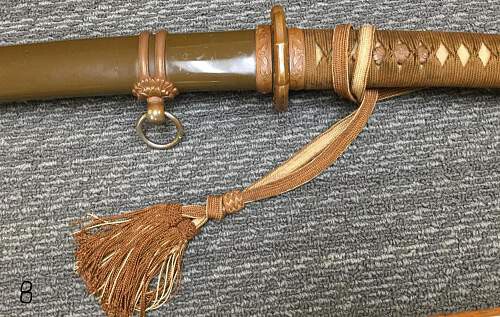
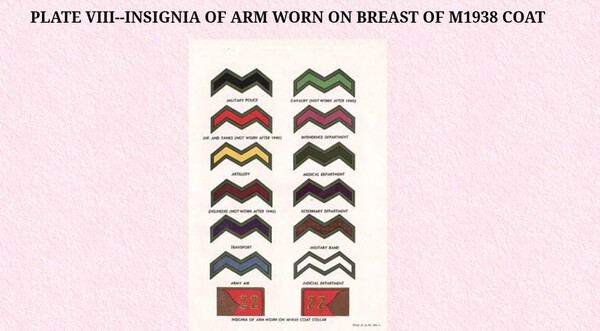
Cream tassel Patches.
-
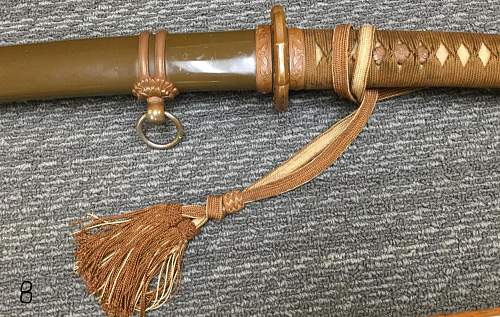
You can see some here: http://www.militaria.co.za/nmb/topic/28631-railway-swords-stamps/?hl=%2Bcream+%2Btassel&do=findComment&comment=301647 And several here: http://www.warrelics.eu/forum/Japanese-militaria/cream-brown-tassel-railway-police-743884/ They were for rail employees.
-
They litterally had the same choices as regular IJA officers.
-
Chris, you must have misunderstood me. What I was saying is that there was no “civilian sword” designated for the gunzoku. They wore Officer Type 98s and, before the uniform reg change, rank tassels commensurate with their equivalent rank.
-
Chris, You won't find and "civil employees swords in the IJA". Gunzuko were authorized by reg to carry Type 98 gunto commensurate with their rank. The only way to know it was carried by Gunzuko is if it had the all brown tassel. Nick Komiya found the uniform reg change that designated the all brown tassel for the Gunzuko. So civil swords, refitted in varying degrees, were carried by all services and all ranks. Found here: http://www.warrelics.eu/forum/Japanese-militaria/what-were-regulations-army-civilian-employees-carry-swords-701783/
-
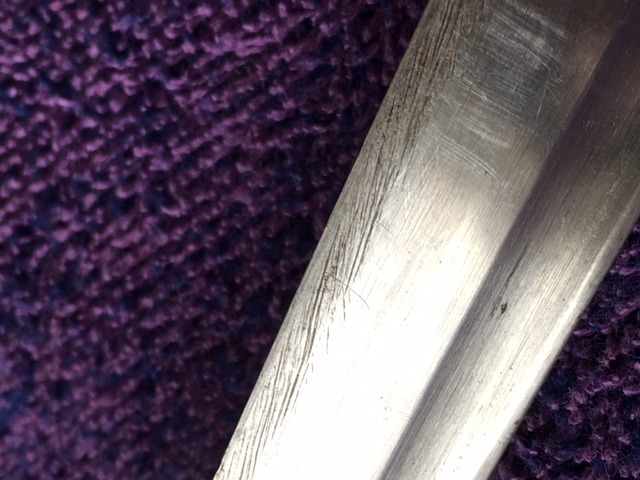
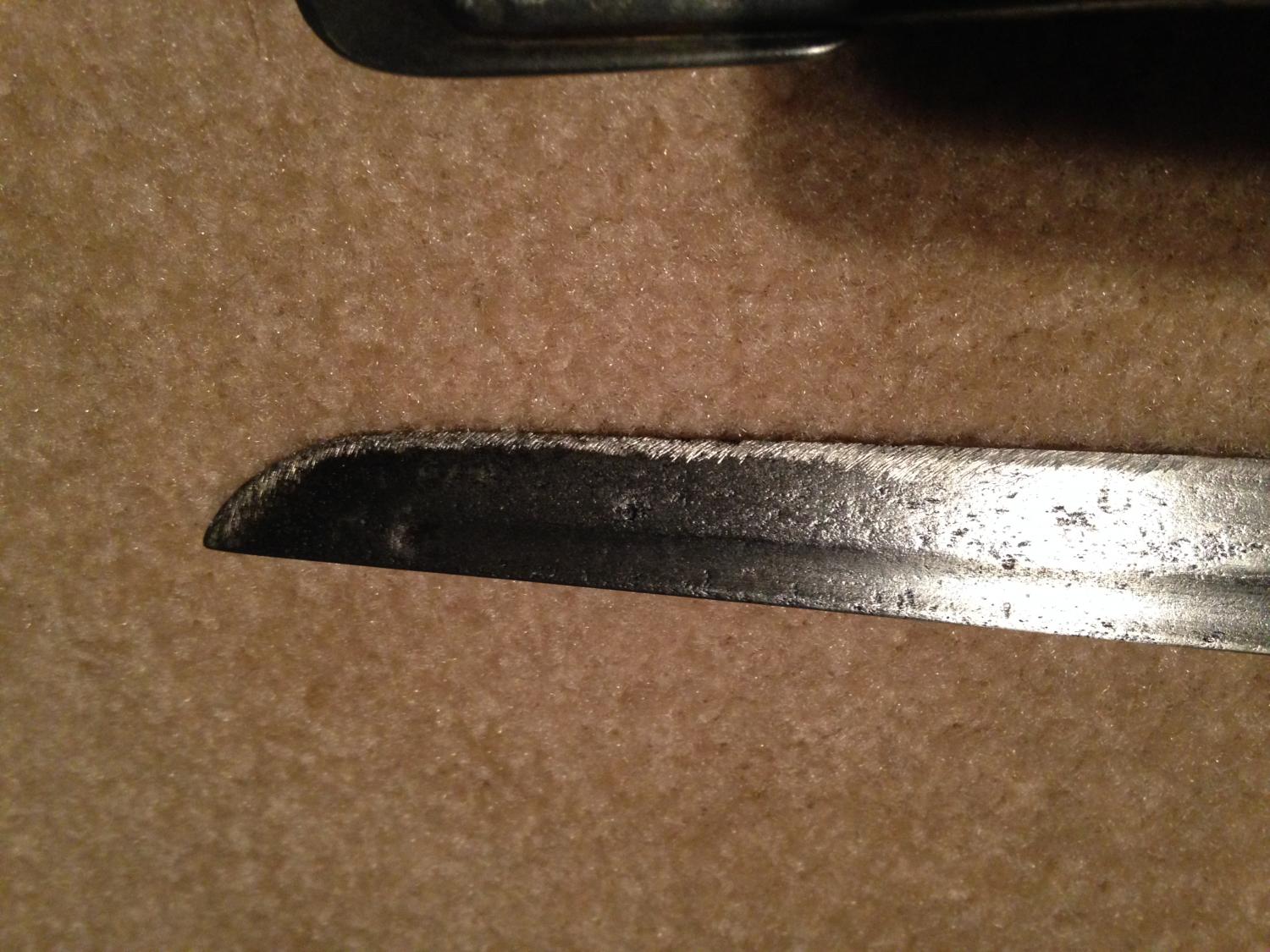
Like this. When I got mine, I assumed the rough filing was a Bubba-job. But a thread came up where we discovered several in this condition and it as said to be done in the field.
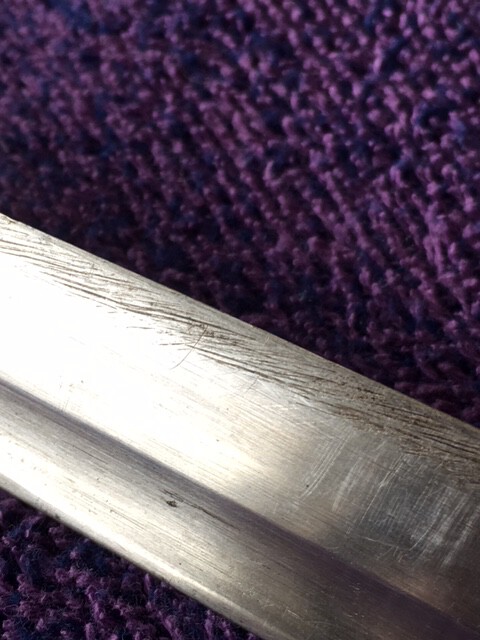
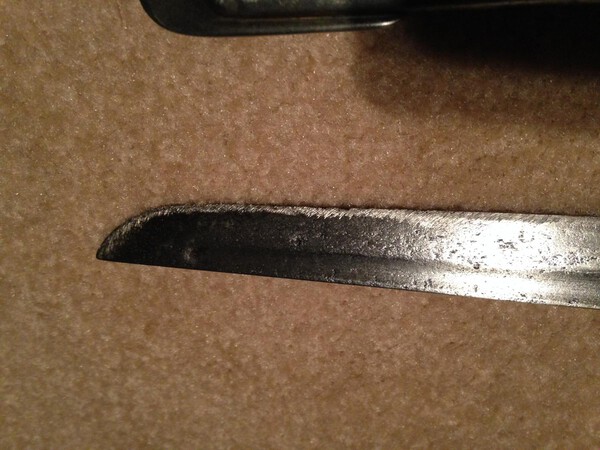
-
Austus, Can you show us an example of what you mean by zigzag edge?
-
Correct on all counts! Good research! Running $375-400 USD ON fleabay.
-
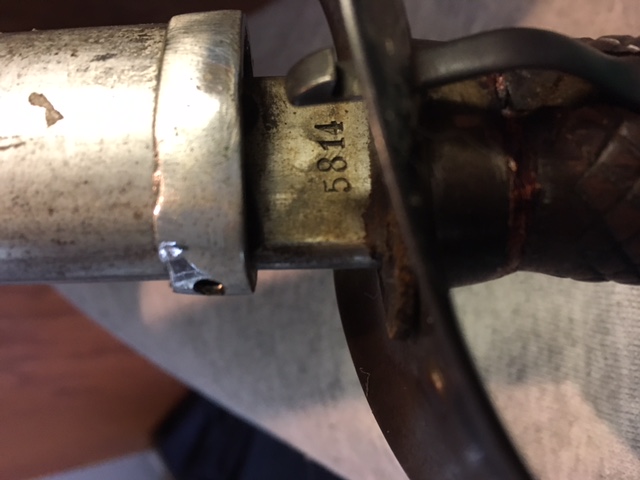
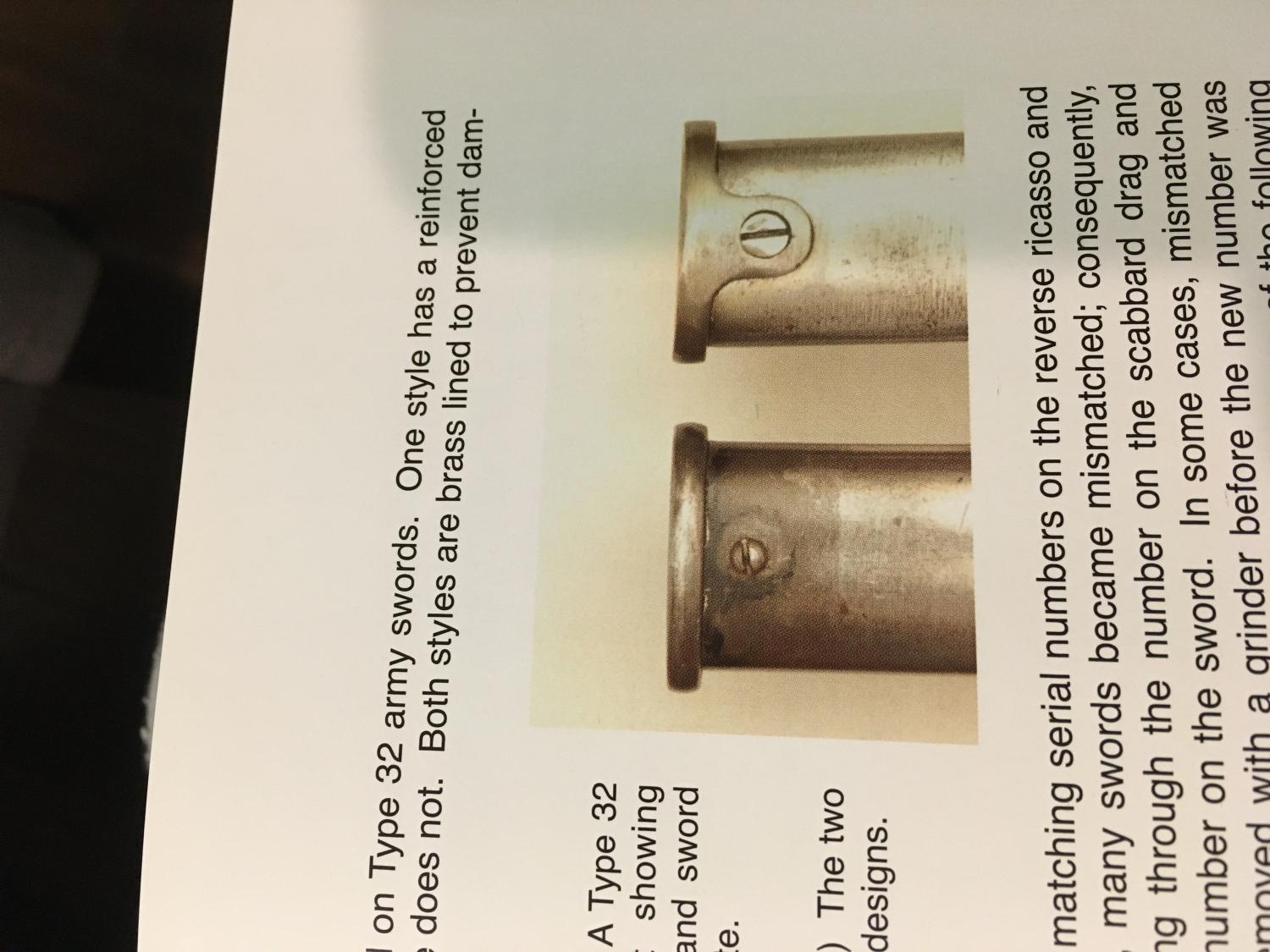
Dawson shows there were 2 styles of the scabbard throat on the 32, and yours is one of them. My Otsu is "5814", so like Steve said, both models ran numbers from probably 1 to the thousands. Both my Ko and Otsu have the leather spacer.
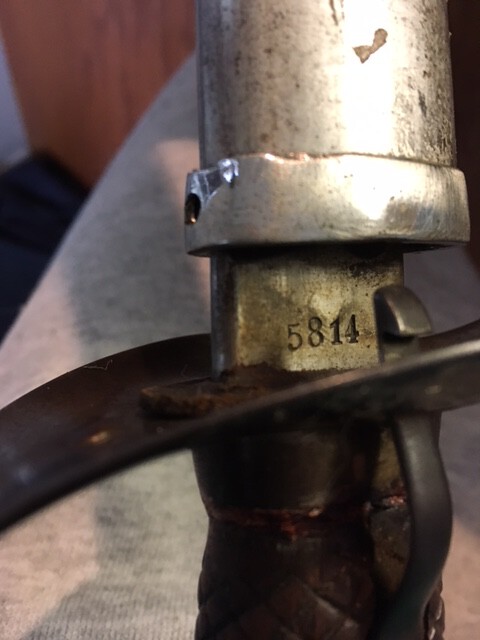
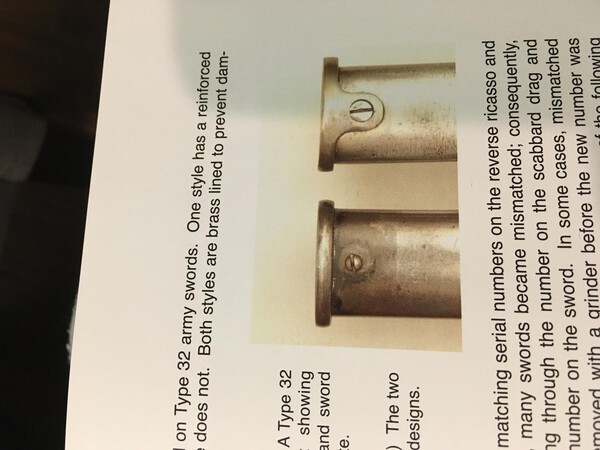
-
Purchased a Type 19 Army Sword Last Night
Bruce Pennington replied to MacTheWhopper's topic in Military Swords of Japan
These 2 are a good place to start: https://www.amazon.com/Swords-Imperial-Japan-1868-1945/dp/0971912726 -
Purchased a Type 19 Army Sword Last Night
Bruce Pennington replied to MacTheWhopper's topic in Military Swords of Japan
I will admit that I am no expert on Type 19s, and will go back and read what Dawson said about these. But at the time of their making, late 1800s, they were the only officer blades. Wasn't it the use of these in the Sino-Japanese war of the 1920s that brought about the revival of true samurai-styled swords for the military? They were breaking in the Chinese winters due to brutal cold, plus they were bouncing off the heavily wrapped Chinese soldiers. So, they were being used as weapons in battle. Kenny, can you tell if yours is chromed, or is that just the shine from lighting? If chromed, I'd say clearly it was a "dress" sword (I don't know when they experimented with chrome, if it was that early, maybe not). But if plain steel, then it was made as a weapon. -
45 Kanji on Nakago — translation help
Bruce Pennington replied to matthewbrice's topic in Translation Assistance
I have found that if you crop a photo before posting, even a tiny bit, the website software will post it upright correctly. -
Attention Mantetsu Owners: A Survey
Bruce Pennington replied to Bruce Pennington's topic in Military Swords of Japan
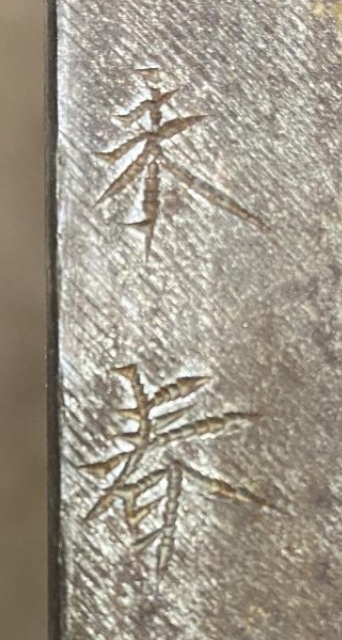
Thanks Stephen! It's added to the collection! I like this one because the "writing" of the Spring kanji is sloppy. It's a reminder that the Mantetsu mei aren't cookie-cutter copies of each other. Different workers will have variations from others, and even could have a bad day and his own work may get sloppy.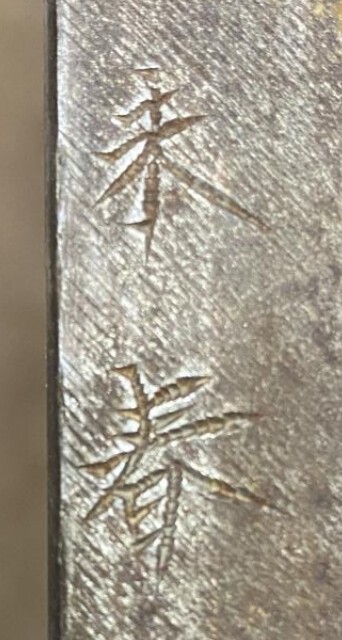
-
Sword Identification Help
Bruce Pennington replied to Badactor9323's topic in Translation Assistance
Thanks Chris! Yes “Fu 795” is the full number. The Spring kanji is pretty sloppy but is a good example that the Mantetsu mei wasn’t this perfectly struck, monolith. Some blades have been questioned in other threads because of variations in the writing, but this is a good example showing that they were still carved by humans that had good days and bad days at work! Ha! -
Sword Identification Help
Bruce Pennington replied to Badactor9323's topic in Translation Assistance
Chis, On your Mantetsu - could you try getting a better picture of the bottom kanji that I've pointed to here? I can't quite see it properly and it looks confusing in the image you've provided. Thanks!
-
No, even the handle is a fake.
-
Literature about resistance tests on WW2 blades
Bruce Pennington replied to Bruno's topic in Military Swords of Japan
This article on Japaneseswordindex really helped me understand the science of blade thickness on cutting ability: http://www.japaneseswordindex.com/niku.htm -
Neil, I also find interesting the ashi. Bolted together.
-
Neil, I fully agree with everyone - quite gorgeous rig! Austus - I believe it's there. The angle of the shot makes it hard to see. Neil, could we get a shot of the menugi?