Bruce Pennington
-
Posts
14,364 -
Joined
-
Last visited
-
Days Won
171
Content Type
Profiles
Forums
Events
Store
Downloads
Gallery
Everything posted by Bruce Pennington
-
Thank you Matt! I am completely unfamiliar with the testing topic. Assuming there's no smith name on the other side, but simply the kao on this side, would it be normal practice to submit a blade, or some blades, for testing only, mumei? Jiri, Is there no mei on the other side?
-
David, Nice presentation, and good job getting that active rust off the 451 nakago! You can read my summary of the Matsu stamp (which was the inspection stamp of the Okasa Supervisory Unit of the Kokura Arsenal) on the RJT mei Help thread. (post #10). George Trotter has in-depth knowledge of the Yamagami brothers, Akihisa and Munetoshi, and discusses them in a couple of threads, but a good one is the RJT Showato? thread, post #18, paragraph 3. If you haven't seen the Stamps Document, you can see the Matsu stamp listed with the other arsenal stamps on page 13. I'm attaching version 5.5, if you like. {the converter I used to create 5.4 PDF butchered it so bad, I've deleted it! I've sent 5.5 to Brian. It should show up in the Downloads section soon. Sorry!}
-
Ok, I believe it would be the smith's kao, too, but on this blade, the kao follows the cutting text ending in "Yoshizane", so seems confusing to me. But it is a large kao, so maybe it simply wouldn't fit in the space following the "kore" of the smith's line of text. One more question, if I may - the smith is Mitsudō kasane saidan?
-

Showato inheritance, very little information
Bruce Pennington replied to TroyTF's topic in Military Swords of Japan
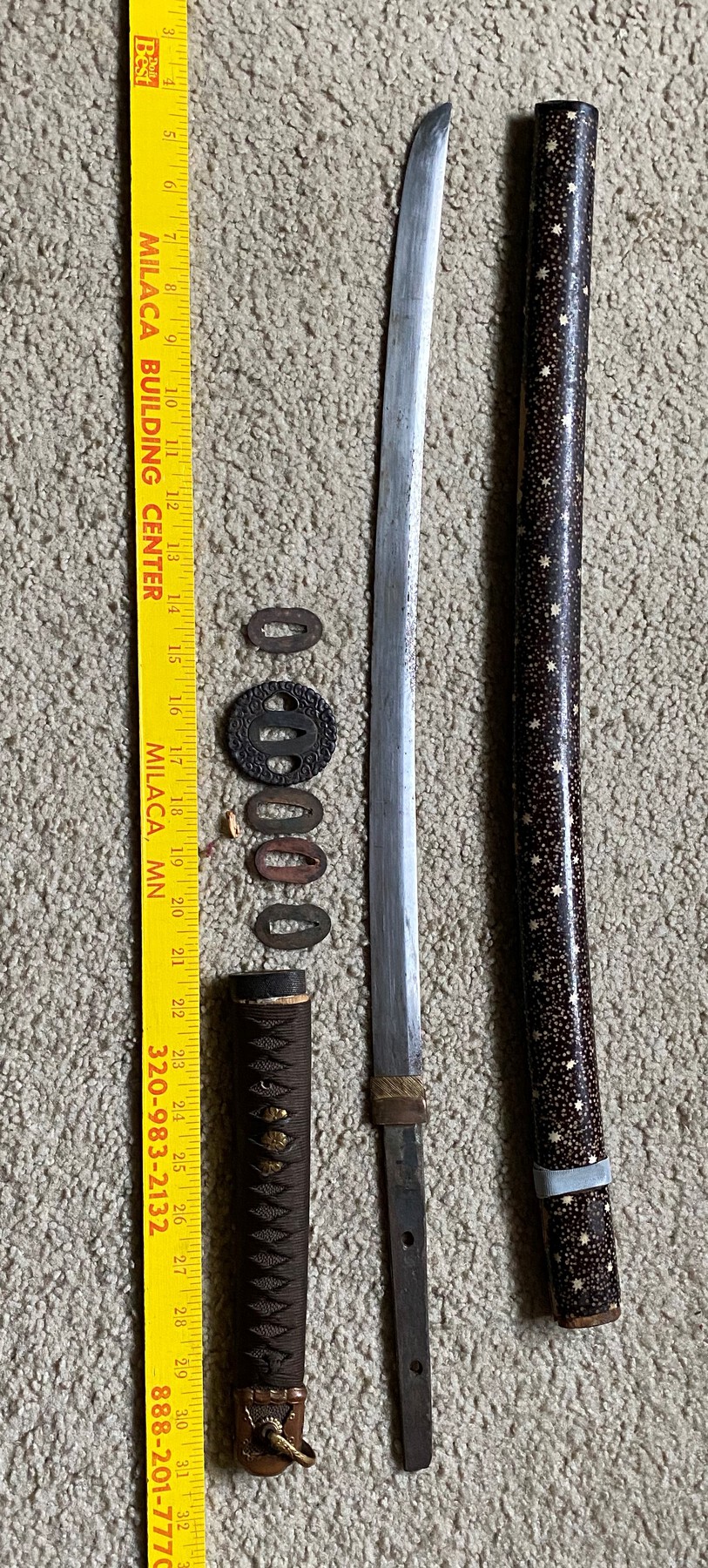
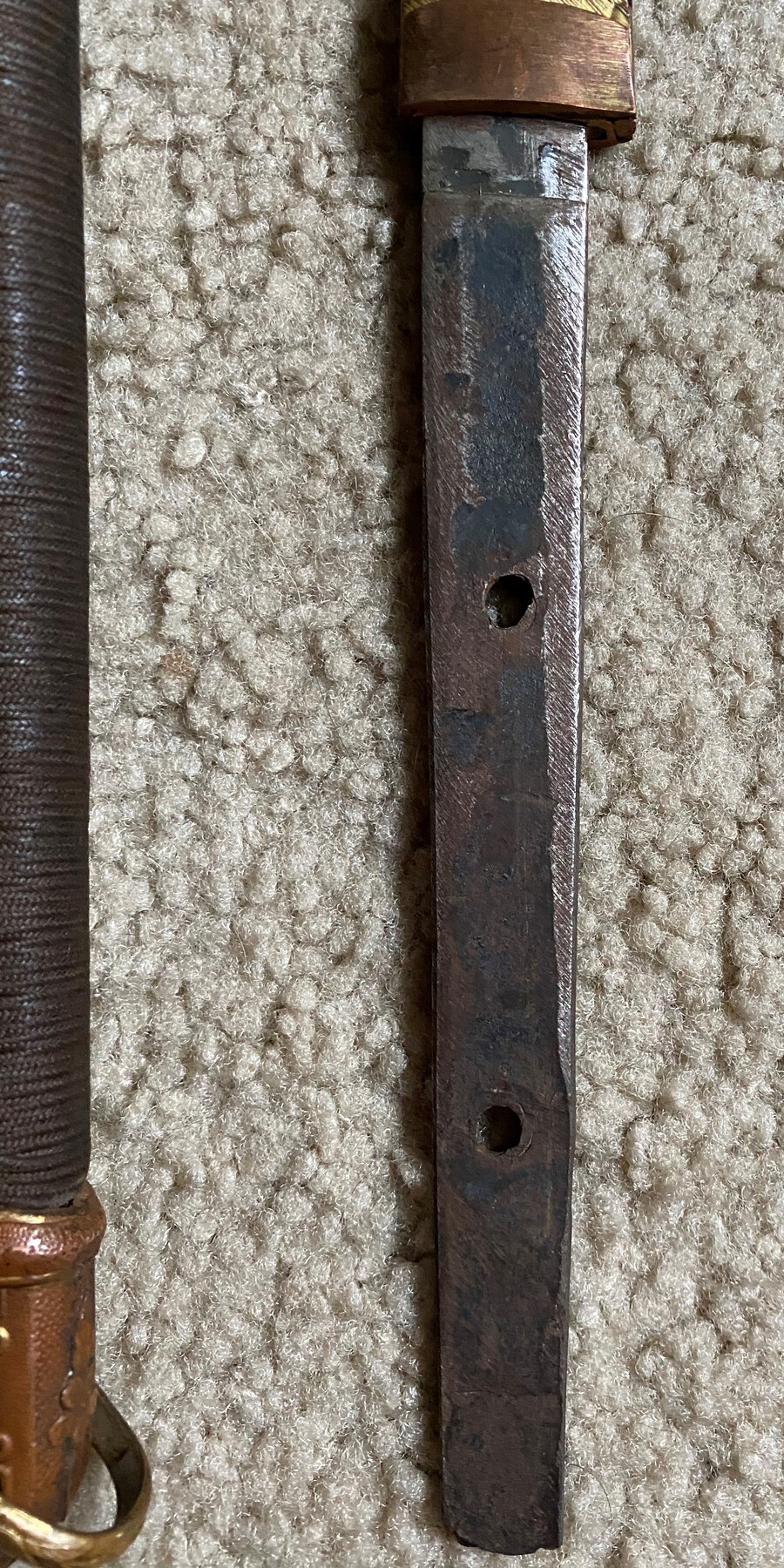
Up front, this whole rig very well may be a post-war, G.I. or Bubba, piece-together. But your question raises an interesting, and maybe unrelated, topic. We know that many Japanese hid hundreds, thousands, of swords in attics, basements, and other places. Additionally, we also know there was a bit of business making tourist tantos with the ends of blades that had been cut in half (ok, "know" is maybe too strong. We have seen tanto we believe were made this way). It is possible this rig was made from a longer piece of blade that had been cut up, explaining the rough, make-shift nakago. As to "risk", the Japanese are not immune to making/selling shady products, or breaking laws. Plus, the war devastated many people's businesses. People had to put food on the table somehow. People will take risks to eat. Way out in speculation-land, but an interesting discussion all the same. -
Steve, Is the kao that of the tester?
-
Showato inheritance, very little information
Bruce Pennington replied to TroyTF's topic in Military Swords of Japan
That's some good detective work on the fuchi/tsuka fit, Chris! I knew the tsuka didn't align with the saya, and you found why! With your collage, I do see a faint hamon, though. Likely oil quenched. -
Thanks Steve! So a bit of a mystery for now. I'll bounce it off Guy at Warrelics and see if he's stumped by it as well.
-
Showato inheritance, very little information
Bruce Pennington replied to TroyTF's topic in Military Swords of Japan
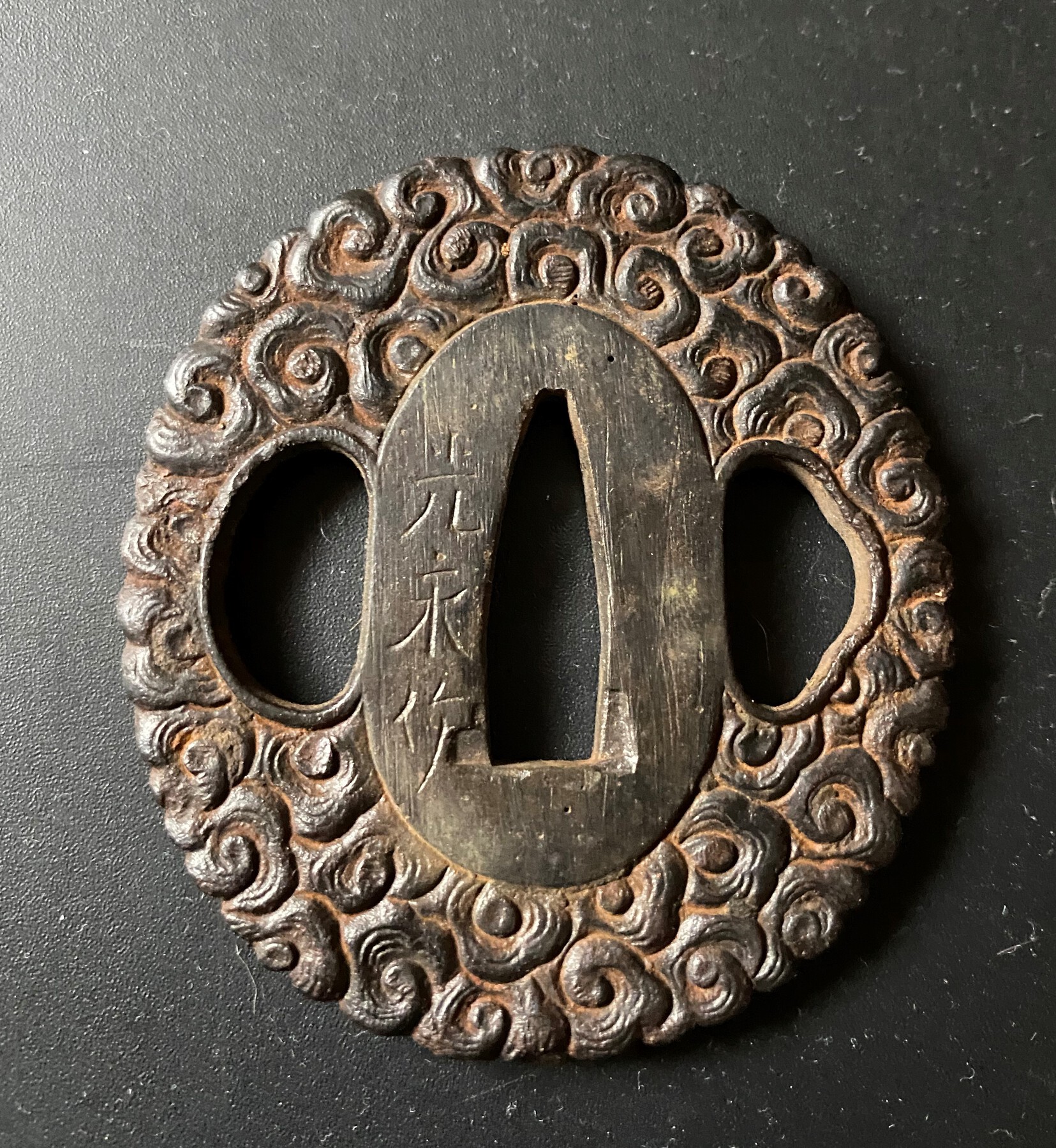
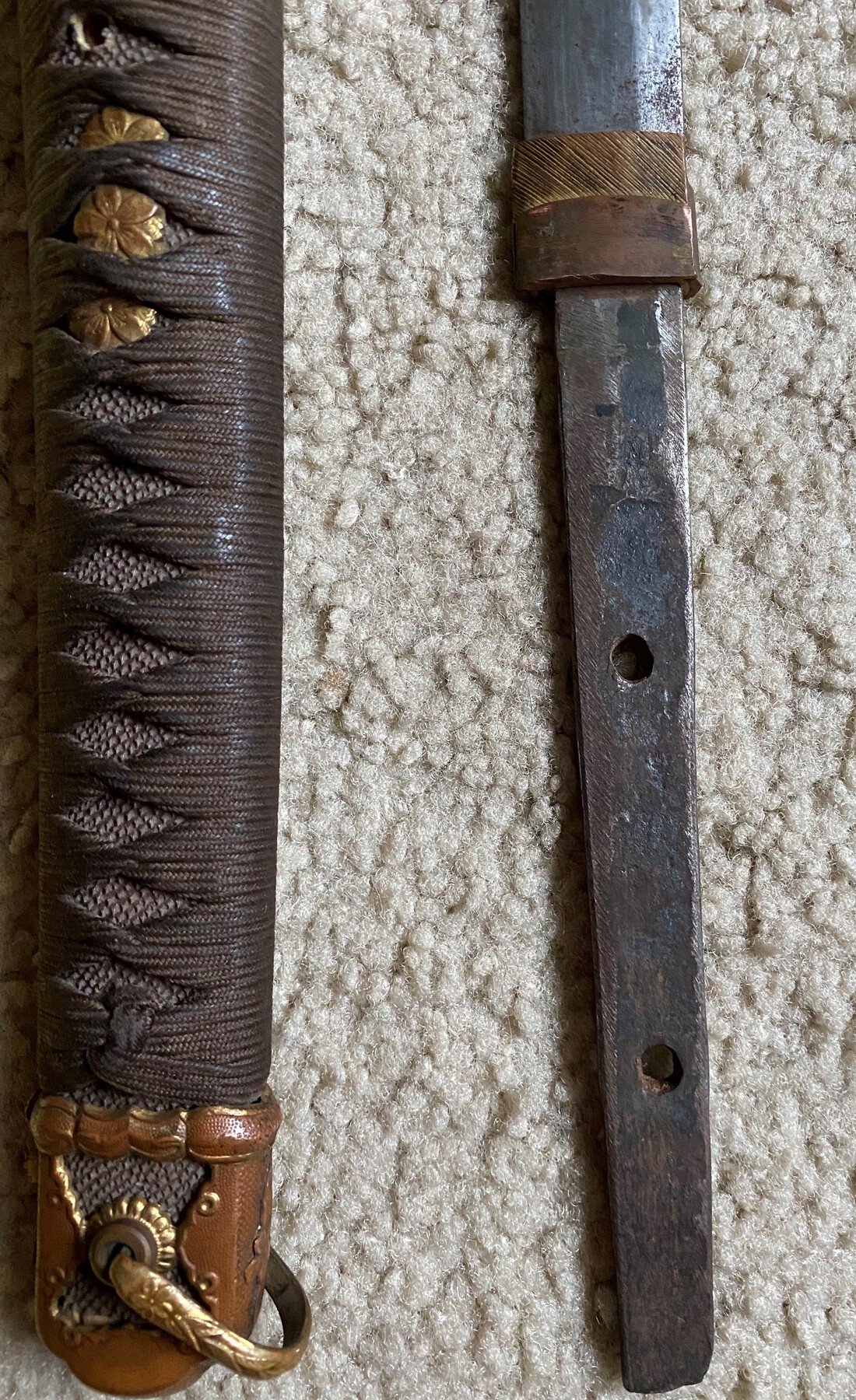
JP, He explained in post 12 that by "stamp" he meant single-steel, machine rolled and cut. Troy, If this sword had been brought to us from an auction buyer, who didn't know it's story, we would all have assumed it was a post-war piece-together. It is done sometimes by collectors and sellers trying to make an easy buck from unsuspecting newbie collectors. But you have, at least for now, a more solid story on the sword. Without more details, though, it's still just as possible he obtained the sword after the war. If so, or even if it was during the occupation, this appears to have been put together from available parts to make a souvenir. You have some interesting parts, though. The tsuka is really nice quality. I put the tsuba to the Translation Assistance guys, READ ABOUT IT HERE. You will see that the craftsman, Mitsunaga, made several of these, but they are likely made cheaply, possibly for tourists, which supports the idea this sword was constructed as a souvenir. Which is why it would be interesting to find out if your uncle served during the post-war occupation. Japanese craftsmen were selling such items after the war, just trying to put food on the table and survive. As such, your sword would still be a valuable piece of Japanese war history, in my opinion. -
Does that mean that the maker of the blade was inspired by, or was copying, the style of the owner of the kao? But we don't know who's kao it was, do we?
-
That's a great example, Ernie! Fuller says that style stamp is found on dirks, but I had never seen an example. I have seen a couple on seppa, but that's my first dirk. Thanks!
-
March 1942. Can’t do mei, but someone else will.
-
Sorry, George, it's not mine. Part of a likely souvenir sword from THIS THREAD.
-
NCOs with Private Swords
Bruce Pennington replied to Bruce Pennington's topic in Military Swords of Japan
Yes! I was hoping that would show up. And isn't this one dated in WWI? -
Survey on distribution of Mon
Bruce Pennington replied to PNSSHOGUN's topic in Military Swords of Japan
Did you say what kind of blade this is with? -
Ok, Nick, thanks, both on the confirmation about the 乙 and the info on your grandfather. After another look, minor point, but there is a "1" there, too. More visible on the tsuka (not the saya like I said earlier), but you can see it faintly on the blades too. So, 乙 1354. Here is the version of the 5 from Steve's reference. You'll note on the tsuka, even the 4 is a variation/simplification.

-
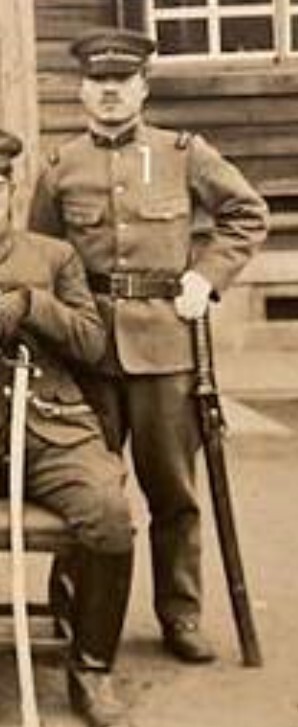
Came across this picture of a MSgt carrying what appears to be a civil/private sword re-fitted for WWII. HERE AT WARRELICS. Nick Komiya uncovered, earlier, an Army order officially permitting the practice - in 1945! But we all have seen pictures as far back as WWI of NCOs holding private swords. This photo was taken in 1939. Late edit: Nick Komiya is aware of the practice as early as the China Incident!

-
Bruno, So MITSUNAGA SAKU. Does this mean it's Japanese made? But maybe for souvenir? Or by Mitusnaga for real purposes? Sorry for the rookie-style questions, but I don't know the tsuba world.
-
Nick, Is the slider near the top metal or leather?

-
Thanks Steve! That makes more sense than the alternating kanji that I was thinking.
-
Showato inheritance, very little information
Bruce Pennington replied to TroyTF's topic in Military Swords of Japan
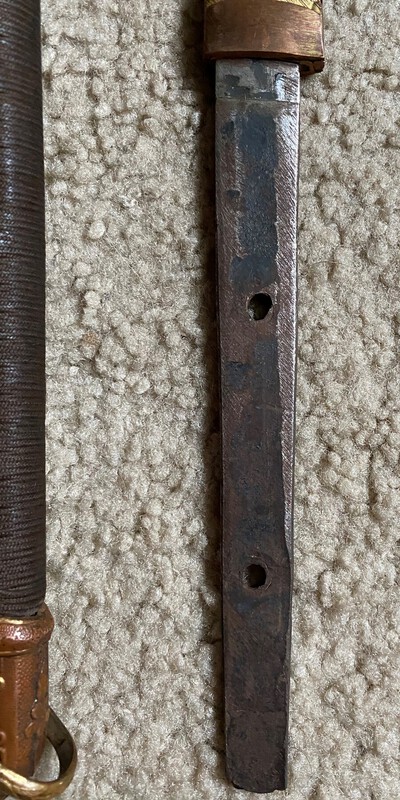
The tsuka has some fabulous sharkskin same'. I'm thinking a post-war tourist souvenir, but I'm not sure a Japanese shop would make a nakago like that, even for a tourist. The nakago is along the lines of island-made. That's why I'd like to hear the time-frame the relative served and when he came home. Plus the added requested pictures. -
Thanks Adam. It comes from, what I think is a possible post-war tourist piece ON THIS THREAD. If the kanji are Japanese, and legit, then it's likely a Japanese-made souvenir, but if it's gibberish, then it's some other type of fakery.
-
Is this mei legit, or fakery? Thanks guys!

-
Showato inheritance, very little information
Bruce Pennington replied to TroyTF's topic in Military Swords of Japan
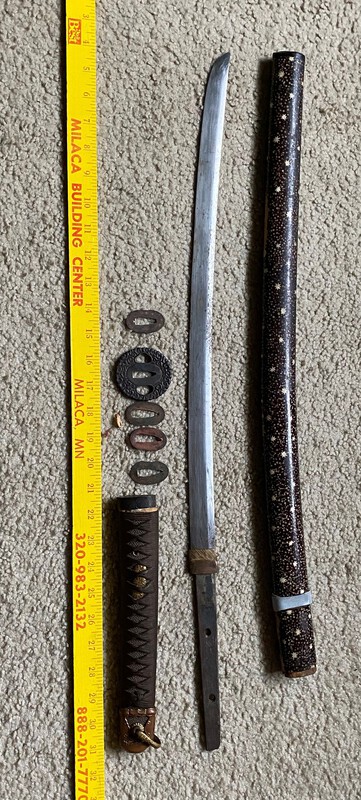
Troy, I don't see the stamp you refer to. Could you give us a photo of that? Also, I could use a picture of the area under the brass habaki, with the habaki off. The habaki is that brass sleeve still on the blade in your pics above. There are notches (machi) in the blade I would like to see how they align. A picture of the blade tip would help, too. Do we know what years your great uncle was over there? What year he came home? Adding your pics in .jpeg to simplify. Looks like Apple has gone and made everything more complicated with their .heic photo software!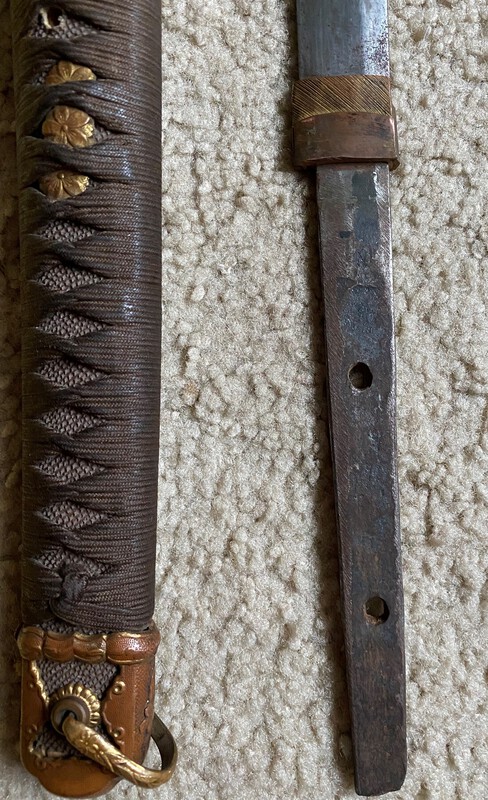
-
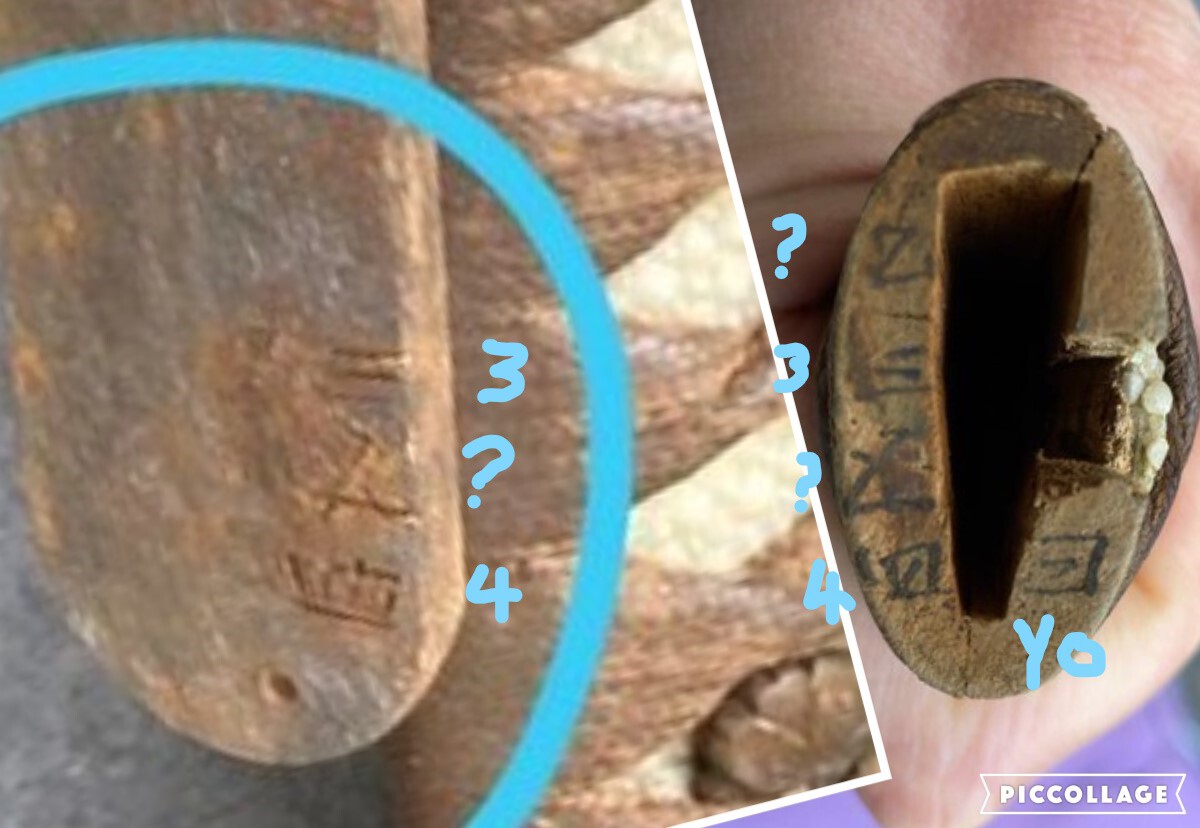
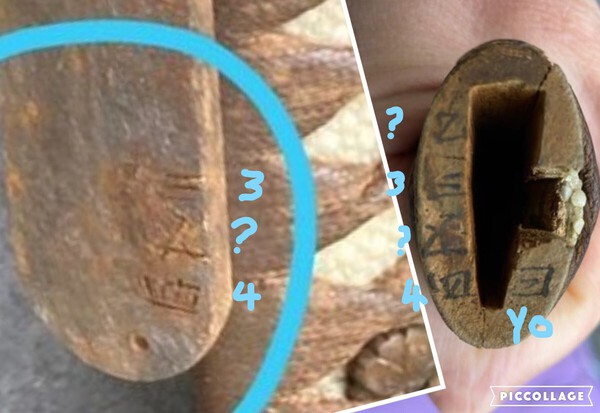
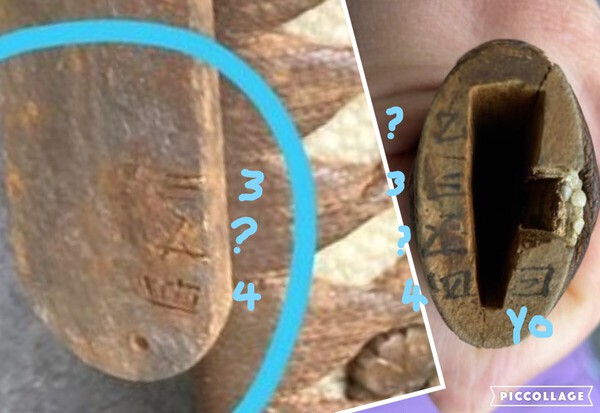
These are on a gunto brought back by a grandfather of the person at THIS THREAD. Cool pic of him boarding a ship with gunto in hand! Normally, they are just numbers, but this one has a mix of kanji and numbers, and I can't make out the kanji. One is a katakana "Yo", but the rest aren't katakana. Can I get some help, please?

-
Nick, The kanji on the end of the nakago (tang) - 3 ? 4 - and are most likely put there by the shop that assembled the blade to it's fittings. They often will have matching numbers on the metal parts, like the tsuba (handguard) and seppa (spacers), but not always. In fact, the numbers match those on the mouth of the saya (scabbard), pic attached. Yours seem to be a mix of kanji and numbers. I'll post on the translation forum for clarification. But they are still likely to be assembly markings. The officer gunto that come back with NCO tassels are a mystery. I've seen a number of them lately. Your picture shows that this came home that way, as opposed to being added back home by a collector or dealer. Now, it's not known if the gunto was found that way, or if the soldier added the tassel before coming home. If your grandfather is still alive, it would mean a lot to us if you could ask him if it was found that way.
- 13 replies
-
- 1
-

-
- tsukamaki
- manufacture
- (and 1 more)