Bruce Pennington
-
Posts
14,520 -
Joined
-
Last visited
-
Days Won
175
Content Type
Profiles
Forums
Events
Store
Downloads
Gallery
Everything posted by Bruce Pennington
-
Chris, John pointed out the same thing on the Pet Dragon thread. I had never heard this trait of Type 94 tsuba. He thought this one might be an early 98, which would still fit the late '30s timeline I proposed.
-
 OK thanks. The thickness was all I was going by. And you are the pro on fittings! I noticed the chuso was in the lower position, but recalled the good discussion we all had about that. It would support the idea that this was a Type 98 though, generally speaking (I know, I know!).
 -
Isn’t that tsuba the wider size?
-
@paul griff just posted a pristine Type 94 HERE in the For Sale Forum with a tsuka marked with both the "7" and the Roman numeral "/ II". Quite unusual to have both on the same piece. The seppa simply have the "7". Edit: After re-reading the thread, I saw that, in post #3, the chuso had a Japanese 7 with Roman 4. So the mixing isn't unusual apparently.


-
Thanks, Paul. With the lack of date and the Type 94 fittings, I'd put this sword in the 1935-1939 range. It certainly could be later, but the two factors together weighs in that date range. Interesting to see the tsuka marked with both numerical "7" and the modified Roman numberal seven "/ II". Haven't see both on the same piece before. \ The new owner is getting a great gunto in several aspects.
-
Paul, That's a REALLY good price for such an excellent gunto! The tsuba looks thick, like a Type 94, so like you say, early model fittings. Any chance of getting a clear shot of the stamp?
-
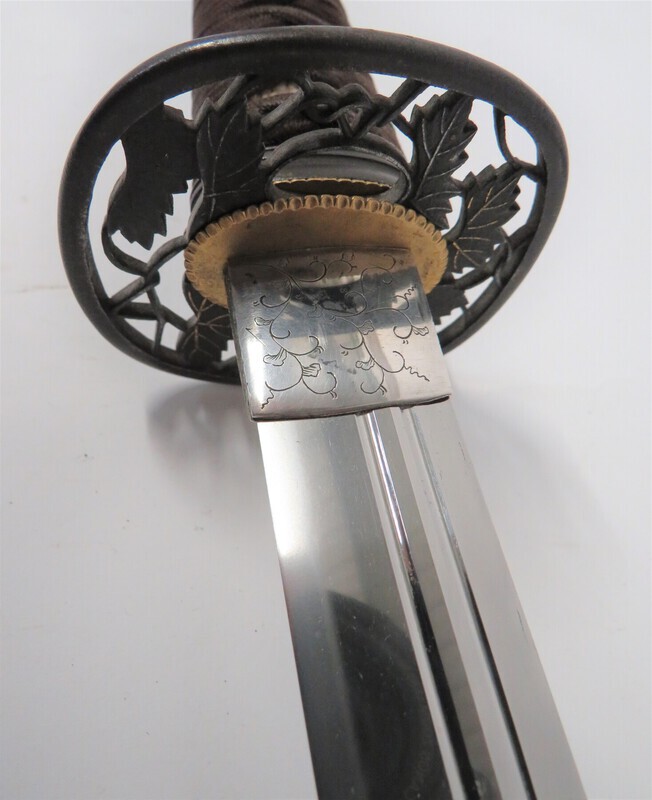
Sometimes less is more. This vine design is less flashy than the other posted earlier, yet it's simplicity gives off a calm feeling to me. Posted HERE.


-
Question about mune and sharpness
Bruce Pennington replied to Okan's topic in General Nihonto Related Discussion
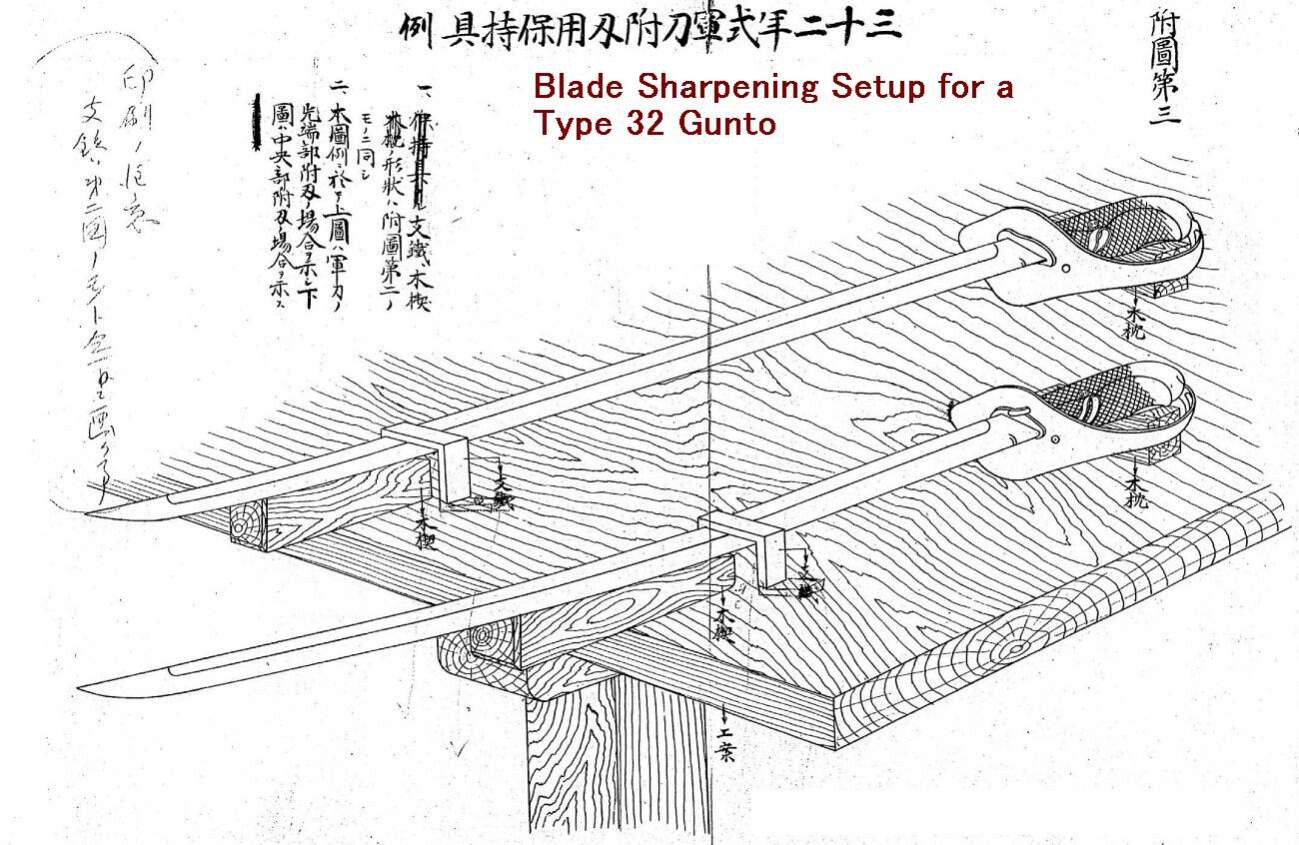
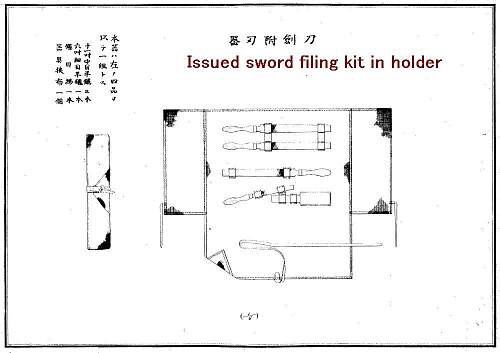
Okan, Check out this discusion on Warrelics about he regulatory requirement to dull blades during peacetime: Sharpening-dulling Blade Practice Here's some of the charts:


-
Need help with date and stamp
Bruce Pennington replied to Itomagoi's topic in Translation Assistance
Thanks guys! -
Need help with date and stamp
Bruce Pennington replied to Itomagoi's topic in Translation Assistance
Thank you Klaus! I checked that name against the list in the Nihontoclub lists and the closest they had was: "Known as Tamba Kihachi Kanehisa 丹波喜八." But this one is listed as from Mino. They reference Hawley. Any idea as to the differences? -
Tessen 5 seals that needs translation
Bruce Pennington replied to Thomas's topic in Translation Assistance
Thomas, I've found Nick Komiya at Warrelics Forum to be pretty good at decoding the tensho script of these seals. -
Yes it is! And thanks for the link. I just figured out I could use the link as the photo name, so now I'll have references for future files
-
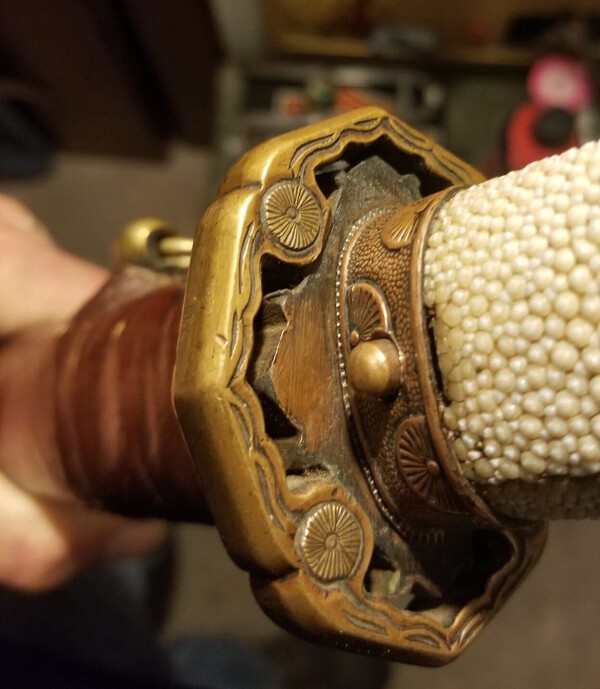
John, do you remember the thread we talked about these? I found some photos I kept, but I didn't save a reference. I know there were 2 or 3 examples of this on it.

-
Peter, there is a thread somewhere talking specifically about this kind. General consensus is that they were made in Manchuria possibly for collaboration forces. Maybe someone can provide a link, I can’t find it.
-
Barry, neither link works!

-
Ujiyoshi pirate long wakizashi with kozuka
Bruce Pennington replied to Sunny's topic in For Sale or Trade
Thank you for the interesting write-up, Steven! Good luck on the sale. -
Arsenal Mark on RJT sword Fittings
Bruce Pennington replied to george trotter's topic in Military Swords of Japan
George, that explains why his info seemed to match what you had already done with the reg translation. "The most interesting part, to me, was the story of smiths making gimei and selling them to antique dealers. I asked Nick for more on that and he said: The "under the table business" occurred, because the antique dealers offered much higher prices than the army. It would have been better profit, even if the smith had to pay the army the full price for the materials. In those days, the government froze all prices for commercial goods, but antiques obviously were not under government price control, so selling under that category must have become a loophole not to be bound by the army's fixed prices. One RJT admits they sold lots to antique dealers this way. " "Those days, retail price for swords at Kaikohsha was 120 yen, and the RJT got paid 50 yen out of this and 23-25 yen went to the polisher." -
I don’t know what the heck that is. Doesn’t look legit to me.
-
leather cover Gendaito by a Yasukuni to
Bruce Pennington replied to Volker62's topic in Military Swords of Japan
Update from Nick - he says it's likely an imported item, probably pre-1941. -
The company tassel is a plus.
-
I like it, as it has personality. It shows use and life, as opposed to pristine gunto that sat in an office corner during the war. Can't speak to the smith, so don't know if it was from someone well-known.
-
Arsenal Mark on RJT sword Fittings
Bruce Pennington replied to george trotter's topic in Military Swords of Japan
Nick Komiya, at Warrelics, has posted a synopsis of his reading 3 books recently obtained from Japan that have information on the RJT system. I'm posting it here for those who may not be able to read his post on that site. For those who can, it is HERE. "It took more than a whopping 4 months, but the books sent me by sea mail from Japan finally arrived yesterday. They are (1) History of Seki city’s Blade Industry, (2) Rikugun Jyumei Toshoh and the Gunto manufacturing association of Aizu Domain (3) Ohmura’s book on the Japanese fighting sword. They were all quite cheap, as two were second hand anyway, so I had bought them in the off chance that they might help with the sword markings questions that Bruce had been raising in the past year. I already read most of the RJT book, and leafed through the Ohmura book, which confirmed it to be pretty much a concise rehashed version of his website. So here are my preliminary findings. 1. RJTs of Aizu This book from 1994 of 186 pages devotes the first half discussing how the blade smiths of farming tools and carpentry tools of Aizu Domain (current Fukushima prefecture) formed an industry association in 1940, which came under government supervision, as part of the national plan to control every aspect of the economy. Then in 1942, the 1st Tokyo armory called upon the Fukushima prefectural government to ask the industry association for volunteers that would like to become Army Designated Gunto Smiths (RJT) in return for free supply of Tamahagane, charcoal, draft deferment and preferential treatment with food rations. The book shows examples of application forms and correspondence relating to this program. In 1944, 11 RJTs and 15 polishers formed their own Gunto manufacturing association, apart from the former tools industry association. Until reading this, I had the impression that the RJT program was mainly intended to bring existing sword smiths under the Army’s roof, and provide them with incentives to be more productive, but the real aim was more ambitious, to make swordsmiths out of smiths, who previously only had experience in making farming and carpentry tools. The latter half consists of family profiles of the RJT smiths largely based on interviews. Interesting episodes like a smith solicited by both the army and navy, using different trade names depending on who the customer was. Smiths could make good money selling to antique dealers, as an “under the table” source of income besides the military, so smiths applied false names as Mei on these black market supplies. Thus identical swords made by the same smith could have a different Mei. There is also the story of Shigetsugu Wakabayashi, a smith that moved his family to Manchuria in 1937 and succeeded in developing the Koa-Isshin Mantetsu Sword with Prof. Kusaka. He returned to Japan in 1941 and became a RJT. 2. Seki blade industry book This book is nearly 1200 pages and covers the blade industry of Seki starting from the Stone Age, so I don’t think I’ll ever read this whole phonebook. Unfortunately there is so far no mention of the Seki stamping that supposedly served as hallmark of quality for Showa-to. Introduction of stringent quality control and product guarantees are mentioned, but no specifics about markings. 3. Ohmura book I am far from being his fan, but a 242 page book for only $15 was just too cheap to pass up. So far, I’ve only skimmed through it to see what it said about the star stamping, as Bruce had led me to believe that this author was claiming that the star stamp was only allowed for RJTs. However, Bruce must have misread the Ohmura site, as he clearly indicates that the star was an army material inspection stamp, and even when a sword is made by a RJT, it would not have the star stamp, if distributed for sale without going through army channels. Stringent specs were provided in 1942 for RJT sword supplies to the army (document that Bruce posted earlier in this thread), and if an RJT delivery to the army was found not to be in full conformity with these points, the swords were rejected and returned without any star stamp. These would have been released to the commercial market by the smith without being blessed with the army star. So the star stamp meant Tamahagane was used, in so far as the sword was being supplied through army channels. By the way, he mentions 4 names as main suppliers of Tamahagane. 1. Yasukuni Tatara 2. Teikoku Steel of Hiroshima 3. Toshiba 4. Akita Steel Works" Note: I've replied to Nick, concerning his feeling that I had inferred that it was Ohmura who made the claim that the star stamp was exclusive to the RJT program - not so - It is from my survey of over 60 star-stamped blades that I've made the observation that the star is only seen on blades made by RJT qualified and approved smiths. -
Thanks John! I didn't have a star-stamped Sadakatsu in the files! I wish the site had said what they meant by "tosho #196" sounds like a number on the mune. No pics though, sigh.
-
leather cover Gendaito by a Yasukuni to
Bruce Pennington replied to Volker62's topic in Military Swords of Japan
Quite interesting Volker. I wonder if the star is the trade mark, or if the star is the symbol used to represent the words "trade mark" like our "TM" or our circled R registered trademark symbol, ® trademark symbol ™ If so, then the "M.B." is the trade marked initials. Have to run this by Nick Komiya and see if Japan used a symbol, or even the concept, or trademarked names and initials. This could be a western item being used by the leather shop, I guess. -
Nice research Bryce. We need more of this in our sword-world. I wish we had a time machine to go back and ask all our questions! Like Bob and Thomas point out, I don't think the smiths were as concerned about which steels were used as much as maybe the buyers were (Army for example). It boggles my mind that so much is made of what beach a sand iron is taken from, or whether it was smelted in a clay furnace or a mechanical one. It is one of Ohmura's biggest pet-peeves. But to get back to Bryce's OP, I'm anxiously awaiting further research! I think your theories sound plausible.