
Bruce Pennington
-
Posts
14,501 -
Joined
-
Last visited
-
Days Won
175
Content Type
Profiles
Forums
Events
Store
Downloads
Gallery
Everything posted by Bruce Pennington
-

Lost and looking for answers
Bruce Pennington replied to Itchy 6-502's topic in Military Swords of Japan
@Brian - could we get this moved to the Military forum? Thanks my friend! Chris, Don't worry about harming anything, these are made specifically easy to disassemble. You'll see in the link Grey posted how easy it is to push/tap out the small bamboo peg holding the handle to the tang. Then, the handle and handguard pieces simply slide off. Sometimes dirt, grime, and age can make them resist a bit, but don't worry about harming anything to gently tap them off. -
Menugi Translations Please
Bruce Pennington replied to Bruce Pennington's topic in Translation Assistance
Harrison987, over on this Wehrmacht-awards thread, posted this radio. You can see similar labels. Focus isn't good enough to see if any match exactly, but it at least shows the radio idea is on the right track.
-
Ha! Don't worry Chris. We will always respect you in the morning!
-
commemorative WW2 Japanese sword
Bruce Pennington replied to Swords's topic in General Nihonto Related Discussion
There has even been a Mantetsu papered, the discussion can probably be found on NMB with good search skills. The thought has turned to include blades of noteworthy historical value, regardless of manufacturing methods. -
Now you got me going! Here's one made in the 1600's. Posted by @SRDRowson HERE.

-
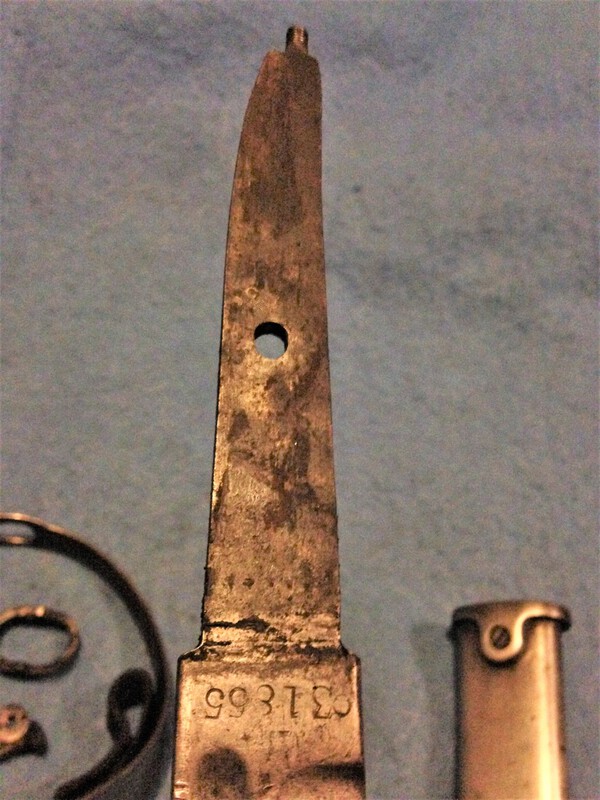
I'm the kind of guy that HAS to take things apart, Ha! Have you tried to unscrew the end-cap? The Japanese did make threaded nakago posts on their kyu-gunto and Type 32s. I've never seen it done with the WWII gunto though. In any case, you have quite a unique sword there. Collectable in it's uniqueness.

-
Significance of Silver Plated Type 98's
Bruce Pennington replied to PNSSHOGUN's topic in Military Swords of Japan
Herman, @SteveM may correct me, but I think your blade was made by Yoshimitsu of Seki. I think it's dated 1942. Fascinating writing under the normal mei and date, though. Maybe Steve can make those out for us? -
The provenance stories like the one Chris posted, to me, seem credible when the person speaking isn't trying to sell the sword, just seeking information. When found on a For Sale description, it could simply be a made up story. Now certainly, even the person seeking info on a family sword, may be intending to sell later, and we just don't know, but why add the story?
-
So, sounds like whomever used the term was trying to call it a pilot sword without using the words "pilot sword", probably because they know from our multiple discussions on the topic, and a dedicated thread, that such an animal didn't exist.
-
commemorative WW2 Japanese sword
Bruce Pennington replied to Swords's topic in General Nihonto Related Discussion
Not compared to a gendaito or nihonto. However, depending upon the condition of all 3, I've seen a showato sell for more than the other 2. -
commemorative WW2 Japanese sword
Bruce Pennington replied to Swords's topic in General Nihonto Related Discussion
I have seen many swords use that style of dating system, but I do not think I have ever seen one actually put the words “commemorative sword”. It is probably referring to the 26th hundred year anniversary of the founding of Japan. https://www.oldtokyo.com/2600th-anniversary-of-the-founding-of-Japan-1940/ -
Opinions, Please
Bruce Pennington replied to Bruce Pennington's topic in General Nihonto Related Discussion
Thanks Simon! So the blade got a Hozon rating even though it's clearly showato. Reminds me of the Mantetsu that recently got a rating. So, the evidence that we have in hand still supports that showa stamped blades were showato. PS: For clarity, I have 30 Kanemichi blades on file - 26 are showa stamped, 4 have the large Seki stamp. So, technically, this blade could have had a large Seki removed, but the odds are in favor of it being a showa. -
Opinions, Please
Bruce Pennington replied to Bruce Pennington's topic in General Nihonto Related Discussion
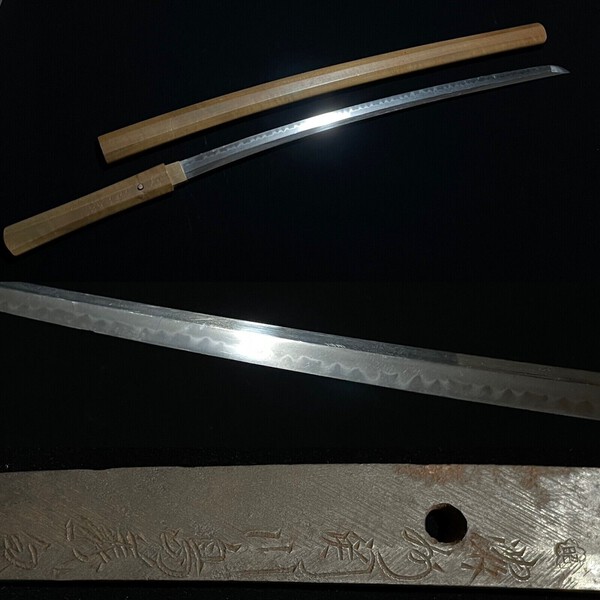
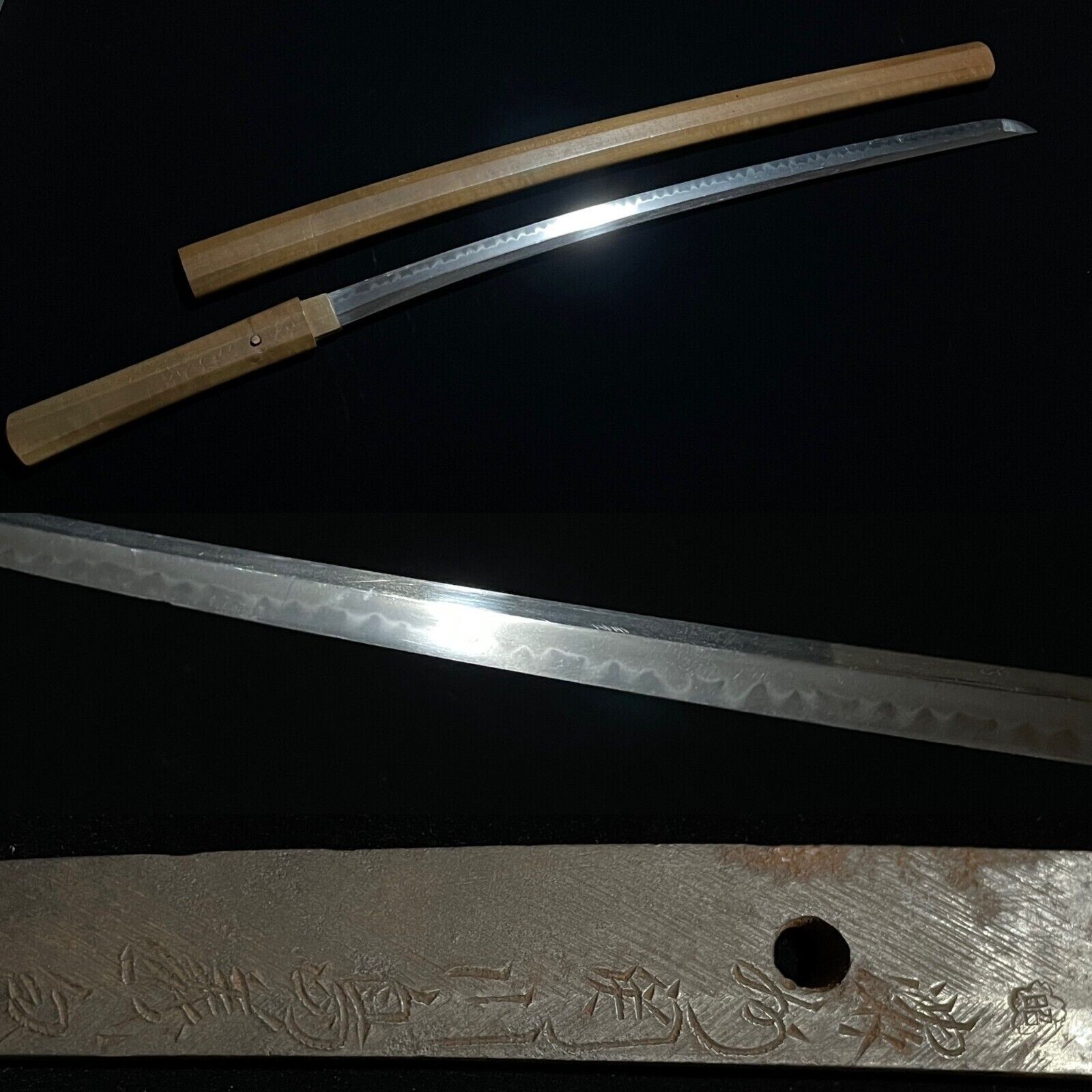
Bingo! You guys nailed it. I'm always on the lookout for a Showa-stamped blade that could be gendaito. While I personally think all Showa and large Seki stamped blades were inspected/approved showato, there remain the stories of a couple blades that papered at shinsa with the showa stamp. Thanks for evaluating this one! @Michaelr - this is from an ebay sale. I think it's still active if you search for it. It's an undated Yoshikane in shirasaya:.thumb.jpg.c7b4b2d6af5261196c59d6ad3a481071.jpg)
.thumb.jpg.e8b67d45cb72d48ac68d7673a12f5173.jpg)
-
Opinions, Please
Bruce Pennington replied to Bruce Pennington's topic in General Nihonto Related Discussion
Strange. I can see them. I did a "Copy picture" and pasted. I'll edit the post and upload them. Should fix it. -
Posting this one from @Bridges thread HERE. Identified as Inaba clan.
-
Type 98 Gunto family moon fake or genuine
Bruce Pennington replied to Alaen's topic in Military Swords of Japan
The color could be a trick of the lighting. To all appearances, it looks original to me. -
Steve, For the record, your sword, other than the leather stack, was a very nice Type 98 Japanese officer sword (gunto). Could be a Type 94, with that centered release button, but the thinner tsuba (handguard) probably pushes it to a 98. @PNSSHOGUN, John may confirm that for us. I like the nice, fat seppa (spacers) and find them more often on upgraded gunto. In other words, the original officer paid a little more money for the sword. (Officers had to buy their own swords). You can see how they originally looked on Ohmura's excellent site Army Commisioned Officers Shingunto. That round spot on the end, to me, looks like a filler or plug, probably covering the access to the end of the tang and how it's secured. If there's no obvious way to get that plug out, and still want to explore it further, you might find a metal/machine shop and ask their opinion.
-
Please let me know what you think. I have my opinion and looking for confirmation. Don't want to bias by saying mine, or showing nakago. I'll post it after. Thanks guys!
.thumb.jpg.f9aa1e67317ccecd88eaf63b4256a2aa.jpg)
.thumb.jpg.80bbf6a510596bfc911f224472aac7c5.jpg)
.thumb.jpg.86c914a628afbe0731666ba48517b561.jpg)
-
Japanese sword WW2 gunto signed Ujifusa yasuki steel
Bruce Pennington replied to Swords's topic in Military Swords of Japan
English Before the war, Kisaku Ibe of Yasugi Steel Co., Ltd., the predecessor of Hitachi Metal Yasugi Factory, and others developed high-speed tool steel with electric steel for the first time in the East with the cooperation of Matsue Electric Light, establishing a further brand in modern steelmaking. Currently, it is developed at the Hitachi Metallurgy Laboratory in Yasugi City, Shimane Prefecture and is defined as the names of all special steels represented by tool steels for high-performance machines, such as blades and molds that require the strength of materials manufactured using advanced technology. These are registered trademarks as "YSS Yasugi Speciality Steel" (YSS stands for Yasugi Speciality Steel). -
I have one like that. I made the mistake of messing around with it one too many times, and it broke! Now it’s glued back together.
-
Manchurian Rinji Seishiki Sword
Bruce Pennington replied to IJASWORDS's topic in Military Swords of Japan
The saya is a very dark green. At first glance, I thought it was black, but in good light you can see it is a dark, dark green. The ito seems to be a very dark grey, or light black. -
Menugi Translations Please
Bruce Pennington replied to Bruce Pennington's topic in Translation Assistance
The 2nd and 3rd sound like plug-in jacks/locations on the device, and the 'filament' one was for the power cord/source. -
Manchurian Rinji Seishiki Sword
Bruce Pennington replied to IJASWORDS's topic in Military Swords of Japan
Hmm, the plot thickens. I don't know anything about WWII electronic equipment. Can't picture what device would use "filaments". If someone here at NMB doesn't pop in with an answer by tomorrow, I'll run it by the Warrelics collectors. Thanks Thomas & Trystan! -
Thanks for posting this Vitaly, @GoldenDrachen, I was considering doing a post myself for info purposes. For everyone else - Vitaly put this up for discussion on This Warrelics Thread. Another guy popped in with an identical one, saying he bought it from a dealer at a show, and 2 hours later, saw that the dealer had dropped another identical one on the table after he left! Vitaly just received the dagger and with it in hand, doesn't feel it is legit.
-
Manchurian Rinji Seishiki Sword
Bruce Pennington replied to IJASWORDS's topic in Military Swords of Japan
Thanks Trystan! The guys on the Translation forum said they came from some sort of phone or communication equipment. Maybe a field radio? I'll post them on Warrelics. They seem to have a bunch of guys that collect that kind of equipment. BTW, do you know what is meant by "fiber power supply"?




.jpg.54eef4355d82de4669ac1f2f32931df0.jpg)
.jpg.54a2593b09c4f206eeaf52d4b8ebf9d8.jpg)
.jpg.abde63cec0d98b1170ee055bef77ebeb.jpg)
.jpg.8a18ee848c7d9ebd756aa9b542fd3c4f.jpg)
.jpg.fce6f1e0dbffd9955380596d1fe8ae25.jpg)