Dave R
-
Posts
1,691 -
Joined
-
Last visited
-
Days Won
11
Content Type
Profiles
Forums
Events
Store
Downloads
Gallery
Everything posted by Dave R
-

Japanese Calvary and Artillery Sword
Dave R replied to waljamada's topic in Military Swords of Japan
This is a good one to start on.... http://www.swordforum.com/vb4/forumdisplay.php?11-Antique-amp-Military-Sword-Forum -
Japanese Calvary and Artillery Sword
Dave R replied to waljamada's topic in Military Swords of Japan
It's a mass produced homogeneous steel blade on the same level as a 19thC-20thC European Cavalry sword or bayonet, and nothing at all like a Nihonto. I think a visit to some other collector forums might be useful for you. -
Even in WW2 this applies. The tradition was very reduced, kept alive by a handful of smiths, so new smiths had to be trained up from the start. Even tamahagane production had to be revived from all but zero , and there was no big pool of skilled men with centuries of tradition behind them to draw on. Production ran for just a decade or thereabouts, so they were just about getting up to speed when they had to stop.
-
As any craftsman will tell you "practice makes perfect", and there you have the difference between current Gendaito and Kazu Uchi Mono! A Sengoku Jidai smith would make blades continually and without artificial limits on numbers, and sell everything that was of decent quality..... Unlike a current smith.
-
Kawachi Daijo/ Kuni Sada sword - opinions please
Dave R replied to Dean1981's topic in Military Swords of Japan
I think I see what might be core metal, which would account for lack of hamon, and I am wary of the mounts. Pudsey (Leeds) Arms Fair is this Sunday and Birmingham in a couple of weeks. Plenty of decent dealers at each..... -
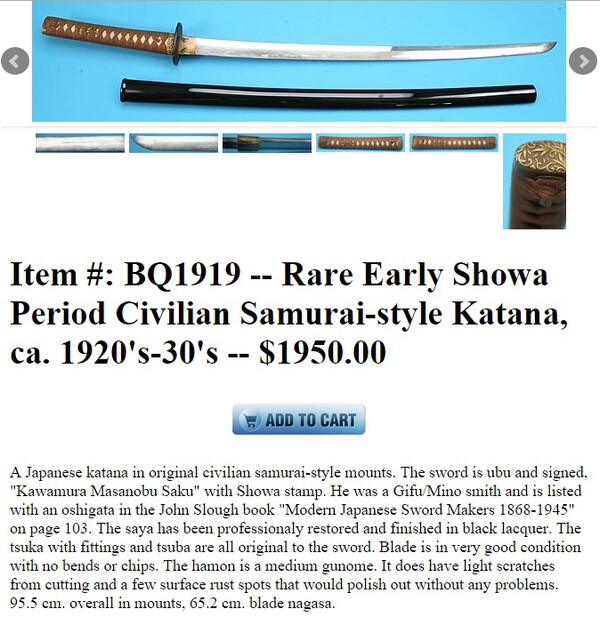
I have Showato in Buke Zukuri in my files, and they have to be pre 1945, and given the sword shortages I doubt they were made after 1938. Below a pic. from a sellers site of a rather nice example, and Sho stamped as well. And of course a lot of them got a rapid makeover, field cover on the saya and etc, and went off to war. We see them all the time.
-
I have reason to believe that some Seki "oily's" started life in civilian mounts! Cheap(er) blades for Iaido possibly.
-
Something that may or may not be relevant, black paint dried faster, which was why early Fords only came in black. If you were doing a quick repaint in the field for scabbards that had been banged about enough to need one, black would have advantages over other colours.
-
Japanese Calvary and Artillery Sword
Dave R replied to waljamada's topic in Military Swords of Japan
A friend of mine who does professional restoration says that most military blades had a brushed or matt finish, rather than mirror or burnished. Officers blades were and are a different matter. Remember you got them cheap for a reason, so don't get in tiz' about condition. I would probably go for a wire brush clean up, and then see what was revealed.... but we all have different strategies and standards. -
"A good polish will immediately reveal"... and there's the rub. As I understand it, there was a shortage of good polishers around in the early Showa, That's also assuming that the polish was done to reveal rather than deceive....
-
... Well, that's the point isn't it! Who did this, when, where and why as Frank Harris would say.
-
Low grade and uninteresting to some, but ignoring factors like plain curiosity, Shin-Gunto fetch decent money on the market now, and some people just collect militaria as opposed to nihonto . This is in fact the Militaria section of this website. There are members currently engaged in discussion and research here about the factory made NCO gunto, Showato officers blades, factory or smith made are at least as interesting! The mere fact that there are Gimei Showato indicate that someone is or was putting their money into it, and it would be good to know if this is a current practice or just one engaged in in the past.
-
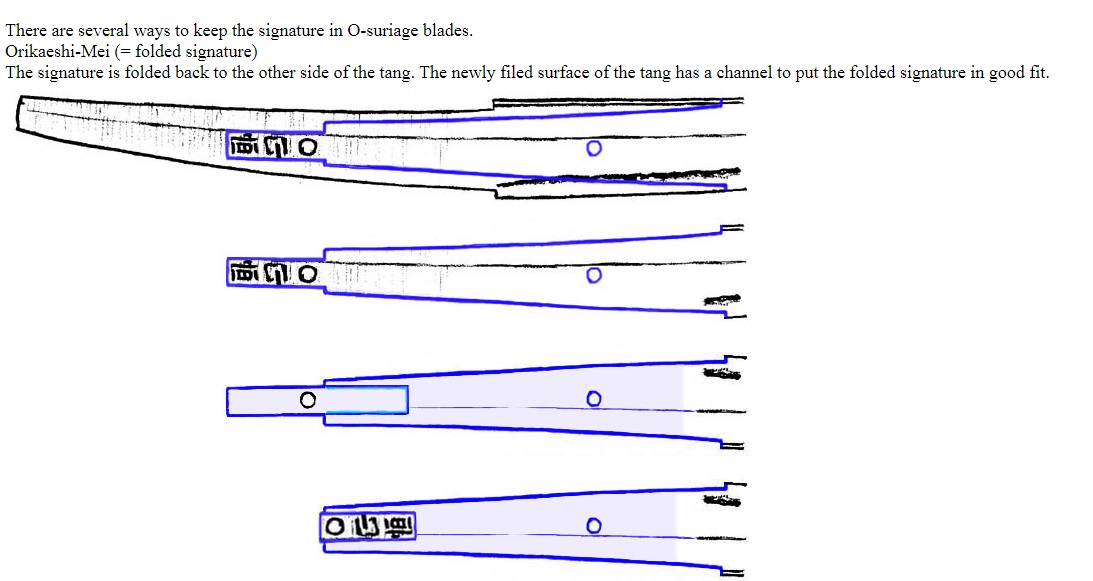
Orikaeshi-mei — needle hole?
Dave R replied to RichardP's topic in General Nihonto Related Discussion
Nicely explained here.... http://www.ksky.ne.jp/~sumie99/suriage.html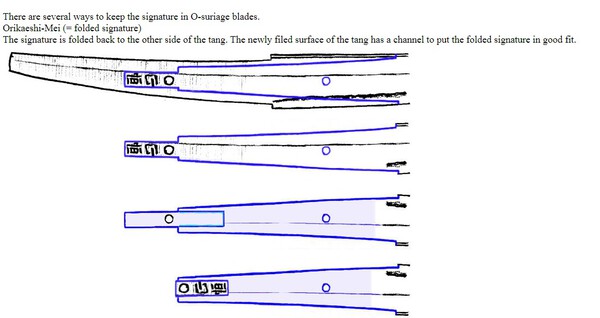
-
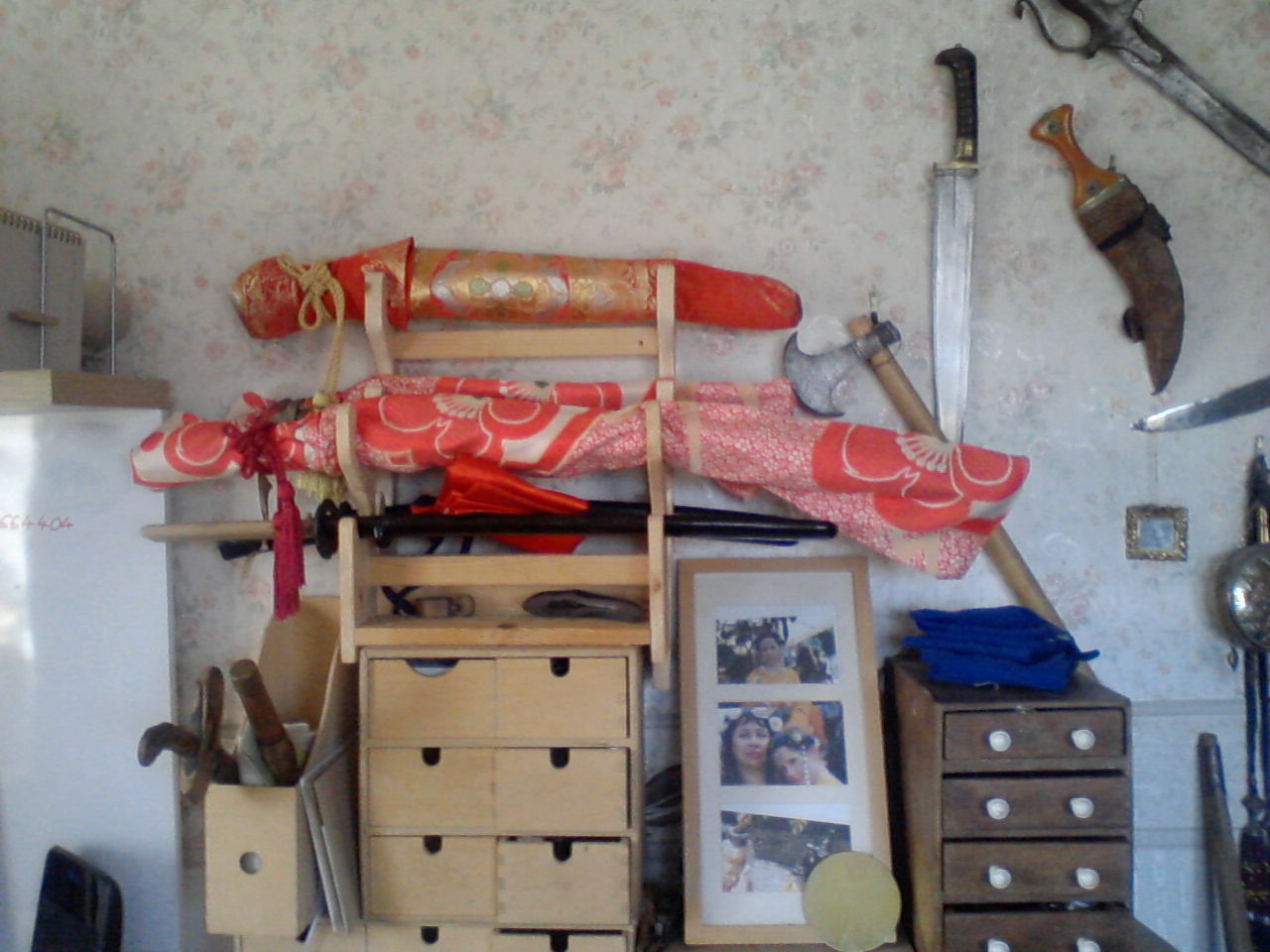
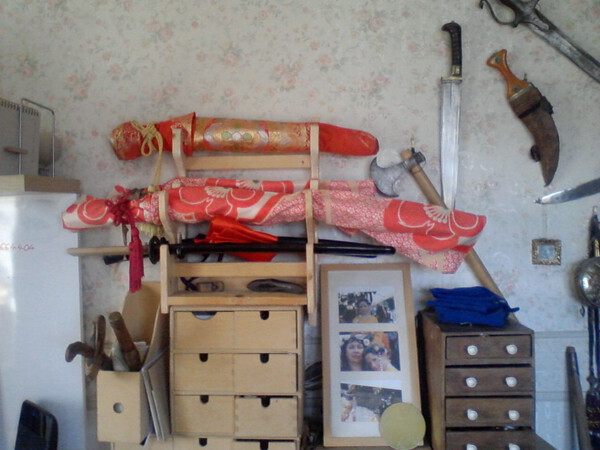
I have mine in home made racks. The collection ran away with me a bit, and I wanted them to be safe from falling over. Some are bagged, and some out on display.
-
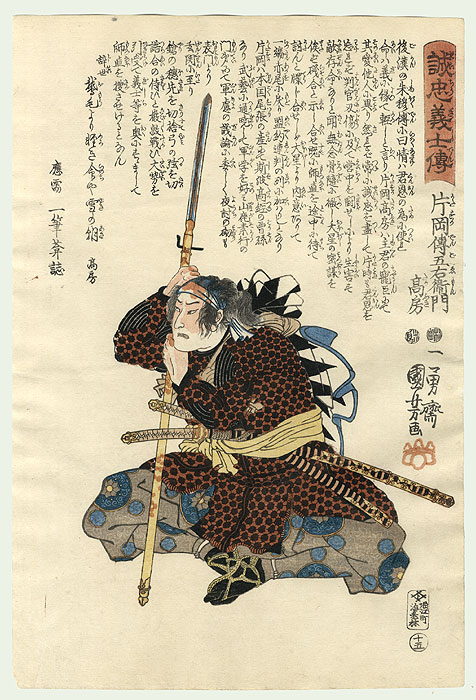
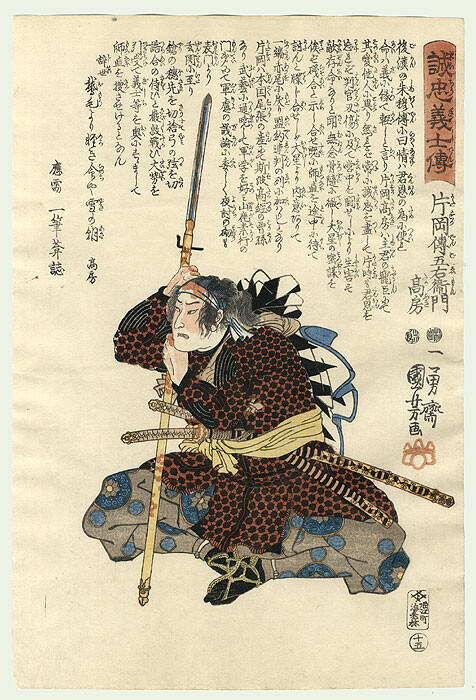
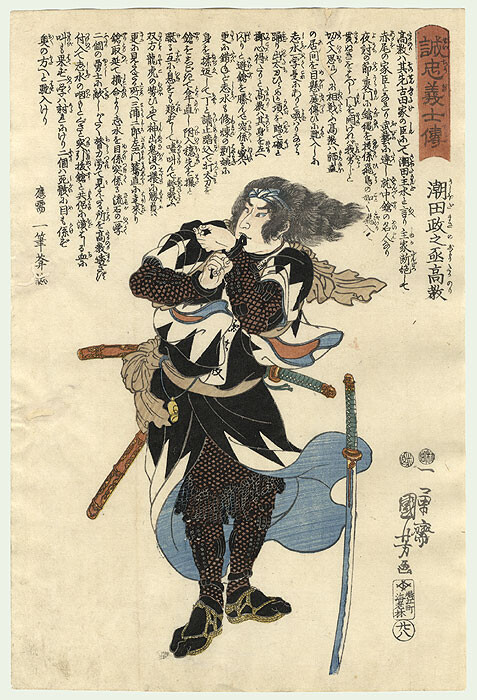
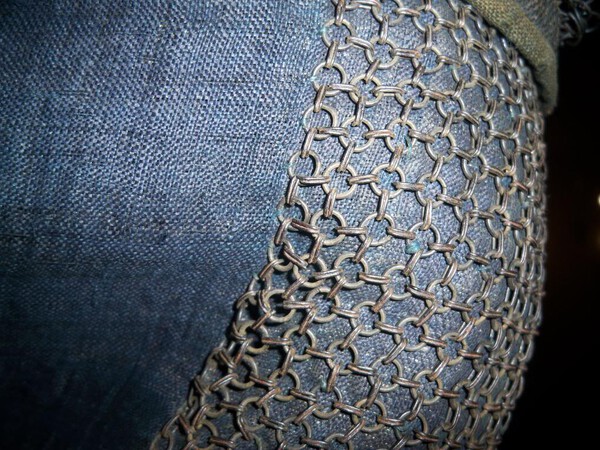
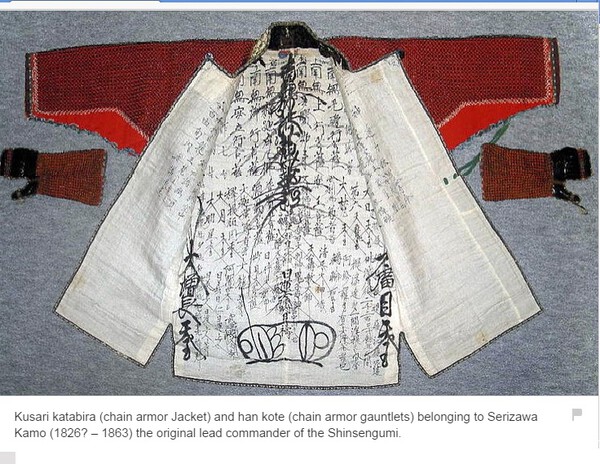
This guy Kataoka Dengoemon Takafusa is wearing a quilted armour of small plates sewn between layers of cloth, and Ushioda Masanojo Takanori who looks like he is wearing fishnet, is wearing that uniquely Japanese open style of mail. It's light armour, and would not stop a full on two handed cut from a trained warrior, but that is what it would take to get through it. A big advantage in a melee.
-
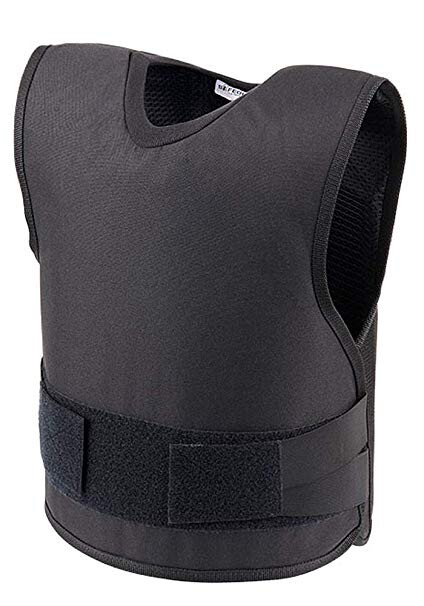
Any armour can be pierced, penetrated or destroyed, ask anyone who mans a Tank! The point of armour (even today) is that it protects against shrapnel, glancing blows, expended projectiles and uncommitted attacks,... not that it makes you invulnerable! As soon as guns appear on the scene armour becomes less of a protection, but.... in an encounter or street fight it gives an advantage. This is why the heavy armour of the 16th century became obsolete and more for parades than the battlefield. Think of these kusari as being in the way of a threat level one or two "second chance body armour" rather than an Osprey.
-
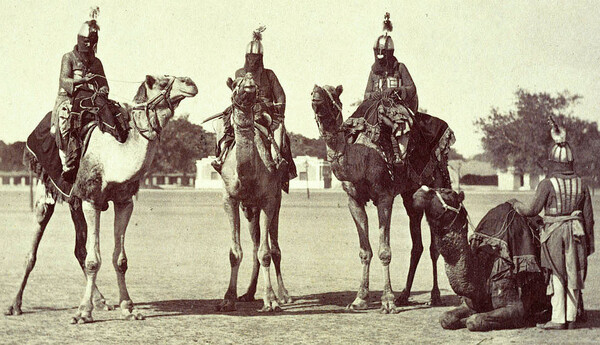
Both British troops and Samurai still had a good chance of running into an armour clad opponent at this time. Both Indian and Japanese warriors were still wearing mail and small plate armour on occasion , though not full plate. Different methods were used to deal with the problem. British troops in India would use the point, which readily goes through mail. Samurai carried a very hard edged two handed sword and cut through mail and thin plate.... Getting back to the original question though, in my opinion blades made with a full temper without a hamon are perfectly effective, a hardened edge can be present with no hamon visible, but lack of hamon is a flaw in Japanese blades.
-
Relevant article from one of my favourite sites. http://www.ksky.ne.jp/~sumie99/flaws.html I was reminded of this by Ken's post in another thread.
-
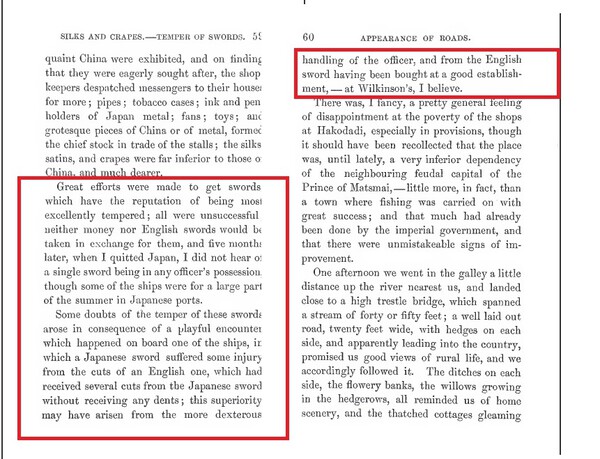
A short extract from a 19th C book, dating from the Crimean War period. A Royal Navy expedition chasing up Russian ships and installations based itself for a while off the coast of Japan.
-
I have an original and antique Chinese sword in my collection, of San Mai construction. No Hamon, but the edge steel shows as a narrow bright line the thickness of a wire. I bought it about 30 or 40 years ago, when they were cheap. Age unknown, but a bring back from the "Boxer Rebellion".
-
Here is what was done with the signature, "mei" ... http://www.ksky.ne.jp/~sumie99/suriage.html
-
Some of us are interested in more than what a sword would sell for. (No offence).
-
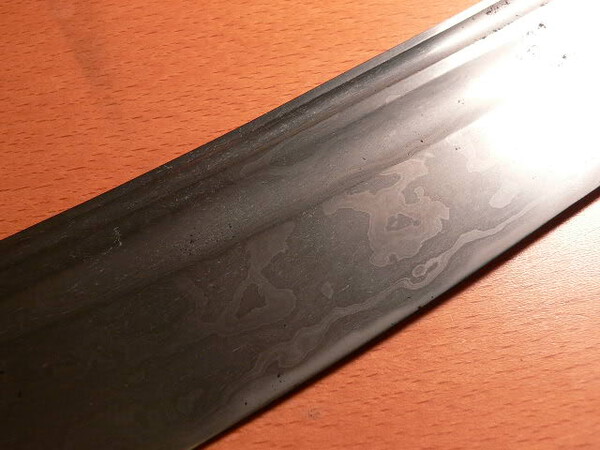
Traditional Chinese blades are "San Mai" hard steel sandwiched between soft, as are a lot of Eastern blades. Some are edge hardened, some are not, all cut like the very devil. Photo of an antique Chinese blade.....
-
So buy one now while we can still tell the difference!
-
Sharpness of a sword? Auction problem
Dave R replied to vajo's topic in General Nihonto Related Discussion
Mind you, Mr Komiya has a few words on the subject. http://www.warrelics.eu/forum/Japanese-militaria/sharpening-dulling-blades-were-taken-granted-675938/