Stegel
-
Posts
426 -
Joined
-
Last visited
-
Days Won
9
8 Followers






Recent Profile Visitors
3,134 profile views




Stegel's Achievements






-
Kirpan Souvenir from Karachi, British India, 1944
Stegel replied to Kiipu's topic in Military Swords of Japan
Yes Karachi is in Pakistan. A desert/dry hot place it is too! For future readers, the info from the last link: Weapons - Modern Kirpan In earlier times the sacred kirpan carried by Sikhs had traditionally been the full size tulwar sword. By the 20th century the kirpan carried by Sikhs had evolved from the typical 30 inch blade of a tulwar sword to a short blade less than 18 inches. Early 20th century kirpan with inlaid mother of pearl handle 12.5 inches in length, ca. 1920's - 1930's, private collection The change in blade length of the sacred kirpan from a sword to a knife was a difficult one for Sikhs and a direct result of onerous laws passed by the British in India. Under the Indian Arms Act (XI) of 1878, no person could carry arms except under special exemption or by virtue of a licence; the act was applied to the Sikh kirpan. At the advent of World War I, the British government fearing that the ban would affect Sikh recruitment into the British Army, thought it advisable to relax the enforcement of the provision. Between 1914 and 1918, two notifications were issued by the British government giving Sikhs the freedom to possess or carry a kirpan. However the terms of these notifications were vague; the size and shape of the kirpan having remained undefined; prosecution of the Sikhs for wearing, carrying and manufacturing the kirpan continued. During the period of the Gurudwara Reform Movement (1920-1925), the British revoked the notifications and Sikhs were once again prosecuted and imprisoned, Sikh soldiers in the armed forces were even court marshalled and dismissed for keeping kirpans. In 1921 the kirpan factories at Bhera and Sialkot in Punjab were raided and all kirpans exceeding 9 inches in length were seized and the owners of the factories put under arrest. Eventually in 1922 after negotiations between the British and the Shiromani Gurdwara Parbandhak Committee the Sikhs again won the right to carry their kirpans, although now with a much shorter blade. [1] -
Kirpan Souvenir from Karachi, British India, 1944
Stegel replied to Kiipu's topic in Military Swords of Japan
I think i found its brother... HERE Slightly different but with same markings..... HERE I suspect that it may be a mass produced tourist piece in the Indo-Persian, and Afghani styles. My parents also bought similar items in Colombo Ceylon, now Sri Lanka Found It ! This style is called the Modern kirpan and is carried by Sikhs. It had traditionally been the full size tulwar sword but reduced to a size of 18inches or less in the 20th century . More info ....HERE -
Shin gunto katana with black lacquered wood scabbard
Stegel replied to Battara's topic in Military Swords of Japan
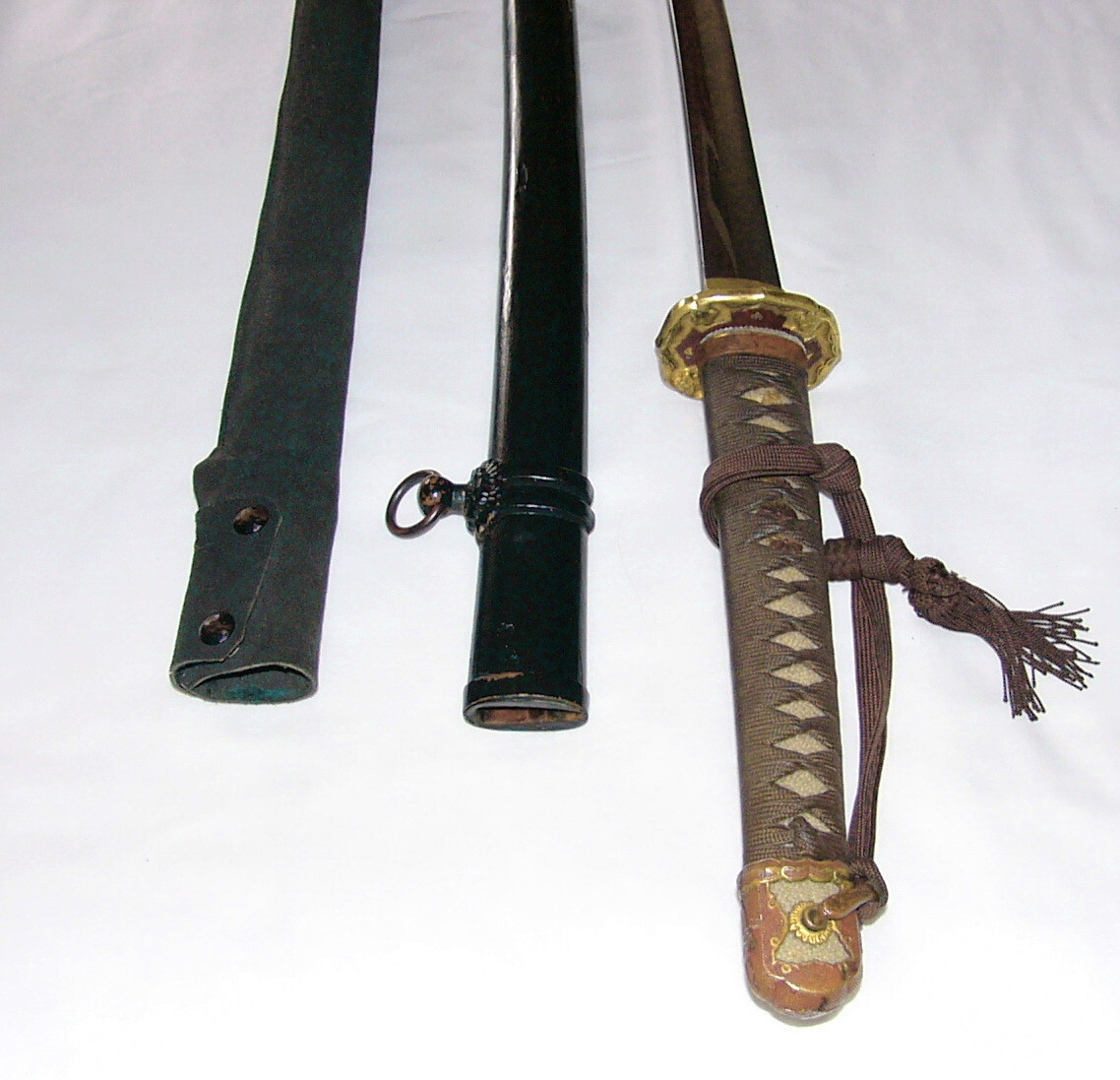
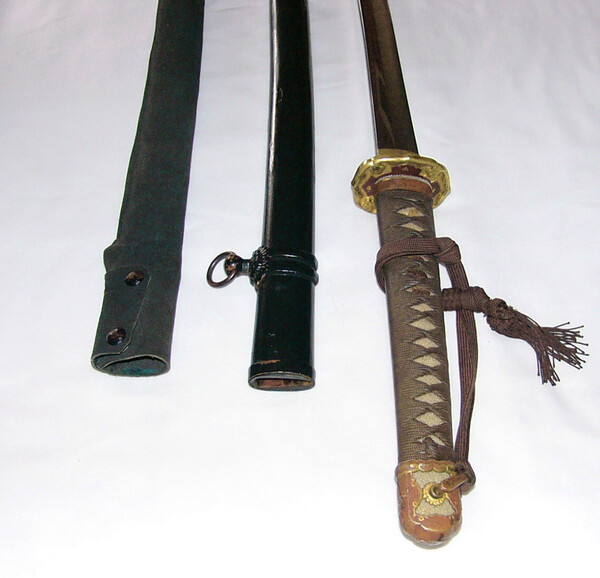
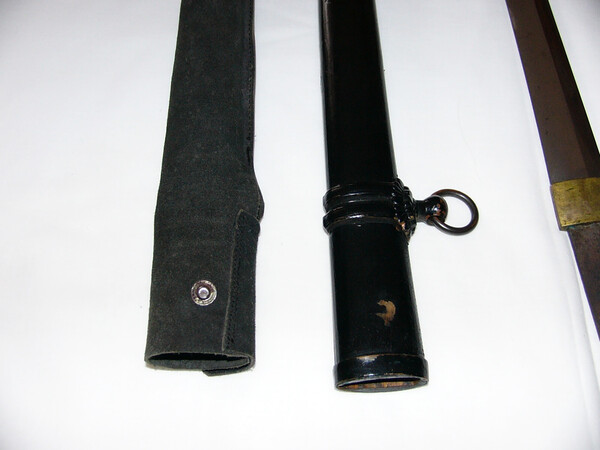
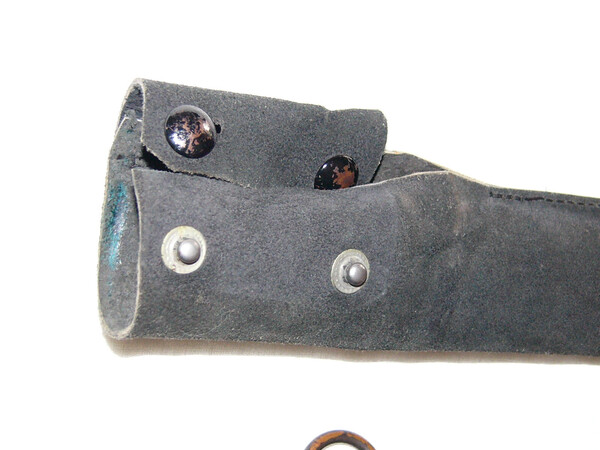
Hi Jose, I have a similar piece, my first ever sword actually. It came with a Sam Browne style belt. Thought i'd share some photo's for your interest.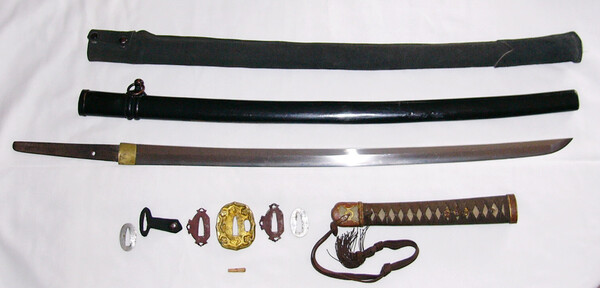


-
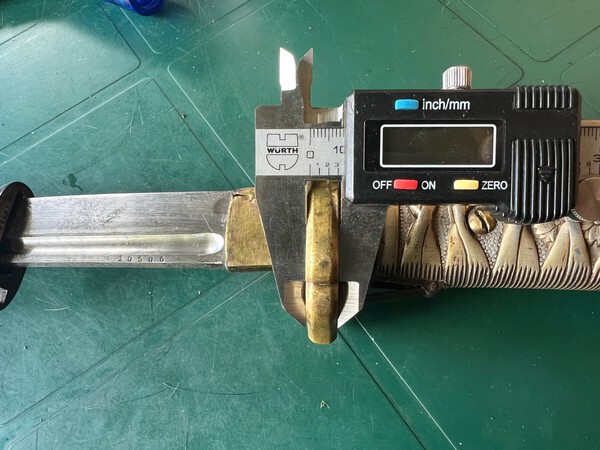
I checked the tsuba thickness on this sword and it is definitely 9mm, not 11mm. This also highlights how certain angles can give a distorted perception when it comes to the appearance of certain objects. In your photo Bruce, I would agree that it looks like the thicker version too. Here’s two photos for the record. Sorry the battery was flat, but you can still see the measurement

-
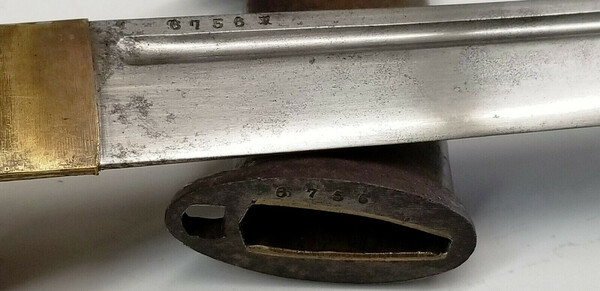
Yes, it is matching blade and scabbard. A pic for your info.
-
Hi Trystan, Where did you come across this sword?? I'm asking because i actually bought and paid for this sword back in Jan 2020 from memory But it never arrived!
-
I also find the scabbard drag to be interesting. Perhaps a replacement or addition, but looks like it is from a different set of fittings to me.
-
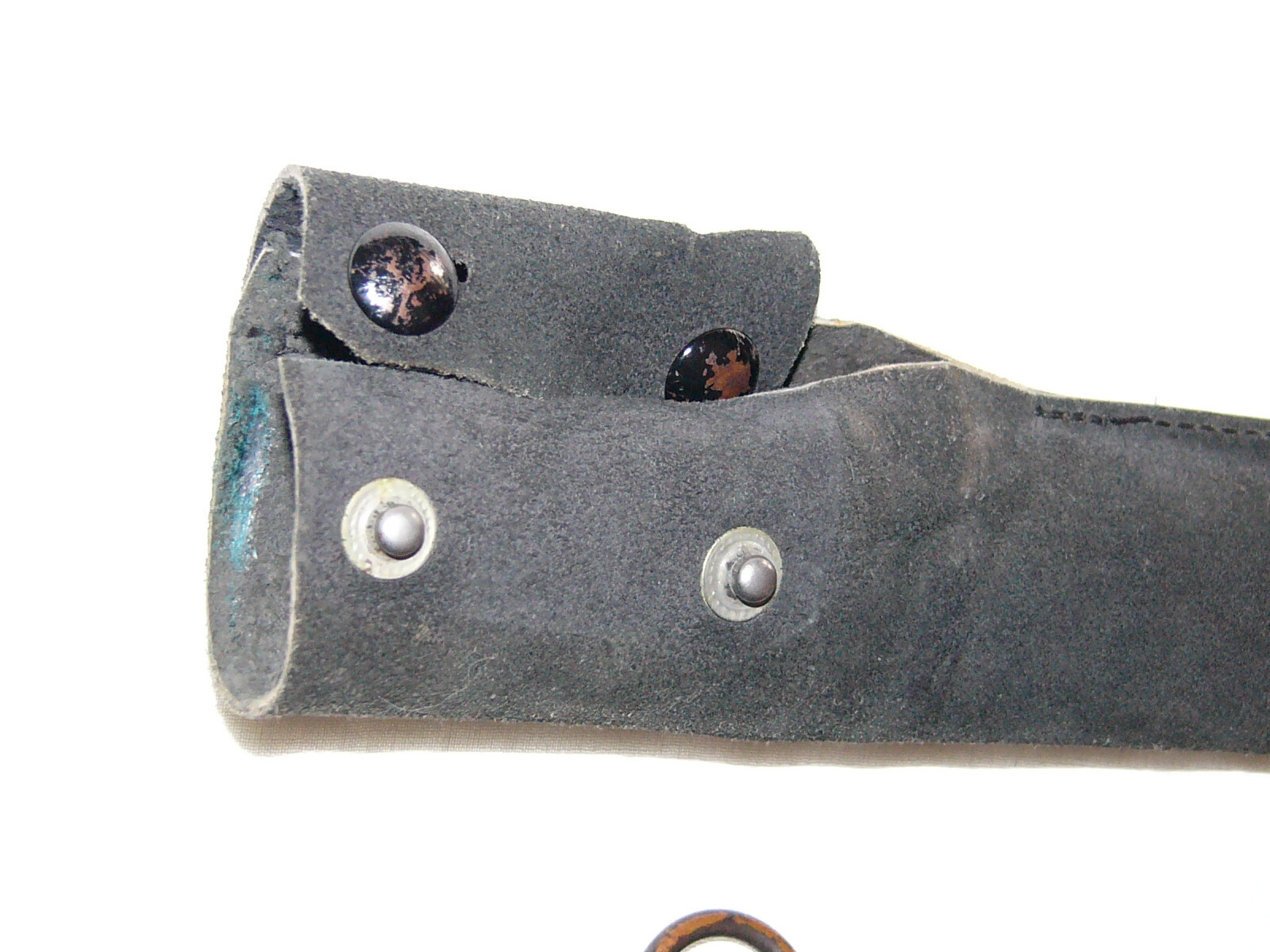
Hi Ron, I agree with Scogg's summary of the sword. A bonus i see, is the leather saya cover, even if well worn, these are hard to come by on any type95. Some better pics would help to determine if it appears original to the saya or a later addition. Do you have the serial number on the throat of the scabbard,or can you get it from the seller ? I'm sure there would be some people interested to see if it's matching. After a second look, it may be that the saya is made of wood? Can't be sure with the poor quality of photo. i have seen this style of sarute on two other copper handled swords before, here in Australia, not very pretty, but i think they may be field replacements. The mounting screw in the handle is typical of a field/factory repair, as is the steel variation of the tsuba from what i have seen previously. The pattern 3 steel tsuba appears surprisingly early in the production run and was produced concurrently with the pattern 2 brass tsuba variation as observed from production serial numbers. The fuchi stamps are genuine and not any cause for alarm, the sub-contractor and Arsenal logos, being reversed, have been observed on quite a few of the early Copper handled swords in the early serial number ranges (below 3000 from memory). This makes the sword a bit more desirable in my opinion as a collector. The asking price is what would swing my decision to buy or not. Overall the sword is not pristine and shouldn't justify a high end price. It depends what you are looking for as a collector and how happy you would be with it. If you do get it, please post some nice quality photos back here for us to look over.
-
Personally to me both handles and fuchi appear to be genuine, the one Chris showed seems to have been buffed removing the definition of the dimples. Neither has the punch marked dimples which are telltale fake, just my opinion.
-
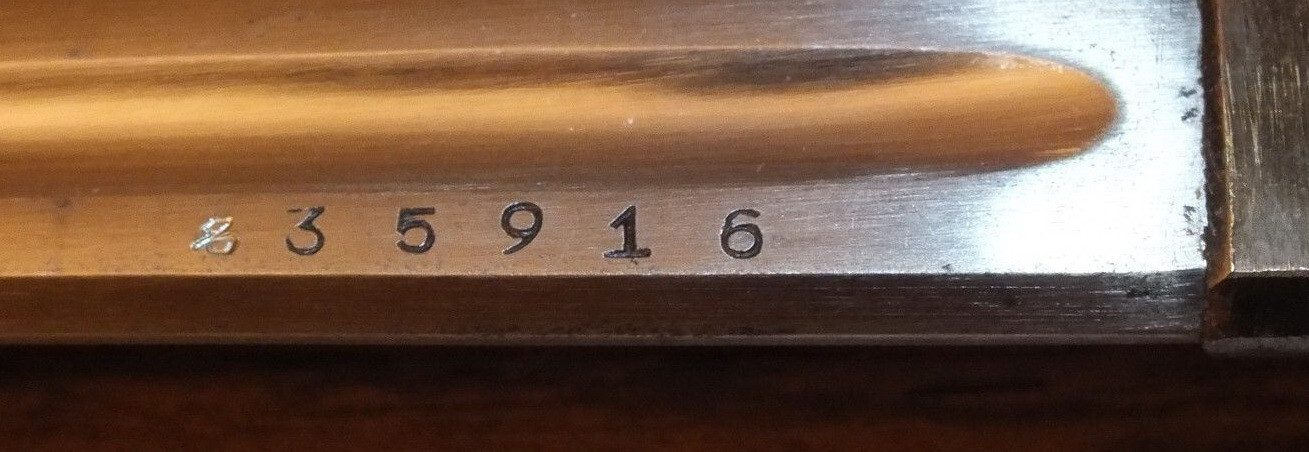
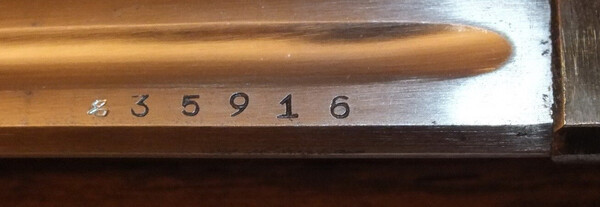
Trystan, The S/n 35914 should be in the gifu range, Iijima was the previous range with the highest recorded at 35652. I have Gifu records before this S/N and one 2 digits higher -see picture. In my opinion it has been refitted at some point with another blade. I tend to agree with your thoughts that it is a fake just by looking at it. If there are close ups of the S/N and Inspection Mark, it would be interesting to confirm with the font style used. I cannot see the numbers clearly when close up. I also think the tsuba edge profile is not correct and most likely tsuba was swapped with blade at same time.
-
Just getting back to the sword @TimJ posted, i agree with everyone that this is a genuine Type 95 from the Nagoya Arsenal. For Thomas, my records show this is almost in the middle of the Gifu range, so looks legit to me going by serial numbers. The leather combat cover is in my opinion a post war addition from an officers type 98 sword, where the scabbard was clearly a little longer than the type 95 one. It would be good to remove it and see the scabbard by itself, this colour paint , although not very common, has been seen before. Confirming it is original (paint or re-paint) would be interesting to find out.
-
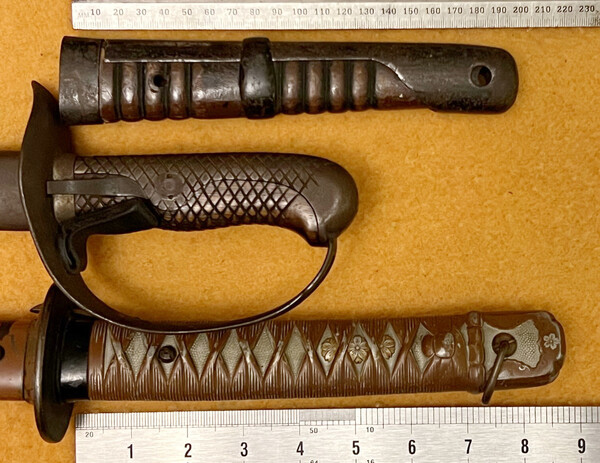
Here's a photo for comparison with a type 32 and a type95, can't believe i didn't do this straight away! I think it may be a bit long/big for a machete, but that's an interesting thought. It doesn't appear to be like any machete handle i have seen from the period, such as the dutch cutlass conversions done in Indonesia. John, i agree with you on the nakago shape, however i think it could possibly hold an old wakizashi size blade.
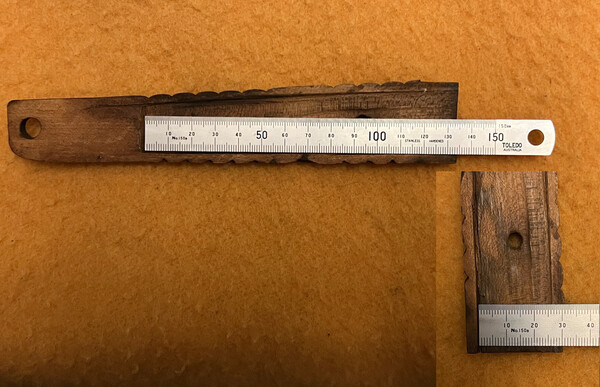
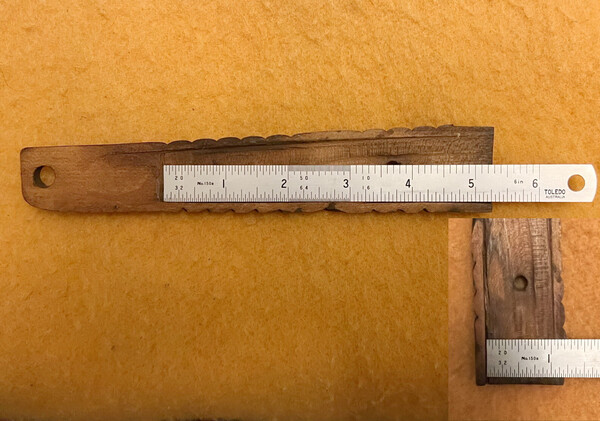
-
one more picture of the metal backstrap and retention rings
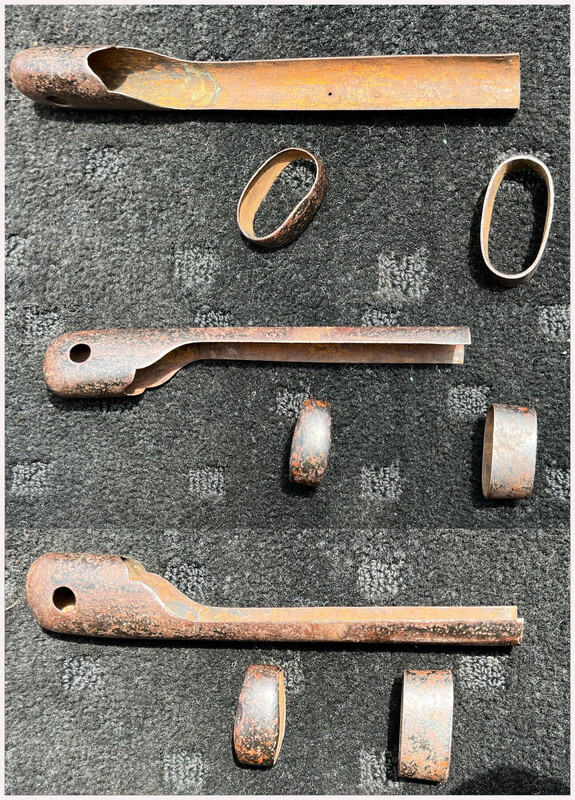
-
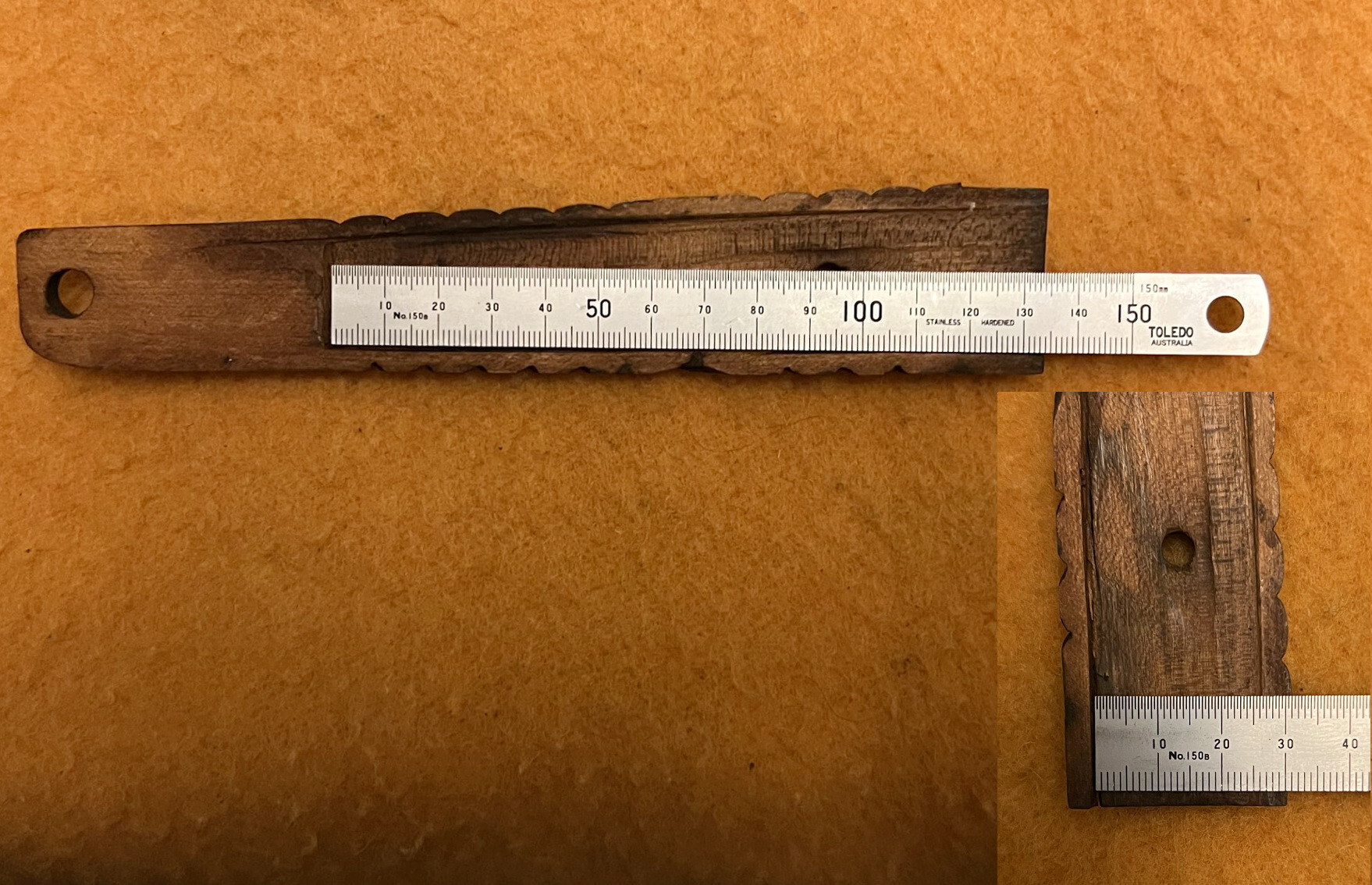
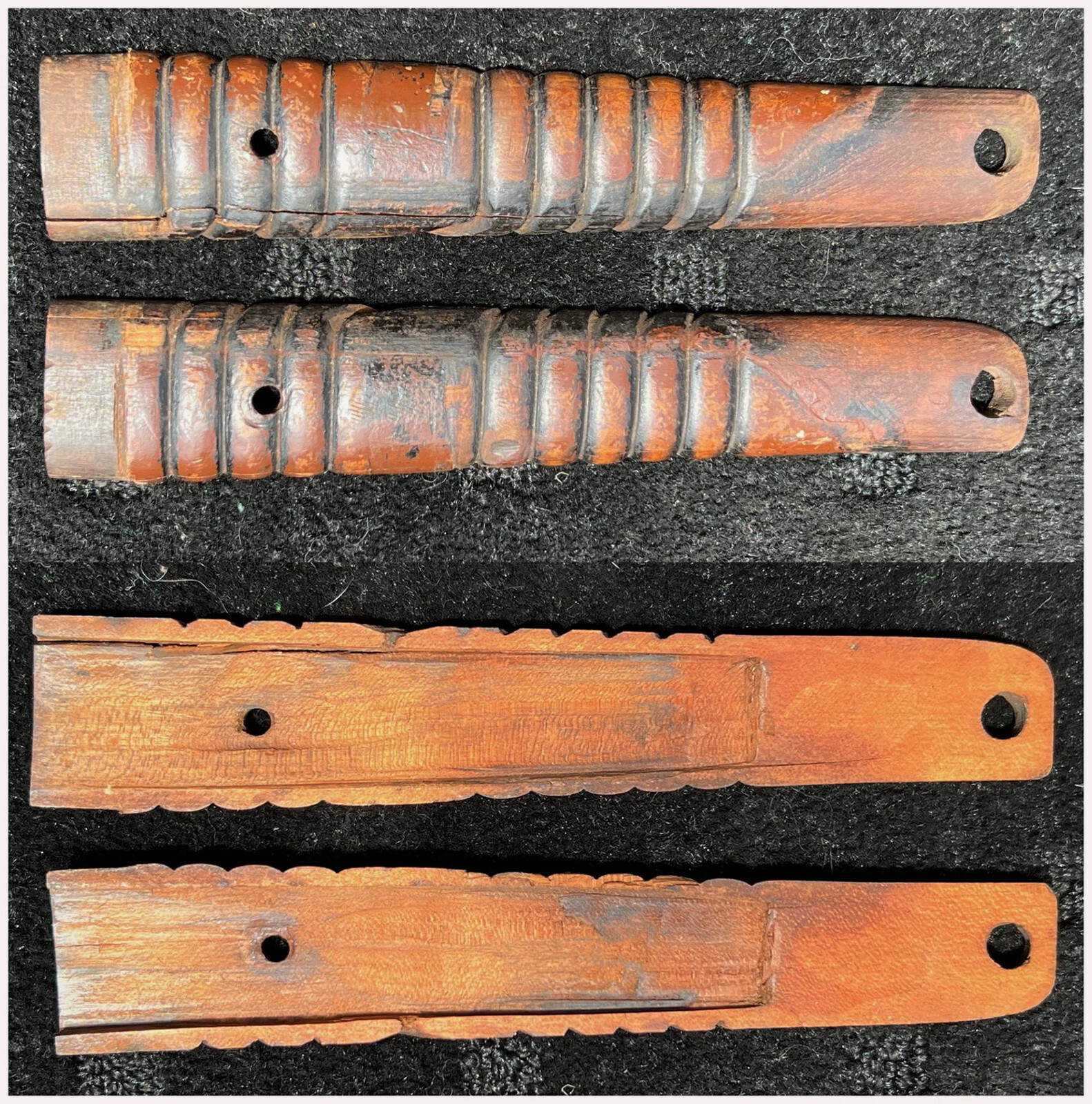
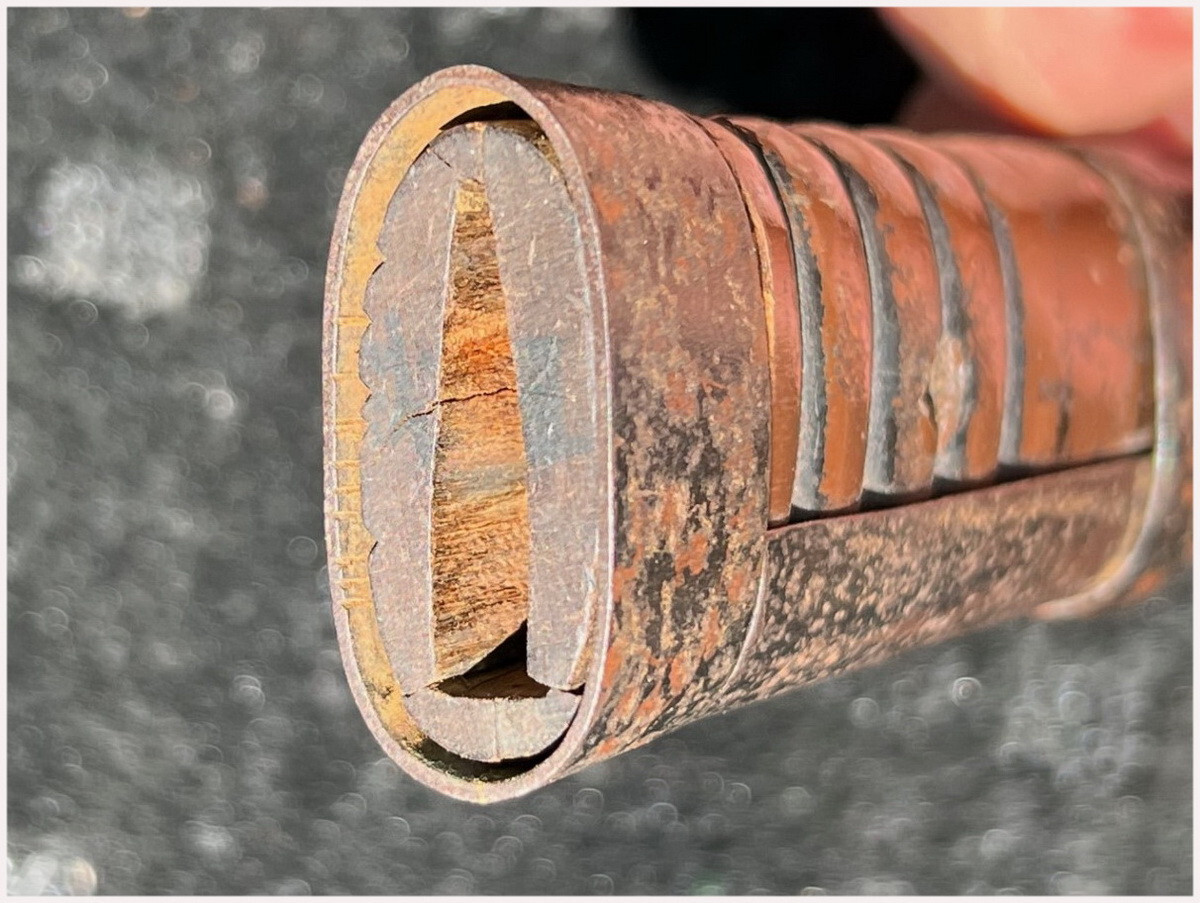
Came across this handle recently, what caught my eye was its Japanese appearance... it wasn't expensive so i bought it. It has a Kyu Gunto appearance, yet is definitely some sort of Spartan like 'budget' build. The only thing i know is that i bought it from a fellow in the U.K Assuming it was found in an arena which the Commonwealth Forces engaged during the war, so we have India/Burma/Malaya/Borneo/Thailand etc Please give me your thoughts on this piece, is it Japanese? Last ditch of some sort? or some collaborationist forces under the Japanese- so possibly island made etc I have some very last ditch swords with this type of handle construction, they may have been supplied as either NCO issue (my belief) but also possibly for officer use because of the type of blades used. I'm all ears for any ideas you might have. Thanks!
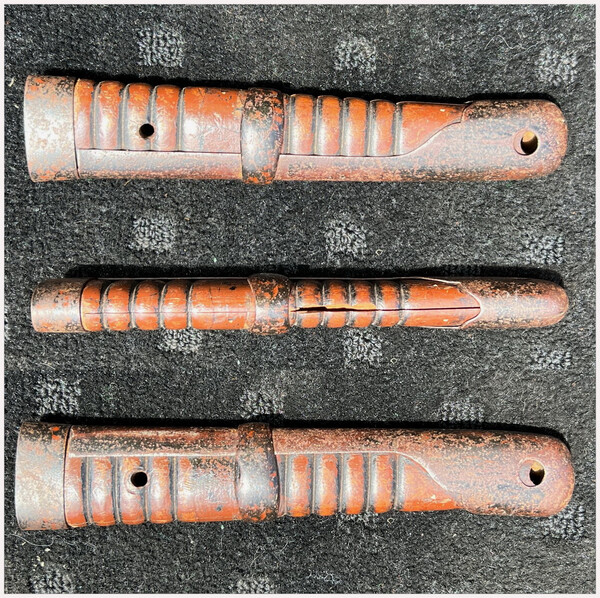
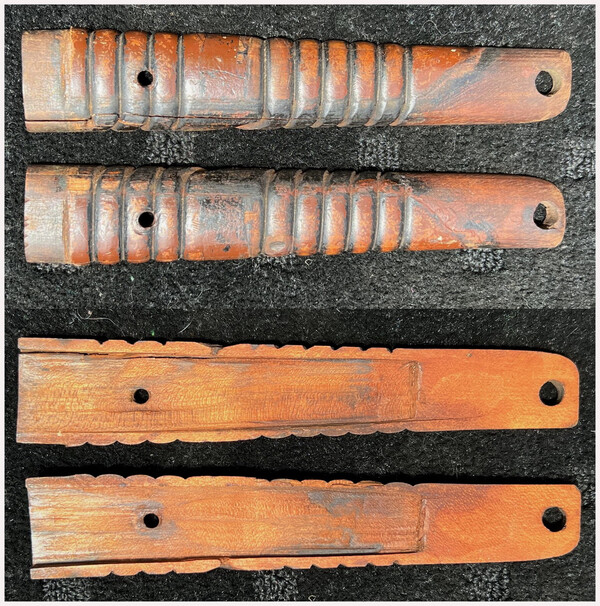
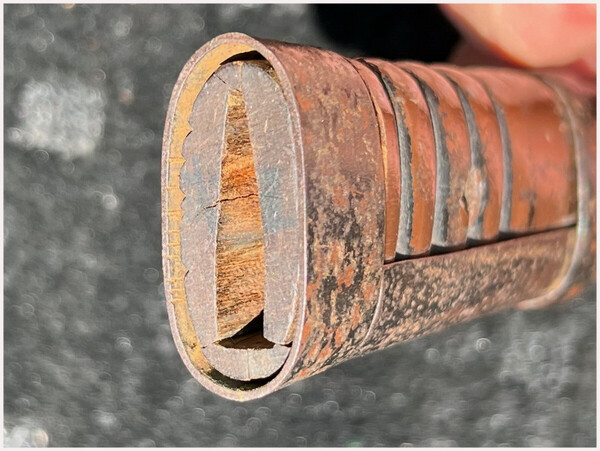
-
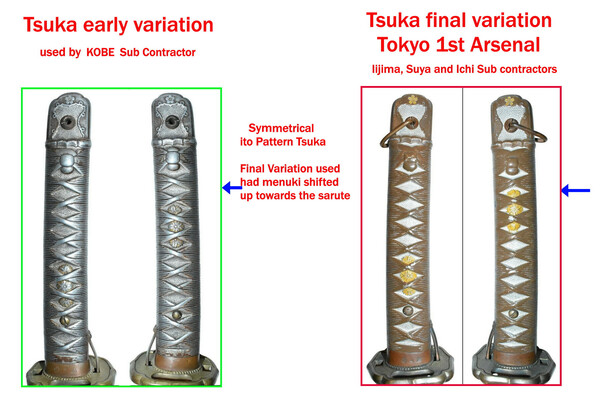
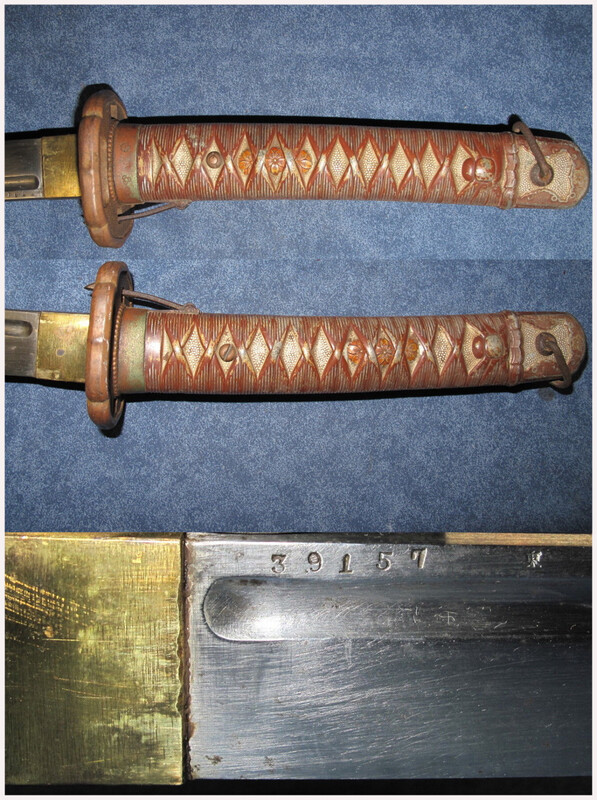
Good job taking notice of this Conway! I second Kippu's comments that this is 'right' inside the Kobe serial number range, it is now the second of it's type (with brass tsuba) that has surfaced. The serial number range before Kobe (37k-39k) is from Gifu, and Suya continues on after this range. However, i'd be a bit cautious buying this sword personally. If you are after a Kobe example, i'd pass on this one, regardless of the serial number. Looking at the other pics from the Auction, i can see that the handle is different to all the other Kobe examples on file. It has the final variation of the Symmetrical Aluminium handle as used by the Tokyo 1st Arsenal, this doesn't automatically exclude it as original though. This version had the left side menuki repositioned higher up towards the sarute by one cross in the ito wrap pattern. Look at the pic below to see what i mean. This pattern also appears sporadically in the lower serial number ranges, giving credence to the idea that these may have been repaired at some point. I have only one on record with an Ichi fuchi in this serial number range, it is 39157, at the end of the Kobe serial number range. It also had Brass tsuba, and this is the highest recorded number i have. It is also a bit cleaner of an example than this one and appears to be a more honest or genuine in my opinion, see below. Bruce you could be spot on with both comments as per repairs and the connection that Ichi and Kobe are of the same shop. The 39157 example being the highest, may provide evidence of this. With Ichi taking over from Kobe, parts such as the fuchi may have been used when the original kobe fuchi's had run out. I believe this may have occured, otherwise they could both be examples of shop repairs which we know did happen.