Nobody
-
Posts
4,129 -
Joined
-
Last visited
-
Days Won
69
Content Type
Profiles
Forums
Events
Store
Downloads
Gallery
Everything posted by Nobody
-
I know few about the organization. The Bijutsu Nihonto Hozon Shinsakai (美術日本刀保存審査会) and the Nihon Bijutsuhin Hozon Shinsakai (日本美術品保存審査会) seem to be both presided over by Honami Tsunemasa (本阿弥常政) in Okayama. ref.; http://militaria.co.za/nihontomessagebo ... =tsunemasa http://collect.jp/~sword-ebay/papers/index.html
-
Based on my instinct, I cannot deny "Sukemitsu". 助光
-
The paper says that the blade length is "5 sun 5 bu 5 rin (= 16.8 cm)". If the actual blade lenght of the tanto corresponds to that, the paper still might belong to the tanto. It might be possible that the paper says munei because the mei was too illegible to read.
-
Though this is only a guess, the mei could be "Kanefusa". 兼房

-
Hi, The registration says only "Mumei". 無銘
-
I am unsure, but the mei looks "Toshin Masashige" to me. 東神 正茂 If the reading is correct, Toshin might be the name of a refinery in Tokushima.
-
I think Erol is correct. It looks "Takada ju Kunihisa" also to me. 髙田住国久
-
HISTORICAL ARTWORK OF SAMURAI BANNERS
Nobody replied to John A Stuart's topic in General Nihonto Related Discussion
Here you are. http://en.wikipedia.org/wiki/Iroha -
They are Daikokuten (大黒天) and Ebisu (恵比寿) as already explained. For more information; http://en.wikipedia.org/wiki/Daikokuten http://en.wikipedia.org/wiki/Ebisu_%28mythology%29
-
Based on their order in the book, they seem to have been read as follows by Fujishiro. 兼宿 – Kaneyado 義憲 – Giken Anyway, no one knows the actual readings of old names, I think.
-
The papers of "Nihon Tosogu Kenkyu-kai (日本刀装具研究会)" and " Juho Token Kenkyu-kai (銃砲刀剣研究会)" seem to be issued through this shop in Osaka. http://www16.ocn.ne.jp/~musasiya/token.htm
-
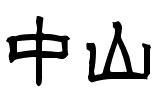
That seems to be a common family name "Nakayama (中山)". The attached pic. shows 中山 in Reisho style (隷書体).
-
FYI: Here is one Takayama-to. Directed by Col. Takayama http://www.toukenhataya.jp/goods/sword/sword_s147.html
-
Piers, If you can read Japanese, some excerpts from the book are here. http://ja.wikipedia.org/wiki/%E9%A6%96% ... F%E6%A4%9C
-
I only have read a brief explanation about Kankyu-to on a magazine before. The article you refered seems to be based on Gunyoki (軍用記) which was published in Edo period. Some pages of the book can be seen on the web page below, though the auction already ended. http://page2.auctions.yahoo.co.jp/jp/auction/b81954489
-
Kanji are as follows; 高山刀鍛錬所作 鍛錬所 (Tanren-sho) - Forge
-
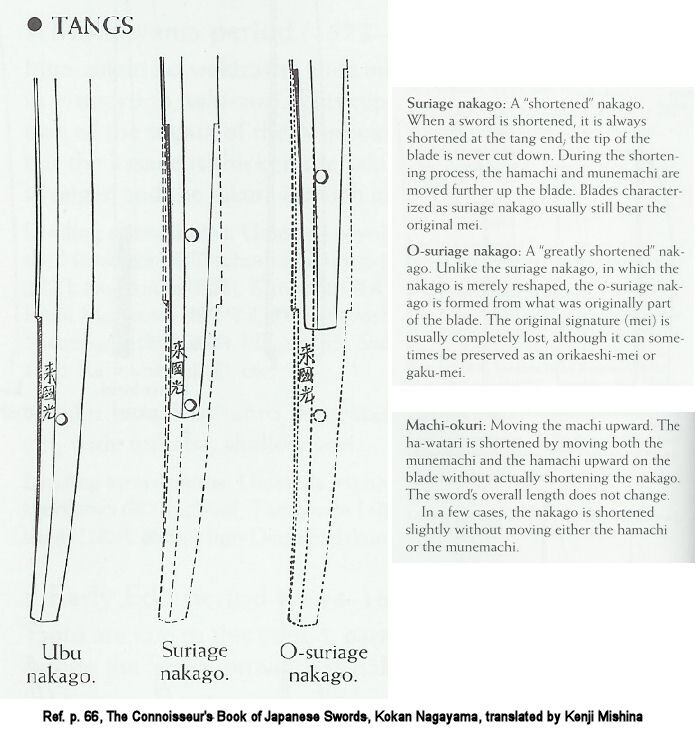
Hi, It is surprising that “Suriage†is misunderstood like that. Suriage seems to be usually translated as “shortened tangâ€. But it does not mean that only the nakago is shortened. IMHO; the main purpose of Suriage includes shortening the BLADE. And the shortened tang is the secondary result. There is no essential difference between Suriage and O-suriage in the shortening process. Only their shortening extents are different. Ref. p. 66, The Connoisseur’s Book of Japanese Swords
-
where is the difference? :lol: Hi Jacques, Here I define (a) and (b) as follows. (a) to move the machi upward (b) to cut (and usually to reshape) the nakago Then, I understand; (1) Machiokuri = (a) and [not (b)] ---> Blade length becomes shorter but the total length does not change. (--- But in a narrow sense, Machiokuri = (a).) (2) Suriage = (a) and (b) ---> Both blade length and total length become shorter. (3) Nakago is cut = (b) ---> Blade length does not change. Only the nakago becomes shorter. I hope that you understand the difference between (2) and (3).
-
Title: 愛刀百華選 (Aito Hyakka-sen) Aito – favorite swords Hyakka – hundred flowers ---> various Sen - selection Authors: (I could be wrong in readings of some names.) 林 盈六 (Hayashi Eiroku) 大野 正 (Ohno Tadashi) 新 市郎 (? Ichiro) – I do not know the correct reading for 新 as a family name. It could be Atarashi, Arata, Shin, or Nii. 八木 昭 (Yagi Akira)
-
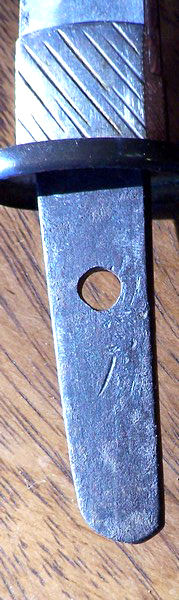
I do not think that the nakago is suriage, though it was cut a little. Sometimes, a practical nakago has the second mekugiana at the end of the nakago. It is usually called Shinobiana (忍び穴), I think. The attached photo shows the nakago of my katana with Shinobiana. BTW, I too am terrible on the Sosho.

-
Hi, The pattern might be found here. http://www.otomiya.com/kamon/plant/matsu.htm
-
That is not a rice basket. 蛇籠 (Jakago) means a gabion.
-
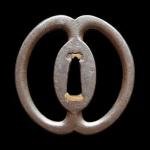
There is no Bushu on the paper. The specific description seems to be as follows; 山水蛇籠図鐔 銘 正次 竪丸形 山金石目地 鋤下彫 金銀色絵 両櫃孔 鋤残耳 The mei is Masatsugu.