Nobody
-
Posts
4,158 -
Joined
-
Last visited
-
Days Won
70
Content Type
Profiles
Forums
Events
Store
Downloads
Gallery
Everything posted by Nobody
-
The container seems to be a Natsume (棗 = a kind of tea caddy). Ref. http://en.wikipedia.org/wiki/Chaki
-
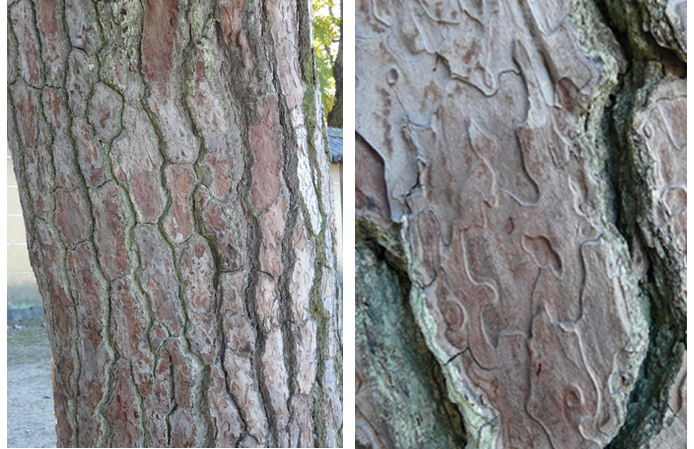
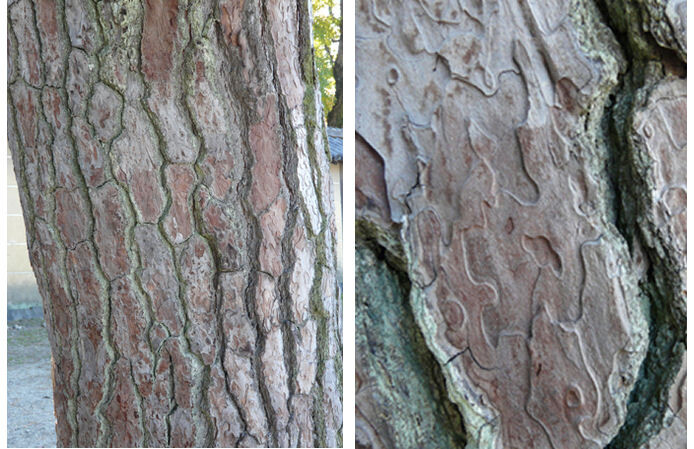
I think there are at least two theories. One is the surface pattern of an actual pine tree, and the other is the shape of a small flake of pine bark. I prefer the latter theory, though I could not find good pictures.
-
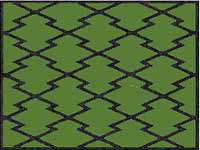
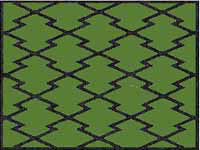
Did you know that a Matsukawa-bishi can be an element for continuous patters? I can easily imagine pine bark.
-
I think the mei reads as follows; æ±å¯‰é½Š (Tôkakusai?) - art name (I might be wrong about its correct reading.) 義壽 (Yoshitoshi) - craftsman's name
-
This Week's Edo Period Corner
Nobody replied to Bugyotsuji's topic in General Nihonto Related Discussion
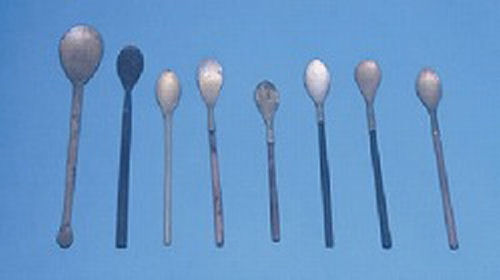
I only just found a site about such devices. The spoon might not be so particularly old. http://www.chiba-muse.or.jp/SEKIYADO/di ... _3_2_4.htm BTW, 薬匙 seems to be also pronounced as “Kusuri-sajiâ€, “Yaku-sajiâ€, or “Yaku-jiâ€. -
Hi, Refer to the following thread. http://militaria.co.za/nihontomessagebo ... d+goldberg
-
This Week's Edo Period Corner
Nobody replied to Bugyotsuji's topic in General Nihonto Related Discussion
Is it a spoon used for preparing medicine? 薬匙 (yakushi)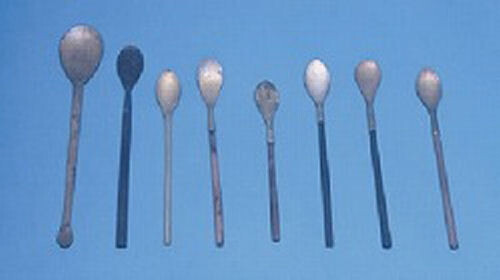
-
contact info for Fujishiro Okisato sensei
Nobody replied to Darcy's topic in General Nihonto Related Discussion
I am unsure, but maybe here; http://www.nihontou.net/prof.html -
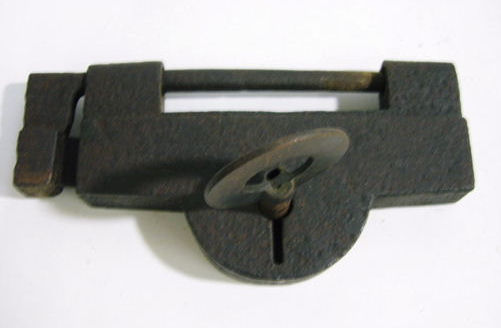
It is always interesting to think about motifs. If you concern with Manji, it might also look like Maru-Manji (丸å). But the design reminds me of a lock rather than a Manji.

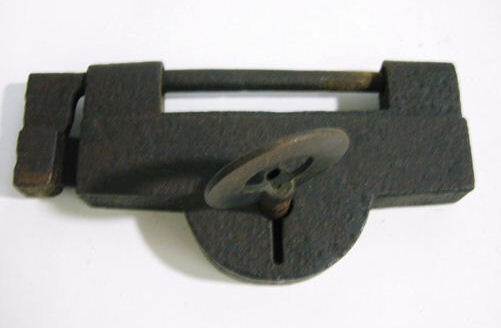
-
Your reading for the date is correct, but the corresponding year is not 1944 but 1943. The date is a lucky day in March of 18th year of Showa (Mar., 1943).
-
The first three kanji are æ–¼æ±éƒ½ (Oite Tôto). They mean “at Tokyoâ€.
-
I cannot find the actual smith with the name yet. So, I am unsure about the second kanji in the brackets. At first, I thought the kanji may be æ—¥ or å› . Now I guess it is æ—¥, and 日新å (Nisshinshi) may be the art name of the smith. BTW, the first three kanji are å‚™å·žä½ (Bishu ju).
-
Guido is correct. Refer to the NBTHK Shinsa Standards. http://www.nihontocraft.com/Nihonto_Shi ... dards.html
-
Hi Eric, I cannot read the upper right small kanji. Kanji on the left column may be as follows, though I am not 100 % sure about the first and the last kanji. ç«¹æž—å ‚æœˆæ¡‚ (Chikurin-do Gekkei)
-
Hi, This is my thoughts, but of course I might be wrong. The wakizashi was originally made as Shinogi-zukuri. And later, the blade was considerably reshaped and lost a lot of meat as well as its Motohaba. I can see Shinogi lines on both sides of its nakago.
-
Piers, How about 自己責任 (Jiko-sekinin: self-responsibility )? The term is often used in various situations lately in Japan.
-
I do not know right path or not. :lol: http://www.aisf.or.jp/~jaanus/deta/h/hakkei.htm http://www.aisf.or.jp/~jaanus/deta/o/oumihakkei.htm At the middle of the page below, you can see the eight scenes of Omi Hakkei ukiyoe by Hiroshige. http://ja.wikipedia.org/wiki/%E8%BF%91% ... B%E6%99%AF
-
Ref. an article from Dr. T's site http://www2.una.edu/Takeuchi/DrT_Jpn_Cu ... ameshi.htm
-
I hope you do not mind a few corrections. The final kanji is 極 (kiwame). So, the text means "Mihara Masachika; attributed by NBTHK".
-
Maybe it means Shijimi (蜆) in Japanese. http://en.wikipedia.org/wiki/Corbiculidae
-
That reads Kensu Osho (蜆å和尚) in Japanese. Osho means priest. The page below may be helpfull. http://www.aisf.or.jp/~jaanus/deta/k/kensu.htm
-
Thanks Carlo, OK, this is the part of the page.

-
I also have the book. If you still need the page, I can help you.
-
I found interesting (or strange?) documents on the net. I do not know their background or if it is appropriate to introduce them here. :? The illustrations in the documents look like karuta (Japanese playing card) and are drawn as anime. However, the texts include descriptions about Nihonto and they are really serious. Unfortunately, the texts are written in Japanese. Each of the following files is a little less than 2 MB. http://homepage.mac.com/tsurugi_t/karuta1.pdf http://homepage.mac.com/tsurugi_t/karuta2.pdf
-
Help deciphering a Mei, Please
Nobody replied to hybridfiat's topic in Auctions and Online Sales or Sellers
Though I do not have any evidence right now, I heard the reason for the irregular reading. Actual reading of é‡‘é“ is thought to be Kanemichi. However, it is expediently read as Kinmichi to distinguish it from å…¼é“ (Kanemichi) when the name is only pronounced.