Ford Hallam
-
Posts
3,091 -
Joined
-
Days Won
78
Content Type
Profiles
Forums
Events
Store
Downloads
Gallery
Everything posted by Ford Hallam
-
 Hi Tobias, this is an ukon-nuno, literally a 'turmeric cotton'. Traditionally thought to repel insects, turmeric dyed cotton cloth was used to wrap ceramics and other small craft/art objects before placing them in Kiri-bako. Nowadays most such fabric is simply synthetically dyed. regards, Ford
 -
Thank you gentlemen, It's always good to hear the film is well received and enjoyed. And in your case Jeff, that it pleased the missus too. I guess you do owe me a beer or two kind regards, Ford
-
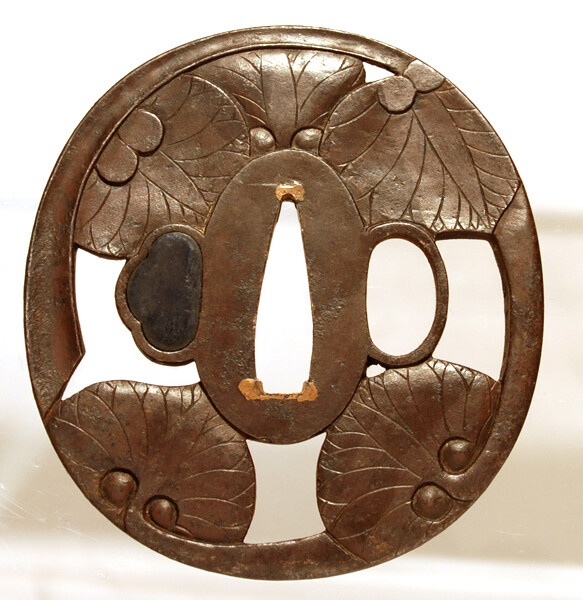
Hi Peter, yes, while it's hard to 100% certain, especially where the images are not tack sharp, but there are a few too many tell-tale signs that make me feel it's a cast copy. Perhaps when you clean away some of that crud in the sukashi you'll be able to judge better. Those 2 round blow holes in the kozuka hitsu are not what one would see in worked steel. I get a sense that there's a trace (a bit more in some places) coarse seam running all around the inside of the openings. Also evident in the indented areas on the outside of the mimi. The thing about Kinai work is that it is generally very good chiselled work. It's crsp and tidy in execution. And while corrosion can coarsen the surface the underlying craftsmanship doesn't then melt away, if that makes sense. Here's very good example of classic Kinai work I've borrowed (nicked) from Danny Massey. A few more images of the Daisho pair on his site here. Well worth a look as they are a pretty decent pair (as the Bishop said to the actress) and at a great price.
-
Hi Peter, some sharper images, especially of the inner walls to the openings, would be helpful. I can tell you what it 'appears' to be but from what I can see I'm a bit concerned. regards, Ford
-
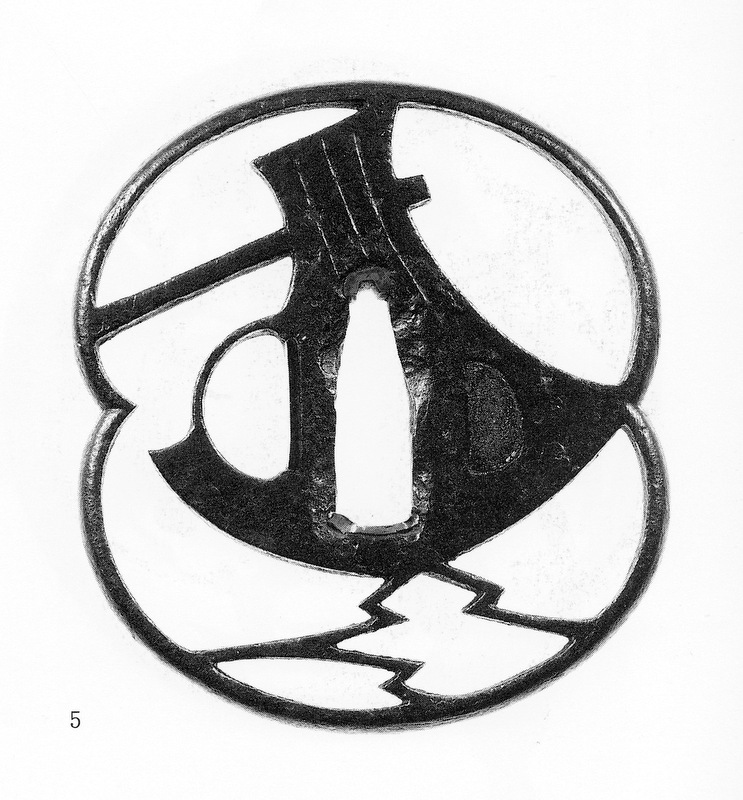
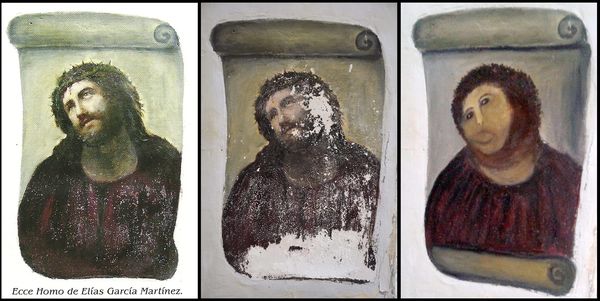
This is a fairly accurate copy of an very well known Akasaka tsuba by Tadamasa, first master. It's most likely a modern hobbyist work but is perfectly honest work for that. Certainly not a fake in the sense it was made to deceive. I wouldn't change it myself because the design is already generally regarded as a masterpiece and in terms of design it really is. I imagine you've read about the elderly Spanish lady who 'restored' a 19th cent. fresco in her local church. A cautionary tale If you want to work with thinner metal and make a different design why not just start from new?


-
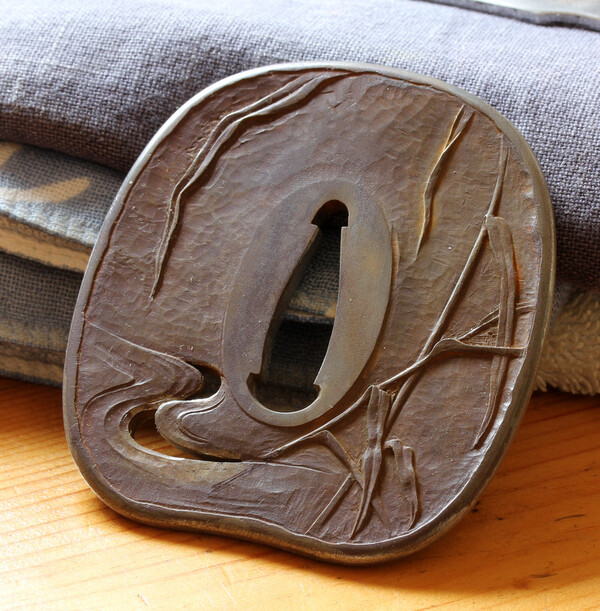
If you've ever wondered how tsuba-shi went about hand carving steel tsuba I've just uploaded to my YouTube channel might provide a little insight. It's viewable in a variety of resolution qualities up to very HD. Select the one you want by clicking the little cog icon below the film frame. I'm presently documenting the making of a Tanaka School inspired piece (the one in the film) and if you're interested you can see some images of the progress, here, on my forum. regards all, Ford

-
That is a very pleasing design, Mike. I'm really enjoying the boji piercings. I feel a version of my own gestating. I find it interesting how Yoshindo San has opted to leave the forged plate essentially untouched and exactly as it looks straight off the anvil. It's a very direct sort of expression, no messing about. I don't like the modern tendency to shape nakago-ana as though they were precision engineered. It seems incongruous given that there's not really a single straight line on a sword blade. My view is that the nakago-ana ought to as carefully considered and shaped as a nakago itself. They both speak to the makers aesthetic sensibilities. btw, you've displayed your tsuba backwards also. It seems Yoshindo san places the gold 'inde' on the ura.
-
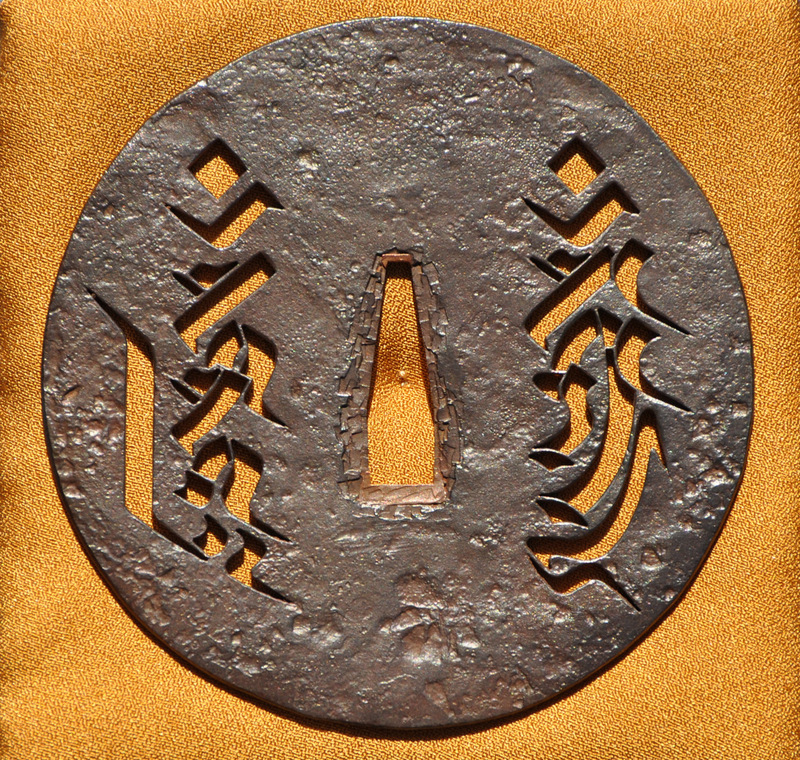
Tobias, the piercings are Siddham script (a variety of Sanskrit) , called Bonji in Japanese. They are usually a sort invocation and are based on the essential syllables of a particular sutra or mantra. On this tsuba the bonji on the right is 'Hammam' and is the seed syllable of the mantra dedicated to Fudo Myo. I can make out the other one but I think it's 'Hum' , the syllable representing Ashuku Buddha, the Guardian of the East in the Kongōkai Mandara. I actually posted the back view above, my bad, here's the correct orientation. I think the original website owner doesn't realise they're present backwards either, probably because they are 'signed' on the back with a gold seal.

-
Cheers David, I'll stay poor then but at least with my work you'll know it's Daimei and genuine :D Mariusz, you're very generous, thanks. I do like the actual design though, perhaps I should make a version. thank Paul :D
-
Imagine my surprise at discovering that the almost legendary mukansa swordsmith Yoshindo Yoshihara has been making tsuba. I mean, how would he feel if I suddenly started making swords? I'm kidding of course (I have to add that for those of you who have no sense of humour....you know who you are ) in fact, I've long been aware of Yoshihara San's secret desire to be a tsuba-shi, he knows where the real art of the sword lies :D Anyway, here's one example, I actually really, really like this design. It's very striking. And at only $3000 I think I need to put my prices up. You can see more images and another one here.

-
Couldn't help myself :D So, what do you want to know? I suppose you know the school? and have translated the mei... Yes, pretty much classic Soten style/school
-
I'm fairly certain it's a tsuba, a Japanese sword guard.
-
This might be worth looking at; http://www.amazon.com/Japanese-Master-Swordsmiths-Gassan-Tradition/dp/0878463097 There's a katana by Sadakazu (no: 6) illustrated that looks very similar in terms of overall shape. It has a bit more sori (1cm) but the nakago and kissaki are quite alike. Masame hada, chu-suguha hamon with hotsure and a nijuba/sanjuba look about it. From what I can make out the boshi has some similarities with yours.
-
Personally I can't see any similarity with Haruaki school work and it seems, to me, to be overly convoluted to try and 'force fit' this artist into that Haruaki school box only on the basis of a partial match in the use of kanji in the name and to overlook the difference in Kao. Sorry Mike, I don't mean to be a knob about but I just don't see a convincing match. There are probably 1000's of , as yet, unrecorded artists who's work will need to be assessed and categorized. To treat our present lists as definitive would be a mistake I feel.
-
And to further demonstrate how hard it can be to nail stylistic characteristics in the workmanship of tsubako here's an example by Tenkodo Hidekuni of the Otsuki school that also shares some similarities with the Akimasa signed one.
-
In my opinion the best single concise volume would then be The Japanese Experience by W G Beasly And for a bit more 'in depth' detail on certain cultural aspects Mason and Caiger's classic (now updated and revised) A History of Japan
-
It looks to be a slightly better than average quality Hamano school piece. The overall condition is fair. As the others have pointed out some of the soft metal inlay's patina has been rubbed off it's actually a fairly simple process for a professional (that would be me ) to restore. Much less trouble than repolishing a sword :D
-
Tobais, are you looking for a general history or something more specifically centred on the warrior class? I only ask becasue that's what the previous posters seem to imagine
-
I'm pleased to have been able to share this piece and that it's so well appreciated.
-
Probably worth noting that the gold in the clouds is nunome-zogan and also a feature of Tanaka school work.
-
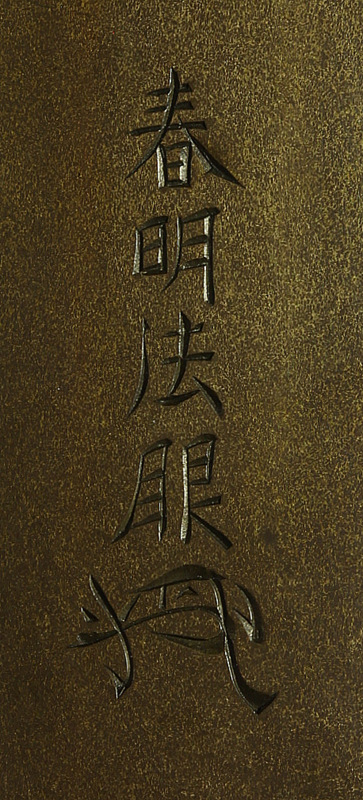
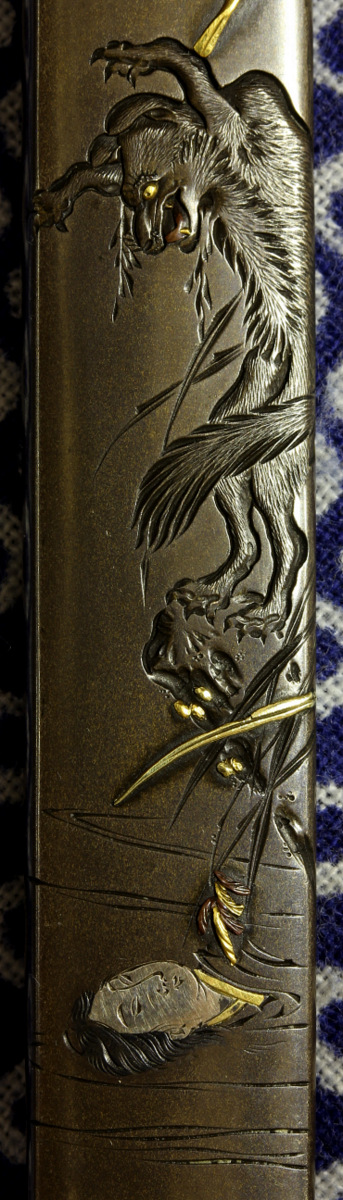
I thought I'd share this particularly fine example of (Kono) Haruaki Hogen's work, 1787–1857 . I know Mike Yamasaki will appreciate the quality :D It's ex. Naunton collection and is described in the Naunton Catalogue by Henri Joly, in the understatement of the 20th. Century, as being "very fine work". No other piece in the collection is thus described. It's now preserved in a rather exceptional English collection. The mei alone is very beautiful. Note also the fine graininess of the ground. This is the classic 'nashiji-ji' that is a feature of the finest shibuichi. That visual texture is the result of the silver in the alloy not being allowed to completely diffuse throughout the copper matrix and to remain as discrete particles. The actual chisel work is quite remarkable in that this sort of direct chiselling allows for absolutely no margin of error nor recutting. Just like in an ink painting there's no going back and redoing something. To my eye this sort of work is the very highest achievement of art in metal.


-
Cheers Mike yes, those really are quite special. I find the carving technique used on the leaves to be particularly appealing. They're very strong and vital forms. Flawless condition too. Thanks for sharing. regards, Ford
-
I'm not sure the Haruaki Hogen School worked in iron much and I'd have to disagree about any similarities in style and workmanship...but that's just my opinion :D Thinking further there might be some similarities with the later Otsuki school work. That incised rim for example. Although the way the waves are rendered doesn't fit at all that well with Otsuki school work.
-
Hi Ludolf, I assume you are referring to the characteristic decorated copper seki-gane that many Tanaka school tsuba feature. While they are a fairly unique characteristic of that school they are by no means always present. If you browse through the MFA's online catalogue of tsuba (47 Tanaka school examples) you see a significant number lacking them or having simply the more typical seki-gane, that was probably fitted later. I'd suggest also that that mei is not all that unusual either. Not all Tanaka work records the School's name. Having said that, this tsuba strikes me a quite late and lacking the force of the more classic examples but never the less I think there are reasonable stylistic similarities to make a case for Tanaka school.
-
Yes, I think it fair to call this Tanaka-Toryusai school. My guess would be that this is the work of a student of one of Kiyotoshi's direct students like Toshiaki or Masakage as they share the same kanji in their mei.