Ford Hallam
-
Posts
3,091 -
Joined
-
Days Won
78
Content Type
Profiles
Forums
Events
Store
Downloads
Gallery
Everything posted by Ford Hallam
-
Perhaps Curran is feeling a tad 'boro-boro'
-
Cheer up Curran I enjoyed your take on this, although it seems to me it tells us far more about you than the tsuba itself :D The first point I'd challenge you on is function. It still appears to be perfectly functional from I can make out. In fact the nakago ana and sekigane are tellingly 'fit for function' and appear to have been spared the ravages of time. You project an interesting quality onto the piece when you claim it "has led a disgruntled confused life" , this is an inanimate object but why assume, were it sentient, that is is confused or disgruntled? Surely an ancient one might have come to gracefully accept, even embrace, the teachings of the eternal Tao and to see it's existence as part of an endless cycle of life and death. Isn't the melancholic recognition of exactly that at the heart of all great art, especially that which we recognise as quintessentially Japanese? As for "plods towards decay without hope"; couldn't that describe much of human kind's own existence? But in any case, what is there to hope for as one ages and eventually dies? Surely the most we can hope for is a calm equanimity in the face of the inevitable. But ultimately, as they say, beauty is in the eye of the beholder. We all 'see' in things much of ourselves, and in that respect this unfairly maligned tsuba seems still to be working. It's very existence seems to be an affront to you when you say; "It has simply continued to exist, without the conviction to die." Isn't the function of some art to challenge and provoke exactly such philosophical musings?
-
I think this tsuba raises some intriguing questions. A few have joked about the 'wabi-sabi' being a bit over the top but I wonder then how we evaluate that aesthetic. I think we understand that wabi-sabi is not something that can consciously be created rather that is a quality an object or place acquires. If this piece is in this condition as a result of age then shouldn't it be possible to asses it's present condition and appearance independent of it's origin as a tsuba and merely as a very old object and that now has different qualities. The question is, how much is too much 'wabi-sabi' ? Consider this piece of weathered wood. Originally it was cut even, perhaps planed smooth but certainly presented a uniform surface albeit with the grain visible if not raised. As a result of years of exposure to the elements the original surface has been utterly obliterated and the material of the wood worn down in a way that now reveals the internal structure of the timber. Generally speaking most of us find this appearance very satisfying and have no trouble pointing to this as having acquired 'wabi-sabi' Looking at this piece of 'apparently' heavily corroded steel in a detached way, and not as a tsuba in very poor condition, I find the object very appealing myself. The sculpted surface reminds me of certain types Scholars rocks. Obviously as a tsuba it no longer meets our expectations in terms of the qualities we usually use to asses them but I wonder if dismissing the piece as it now is isn't missing something else. If this was a Kamakura period habaki that looked like this it would be the subject of much envy I suspect, is it just a matter of age or is the aesthetic being valued also? I find the metal surface very intriguing and I'm not 100% convinced this is all the result of natural corrosion. I actually have a small collection of similarly corroded steel bits in my studio. I study them to better understand the nature of metal but there is always an aspect, no matter how closely I examine them, even under a microscope, that remains mysterious. I might even suggest 'Yugen'. This much maligned tsuba deserves a more sympathetic consideration I think. It stimulates my imagination greatly. I suppose it helps that as a craftsman and artist I do see these things with very different eyes and I never let artificial categories and arbitrary expectations limit what I might appreciate. That's why I was happy to pay £28 for it :D


-
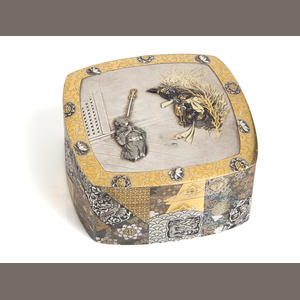
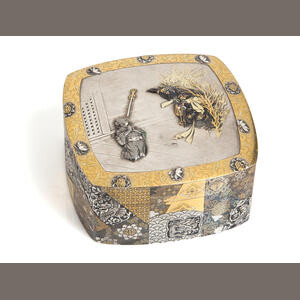
If anything pieces have softened since the mid '80's and '90's which was when prices got a bit silly. but then consider that the price range for genuine Kano Katsuo tosogu is around $15 000 to $150 000. Supply and demand sets these prices. There was a company called the Ozeki Co. which, in the Meiji period, commissioned works from many of the very finest artists of the day. Those pieces, and that little box is exactly the type of thing they sold, fetch an absolute premium at auction because without exception they are simply the very finest pieces to come out of Japan at that time.
-
Hoanh, you could still win the lottery....and if you do be sure to contact me. I'll steer you right David, intriguing subject that is your favourite. Does this hint at some wicked secret you need to confess and receive absolution for ? Have you been a very naughty boy?..... Seriously though, when tsuba by later artist like Moritoshi, and even slightly earlier but previously overlooked artists, do become available they are achieving fairly serious prices now. Estimates of £1200 are easily eclipsed by hammer prices of over £10 000. There's a way to go but with all thing exceptional, rare and finite, the market demand will establish the final price. What I'm saying is that tsuba collectors are presently very complacent. We're artificially conditioned to accept certain pricings because thus far it's quite a closed market. Things will change dramatically quite soon. Of that I'm certain,auction and art history suggests I'm not just speculating wildly here.
-
I can only imagine that the deafening silence this post has provoked is simply stunned awe in the face of such superlative artistry and and craftsmanship
-
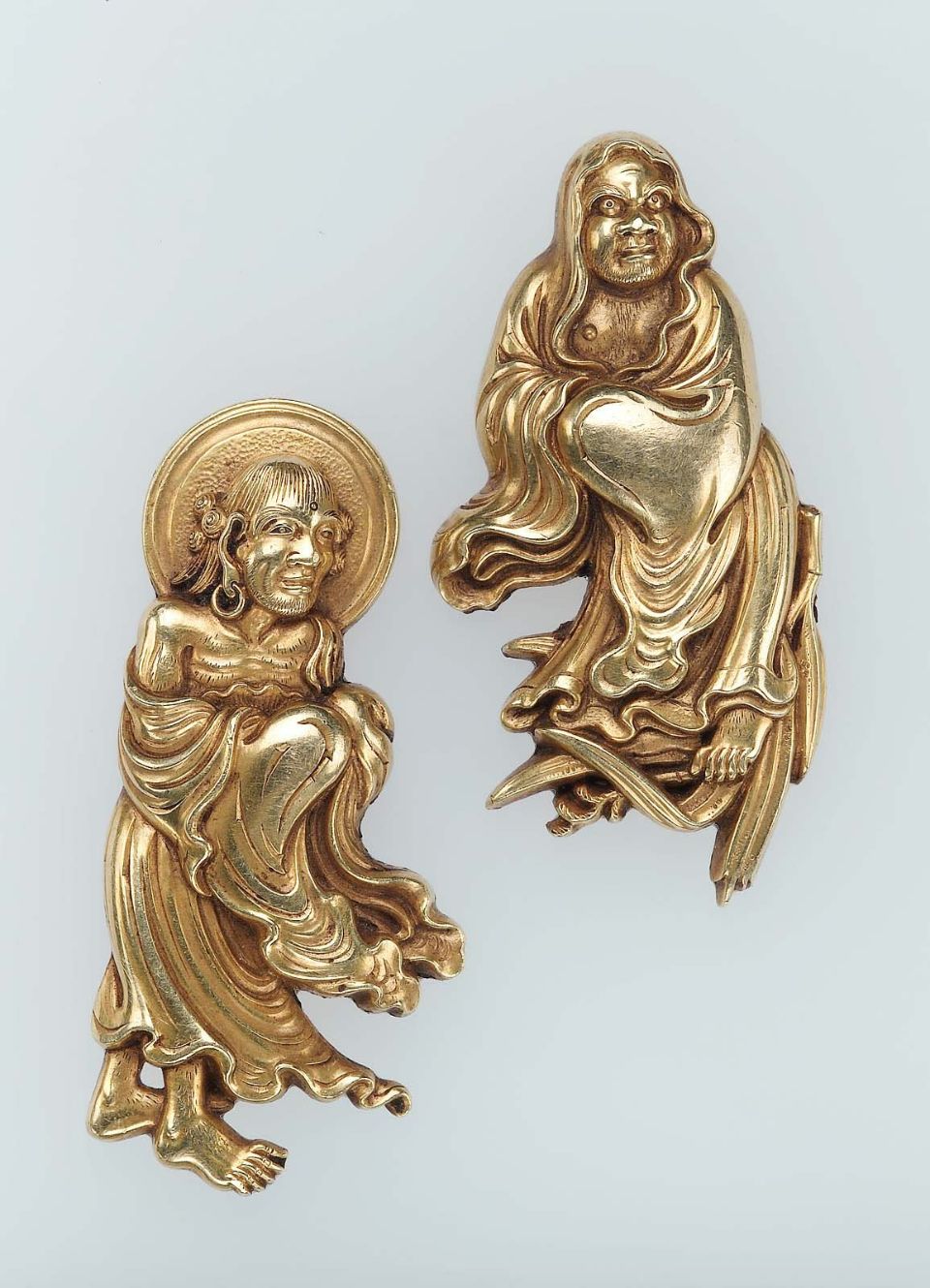
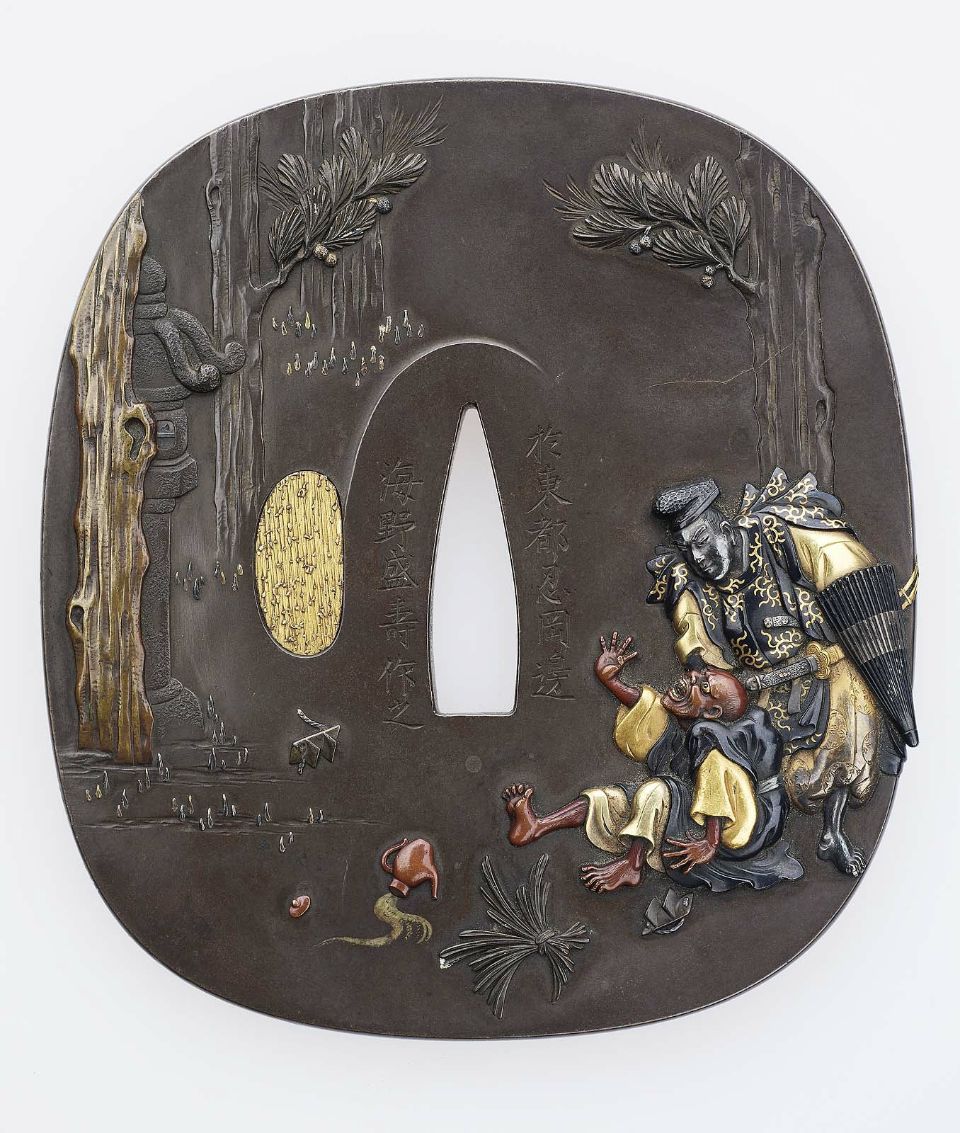
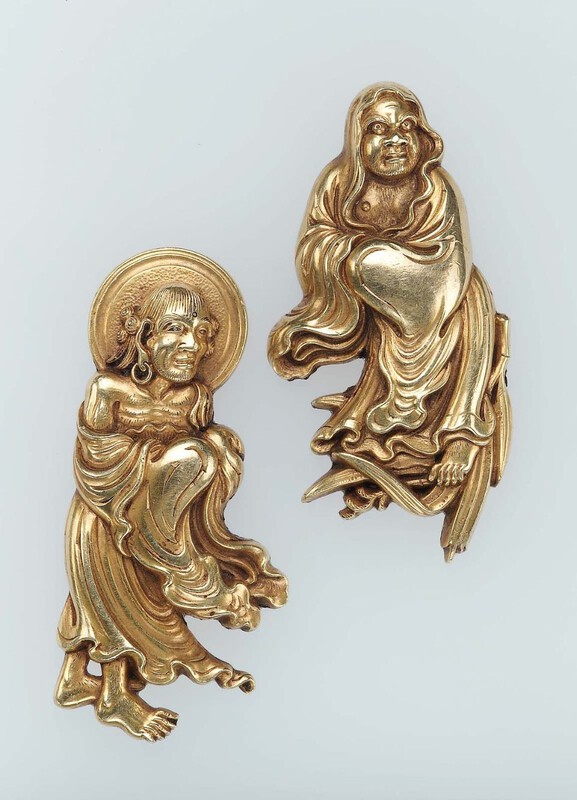
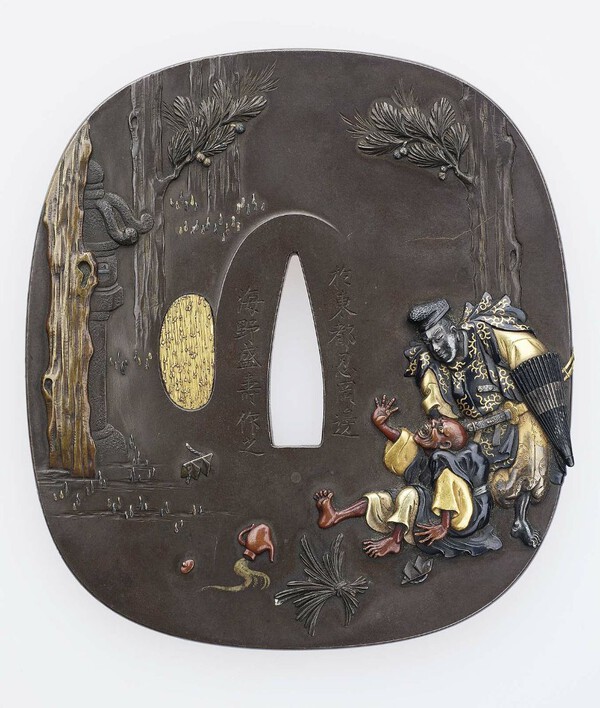
$170 000...that's how much I can't post a larger image but if you follow this link to the Bonhams website you'll find some excellent images that you can zoom in on. Unno Moritoshi (1834–1896) was a Mito artist and trained under Yoshimori. He was also a tsuba and tosogu-shi. The Boston Museum of fine art hold a large collection of work by him, a number are illustrated in 'Lethal Elegance' by Joe Earl. The items in the MFA collection are known to all be genuine because they were bequeathed to the museum by 2 American collectors, William Sturgis Bigelow and Charles Goddard Weld, who both seemed to have a personal relationship with Moritoshi and other leading Mito artists. Many of the piece were most probably special commissions. In fact the MFA collection is probably the finest, anywhere, of late Edo Mito work. I was fortunate to work on a number of pieces (about a dozen at least) by Moritishi in my previous life as a restorer in London so I am intimately familiar with his work. I bring your attention to his art because it epitomises the finest quality that was being produced at the end of the 19th century in Japan. That astronomical price of $170 000 for that little box is actually fairly typical for works at this level. I think puts the price of the finest kinko tsuba into some sort of perspective and it's only a matter of time before serious art collectors start to take note and the tsuba you think are very expensive will be re-evaluated and their prices begin to climb towards similar stratospheric level. I invite you have a close study of his technique and artistry. Compare those gold menuki with the finest Goto works and consider which strikes you as being the finer work of art.
-
Hi Junichi the short course will be structured as an introduction, a taster of the basics. Some experience with hand tools or jewellery making would be helpful. I'm afraid I won't be able to get to any shows over there, unless there's something happening after the 10 November. I actually have 4 students coming here for individual 3 weeks sessions in my studio this year so my schedule is pretty inflexible right now. The price of fame...
-
Thanks Chris, it seems to gaining support quite rapidly so I'm expecting it to be really good. Lots of very enthusiast participants from a variety of fields. Who knew? :D Mike, yes, I deliberately chose October so that all you sword guys would be out of the country....place ain't big enough for the both of us Actually it wasn't my preferred timing, I had hoped to run the course earlier and swing by Tokyo on the way back, with a pocket full of dollars, but others conspired against me. :? It might be an idea to produce some film footage. particularly as we may also be joined by one of the Kanefusa smiths, they also want to learn the real deal, who would be demonstrating forging and yaki-ire.
-
John, no translators but I will speak very slowly :D Henry, you never know, I may very well be running exactly such a course in Tokyo in the near future. I'll let you know.
-
On the off chance that there is someone, or someones even, who fancies trying their hand at some of the basic techniques of classical Kinko work I'd like to announce that I will be running a 6 day introductory course in Japanese decorative metalwork at the start of November in New Hampshire, USA. This will be immediately following a 4 week immersion course I'm running. For more details on both courses you can have a peek on the full announcement here on the Bladesmiths forum. This will be a unique opportunity to get a first hand glimpse into the work of Edo period kinko-shi and may provide an enhanced appreciation of this art form. Cost is $1250 for the week. We'll cover the basics of chisel use and carving, wire and honzogan and touch on patination. And as with all my teaching we'll be dealing with aspects of the aesthetics of the work and developing good working technique and skills. And you get to listen to me talk for a week :-) Basic tools can be supplied for the duration of the course for those who don't wish to purchase their own sets. Thanks for your time, Ford

-

The Hamano School and the varieties of expression
Ford Hallam replied to Ford Hallam's topic in Tosogu
Mike, the tsuba I showed are all in the MFA on-line collection. You merely need to to search in the East Asian collection for 'Hamano tsuba' I deliberately didn't note the artists names because in this discussion it's not all that relevant. I merely wanted to illustrate the school's various uses of technique. Similarly whether the mei are genuine or not was not important to me, the workmanship they display was what I wanted to point to. In that respect the workmanship is more reliable Paul, What I was getting at, and which Chris accurately picked up on, is that to properly asses the objective qualities of this sort of work it's necessary to have some understanding of the 'language' the artists are using. We're not referring to an enjoyment of subject matter or more general aesthetic effects but specific qualities that the workmanship display. I think it fairly self evident that the more one studies and contemplates any subject the more sophisticated and nuanced one's appreciation may become. I'm put in mind of a particular 800 year old Yamashiro blade which on first encounter seemed somewhat lacklustre Similarly, many of the 'rustic' Higo works that many have mentioned may seem to the uninitiated to be very much 'naked emperors' of metalwork. The works were discussing were created for an alien world, one very foreign to us, so we really do have to try to better understand their correct cultural context and the measure by which those works were judged by the original audience they were intended for. This quote from Captain F Brinkley (1841 - 1912) seems apropos at this point. Cpt. Brinkley has this to say about the Hamano, again quoting the Soken Kisho And on the Omori he offers the following; -
The Hamano School and the varieties of expression
Ford Hallam replied to Ford Hallam's topic in Tosogu
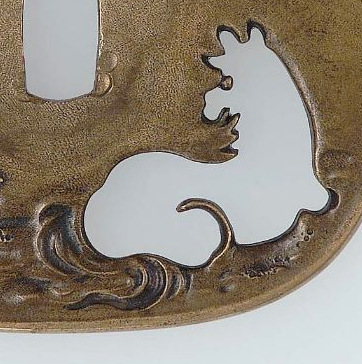
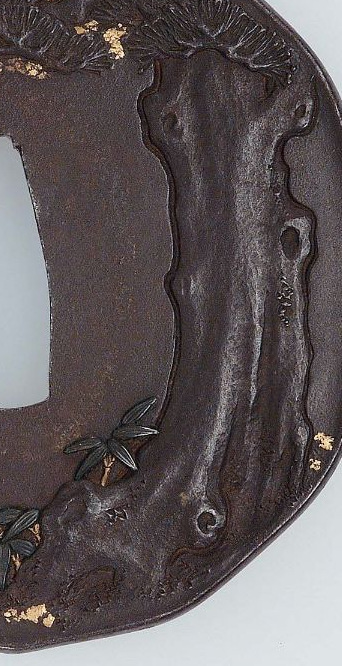
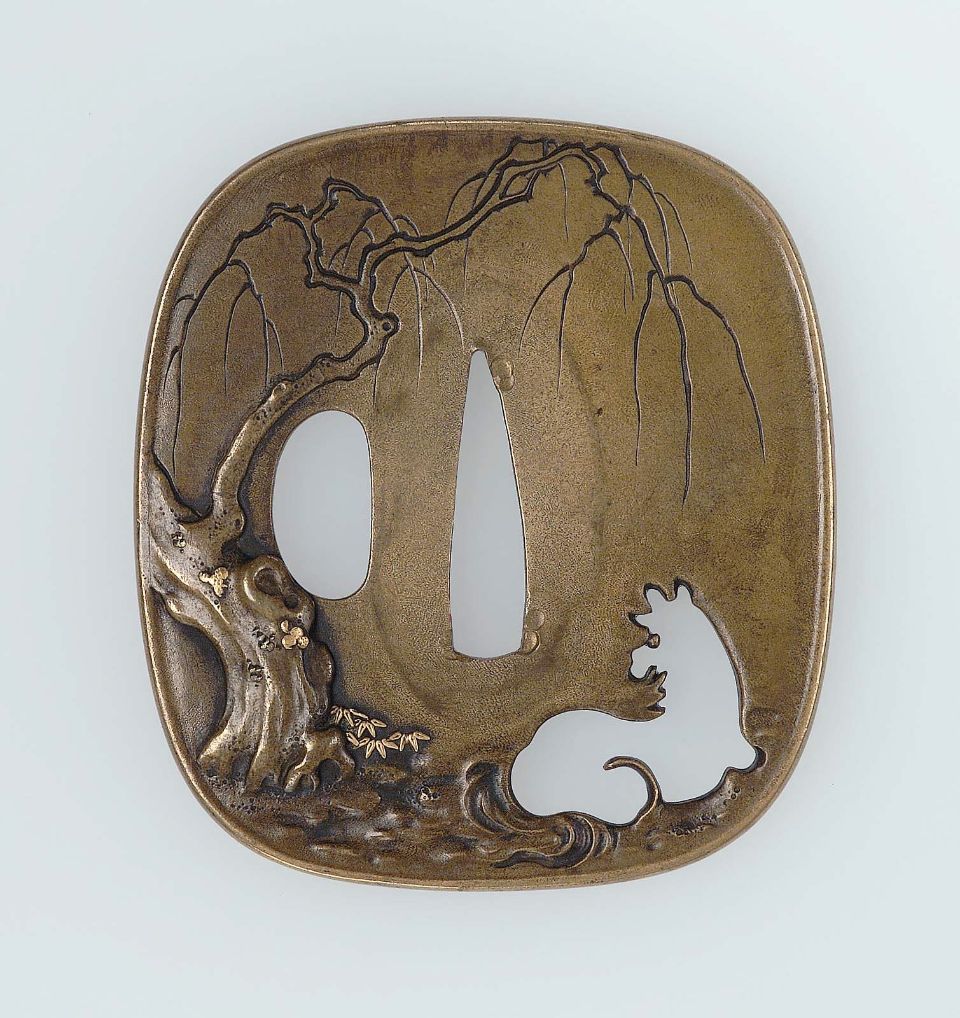
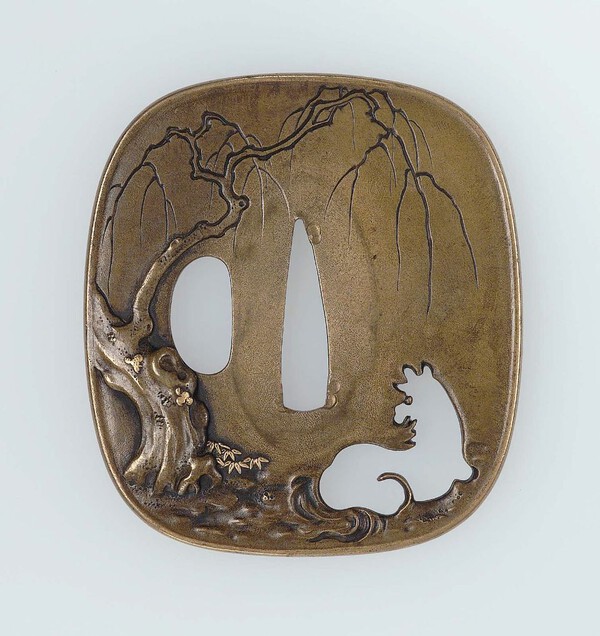
Mike, the point you made was essentially about the level of technique displayed in the the undercutting and how this is to be seen on top level Omori work. My comment on that is that the presence of that particular technique, in itself, does not automatically signal exceptional work. Neither was I making any qualitative judgement between Omori or Hamano work. The fact is we don't know what Omori Teruhide was thinking but you described Omori technique as being as of a higher standard than Hamano. Yes, you put the 'words' in the mouth of Teruhide but the idea was presented in your post so I merely responded to the idea. It doesn't matter who said it. The notion is flawed and I have attempted to show why. Sorry if you feel I was criticising you personally, my intention was merely to use that idea of technique alone being the measure of artistic quality as a starting point in this discussion. [from here on my comments are more general, I'm not trying to lecture dear Mike, I'm sure he doesn't need that from me] If this was Teruhide's attitude I'd have to say he was wrong. :? In fact Edo period writers on painting do sometimes point out how works that rely over-much on technical wizardry, while being superficially impressive, are rather shallow and empty of real content. So my criticism isn't just one made from the point of view of contemporary thinking on art. Having said that it's undeniable that certain works which are incredibly complex from a technical stand point have always been greatly admired. In fact that very complexity and the inherent difficulty of the workmanship of those sorts of works is precisely what is most appreciated. If we consider the full effect of an en suite set of Omori waves the feeling evoked is generally one of being overwhelmed or of being slightly in awe. This is a very intense display of technique fully intended to impress. There's very little subtlety evident, this type of work is meant to make a statement. A single piece showing the waves would be enough to demonstrate the skill but by covering every available surface with those amazing waves I'm left feeling that technique is all that matters. But this doesn't lessen Omori work within the context of Machibori tradition. They were virtuoso wave carvers, that was their forte, but in some other aspects I find their work weaker that the Hamano originals they sometimes emulate. What it comes down to, for me, is not actual technical skill and technique but how those skills are applied to create an aesthetic effect. The Omori were not lacking in skill yet on the whole I find the Hamano masters to be more expressive and the Omori to be a bit stiff by comparison. I might speculate that this was a natural consequence of the sort of formal, or stylised carving of all those waves whereas the Hamano explored themes from legend, myth and poetic scenery, and they were far more painterly in their approach. It appears to my eye that the Hamano studios developed a far richer vocabulary in the way they treated the ground and various elements like rocks or tree bark. I also think it significant that the Omori produce Hamano style work but we don't see as much Hamano work emulating classic Omori style. What I wanted to call attention to with the examples I posted was the variety of expression those different carved effects produce. From an objective point of view it really doesn't matter that it's a horse, as oppoed to what ever creature you personally might prefer , under that willow tree. What is worth appreciating is the ingenuity of the concept and the almost sculptural quality of the carving of the tail as well as the subtle modelling of the ground, almost like wet sand. sc52690.fpx&obj=iip,1.jpg[/attachment] I've deliberately tried to use evocative language to describe this work in the hope that it may help to reveal what genuine expressive technique looks like. This is a demonstration of consummate skill but it's almost invisible, and that's as it should be, in my opinion, as an artist.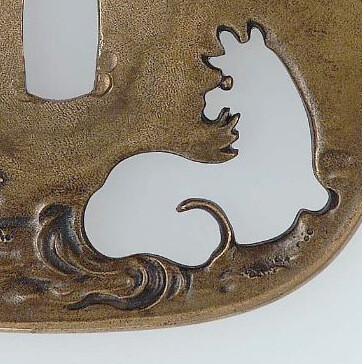
-
The Hamano School and the varieties of expression
Ford Hallam replied to Ford Hallam's topic in Tosogu
Hi Chris, in essence that's exactly what is behind my thinking, beautifully put, cheers -
The Hamano School and the varieties of expression
Ford Hallam replied to Ford Hallam's topic in Tosogu
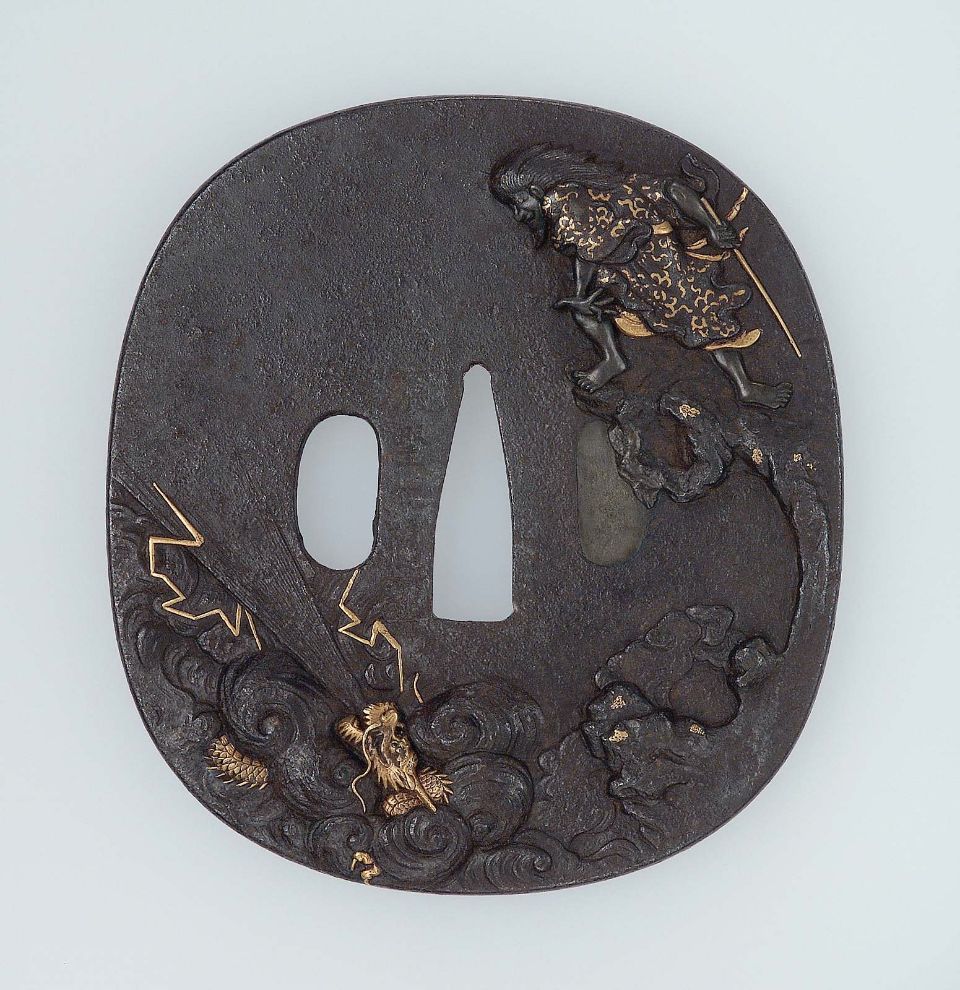
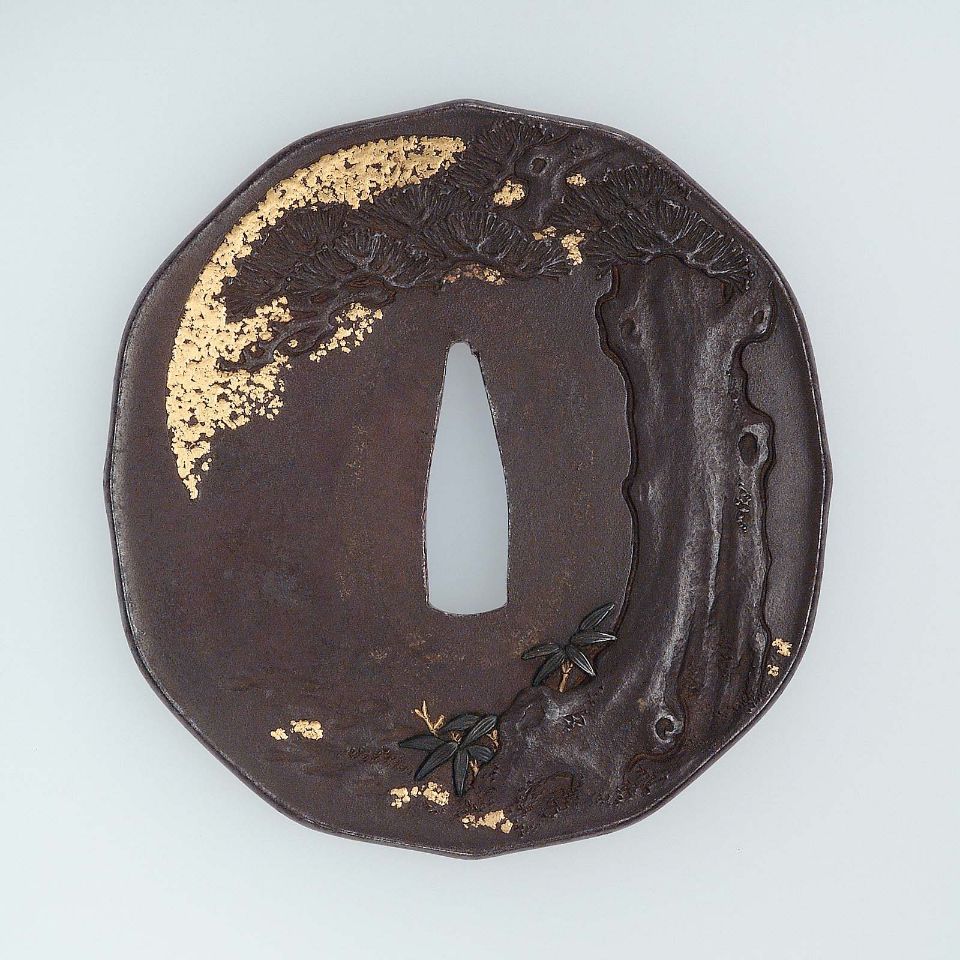
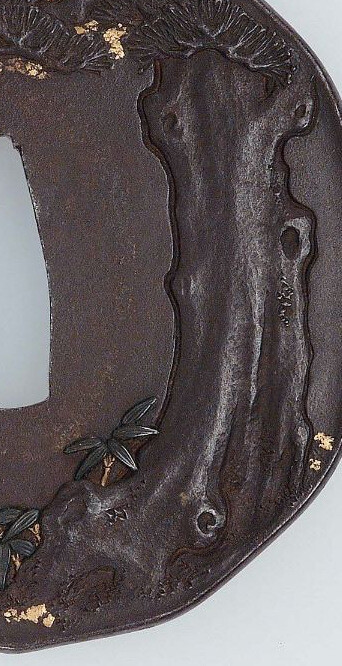
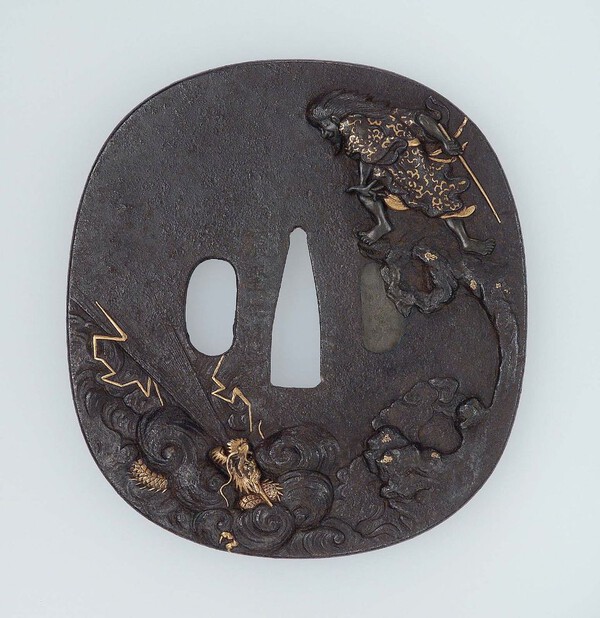
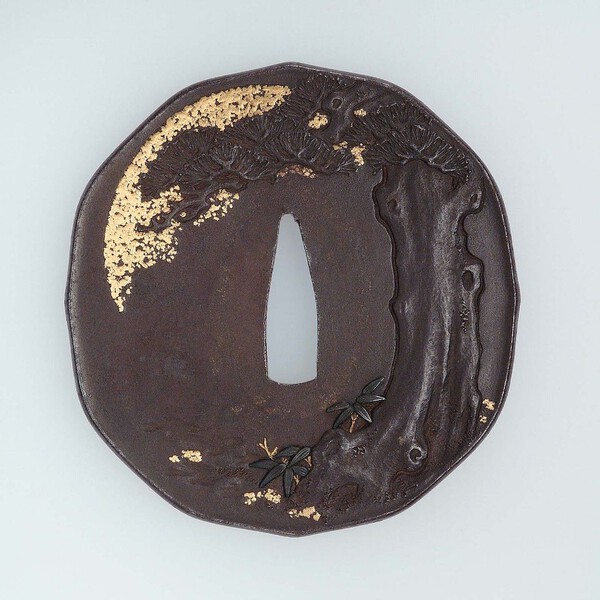
Cheers David, glad you're getting something out of all the noise I make :D Paul, yes, it's probably impossible to be completely objective but merely describing why certain aspects appeal starts the analysis, I think. The first one is a great work of understated carving. That's serious amount of work but the effect isn't overbearing at all. As you say, this degree of subtlety takes real sensitivity. The cheery on top is this chidori birds though. They are almost humorous and the detail, just those seemingly incidental punch marks on the smooth forms of their plump little bodies. How confidant must an artist be to pull that effect of convincingly? I take your point regarding the dragon tsuba but consider the juxtaposition of those tightly swirling clouds around the dragon, the more gentle clouds off to the right and the gnarly rock work. Also worth remembering that the composition, in this instance is almost certainly taken from an artists design book, hence that seemingly odd positioning of the feet, but that was part of the artistic convention at the time. And those 'blossoms' on the 3rd example is actually the moon That's a pine tree. -
Following on from some comments I made here about technique I want to present a few examples of Hamano work that in my opinion require no enhancement nor technical improvement. The matter of skill and the application of technique in metalwork like tsuba is quite a complex one to properly asses. I hope in this thread to be able to begin an exploration of what we really mean by the word skill and how we can better identify and appreciate it. What promoted this thread was a remark Mike Y. made; My own response to this statement can be found in the thread I linked to above so I won't repeat myself here suffice to say that I don't think that merely pushing a technical aspect of a piece necessarily makes it better. Mike's implication was (it seems to me) that the Omori school were essentially more skilled and possessed a higher level of technique. I would have to completely disagree with this assessment and suggest that even trying to make such a comparison is facile and irrelevant. Firstly, no actual comparative analysis of skill and technique has been attempted. To deduce that because the Omori did undercuts that therefore there technique was better than artists who didn't simply isn't logical. If a Hamano master felt the need to include undercuts in their work they would have. It's not a particularly complicated process, especially when you consider that metal is malleable and can be pushed about quite a bit. Omori waves are rightfully famed but a schools reputation can't rest on one notable technique alone. Consider these 4 examples of Hamano work that I've 'borrowed' (for educational purposes ) from the MFA on-line collection.

-
Interesting take on this 'advanced' technique There's a wise adage in art that suggests that "better is the enemy of good" The point being that simply pushing technical aspects of an art work doesn't automatically make it superior. To suggest that by taking the original Hamano style and simply pushing one purely technical aspect it somehow becomes superior is to miss the point of art. As it happens undercutting such as on the tree bark isn't particularly difficult, it's seen on any number of soft metal work pieces but really is nothing more than virtuoso twiddling, a clever but ultimately superficial gimmick. Just because a craftsman can do something doesn't always mean he should. The converse is also true, one can't do too little either, the art lies in doing just the right amount. With their waves, the Omori push the limits of carving and the effect is dazzling and works magnificently. On this tree bark it feels contrived to me, but that just my opinion on the aesthetics of the trick. For me the original and finest of Hamano workmanship is perfect as it is and in no way inferior to Omori work of the top level.
-
Cheers David I hope I didn't sound too hard on the issue but the proper training of a kinko-shi/tsuba-shi is as complex and time consuming as that of a swordsmith or polisher. All of the same types of areas need to be thoroughly studied and internalised, the work of the past, schools, styles, aesthetics etc, the actual hand skills needed to do the work well takes time to develop as does a reliable eye, and the multitude of specific techniques take a lifetime and more to even begin to master. A full apprenticeship is not for the faint hearted nor the dilettante. I'm still looking for someone, my wife says I'm looking for a younger me. Which means he/she will probably get right up my nose regards, Ford
-
Hi David while it's true that Patrick came to my studio ( about 7 years ago, I think ) and spent 3 weeks with me during which I showed him the basics of some techniques it would be a gross oversimplification to suggest that that constitutes a proper training. If I could impart everything I know in 3 weeks it would say much for my knowledge base, now would it? Patrick is a very competent artisan and has developed his own distinctive style but I don't think he'd be at all offended if I were to suggest that there are still aspects of the work, especially restoration work, that he has yet to delve into in any detail. A full and thorough training in the classical tradition (which doesn't actually even touch on the restoration of older pieces at all) takes at least 7 years and probably longer to properly assimilate the values and aesthetics of the tradition. I've have the pleasure of a number of students visit me to learn a little more to help them on their path but it would be misleading to regard any of them as being graduates of my studio. This is something they, themselves, are very much aware of so it's important that the wider community appreciate this and not have unrealistic expectations or place unreasonable demands on them.
-
Ethical Question for collectore & Enthusiasts...
Ford Hallam replied to CurtisR's topic in General Nihonto Related Discussion
Ok, so I clearly owe you more than a couple of 'cold one's' when I get to Oz -
Ethical Question for collectore & Enthusiasts...
Ford Hallam replied to CurtisR's topic in General Nihonto Related Discussion
Cheers Keith, I'll take that as my cue to voice "an informed opinion" :D What would you do without me? From my perspective undoubtedly the cheapest option is to use suitable older fittings. The only drawbacks being the sizes of the fuchi/kashira. Edo period fittings tend to be slightly on the small side for more healthily proportioned newer blades, and Western men's hands There is the question of whether Edo period style fittings would be appropriate for a Showa period blade but that is a matter of personal concern, I feel. I have no doubt that those sorts of considerations were not all that important in the past. Older blades were revered but very frequently mounted in the style or fashion that was popular at the time. Following that, perhaps traditional, attitude I might suggest that the 'correct' approach today would be to have mountings made that were reflective of a more contemporary aesthetic. That raises the question as to what that aesthetic might look like. For some of my clients it was a subtle Hallam take/interpretation of older styles. While for others a somewhat more original approach was favoured. In all cases though, the work is fully informed by and develops out of the art and workmanship of the past. Personally speaking I don't favour simply mimicking older work (an exception would be where a koshirae is in need of a replacement part). Merely reproducing older styles is to my mind a waste of time and money. My feeling is that having something more contemporary made (while still strongly informed by the tradition) one gets both something unique and personal to enjoy, and there's a small chance the work might ultimately be valued in the same way good work of the past is. By which I mean it may eventually be seen as adding to the tradition in a meaningful way. As to costs, a reasonably original and well designed set of tsuba, f/k and menuki would probably start at around $9000. I dare say there are cheaper alternatives though -
Keith no gloating from me :D The approach you took is absolutely correct. Start with something relatively soft and move on to something slightly more hard if required. I look forward to seeing the results. Sounds as though you've on track through. cheers, fh
-
Adam, completely stripping both pieces and repatinating them would be the easiest approach for me but in principle it is sometimes worth preserving what we can, if it's in reasonably condition.
-
To illustrate the difference in technique this is a close up of classic kata-kiri bori on a tsuba by Yokoya Soyo II. (1700- 1779) This is not the 1st Soyo who founded the school but the 3rd Master of the Yokoya school, the son of Somin. Haynes tells us he is regarded as having produced the finest kata-kiri of that school. And to better illustrate the vigour and power of the Master's work here's an image of the same tsuba that I've inverted the colours on to better reveal the design and shape of the cuts. I used this as part of a teaching exercise.
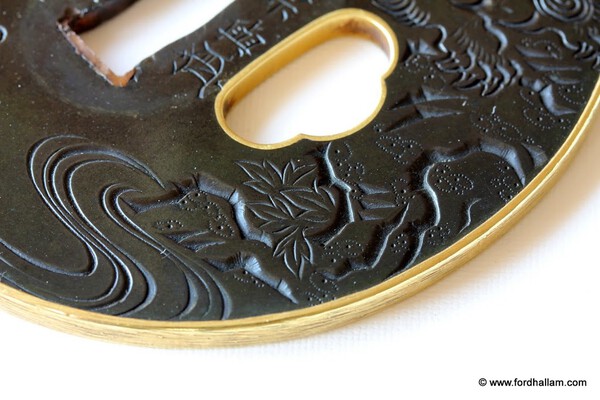
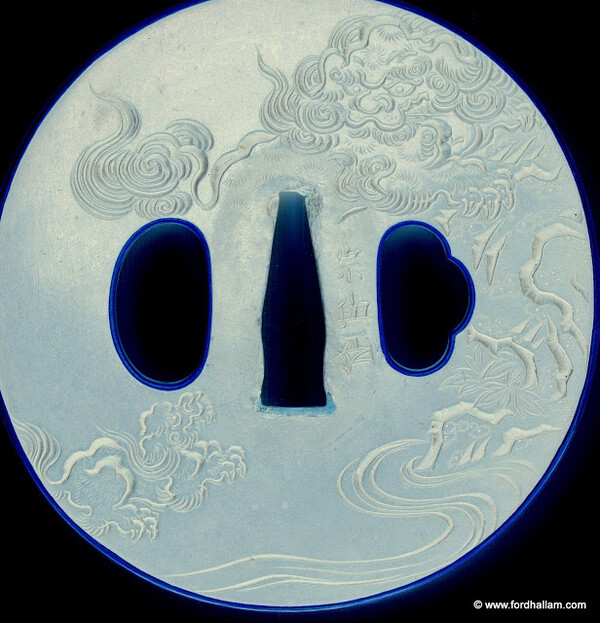
-
Hi Keith Verdigris is in essence a form of rust on copper or cuprous alloys. It's a complex mix of various naturally occurring copper salts, (acetate, chloride and carbonates). It can't really be stabilised other then by keeping the piece in as stable and neutral environment as possible. Because verdigris is hygroscopic (it attracts moisture) it will keep reacting as long as there's moisture in the air. There is a specialised chemical solution used by museum conservators that can dissolve and break down verdigris. I've used it very successfully on bronzes and the underlying metal was conveniently left deep brown, much to my clients delight. Unfortunately I doubt it would result in the same happy result on shakudo. Any chemical solution that will remove the verdigris will also eliminate the patina. You can try rubbing at it with a wet toothpick to eliminate as much as possible. Then washing well with a mild soap, green Fairy Liquid is perfectly fine. Dry well, warm with a hair dryer until quite hot to the touch and seal with Renaissance wax. If I were to deal with it I'd completely remove all trace of the corrosion using the appropriate acids, refinish the damaged areas as much as is feasible and then re-develop the patina to blend with the original colour. This is not a job for an amateur nor someone inexperienced in these processes. I merely describe the approach a professional would take and hasten to add I know of no other professionals experienced in these processes as they relate to traditional Japanese metalwork. And just to correct a common misapprehension. The patina is developed in a very mild copper salt, (ironically in this case, a variety of verdigris and copper sulphate) neutral aqueous solution. When we use the word 'pickle' it refers to an acid solution intended to remove oxides and flux resides resulting from soldering. regards, Ford