Guido
-
Posts
3,242 -
Joined
-
Days Won
99
Content Type
Profiles
Forums
Events
Store
Downloads
Gallery
Everything posted by Guido
-
Kill-joy!
-
Well, think positive: how do you know it isn't the first ever Zaimei Sadamune! :lol:
-
I can't help it either - asking the following question, that is: why on earth would you go through all that trouble and expenses to buy a ... uhm ... "sword" like that? It seems to me that NMB failed you miserably in trying to set certain standards .
-

The cost of a sword in 1600
Guido replied to Louie Skebo's topic in General Nihonto Related Discussion
To keep this thread alive, under no circumstances go to the articles forum and read Markus' excellent article "Sword Prices, Origami and Samurai Income"! -
Special issue from JSS/US
Guido replied to Grey Doffin's topic in Sword Shows, Events, Community News and Legislation Issues
I became a lifetime member in 1986 by paying a tenfold yearly subscription fee - the best deal I ever made, I now don't have to worry about payments anymore :D. I wonder if this is still an option ... Barry? -
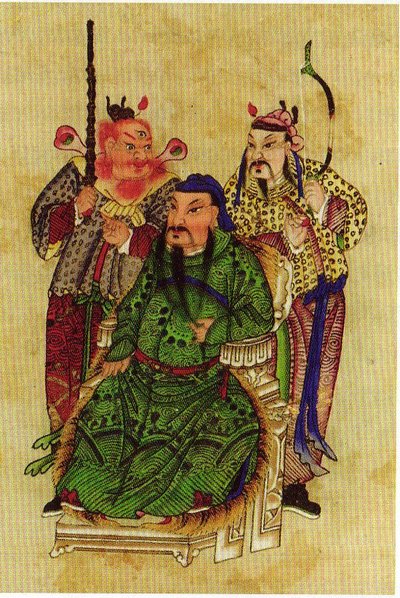
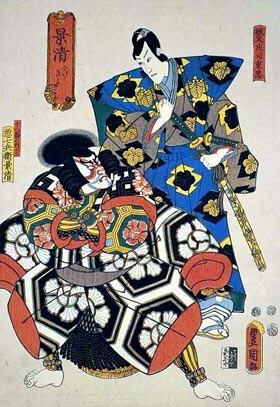
The "Records of Three Kingdoms" (Sānguó Zhì 三國志) is the official and authoritative historical text on the period of the Three Kingdoms from 189 to 280 that was written by Chén Shòu 陳壽 in the 3'rd century. The work collects the smaller histories of the rival states Cáo Wèi 曹魏, Shǔ Hàn 蜀漢 and Dōng Wú 東吳 of the Three Kingdoms into a single text and provided the basis for the later, more popular historical novel "Romance of the Three Kingdoms" (Sānguó Yǎnyì 三國演義), written by Luó Guànzhōng 羅貫中 in the 14'th century. It's one of the four great classical novels of Chinese literature, with a grand total of 800,000 words, and nearly a thousand characters - most of them historical - in 120 chapters. Sānguó Zhì 三國志 (Japanese: Sangoku-shi) and Sānguó Yǎnyì 三國演義 (Japanese: Sangoku Shiengi) were also very popular in Edo period Japan, especially the three famous generals Guān Yǔ 關羽 (Japanese: Kan-U), Zhāng Fēi 張飛 (Japanese: Chō-Hi) and Zhao Yun 趙雲 (Japanese: Chō-Un). The Kabuki play "Kagekiyo 景清", based on the Heike Monogatari 平家物語, was staged for the first time in September 1732. The main characters are Taira no Kagekiyo 平景清 and Hatakeyama Shigetada 畠山重忠, generals of the Heike 平家 clan (see attachment # 1). In a later adaption Shigetada and Kagekiyo were substituted for Guān Yǔ and Zhāng Fēi. Substituting characters with similar sounding names and / or attributes for historical and legendary figures is a popular techique in Kabuki called Mitate 見立. The third general, Zhao Yun, wasn't included in this play, thus paving the way for wood-block prints, Netsuke, lacquer work, Kodōgu and so on depicting Guān Yǔ and Zhāng Fēi as a pair. Zhāng Fēi is usually described and depicted as red-haired and blue-eyed (see attachment of a Chinese painting of the three generals) - also attributes of the Nambanjin 南蛮人, "Southern Barbarians". Some Japanese artists therefore gave him the appearance of a Dutchman. He thus is often depicted in Japan in rather plain clothes and with a funny, roundish hat. It's understandable that Weber confused him for Guān Yǔ's servant. P.S.: I used Pinyin instead of Wade-Giles for transcribing Chinese (unlike Weber who used the latter) since it's not only the standard nowadays, but also comes much closer to the actual pronounciation.

-
Anthony, I merged the three different topics into one - please use the "post reply" and not "new topic" button if you want to add something to an existing thread. Also, please sign you posts per forum rules - thank you.
-
Dave, if this partially pseudo-philosophical and outlandish discussion didn't scare you away by now: You got a very nice Edo period Kamakura Tsuba with legitimate papers. IMO it represents well the rather rustic emulation of Kamakura-bori wood carving, and has a rare Wan-gata shape. It's a decent piece that you can be proud of, and way above the junk, fakes and mediocrity that is posted here so often. Thank you for sharing. To everybody else and in general: there's not a fine, but rather bold line between politely pointing out shortcomings in workmanship or identifying Gimei, and making wild guesses and unsupported claims. Of course everybody is entitled to an opinion, but not all opinions are equal or educated or even valid.
-
At least I can blame that one on Prof. Wolfgang Hadamitzky, the eminent German authority on Japanese language. :D The translation for 矧 I got was "fletching / notching an arrow". BTW, I added the (for me and obviously him) new meaning to the database of http://www.wadoku.de/ - thank you!
-
兜は六枚の鉄を矧合せて作られた形象兜. Rough translation: "The six iron plates of the helmet were joined like in the manner of fletching (or maybe notching?) an arrow." 作られた only means "it was made".
-
Ian, "-rareta" is usually a grammatical ending - there should be a Kanji in front of it, could you post a scan?
-
There's no attribution to a period on the papers.
-
Shinogi-zukuri Wakizashi didn't exist prior to the Muromachi period.
-
Well, that would sound almost equally funny ...
-
Dai Token Ichi 2009, when??
Guido replied to Adrian S's topic in Sword Shows, Events, Community News and Legislation Issues
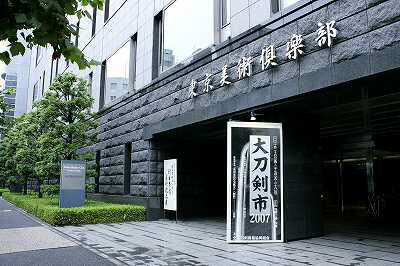
Some more detailed info for those who visit the DTI for the first time: I find it most convenient, easy and least time consuming to go to the DTI via Onarimon station on the Mita line (see attached map). Take exit # 4, make a 180 degree turn, walk a few steps to the big intersection and turn left there. After 100 or so meters (and passing a fire station on the left) you'll see the Red Cross building across the street on the right, and to your left the Tōkyō Bijutsu Club, just like in the attached picture with the DTI sign. Opening hours are from 10:00 AM to 6:00 PM on the first two days, and 10:00 AM to 5:00 PM on the third day. The show is located on the 3'rd and 4'th floors, but registration is on the 4'th floor. If prices didn't increase, 1,500 Yen will buy you a 3 day pass including a nice catalog. For finding out what train and subway lines to use, and how long it takes and costs, there's a nifty tool: http://www.hyperdia.com/. Actually it's very helpful to find out any train connection within Japan - just click on "English" in the upper left corner and put in the station names without spaces. See you in two months!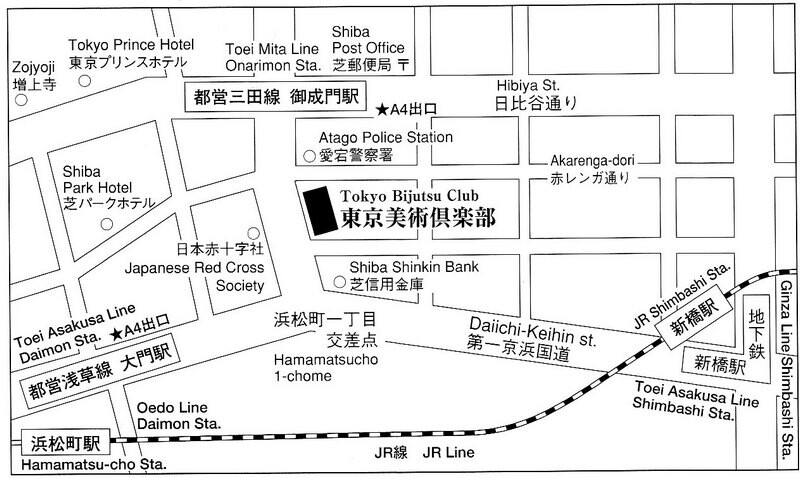
-
-
ECHIZEN JÛ (right side) KINAI SAKU (left side)
-
How about *you* tell us why you think these NBTHK Hozon papers (that look perfectly legitimate to me) are "weird Chinese fakes"?
-
http://www.vikingsword.com/vb/showthread.php?t=10680 Besides, Emperor Hirohito wasn't born yet in Meiji 2 ...
-
Peter, the Nihontô Meikan only states that he signed "Bishû Inuyama jû Michiaki 尾州犬山住道暁" and "Bishû Inuyama jû Michiaki saku kore 尾州犬山住道暁作之", that he was from Owari 尾張 and worked ca. Tempô 天保 - that's all she wrote ... :|
-
Kansai police seems indeed to be different from Narita police (I only dealt with them so far). The magnet stunt is usually only pulled when a sword is exported, to prove that it's an Iaitô / Mogitô, never heard about it the other way around (after all, you probably never claimed that it's made of a zinc-alluminium alloy, did you?). In any case, it might be easier to have it shipped to Japan instead of carrying it with you. The Toroku-Shinsa then takes place at the international p/o, and those guys really know what they're doing.
-
Philip, you'll get a Hikiwatshisho without any supporting documentation - except if it's obviously a sword that's not allowed into Japan (like a non-Japanese sword or one with a Shôwa stamp etc.). Copies of books or "certificates" by a dealer outside of Japan won't do any good anyhow. The Japanese police will not call a dealer or "expert witness" out to the airport, they make their own decision on the spot, and rest assured that they have a good idea about what they're looking at. You have to present it for Toroku-Shinsa afterwards (within one month), and that's where the final decision is made whether it can stay in Japan or not. Been there, done that, and never had a problem.
-
Are Gimei blades worth collecting?
Guido replied to Gabriel L's topic in General Nihonto Related Discussion
Hey, you still can throw away the papers! -
What's wrong with the default color(s)?
-
same here ... :?