Guido
-
Posts
3,242 -
Joined
-
Days Won
99
Content Type
Profiles
Forums
Events
Store
Downloads
Gallery
Everything posted by Guido
-
My take: both Shôshin, both Ubu, B made as an Utsushimono and thus giving the appearance of being Suriage.
-
The "Nihonto Newsletters" by Albert Yamanaka: http://www.ncjsc.org/pubs_4_sale.htm
-
The paper says 氷割れ梅花図, plum blossoms on cracked ice.
-
According to Albert Yamanaka they are: Honjô Masamune 2-1-5 Kuniyuki 2-4-9 Aoe Masatsune 2-5-3 2 Chokutô with Hôô Koshirae, 2-2-5 and 2-4-8 respectively Rai Kunimitsu 2-5-8 Kunihihro Kamakura Jûnin / Bumpô 2-shu 2-gatsu Nichi 1-1-1-5 Bishû Osafune Iesuke / Ôei 21-nen 2-gatsu Nichi 2-4-3 Nagamitsu 2-2-2 Botan-zukuri Tantô 8-8 Keitô Tachi 2-2-5 Norishige 2-1 Sôshû Jû Akihiro 2-1 Shumenosuke Ichinohira Yasuyo 2-8-1-5 not listed: Hotarumaru Rai Kunitoshi 3-3-1-3
-
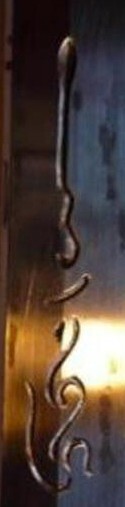
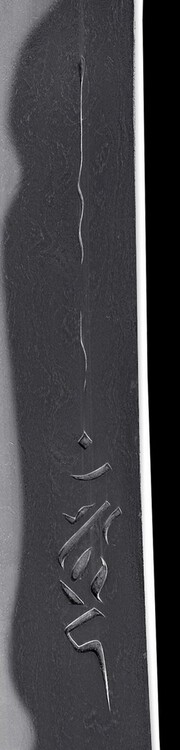
長梵字 (nagabonji), not really that uncommon.

-
Sayagaki from Fukunaga Suiken and attributed to Nakajima Rai
Guido replied to cisco-san's topic in Translation Assistance
Rai Kuninaga 来國長, a student of Rai Kunitoshi 来國俊, moved from Kyōto 京都 in Yamashiro 山城 province to Nakajima 中島 in neighboring Setssu 摂津 province around Gentoku 元徳 (1329 ~ 1331). There are probably three generations of Kuninaga 國長, and they were active from the late Kamakura period 鎌倉時代後期 through the early Muromachi period 室町時代初期. This group of smiths is commonly called Nakajima Rai 中島来 since their workmanship is very similar, and even signed blades are not easily attributable to a specific generation -
I think the discussion about the different names for cutting techniques is moot in this case, because the Saidanmei says 二ツ胴 (futatsu-dô), not 二ノ胴 (ni no dô) - thus stating that two bodies were cut. 分石 (bunseki?) doesn't make sense to me, but might be the name the sword was given. The last part of the Zôgan-mei looks like 斉X長式所持之, a Shoji-mei (i.e. stating the owner of the sword). As Ted said, at this point it's very hard to be sure if the Kinzôgan-mei is genuine or not, but to me it doesn't look very convincing.
-
JOLY'S "LEGEND IN JAPANESE ART" ON LINE
Guido replied to Bazza's topic in General Nihonto Related Discussion
Barry, attached you'll find a short article I wrote for the International Netsuke Society a few years ago:siniu.pdf -
Stephen, I'm speechless: instead of aplogizing for your personal insults and profanity (which were thankfully deleted by Brian), you're now playing the victim! If it were up to me, you would have been banned for quite some time now since this isn't the first time you're going below the belt. Shame on you!
-
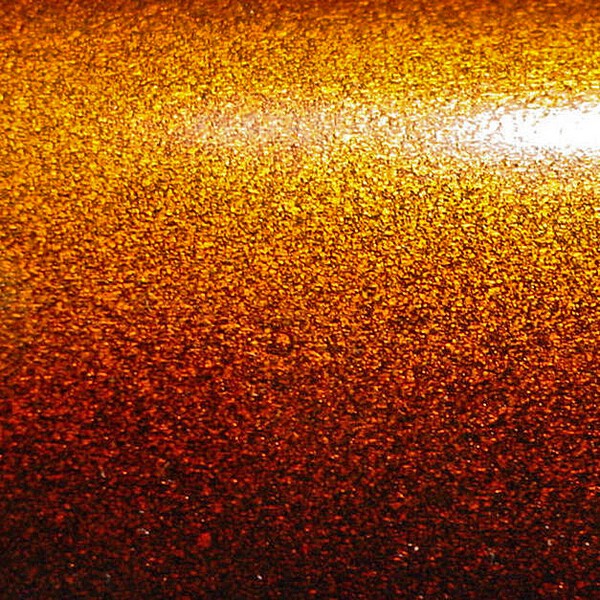
And some more:
-
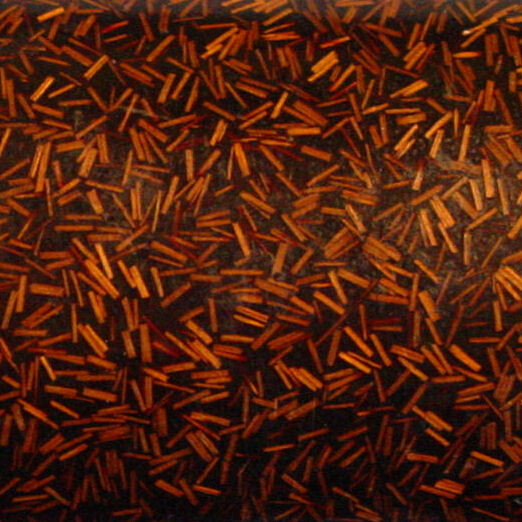
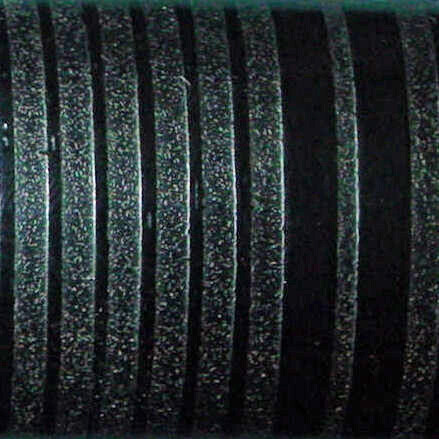
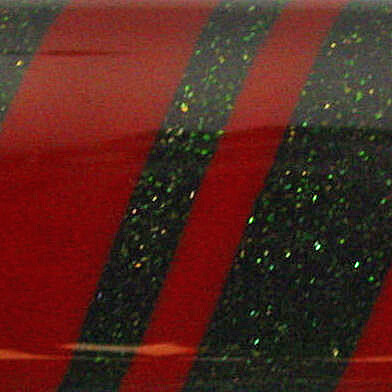
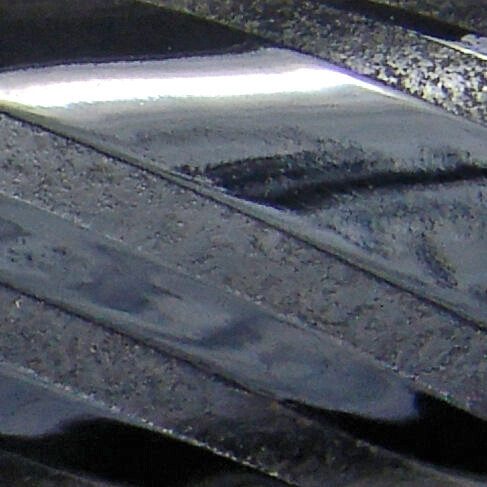
DIY aside for a moment: Cashew, applied by a professional, can be a great finish that looks as good - and sometimes even better - than "real" Urushi. Attached are a few close-up shots of Sayanuri of some of my swords (sorry for the glare in some of them): I dare you to tell the difference!
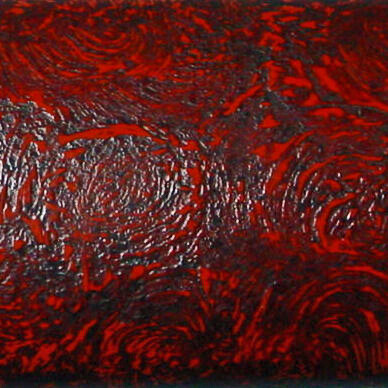
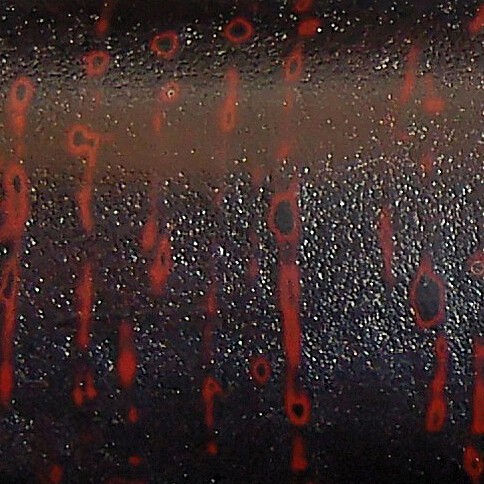
-
Before others chime in with "it's part of the sword's history and should remain": having a Gimei removed is the only sensible thing to do IM not so HO. If one of the punks in the neighborhood scratches his initials into the lacquer of my car I have a paint job, and don't leave it as "part of my car's history". A good polisher or smith can do that in a way that makes it virtually undetectable (Yoshihara Yoshindo is *very* good at it, but not exactly cheap, and it takes quite a long time). I once had a Gimei removed from a Tantô, and even Mr. Tanobe was "fooled" and wrote "Ubu Mumei" in the Sayagaki ...
-
After "the other post" was pulled, here's another pic from his childhood:

-
I believe the Hi are original, and the different lengths in the Nakago are actually quite common on (Ô)Suriage swords. When a blade is shortened, an entire or partial new Nakago has to be shaped. This can obviously done by filing both flat sides down to a taper, or only (or mostly) one side; the latter method is prefered when an existing signature has to be preserved on the opposite side, but is (in my experience) the most often used method regardless of the concern for a Mei anyhow.
-
John, I don't know if it helps or not, but here's a screenshot of my personal translation software (however, I'd like to know which OCR you use):

-
If you ever get to the Panjiayuan flee market, South 3'rd Ring Road, Beijing, you'll find dozens of this sword's brothers and sisters. If you're lucky you can watch the vendors "antiqueing" them right before your very eyes.
-
It certainly looks like a nicely done Keichô-suriage of a Kotô blade to my untrained eyes.
-
FUJIWARA RAI KUNIFUSA, request details on this sword smith
Guido replied to steve oakley's topic in Military Swords of Japan
Actually I don't - WWII swords are certainly not my field of interest (I usually click the "mark forum read" button on top of the Guntô forum, and only saw this topic because it was originally in the Nihontô section). I do, however, have an extensive library that includes Guntô and Gendaitô reference material, and wasn't able to match the signature. That, and the head-cutter nickname, lead me to the conclusion that the entire inscription isn't legit. BUT: I could be totally off, of course, and there indeed was this smith who signed awkwardly and in different styles and combinations of characters, and who named swords before sending them off to his customers ("hey, this sword is named "Beijing Backdoor Breaker", great for infiltrating the Chinese capitol if you ever happen to be there!"). I just don't think it makes sense, and find it more likely that someone did those inscriptions on unsigned swords after the war to make them more interesting to potential buyers. In regard to war crimes: as a German I'm pretty much the last one on this board to point a finger at anyone. But if the Shanghai head-cutter inscription was added for the sole purpose of raising the value, I find that extremely tasteless. This has nothing to do with the present and future owners, or the seller of this sword, but the (alleged) faker. I also wonder what people on this board would think if we were not discussing something that happened between two Far East nations, but something closer to home. But this is indeed a discussion for another board, we're here to enjoy weapons detached from their historical context, aren't we? Anyhow, I rest my case. -
FUJIWARA RAI KUNIFUSA, request details on this sword smith
Guido replied to steve oakley's topic in Military Swords of Japan
It looks like I failed to express myself clearly; let me give it another try: - The signature doesn't match known examples. - The signature and the additional inscription are done by the same hand and most probably at the same time. - A sword may get named *after* a certain feat was achieved with/by it, not *before*. - If both the Mei and nickname were chiseled at the same time/by the same person, it is reasonable to assume that it wasn't done by the original smith (after all, how could he have known about it later being used in Shanghai for decapitation when he signed it?) - Testing swords on bodies of executed criminals in the Edo period can't be compared to war atrocities. Anyhow, if the inscription would be genuine, it's kind of a macabre, but still legitimate part of its history. But unlike Saidan-mei, if it's added later to raise the "value" it's rather sick (at least IMO) - there are still a lot of people around here in China who's relatives were killed by Japanese soldiers who wanted to tests their swords on live people, soldiers and civilians alike. We're not talking about some nameless criminal - who was already dead anyhow - a couple of centuries ago... -
FUJIWARA RAI KUNIFUSA, request details on this sword smith
Guido replied to steve oakley's topic in Military Swords of Japan
It says "Shanghai Kubigiri-maru", to be precise. And since both the "Mei" and this inscription are obviously done by the same hand - and thus added later for enhanced "appeal" - we now know that the Mei itself is Gimei. That's the good news. The sad (or rather sickening) news: the person who did the inscription found it appropriate to imply that this sword was used to behead Chinese in Shanghai; I'm pretty sure some buyers (who think the inscription is genuine) will pay a premium for the knowledge that their new sword was used to chop off some heads. -
for forumites in or near Tôkyô
Guido replied to Guido's topic in Sword Shows, Events, Community News and Legislation Issues
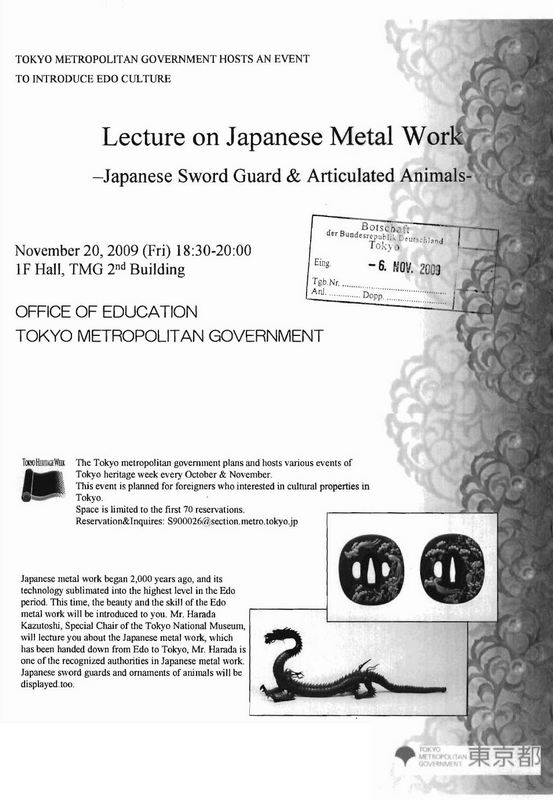
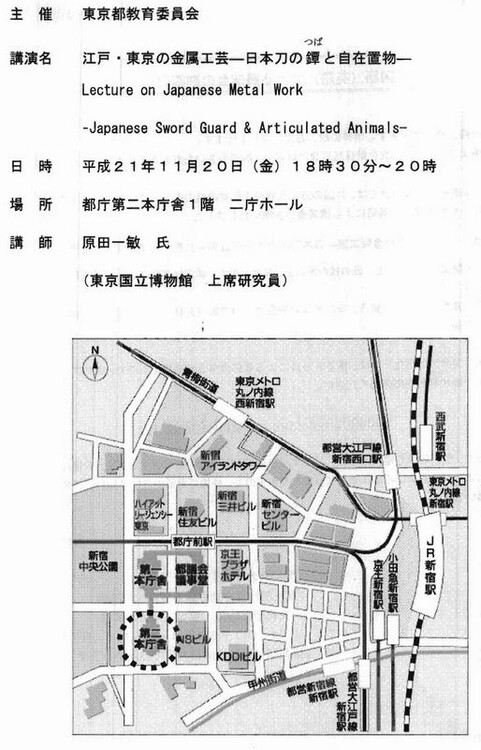
Henry, the scan I got is a huge pdf that I can't post; here are screenshots of the relevant parts:
-
for forumites in or near Tôkyô
Guido replied to Guido's topic in Sword Shows, Events, Community News and Legislation Issues
The Japanese version gives the e-mail address as S9000026@section.metro.tokyo.jp, seems they missed a 0 in the English part. -
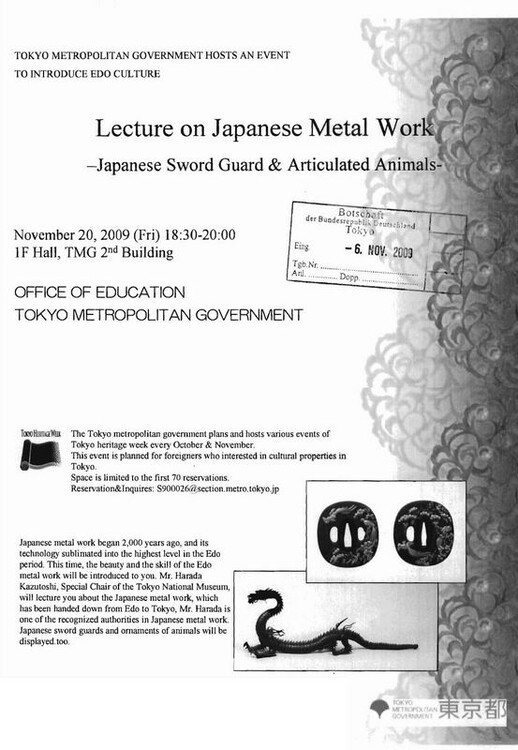
A colleague in Tôkyô just forwarded the attachment to me - looks like a great opportunity to get some insights into traditional metal work in general and more specific Kodôgu.
-
Marc, when I put some substantial time and energy into explaining a "three kingdoms" motif recently (a thread you were very active in) and - if I may be so immodest - came up with some so far unpublished and new research, all the flurry stopped and there was no response at all. I hope I don't sound somehow bitter, because I am not. It's just the nature of the beast (i.e. online forums). There are only a handful of people here who are looking beyond the Samurai lore and are willing to appreciate swords and fittings as an art form, and delve into the history and language. Yes, I know, I sound like a broken record, and I promise this will be the last post I mention it in. I actually - and finally - "found my peace" in not expecting serious posts on a regular basis. They still pop up from time to time, and I'll happily participate when they do. No responses to a post usually means people are busy hunting for a lost Masamune on eBay.
-
John, it's 入子鞘.