Guido
-
Posts
3,242 -
Joined
-
Days Won
99
Content Type
Profiles
Forums
Events
Store
Downloads
Gallery
Everything posted by Guido
-
Some good advice, and basically he got the laws correctly. However, living in China myself, I can assure you that there are numerous ways around the mentioned legal restrictions. But sadly it is true that even at the "better" antique stores, about 90% of all items for sale are fake; more often than not this percentage is even higher. As with any any other field of collecting, you really need to know your stuff in order to not being taken advantage of. But that's old news anyhow.
-
Wow, *that* was fast!
-
Because YouTube is blocked here in China, I had asked my daughter in Japan to download the video, and finally was able to watch it when she arrived two days ago, visiting us for Christmas. I had seen the Tsuba in the flesh last year, and it's a real eye-opener to get some insights into its making. The only thing I can complain about is that the video is too short .
-

What is more important, Kantei or picking a good sword?
Guido replied to David Flynn's topic in Nihonto
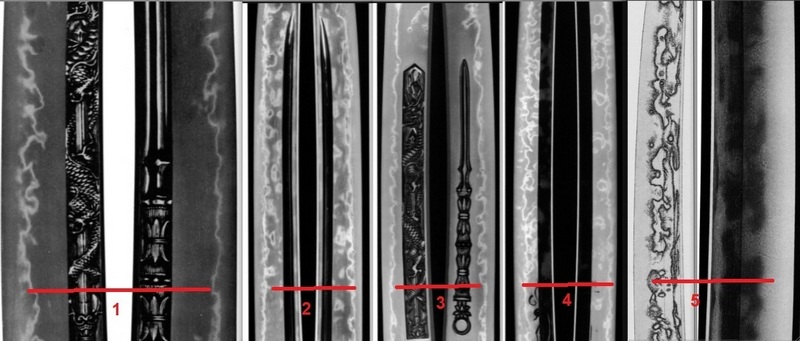
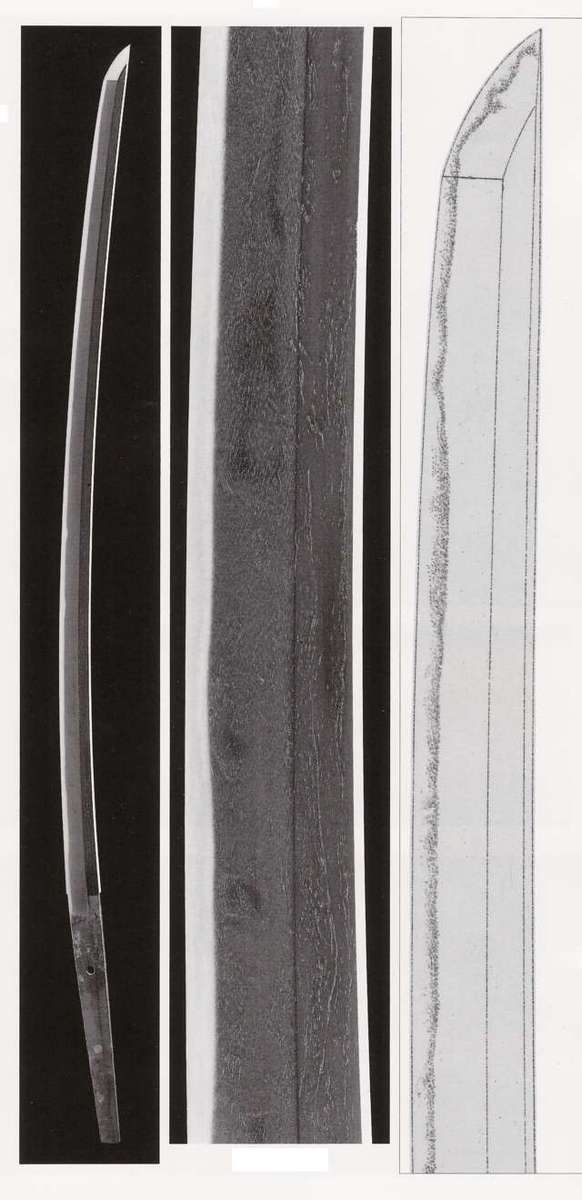
Sword in hand is of course always the way to go, but I think the pictures show enough detail to comfortably Kantei them as Sôshû school blades. 1, 3, 4 & 5 are Nioi-based and therefore Sue-Sôshû. 1, 3 & 5 = Takahiro, Tsunamune or Fusamune 4 = Hiromasa? 2 is more "classic" with lots of Nie and other activities, i.e. Nambokuchô period. Maybe Akihiro, but more likely Hiromitsu. That's as far as I can go based on my impression of the photos (the Oshigata might be a little misleading and doesn't correspond well enough with the pic). If we define a "good" sword as one of artistic merit, i.e. an "art sword", then all five are "good swords". Personally I would pick # 2 as the best of them. Disclaimer: If I was off in my Kantei, I hereby retract my above statements and announce that it's impossible to judge swords from photos or Oshigata.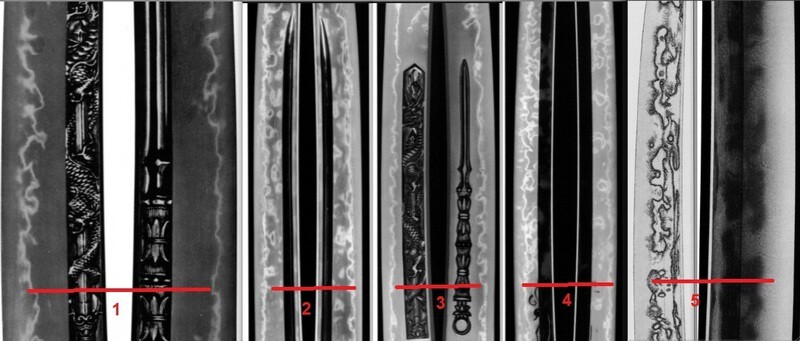
-
What is more important, Kantei or picking a good sword?
Guido replied to David Flynn's topic in Nihonto
If one is blessed with innate good taste, he may develop expertness by listening and looking, like gifted students who earn degrees without cracking a book. For most of us, however, reading, discussing, examining, studying - and 'yes', doing Kantei - are an essential though happy regimen for graduation to connoisseurship. The emotional response to a superb Nihontô may be as intense for the collector who never learned any "technical" information as for the expert, just as the emotional response to music may be as great for the listener who can't hum a tune as for the trained musician. But the intellectual pleasure, if not the emotional response, of the musician is profoundly enhanced by his understanding of theme, harmony, and counterpoint. -
Shôwa Tennô's birthday was April 29'th; the present emperor's birthday is December 23'rd.If a sword is forged for a special occasion it's usually mentioned on the Nakago.
-
Superiority? The only thing is smell is envy ..
-
鉄の意匠 = Tetsu no Ishô = design in iron 水戸刀と刀装具の名品 = Mito-Tô to Tôsôgu no Meihin = famous swords and sword fittings from Mito
-
Yup, that's what it's all about, and that's why we are all on NMB! Although, come to think of it, a Walmart machete will do the same for considerably less money. My dream is to own a Learjet, but sadly I lack the funds for one. I therefore fold paper planes in my leisure time and am happy with them - they all fulfill their purpose and fly. But then again, my rather low IQ barely enables me to peel a banana.
-
Help translate/validate a NTHK SHINTEISHO paper, please
Guido replied to drdata's topic in Translation Assistance
Piers, you're absolutely right, lazy me didn't look at the original scan. "Ari kore" indeed refers to the length in traditional measurements, there's no metric equivalent given. -
Help translate/validate a NTHK SHINTEISHO paper, please
Guido replied to drdata's topic in Translation Assistance
センチ有之 = senchi ari kore = "this has (a length of X) centimeters" -
-
Taking my role as one of the resident heretics very seriously, I'm still not 100% convinced. For instance, many (if not most) Japanese books give the reading for 良業物 as "Ryô-Wazamono" althought it correctly reads "Yoki-Wazamono". I guess I'll stick with Socrates for the time being: ἓν οἶδα ὅτι οὐδὲν οἶδα ("The only real wisdom is knowing you know nothing"). Btw, an executive order issued in July of Shōho 正保 2 (1645) specified the maximum blade length of Katana to be 2 Shaku 8 Sun to 9 Sun (= 84.84 cm ~ 87.87 cm) and Wakizashi to be 1 Shaku 8 Sun to 9 Sun (= 54.54 cm ~ 57.57 cm). That makes me wonder if swords between 57.57 and 60.6 cm would have by law also been considered Katana back then, or was this order only meant for Daishô ...?
-
My apologies to Marc's daughter, I'll try to steer them into the "right" direction ...
-
That sums it up nicely. I'm reasonably sure that people would have referred to it as Katana back in the day (because it functioned as such), not withstanding the fact that the precise classification is Wakizashi.The original and correct term for "screwdriver" is "screwturner" (Scraubenzieher/Schraubendreher in German), but who uses it in common language? Right now my wife has a few friends over for coffee/tea, all native Japanese speakers, including her. I showed them the Kanji, and the verdict was 4:1 in favor of Teisun, but I also know from past experiences that this doesn't prove anything. At least they got semething else to discuss now besides Gucci handbags ... :lol:
-
I'm not a huge fan of Wikipedia, and hardly ever go there for reliable information; I usually rely on the Nihon Kokugo Daijiten and similar encyclopedia.Anyhow, the Tôkyô Geijutsu Daigaku has records of "Kanejaku" used as far back as October 1'st, 905. Jôsun is certainly a valid alternative reading, but Teisun somehow sounds more "natural" to me. But so far I wasn't able to find this Kanji combination in any of my dictionaries, and therefore can't be sure.
-
No, it isn’t, there are indeed different Tatami sizes: in Tōkyō the Edoma (or Kantōma) of 0.88 m by 1.76 m, in Kyōto the Kyōma of 0.955 m by 1.91 m, and in Nagoya the Ainoma of 0.91 m by 1.82 m.
-
The Shakkanhō 尺貫法 (traditional Chinese measurement system [used in Japan since 701]) was already “standardized” early on, and firmly in place during the Edo period. In 1891 the government merely defined the metric equivalences; in 1924 it was replaced by the metric system. There are two types of Shaku 尺: the “standard” Kanejaku 曲尺 (10/33 meters = 11.93 inches), and the Kujirajaku 鯨尺 (25/66 meters = 14.9 inches) used only for measuring clothes. There also was a Shaku written with a different Kanji - 勺 – used for land pricing and Saké units. The Kanejaku – or Shaku for short – was/is the unit used for sword lengths, and the various government restrictions on sword lengths of the Edo period are based on it. The “standard / average” length during the Edo period was called Teisun 定寸; it’s 2 Shaku 尺 3 Sun 寸 5 Bu 分 (71.2 cm) for Katana, and 8 Sun 寸 5 Bu 分 (25.8 cm) for Tantō. Tantō longer than Teisun are called Sunnobi-Tantō 寸延び短刀, and less than Teisun Sunzumari-Tantō 寸詰まり短刀. There was no standard length for Wakizashi, but those over 1 Shaku 尺 8 Sun 寸, or 54.5 cm, are called Ō-Wakizashi 大脇指. Tachi 太刀 of more than 3 Shaku (90.9 cm) are referred to as Ōdachi 大太刀, whereas Tachi under 2 Shaku 尺 (60.6 cm) are called Kodachi 小太刀.
-
Takahashi 高橋 is the third most common Japanese surname after Satô 佐藤 and Suzuki 鈴木.
-
I have no idea how they did it - my anti-virus and firewall software is top of the line, but a scan showed no infection. Same with the spyware scan I did. My computer is clean. But how did they get access to my "contacts" folder? The only explanation is that they hacked the mail server.
-
Yup, same address as before.By now a few other of my colleagues had their e-mail accounts hacked, and some expats I know as well - seems the hackers are targeting foreigners in China ...