Guido
-
Posts
3,242 -
Joined
-
Days Won
99
Content Type
Profiles
Forums
Events
Store
Downloads
Gallery
Everything posted by Guido
-
Photos from the other side of life
Guido replied to Henry Wilson's topic in General Nihonto Related Discussion
I don't get it, Mr. Moto ... -
A question about NBTHK (and others) rating policies
Guido replied to Drago's topic in General Nihonto Related Discussion
Do yourself a favor and calm down, Tobias - you're asking the wrong questions, and obviously open just another thread if you don't like the answers you previously got. If you're serious about Nihontô, do what Andreas sensibly recommended, and join the European branch of the NBTHK. Not many people are as fortunate as you to have some extremely knowlegable collectors so close, combined with the opportunity to see first rate swords on a regular basis without actually travelling to Japan. -
CUTTING TEST KUBIKIRI ASAEMON JAPANESE SWORD BOOK
Guido replied to blekk's topic in Auctions and Online Sales or Sellers
and some more:

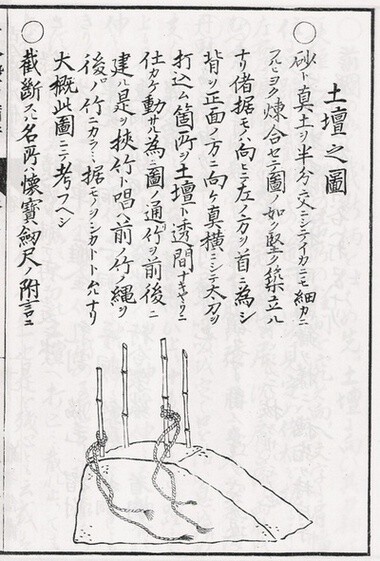
-
CUTTING TEST KUBIKIRI ASAEMON JAPANESE SWORD BOOK
Guido replied to blekk's topic in Auctions and Online Sales or Sellers
more scans: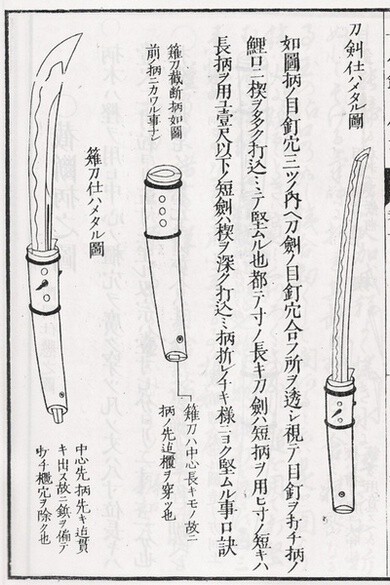
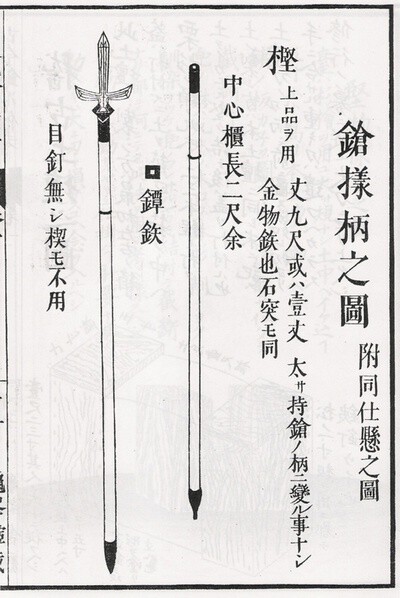

-
CUTTING TEST KUBIKIRI ASAEMON JAPANESE SWORD BOOK
Guido replied to blekk's topic in Auctions and Online Sales or Sellers
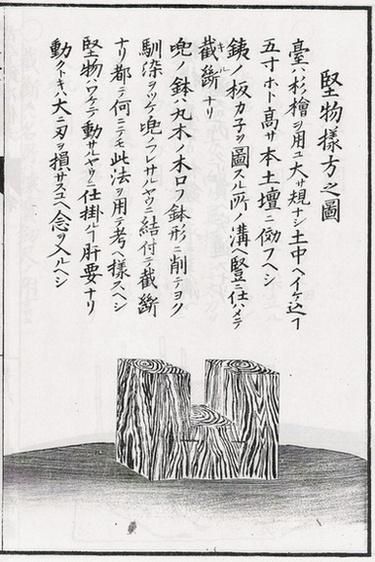
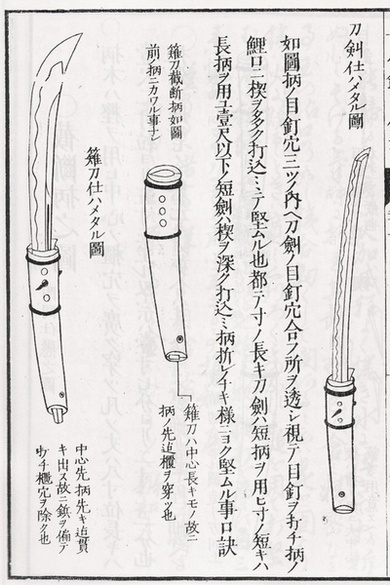
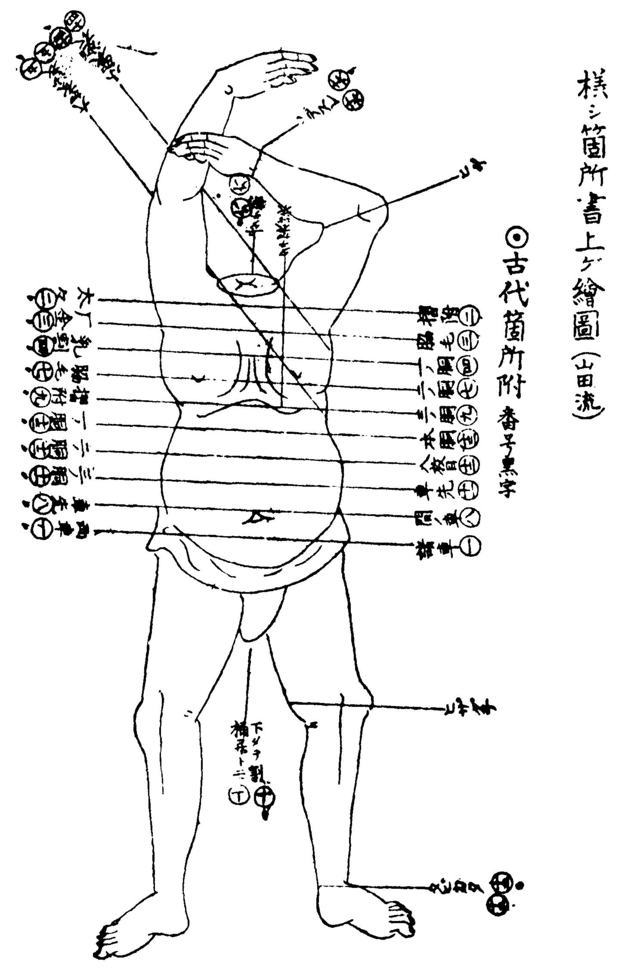
Two other interesting books on Tameshigiri, Wazamono etc. I have are Wazamono Nyūmon 日本刀業物入門, published by Mitsugei Shuppan 光芸出版 and Kokon Kaj Bikō 古今鍛治備考 by Yamada Asaemon Yoshimitsu 山田浅右衛門吉睦 ("the original", so to speak). This one is *really* hard to get. The following is an excerpt from an article that's sitting in an unfinished state on my HD for quite some time now (sorry, Chris, I'm just too lazy to edit the Japanese out): Oh, and I'm aware of the fact that 良業物 is usually read "Ryō-Wazamono", but I discussed this particular reading with some people at the NBTHK a while back, and the consensus was that "Yoki-Wazamono" is indeed the correct pronounciation - I won't budge on that one . Here are some scans from the 7 volume Kokon Kaji Bikō, which is otherwise a listing of sword smiths (kind of an early Taikan) and lots of drawing-style Oshigata:

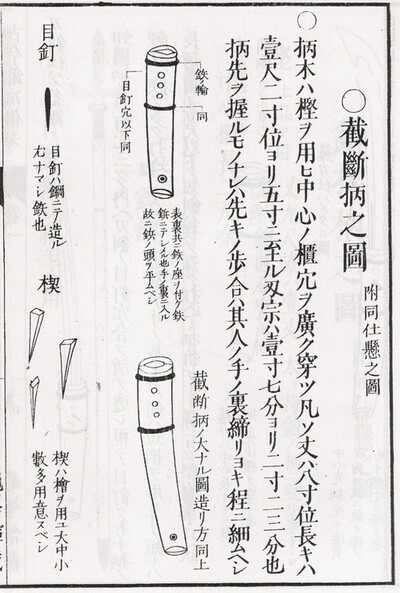
-
CUTTING TEST KUBIKIRI ASAEMON JAPANESE SWORD BOOK
Guido replied to blekk's topic in Auctions and Online Sales or Sellers
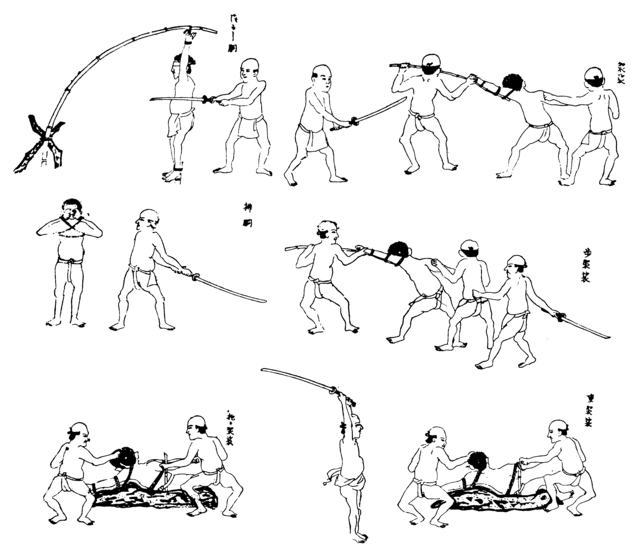
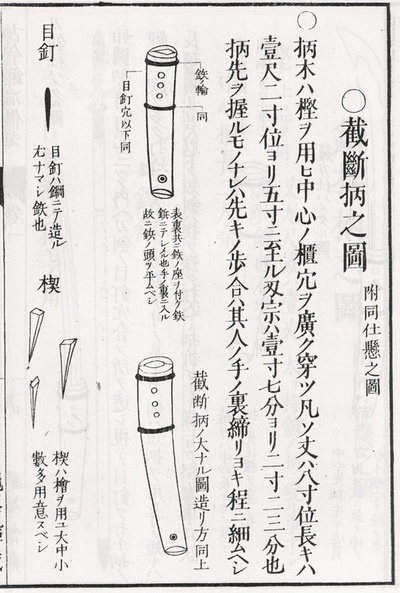
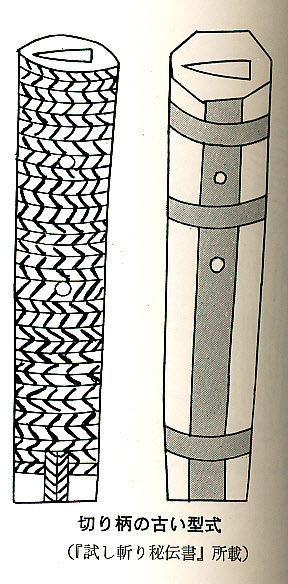
Kind of. The books deal mostly with the history of Tameshigiri, individual testers and their lineage (even blurry b/w photos of their grave stones), when and how tests were performed etc. - but not many pictures except old-style Oshigata. The only "DIY" pic I found is the one I scanned (see attachment).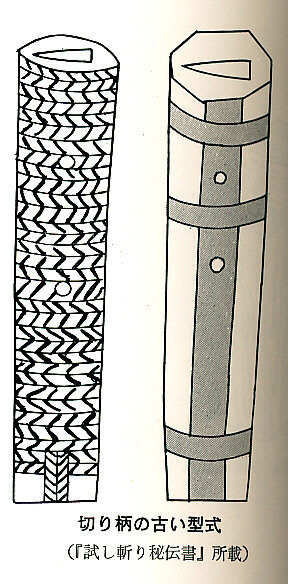
-
Traditional Japanese Polish
Guido replied to drbvac's topic in Sword Shows, Events, Community News and Legislation Issues
I guess that's where we get to the cross roads - personally, I'm not really interested in Nihontô as weapons (a machete would probably do an equally good job) but only as an art form. Indeed (and absolutely no sarcasm intended). I own a 1836 Navy Colt, and think it looks real purty . I also own a Henry Rifle with Nimschke engraving; the scroll work doesn't add anything to functionality, but doesn't it give the rifle the extra touch that makes it much more desireable than a plain one? -
CUTTING TEST KUBIKIRI ASAEMON JAPANESE SWORD BOOK
Guido replied to blekk's topic in Auctions and Online Sales or Sellers
I own Fukunaga Suiken's "Kubikiri Asaemon Tôken Oshigata (福永酔剣 - 首斬り浅右衛門刀剣押形) - it consists of *two* volumes, buying just one doesn't really make sense. Half of both volumes are Oshigata, but there are better refernces available for considerably less money. The interesting stuff is in the text, which is Japanese. I therefore recommend these books only to people who have good Japanese reading abilities. -
Traditional Japanese Polish
Guido replied to drbvac's topic in Sword Shows, Events, Community News and Legislation Issues
Maybe my article "Polishing and Conservation of the Japanese Sword" in the article sub-forum might be of interest to some readers of this thread. It's probably personally biased, but I tried to give the facts as straight as possible. It's also slightly dated, but I somehow never got around to send the newest version to Brian (o.k., added to my to-do list ). In any case, a question I always ask those who say that Sashikomi is more traditional: since Hadori (in a less refined way than how it was done from the Meiji period on) is around since at least the mid-Edo period, how do you define "traditional"? Maybe we should stay away from Japanese swords and collect stone age spear points if we want *really* traditional techniques ....? -
Bridge of Dreams closes ;-(
Guido replied to b.hennick's topic in Sword Shows, Events, Community News and Legislation Issues
Craig, I think we only met once, in Tôkyô, 2004 (?), at the first NMB Gathering; at that time Hans introduced you to me. Being kind of a heavy smoker myself, your post shocked me - I guess it's about time to take a closer look at my unhealthy habits ... IIRC, I never bought a book from you, but the reason for that is that my library is so extensive (in all modesty ) that there's not much left that gets me excited nowadays. Coming from a country where social security / health insurance is mandatory - you can't opt out of it even if you want to - I can only imagine what you're going through right now. Hang in there! I always enjoy your posts on NMB and Facebook, and wish you all the best. -
Nihonto Koza, English translation by Harry "Afu" Watson.
-
In all fairness, it wasn't Louis who advertised his polishing in the first place; but it's indeed a good opportunity for those who touted his horn to put their money where their mouth is, so to speak.
-
That's exactly my experience with the polishers I know. Or, as my father always said: "Once you've made up your mind that a job is worth being done, it's worth being done properly and with diligence to the best of your abilities."
-
No, that's what gives us totally unnecessary headaches . I don't get this obsession with the "correct" terminology that pops up on this forum every so often. Is it burgundy or ox-blood red? Who gives a flying [self-censored]?
-
It's always a good idea to buy a friend a beer or two but I think we can safely assume that this Tsuba isn't made by the first or second generation Nobuie .
-
Nobuie
-
P.S.: If you so much as touch my tea cup, I'll break your frickin arm!
-
Malcolm, I have to admit that I'm not familiar with this concept, so I'm afraid I can't be of any help.
-
You're making a very good point, Clive (now you've earned those pints of beer you were talking about ealier ). However, in the past even some well-known, quite qualified Japanese polishers didn't enter blades into the NBTHK competition for "political" reasons. The NBSK seems to go exactly the other way, i.e. being p/c to a point where it hurts - as is evident by the Nyûsen (or their equivalent) a Tsuba got this year that was very crudely executed, just because it was made by a non-Japanese (at least that's what I suspect, at this point I really don't want to open another can of worms!). Anyhow, not withstanding the cases of swords messed up by a Mukansa polisher, and fine polishes by rank-and filers, or the sub-standard Japanese and great foreign polish - or the other way around - that many of us who have been around long enough have seen: it all boils down to the ability to recognize a good polish, detached from prizes or certificates (or the lack thereof). I probably sound like a broken record, but if one can't judge confidently the quality of a polish, everything we talked about so far is moot.
-
There are those rare instances when I don't have the slightest idea what people are talking about - this is one of them. *Any* removal of material will weaken a blade. Even Bo-hi weaken a blade, but it's the best way to make a blade lighter without sacrificing too much of its integrity. I can't think of any other reason than decoration when it comes to Ramma-Sukashi. Except insanity, maybe, when looking at the picture that started this thread ....
-
The "rigid" definitions are rather modern, and used for papering and cataloging. I doubt that anyone got his pants (or rather Hakama) around his ankles over a Sun or so in the old days ...
-
For decorative purposes.
-
It's a regular Katana (or Tachi, depending on your point of view) with a type of Horimono that is called Ramma-Sukashi 欄間透かし. What an atrocity!
-
Ichijô, at the end of the Edo period, often worked outside of the standard Gotô techniques. I think it highly unlikely that these Tsuba were hot-stamped, more likely carved.
-
What an interesting statement. I could understand if you'd say that you don't want to spend that much money, but why on earth do upper quality swords not *appeal* to you?