Guido
-
Posts
3,242 -
Joined
-
Days Won
99
Content Type
Profiles
Forums
Events
Store
Downloads
Gallery
Everything posted by Guido
-
三条宗近十六代宗次 SANJŌ MUNECHIKA JŪROKUDAI MUNETSUGU
-
Goto - side school / branches - discussions on difference.
Guido replied to GARY WORTHAM's topic in Tosogu
Could I have a definition of "Daimyô quality", please? BTW, some Daimyô earned less than a Hatamoto or Gokenin ... -
Looks like 無.
-
The second photo shows clearly that the Tsuka was made for a Shinogi-zukuri or Hira-zukuri blade .... But anyhow, even if it was made for a Ken - what would that change in regard to the quality/craftsmanship of the Tsuka itself? P.S.: Edited to add image.

-
Oh no, not again ...

-
Newbie Looking for First Katana
Guido replied to Joeyg's topic in General Nihonto Related Discussion
Not nice. Now I'm angry at myself for not saving the pic - I simply loved it! -
Pull up the side panels at the same time (while holding the "feet" with your thubs), and everything falls into place - or, rather, apart .
-
Piers, I've seen similar stands in Japan quite often (Tôken Shibata on Ginza sells a "deluxe version" with Ramma Sukashi in the front part), and they are indeed made of rosewood. I heard they are made in Indonesia, since wood and labor is much cheaper there.
-
Don't be too hard on yourself, Ted - there's the story of a NBTHK Kodôgu Shinsa member who pronounced it exactly like that ... And when it comes to Higo Tsuba (Shimizu Jingo), 八代 is usually read "Yashiro".
-
Grey, there is no no Daijō .
-
Another excerpt from my many unfinished articles:
-
Newbie Looking for First Katana
Guido replied to Joeyg's topic in General Nihonto Related Discussion
Curran, that's right. Here's a list of the Shinsa fees: http://www.touken.or.jp/english/shinsa_fees.html -
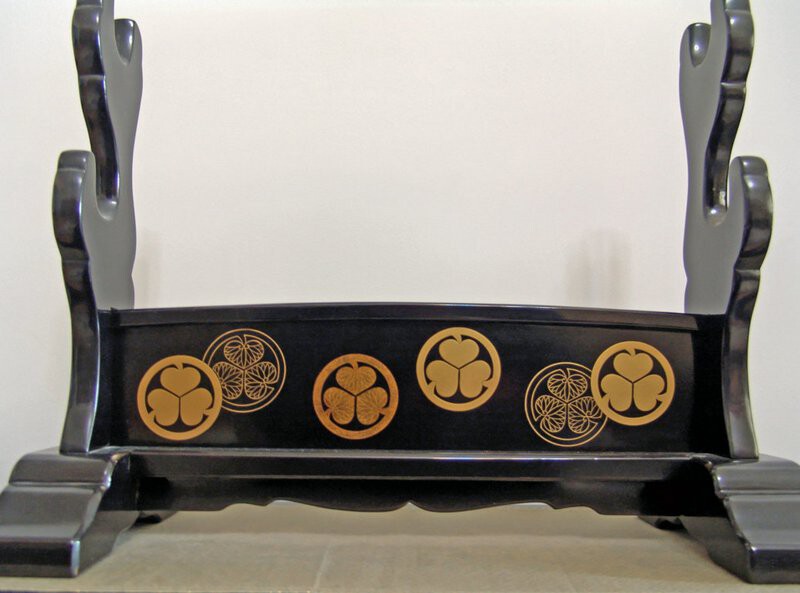
No, just on top and on one side. As I said before: the solid gold ones are in Takamakie, and the third one from the left is Hiramakie in Nashiji.
-
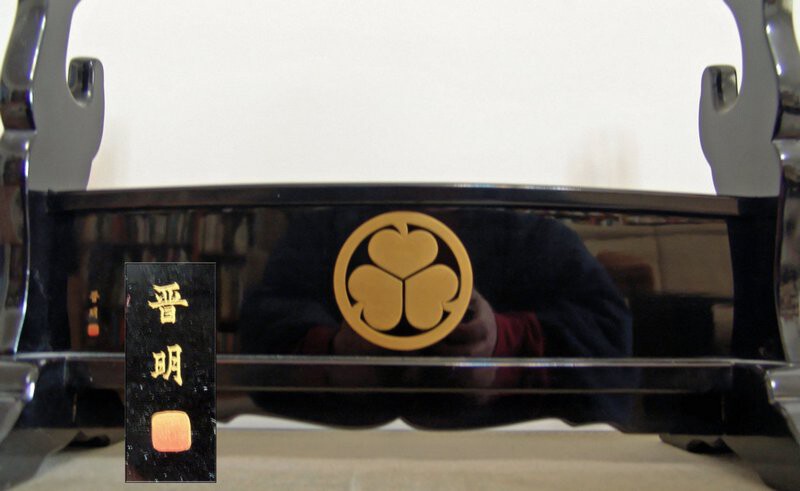
Well, thanks - I can read the Kanji myself . I'm rather convinced that it's a name (especially with the lacquer "Hanko" below it), not a reference.
-
Just coincident.
-
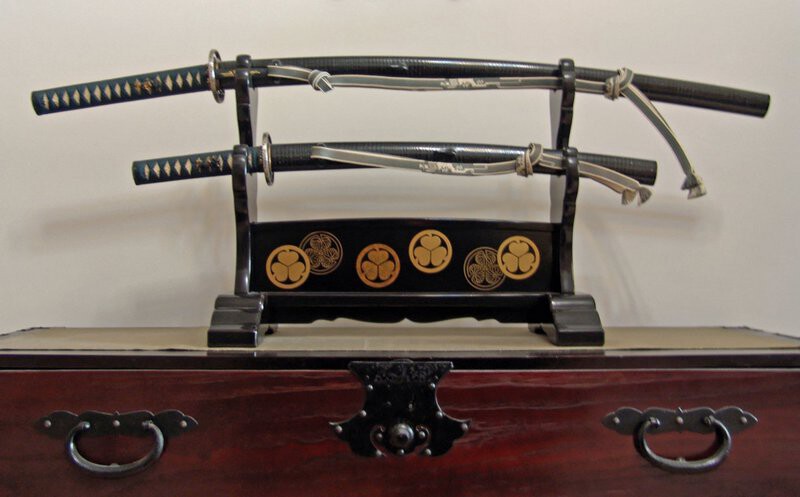
Coming a little late to this thread, but anyhow, here's my favorite Daishôkake; it easily can be disassembled (for travelling, I guess) and has Aoi no Gomon in Takamakie (gold), Hiramakie (Kin-nashiji) and Togidashi. On the backside is another, bigger one in Takamakie - unfortunately the finely raised lines within the Takamakie Mon don't show in my pictures. It's signed, but I don't know the artist - can anyone with knowledge of lacquer artists identify him?
-
Newbie Looking for First Katana
Guido replied to Joeyg's topic in General Nihonto Related Discussion
Not so. You can submit a sword without papers for both Hozon and Tokubetsu Hozon at the same time. To apply for Jûyô, only a previous Hozon paper is required. -
Tsuba - bad shape or design?
Guido replied to Marius's topic in Auctions and Online Sales or Sellers
What Pete said. Of course, people less educated (and certainly less funny ) than him might refer to it as Chirigami-zôgan 塵紙象嵌 ("tissue paper inlay"). -
Nope, our anthropomorphic little friend is simply called ミッキー (マウス) in Japanese. He/it is neither considered a mouse nor a rat, just a cartoon character.Sorry for going all linguistic on you .
-
There's no difference in Japanese, both are called Nezumi 鼠.
-
Good thinking ... and of course the bachelors always can get married if they're in need of a live dragon ...
-
P.S.: Last year many Chinese bought live rabbits, thinking that it will bring them luck in the year of the hare. I wonder what are they going to do this year ...?
-
Still three weeks to go until the new year starts here in China, but to the rest of the world: a Happy New Year of the Dragon!

-
Actually he's in Yoyogi, Shibuya Ward. Anyhow, why would anyone want to spread the rumor that he's imprisoned?
-
The Yoshinogawa with its strong current and rapids was - and still is - famous for its cherry blossoms along the river banks (like your Tsuba), and IIRC, there are some Waka poems describing this. There are also related Bunraku and Kabuki plays that use the Sakura at the Yoshinogawa as a background, although I doubt that something that bourgois (to the Buke, at least) would have inspired a Tsuba design: http://www.kabuki21.com/yoshinogawa.php http://web-Japan.org/museum/kabuki/kabu ... ki_02.html