Guido
-
Posts
3,242 -
Joined
-
Days Won
99
Content Type
Profiles
Forums
Events
Store
Downloads
Gallery
Everything posted by Guido
-
Japanese sword fitting art restoration Crowdfunder
Guido replied to Brandt's topic in General Nihonto Related Discussion
Let the molds rot in peace. Here is why: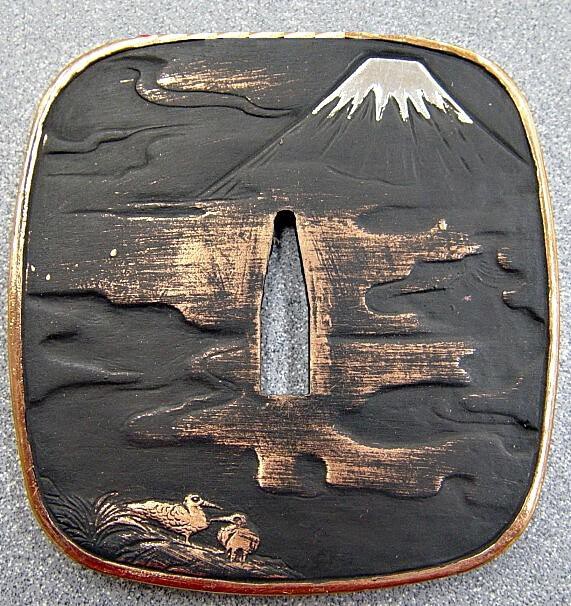
-
Not unusual, rather the norm with Suriage blades; there's some good info about this effect in the articles sub-forum by Paul Martin.
-
George, I can’t understand why you still hold on to the misconception that all swords polished until 1945 were done in Sashikomi. Although Sashikomi is indeed the earlier form of (final) polishing, Hadori was used at least from the mid-Edo period on according to old records, and possibly even earlier. However, the care that is exercised in doing Hadori as we know it now, and the level of whitening of the Hamon / Hataraki, as well as the degree of darkening of the Jihada trough Nugui, is something that came with the advent of the light bulb. Electricity didn't only enable the polisher to work with a constant, bright source of light, but makes it easier to see the various Hataraki clearly, and the Honami family responded to the call of connoisseurs to refine their techniques in accordance with the improved conditions of appreciating swords. No conspiracy, no brainwashing. The light bulb, btw, was introduced to Japan well before 1952 . If we follow your reasoning, and Sashikomi is better because it preceded Hadori, and therefore is the more traditional method, we should collect pre-Edo swords only in Shiratogi, i.e. not going beyond the Komanagura stone; actually, there wouldn’t be much to look at at all . Another reason for believing Sashikomi is more traditional could be a misunderstanding: many swords "lost" their Hadori polish, and may appear as if done in Sashikomi. A polish lasts only so long, and after decades of using Uchiko - which is powdered polishing stone - Hadori tends to fade.
-
Come on, do you mean to tell me that also Gamma-Hada is actually not made of toad skins???
-
I disagree with Brian, George: you would make *a heck of a lawyer*!
-
Well, I have to admit you got me fooled there for a second.
-
FWIW, I never bought a sword online, I examined each one personally before I decided to buy (or not), no matter what type of polish it was in. Having said that, there are some individuals and dealers I would trust enough to buy from without sword in hand, it just never came to that. I hardly eat any sweets, but occasionally have a craving for chocolate. When that happens, only three brands are acceptable: British Cadbury, Swiss Milka and Swedish Marabou . But then again, I could think of a few exceptions (about the chocolate, not the swords) ...

-
great site for those interested in gunto koshirae....
Guido replied to cabowen's topic in Military Swords of Japan
Some great examples of how one can legally own a non-traditionally made sword in Japan ... ouch!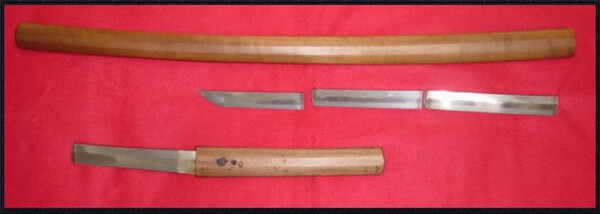
-
The (relatively speaking) high price is mainly due to it being unaltered, i.e. having no later added Hitsu-ana, which is rare. As to the aesthetics ...
-
Yes, same Kanji as used for some Kabuto - but it doesn't mean "strange", more something along the lines of "unusual", "experimental", "exotic", "free pattern": not run-of-the-mill techniques.
-
If in doubt, you can't go wrong with Kawari-nuri 変わり塗り :D.
-
The Uchigatana 打刀 (lit. "strike-sword") had its predecessors in the Heian period, but it only became standard during the second half of the Muromachi period. “Uchigatana” is usually abbreviated to just “Katana”. Katate-uchi(gatana) 片手打(刀) means “single-hand Katana” and refers to the length (around 2 Shaku) and mounting with a shorter Tsuka. Higo Koshirae is the most common mounting for this type of sword (e.g. Kazen Koshirae and Nobunaga Koshirae).
-

-
Maybe I should teach them a lesson ...?

-
I moved to Indonesia more than a year ago for the sole purpose of learning some silent deadly techniques, like killing with a paper clip. But it seems they're onto me, since the video link you posted is blocked:

-
http://weather.jp.msn.com/local.aspx?we ... 6%E3%83%9F


-
But in that case the regular placement would make more sense, wouldn't it?
-
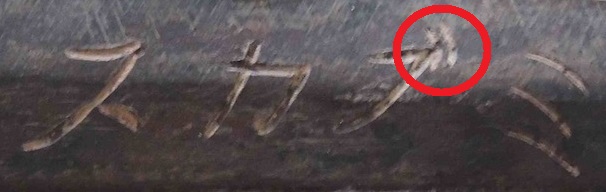
Not su-ka-fu-mi, it actually says su-ka-bu-mi: http://en.wikipedia.org/wiki/Sukabumi
-
The Hada and Hataraki can be seen much better in this close-up:

-
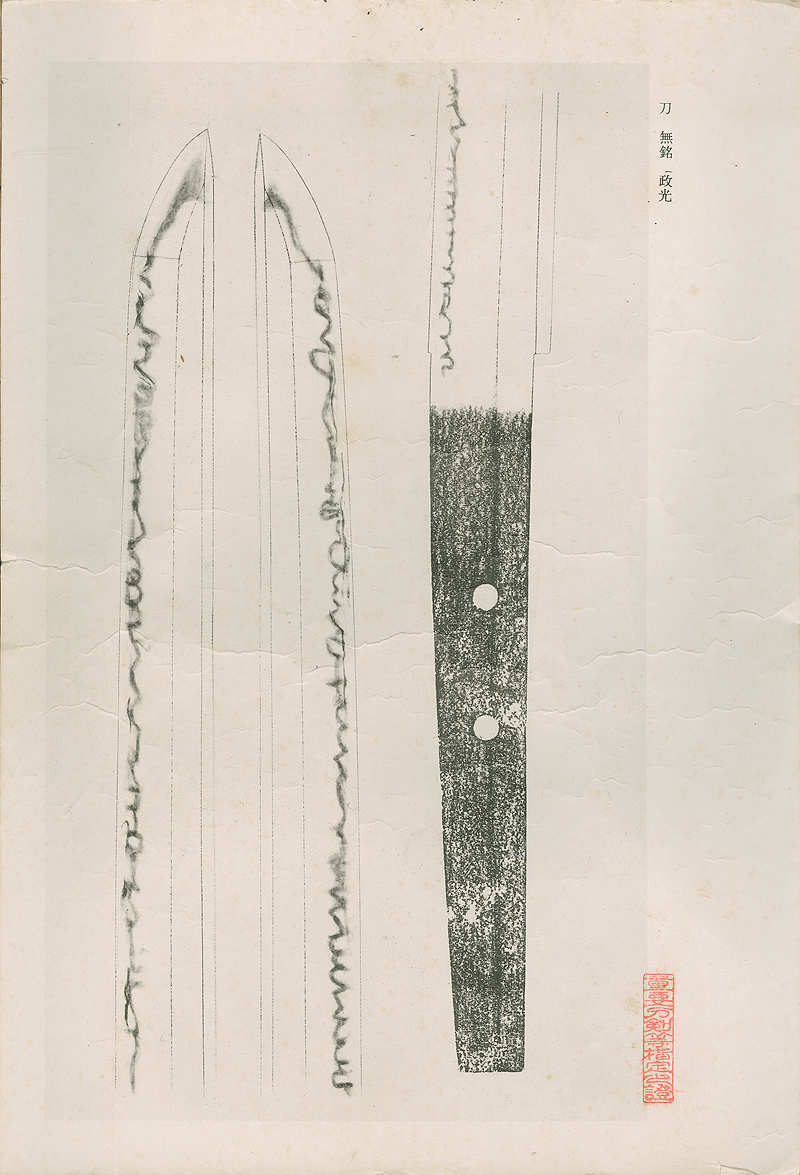
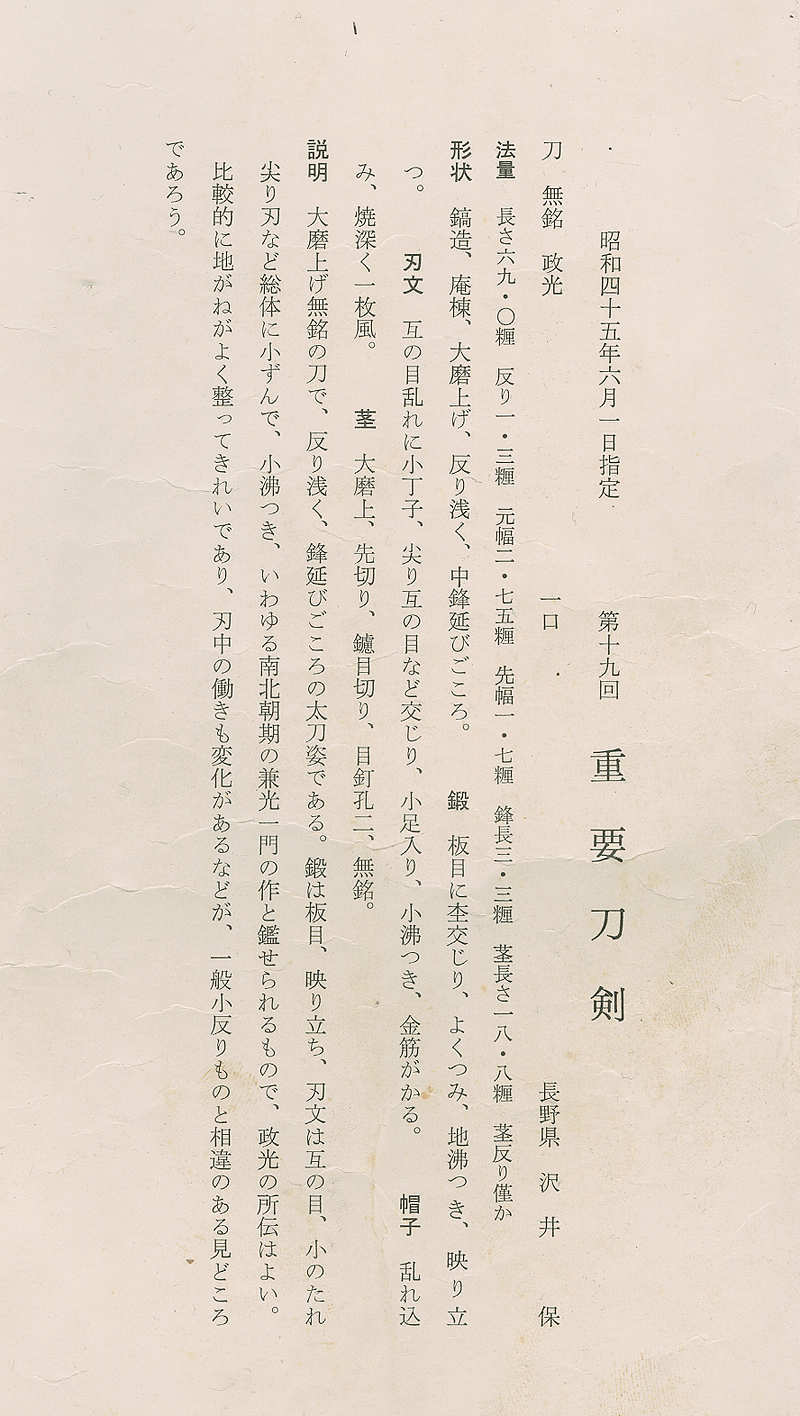
Here's one from my collection. As the paper states, it's of typical workmanship for Masamitsu, and although Mumei, therefore papered without "Den".


-
IMO, the paper says "mumei namban-shu": *** Doh, picture deleted since that's what the link (posted while I was typing) says, too.
-
I'm in a state of shock - that's the first draft of a Kanji index I sent to a friend at least 10 years ago - I had no idea that it was published on the internet! In the meantime I added a radical index and made some corrections / amendements, but never got around to actually finish it.
-
American polisher... Eric Roush
Guido replied to silverfox2965's topic in General Nihonto Related Discussion
With the possible exception of the last sentence - since there are occasionally collectors/dealers who have that knowlege themselves - Paul's statement sums up everything there is to say about polishing Japanese swords. The only problem is that people who don't know squat about swords often think they belong to the "last-sentence-exception". -
His sword technique is quite impressive - but "last Samurai"? I doubt a Samurai would have cut vegetables, candle wicks, baseballs etc. on variety shows ...
-
Oops, Markus posted while I was typing ...