Guido
-
Posts
3,242 -
Joined
-
Days Won
99
Content Type
Profiles
Forums
Events
Store
Downloads
Gallery
Everything posted by Guido
-
Well, you can trust *me* :D : 8.6 x 8.1 cm!
-
Yôkan:
-
FWIW, a huge Jakushi Tsuba that is mounted on one of my Koshirae:
-
-
Cashew, being a natural urethane resin, doesn't cause contact dermatitis like urushi.
-
From Ginza Chôshûya's February issue:

-
Confirmed orders for "The Index of Japanese Swordsmiths"
Guido replied to Brian's topic in General Nihonto Related Discussion

-
I have the greatest respect for Mr. Buck, and own his book as a reference for wrapping techniques. However, it would have greatly benefitted from proof-reading in regard to the Japanese terms. There are quite a few misnomers and mix-ups concerning colors, materials and styles. Here are a few examples: pg. 42: mempu 綿布 = cotton pg. 44: gampi 雁皮 = a paper made from Diplomorpha sikokiana, also called kigami 木紙 ("wood paper") pg. 34: kusube 燻べ = smoked leather pg. 58: kumiage 組上 ajirokumiage 網代組上 pg. 60: tō (fuji) 藤 = wisteria (rattan) pg. 64: kami-hosoyoroi 紙細縒 = narrow twisted paper strings pg. 69: buyō 武用 = "military/war use" pg. 71: kojidai 古時代 = ancient times pg. 75: kodai-murasaki 古代紫 kumiage 組上 pg. 78: often used in Shōnai 庄内, but usually called shinomaki 篠巻 pg. 82: often used in Shōnai 庄内, but usually called karamemaki 絡巻 pg. 84: Shōnai tsuka 庄内柄 dashi-menuki-tsuka-maki 出し目貫柄巻
-
The correct term is indeed Kumiage-Maki (組上巻). Btw, "murasaki" means "purple".
-
You took the words right out of my mouth. I think this thread has run its course, and unless there is new evidence, we are going to run in circles (it actually has begun already, plus - of course - the usual cryptic remarks in an alien language).
-
Pete, I think you got it all wrong. Ford and I actually agree on most things; with the possible exception of how to properly use a semicolon.
-
Ford, I'm flattered - I thought I might rather be subjected to

-
What Henry says. But if a new name is indeed needed for this type of early fittings, I think that Shoki-Kinkō 初期金工 sounds a little "constructed". I'd prefer Jōko-Kinkō 上古金工. That would also be in accordance with swords of about the same period. Just a suggestion/thought.
-
Dai Token Ichi 2014
Guido replied to Baka Gaijin's topic in Sword Shows, Events, Community News and Legislation Issues
A confirmation straight from the horse's mouth: 平成 26 年 11 月 1 日 (土) ・2 日 (日) ・3 日 (月). As already mentioned, November 3'rd is a Japanese national holiday - Culture Day, no less :D. -
Please show me at least the courtesy of actually reading what I write - (body) armor is Yoroi, a helmet is a Kabuto, only if the two are together it's called Yoroikabuto. That's what *I* explained' date=' above you said
-
Yoroi 鎧 isn't just any kind of armoring, but specifically medieval body armor (from all countries). Kabuto 兜 means helmet, and together they are Yoroikabuto 鎧兜. Katchū 甲冑 has basically the same meaning, but is mostly used in written Japanese, and more formal. (Tōsei) Gusoku (当世) 具足 is a certain type of armor used from the Sengoku Jidai on; before that, there were (going back in time) the Haraate 腹当, Haramaki 腹巻, Dōmaru 胴丸, Ōyoroi 大鎧, etc.
-
In my experience, most (modern day) Japanese call a set of armor "yoroi-kabuto", not "katchû", in the same way the call all swords "katana" and not "nihontô".
-
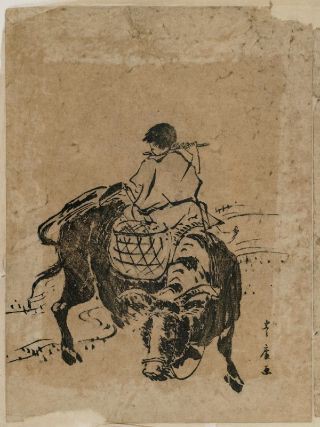
Indeed. It's not that common a Kodôgu theme, but often found in paintings and especially Netsuke, like this one from the Met:
-
I'll give you a hint: http://books.google.co.id/books/about/T ... edir_esc=y
-
I guess it depends on how you define "many": in the late 1800's, Japan had a population of approx. 33,000,000, and about 30,000 Kakure Kirishitan – that's less than 1% of the entire population, almost the same as today. Of those 30,000, the majority consisted - to my knowlege - of commoners.
-
To avoid any misunderstandings: I don't totally discount the theory that the so called "Tokei Tsuba" were inspired by the “Jesuit Sun” – I just think it's highly unlikely. First of all, the Jesuit symbol usually consists of 32 rays, 16 straight and 16 wavy, placed alternately. So far I haven't seen any Tsuba that has this feature, i.e. wavy rays. IMO there's no technical reason that prevented Tsubakō from carving rays that way. There is also not a single Tsuba – to my knowledge – that shows the nails or the IHS letters, much more important parts of the Jesuit seal than the rays; there are quite a few Namban-Tsuba that have the letters VOC of the Dutch East India Company incorporated into the design, so why was IHS never used? Secondly, dating Tsuba isn't an exact science; do we really have evidence that Tokei Tsuba were not produced prior to the arrival of Jesuits? Finally, even if we assume that the "Jesuit Sun" was the inspiration for the Tokei Tsuba (I continue to use this description because it's how those Tsuba are called in Japan; I find it even less likely that gear-wheels were the template of this motif), what makes them" Christian Tsuba", something that often is implied? If they really were perceived as such back in the day, we wouldn't find that many examples. As I tried to show in my imaginary dialogue between a Bugyō (magistrate) and Samurai, authorities were not that brain dead to suddenly accept a different explanation for the motif if it indeed was of Christian nature / evidence of one's religious beliefs. I also would like to state that I'm not trying to belittle Fred's research – which I find very interesting and certainly not without merit – or that I enjoy poking holes in other people's theories (that field is already covered by some other forumites). I'm just trying to present my take on this topic. I'm also not too stubborn to admit that I'm wrong if compelling evidence is provided. But so far I don't see any. And on a different note: why do discussions like this one always have to result in personal attacks? It should be clear that Sergei just clarified that his opinion isn't influenced by his religion (or lack thereof), or that Chris' (obvious) joke wasn't meant as a pro-nazi remark. It's astonishing how much energy is wasted on NMB to turn innocent statements into (perceived) insults …

-
That's what I see, too. The obvious match would be an oxen, then; should not be too difficult to find.
-
Ron, isn't that like saying the Nazis in Germany were Buddhists because they used the swastika as their symbol?
-
Exactly my point. It's a very interesting theory, but until now we don't know for sure, one way or the other. I personally remain sceptic - call me the "Tsuba Agnostic" if you will. :D
-
Bugyō: Hey, your Tsuba is a hidden Christian symbol, you're under arrest! Samurai: First of all, it's not hidden. Secondly, it just looked like a Jesuit symbol until the ban of Christianity, but that was yesterday. Now it looks much more like a clock wheel. Bugyō (slaps his forehead): Damn, my bad - carry on! Samurai: Gloria in excelsis Deo!