
Leaderboard

Popular Content
Showing content with the highest reputation on 06/11/2026 in Posts
-
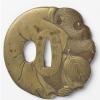
Hi. I recently secured this little treasure, a Toran Kei Tsuba from the Kofun period. I absolutely love it, the antiquity, rarity, beauty and charm. It measures about 7cm x 5.2. The wording placed over the tsuba is my instagram account. Mark

 10 points
 -
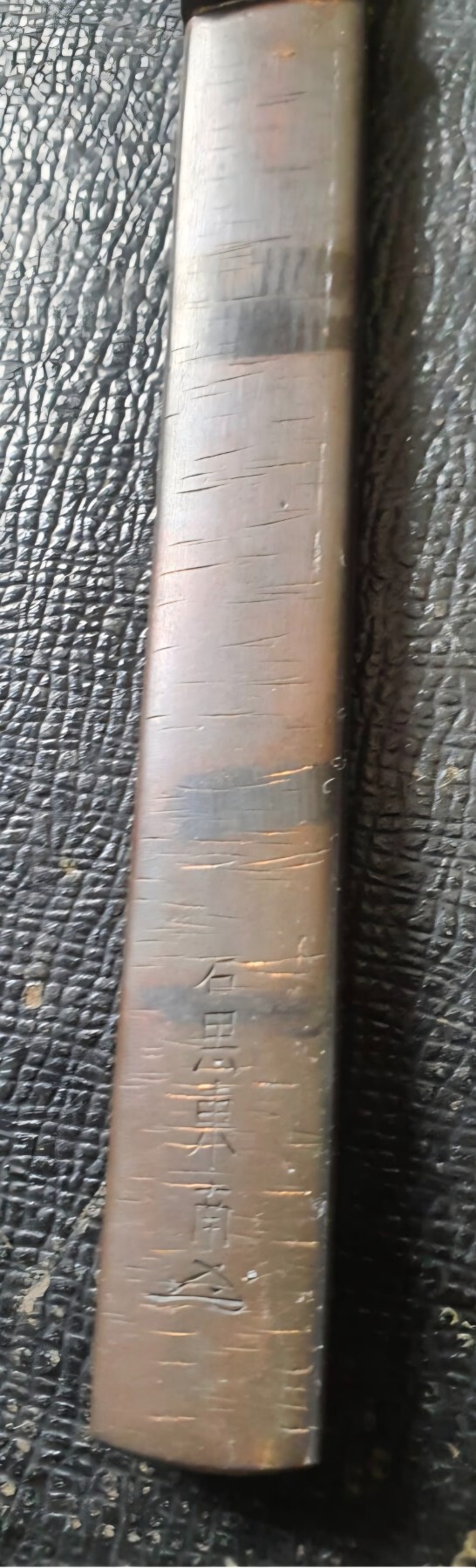
Kanemori seems to be the mei, and the date is 'showa juhachi nen', 1943. Pictures like this should be shown with the point uppermost so that the mei can be read vertically. Also, best shown against a black background.4 points
-
I fixed the photos. Hi Justin, You may already know, but you have a Type 97 Navy officer sword there, or kaigunto. You can read about them on Ohmura's site: Naval Officers Kaigunto - Ohmura This should be your smith: "KANEMORI (兼守), Shōwa (昭和, 1926-1989), Gifu – “Kanemori” (兼守), real name Nishida Rin´ya (西田林弥), born March 14th 1883, he worked as a guntō smith died September 19th 1944" Be sure not to use sandpaper or a buffer on the blade. They will ruin it. Here's a good page for care and cleaning: Japanese Sword Care. You might check up higher on the nakago (tang) for small stamps that may be up there. The saya (scabbard) is a custom job, covered in stingray skin. Would have looked really nice.3 points
-
So several individuals that are much wiser/more experienced sword collectors have now looked at this sword in hand and I can say they state that two of their comments are in common: 1. This certainly appears to be from the Rai school (late 1400's). 2. This is most certainly NOT a Kunimitsu mei, but is most probably from the Rai school. I intend to have it submitted to a shinsa, after which I feel that I will need the mei crushed, and then resubmit to shinsa to try and get it attributed to one of the smiths/students of the school. Fascinating that I bought this as a "after thought" to keep it with the Type 2 Arasaka that I originally wanted to keep the items together that the GI brought home after the war 80 years ago. This has certainly taken me down Alice's rabbit hole once I started to appreciate the blade as something potentially pretty nice. Thanks for the comments and help to all here, as since I have demonstrated by my ignorance that I am NOT a sword collector. Brian3 points
-
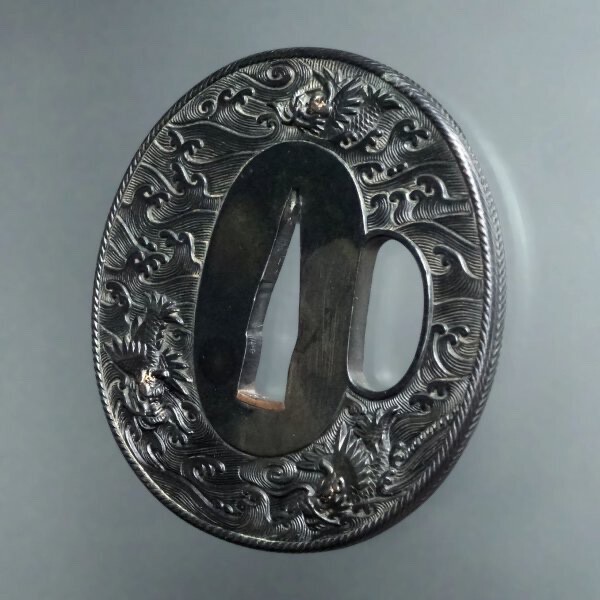
Here you go @Geraint, and those of you who cannot open the link. I find the mimi impressive and interesting. I have not yet developed the “eye” that you tosogu folks have; but I find the piece attractive. I’ll have to practice a bit with Curran’s procedure. Could be a nice pickup for someone IF it were to sell for gimei prices. Regards, -Sam




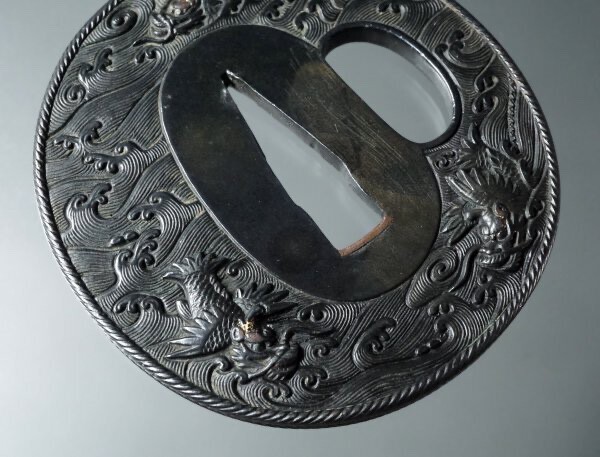
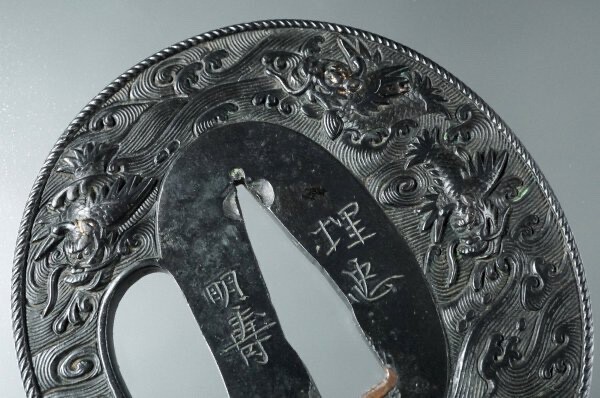
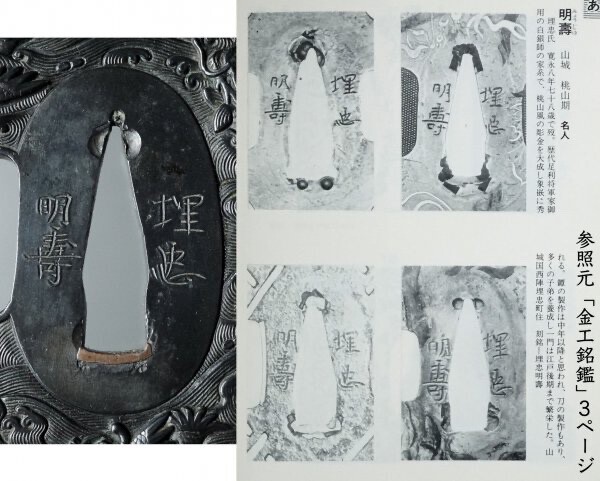 3 points
 -
There are different ways of writing Nao直, some very close to Michi 道. Sweet sets.2 points
-
You need to provide the model with enough context to know what it is translating. Your free online AI translations go in with minimal, if not zero context when given a task to do. If you give an AI tool proper context about nihonto terminology, the results can be quite excellent if not near perfect.2 points
-
Brian, Talk about "baptized by fire". Keep us updated on your journey to shinsa. You will probably catch the 'nihonto bug' after this or rip your hair out2 points
-
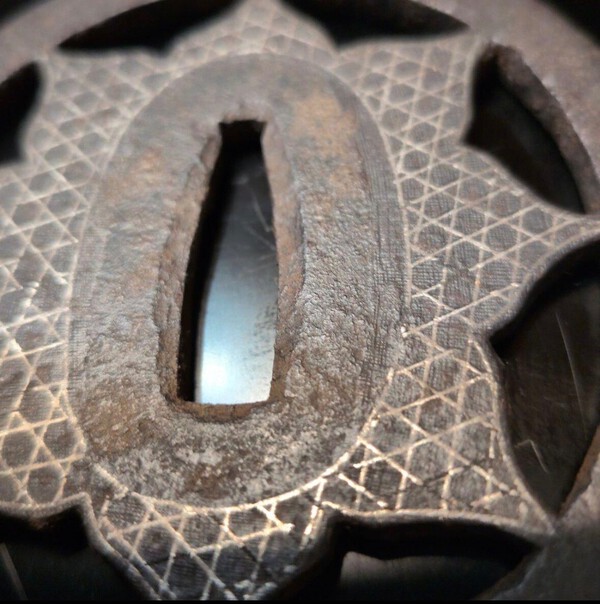
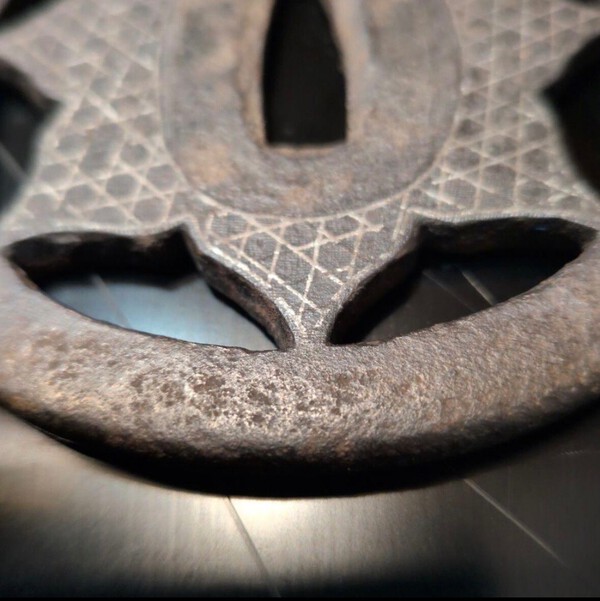
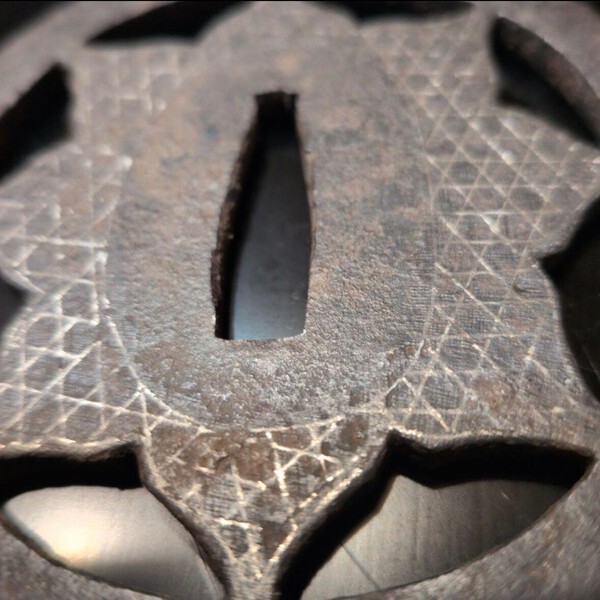
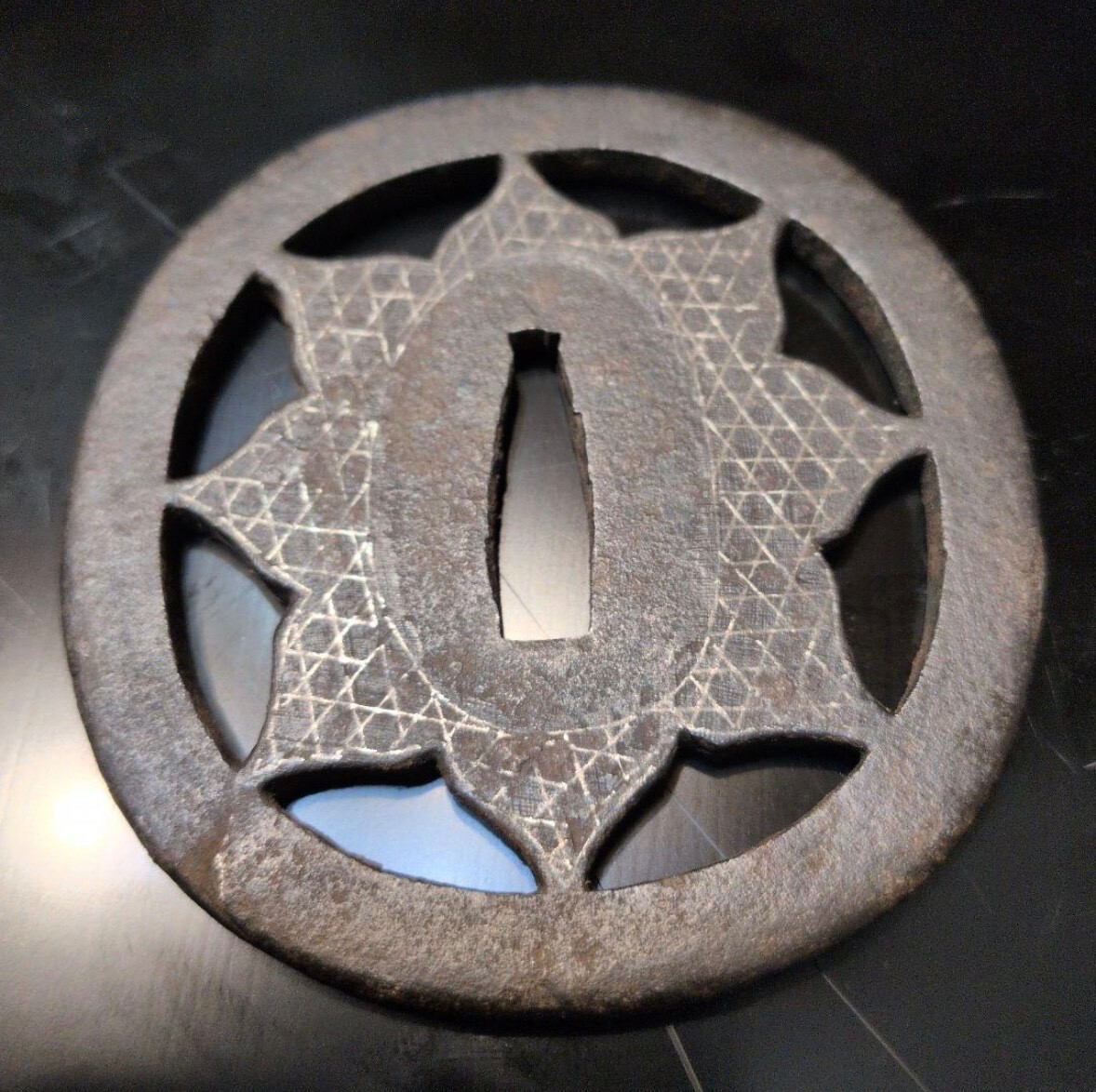
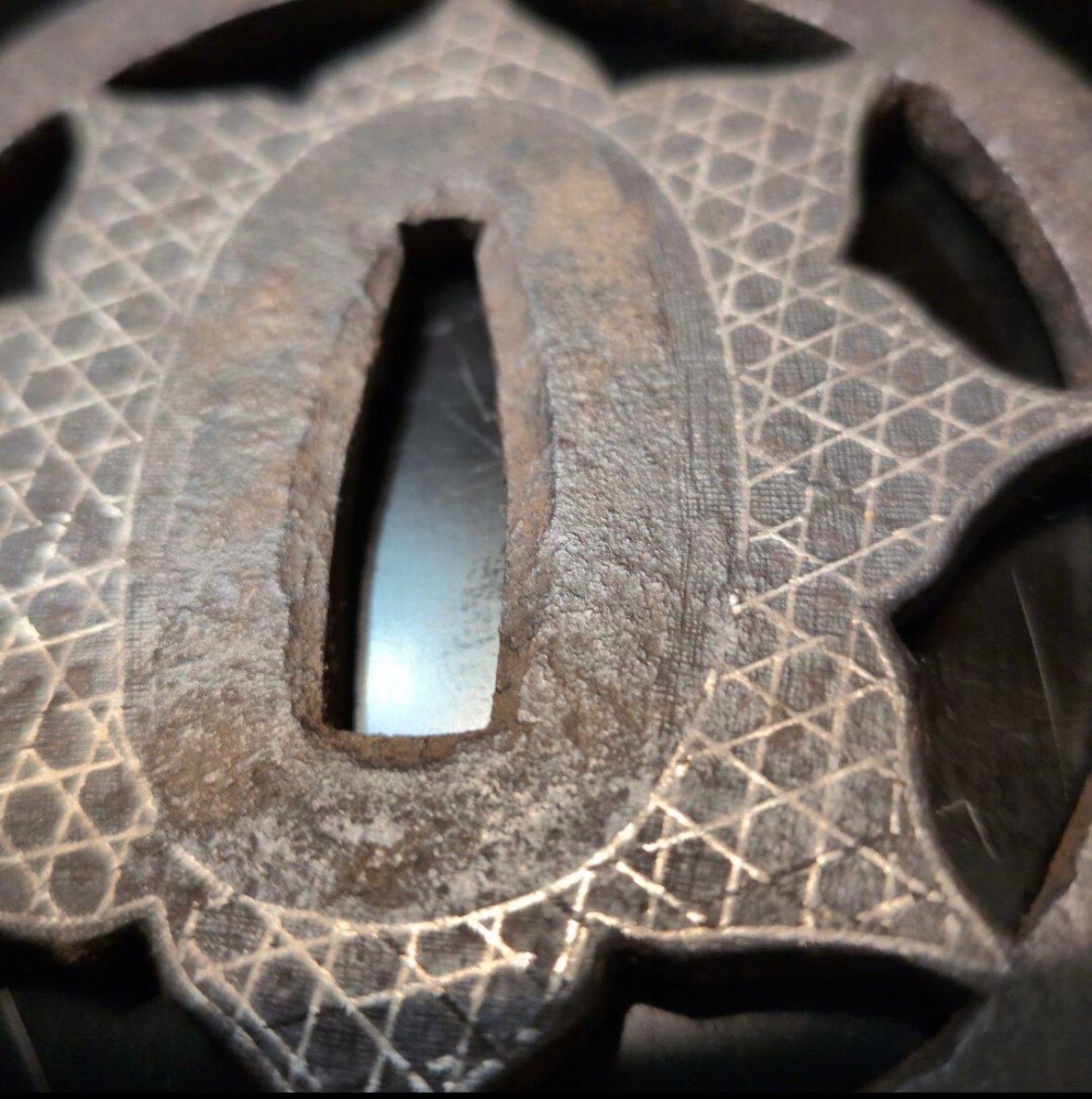
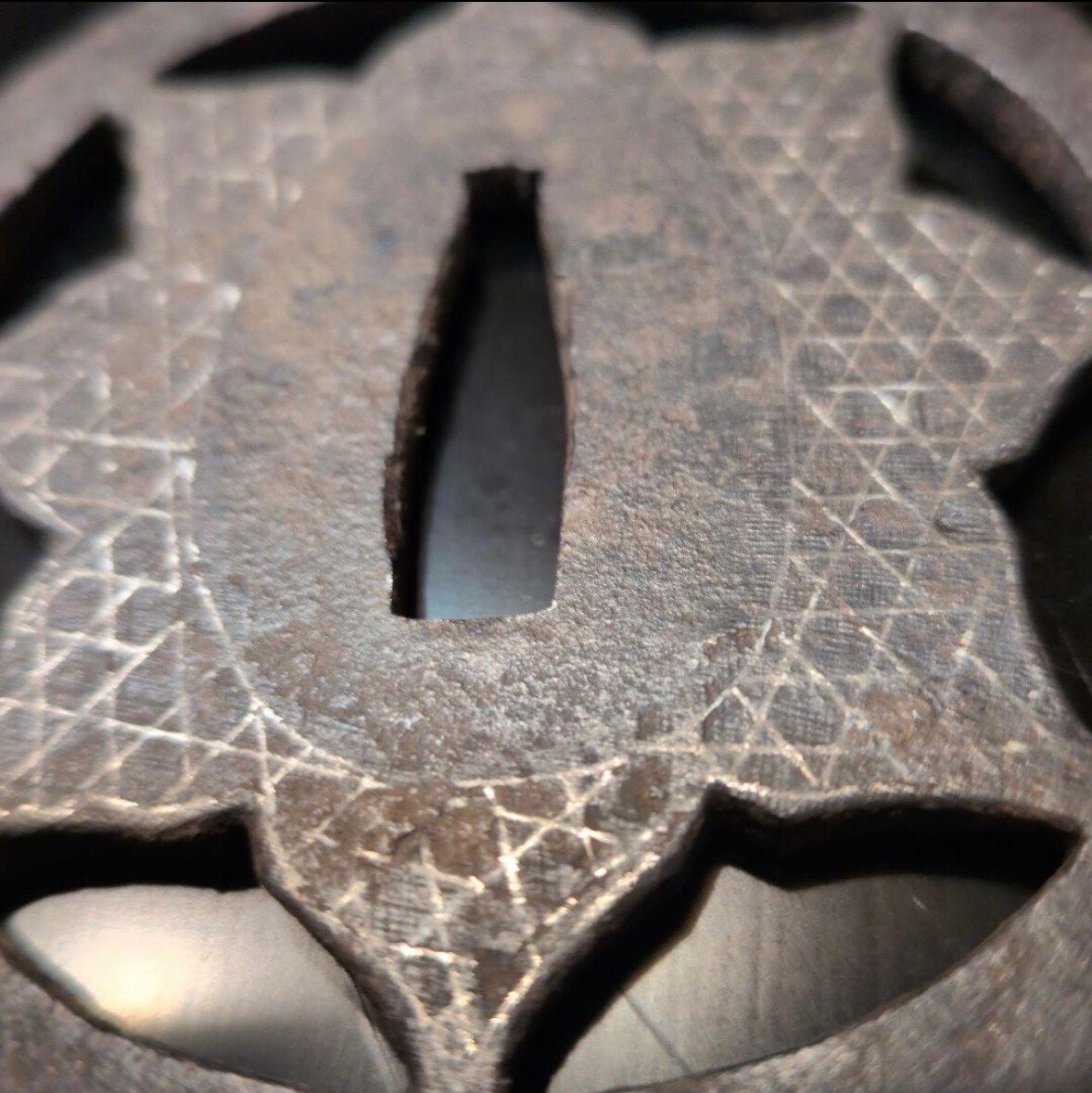
Many thanks for the good replies. 👍 @Spartancrest Dale - that does look similar workmanship. So maybe the generic Shoami, then? @Bugyotsuji Piers - you could be right but, in Buddhist art, deities are always seated on an eight leaved lotus. So I thought it might possibly tie in with the Buddhist beliefs of the man who carried it. But he may just have liked sunflowers! Best, Hector2 points
-
I have more questions than answers. The box says simply 'silver zogan tsuba'. I can see it's a thick, almost maru tsuba in iron, quite large, with an unusally wide square-cut mimi fukurin, silver nunome-zogan lattice-work pattern, no hitsu-ana, showing some evidence it may have been in use. Edo Period I reckon, but that is a wide ballpark. Where was it made? Maybe Spartancrest below will have some ideas. (I'm getting a 'show his reply' message as I write). Is it really a lotus, or are those leaves of a sunflower, I am asking myself? Sunflower seeds are often suggested by a crosshatch.2 points
-
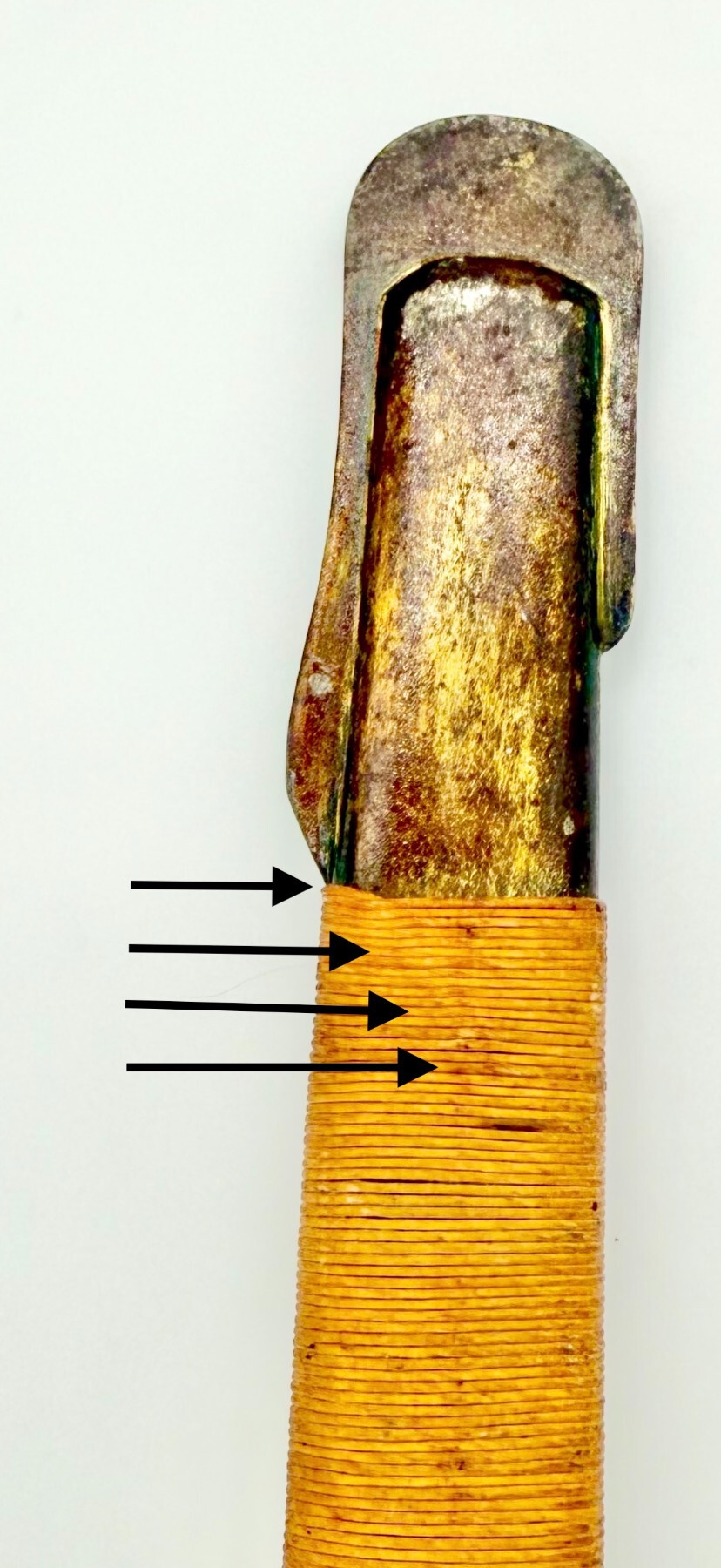
Great summary Rob. My beliefs reflect your own. I am sure that I have shared my example below maybe in the leather covered thread; but here it is to add to the string discussion. I have an early Aluminum Type 95 (Variation#2, SUYA, serial number 7249), that has a string wrapped scabbard. It was applied with an incredible amount of care and precision. Note how the string is not tied at any place, but is rather tucked neatly into itself (see last image). It appears to be coated with some kind of glue or "hardener", I am not sure, but it feels like it's had something applied over the top. Its very cleanly done, and VERY tight. I have always assumed it was wartime, or immediately post-war. I rather like it, and think it adds some character. I do not know if it holds any relevance to the string discussion, but the scabbard on my sword is a unit armorer replacement and is unserialized. All the best, -Sam


 2 points
 -
Hey everyone, nice to meet you all. This is my first post here and I'm looking forward to learning from the group. Just wanted to get some opinions on my wakizashi which I purchased from Tozando in Kyoto. It unfortunately does not have NBTHK certification, but is a beautiful blade that immediately caught my attention. Can anyone tell me about the signature? Pictures are here.1 point
-
Picked this Tsuba up five months ago - any ideas as to school and age? Best, Hector
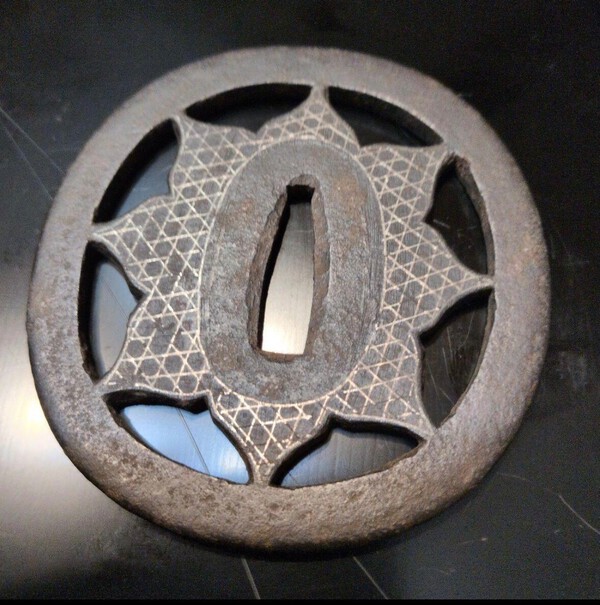


 1 point
 -
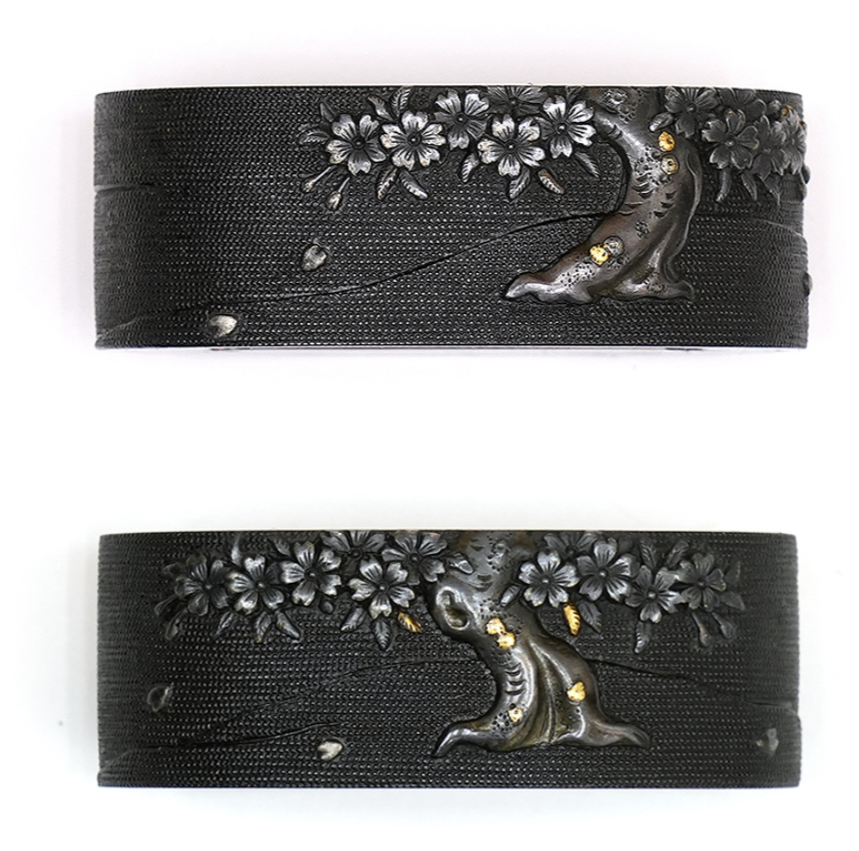
I noted in the sale/trade forums this topic. "The Fuchi Kashira Orphanage." I'm linking to it below, but for the sake of the readers, I'll start with my own thoughts. First, my read of the market, that topic, and just generally going though sale items all over the internet and in person, is that there are significantly more Fuchi without Kashira then there are Kashira without fuchi. I rather imagine that the Kashiras are more subject to destruction than Fuchi, as Kashira were 'out on the end' and subject to being hit. A sword that falls off a shelf (stand and all) in an Earthquake is likely to land on the Kashia. If a drunken fellow wearing his sword should fall on his face, Kashira damage... all sorts of errors might lead to a Kashira taking a hit while a Fuchi would be protected being up against the tsuba. But, I also consider that the Kashira... might not have matched to start with, and that's part of what I'd like to ask about. Do we see many old Tsuka (be they in a koshirae or orhpaned themselves) with a very elegant fuchi... and a more generic 'pommel?' (From this point on I'm going to use the phrase 'end cap' in case some of these aren't considered kashira.) Take this matched set of two fuchi, which I'm honestly tempted by if one of you doesn't beat me to it, which feature Sakura trees in the moonlight. (For sale at Toshin, a set for paired swords. ) https://shop.nihontou.jp/products/detail/30227 But, if I bought them to someday assemble into something, what would I pair them with? I think they might look a bit odd with the somewhat generic endcaps like (I'm using pommel here because I'm unsure if I'm still suppose to use the word Kashira for something like this end cap as we might see on a handachi. And, additionally, there appears to be a significant lack of kashira like this on the market. They do exist, but they are fairly uncommon. I would, as a newbie, think that we should see the market overloaded with reproductions and historical examples of endcaps such as these, because of how common they were in the olden times. Instead we mostly see very small, very ornate caps both in the antique and reproduction market. By the way, we sometimes see endcaps like that where the hole for the cord is part of the cap itself. Is that something we only see on later military swords, or are there examples where that is present on older swords? Edo or before? (This is a cheap reproduction one, but it illustrates the idea of the 'hole' being a part of the cap.) There's also the end caps that have a large space open, which I rather presume is for the attachment of a lanyard, and (if I understand correctly) is attached to the higo school which emphasizes simplicity... (but that might be an error on my part.) which would also suggest that it isn't really right to match it to a complicated and ornate fuchi because they emphasize different things artistically. So part of me is wondering if perhaps all these wonderful fuchi DID originally go with such end caps? And perhaps this isn't Higo.... Tell me if I'm making mistakes.) Now, do we still use the term Kashira for those more martial styles of endcap? Is there a specific sub-term for those styles? (Reproduction market) As such, I'd like to ask the forum about what might have happened ot them, or if (somewhat generic) fittings mi So, these 'large caps" do appear on older swords, are often in old paintings, museums, and movies... but there's a lack of them (from my perspective, if I'm wrong tell me) on the market both for reproduction and antique fittings. When gunto swords were being designed, they went with end caps like these because of their martial history. Most of the market appears to be dominated by these sets which consist of a collar and a flat, somewhat squared off cap. Less common but still moderately common is the same but domed. (the first is an antique and the second is reproduction.) , Now, I don't want to sound like I'm saying anything against Edo period ornate Kashira! I like them, but I also like all the other styles I don't see very often. I'd like to see more of them, both as antiques and on the reproduction market because they appear to be very significant and important. I'd like to know if perhaps all these Fuchi without Kashira originally had something other then a flat or domed set like those immediately above? Now, there IS a market for modern tachi/handachi fittings, but it appears to be almost underground. I had to do a lot of digging before I found a shop that produces them. https://nosyudo.jp/kt_4_nml/ But I'd really expect almost a third of Iaito to be handachi! And obviously that is not the case.


 1 point
 -
Curran's approach is the same as what I was taught about sword kantei - look at the sugata, jigane and yakite - What does that tell you about time period, smith tradition and maybe swordsmith?. THEN look at the mei and see if it fits. Many of the Japanese books about swords and kodogu are limited publication or privately published, so very little of that knowledge has been scanned into online digital records. So yes, reference books are still required. For signatures, here are a few standards. Probably the most recent and exhaustive in English, but no images of actual mei. I believe it came with searchable files in .pdf format. https://japaneseswordbooksandtsuba.com/store/book/fittings-books/b760-the-index-of-Japanese-sword-fittings-and-associated-artists-by-robert-haynes/ Anything by Wakayama is highly regarded. https://japaneseswordbooksandtsuba.com/?s=wakayama My go-to books with images of validated mei. https://japaneseswordbooksandtsuba.com/store/book/fittings-books/b672-toso-kodogu-meiji-taikei-by-wakayama-with-english-index/ Another by different authors. https://japaneseswordbooksandtsuba.com/store/book/fittings-books/b755-kinko-meikan-by-senichiro-masumoto-kenichi-kokubo-with-translation/1 point
-
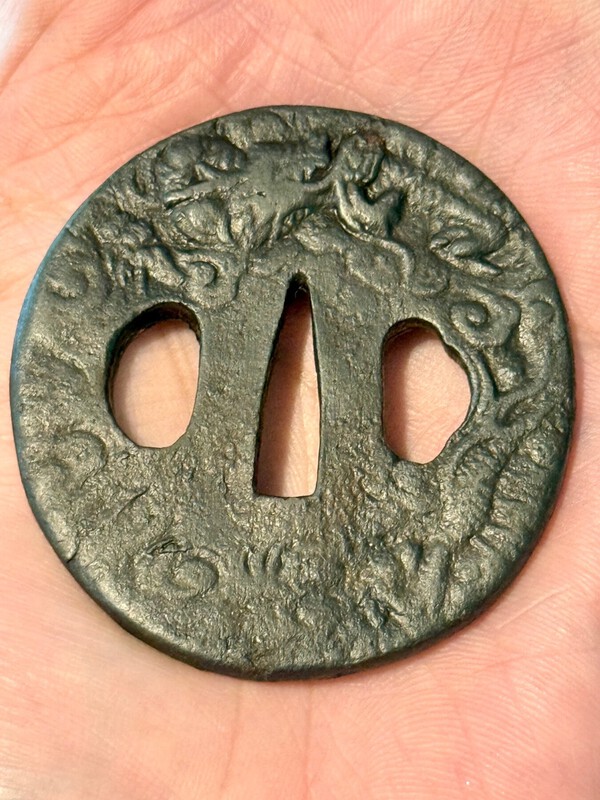
@ROKUJURO I understand what you mean via the photos. I took about 30 photos at different angles under light and those are the best I could manage. It’s more noticeable to the naked eye, but still difficult to decipher if it’s an old signal or as @Bugyotsuji said may be Gimei that has possibly been hammered off. I’m still learning about Japanese swords as this is my first, but I’m greatly enjoying learning the subject and wish I’d gotten into it earlier. The Wakizashi was a gift and was bought at an antique store a couple months ago. Unfortunately it was not only neglected, but someone has obviously attempted to sand rust off the blade at one point which has left a lot of scratches. It then re rusted over pretty bad. I bought a cleaning set for it and have been letting it soak a few minutes here and there with Choji oil. Also using powdered antler and gently wiping the blade down over and over a lot of rust and what appears to be build up old oil has come off and it’s much nicer looking now. The Hamon is visible on both sides however you have to have it under light to be able to really see it well enough to see what it used to look like. Regardless I’m pretty happy with the sword especially since I didn’t have to pay for it. The Tsuba on it is a dragon motif which I quite like. Especially after I was able to scratch away the massively built up rust that was also hiding a lot of detail. It was almost like an excavation on the Tsuba. Where it looked smooth was actually rust and grime filling in lines and pockets. After scraping those out and discovering what was underneath I’ve really become interested in collecting Tsuba now as well.
 1 point
 -
Ok, right. He is just describing the wooden saya covered with leather. The translation system he used for that site was pretty antiquated and not real good. I would like to see some shots of your saya. Sounds unique.
 1 point
 -
My interpretation below: "Leather combat cover" is the term generally used when leather is applied to any saya at any time. This includes the metal 94/98 scabbards. "Late stage type leather-binding wooden saya" on the other hand would be primarily for blades that previously had a wooden saya, usually but not always civilian or blades donated to the war effort. A metal hanger would be added in place of the kurikata, and then the leather added. Thoughts? -Sam1 point
-
But I am still drawn to these simpler sets.... The indecision......
 1 point
 -
Thank you, it helped a lot. I responded to the PM. John C.1 point
-
I’m eating my hat. An open eight-petal lotus flower. https://kyuanji.jp/blog/2022/09/post-28.html
 1 point
 -
https://emuseum.cornell.edu/objects/18527/tsuba-with-pierced-design-of-6pointed-star-inlaid-with-squ similar technique? But the only others are in the Ashmolean museum and are listed as various offshoots of Shoami school - and that is a pretty general attribution as we all know.1 point
-
Yes, Aoi's system has a standard 1000JPY minimum increment for all bids. If you up your bid, but the current bidder is still higher than you, it will record your maximum bid in there, and then set their bid to be 1000JPY higher than this. The increasing bid increment in auction houses is to keep the pace of bidding going faster and faster; this isn't an issue for online auctions because the system is able to handle multiple tiny bid increases within a single second and not skip a beat, unlike a human auctioneer who can only call out so many bids in a given timeframe. According to some of my friends in e-commerce, keeping a small increment apparently encourages bidders who are on the fence to jump in, on the off-chance that they might just happen to snap up the item with a tiny increment outbidding the current maximum. And once they do this, they get invested in the outcome and are more likely to raise their bid.1 point
-
@Bugyotsuji my mistake. I meant oiling with choji oil.1 point
-
Reading the place's faq, maybe it does work like that. If mgha typed in 100 mil, it would automatically put him at 1k over.... or so it appears from the data.... So sounds like there is not a set increase over a certain point.1 point
-
I think this might be trolls hacking or something.... perhaps hacking the website, perhaps hacking the accounts of the bidders. Most auction houses have a minimum increase over a certain point, does this one? (Usually outlined.) Like after 20k, bids must increase by 1k, after 30K, must increase by 5k.... after 50K, 10K increased... I ask because Mgha outbid Jack by exactly 1K each time? So Jack gets frustrated and types in a crazy number.... and again Mgha outbids him... by 1k? I'm with @eternal_newbieI think something is definitely off. Could be a hacker or a troll who just made an account (or stole an existing account... or both accounts...) to have fun with and is laughing his butt off in a darknet chatroom somewhere.1 point
-
How about Jauce? https://www.jauce.com/auction/s12330555471 point
-
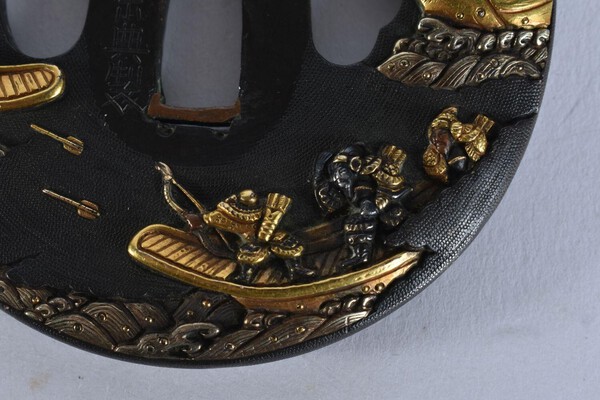
I would like to hear your opinion about this item. I'm unable to see clearly If mei indicates tsuba being casted. I didn't bought it. Looks like fake copy similar to daisho set from ex Haynes collection. Tsuba mentioned in title https://www.invaluable.com/auction-lot/a-fine-19th-century-Japanese-meiji-period-onlaid--e5e8567ccc



 1 point
 -
Different ura side
 1 point
 -
Gift 1937

 1 point
 -
Hmm... I wonder how kosher those bids are. Wouldn't be surprised to see it show up again for sale, perhaps at a more reasonable price. Yes, it's ubu, zaimei, early Osafune... but 71M yen is well into Tokubetsu Juyo or Masamune territory.1 point
-
Many of the swords people describe as "a good starter blade" or "an interesting study piece" are mediocre, in poor health and polish, and generally don't really offer anything to be learned from by examining them other than the experience of holding a Japanese sword. This, on the other hand, is the kind of blade I would have loved to start with; a maker of high skill and renown (considered the intermediate quality step between Tametsugu and Norishige, and with many blades that have earned Juyo), in good polish and health, and with plenty of activities in the hamon and ji. A blade like this will continue to reveal its secrets as you get better at viewing it and understanding what you're looking at, and in turn will continue to entice you to develop your skill and broaden your knowledge. Good luck with your sale!1 point
-
This is the most correct assumption) Here is a similar tsuba, the signature also has nothing in common. Although looking like shakudo, the metal is probably nigurome, an alloy of katashirome (tin and lead) and copper, which only becomes shakudo after gold. https://www.metmuseum.org/art/collection/search/29524
 1 point
 -
Oh I don't mean to express a theory as a certainty.... and I agree eagles are a frequent theme, this is just suggestive by the pale head of the eagle. The American Bald Eagle stands out by it's white head feathers. On the other hand, I did find this, and it's from the Early Edo Period, significantly predating America arrival or indeed the founding of the county.... https://collections.mfa.org/objects/26037 Even so, while I might be mistaken on that object, the fact that some things were made for export is still true...
 1 point
 -
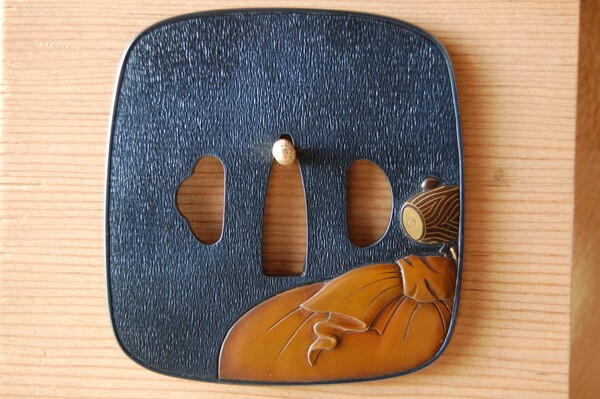
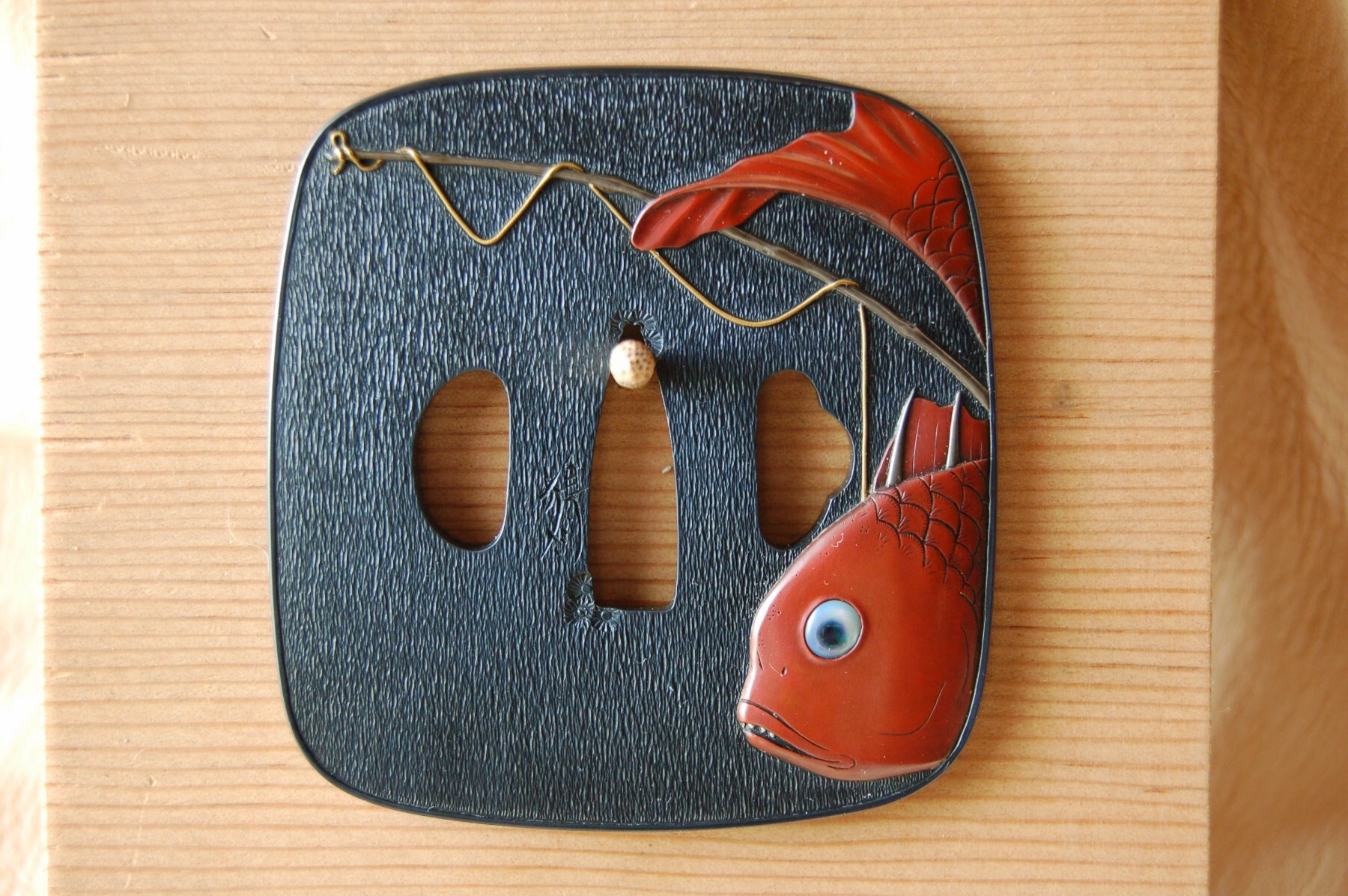
Hi George, I appreciate kind words regarding and restraint in not posting my work. I will add the the pics of the tsuba in question myself for you all One of the most beautiful things inherent in Japanese art is the act of allusion and the culturally shared stories told in this manner. As for the eye, it is indeed inlaid with mother of pearl, but the iris is not black bronze. The method I was taught, have seen on antique pieces, and repeated myself in this case , was different. I carved thin the iris area on the back of the polished MOP to make it more transparent , and then blacken it with sumi 墨 before setting it into place. Please let me know if you have any other question as I would be happy to oblige. I hope this info is helpful!! Best regards, Marcus
 1 point
 -
Hello Nazar, Good picture.....this 'string binding' of sayas has been mentioned before, maybe on the leather combat cover thread? I believe many of those seen are period, in fact I have a copper 95 with the tell tale makings of old (long gone) string binding. Of course, both metal and wooden sayas had leather covers in the combat environment but what happened if you were transferred without the benefit of a leather cover or yours simply rotted off in the tropics.....string? My belief is that it may have been done to both camouflage and also, possibly more importantly, to reduce any noise occurring from the steel saya hitting the many other metal military objects carried. Sound carries! Rob1 point
-
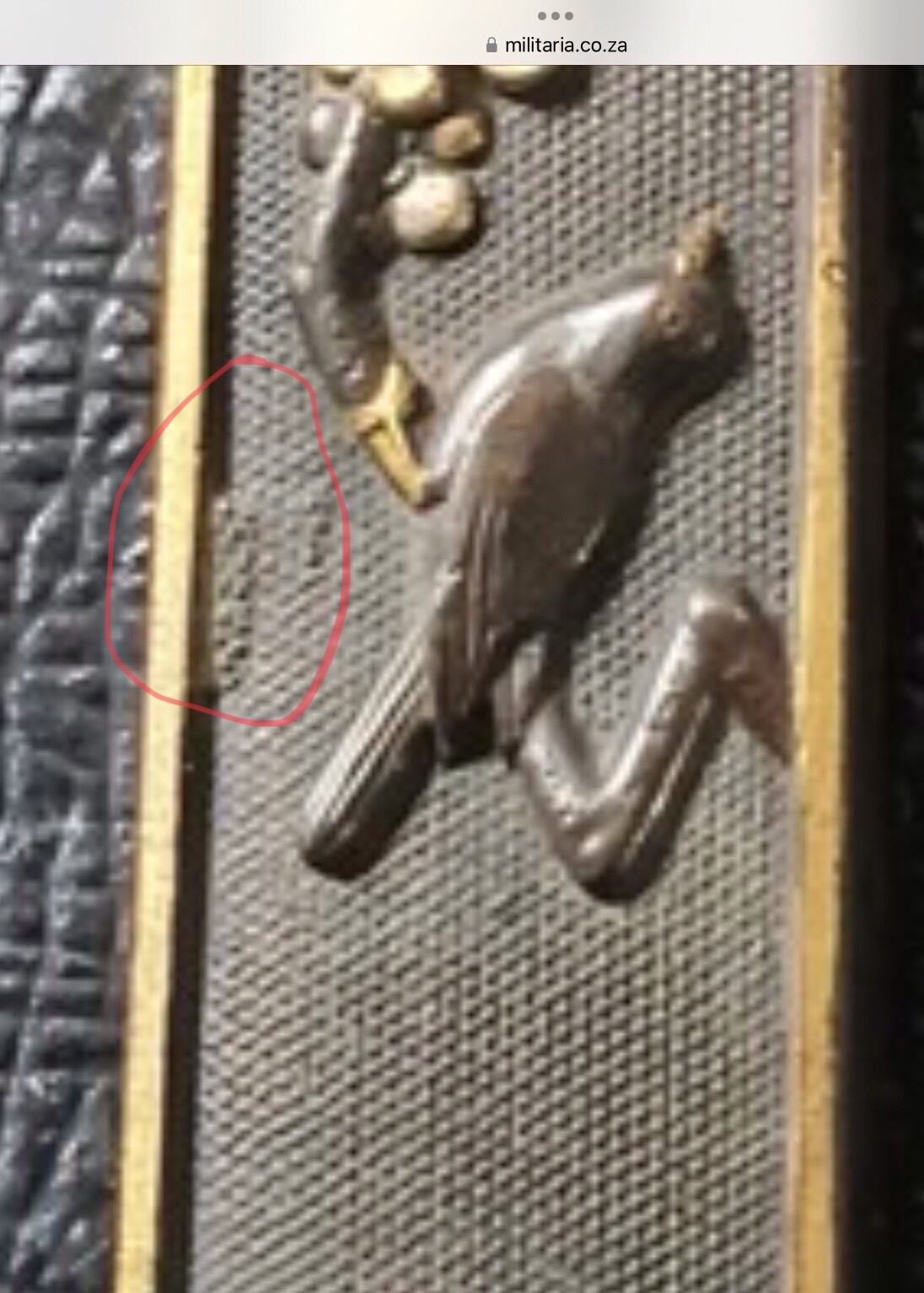
Eg……this blemish would not exist on a genuine Nanako front plate.
 1 point
 -
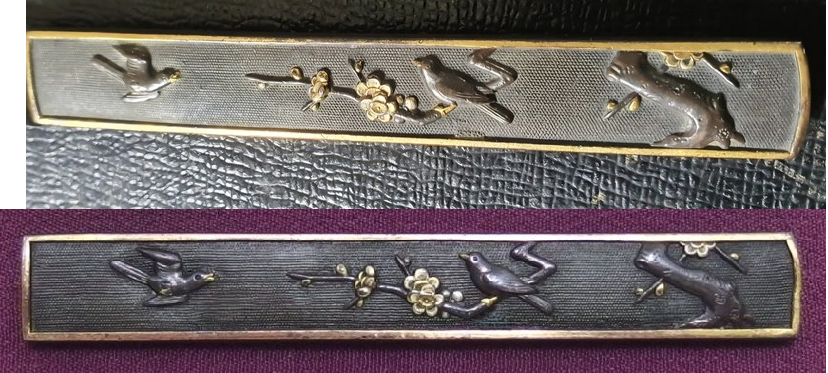
https://auctions.yahoo.co.jp/jp/auction/u1224612069 Comparing the two: very, very close but not identical as far as I can tell. The reverse side is markedly different with the striation marks all over the place on Bruno's
 1 point
 -
I agree with "候". 出来宜敷候 * Deki yoroshiku soro.1 point
-
Reminds me of a local baskeball club -
 1 point
 -
1st one is 面白元作之珍重 Interesting and original (design) 2nd one is 出来宜敷囗 deki yoroshiku I'm actually a bit stumped by the final character of the second line. I have a few Kanzan hakogaki with this same construction, and I have kind of lazily skipped over it, thinking it was part of 宜敷, or maybe it was 宜敷く, or some variation of く (perhaps hentaigana). But looking at this fresh I don't like any of those options, and am wondering what it is exactly. Edit: Looking again, I guess the last character is 候 (in kuzushiji)1 point
-
I think I have seen these before? I have an image of one with the rim removed. A common theme but each seems unique?
 1 point
 -
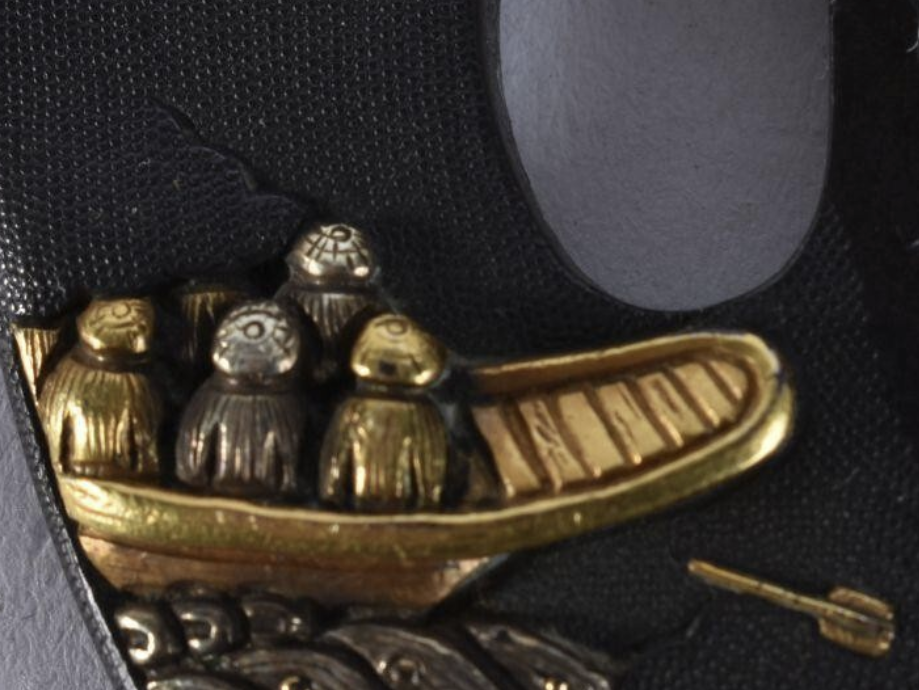
I don't really know on this piece, (I know I don't like it.) But for the sake of debate, I'll take the opposite tack, and ask what makes one suppose it's not old? Now, before we continue, I'd like to put forward that the link claims this item is Meiji period, which means it might have been made to what the Japanese at the time believed European/American tastes were, and it was made for export. (assuming it isn't fake to start with.) The thing that stands out the most is that the people in the boats on the left side of the composition look ... like posts with heads, and the people on the right side look like people. That's a very strange artistic choice. On the other hand the dot pattern looks pretty good, so it seems likely at a minimum a real Tsuba was used to make this, wouldn't it? I also recently say in an auction a sword stand from the Meiji period that looked like it had a Japanese idea of an American Bald Eagle, (again perhaps for export?) https://www.hermann-historica.de/en/auctions/lot/id/1577041 Sold for 950 Euros. Add about 25-30% to that for commission.
 1 point
 -
I don't want to be that guy, and please correct me if I'm wrong but the wavy shinogi line in the nakago makes me a tad suspicious of this blades origin. There's also something off about the patina on the nakago, looks a little like it's been artificially aged. I hope I'm wrong and will defer to more experienced people but I can't shake the gut feeling that this is a modern reproduction.1 point
-
You probably mean the Tokugawa clan, like royalty in Japan.1 point
-
From ebay

 1 point
 -
Dear All. I think defining nanako shi as non artisans is causing a problem here. Quite evidently the work, especially at its finest, requires great skill and there were workers who specialised in it. We know that not all nanako is top flight. All the best.1 point





















This leaderboard is set to Johannesburg/GMT+02:00