
Soshin
-
Posts
2,932 -
Joined
-
Last visited
-
Days Won
3
Content Type
Profiles
Forums
Events
Store
Downloads
Gallery
Everything posted by Soshin
-
I would say Owari from just looking at the two photo. Would love to see the rim in more detail. Nice tsuba.
-
Hello Uwe G., I really like the set very charming in my opinion. Checking my references the mei looks fine to me for Hamano Naoyuki without his kao. He lived in Edo from 1754-1827. I am not saying it is authentic but if I had this fuchi-gashira I would go ahead and submit it to NBTHK or NTHK shinsa.
-
Hello Mark, The condition of the surface your tsuba doesn't look good at all or natural. It really makes me think it a reproduction or a real antique tsuba that has been heavily messed with an artificial patina applied. In either case I wouldn't bother wasting more time on it.
-
The collective's hand is up they like Nanban tsuba. Here is my most recent addition to my collection in this very broad category.

-
Opinions are irrelevant resistance is futile, you will be assimilated your biological and technological distinctiveness will be added to our own... sorry about that... the tsuba it looks like a late Edo Period work of nice quality. It was up for auction at a auction house in Europe a few months ago. I watched it but didn't bid.
-
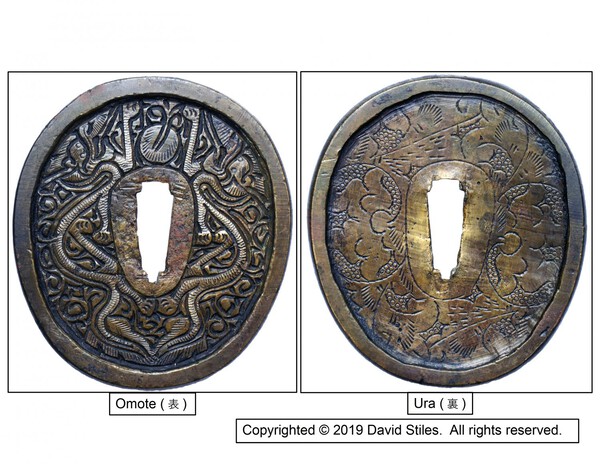
Thanks Peter and Marius, I don't completely agree with everything discussed in the Facebook page that Marius linked to or even everything discussed in James L. McElhinney extensive number of articles written in the Japanese Sword Society of the United States (JSSUS) newsletter a heavy influencer of the Facebook page content. Some of his points I think are valid but others just seems too much a logical leap without the necessary strong analytical evidence. I was able to take some much better photos of the tsuba using a much better camera and lighting setup. This photo shows the color and darkness of the lacquered brass in a much more realistic way. Notice the great difference between the two sides of the tsuba. A characteristic I have seen in other early (pre-Edo to early Edo Period) Nanban style tsuba. I am thinking the design on the reverse (ura) side was likely added later after the tsuba was imported into Japan sometime during the Azuchi-Momoyama Period to early Edo Period. I also think this is the case for the seppa-dai as pointed out by Peter on one of this tsuba. More nice photos of this tsuba will be up on Tsuba Otaku website's homepage (www.tsubaotaku.com) on April 1st.
-
After looking at I was mistaken in my counting. I very much like this Chinese Dao handguard (circa late Ming Dynasty) repurposed as a nanban tachi tsuba and just finished doing some great looking photos DSLR. It will be up on my website the first of April.
-
No Steve, I can clearly see five toes on the Chinese hand guard but only three on my hand guard. I starting to think my is Chinese anyways but made in Nagasaki right before or shortly after the fall of the Ming Dynasty so let it go man and chill out.
-
The rim doesn't look right for Kanayama in terms of the lack of iron bones (tekkotsu) and the round overall shape of the rim. It might be Ono but I have a Ono tsuba with very strong iron bones like a Kanayama tsuba. I am thinking Shoami or possible a late Owari-Sukashi work circa the middle Edo Period. I like the bell openwork design I think it references a No theater play.
-
No Steve you are mistaken and confused but thanks anyway for the discussion. Chill out and have a good weekend. Time for the Baltimore Antique Arms Show tomorrow. If I am lucky I will run into ‘Asian Export don’t say Nanban’ himself at the show.
-
Hi Steve K., My hand guard is differrent in terms of the rim shape. This is the Chinese sword I am talking about: http://www.mandarinmansion.com/images/chinese/qing-southern-saber/qing-saber19.jpg. While not all of them are likely that some are. None of the Chinese hand guards have black or red lacquer applied to them. I also notice stylistic elements different in the twin dragons. The dragons on my tsuba are all picutured with only three claws a Japanese artisitc consideration then it comes to pictureing dragons in art. Looking at the Chinese offers saber the dragon claws are visable and are all five in number: (http://www.mandarinmansion.com/images/chinese/qing-chinese-officer-saber/qing-chinese-officer-saber15.jpg). I agree with the dealer (Ginza Choshuya in Tokyo) assessment of age as my tsuba isn't the stereotyped Nanban tsuba you see made during the Edo Period.
-
I noticed some very important differences to the links that Jussi linked outside of the similar design elements. One sword he linked to shows that the hand guard was continues to the handle. I have seen this on Chinese Dao. I think my tsuba was made in imitation to a Chinese hand guard or was made in China during the Azuchi-Momoyama Period before closing down of Japan during the Edo Period. Thanks everyone for their comments.
-
Hello Chris S., I didn't mean my tsuba was Hizen just that brass like this was used in many of there tsuba from that area. Right now I am not really sure other then that tsuba was mounted and used on a sword worn edge down.
-
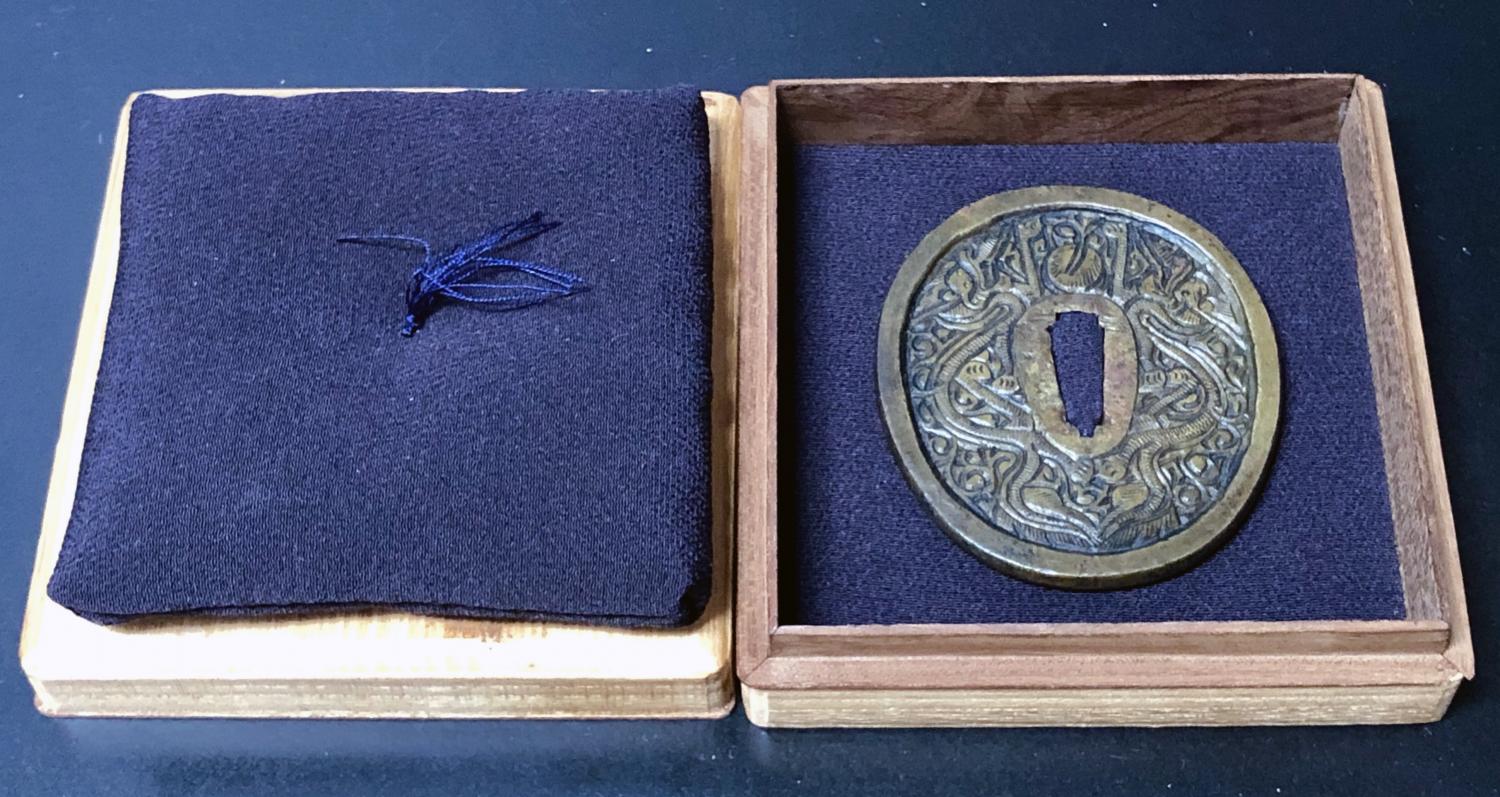
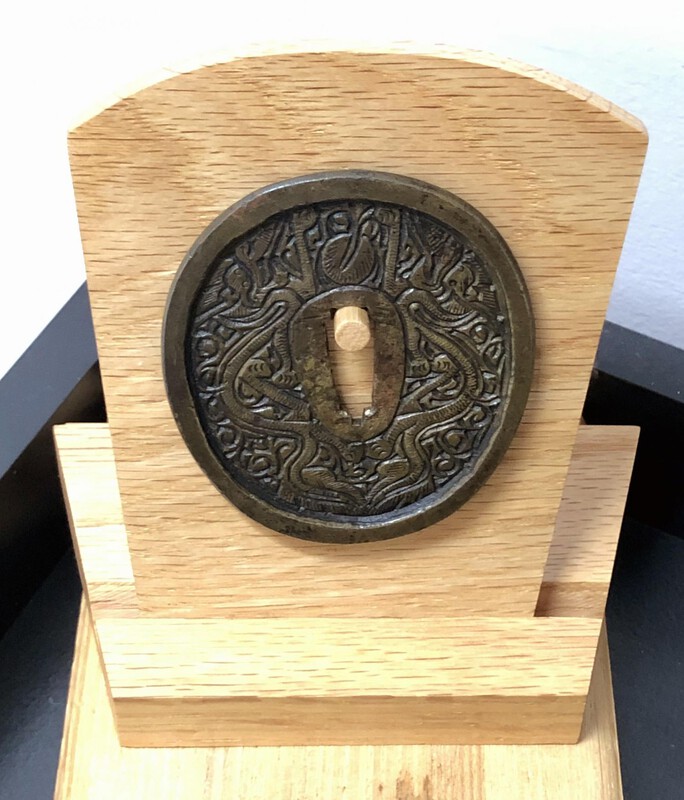
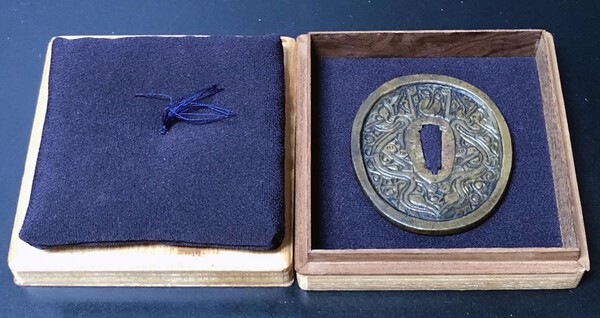
A per my comment on the other post. I picked this tsuba from a Japanese dealer. It came in a nice custom box and unpapered. The dealer was thinking it dated from the Azuchi-Momoyama Period to the early Edo Period. The way I came up with to describing it as a Nanban tachi tsuba. I have only just began starting to study it in preparation for me to do some better photographs (these were taken with my iPhone) and discuss it on the homepage of my Tsuba Otaku website (www.tsubaotaku.com). The base metal is I think brass (shinchu 真鍮) a common alloy seen in other works of different schools and groups in Hizen Province during the Edo Period. There have also been the use of black and to a less extent red lacquer on the surface of the tsuba. The design is of twin dragons and a apple. It measures 7.7 cm long by 6.9 cm wide. As always feel free to discuss politely. Thank you.
-
I picked from a Japanese dealer a nanban tsuba in a custom box that is very different then anything I have seen before. Will post in another topic. The above tsuba is modern Chinese fake and has really nothing to do with Nanban tsuba per say.
-
Uwe, Yes I agree in terms of the date. Thank you.
-
Looking up the Kanji some more and these are also possible readings on the artist name. Thank you John.
-
Good question. I have no clue.
-
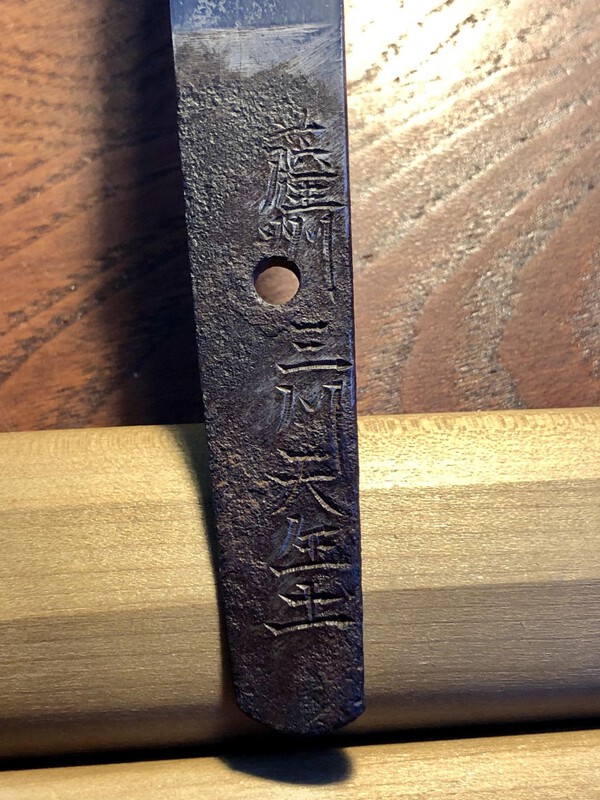
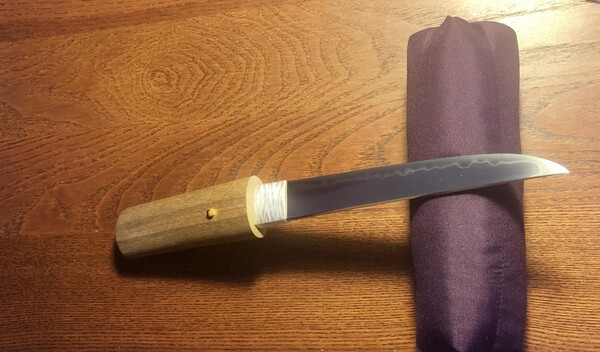
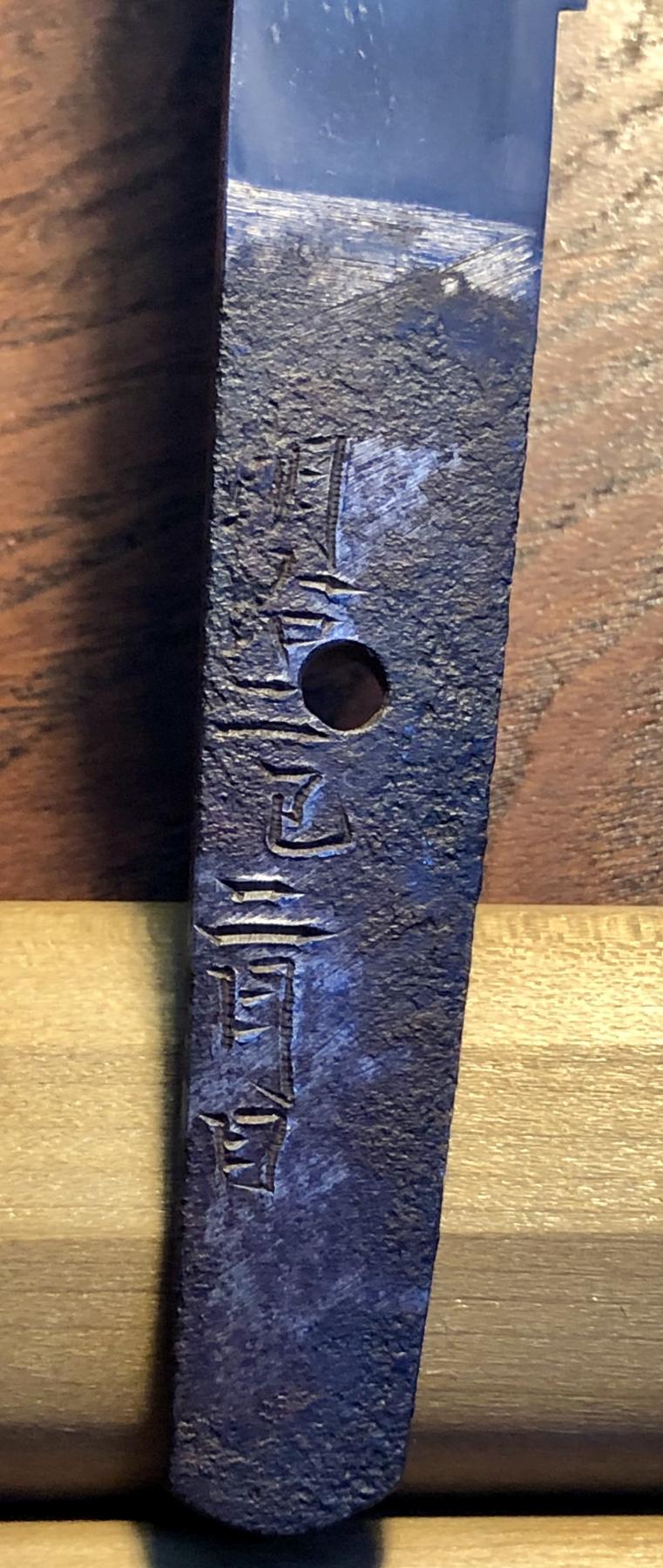
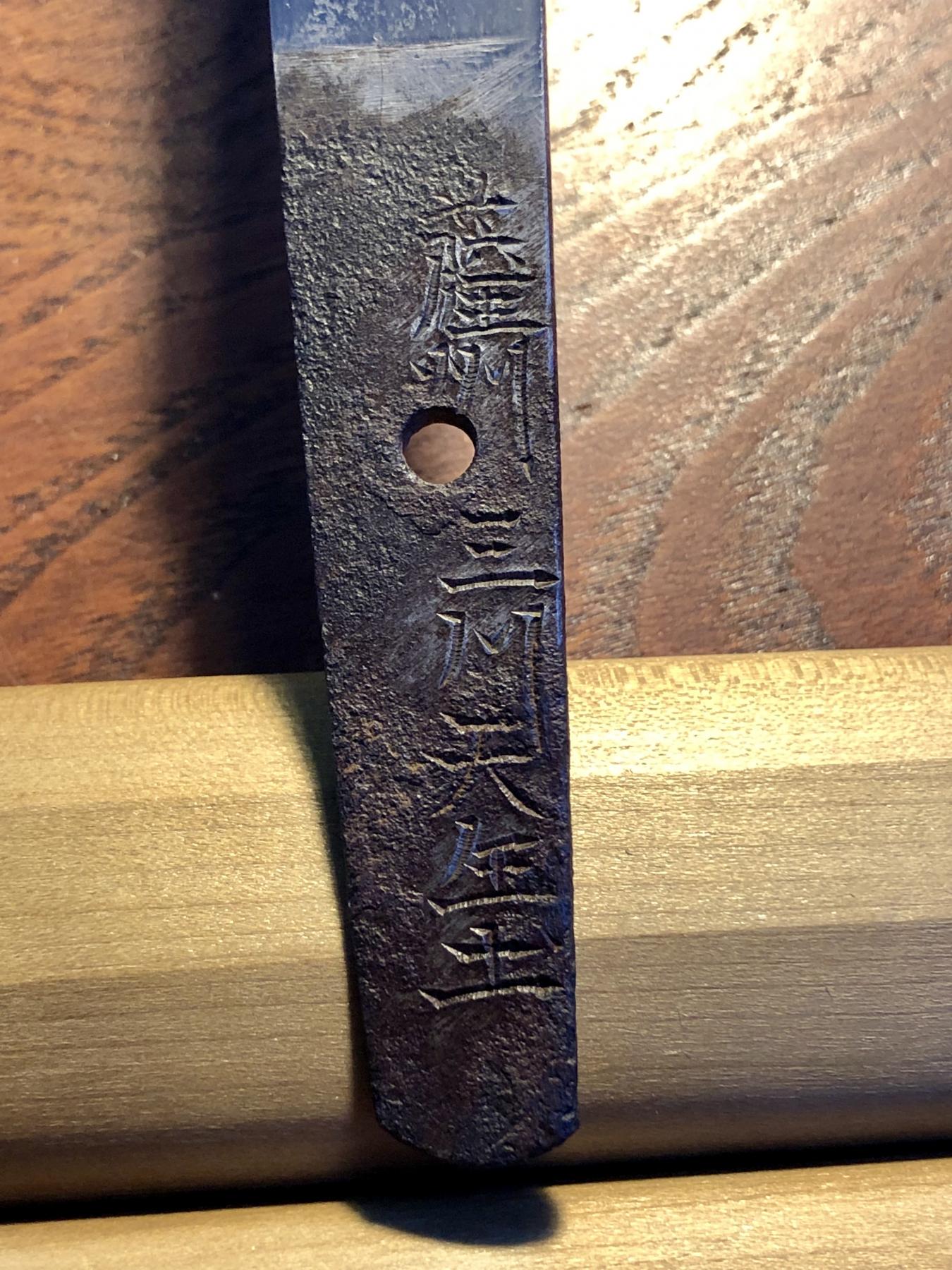
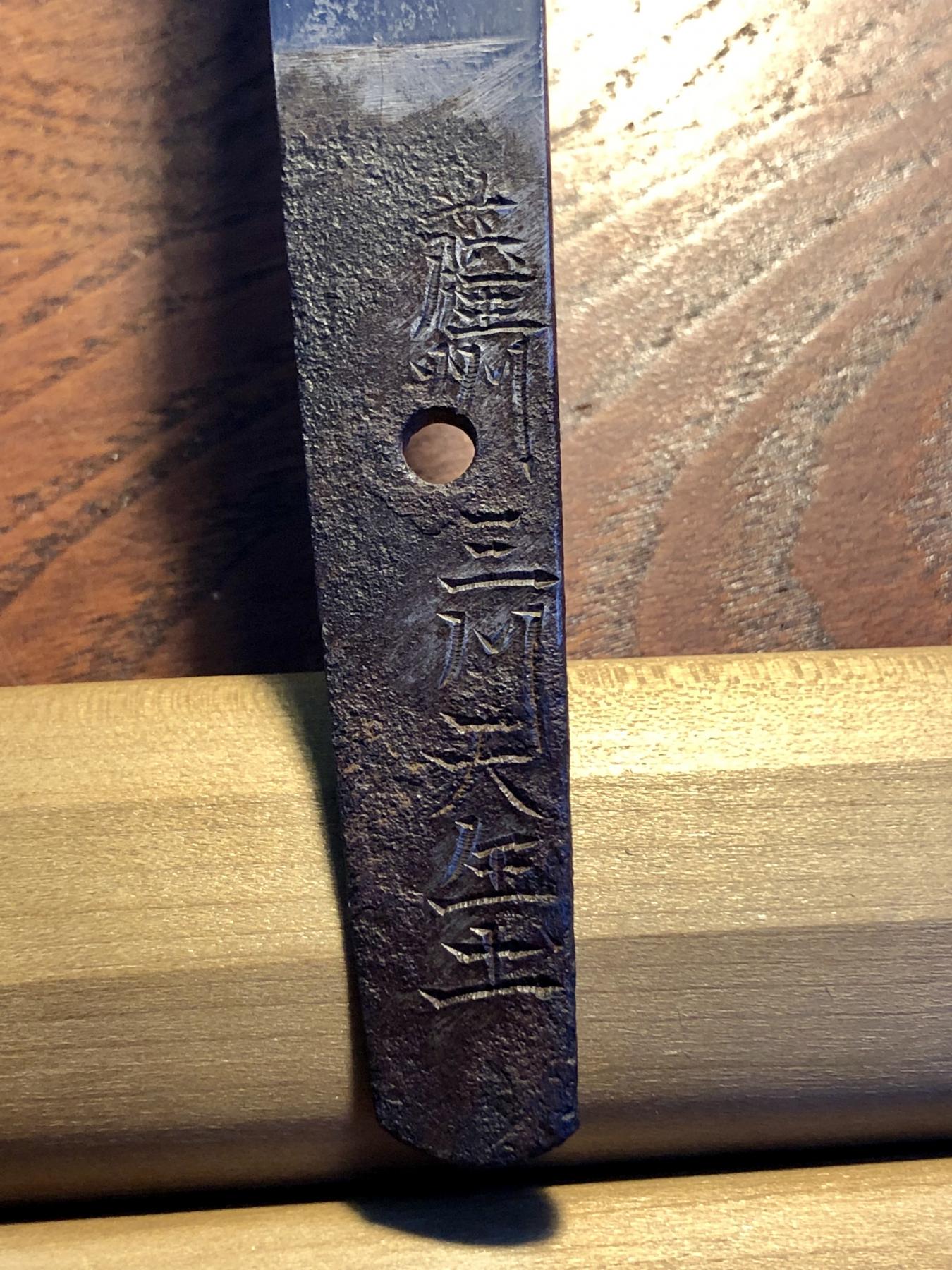
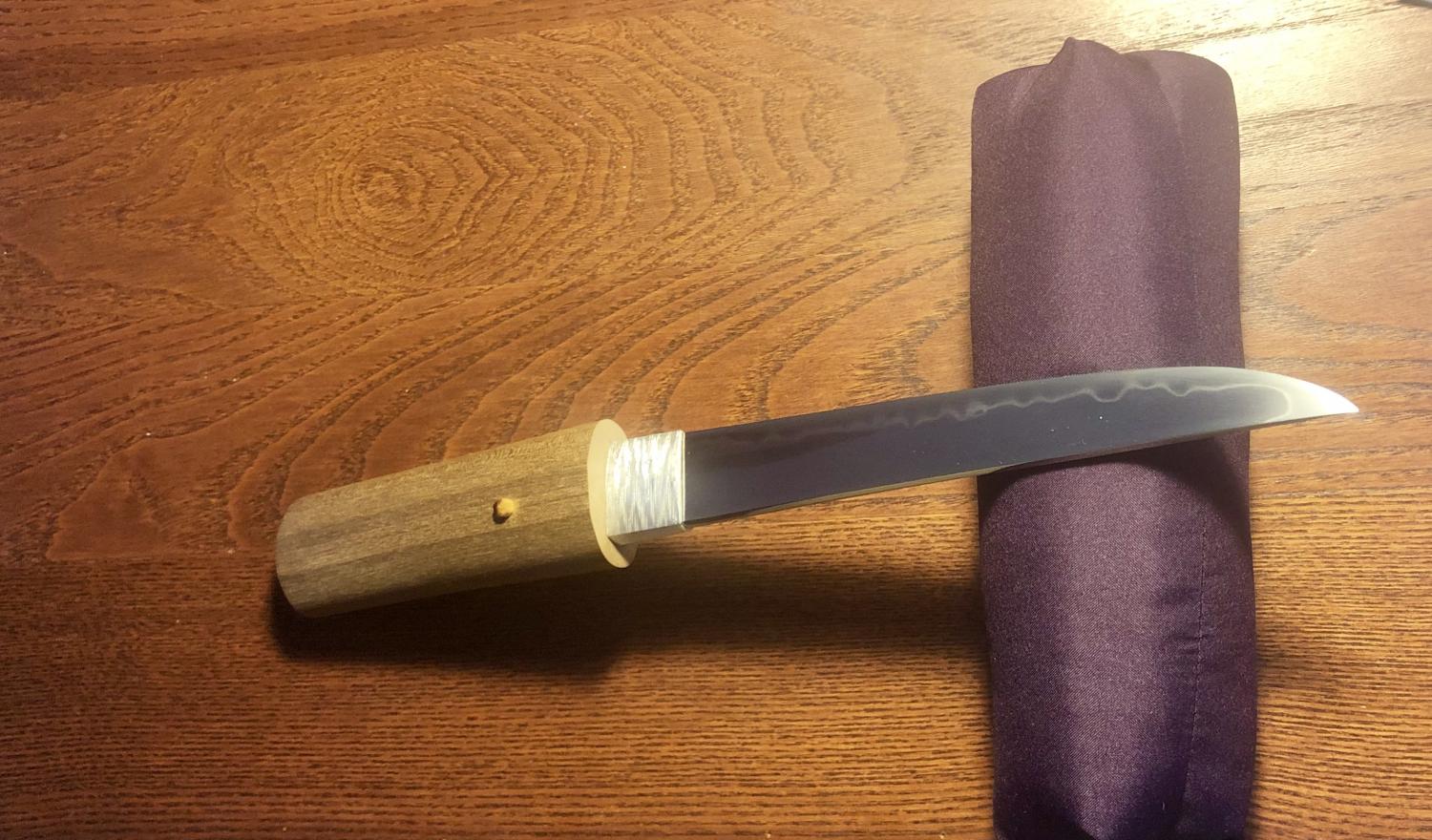
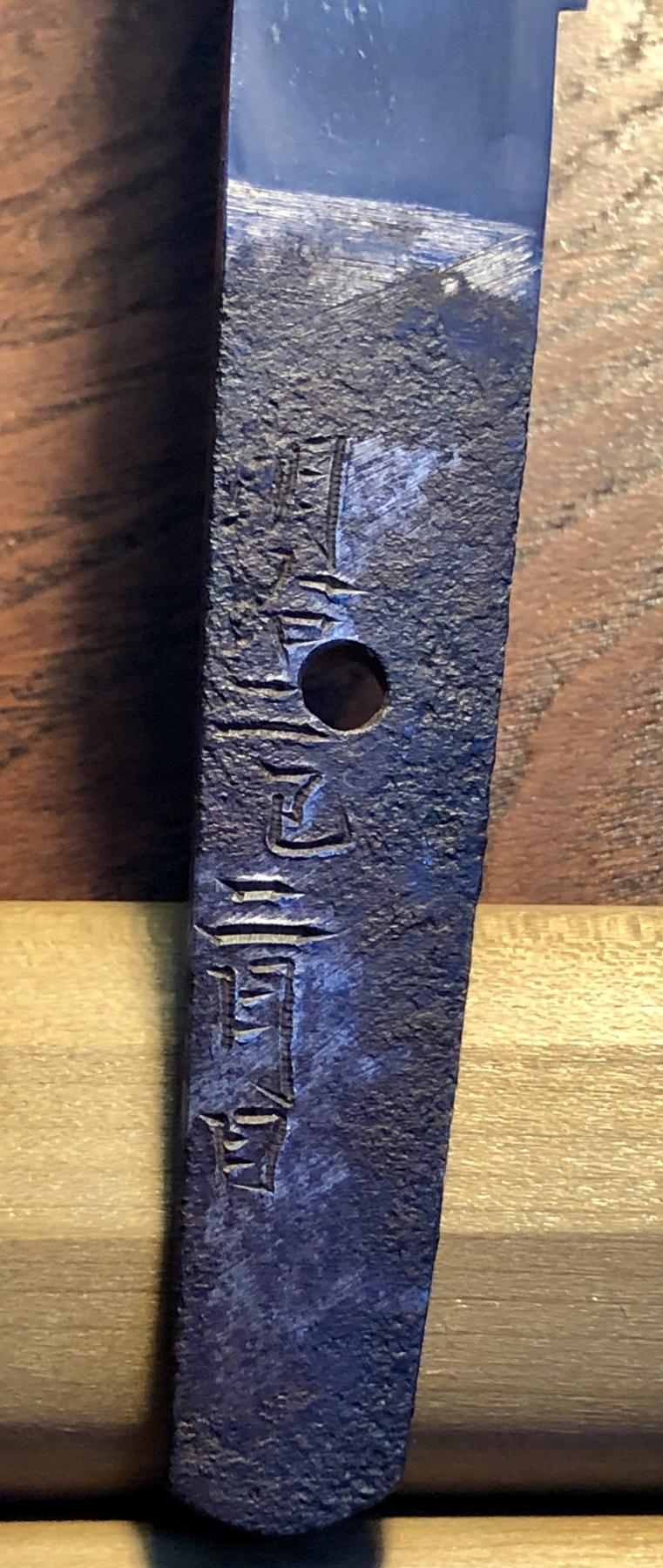
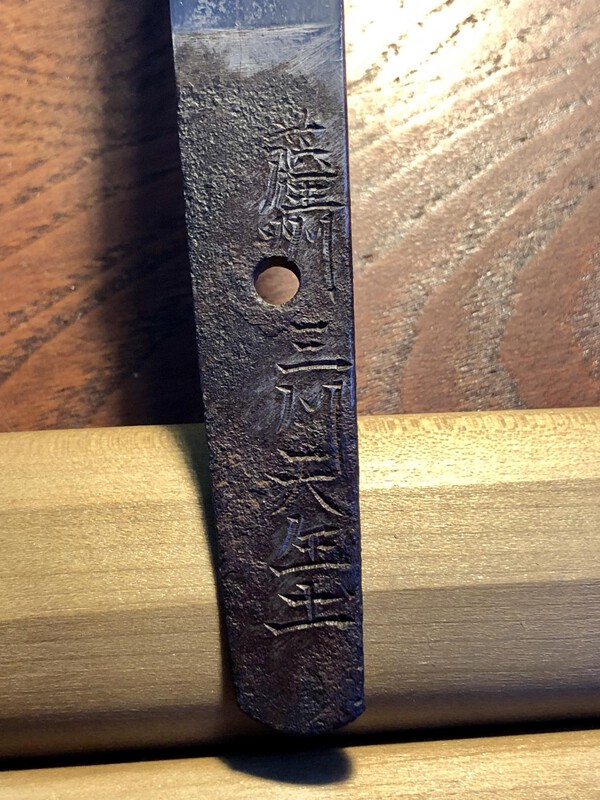
I have this new shinshintō tantō that picked up at the Tampa show last weekend. I think the nakago read 'Sashū Mikawa Tensaido'. The reading of the signature is based upon the previous owners notes. The tantō is also dated on the reverse side. Please note I am a professional Japanese fine art and antiques dealer and have studied Japanese language myself. I often don't need help with these type of things but i can't find any information about this swordsmith. I will at some point down the line use this information to help sell the Tantō.

-
In the passed on my website and other mediums I have used the term ‘dagger’ to describe tantō. I will continue doing so. Changing now would be a waste of time. Brian, I can’t confirm the reading of the mei. While it can be read like this it might not be correct. The reading was what the previous owner was thinking from his notes.
-
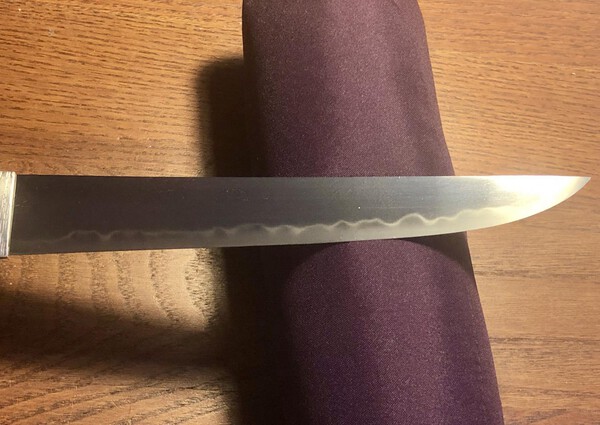
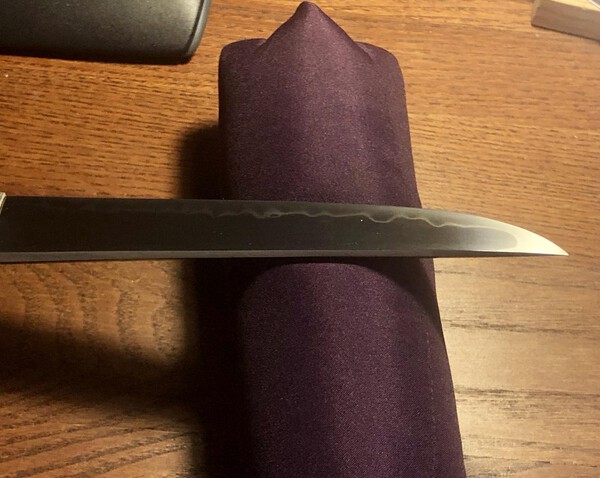
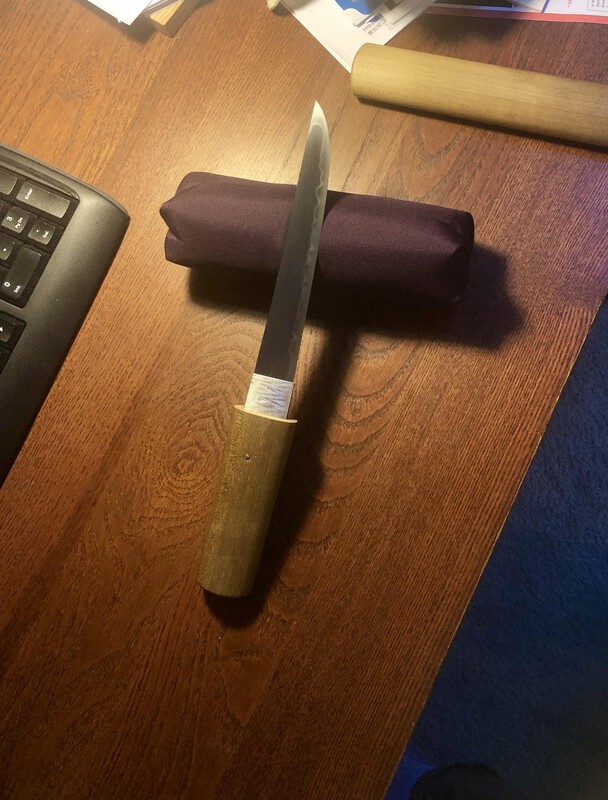
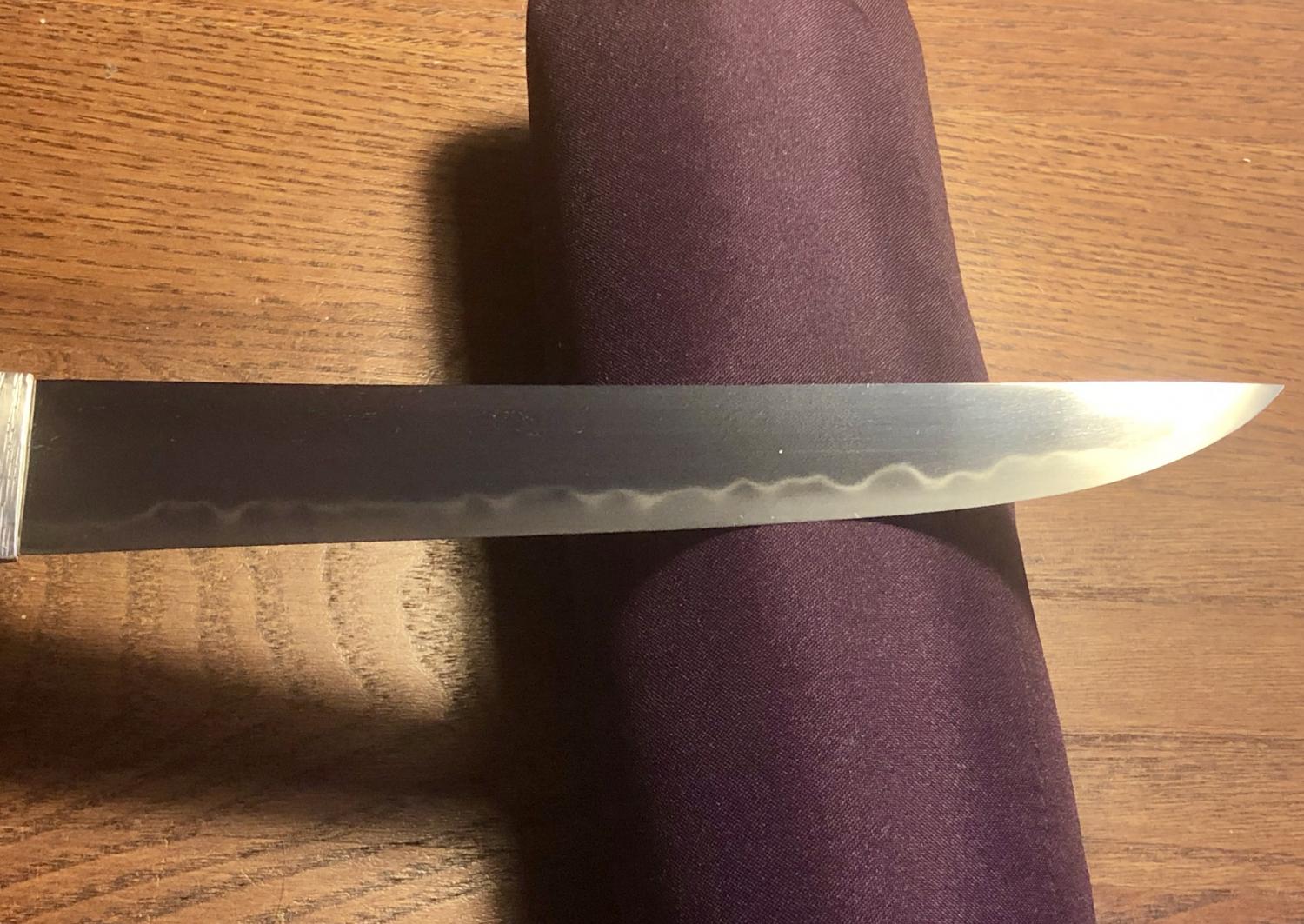
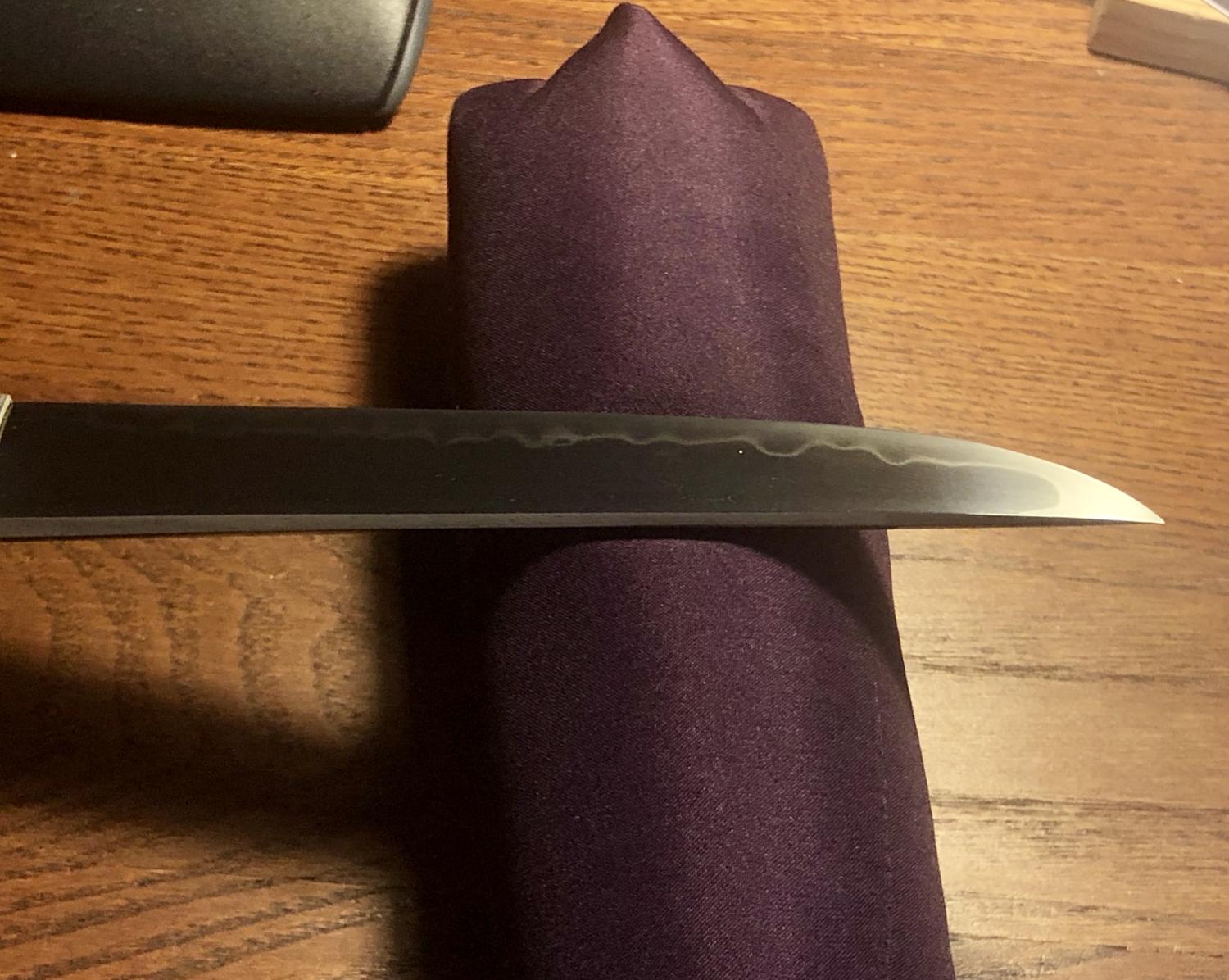
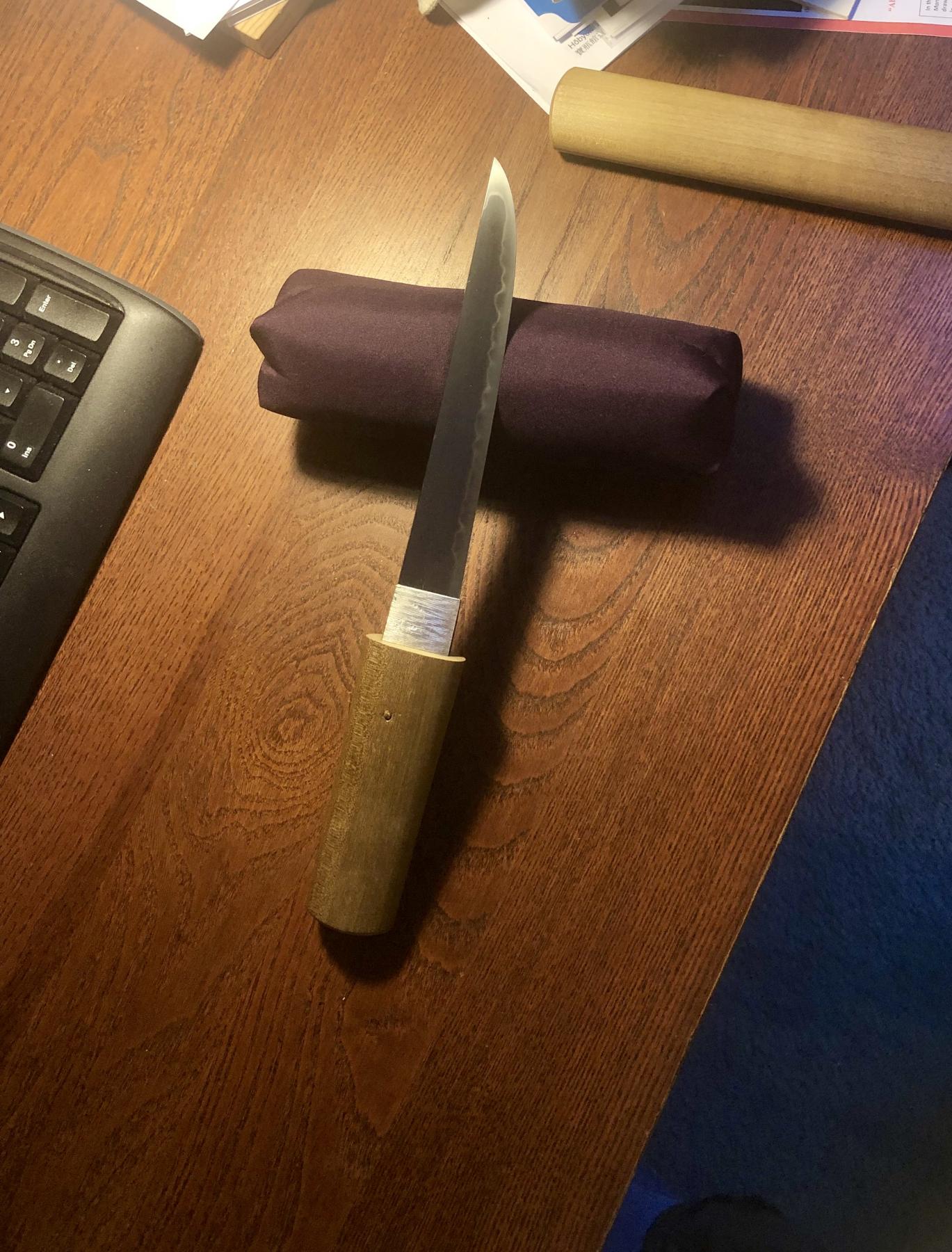
Here is a new gendaitō tantō I picked up at the Tampa Japanese sword show earlier this month. It is small likely made as a lady’s dagger. It is my first signed and dated sword. It is signed ‘Sashū Mikawa Tensaido’. Here are quick photos with my iPhone better photos will come later. The ji-hada is a fine ko-itame. The hamon has a gunome-midare shape. Feel free to politely discuss.