Matsunoki
-
Posts
3,797 -
Joined
-
Last visited
-
Days Won
70
Content Type
Profiles
Forums
Events
Store
Downloads
Gallery
Everything posted by Matsunoki
-
Thanks Ray. Very kind of you.
-
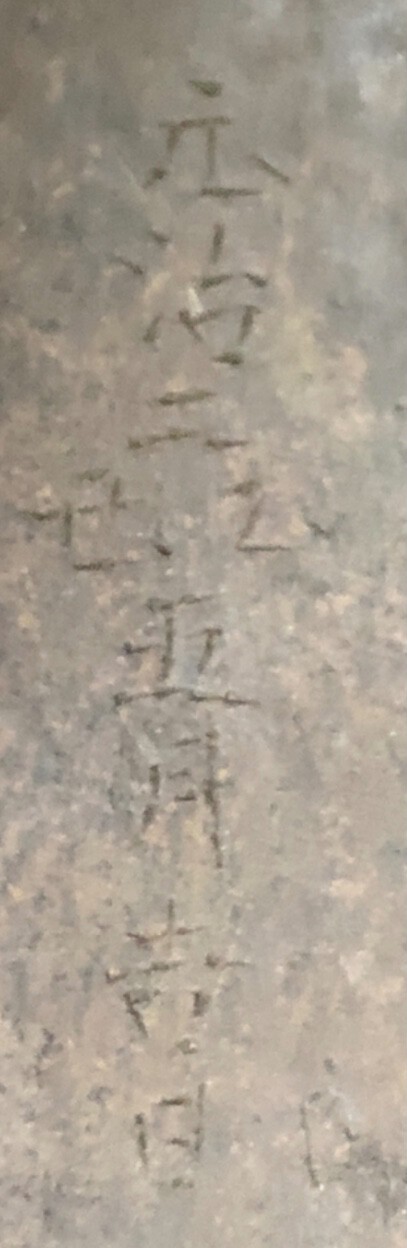
I think I can see “? Ji ni ? Month ?lucky? Day” …..I’m confused again. Is this a date? Any help greatly appreciated! Sorry to be useless on kanji! Many thanks.

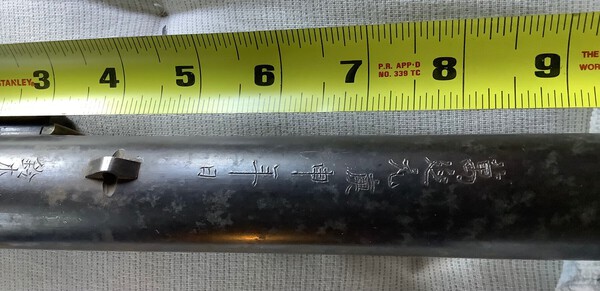
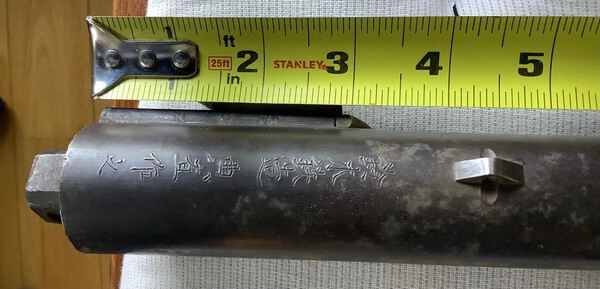


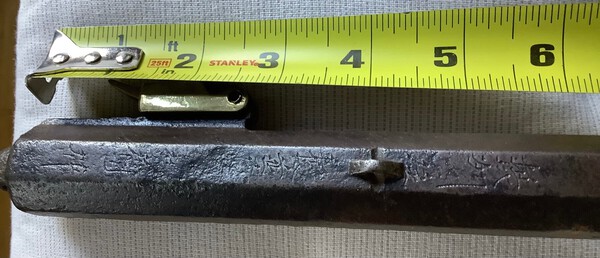

-
I’ve emailed Rachel Hyman. (“Senior specialist”) ……erm. Let’s see what she does.
-
Hi Jake, I think the most likely explanation is that someone used a pin to see if it was glass…..and doubtless found out that it was not glass! My comments are based on having made a huge number of these eyes in a variety of materials when I used to restore pieces (netsuke, shibayama, okimono etc.) During that time I have never encountered a glass eye nor any where any type of pupil had been created by dribbling anything internally (except from the reverse as described above). Once you get the hang of it and have the right tooling they are not that difficult to make…..just a bit fiddly - which tends to mangle your fingernails (miniature diamond drills and cutting discs on flexi drive jewellers machines).
-
There are 3 main ways of reliably creating the dark pupil. 1. a piece of black horn is inlaid into the front of the eye and then polished down…..most common. 90%+ 2. a piece of dark horn is inlaid into the back of the eye….rarely done as the effect is not as crisp 3. a hollow is created on the back of the eye and filled with black lacquer or similar…quicker thus cheaper A even cheaper method is simply to stain or lacquer the pupil onto the front of the eye but this obviously wears off very quickly when handled. They eye in question is either 2 or 3 above imo I think we can discount any possibility of injections! As for how they are securely fitted…..most are simply glued in with a variety of adhesives. Some have a deep tapered reverse to give greater surface area adhesion. Raising up a metal lip after insertion would likely damage the horn so that’s unlikely and I have never seen it done on organic material, only on other metal inlays Just for info…..the horn used can be of varying transparency depending on the desired effect….from virtually clear to dark amber to black. In addition to horn a variety of shell (mother of pearl) can be used for the eyes ……golden lip pearl, black lip pearl, bronze lip pearl etc …..all showing a range of stunning iridescent colours when finely polished. Often mistakenly described as “gem stones”.
-
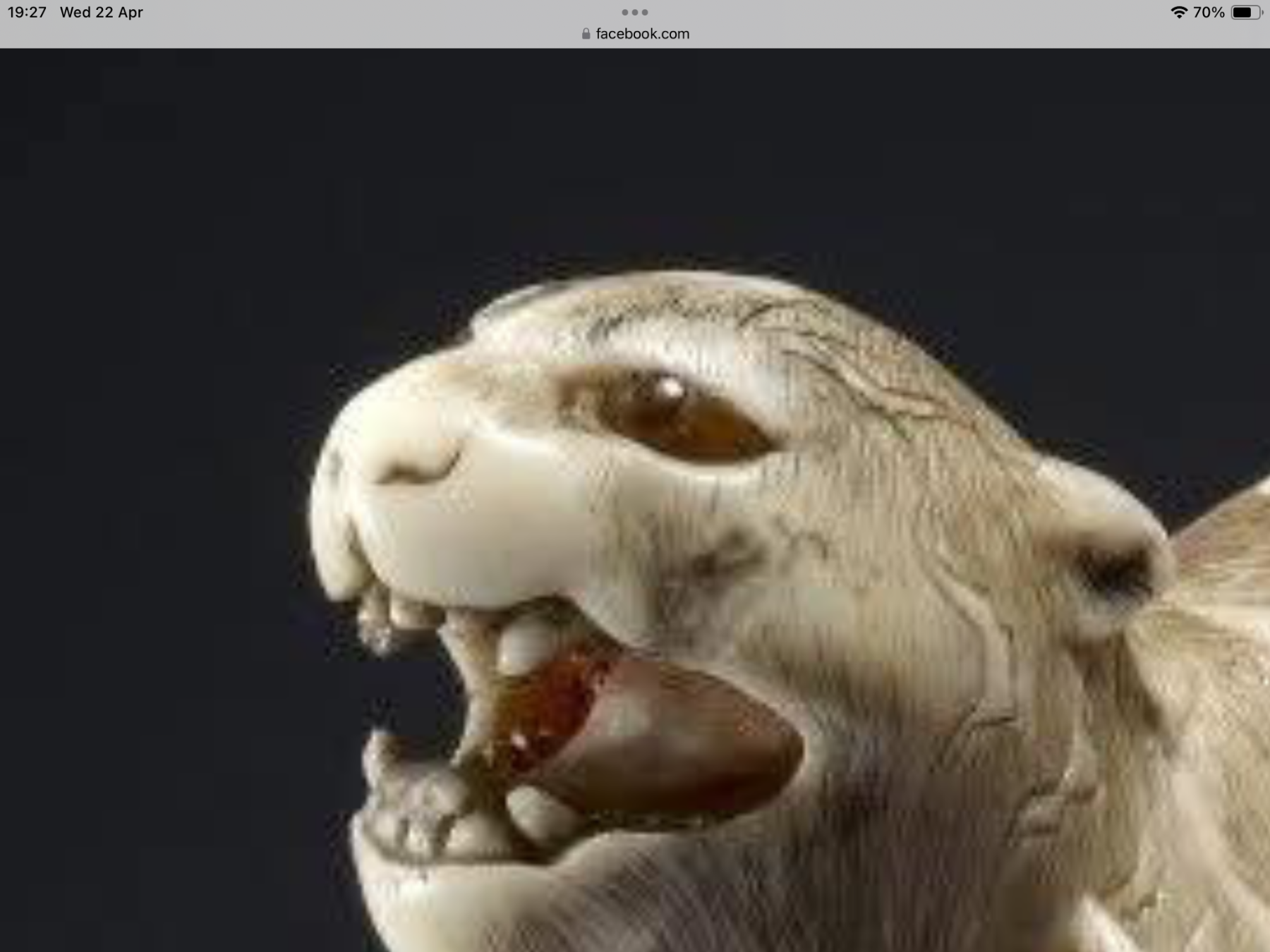
The most common material used for inlaid eyes in Japanese Art is translucent horn often with a darker pupil. Found on metalwork, netsuke, Shibayama, okimono etc. This is what this eye looks like to me. I’ve made 100s of them! Quick pick of something similar….

-
Amazing, many congratulations . So nice to see that such skills, knowledge and ability still exist in this world. I understand your comment re “active meditation”. It is a very peaceful place to be.
-
Have you looked at the Tomkinson collection? ….or the Edward Wrangham collection? (See Bonhams past auctions for this one)
-
To recognise a fake you first need to know what the real thing looks like, all the component parts, blade, fittings etc.You need to understand quality and artistry. That takes time and determined study. Or you can deliberately study fakes…..there are dedicated topics on this forum for that purpose. Once you have done that you will be able to tell the difference. It takes some effort. Every component of your sword sadly screams fake from the rooftops……but only when you know what you are looking at.
-
Potentially that was very cheap. Can’t really tell from the images.
-
Very often the plugs are not one solid piece but instead are two plates, one inserted from each side although lead ones are more commonly one piece (and much easier to remove) Also how “robust” is the tsuba. Delicate sukashi with little support to/around the ana or more substantial? Removal can be as simple as tapping it/them out if the tsuba is robust. Use a wooden dowel and support snugly and firmly around the ana underneath. If the tsuba is delicate then great caution is wise! How good are your drilling skills and equipment? It all depends on the plug material and the strength of the tsuba
-
What are the plugs made from?
-
That is very surprising because when you look at the bare tsuka you can see remains of what appears to be a backing paper of some sort and lines going around as if something had been wrapped around it. Are those lines in the bare tsuka scratched/carved into it? What do you think their function was? Is the inside of the “sleeve” lined with anything…..the remains of the paper still stuck to the tsuka. Don’t suppose you can get an image looking into the “sleeve”. Really unusual and makes no logical sense whatsoever…..having something capable of sliding off would be dangerous in use with no apparent benefits.
-
I do not think that the “tsuka maki” was ever intended to slide off the tsuka. The fact that it has survived is a miracle because I think it is simply a continuous thick cord or twine wrap that was originally glued to the tsuka and then stabilised by a coating of thick lacquer. Possibly several coats that have then created a very rigid structure. For some reason the glue has given way and it has slid off. I have owned similar wraps on tanto…..but never had one come off!
-
Novel ‘oddity’ or painful to the eyes?
Matsunoki replied to Mark S.'s topic in General Nihonto Related Discussion
First glance it’s not a million miles from shobu-zukuri (iris leaf) and it is rather elegant. As a stabbing weapon it looks extremely efficient and having watched several Samurai films etc recently there seems to be a fair bit of stabbing involved when there is no room for swinging a longer blade or as coup de grace after battles. Creative way to aesthetically save a (probably) ugly damaged blade. Maybe not one for purists. -
Correct. It isn’t that unusual…..many swords were rehardened following assorted damages.
-
Looks fake from these images. Show image of nakago without tsuka and habaki.
-
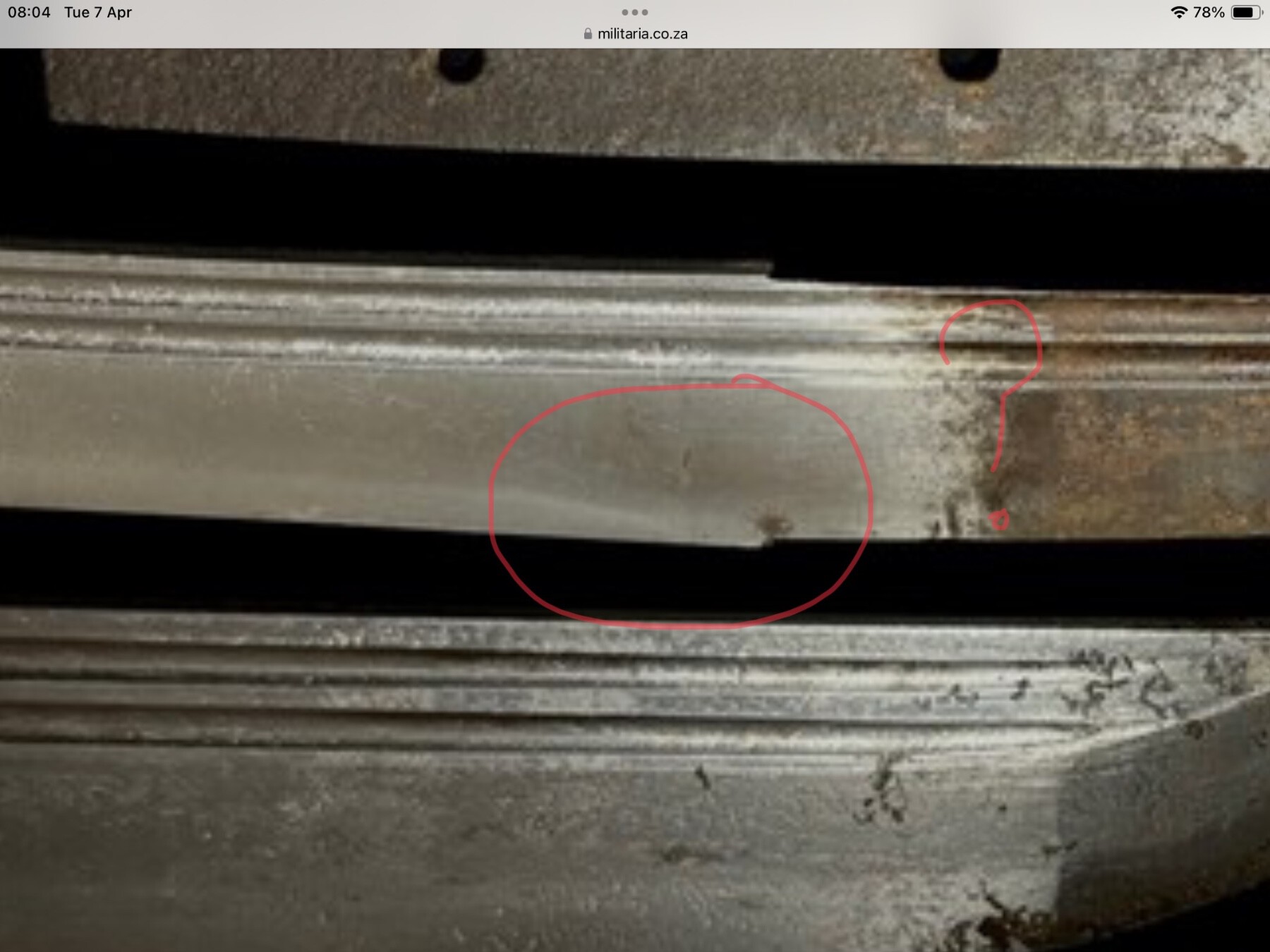
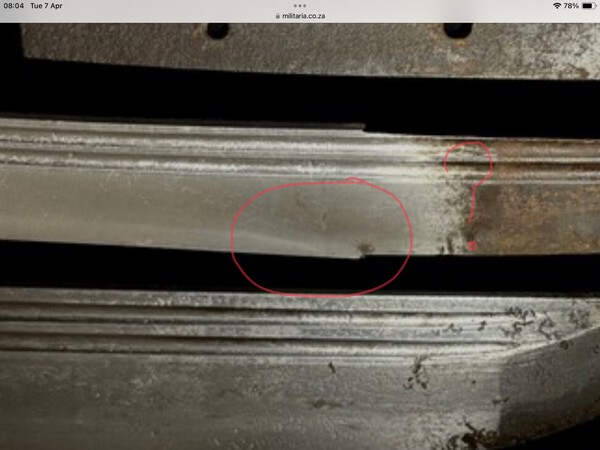
Probably re-hardened if the hamon finishes here?
-
Excellent advice from Geraint. It’s so easy to make things far worse and then wish you had never started.
-
Help please with kozuka mei (again….sorry!)
Matsunoki replied to Matsunoki's topic in Translation Assistance
👍🙂 Either way …..I’m enjoying going back through those nice pieces that came from you John. You don’t see many of this quality nowadays except maybe Bonhams ….and they have relocated to Paris. UK is a bit of a wasteland, sadly. -
Fake.
-
Help please with kozuka mei (again….sorry!)
Matsunoki replied to Matsunoki's topic in Translation Assistance
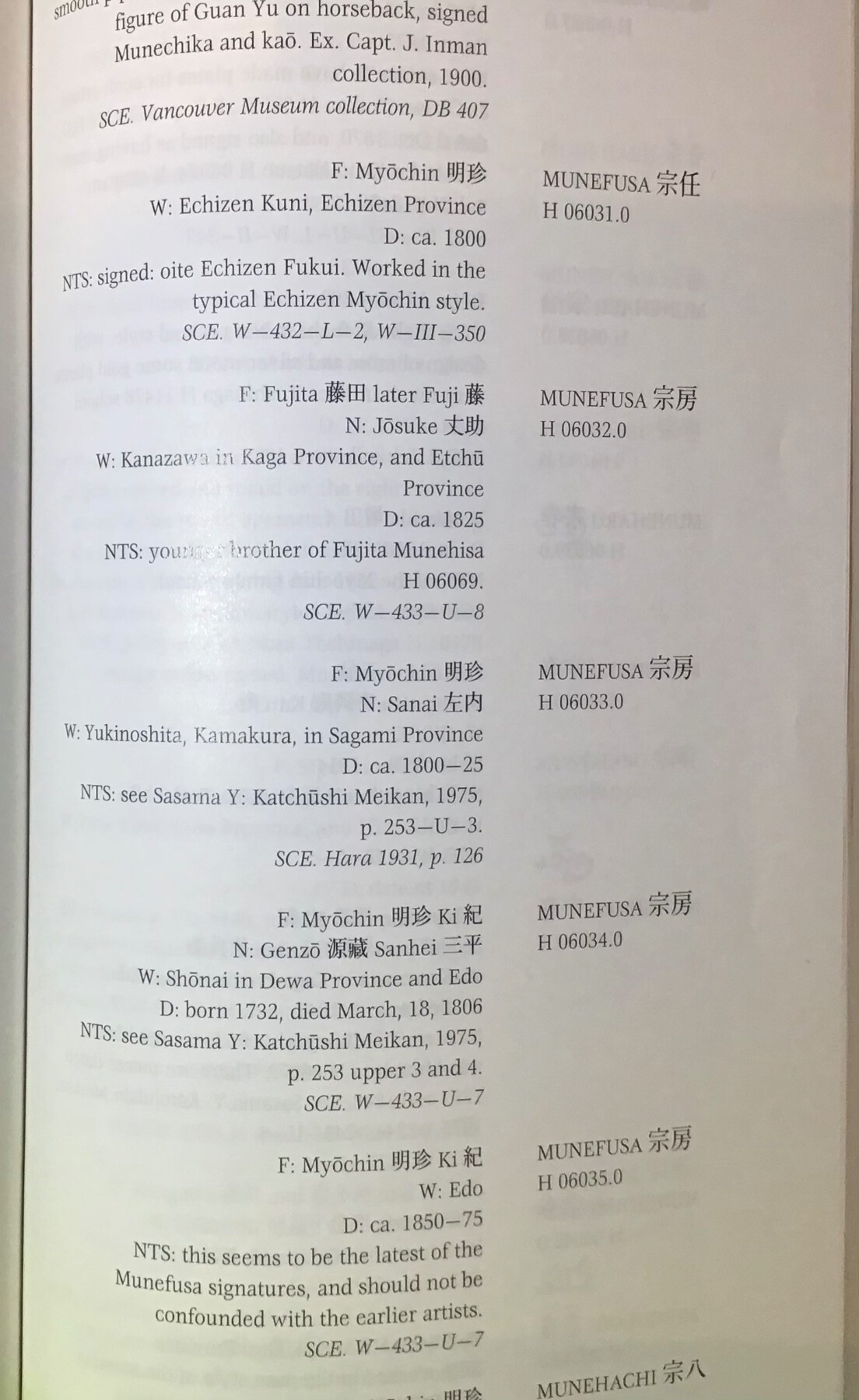
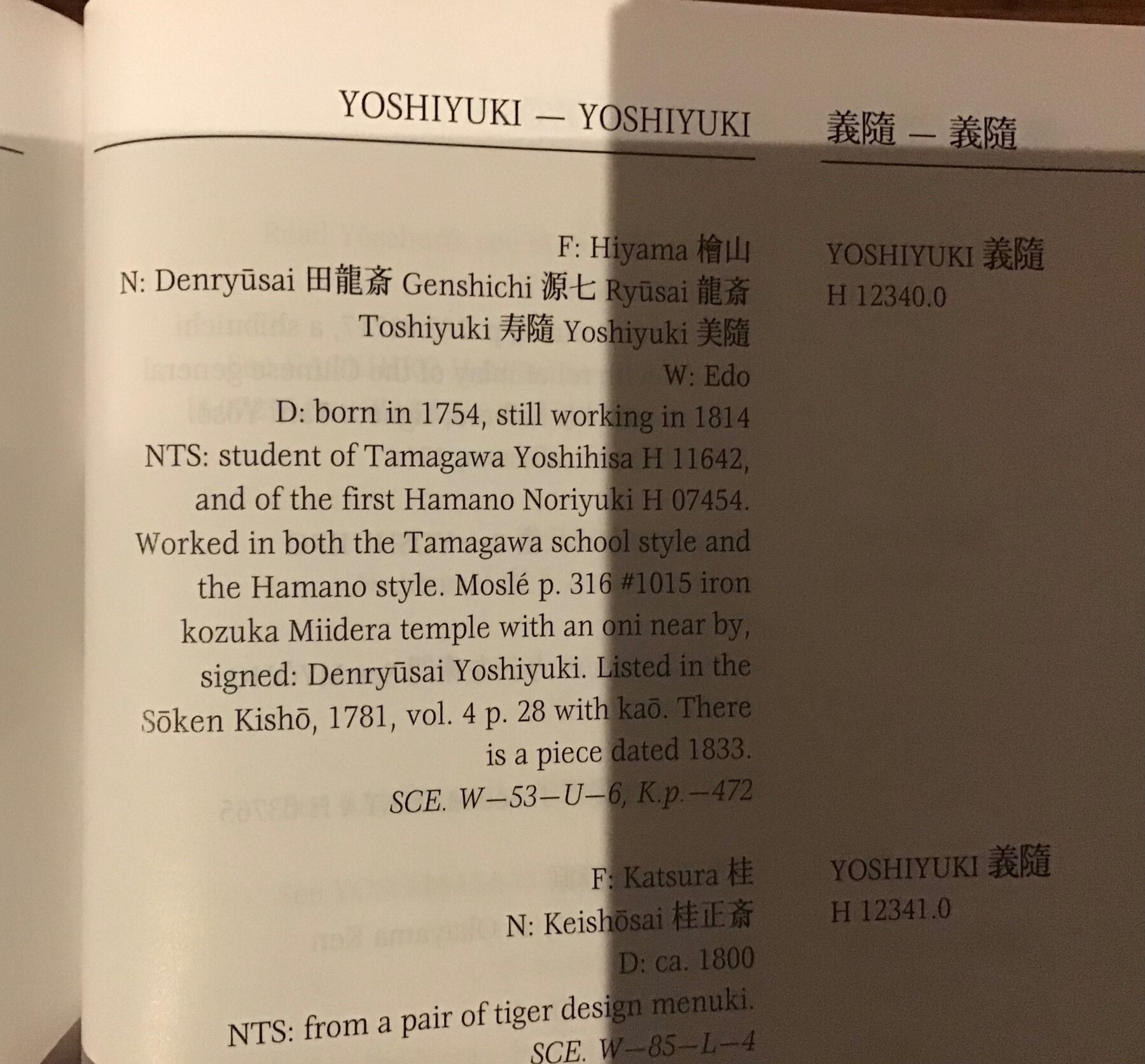
This explains why I have never really bothered about Mei but instead tried to concentrate on quality!!🙂 This is the Haynes entry that I found……just a couple above yours John. All too confusing for my ageing brain🙂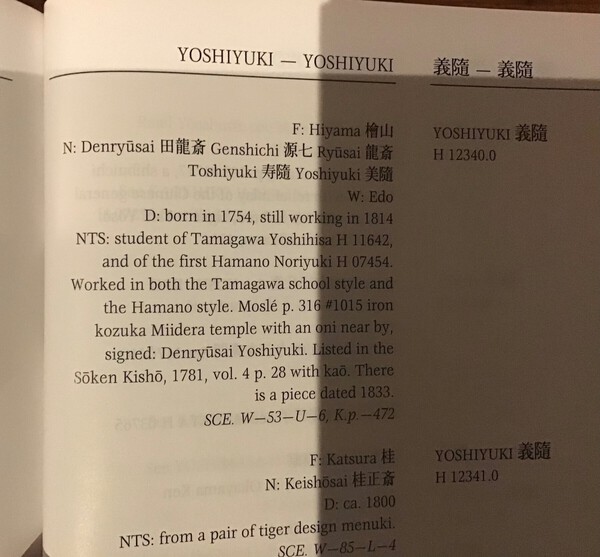
-
Help please with kozuka mei (again….sorry!)
Matsunoki replied to Matsunoki's topic in Translation Assistance
Hi John, nice to hear from you. Yes indeed I think it did come from you and yes it is Shoki. Really fine kozuka but maybe time to move on again. Can’t quite make up my mind! -
Help please with kozuka mei (again….sorry!)
Matsunoki replied to Matsunoki's topic in Translation Assistance
Hi Jean, many thanks. Much appreciated! I am sorting out my kozuka collection with a view to selling. I had not remembered that this one was signed until I sat down for a “proper look”! Time to get organised I think🙂 Best. C.