Jon
-
Posts
267 -
Joined
-
Last visited
-
Days Won
2
Content Type
Profiles
Forums
Events
Store
Downloads
Gallery
Everything posted by Jon
-
One of the really import thing to understand when considering iron and steel is what rust is and how it works…a really simplified set of rules is that there are different types of rust to consider there is stable rust type and unstable rust…your aim is prevent any rust or if you have rust make sure it’s only stable rust. Red rust..this is bad rust it’s essentially active destruction and if not managed will destroy the iron/steel item. It’s Hydrated oxide Fe2O3•H2O (high oxygen/water exposure) with another contaminant such as salt, its a sign that the environment itself is very corrosive it’s usually uniform….the classic example is an unprotected iron tool left in a garden shed. yellow rust..this is bad rust rust from iron oxides that is very soluble and is creates in high water environments…a bike left out in the rain will form this yellow rust. Iron oxide-hydroxide FeO(OH)H2O (high moisture) it will run and will have run marks. brown rust..another bad rust,this forms in low moisture high oxygen environments..Oxide Fe2O3 (high oxygen/low moisture). This is the sort of rust that a unprotected iron object will get in a family home. It tends to be spotty and will be propagated by contamination on the iron ( from a finger print etc). now we have good rust…BLACK rust…this is rust that forms in a low oxygen and low moisture environment environment, Iron (II)oxide – Fe3O4,also called magnetite. it tends to take longer to form than other rusts and can actually form as a layer under other rusts, especially brown rust…now the great thing about black rust is that it’s stable and does not propagate but more than that it forms a layer that protects against active rust types ( red, yellow and brown)…for old artefacts made of iron and steel ( swords and other weapons ) black rust can be a savour and preservative…very old European swords will often be covered in a coat of black rust and You do NOT EVER remove this black rust from these artefacts ( unless your a philistine) as it’s the patina of age and authenticity and protection all in one..Japanese swords are a bit different in that the collectors aim to have the blade in Polish and free of any rust ( to see and study the steel) but even Japanese swords preserve that black rust on the tang ( again to show the age ) the act of collecting and and appreciating Japanese swords is actually a bit of destructive process to gain access to the steel in the polished state ( no other area actively removes metal from artifacts…as a collector of old stuff it took me a while to get my head around the Japanese sword collection paradigm). So with a blade like this that you are not going to likely get polished by a professional Polisher your best bet may be to follow a more European sword collecting approach which is to stabilise and protect only ( until you can get an expert opinion on the worth of polishing). so your aim is to stop the red,yellow, brown rust and stabilise to only having black rust. The way you do this is to remove oxygen and moisture..so first oil…second oil and third oil. A good machine oil is best such as sewing machine oil ( I use singers sewing machine oil it’s cheap and easy to get hold of)…if it’s heavily red rusted I tend to actually give it thick layer of oil for a good few days…this really helps the oil penetrate the rust…carefully cleaning with good quality lint free cotton cloth and 99% ethanol …then it’s a case of thin layers of oil and clean every few days after a while you should have nothing left but black rust…then it’s just maintaining protection which is a very light ( no beading) layer of oil and leave that black rust well alone unless your sending it to a polisher….resists using acids and rust stabilisers on Japanese swords or any historic artifact for that matter.
-
I’ve actually been showing my wife some yomeiri tanto and suggesting she might like one…unfortunately she saw right through me and told me I was not getting another blade this year… ( mistakes were made and I accidentally purchased four….when the agreed limit was one )……still with two daughters I should be investing in two nice Yomeiri Tanto for the future…( I will try that argument next year).
-
That is a common affliction….WICSS……(wife induced collector strangulation syndrome).
-
Hi for interest what eBay shop would this be ?
-
It always amazes me how different things can look between one picture and the next…a slight variation in light or angle….those pictures you have taken of the NAKAGO are a classic case, one set show the nice black magnetite the other looks like it’s all been cleaned off….. Jon
-
Cheers that’s helpful so so effectively a if it’s 26-30cm blade, it’s a sunnobi Tanto..if it’s over 30cm then it’s a wakizashi even if it’s a Hira-zukuri blade and looks more like a Tanto than a Wakizashi.
-
So if you have a Hira-zukuri blade at 31cm what makes it either a Hira-zukuri wakizashi or a sunnobi Tanto…bit confused on this one. jon
-
Cheers Ray and Dave, really helpful, thankyou, out of interest, Uda a is pretty big old school, how often are Uda blades not attributed to a smith ? jon
-
Hi could anyone translate the information on these two hozon papers please


-
I can see your difficulties, I suppose the decision is around accepting the reality of your own market and if that is more expensive than others ( there are a few countries with import bans) . Also in really even if you wait to see what happens, you don’t know what the internal currency market will be like in a few years ( the yen may suddenly jump in value and the main export market goes through the roof price wise). So in the end it becomes a paradigm issue. 1) are you only willing buy a “good value” makes monetary sense purchase and or wait for a long time to find perfection that many never come…and don’t buy something even when you can get that which is accessible and you want at a price you’re willing to pay even if it’s more than in other markets and it’s a sword you have found and you like, that you know is genuine, with papers and with koshirae that will give you pleasure…… 2) or buy the sword you want that will give you pleasure and happiness in being its keeper for a time. personally and in really we don’t own anything other than our lives….live and enjoy it….get that which makes you happy…no one owns these swords we just pay for the pleasure of being their keepers for a time…if it will give you pleasure and you have the money pay the money….enjoy the sword… But there is also pleasure in anticipation….especially for the collector..so if you think you can find better…you could also wait a bit…. im sort of suffering the same thing…there is a specific car I want….but it’s pretty expensive in the UK…in the states it’s around $15,000 cheaper…but I don’t live in the states so I have to live in my reality and how much the loverly car is going to cost me…it will not stop me buying the car because a load of American ( lucky gits) are driving around in them for $15,000 less than it will cost me….and quite frankly I don’t care…all I want is the mustang…..I’m not owning it I’m living it and that’s the important bit. what I’m trying to say is if you like the sword, want the sword, can afford the sword and it will bring you please , buy the sword. Don’t not buy it because someone with access to the American or japans markets can at present get it cheaper…that’s not your reality..live your own.
-
Is that drops of water on the blade…it really needs an oil.
-
If your going to be precise the Ainu were really the fourth people of Japan, the first were the terminal upper Paleolithic North Eurasians ( say around 30,000 BC to 15 BC)..then you had the Jōmon from around 14,000 to 300 BC…then the Okhotsk and Satsumon people’s that seem to have merged by around 800AD to form the Ainu people…we tend to forget that even native peoples are all migrants and human history is just a story of one wave of migration after another. I did not bother with the early modern humans who were all knocking about from around from around 200,000BC-300,000BC or the archaic humans from way back to 800,000BC..after all we know H. sapiens heidelbergensis was knocking around in china from 600,000BC so no reason H sapient heidelbergenisis was not the first people of Japan.
-
So does anyone one know of any good references that have the measurements of different schools etc of swords..so charts of sori, Kasane, Nagasa etc for different schools, provinces, eras…the references I have tend to be descriptive…like a shallow sori..but that’s not really as helpful as know what the actual measurements are likely to be.
-
A Nagasa of 59.8cm, that’s not very long for a Katana.
-
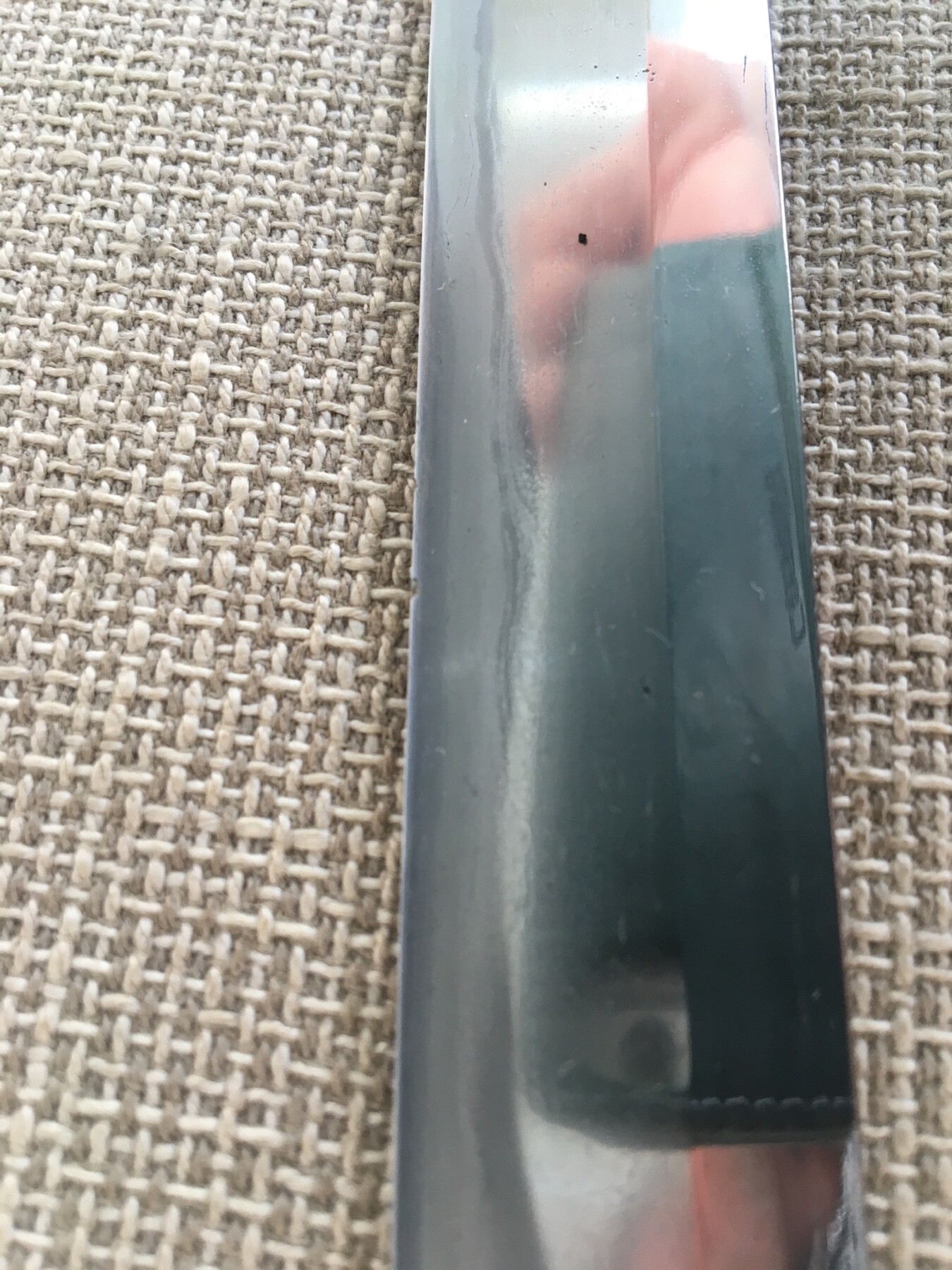
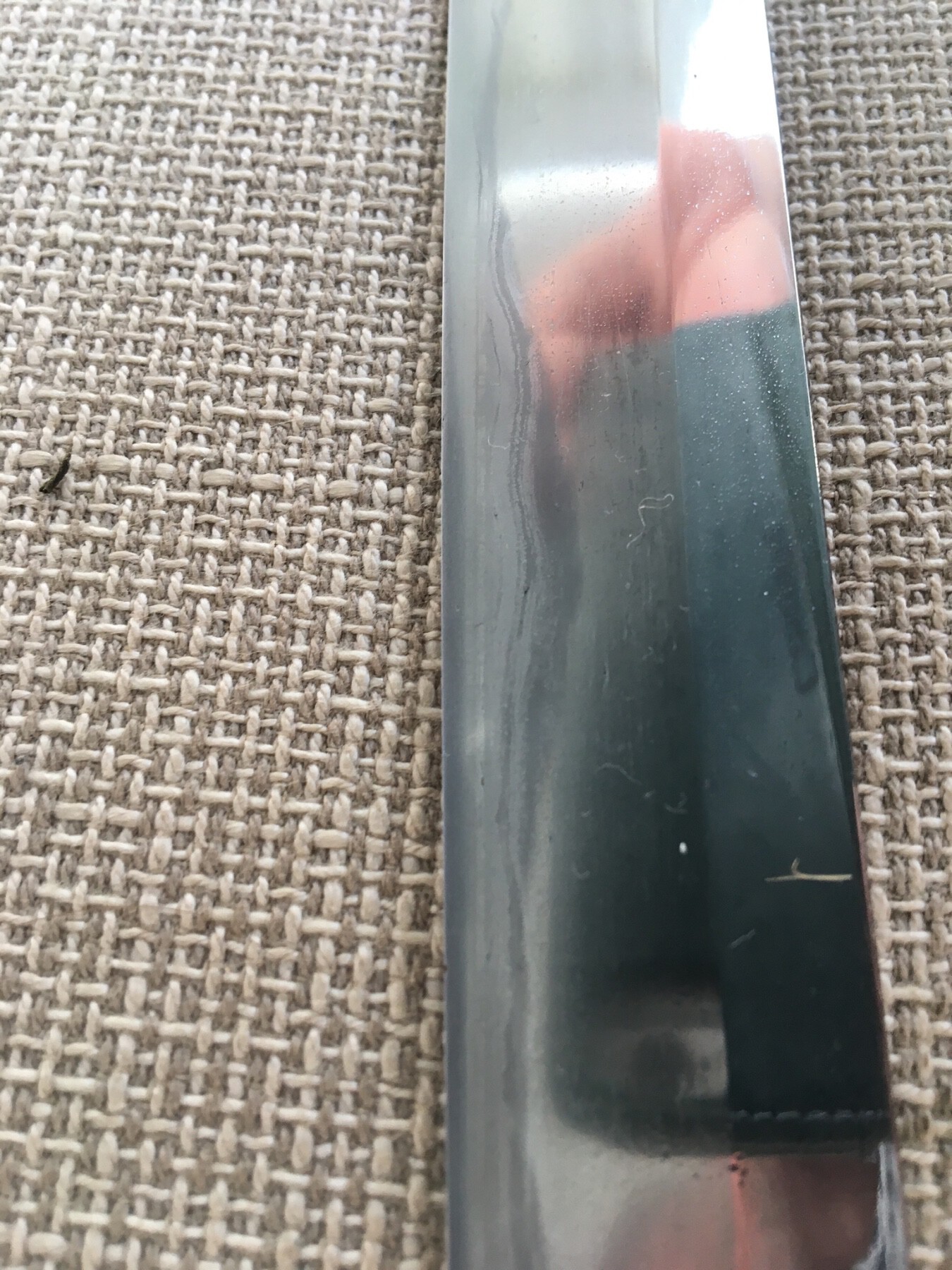
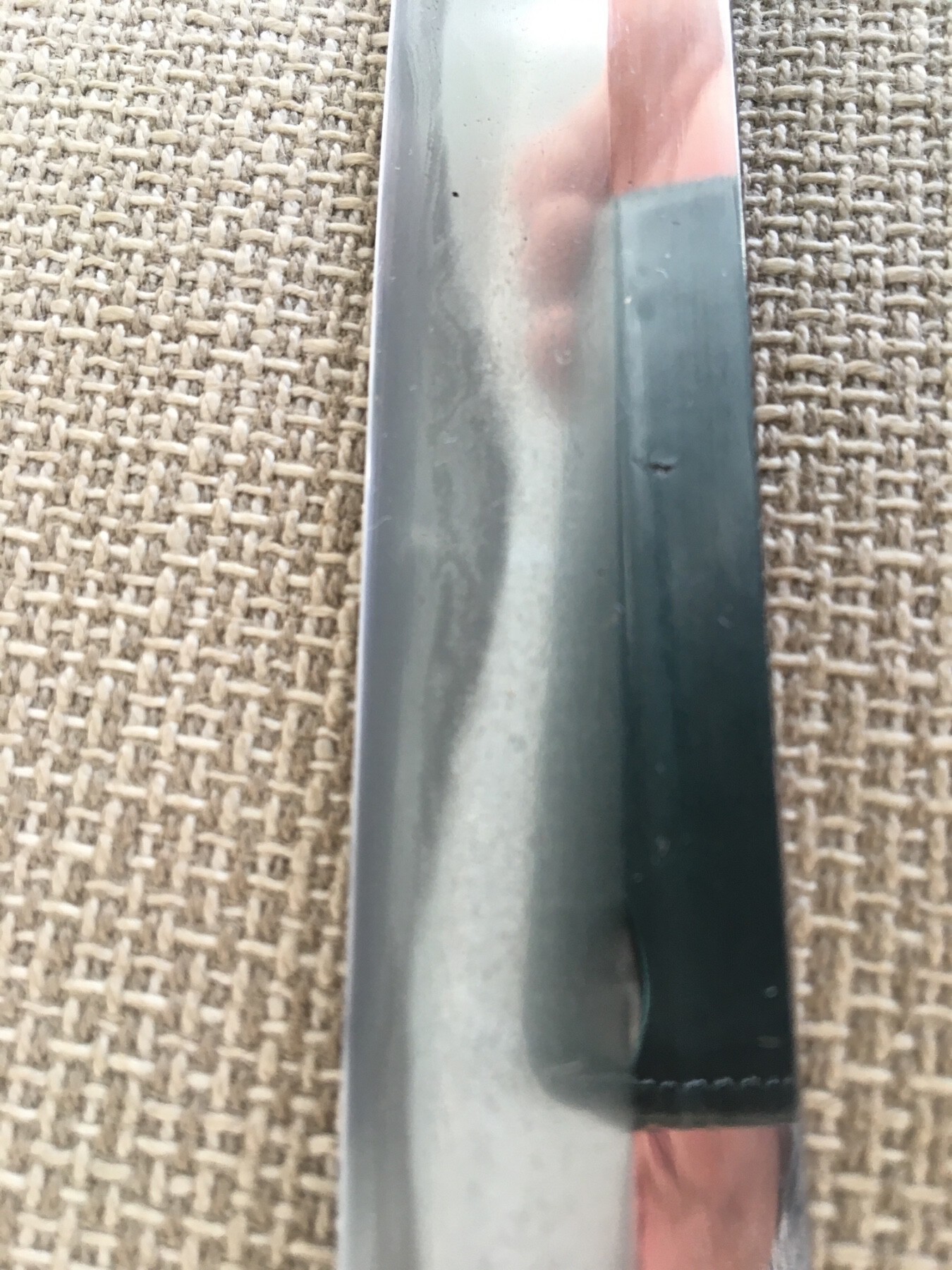
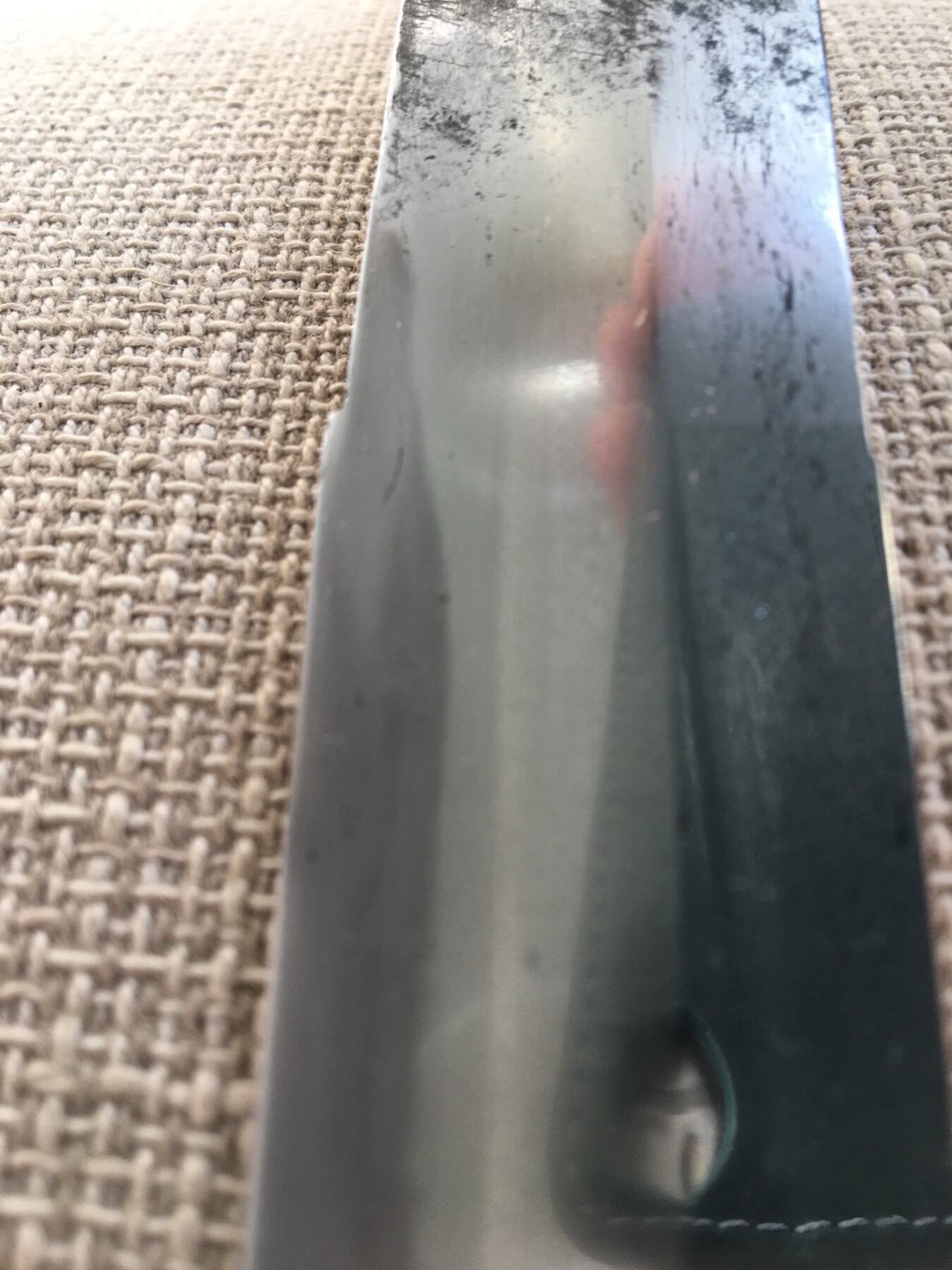
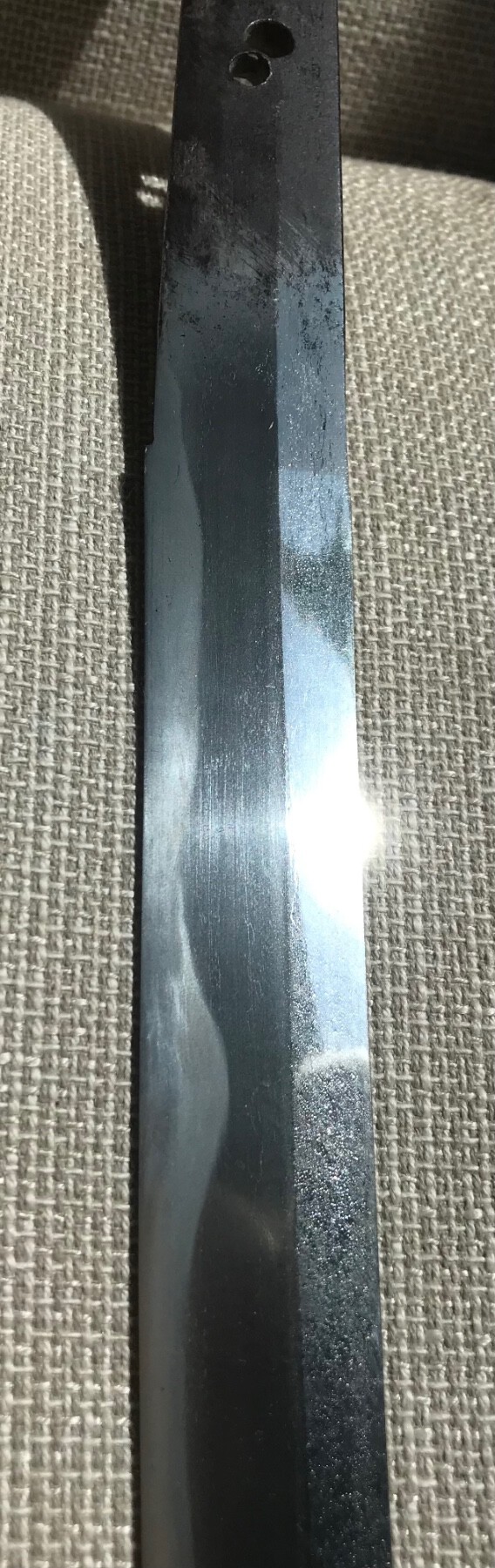
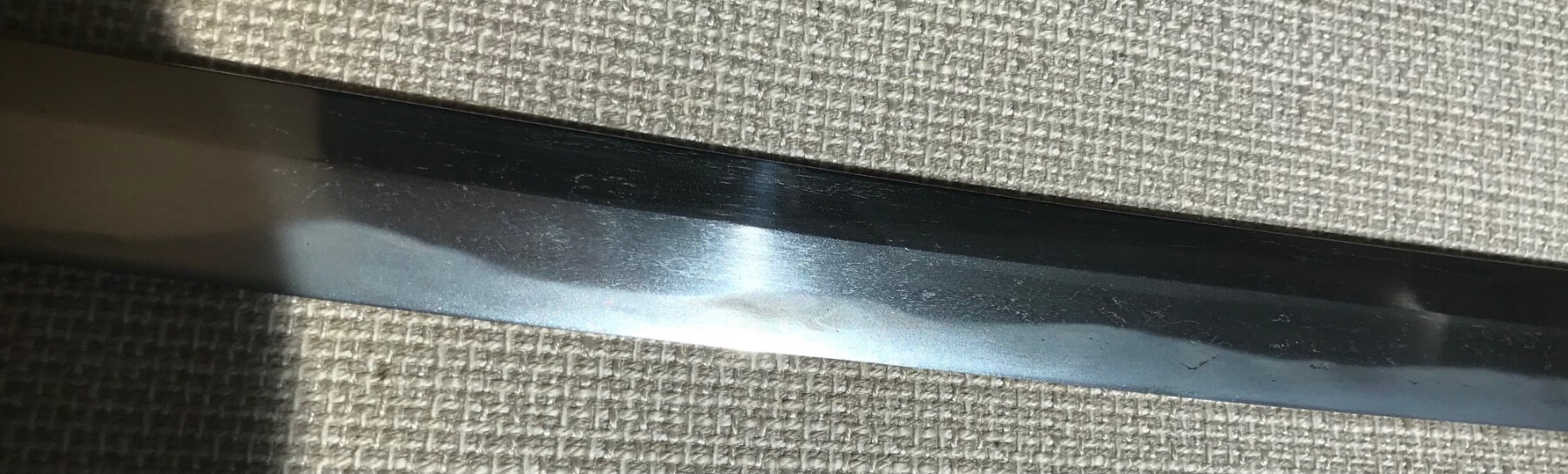
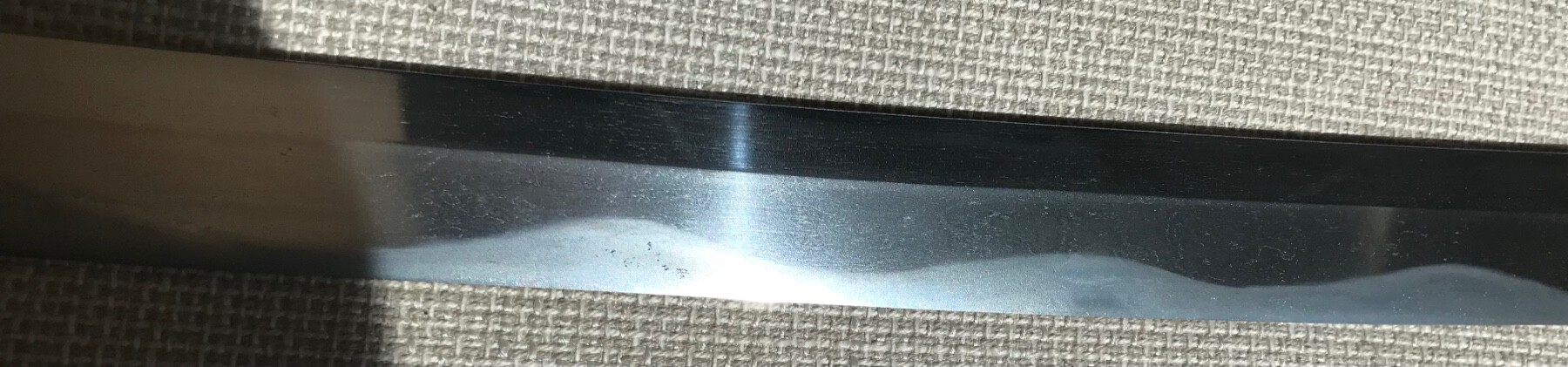
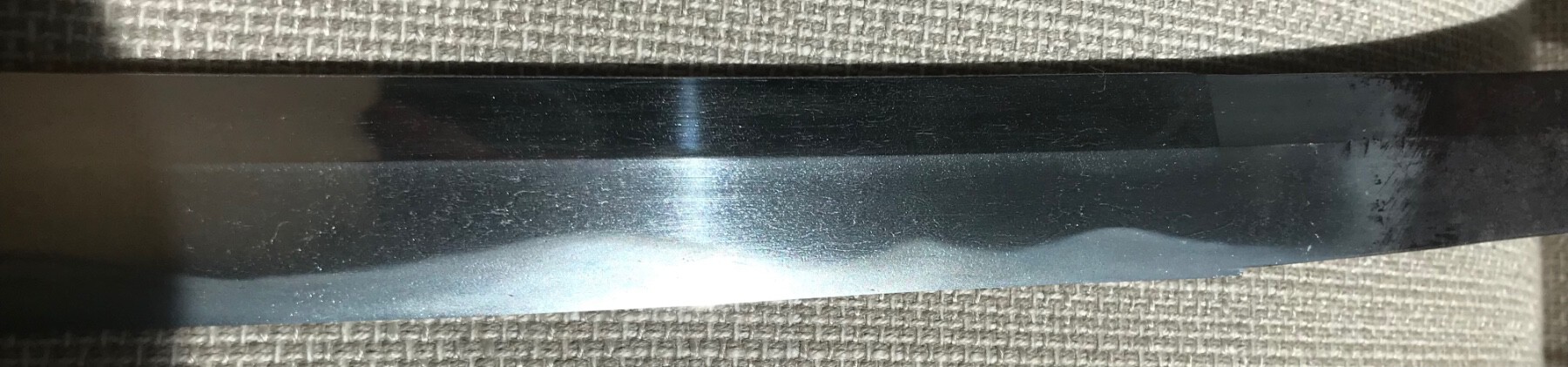
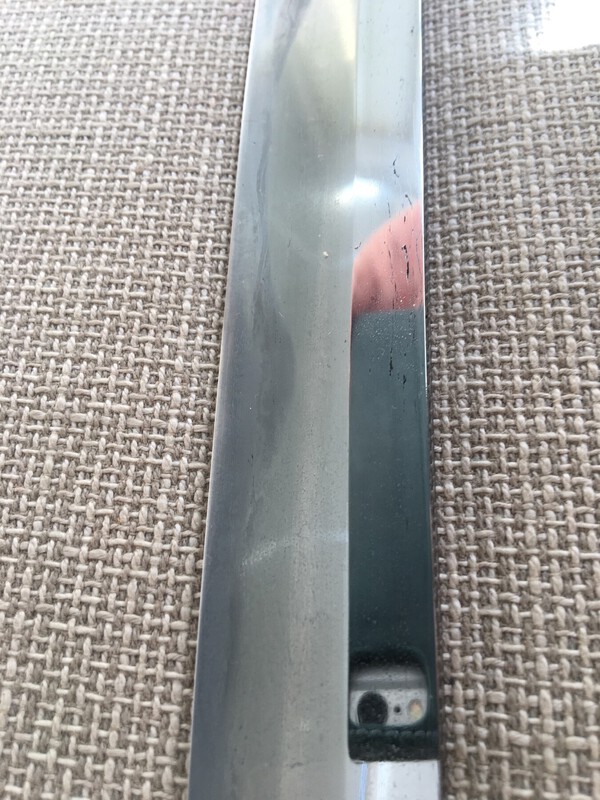
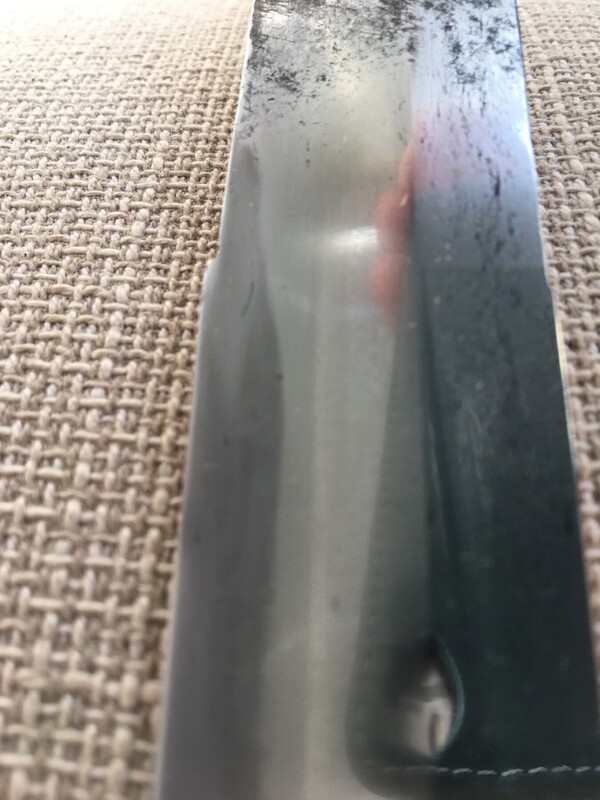
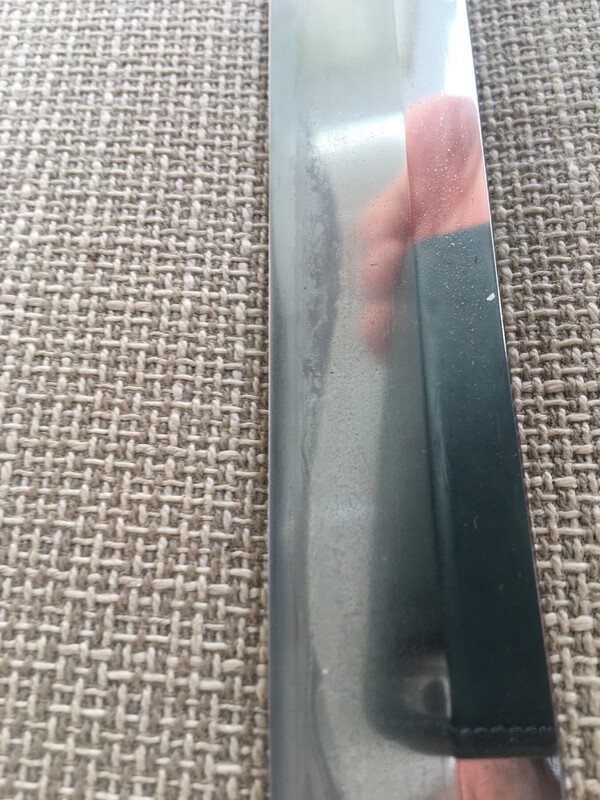
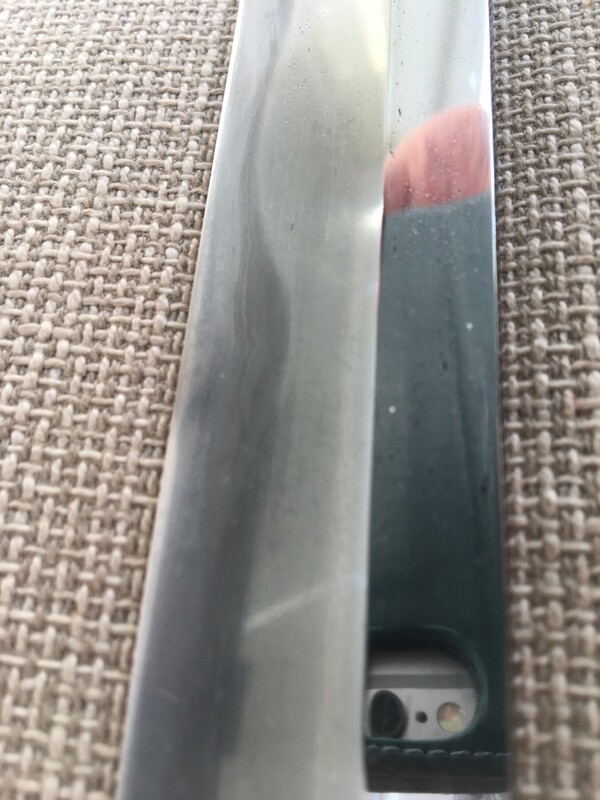
Can I just say I’m very disappointed, the sword has a really beautiful polish, it’s very sad to see some unkind judgements on the Polish being made because of my photos and photographs skills being poor. Sometimes it is better to not say something when all you have is a poor picture to comment on if that impacts on another. feedback that you need to take better pictures would have been fine and is helpful, assumptions on the quality of the work and making comments on it from my poor pictures is I’m sorry to say a poor show.
-
"no disrespect Jon, capturing detail is difficult..." none take, thank you and having this blade in front of me is a real pleasure. Unfortunately using an iPhone with no photography skills does not do it or the Polish justice.
-
The polisher was Les from Scotland, unfortunately he is no longer taking commissions at present.
-
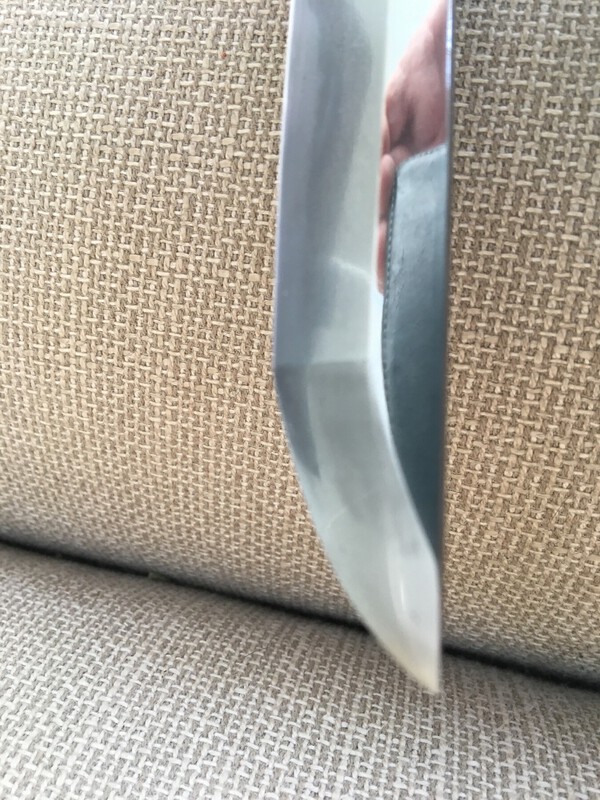
-
More
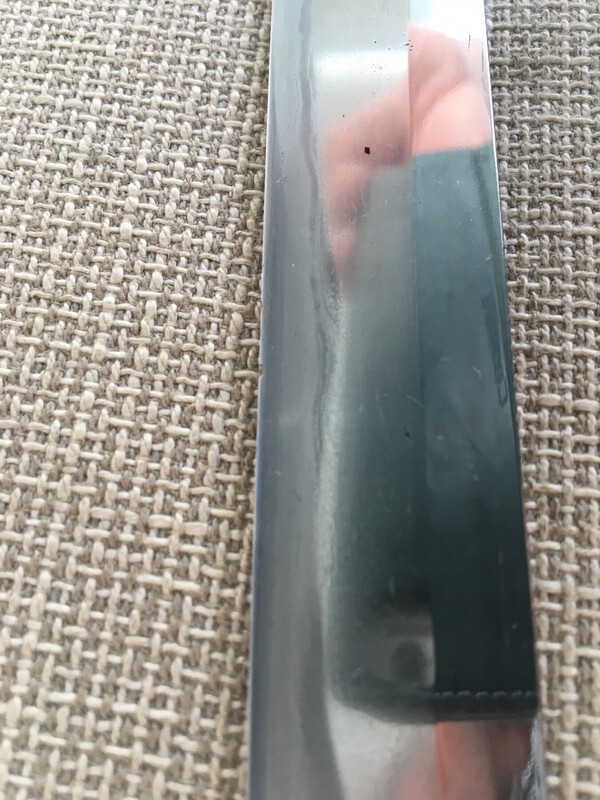
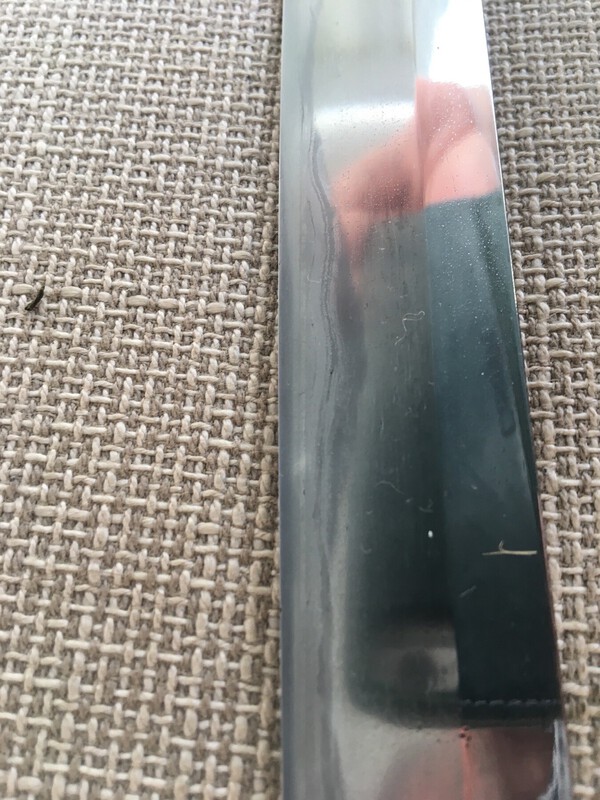
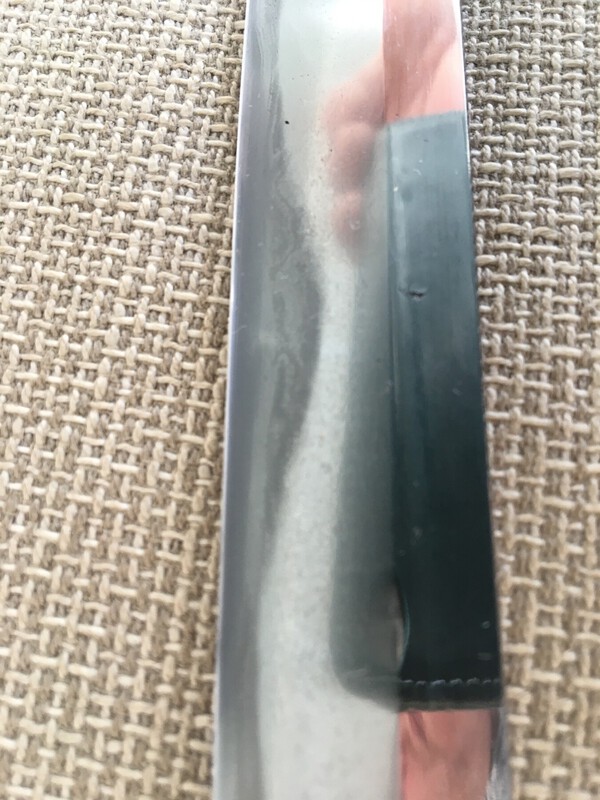
-
More
-
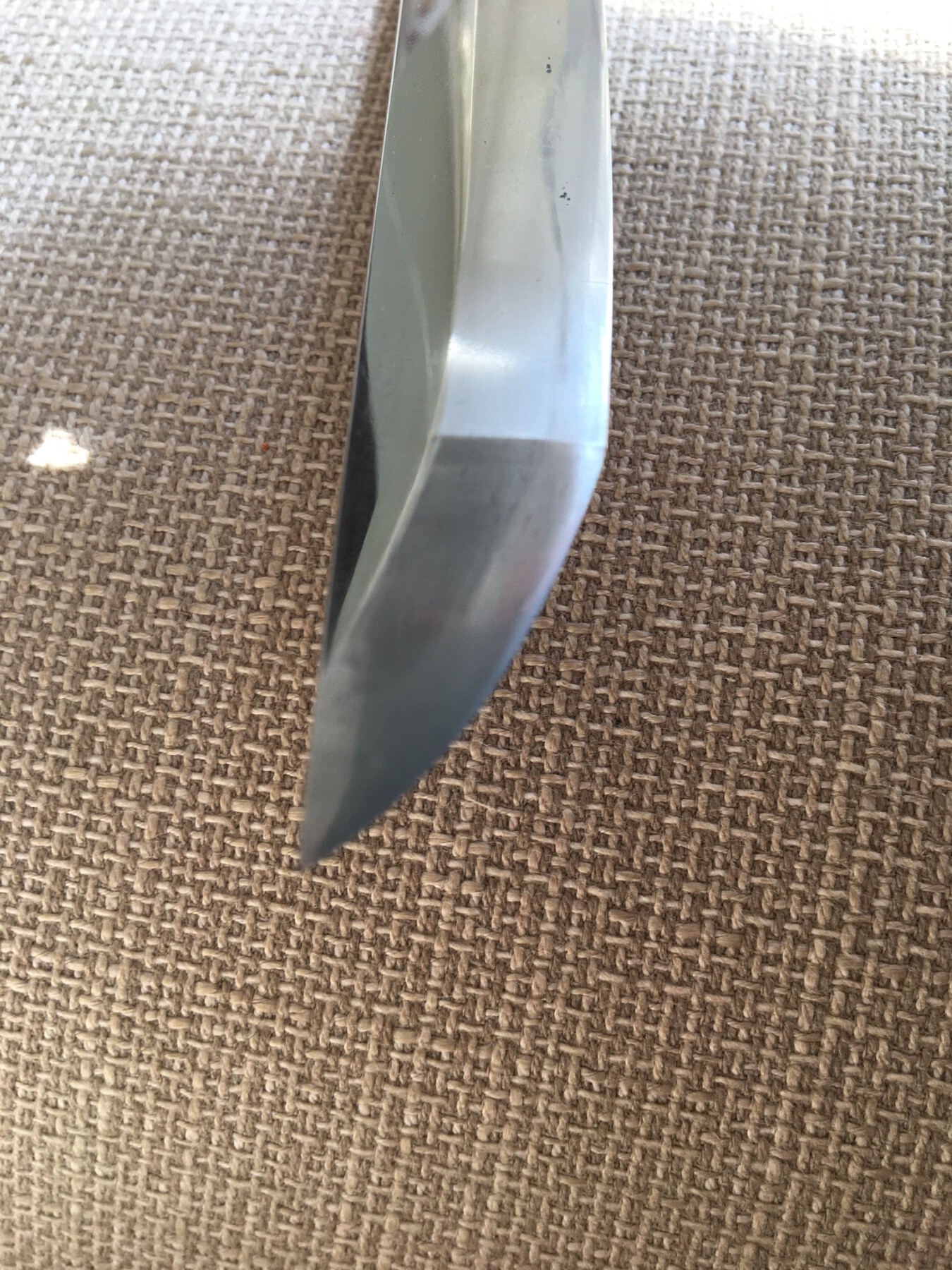
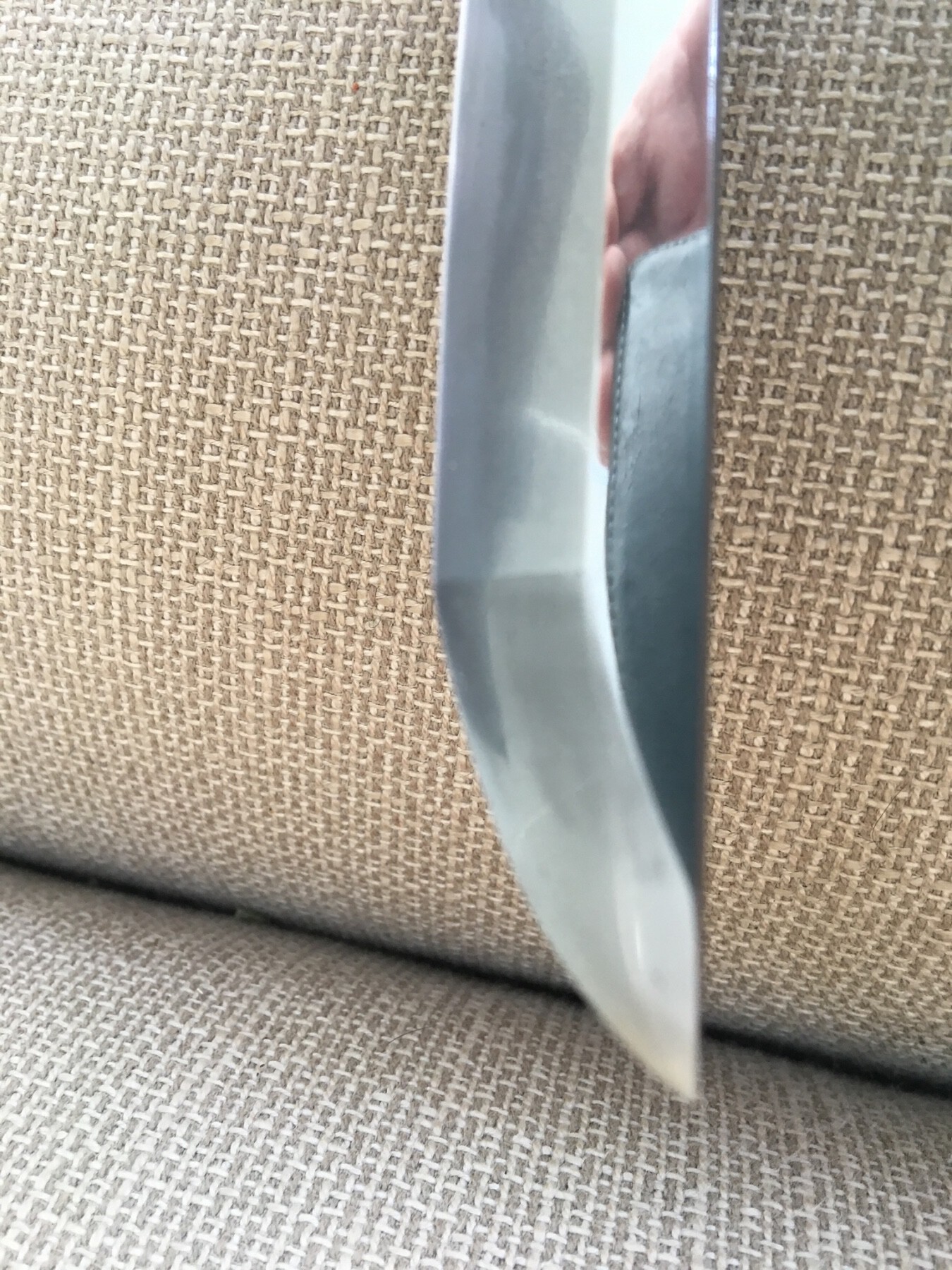
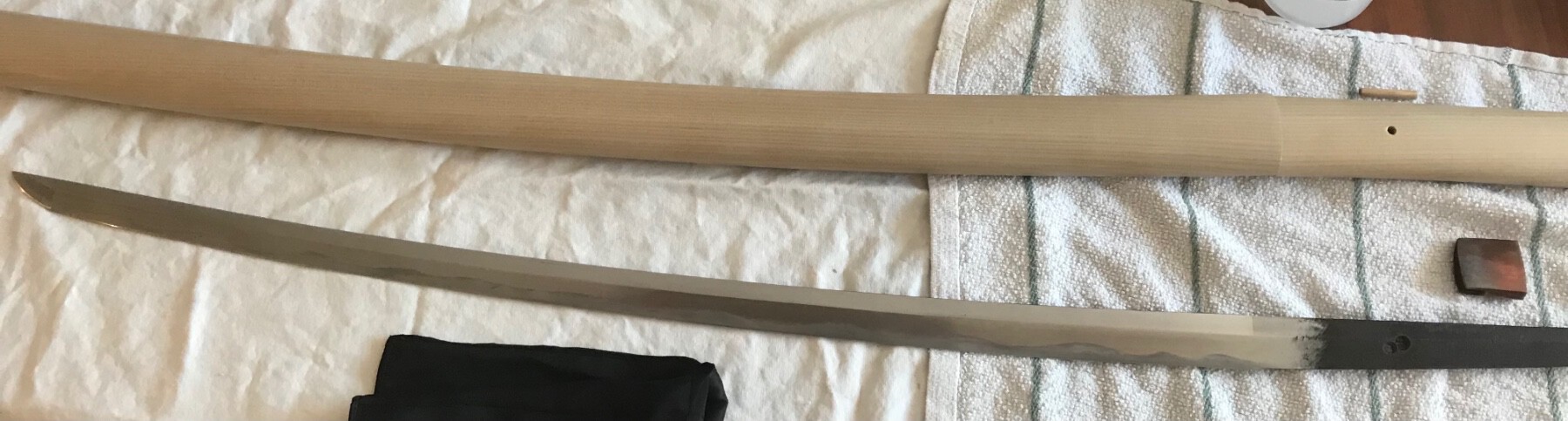
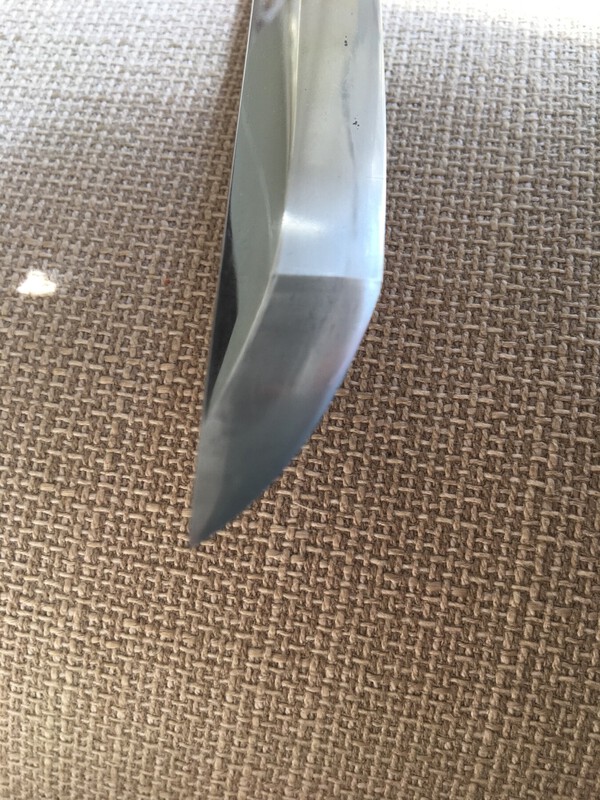
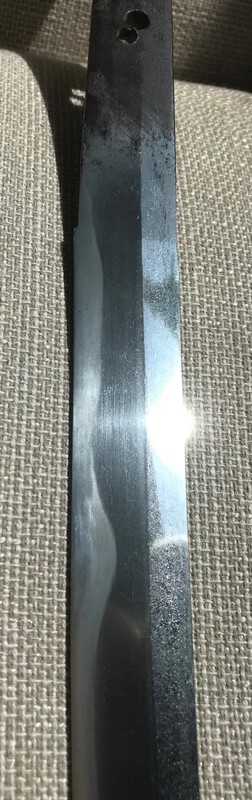
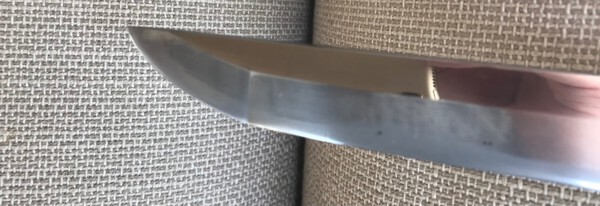
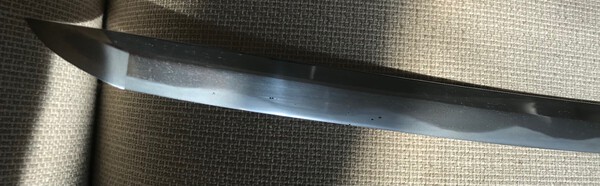
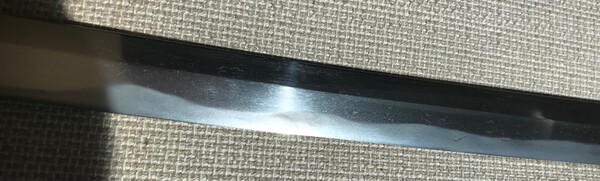
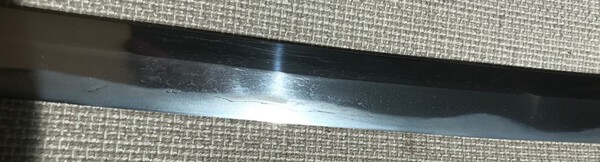
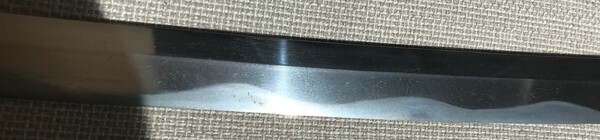
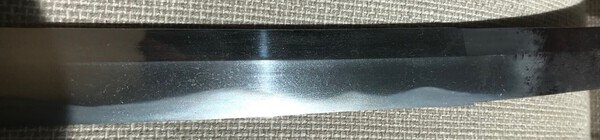
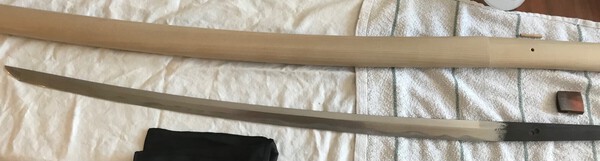
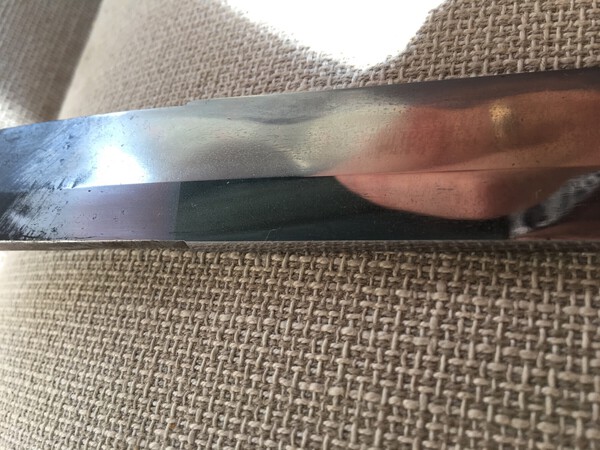
Now for the fully polished blade with Shirasaya. As I mentioned earlier any thoughts on the blade, it’s character etc would be very much appreciated.
-
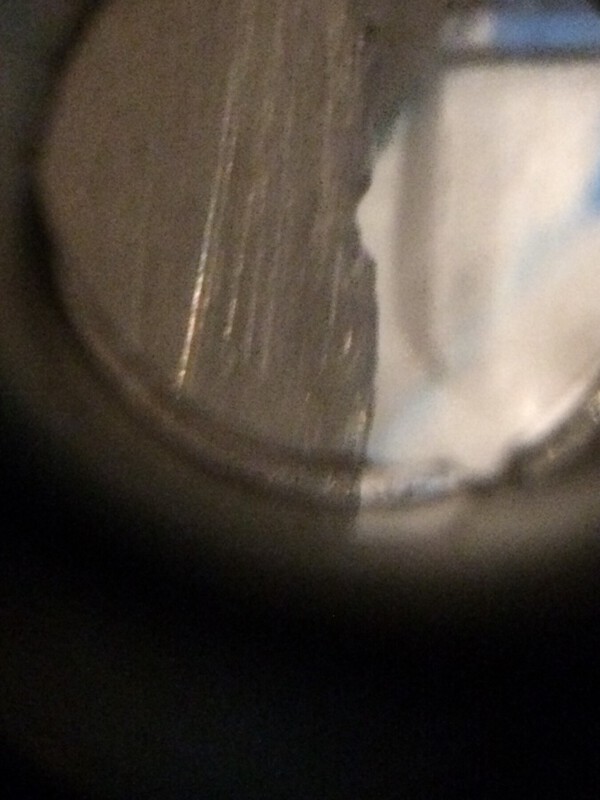
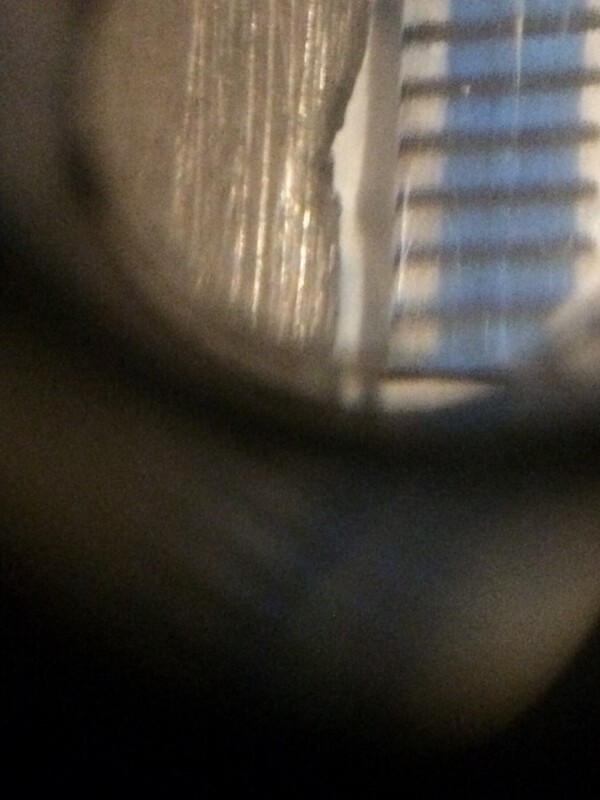
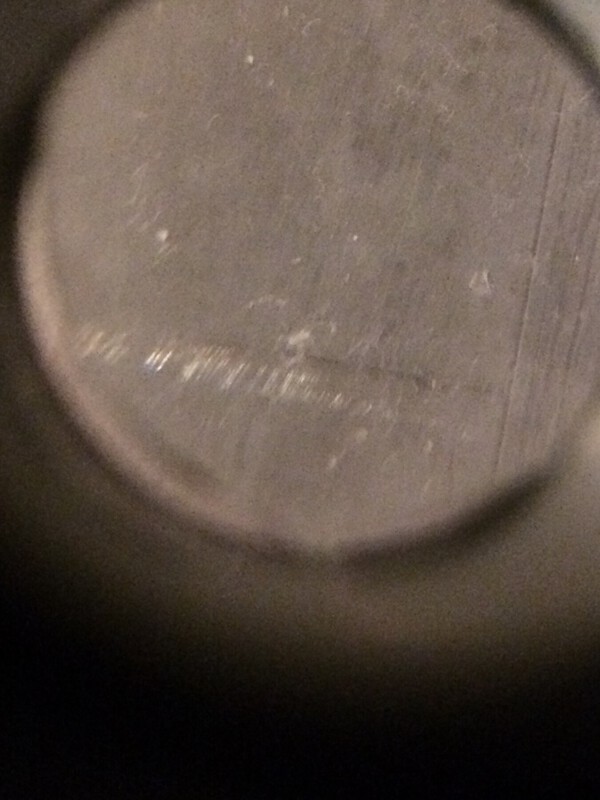
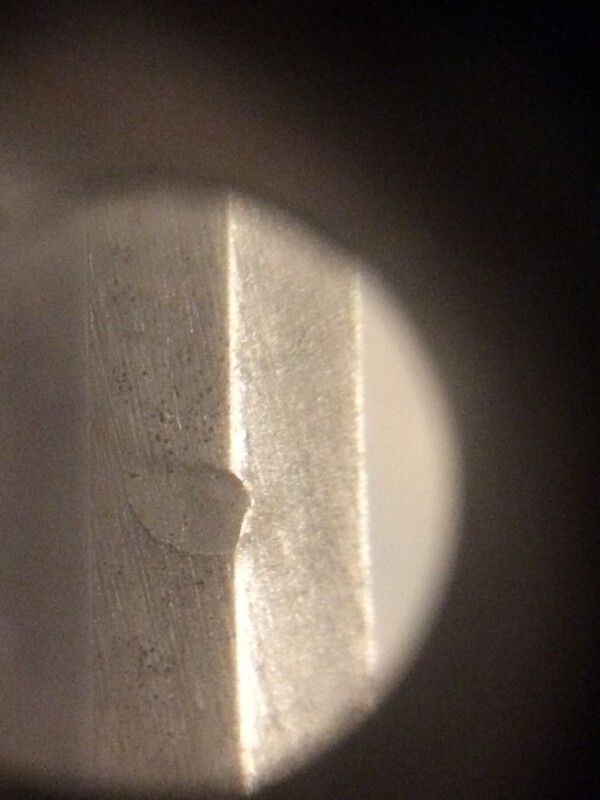
And close in
-
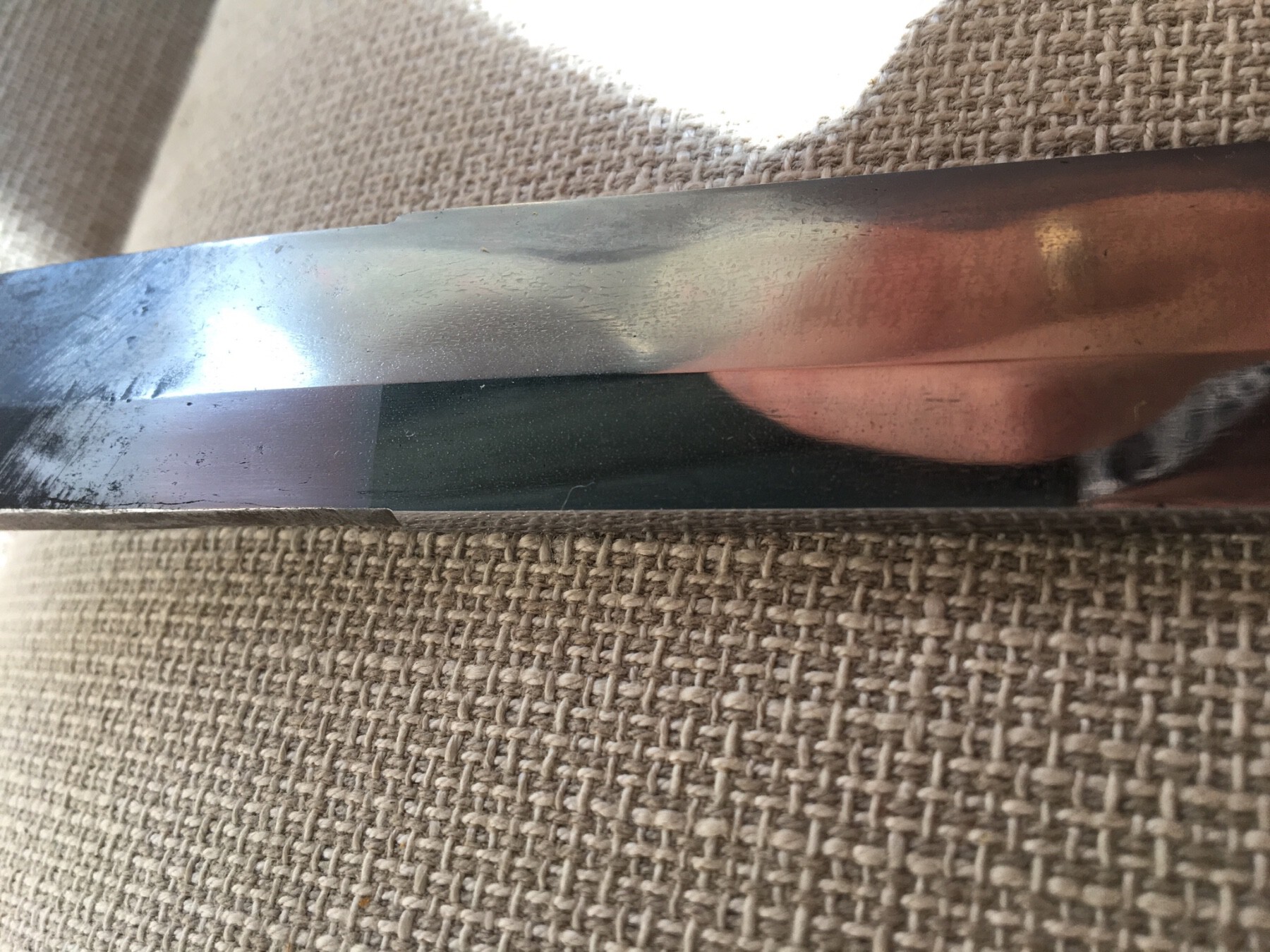
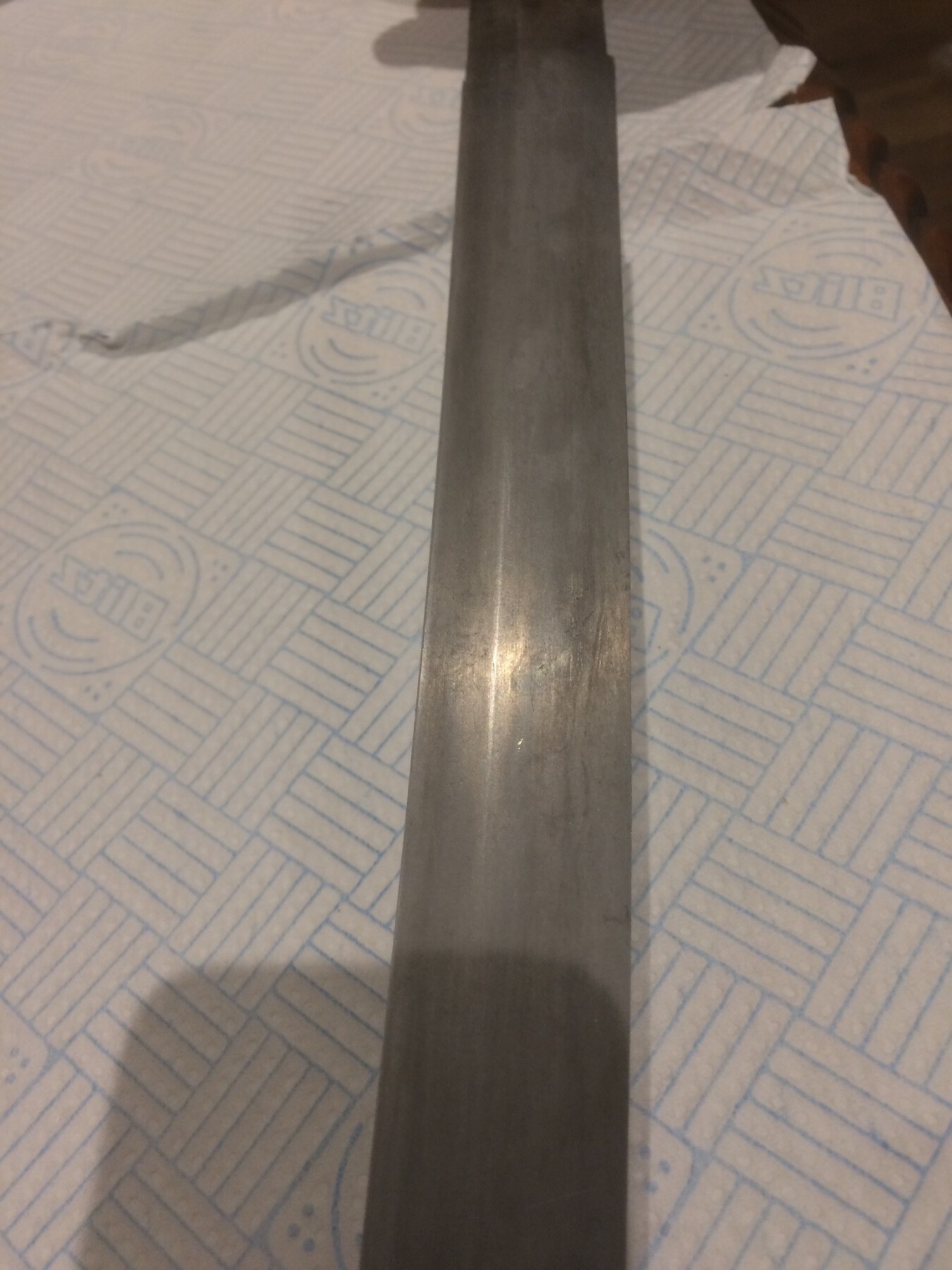
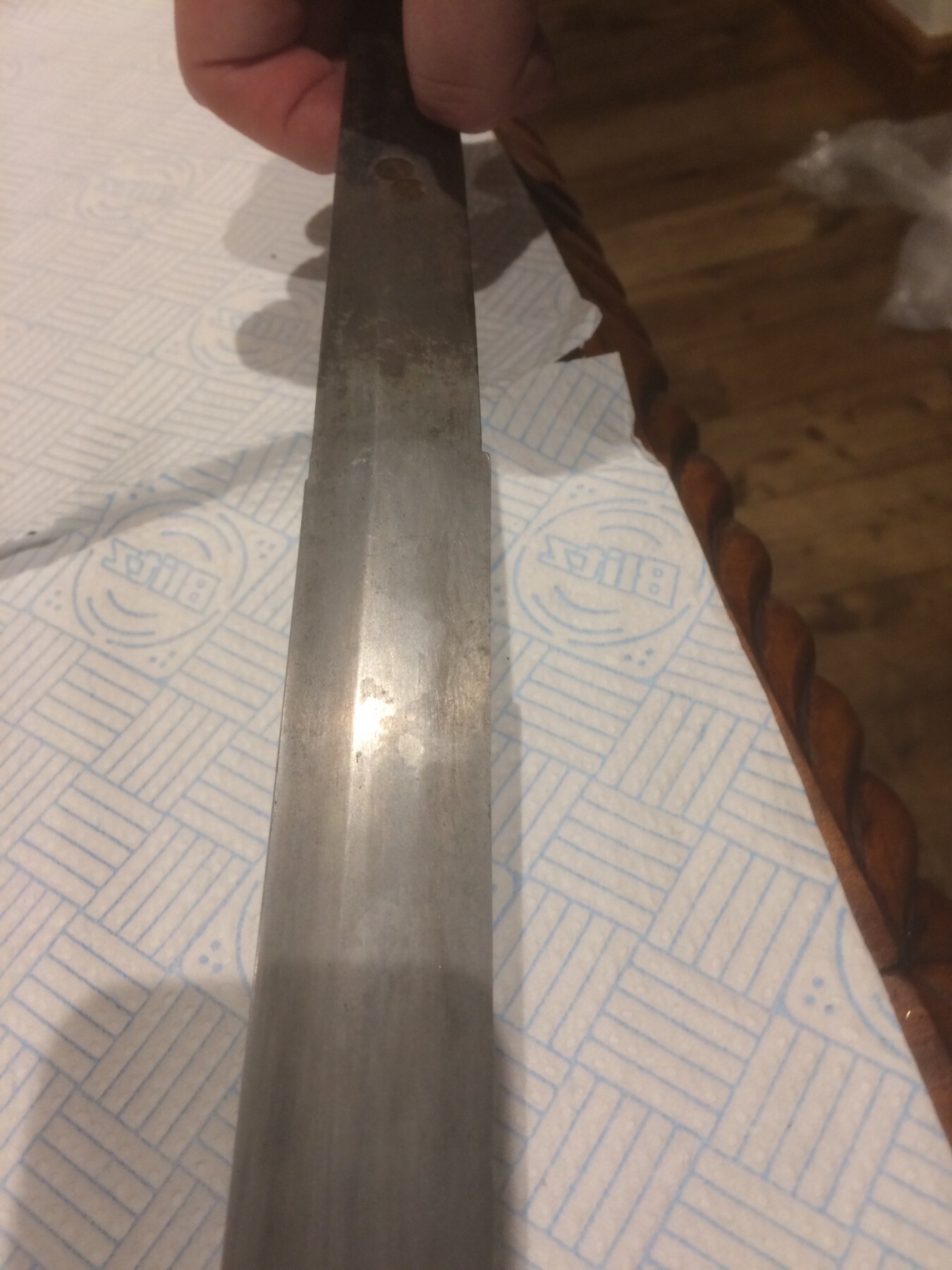
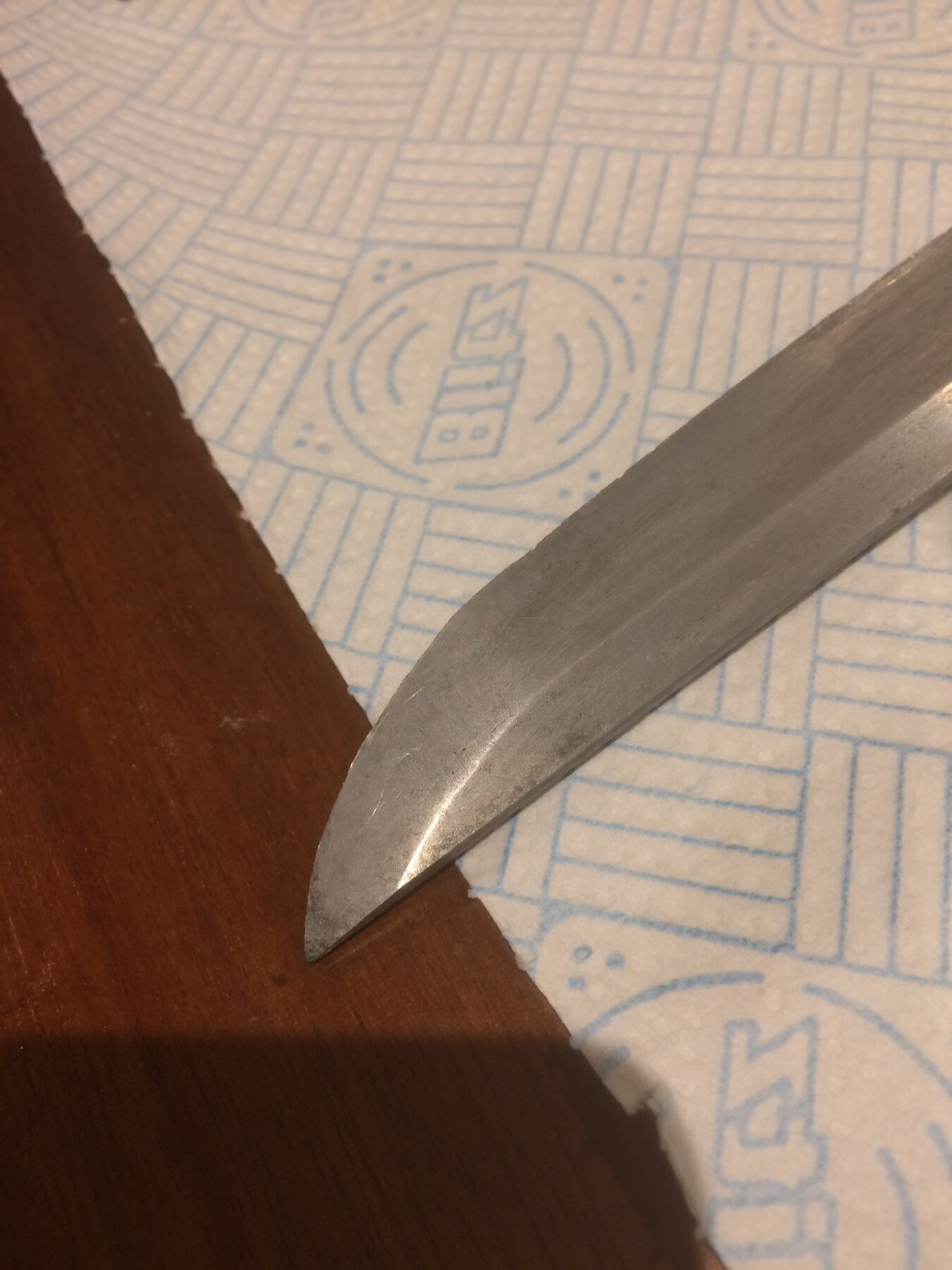
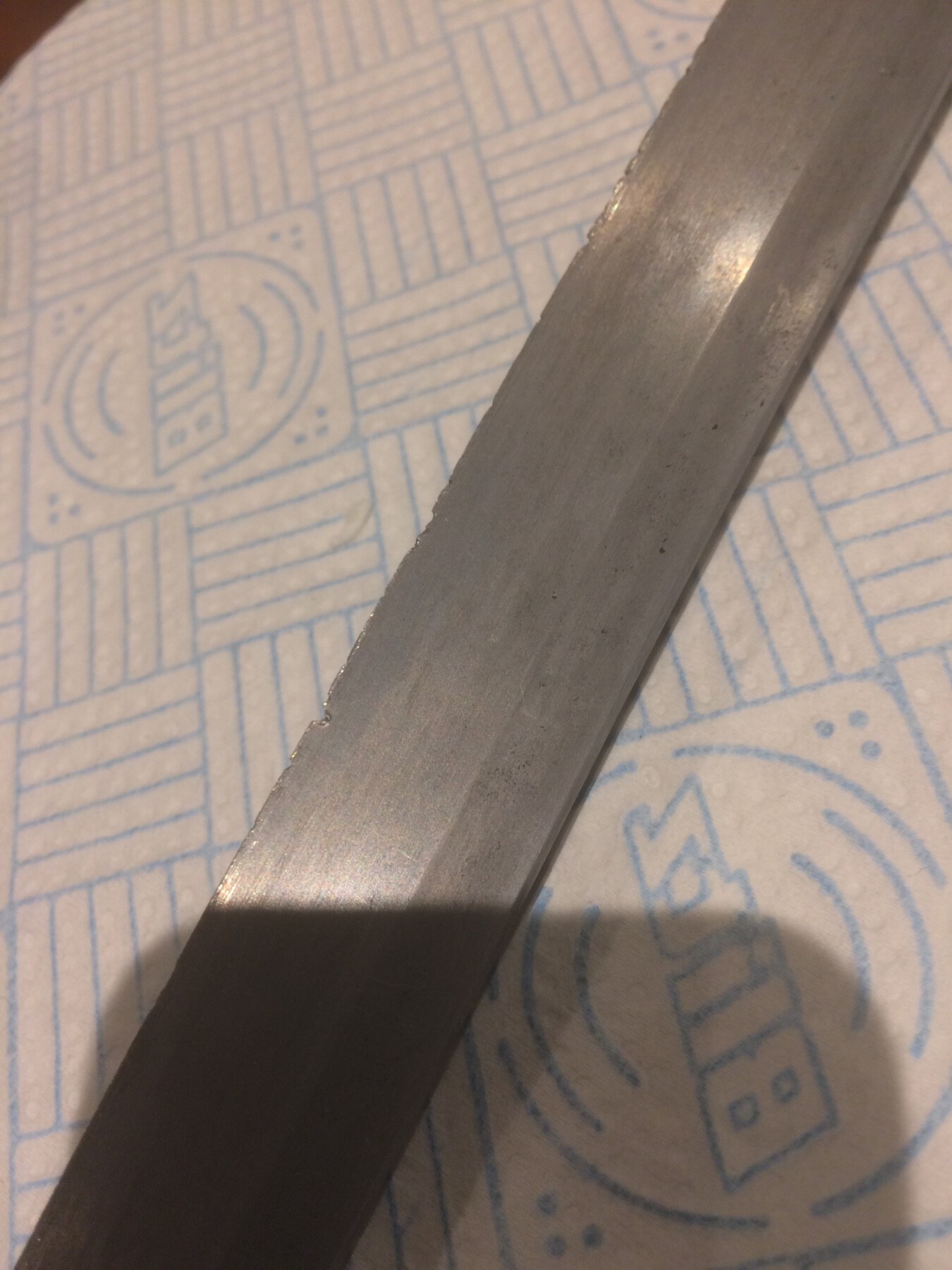
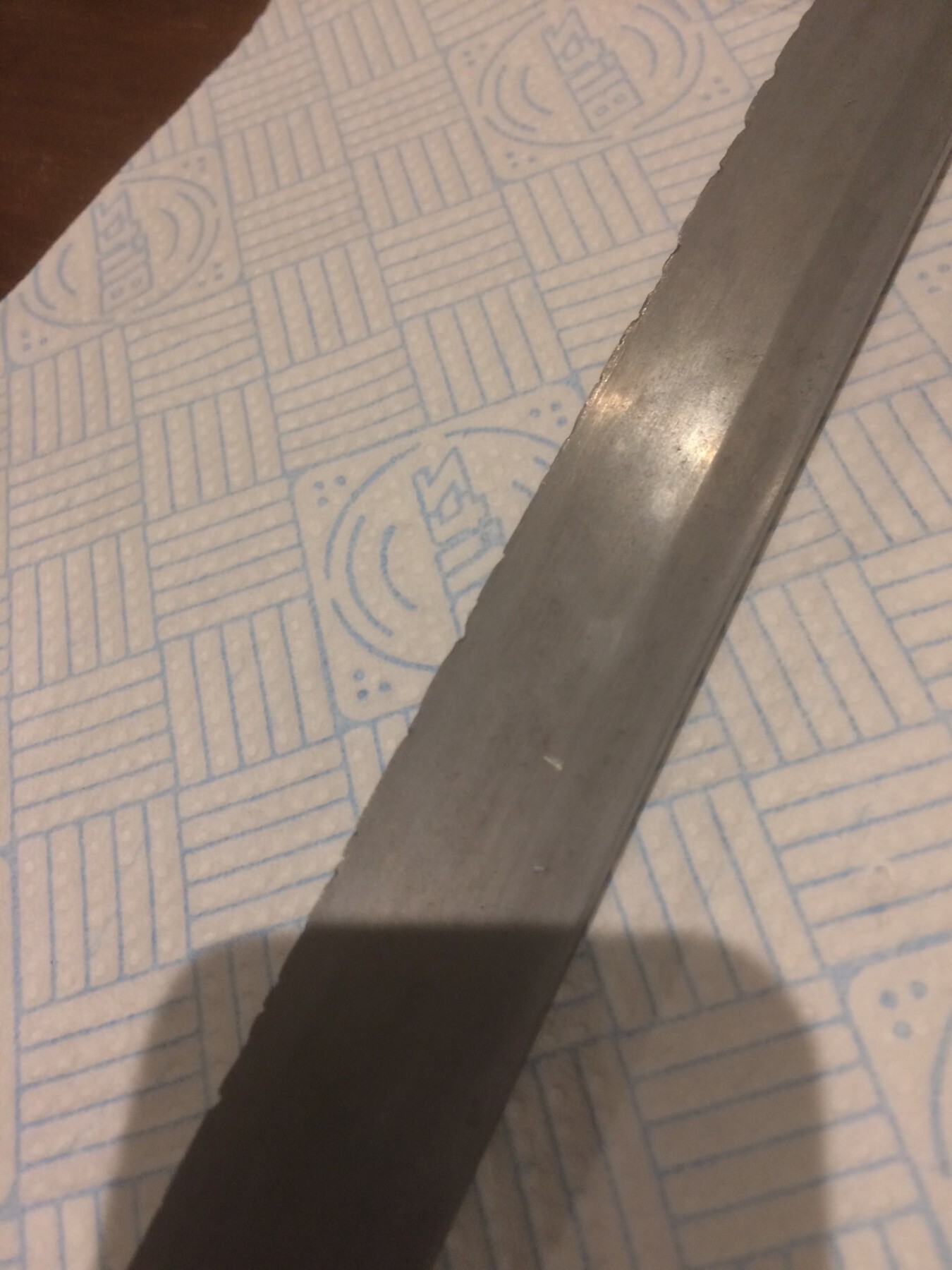
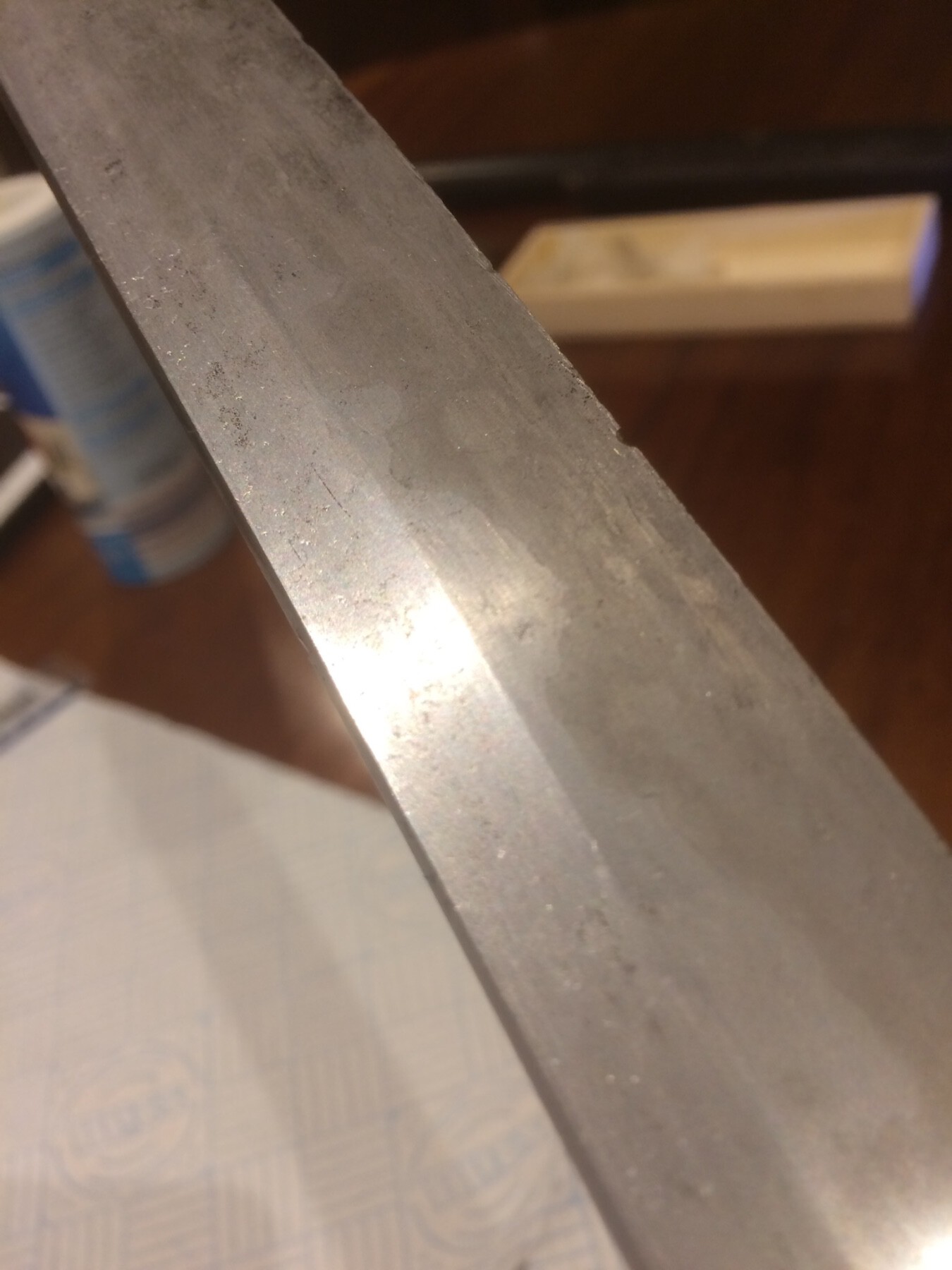
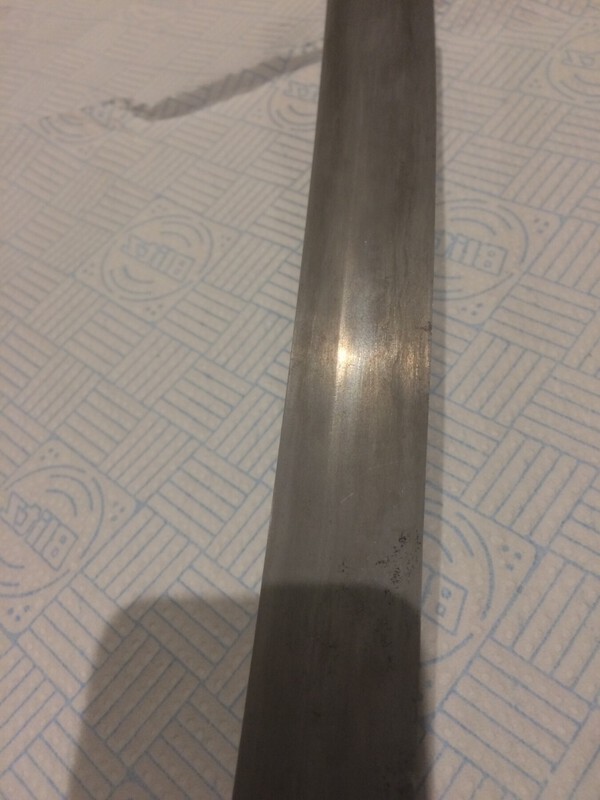
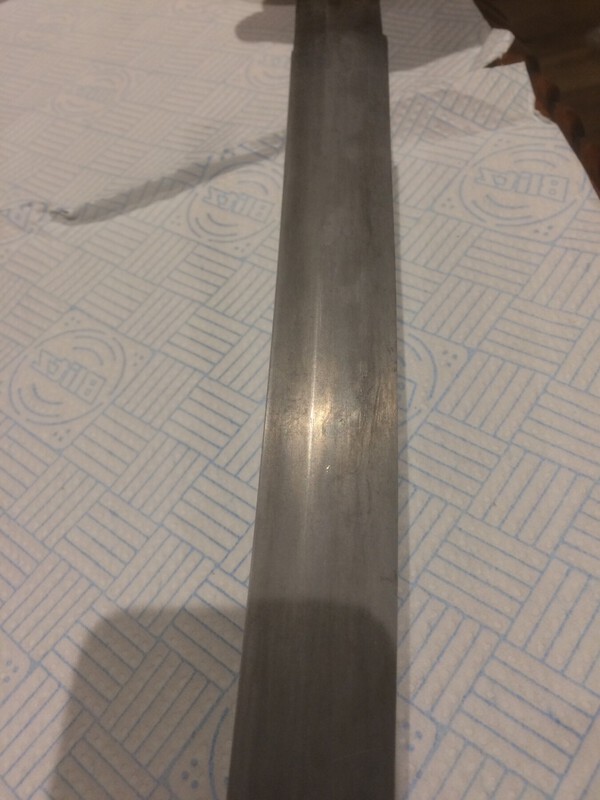
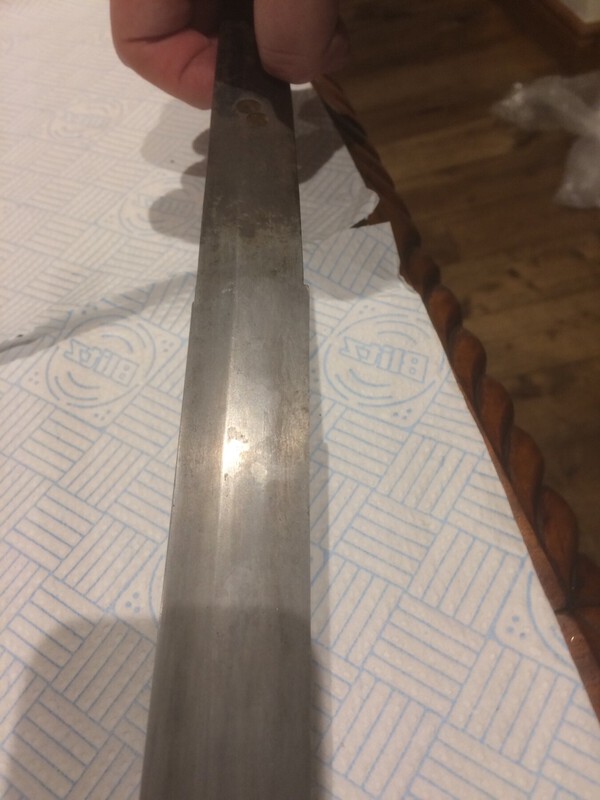
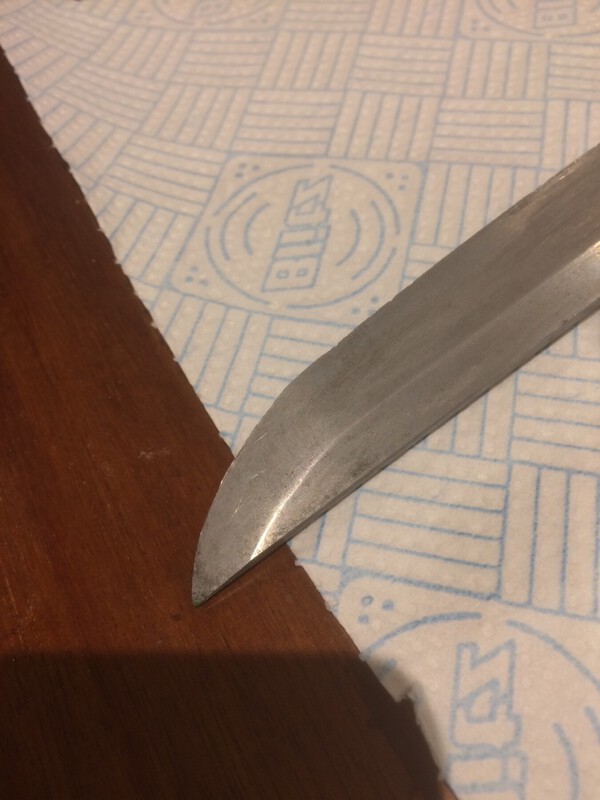
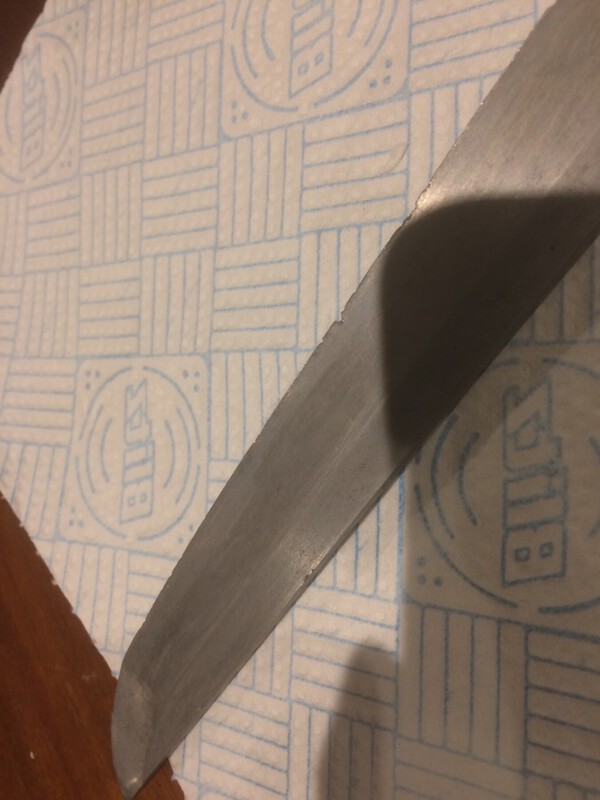
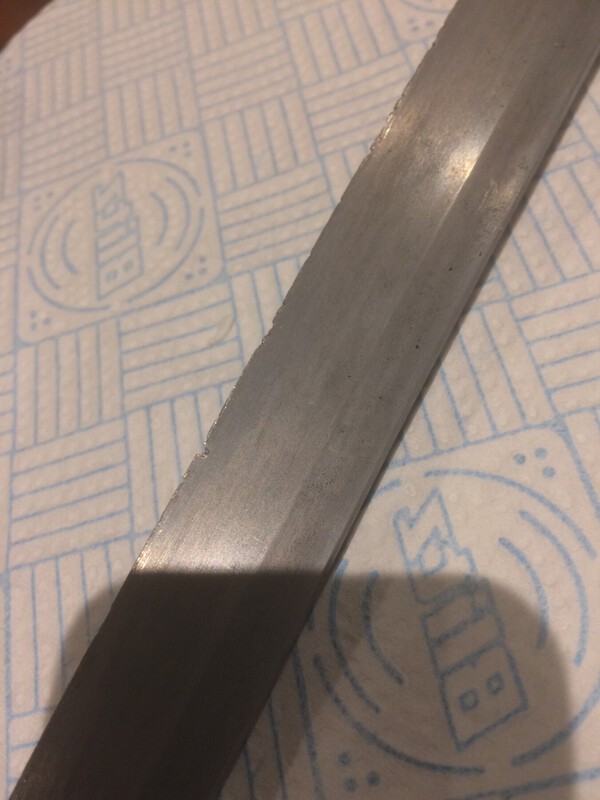
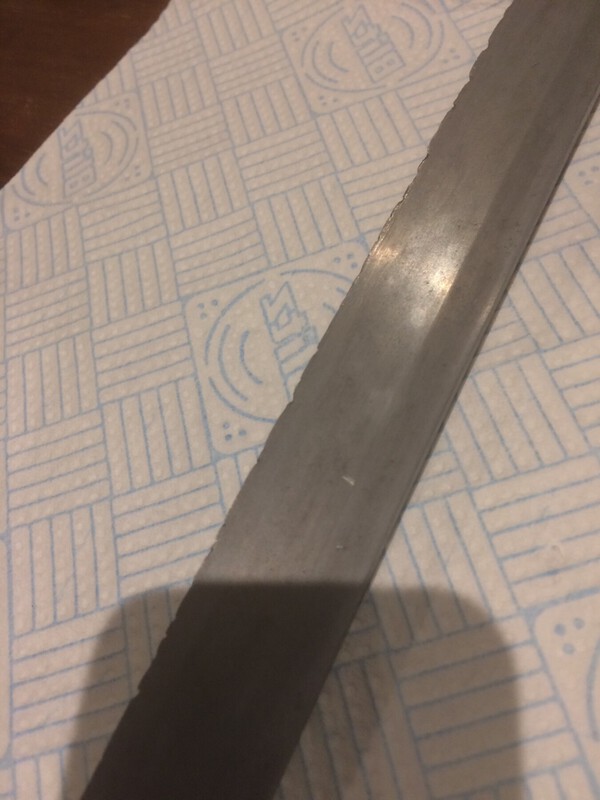
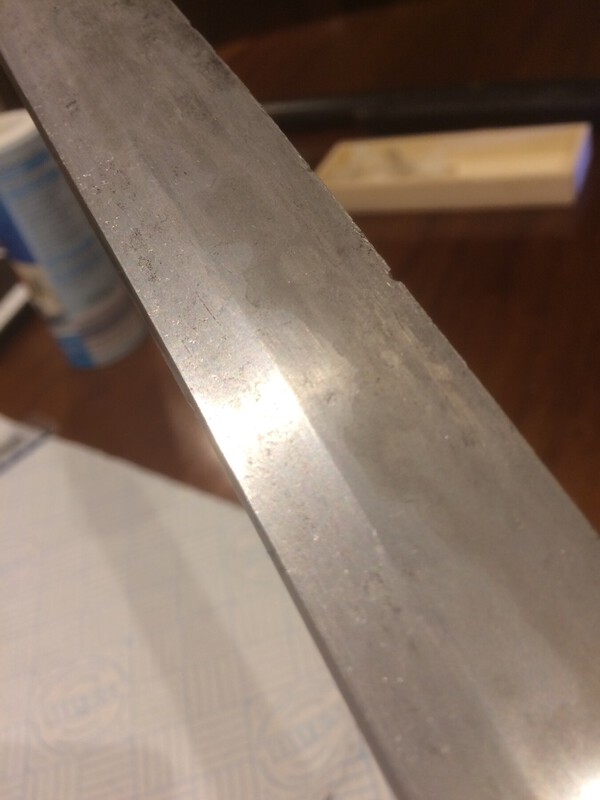
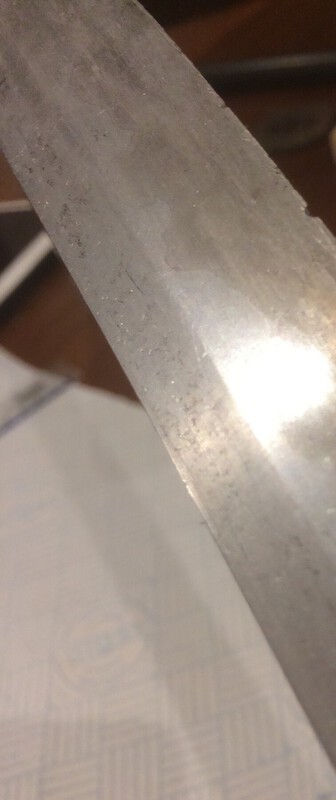
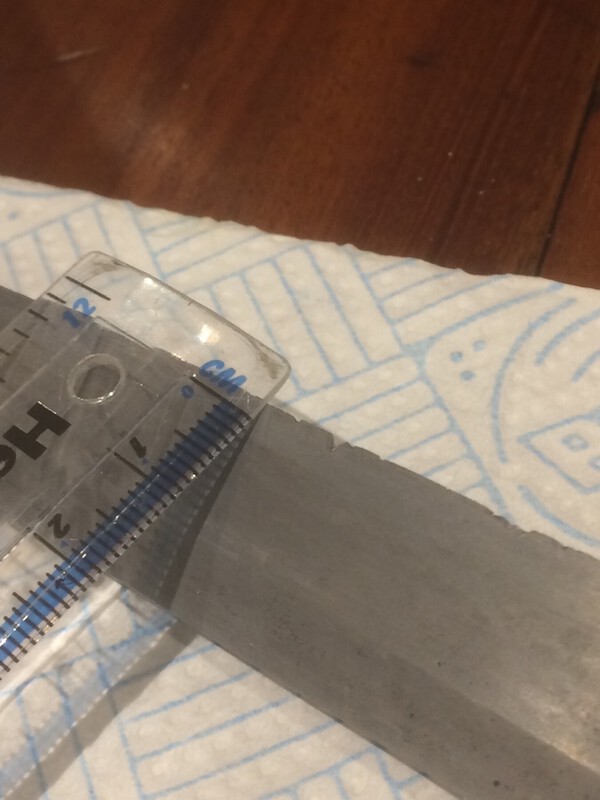
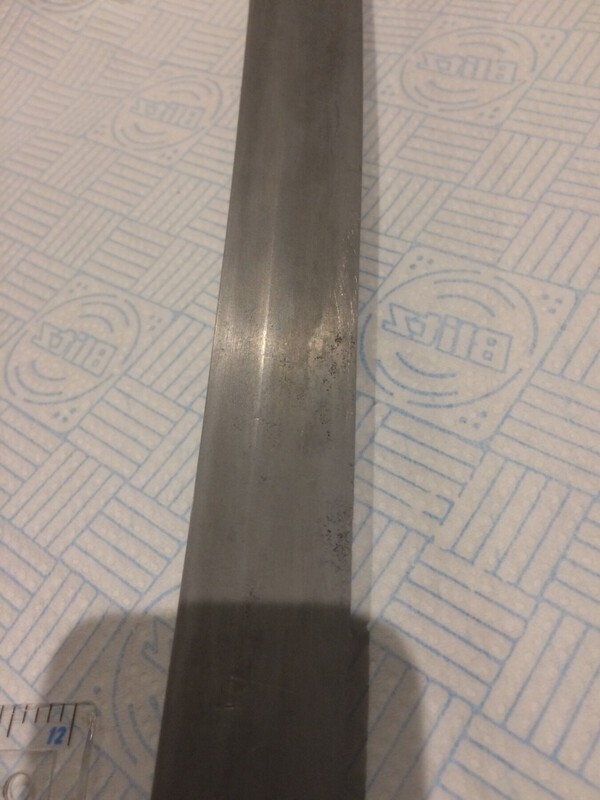
More pictures of the out of polish damage
-
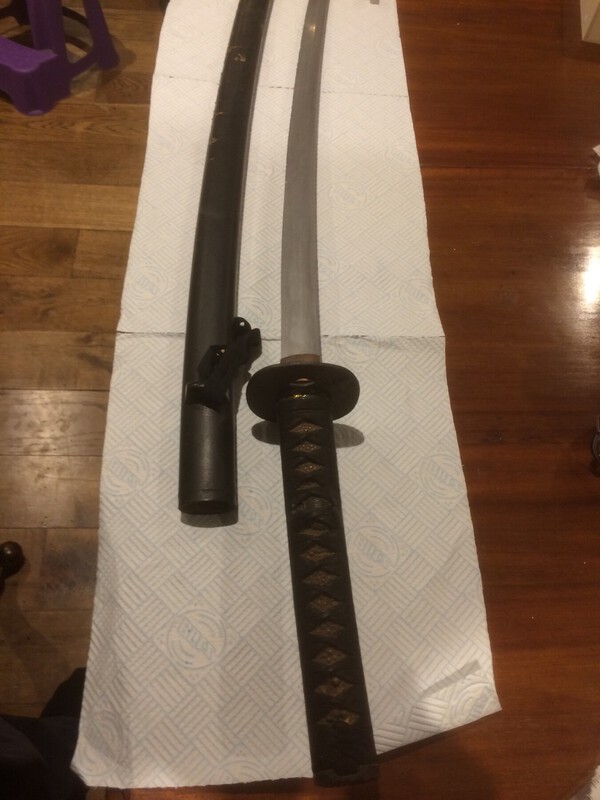
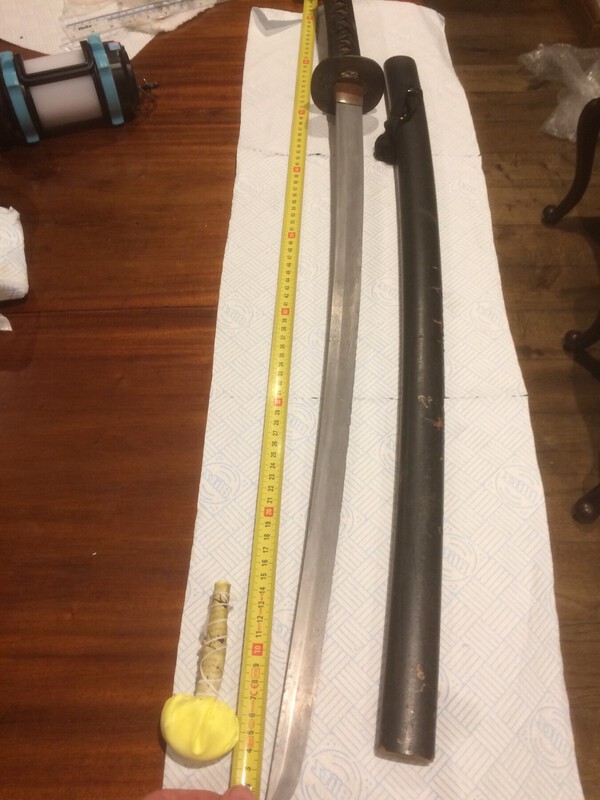
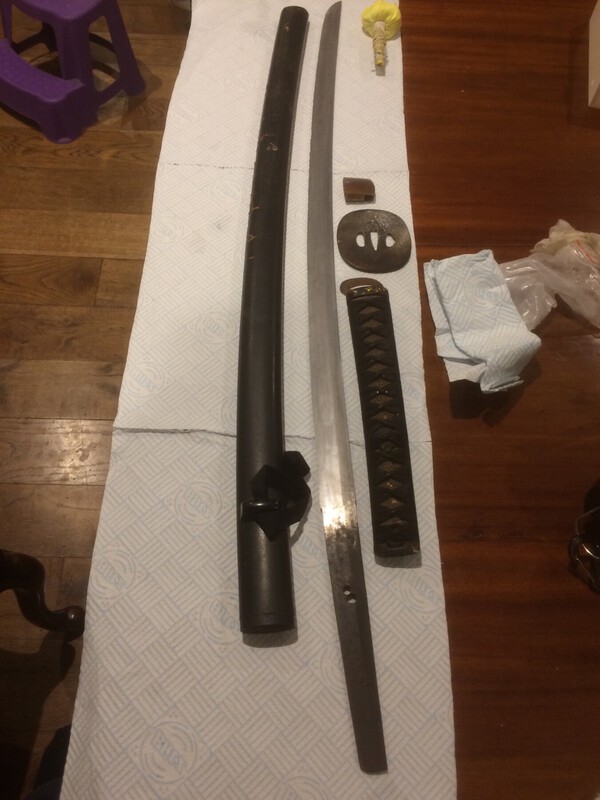
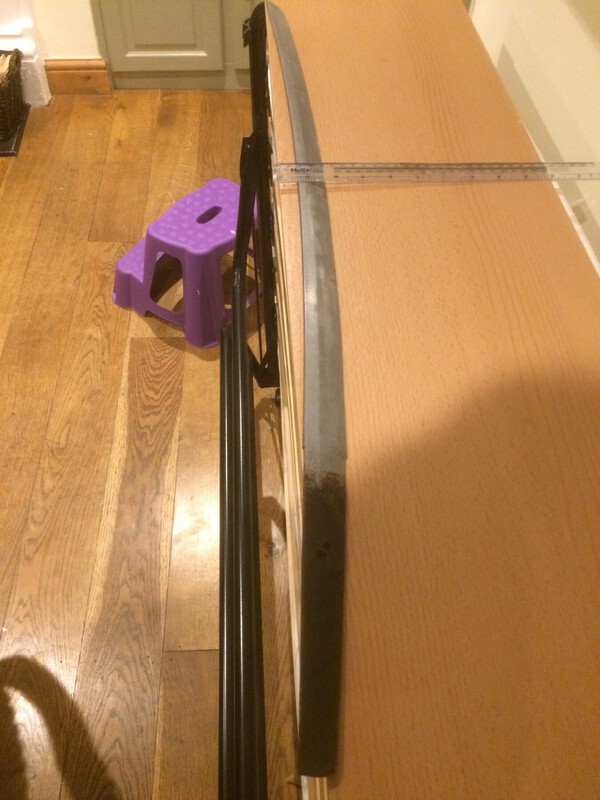
A couple of years ago I posted a blade I had inherited, this kicked off my journey and interest in Nihonto. After a long wait I’ve now had the blade polished and fitted with a new shirasaya. So I thought I would post the before and after shoots. it’s worth noting that the polisher felt some of the chips were to deep to fully Polish out without impacting on the blade…but this never a commercial decision, was all about restoring a family heirloom as well as giving me a koto study piece for the price of the polish. Also any thoughts or views on the blade would be appreciated as well.
-
Hi I’ve just become a member this last week….looking forward to some of the zoom meetings.