Scogg
-
Posts
1,928 -
Joined
-
Last visited
-
Days Won
20
Content Type
Profiles
Forums
Events
Store
Downloads
Gallery
Everything posted by Scogg
-

Photographs Illustrating the Wearing of Japanese Guntō
Scogg replied to saemonjonosuke's topic in Military Swords of Japan
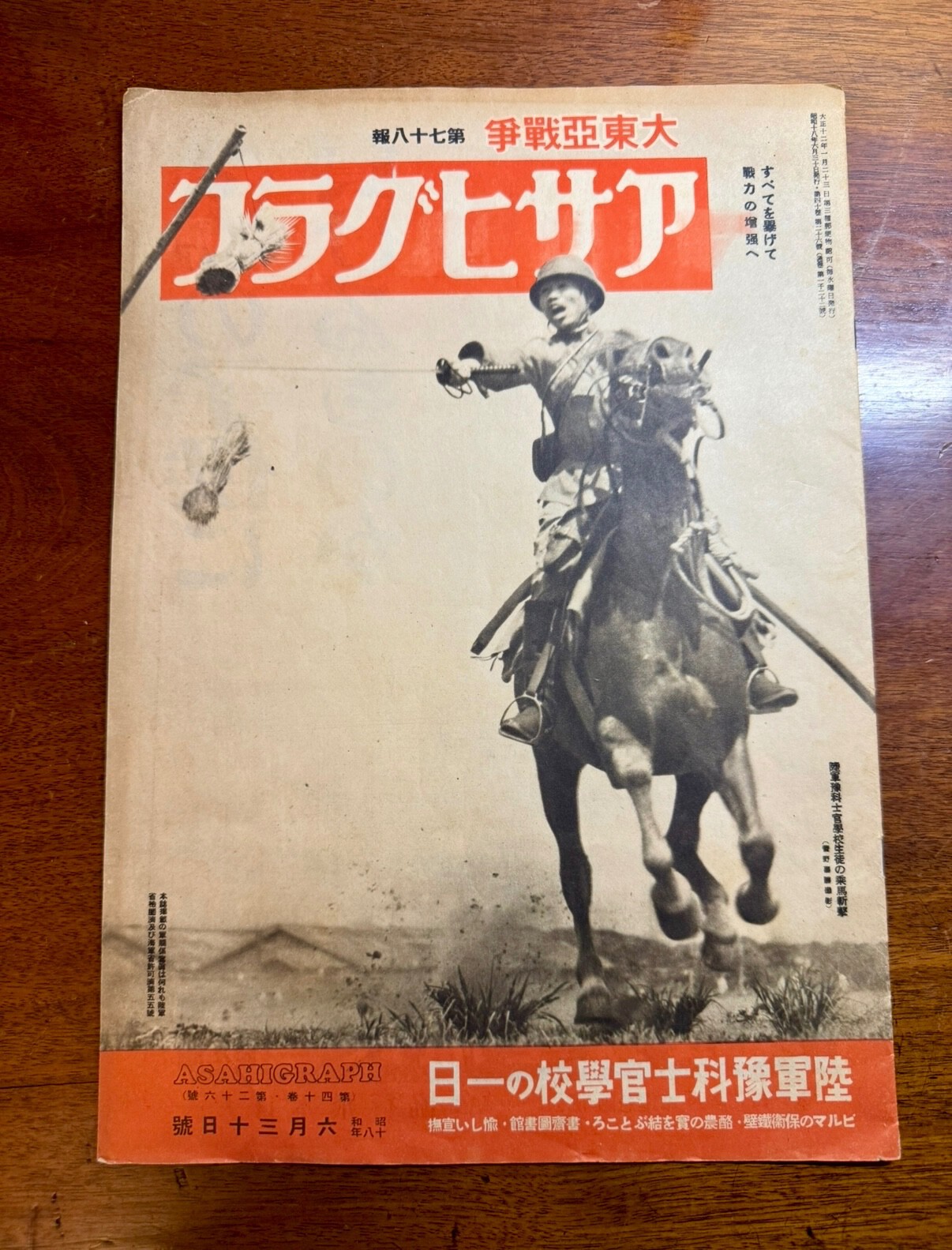
Image of sword in-use (in training). I share this image every chance that I get, so apologies if some of ya’ll have seen it before. I find it fascinating, and very cool. I would frame it, but I like having access to pages within. Best, -Sam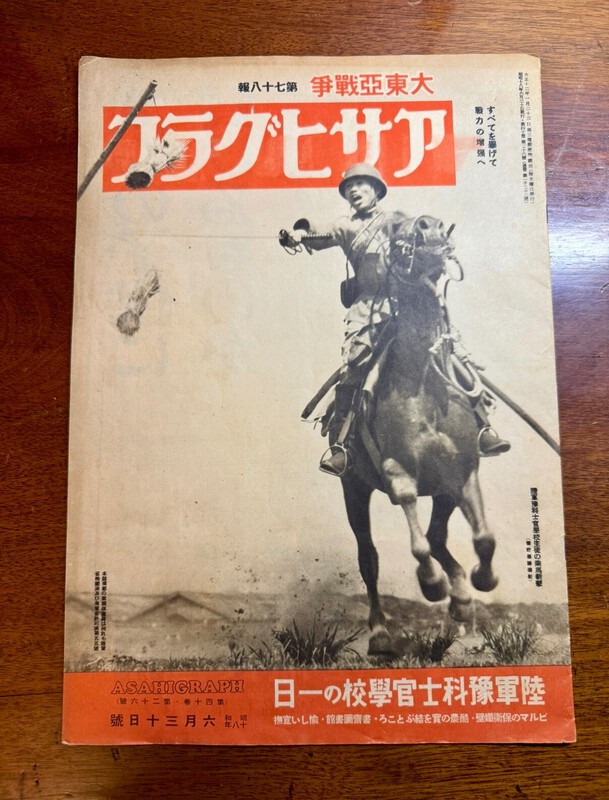
-
You're amongst peers in your desire to dive right in! That's how myself, and many of us started this hobby. It's fascinating stuff. I think you're confusing asymmetrical wrap pattern with asymmetrical menuki placement. The wrap pattern is symmetrical, while your menuki are offset. The menuki depict Sakura Flowers (cherry blossoms). The wrap pattern is just the imitation silk wrap (cast in aluminum) that creates those diamond shapes across the hilt. The menuki on all Type 95s, and most Japanese swords are offset. This is because when you hold the hilt with two hands (you can try this at home), the menuki will fill the gaps in your hands/palms and create a more secure grip. Your confusion on the matter actually helps me though... I might want to reword that section in my document on the next edition, to make it a little more clear. Hope that answers some questions, All the best, -Sam
-
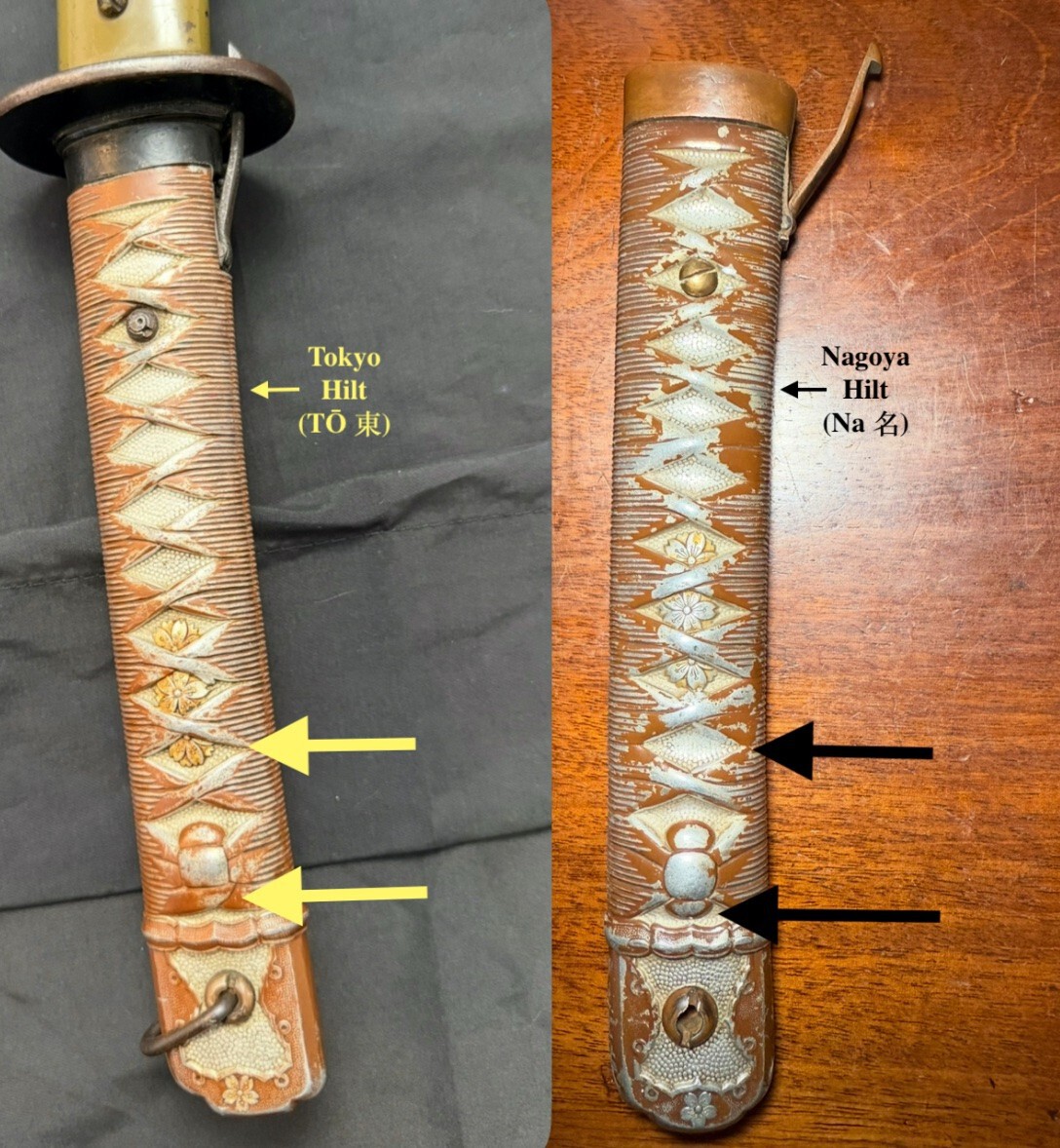
Hi Marilyn, A lot to unpack here. Ohmura's guide is an awesome resource, and was one of my main sources when writing my Type 95 Variations Document, that can be found in the download section here on the Nihonto Message Board. There I address some of these more subtle material changes. I also make an attempt to consolidate the various identification systems (Variations / Patterns / Dawsons book types). It is A LOT to digest, which was the main goal of my document - to consolidate much of the information previously scattered across many sources... Still, quite a lot to take-in. I will start with the hilt and menuki. Your note of the Menuki is impressive; as it's a pretty subtle difference between swords. Swords made at Tokyo based manufacturers with TŌ (東) inspection stamps have a hilt that differs from those out of Nagoya with Na (名) inspections stamps; this difference between the aluminum cast hilts was established on June 24th 1939. I will attach an image below that reflects these differences. The menuki itself is there to improve ergonomic grip, and mimics the placement from traditional Japanese swords. Now your pattern/variation type with the steel tsuba with copper ferrule. I would confidently place your sword on Ohmura's list as the "middle type". Reason being, is that every single sword that I have observed and cataloged that has both the Sakura-Ichi stamp with Steel Tsuba also has a copper ferrule. Rather than using up spare parts or being a transitional pattern; it appears that this manufacturer never transitioned over to the steel ferrule like some others did. These are the kinds of subtle differences you find across contractors and arsenals. If you look at my Document, I address this "middle pattern" type as the "Variation#4" on pages 43-47, and my last images shows two examples, one with steel and the other with copper ferrule. Be cautious when using AI for information about Japanese swords. While it’s improving rapidly, it still frequently produces misleading or inaccurate details. It will pull information from almost anywhere to satisfy a prompt. Use it carefully and verify everything. I hope this helps, All the best, -Sam From my monograph in the download section: "The hilt differs between Tokyo and Nagoya made Type 95 swords. The menuki are positioned slightly differently, which results in a variation in the number and arrangement of the hilt diamond pattern. These differences are highlighted by the arrows in my images below. In the Tokyo example, there are four diamonds between the mekugi and the menuki, whereas the Nagoya example has three. The Nagoya example features an empty diamond below the menuki, which is not present on the Tokyo hilt. At the pommel end of the hilt, the knot style on the Nagoya example is also slightly different from that of the Tokyo example."

-
Hi John, Thank you for the link. Yes that appears to be a Variation 9 Jinsen sword, with the wooden scabbard and chape. Very interesting one with that extraordinary mark; and you’re correct it pushes the range higher! It’s always satisfying to extend those known ranges - it feels like making a little discovery. Much appreciated, this is a good one for the archive, and will definitely include on my next update -Sam
-
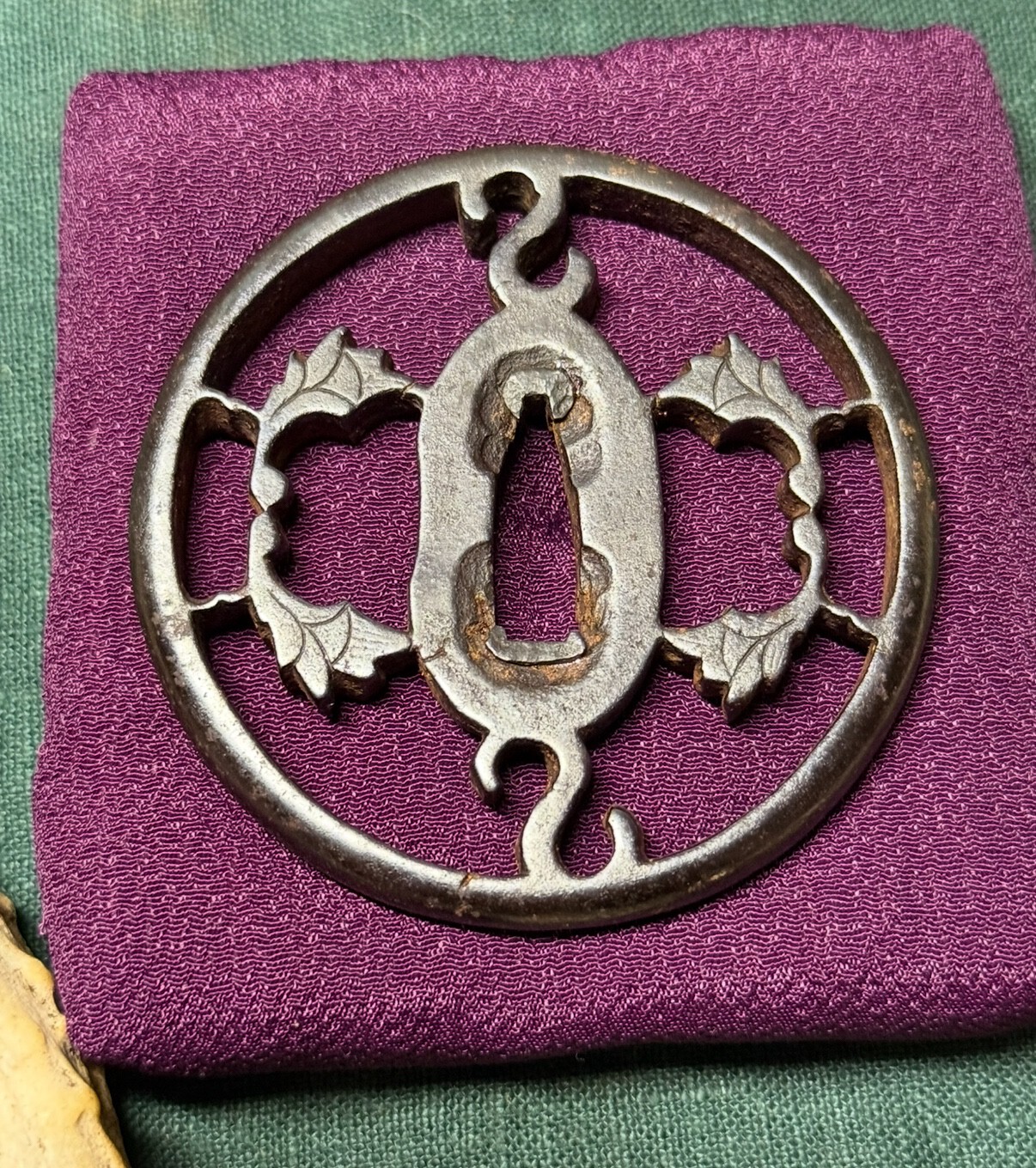
No harm no foul. I move around posts quite a bit, and it’s really no problem at all. I just want to make sure we get the right eyes on your sword Your stamp appears to be the Sakura flower with Gi inside. You can read a little about it in Bruce’s stamps document in the download section. I have a tsuba with this same stamp, of which can be seen on my post in the link below: https://www.militaria.co.za/nmb/topic/5999-arsenal-stamps/page/51/#comments Are there any stamps on your tsuba? All the best, -Sam
-
Hi Marilyn, welcome to the forum! Your sword looks to be in great condition, and thank you for sharing your family story with us. It’s very interesting to hear and aligns well with what we know about the end of the war and disarmament. Your sword is a very nice example of the Japanese Type 95 Military Sword. Yours is the Variation #4 (or pattern 3 in some sources); basically meaning it has aluminum handle and round steel tsuba. Your sword has the Tokyo First Army Arsenal inspection stamp (東) , and a more mysterious stamp that’s a Sakura flower with a line inside, we sometimes call this the “Sakura Ichi” stamp, and its origins remain mysterious. It might be associated with Kōbe/Kanbe Shōten workshop, because the stamp is similar, but it’s not known for certain. The concentric circles or 4 stacked cannonball stamp is for Kokura Army Arsenal who administered the Type 95 program. Because of the mystery surrounding the Sakura Ichi stamp, it’s a little tough to date, but according to my records and its serial number I would date it around summer 1942. It’s not a transitional model necessarily. But it’s one of the several variations amongst an ever evolving sword type that was made concurrently across multiple contractors and arsenals. So you see a bit of variety. It’s absolutely genuine like you say. No reason for concern: but the fact that yours has an extra 東 stamp on the opposite side of the ferrule is unusual and interesting. All the best, -Sam
-
Hi @Patinamax, cool sword, and thanks for sharing I’m going to relocate this to the military sword section because it fits that section better, and I think you’ll get more input over there All the best, -Sam
-
nihonto-db.com, Nihonto Database and interactive tools
Scogg replied to nulldevice's topic in Nihonto
Chandler, I'm sorry I didn't get to see you in Vegas this year; but it sounds like you had a pretty good excuse . Congrats on fatherhood! How exciting! I'm extremely impressed by what you've put together... This is the kind of material I've desired ever since I fist got interested in Nihonto. This is really amazing stuff, and I love the province map and compare tool. What you've done is important, and will benefit collectors immeasurably. Well done, congrats, and THANK YOU! -Sam -
Thank you all for the kind words. I hope the document is useful to collectors and prospective sword buyers. For those interested in further study, I encourage you to explore the bibliography section. It includes several invaluable sources, and the real credit belongs to the authors and contributors whose research and forum discussions made this possible. I put this together for everyone, but also so I could personally more easily digest material from such a large variety of sources. Some hands on study has helped a lot too. I look forward to continuing my study and collection, and updating the document as I learn more. I hope it meets the high standards of this forum and those collectors and scholars before me. Thanks again everyone! I'm excited to have it out there. All the best, -Sam
-
Showato at large is definitely beyond my ability , although guys like Bruce and Mal have a lot of downloads about gunto that are really well put together. I hope to stay on-top of Type 95 observation, archiving, and collecting. Update editions and maybe do a companion piece someday. During all the research, I’ve learned a lot about the type 32 gunto too. I’ve considered tracking them as well. -Sam
-
I am excited to announce the release of a document I have been working on: Type 95 Military Sword Variations. It is now available in the download section for anyone who would like to access it. I am pinning this thread in place of the Type 95 Worksheet, of which can be found here: https://www.militaria.co.za/nmb/topic/29722-type-95-gunto-worksheet/#comments My hope is that this monograph helps dispel some of the long standing rumors surrounding these swords and assists collectors in identifying the examples in their own collections. This work is purely educational and is intended to consolidate information from several sources into one comprehensive reference. I would like to acknowledge the late Nick Komiya for the huge amount of documents he shared on the warrelics forum over the years; without his contributions to the study of Japanese Militaria, this document simply could not exist. I'd also like to extend a special thanks to the following Nihonto Message Board members, who either directly, or indirectly through discussions over the years, greatly aided my understanding of this type of Japanese sword. I am forever grateful. @Kiipu @Bruce Pennington @Conway S @John C @drb 1643 Tom Foster, @robinalexander @BANGBANGSAN @Shamsy @Stegel @PNSSHOGUN @rebcannonshooter @Grimmdarkspire @matthewbrice @vajo @Brian . Please see the aknowledgements section in the download, and I hope not to have forgotten anyone... This is Edition #1, and I intend to update the download annually as new revelations arise and as serial number range changes are observed. It is formatted imperfectly, but to the best of my ability with programs at hand (I am an enthusiast and collector, not an experienced writer). Please feel free to let me know if you notice any typos or inconsistencies, and I will address them promptly. Feel free to use this topic to post information or questions about Type 95 Gunto. I hope you find the monograph helpful. Happy Valentine’s Day! -Sam
- 38 replies
-
- 13
-

-

-

-
@JBHIII Relocating your thread to the TOSOGU section. I think you will get more input and opinions over there. Best of luck with your fathers collection, Some cool items there. -Sam
-
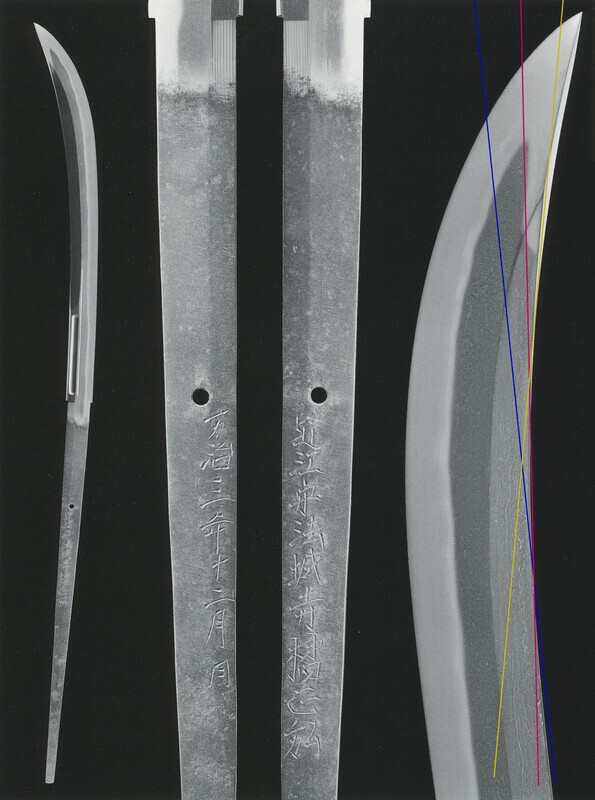
So that’s a little tough for me to guess with my level of knowledge. Especially with a naginata naoshi, as much of my studies has been with katana and tachi. Simply put, I’m just not there yet to give you a good age estimate. The thing with age, is that it’s generally assessed based on SUGATA and the form of the blade. When a blade has been shortened, much of that profile has been lost or altered. That can be said 2fold for naginata, because they’re often not only shortened from the bottom up, they are also often altered at the tip. Please see the heated discussion below. Lots of arguing, but also lots of valuable info: https://www.militaria.co.za/nmb/topic/52155-naginata-naoshi/page/3/ From what little we can see, I think koto is likely. But because of what I mentioned above - big grain of salt. -Sam

-
I’m not certain, but it could be partly due to the sugata once being “U no Kubi Zukuri”, perhaps? http://meiboku.info/guide/form/zukuri/index.htm Looks interesting, and I like the profile. Nice find, and I would be curious to hear what a Togishi might say about it. All the best, -Sam
-
What I notice right away is the nakagojiri shape looking straight, and that it does not extend into the pommel area. Whereas the aluminum and copper variations the nakagojiri is more chestnut shaped and has the large hole for the grommet screw through the pommel. This is not altogether surprising considering the double menuki serving as mekugi situation; but it’s interesting to actually see, and also to see the nakagojiri shape and location. I’ve put a bid on this sword for curiosity sake. I hope nobody outbids me, because I feel I’m one of very few people something like this would appeal to. Wish me luck -Sam
-
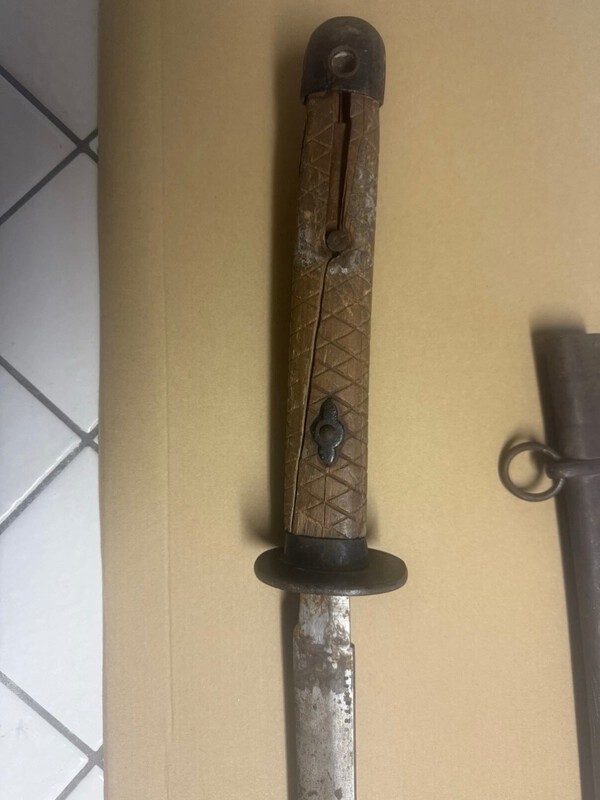
While we’re on the topic of ha-machi and mune-machi alignment. Here is a rare glimpse of the machi on a wood handle Variation#8 that displays misalignment. Looks like a seki stamp on the blade, and I think the serial number is 215465, although the eBay photos make it very hard to see.

-
@MichaelL Relocating to the fake Japanese sword section. Sorry for the not-so-ideal assessment of your sword. For what it's worth, some people here on the forum started with a fake blade, which inspired them to find and collect genuine examples. Regards, -Sam
-
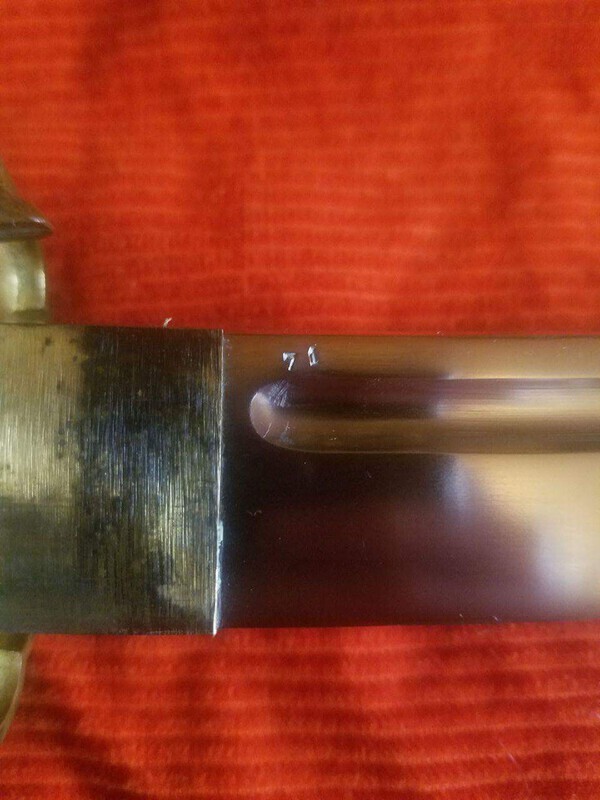
I think Kiipu is speaking of blades that we have seen the tang and machi alignment. Rare to see on the Type 95. For your records, 857 belonged to a friend of mine and has a 東 stamp on the tang. Serial number 4 is my lowest recorded. Serial number 71 is the lowest that I've personally observed photos of; and it has the cutout for habaki. But we have not seen the tang or the ha-machi/mune-machi for this blade. https://www.militaria.co.za/nmb/topic/22385-type-95-nco-copper-hilt/ All the best, -Sam
-
This can happen when copy/pasting from another app or translator program. When pasting, you will be prompted with an option to "post as plain text instead", and that will fix the formatting. I recently encountered something similar when copy/pasting from my phone notes app and my text looked good to me, but those in dark mode could not read it. @Gerry123, I'm going to relocate your post to the Nihonto section, because I feel it better fits that category. Like has been said, there is not anything that is obviously military issue that I can dicern. Best of luck, -Sam
-
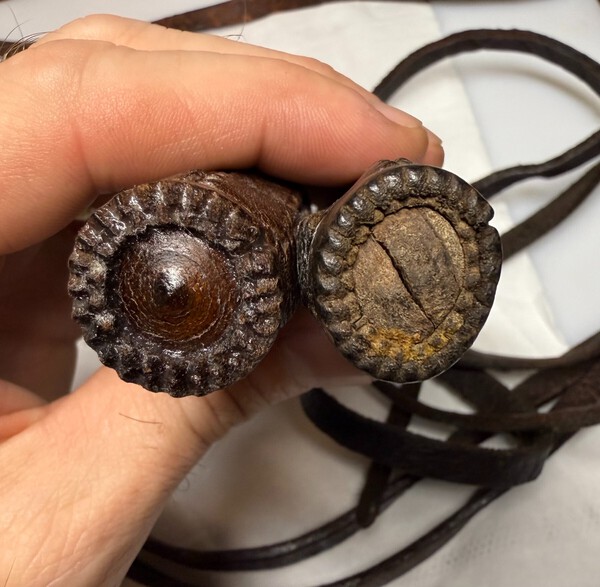
Here is a really fascinating thread from Nick Komiya about the Type 32 Gunto production. It includes a document on a change in tassel production which I thought was interesting and attached below. https://www.warrelics.eu/forum/Japanese-militaria/system-kaizen-behind-type-32-gunto-production-1930s-788442/ I have two tassels that I beleive display the before/after of this change. Left tassel looks greasy from antique leather conditioner. Regards, -Sam

-
Late War NCO help with date and arsenal
Scogg replied to nchistory's topic in Military Swords of Japan
Hi Chris, The blade has 関 stamp which is for SEKI = 名古屋陸軍造兵廠関監督班 = Seki Supervisory Unit of Nagoya Army Arsenal. Your sword was likely made around June/July of 1944. No doubt in my mind that it's 100% genuine. Great looking example of the Pattern#5 (or Variation#8) Type 95 Gunto. -Sam (Also, that's a great book ) -
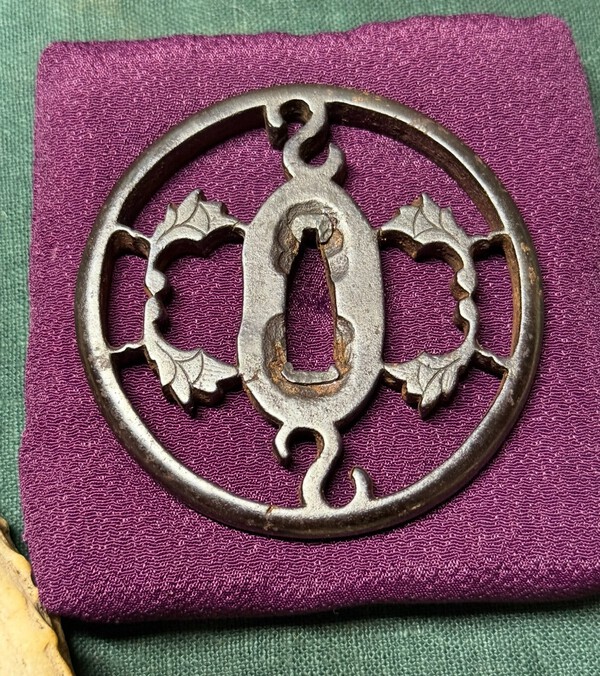
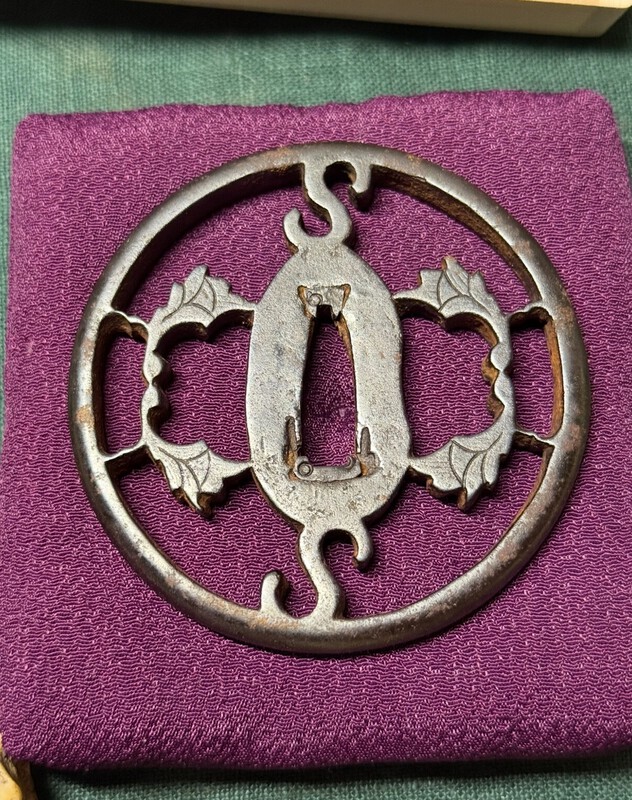
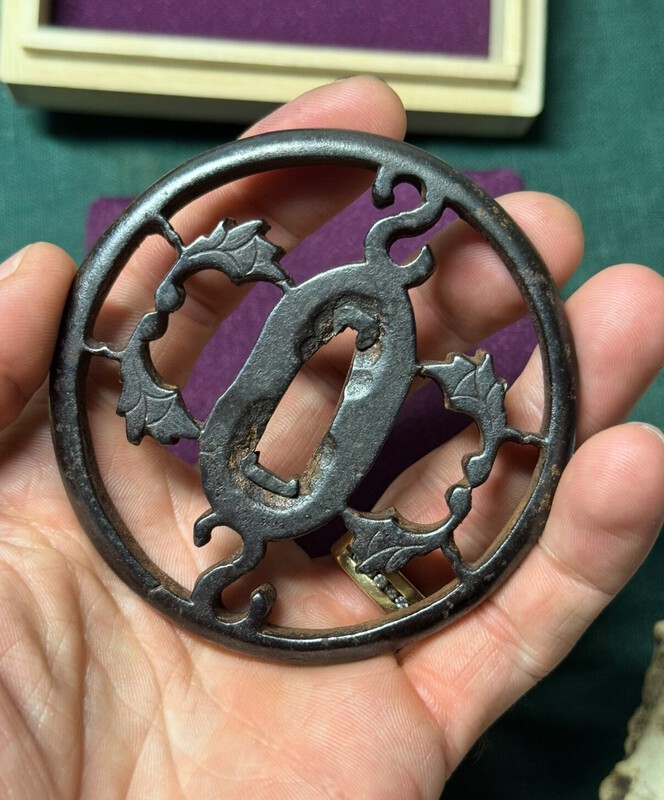
Here’s what I believe is an Akasaka tsuba, from my collection with this feature. Thanks for creating this thread, I’ve always been curious about it. -Sam

-
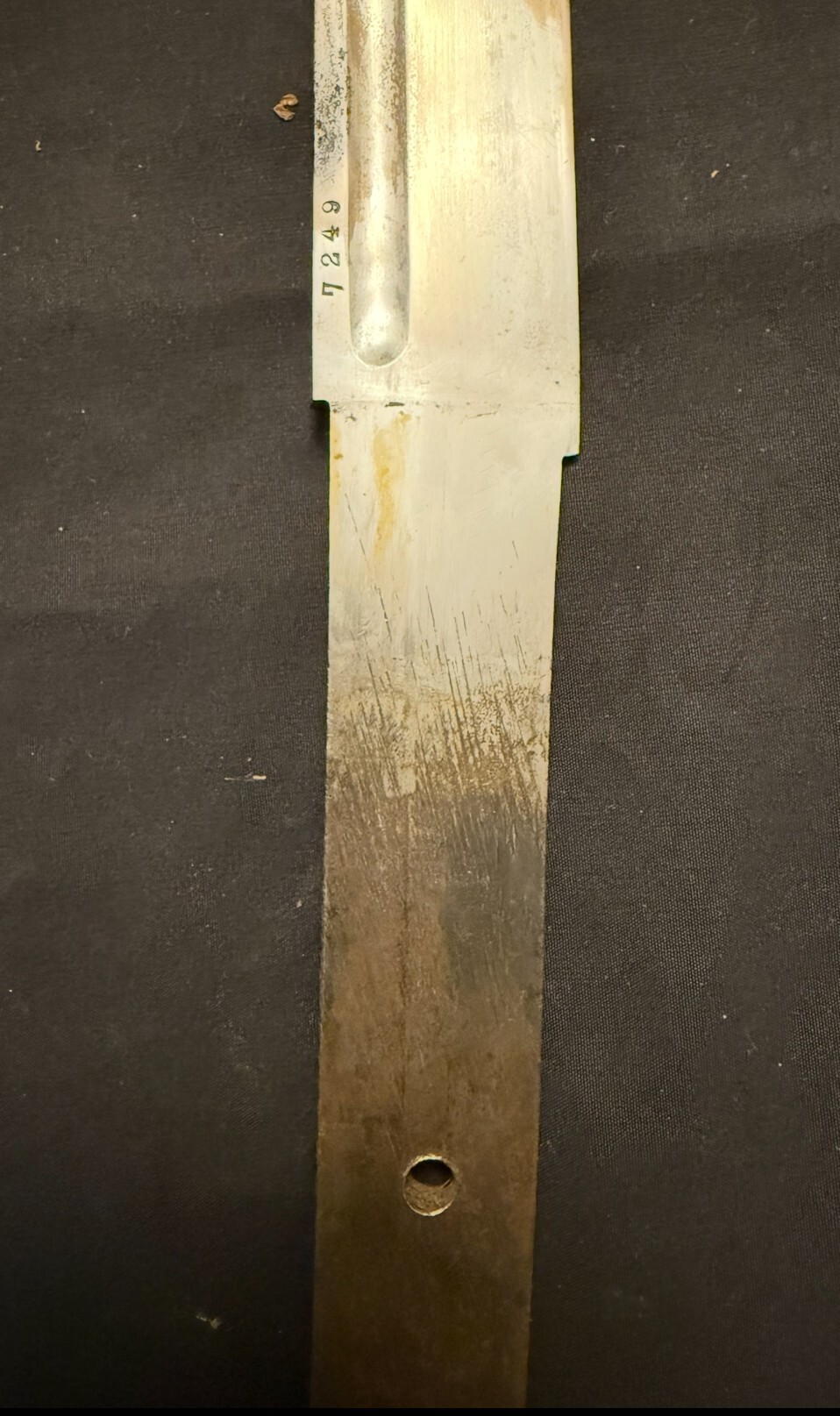
As far as I am aware, amongst the metal hilt Type 95 Gunto, only the copper variant had aligned machi. All aluminum variants of which that I have seen the nakago; have misaligned machi. I do not know about the wooden variants, but I suspect that they are also misaligned. Even my early aluminum transitional pattern has misaligned machi. So it appears, according to my interpretation, that the introduction of misaligned machi occured at the transition from copper to aluminum hilt in 1938. Photos below serial number #857 Copper, and #7249 Aluminum. To those reading along... I do not recommend disassembling your Type 95 swords. Bruce and I have a lot of experience with these; and are doing this with extreme care and for educational purposes. There's very little information to gain from taking them apart. All the best, -Sam
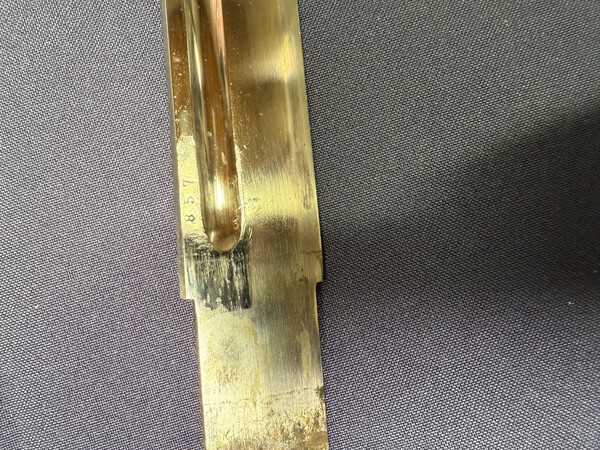

-
I see a lot to be excited about with your sword. I'm sure I'm not speaking for myself when saying, I'd love to see the nakago! My guess, with some thanks to our prior discussions, would be high quality old Bizen... From photos, I think it looks very nice. Best of luck, and looking forward to what Shinsa has to say. -Sam
-
Hi Dan, It’s already implied that uncited conversational comments are your opinions. Calling someone a “snob” is name-calling, and accusing others of being part of a conspiracy to benefit restoration businesses, something you’ve entirely fabricated, can be viewed as slander. In the opinion of others, you are sharing bad advice and therefore receiving pushback for it. If that makes you feel intimidated, ridiculed, berated, or belittled, that is your perception, but it does not justify personal attacks or spreading false claims. This forum is explicitly for the study and preservation of genuine Japanese swords and fittings. I sincerely hope that means we’re all “snobs” when it comes to this stuff. -Sam