Scogg
-
Posts
1,929 -
Joined
-
Last visited
-
Days Won
20
Content Type
Profiles
Forums
Events
Store
Downloads
Gallery
Everything posted by Scogg
-
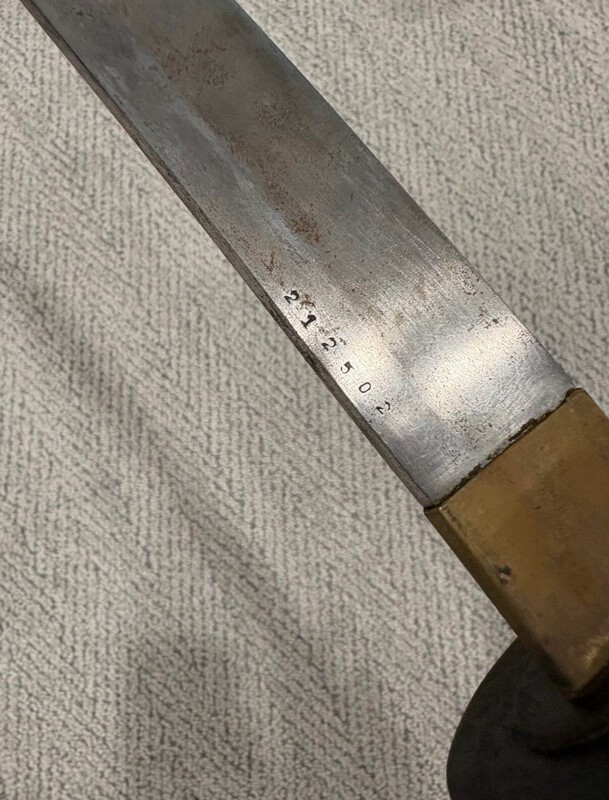
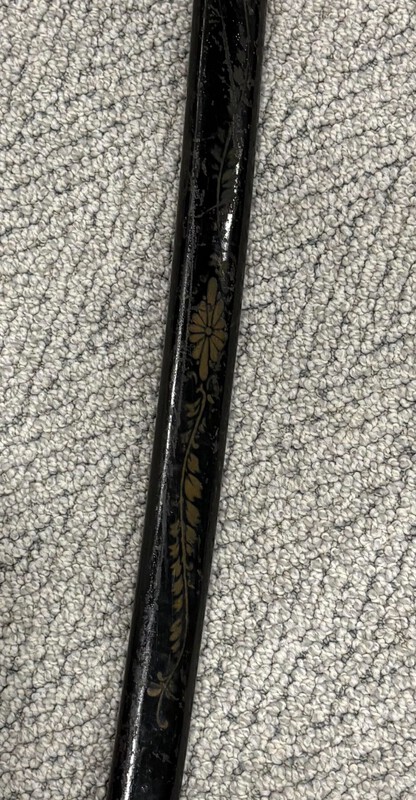
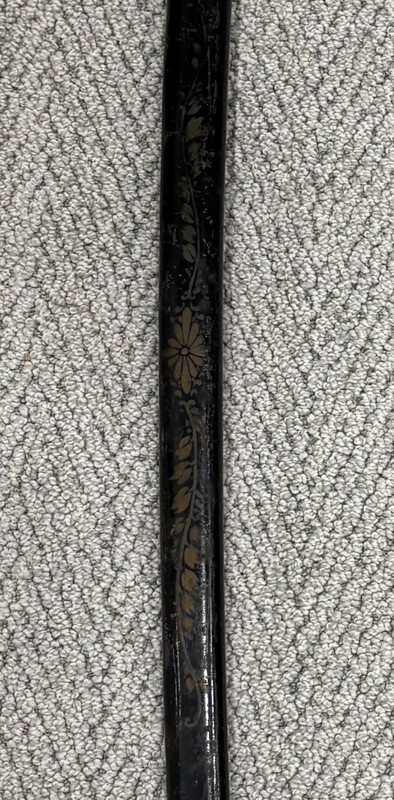
Here’s a nearby serial number that appeared on Reddit. Also with some post-war work, but more tastefully done
-
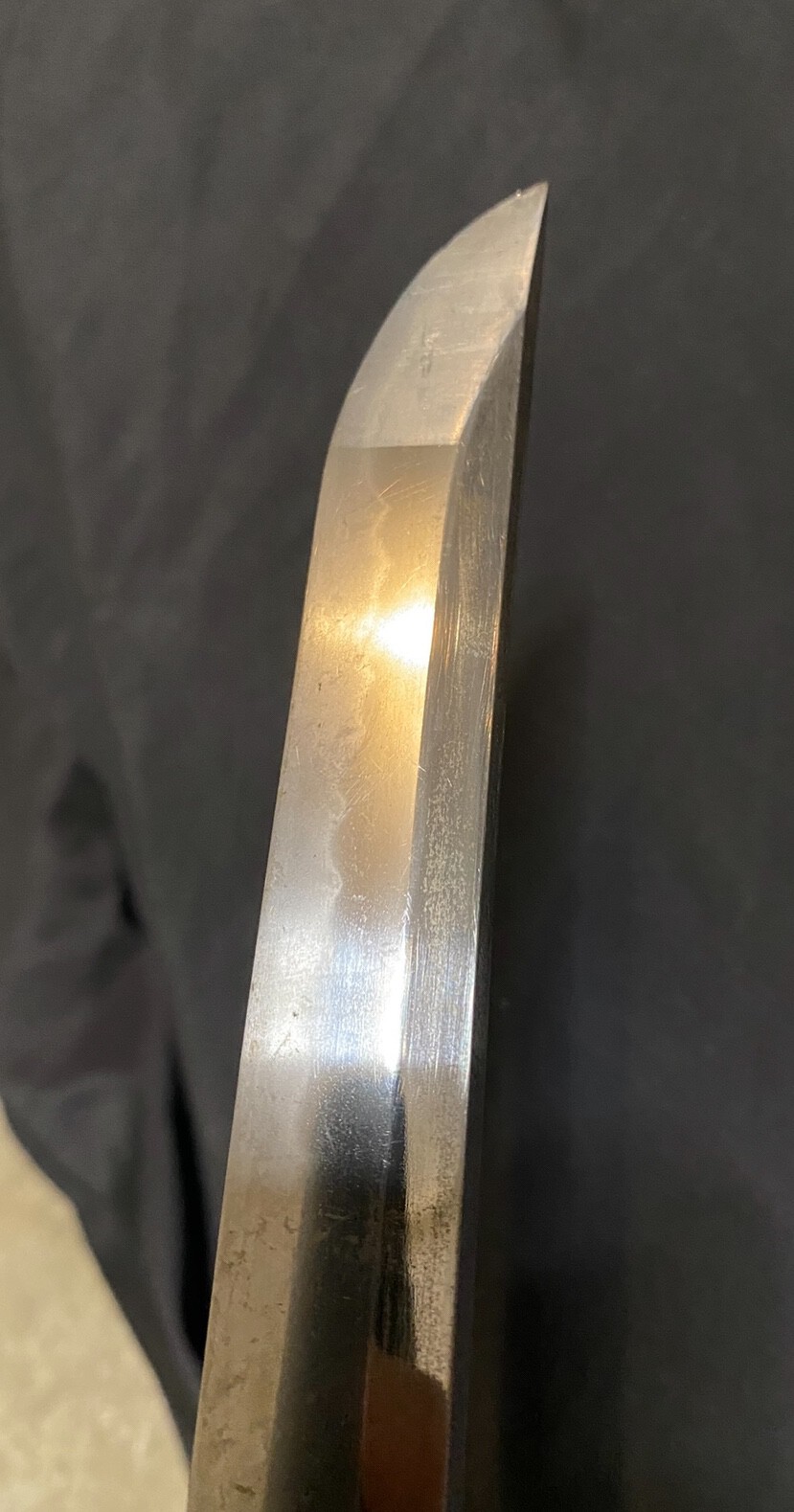
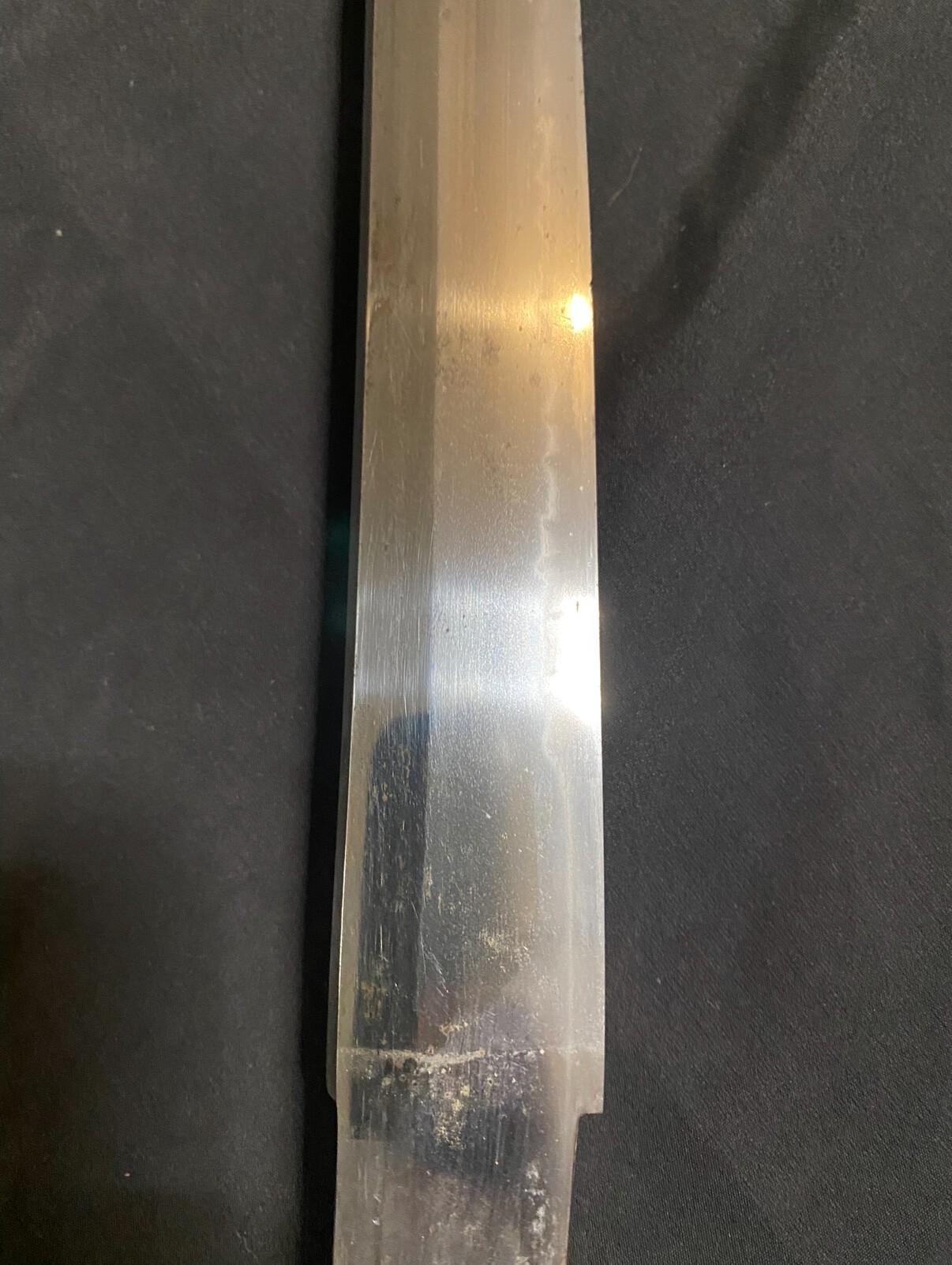
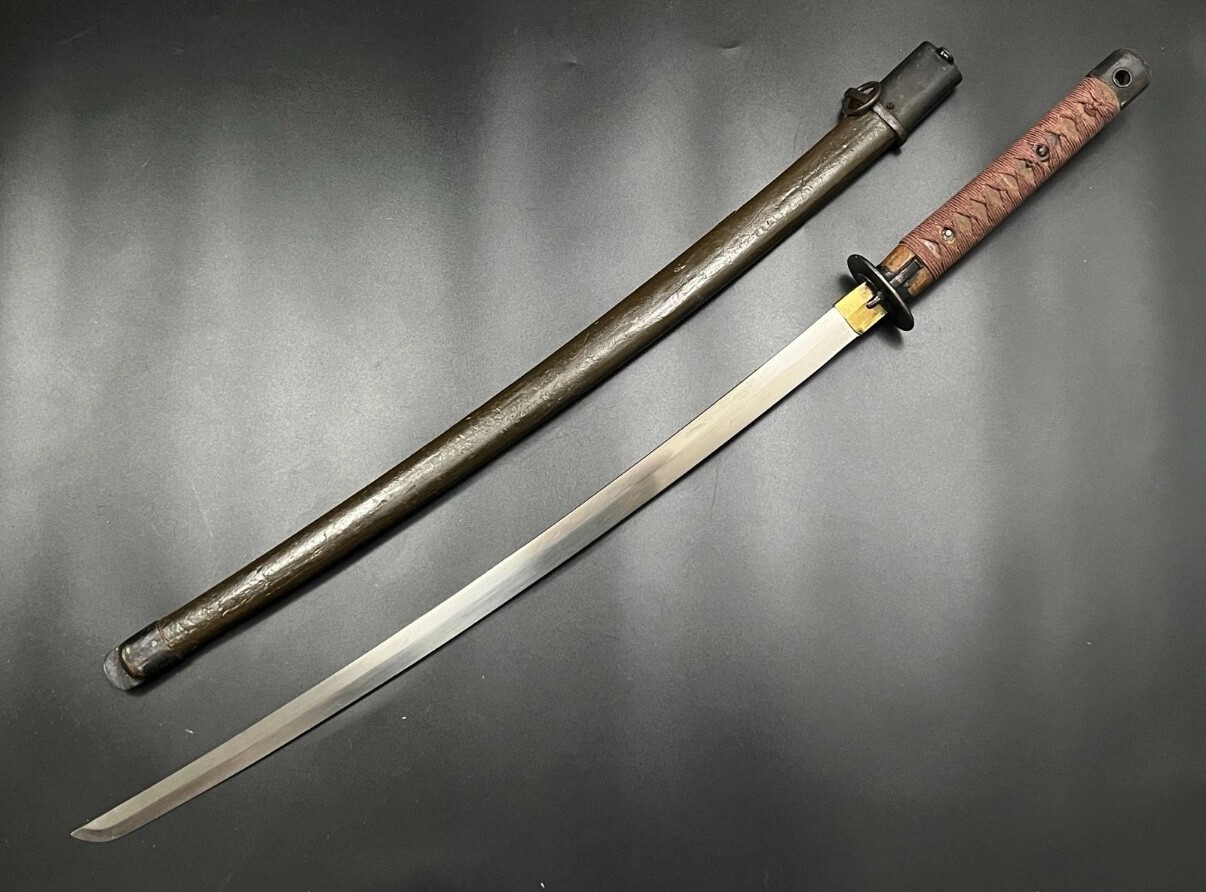
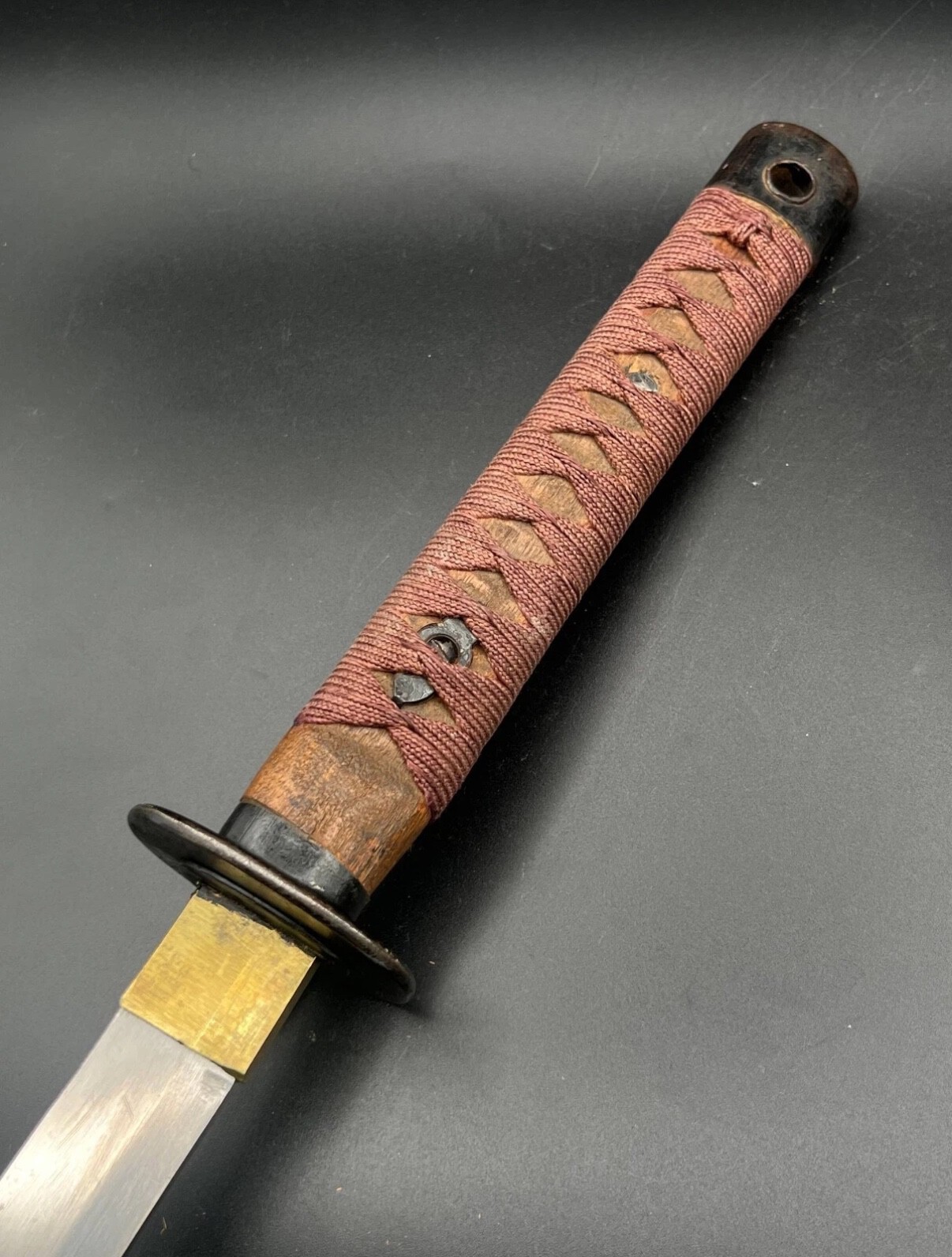
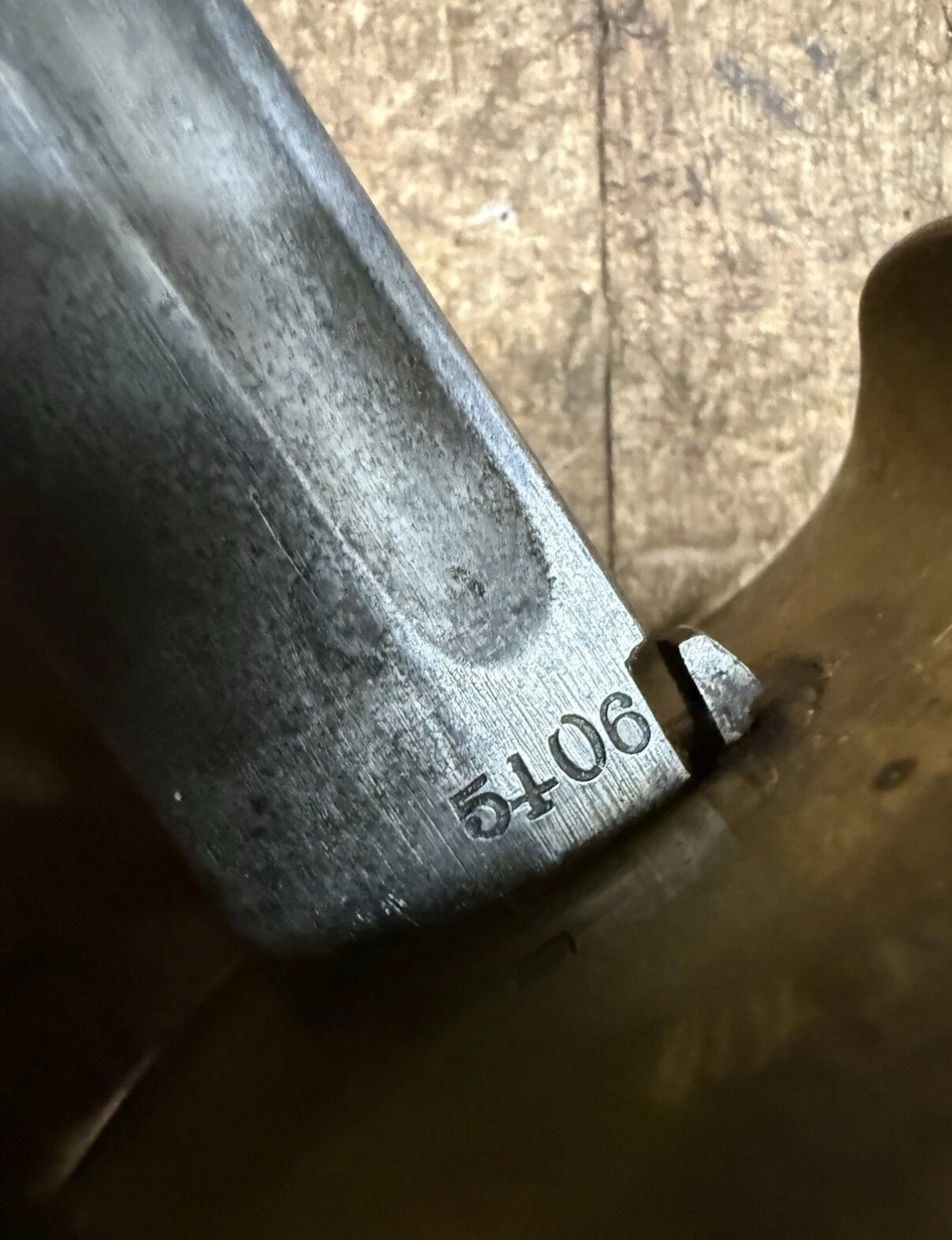
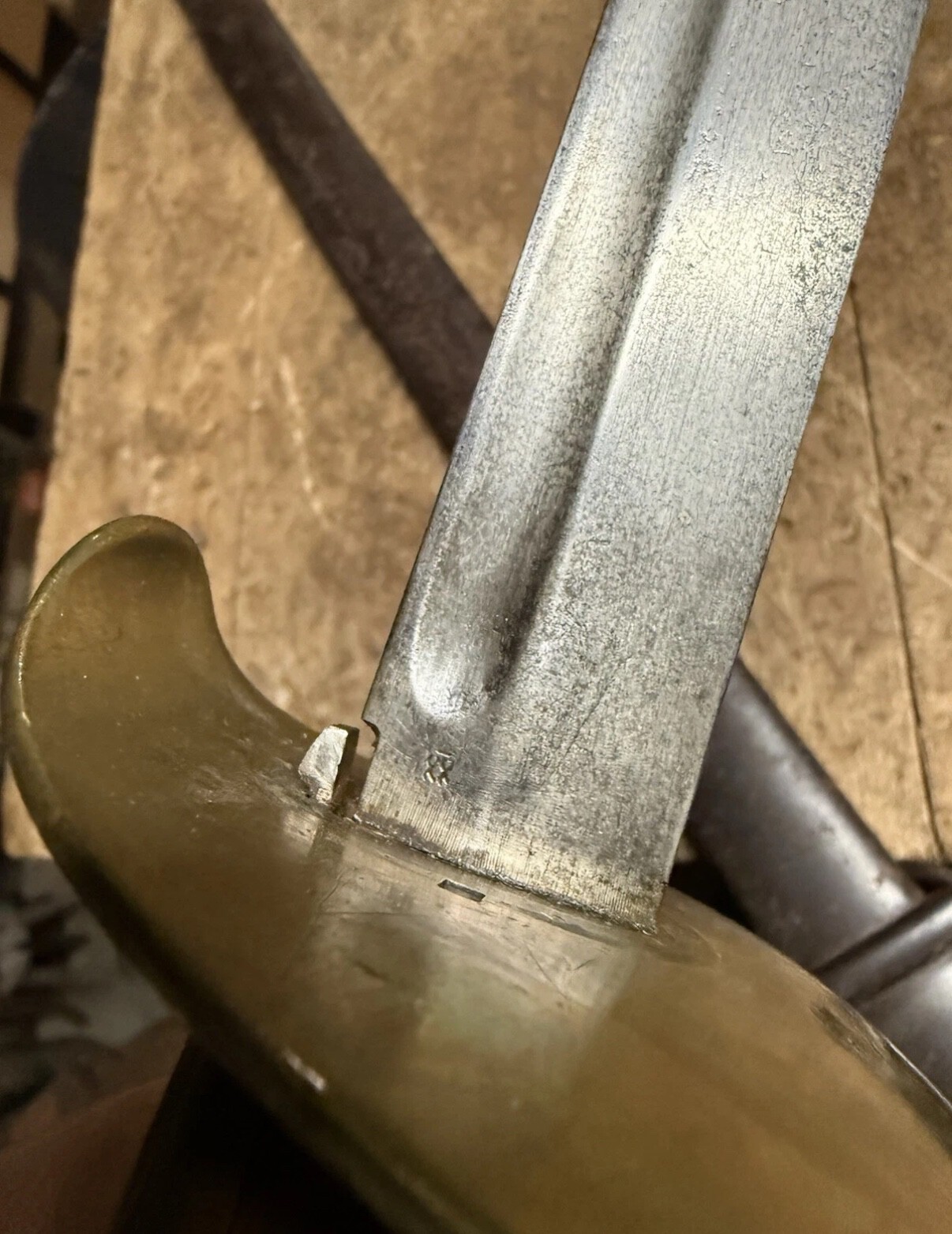
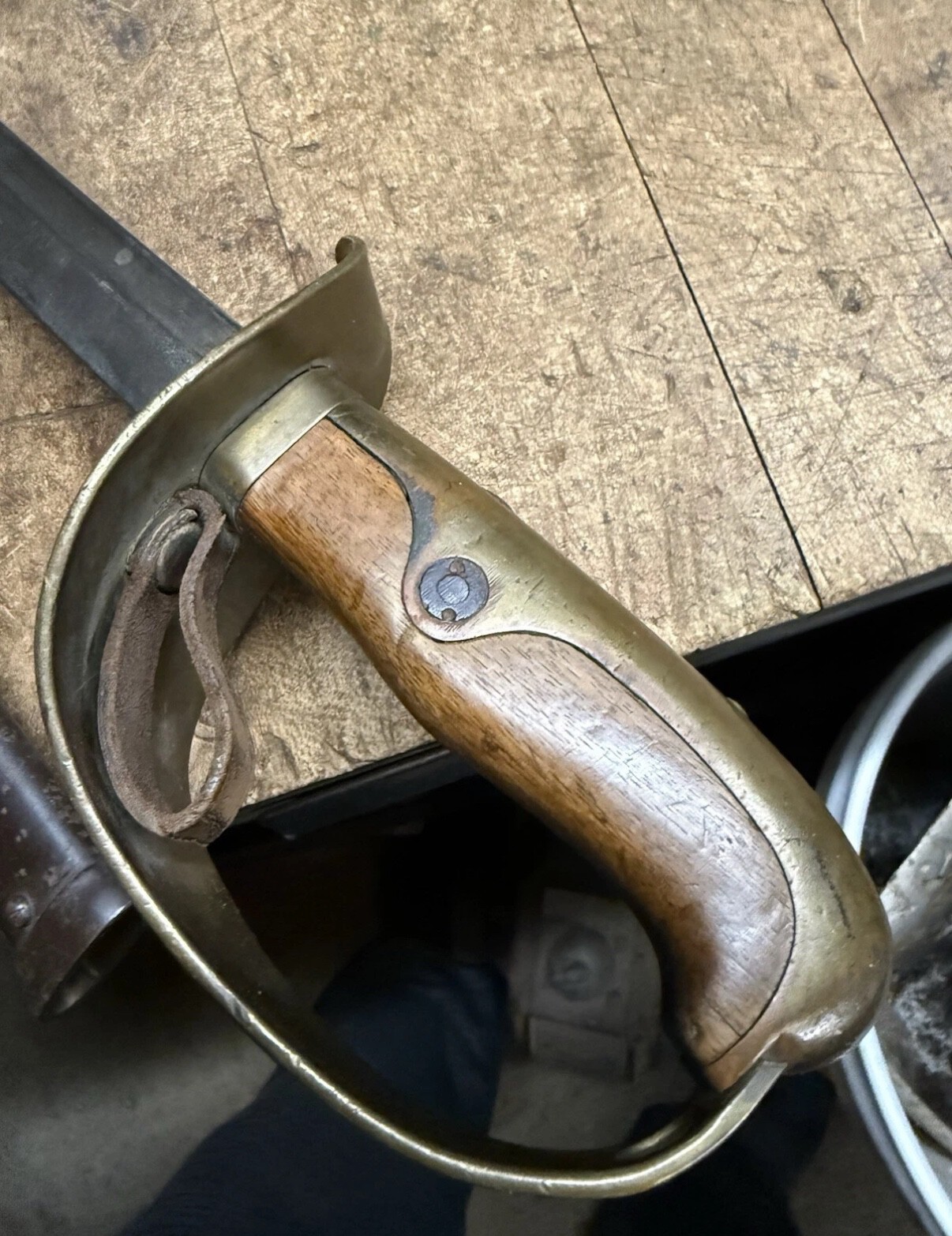
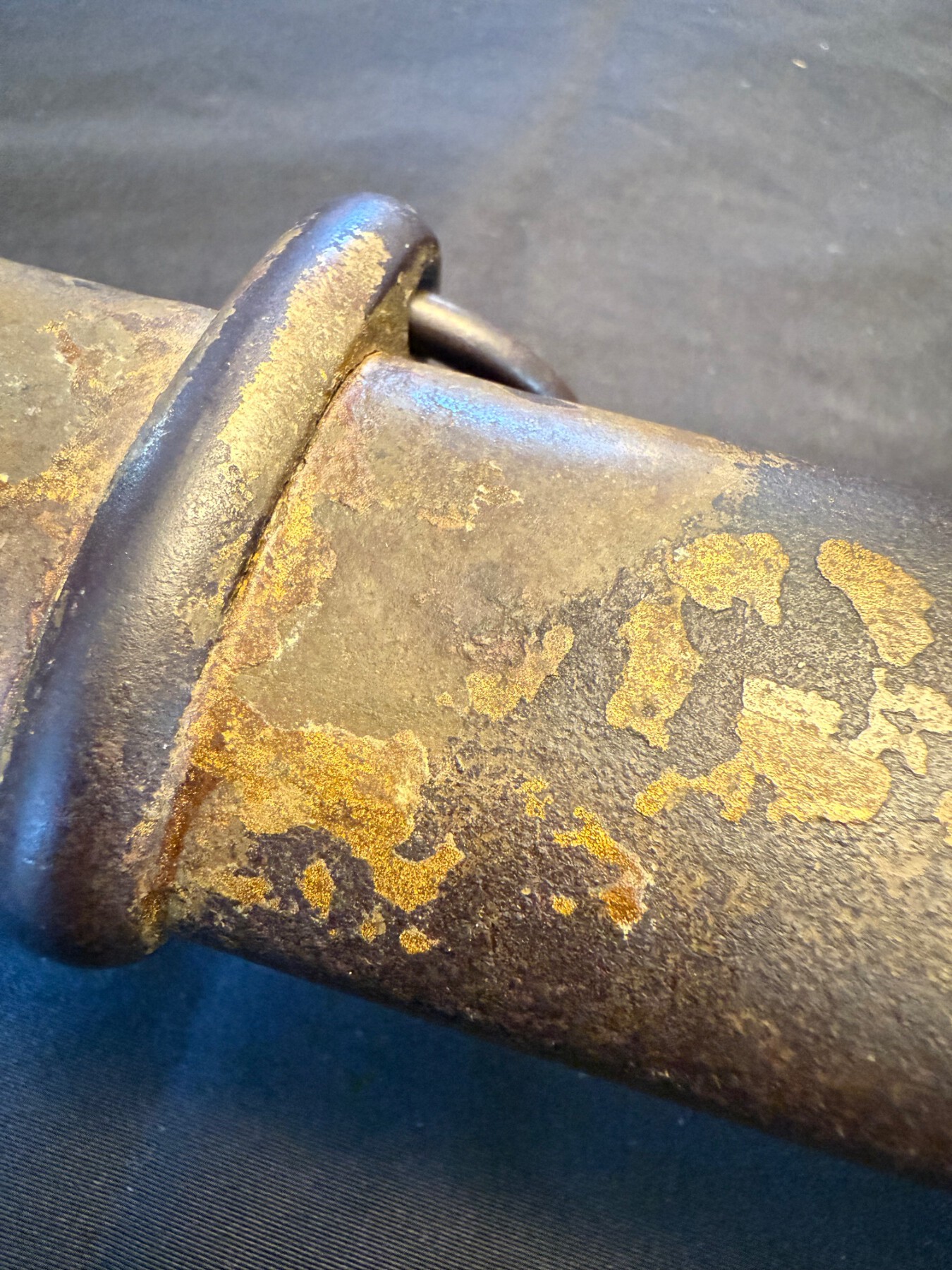
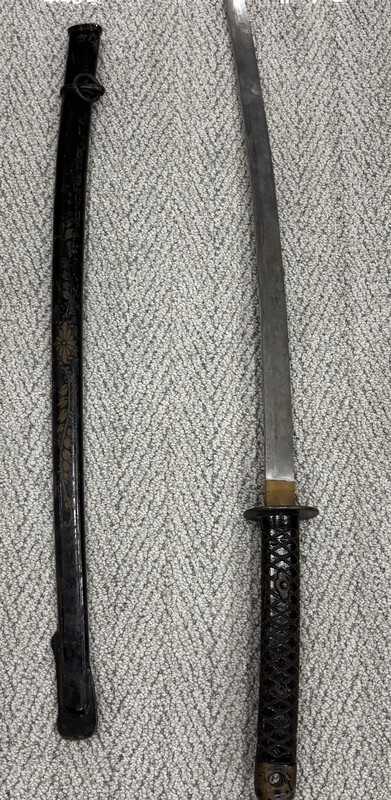
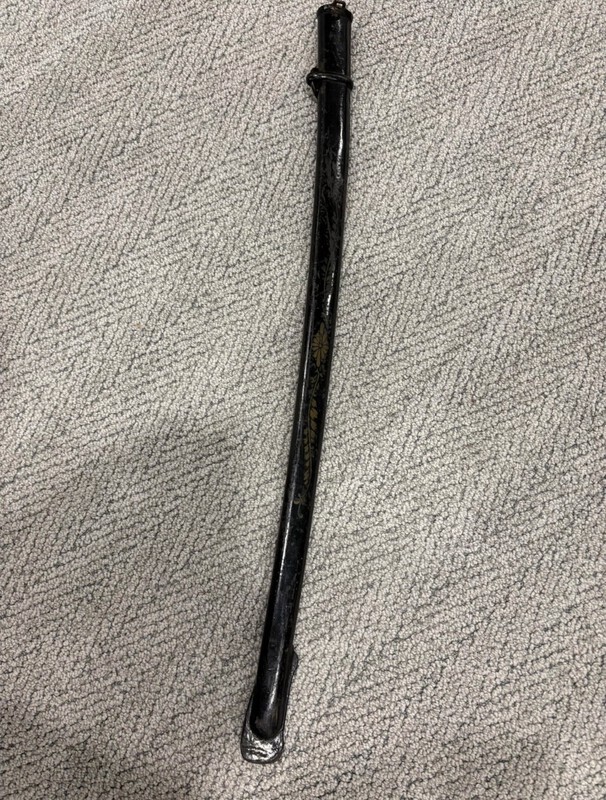
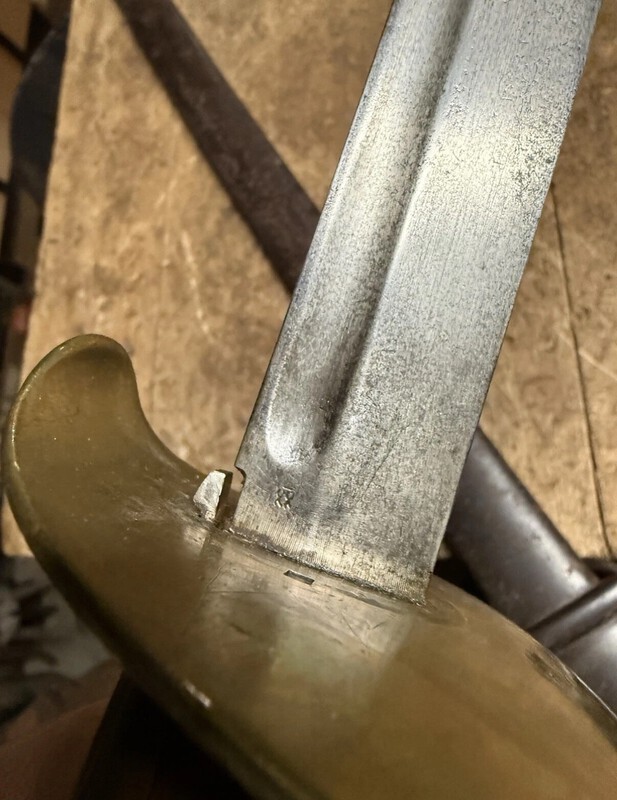
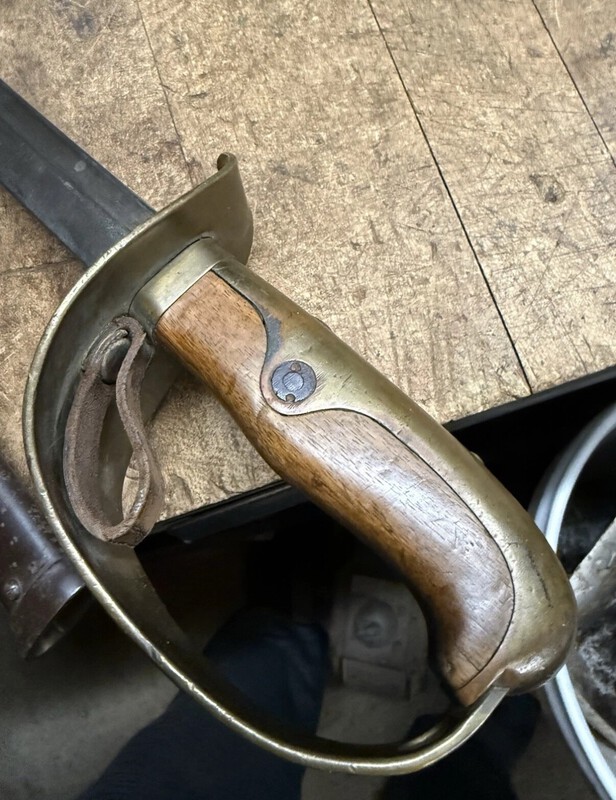
That’s an ugly one . This started out as a Variation #8 wood-hilt Type 95, probably made in 1944, but it’s been pretty heavily messed with. I have the high/low range of this variation between 203306 and 218821. It’s missing the pommel, mekugi, tsuba, and seppa. The ferrule (fuchi) looks original, but the clip’s been cut off or removed. You can still see the chūkan (the clip housing). At some point it was painted that same brassy color you see on parts of the scabbard. The scabbard itself is a Nagoya scabbard, so that's correct, but the clip opening at the throat has been filed off, or replaced. And the blade’s been buffed to oblivion, which also softens the edges of the serial number making it look weird. I think it's real, but looks like heavily damaged post-war “bubba” work to me. I would avoid. -Sam
-

MILITARY books By Richard Fuller & Ron Gregory
Scogg replied to Rawa's topic in Military Swords of Japan
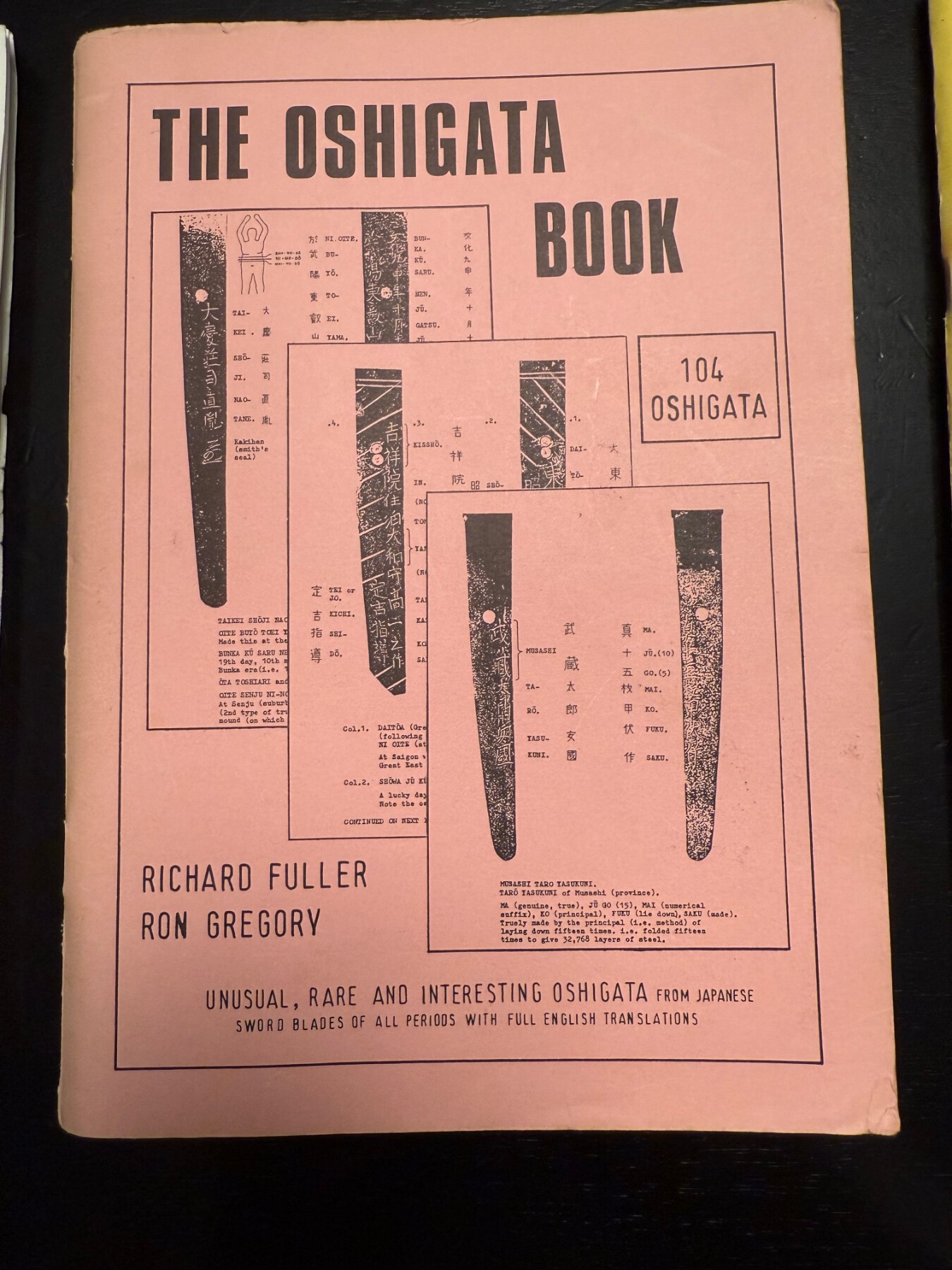
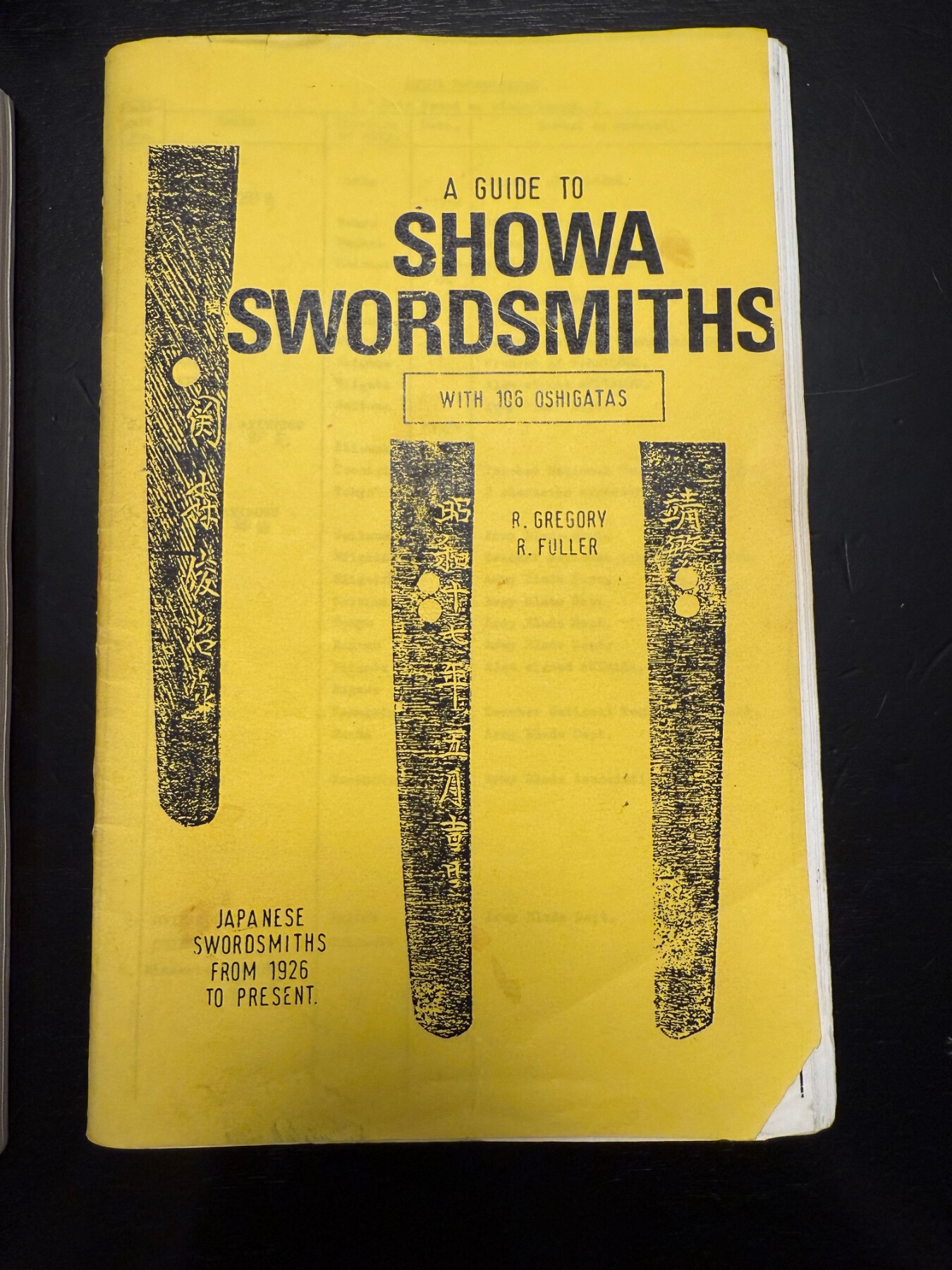
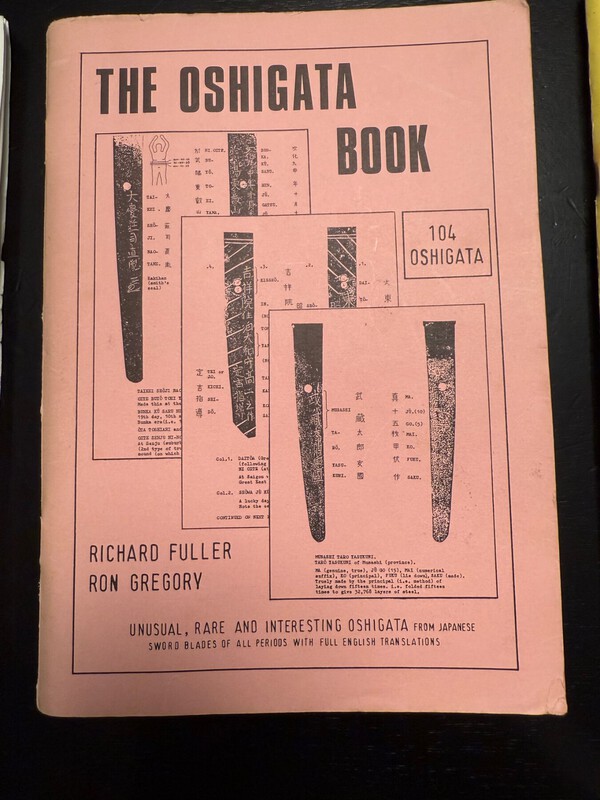
There are 3 Richard Fuller and Ron Gregory oshigata paperback books that I’m aware of. I have one of each in my library. They are well known books, but hard to find. Swordsmiths of Japan 1926-1945 is 275 pages. The Oshigata book is 144 pages. Showa Swordsmiths is 80 pages.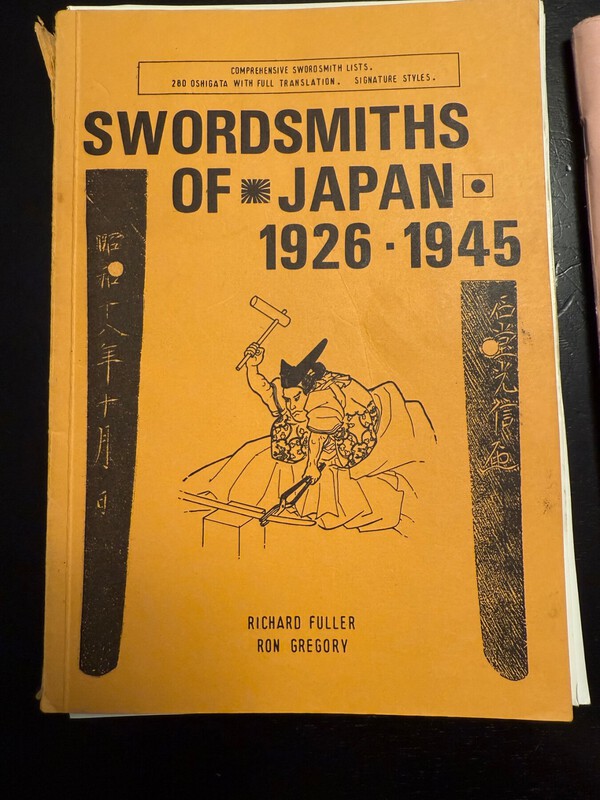

-
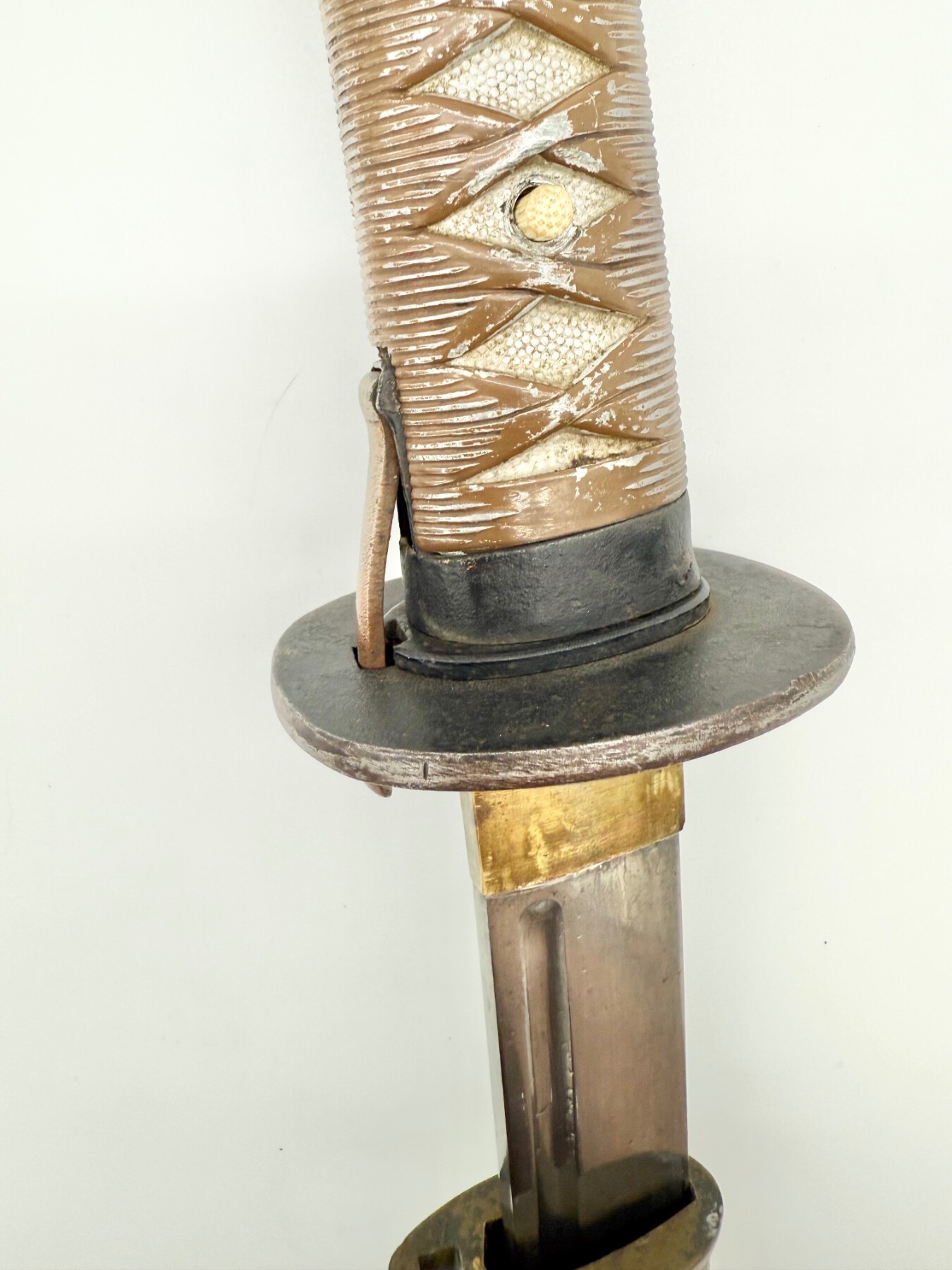
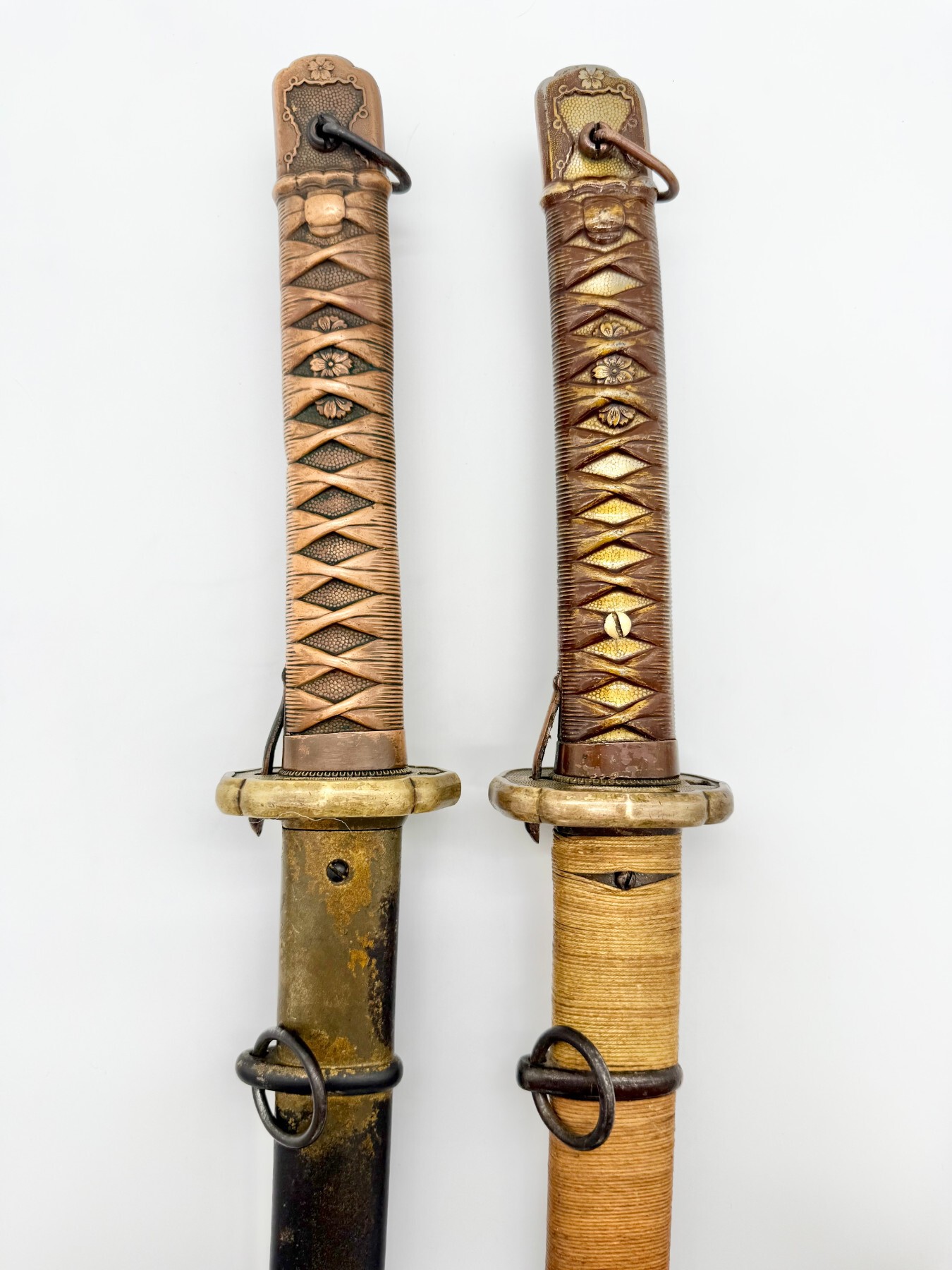
@The Blacksmith If you mean the first photos, where that screw mekugi punctures the ito. That’s a “Variation #2” sword with Suya Shoten ferrule stamp. Both Suya and Iijima had the mekugi puncture the ito like that for a very narrow serial number range right after the copper hilt Variation 1 swords. Gifu had a slightly different mekugi situation where the Ito kind of bends around the mekugi. June 24th 1939 the hilt pattern was changed so the mekugi would go through the diamonds and no longer interfere with the ito. They did this by making the wrap pattern symmetrical whereas before it was asymmetrical. Copper hilt swords only have the grommet and no mekugi unless they are field repairs. My example up there looks like a copper, but really it’s aluminum #7249 Best, -Sam
-
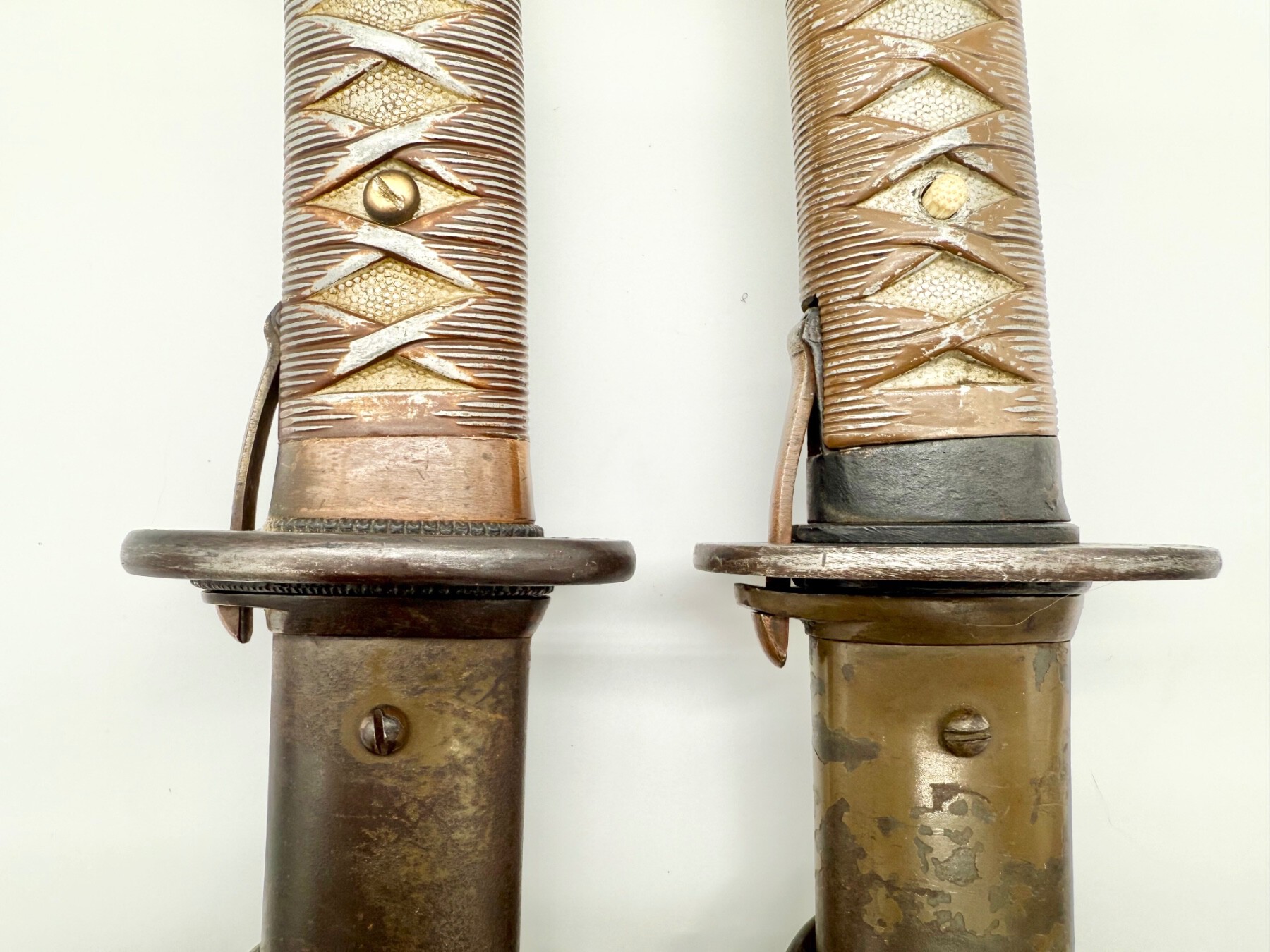
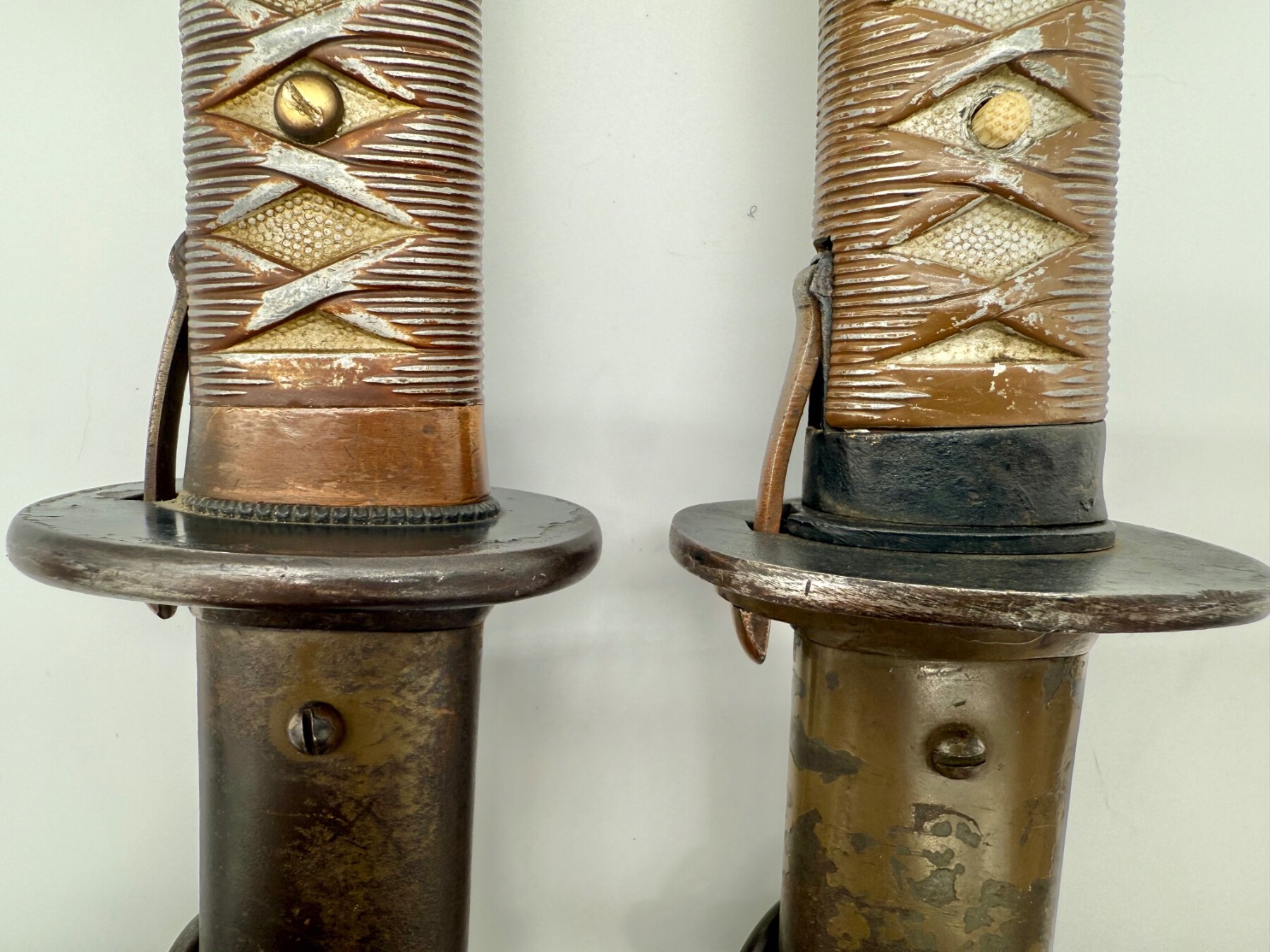
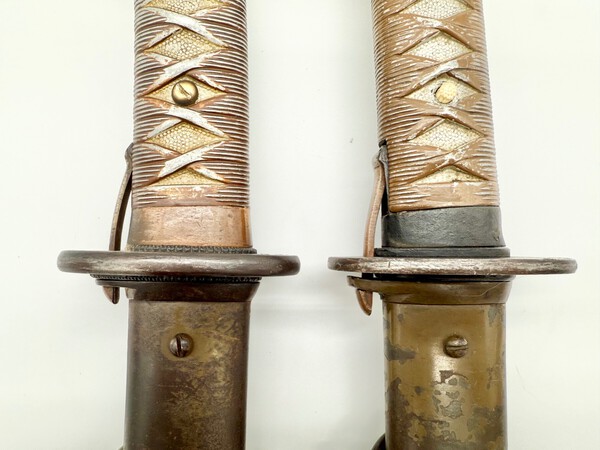
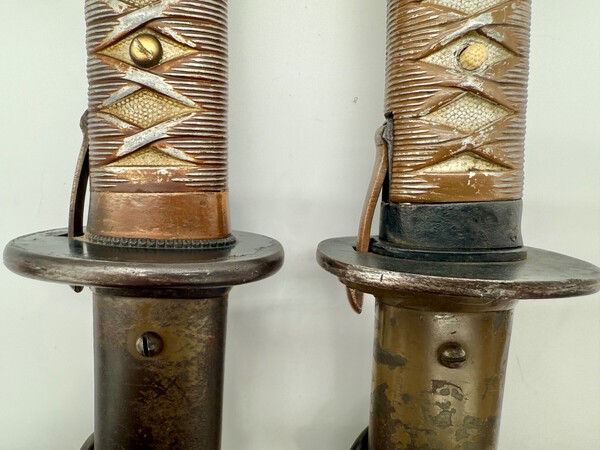
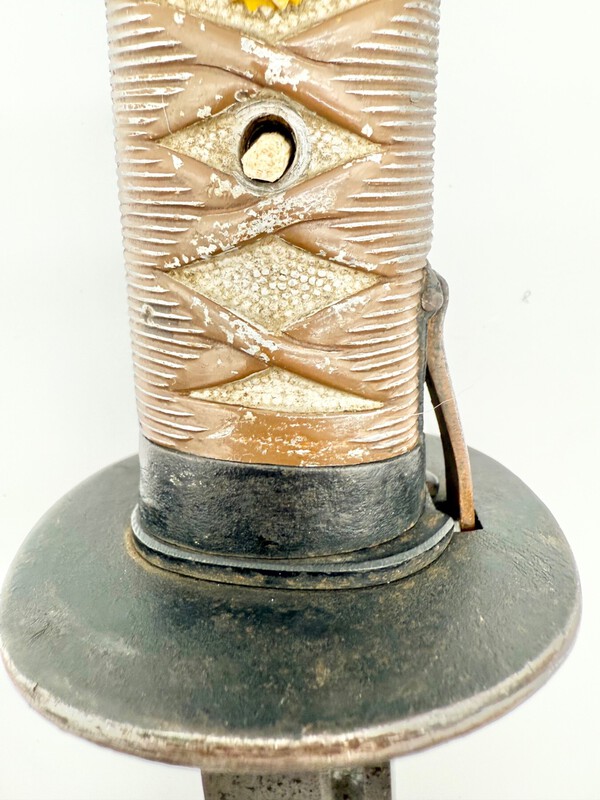
Good question. The sword on the right represents what Jim Dawson’s cyclopedia refers to as a “2a pattern”. These swords have thick seppa that have a cutout for the retention clip, and also the tsuba is more thin than other aluminum hilt steel tsuba Variation4 swords. The missing mekugi is unrelated, and was probably lost or damaged when somebody tried to disassemble it. I put the bamboo mekugi in there for security. It is currently my interpretation that these thick seppa and thin tsuba “Dawsons 2a” swords are indeed factory repairs or field repairs. You find this unusual configuration scattered amongst all top-latch variations and on both Tokyo and Nagoya stamped blades. My photos are an attempt to show those differences next to a “more standard” and what I believe to be a factory original variation 4 sword. Other interpretations may vary… -Sam

-
My pleasure @The Blacksmith Russ! Thank you very much for the kind words. I still consider it a "work in progress". For what it's worth, and for those interested. Currently I am collecting each variation so that I can take more standardized "professional" looking photographs. Hope to update the document to the "Second Edition" around its 1 year anniversary. -Sam Here's a little sneak peak of the "work in progress". Had to shrink file size for this post, and I am still fine tuning stuff


-
Fake NCO katana, possibly the worst I have seen.......
Scogg replied to The Blacksmith's topic in Fake Japanese Swords
That's an ugly one! Maybe I should add "Hexagon Mekugi" to my document's fake identifier list I also spend some time cataloging fake serial numbers. Unfortunately this one can't easily be cataloged - fortunately swords like this are easy to spot -Sam -
Attention Mantetsu Owners: A Survey
Scogg replied to Bruce Pennington's topic in Military Swords of Japan
I wonder what could have chewed up the Nakago like that. I can not imagine why something like that would be done intentionally. Wartime damage perhaps? Would love to see more of the sword. -Sam -
My bids are not only for the book, but also for the forum. The amount of help I have received here is worth a lot to me. The way I see it: I'm making a donation to the forum and getting a couple free books in return If I win, one of the books will be a gift for my wife -Sam
-
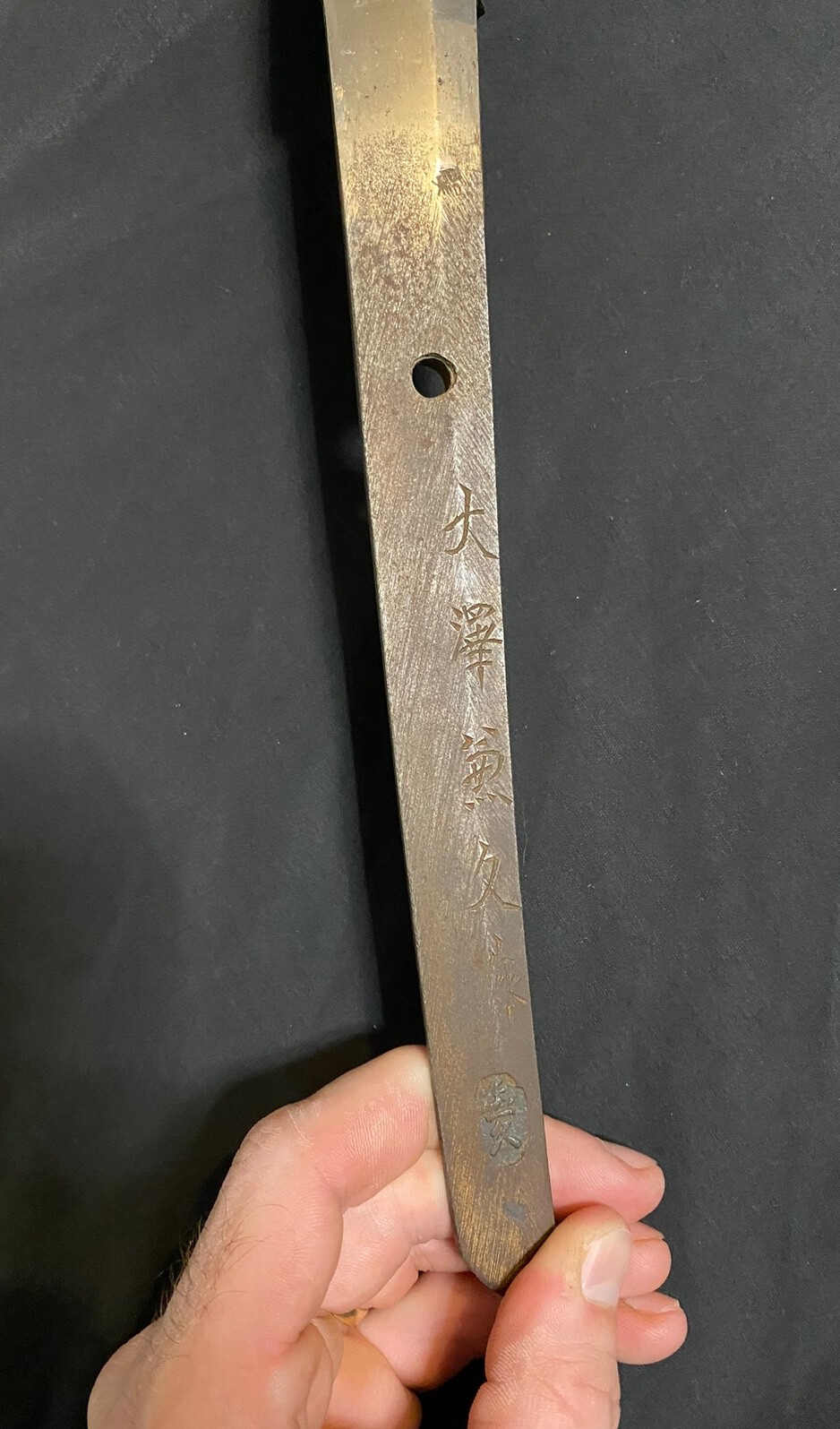
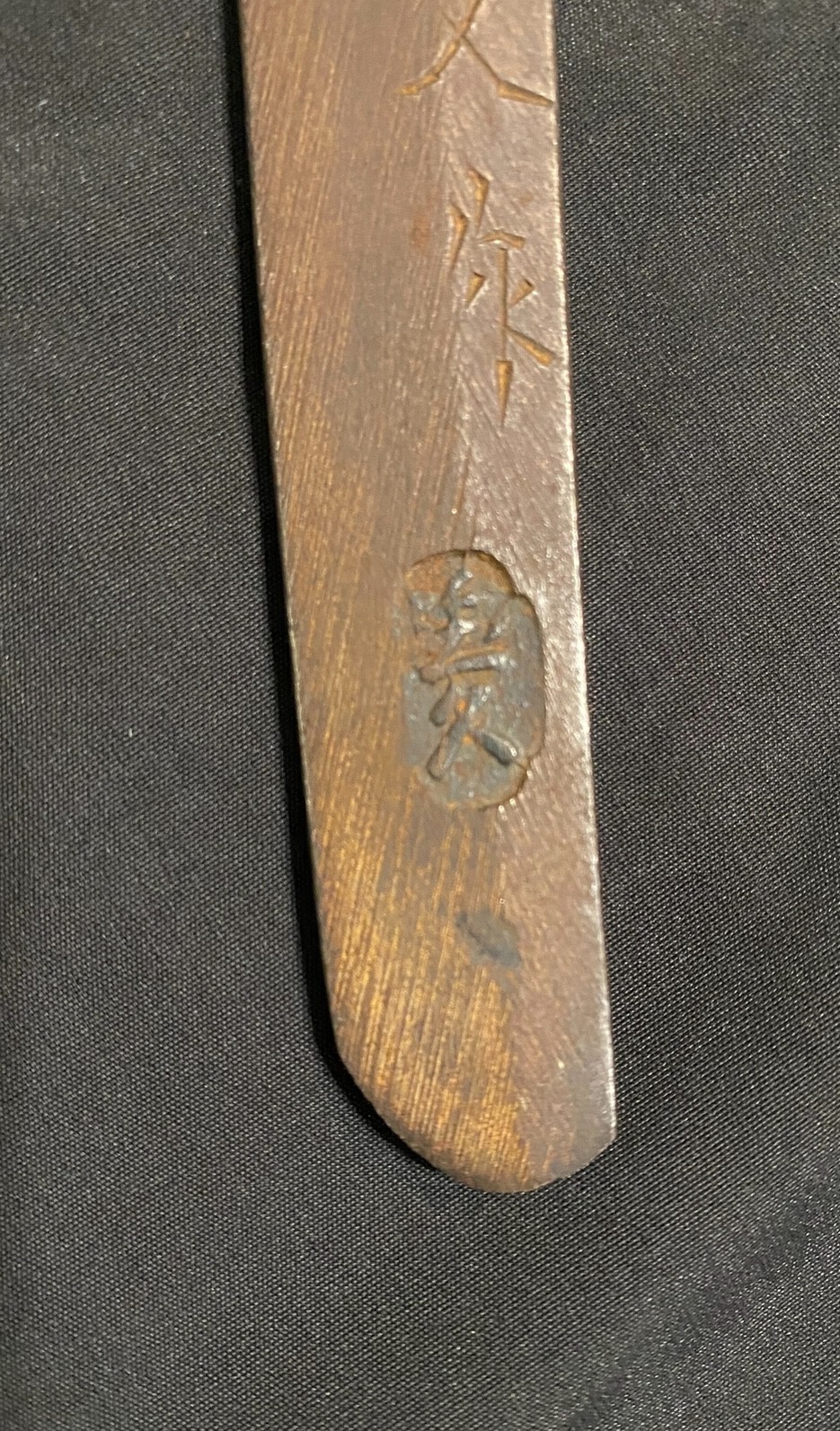
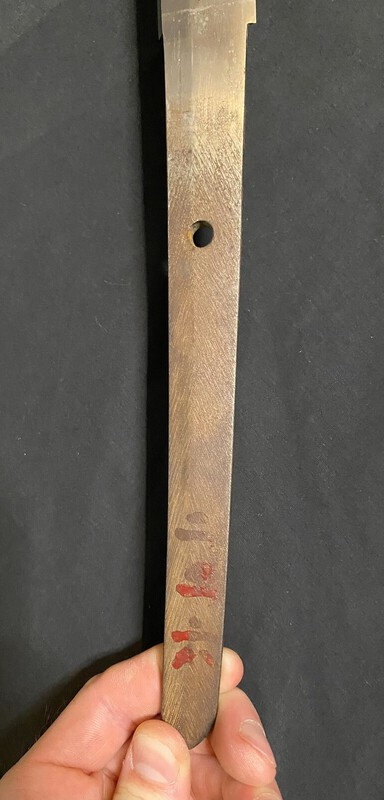
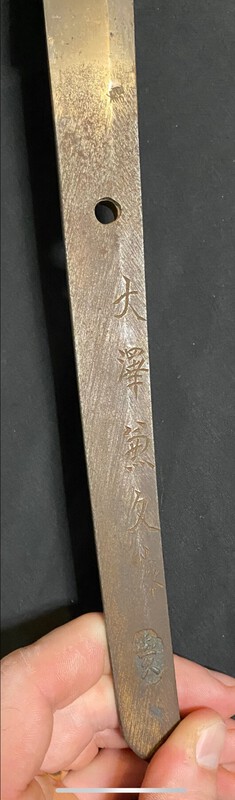
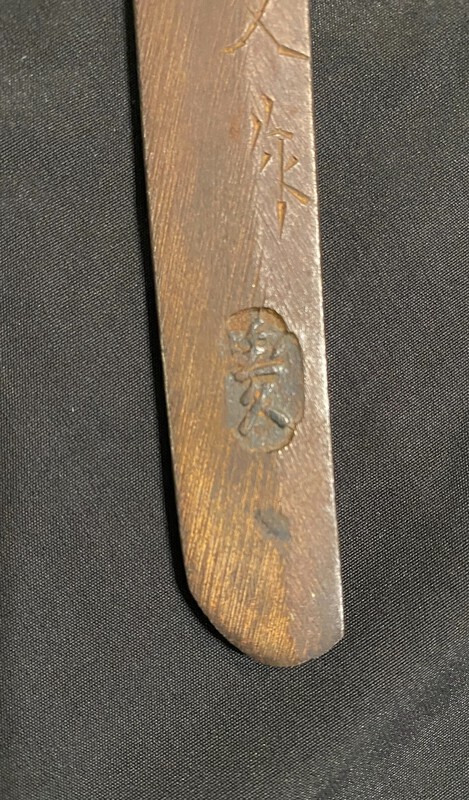
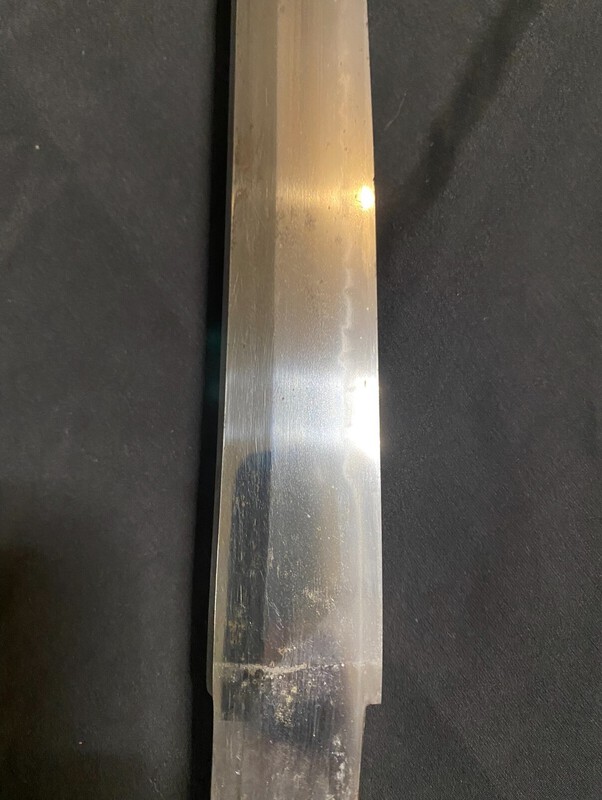
For comparison. I once owned a blade signed Osawa Kanehisa with seki stamp and kokuin. I sold it a couple years ago, but I always thought it was a relatively well made showato. -Sam


-
Major names in shinsa/kantei world
Scogg replied to Mark S.'s topic in General Nihonto Related Discussion
The most knowledgable people in Nihonto that I’ve met were very humble and mostly keep to themselves. In my very limited experience of course. Hopefully that’s the reason for the crickets. Maybe those high-up and highly knowledgeable individuals names aren’t well known outside their respective circles. Best, -Sam -
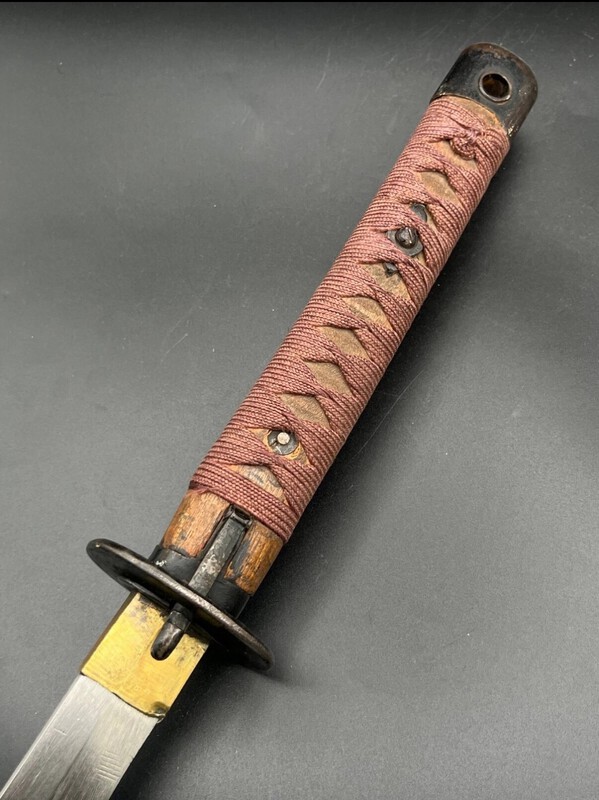
Here’s a late war maroon ito wrapped handle with unserialized blade. Just sharing because you don’t see these everyday. A bit pricey for my blood. -Sam https://ebay.us/m/IOG2fJ


-
This section is only for discussion. We have a different designated "For sale" section that is for selling items. Once some of these discrepancies are addressed, I will relocate the topic to the "for sale" section. Because you are a new Forum Member, Darin. It may help if you include a picture of the item with a piece of paper showing your name and date. Asking price is required by rule for listings. All the best, -Sam
-
Thank you Marius. Some great looking books! I'll get it started off. I'd like to bid on the following: $50 - "2. Ikebana, Japanese Flower Arrangement, John March-Penney" $50 - "3. Japanese Dandyism: Samurai, Tokyo Metropolitan Museum of Photography"
-
Here on the Nihonto Message Board, we are commited to the study and preservation of genuine Japanese swords and fittings. We do not condone or encourage DIY restorations or polishing. As with any antique or culturally important item; it's really important that you do not damage history. https://en.wikipedia.org/wiki/Ecce_Homo_(García_Martínez_and_Giménez) It takes an extremely specific skill-set, that's earned over years of apprenticeship with a qualified togishi. If you were unable to identify the blade or translate the signature, you are definitely not qualified to "grind" at a potentially 500 year old antique Japanese sword... Sincerely, -Sam
-
Another example on eBay https://ebay.us/m/Ox8mXy


-
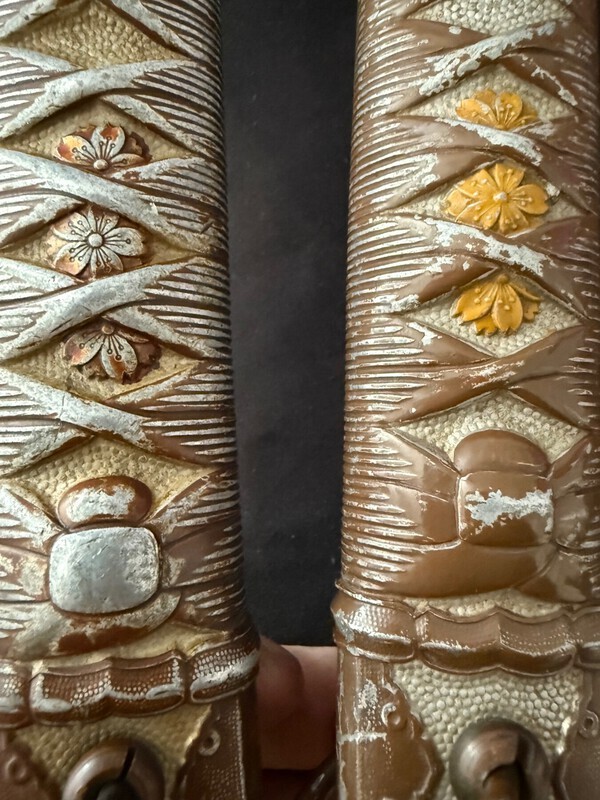
Indeed interesting. This one has been on eBay for some time now. It actually has sparked a big question for me... I notice that the stamen on the sakura menuki have raised details. Whereas a sword in my collection in the 151k range with the same ferrule stamps has engraved stamen on the menuki. I have since been trying to narrow down when this change happened. Along with fine details on the tsuka amongst all subcontactors. Someone out there might already know the answer. I'm leaning toward the interpretation that Suya may have switched casting moulds around their last batch of production. Other interpretations may vary... -Sam (Sword on the left is serial number 151,957 東 with ferrule stamps: Suya, 東 , Tokyo1st Star.) (Sword on the right is just a side-by-side example of the difference found in sakura stamen details. 54,683 東, no ferrule stamps, "Dawsons 2a", with thick seppa.)
-
The sugata does not resemble Heian sugata. Personally, I would not go through the effort to see this particular sword in-hand. I think there's enough showing here to raise all the red flags necessary to make an informed decision to avoid this item. I think the blade was made relatively recently, probably outside of Japan, and in an attempt to "look old" for internet photos. All in my opinion of course. Gamble at your own risk. -Sam
-
I just find the arsenal landscape of World War 2 Japan fascinating, and have an interest in military swords of Japan. Yours looks signed with some skill and care. Also, while mune stamps are not unheard of, they are outside the norm. For those reasons I think it’s interesting. All the best, -Sam
-
@cookiemonstah47, now that we see these military stamps, I’ve relocated the thread to the military swords of Japan section. 名 = na = 名古屋陸軍造兵廠監督課 = Nagoya Army Arsenal Supervisory Section. ホ = HO = 小倉陸軍造兵廠第一製造所 = 1st Factory of Kokura Army Arsenal Interesting sword, -Sam
-
I would not. In my opinion, it looks like a fake. It looks like it’s trying to be a gunto, but the fittings look like the ones often seen on forgeries. Best of luck, -Sam
-
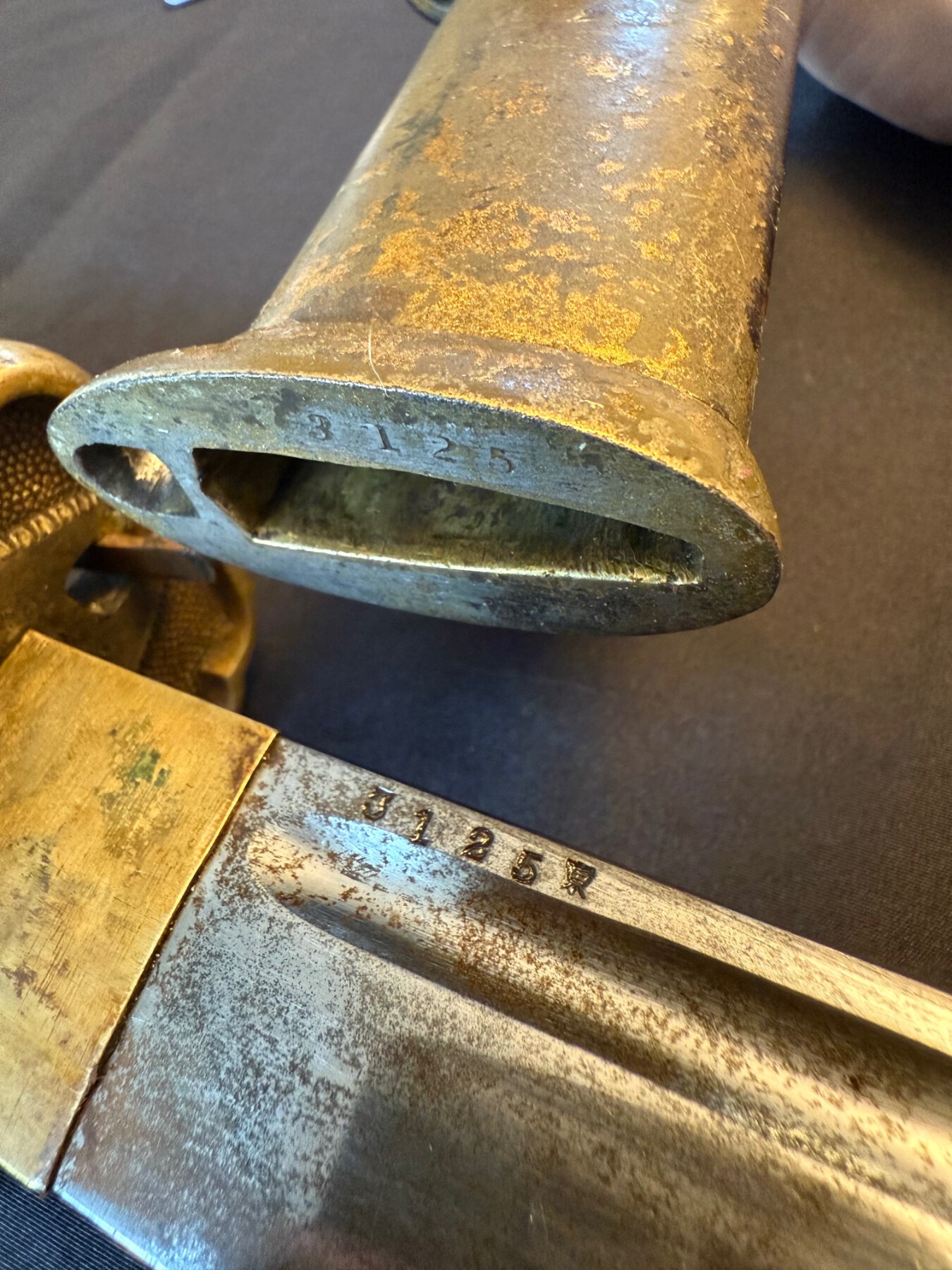
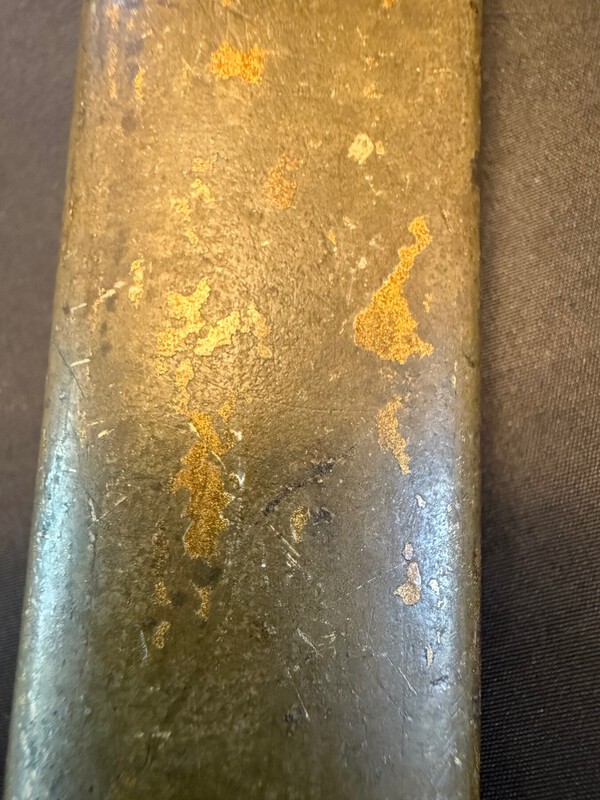
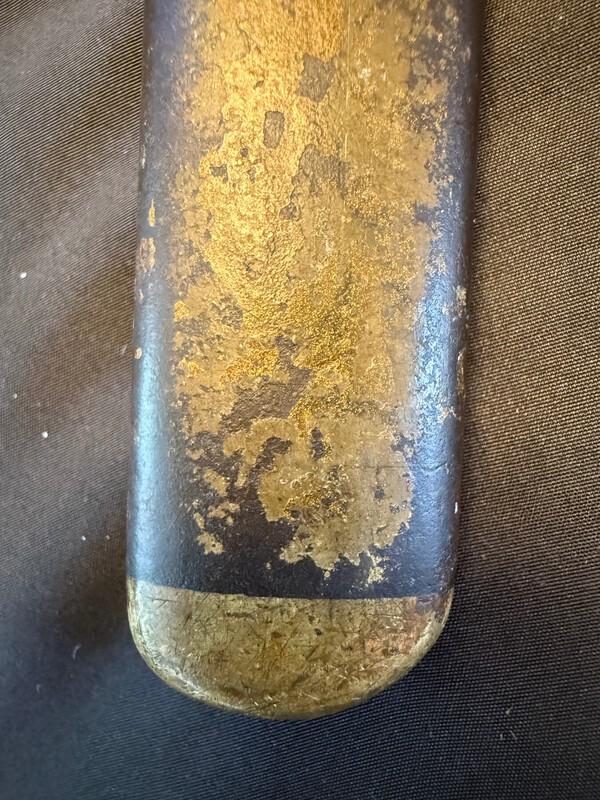
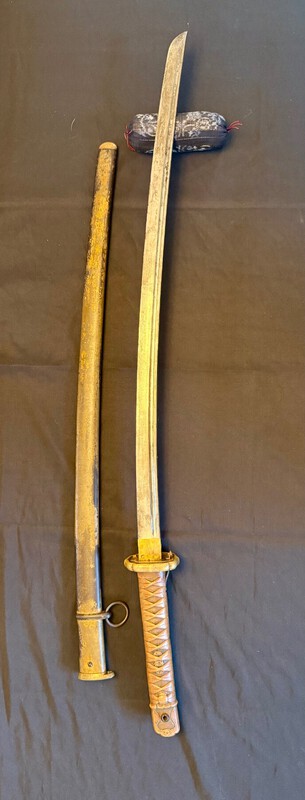
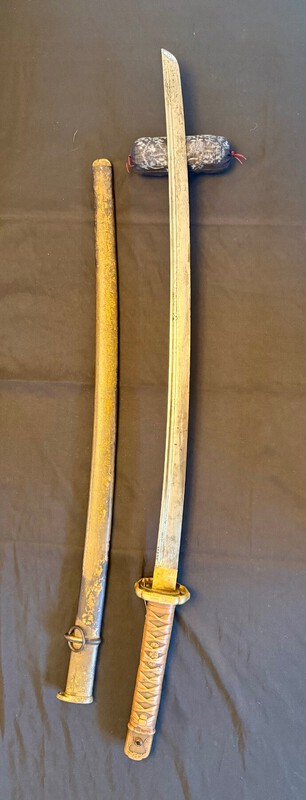
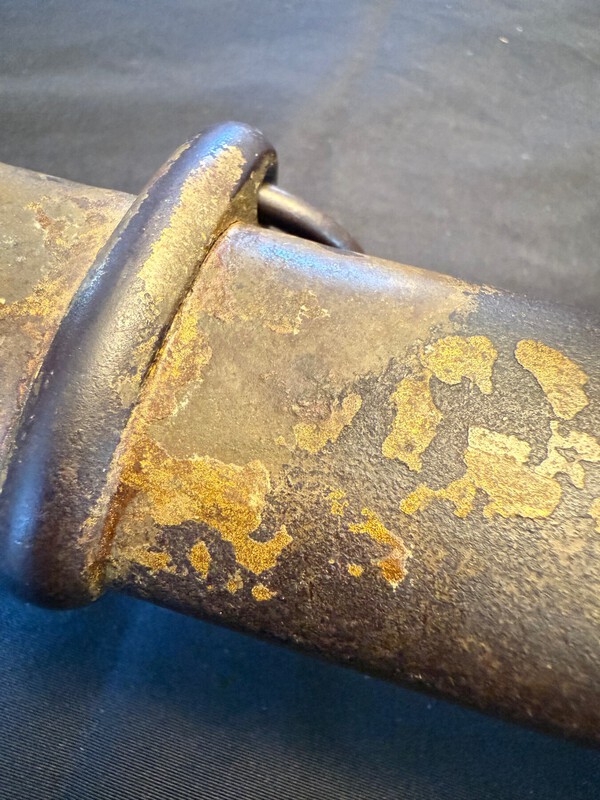
Thank you Bruce. I’ve been closely inspecting this sword for a couple days now. I suspect that on my Variation#1 Type 95 scabbard, that the gold paint was applied after the original olive/green paint. The gold paint also appears over the darker corroded areas that have lost the olive paint. This leads me to think that the gold paint was probably done later, or post-war. It’s got some glittery aspects to it also. -Sam

-
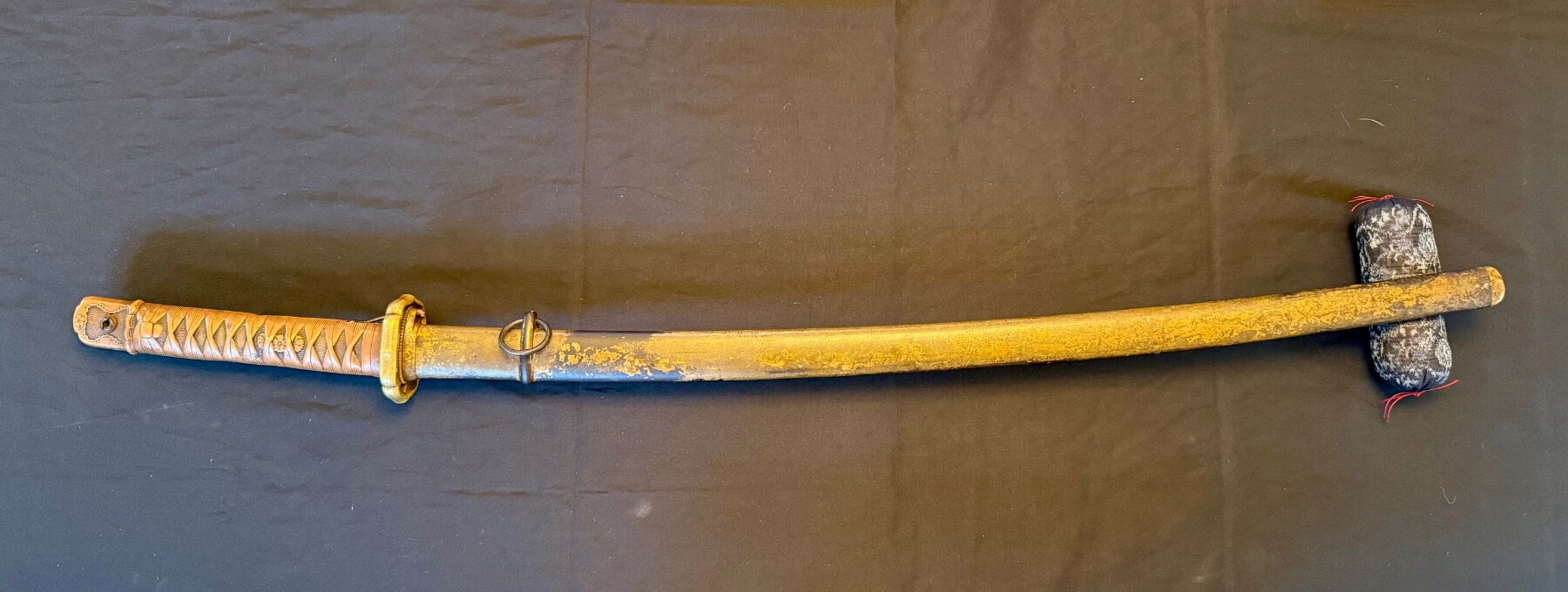
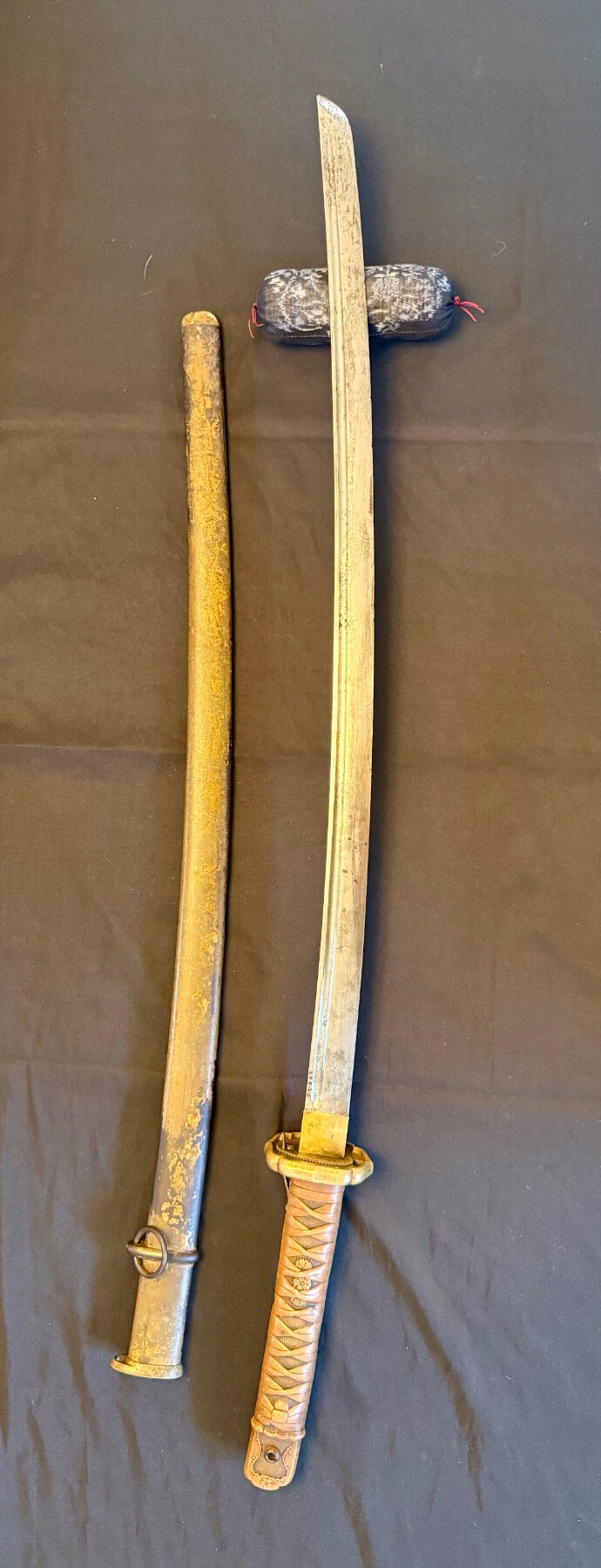
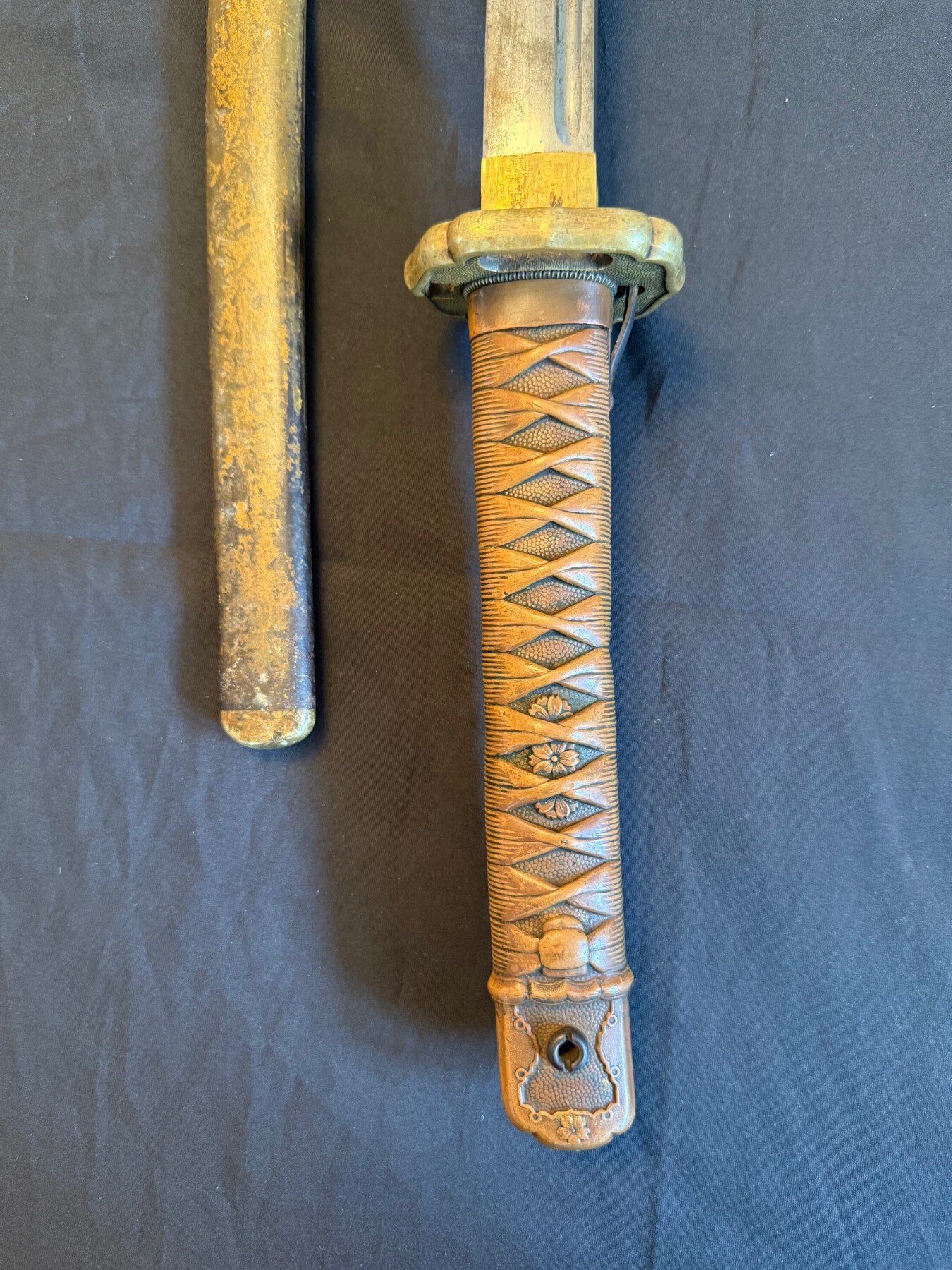
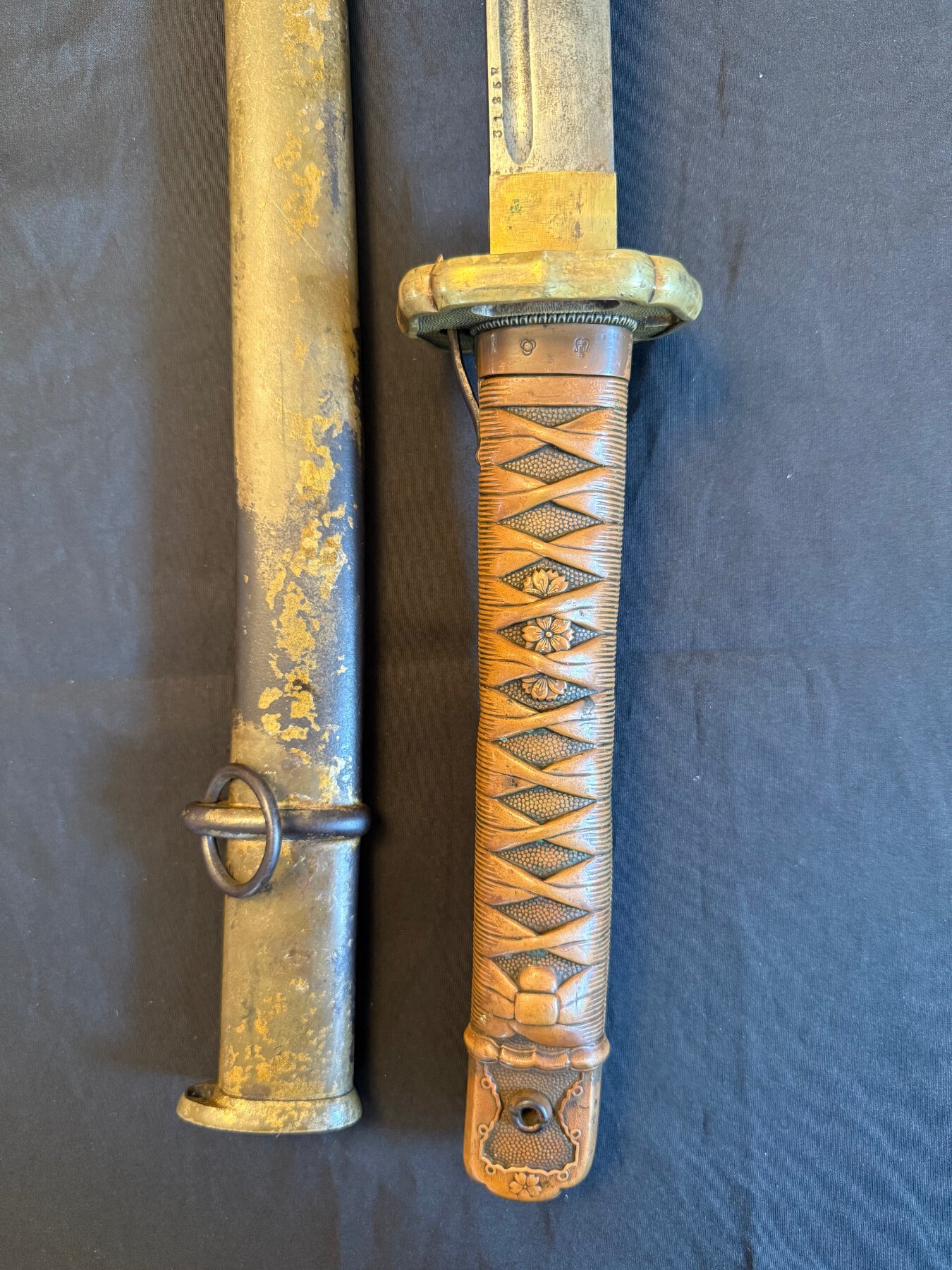
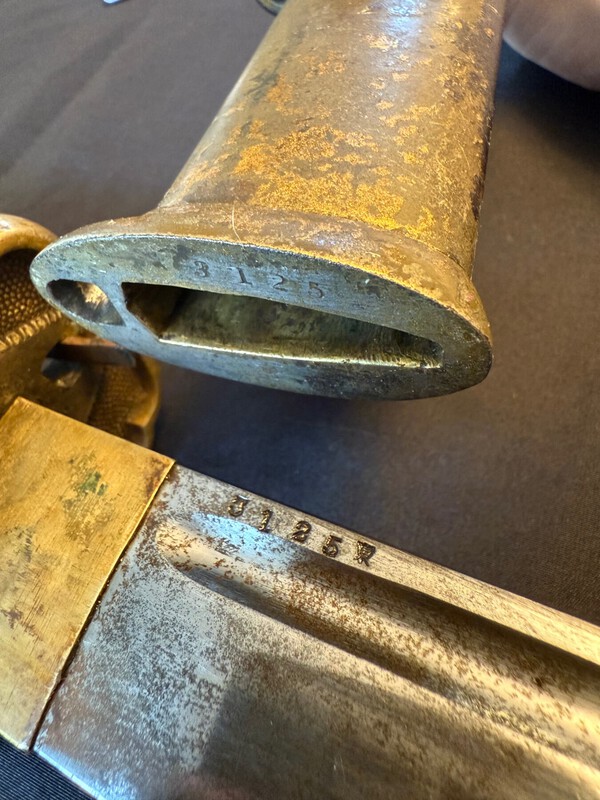
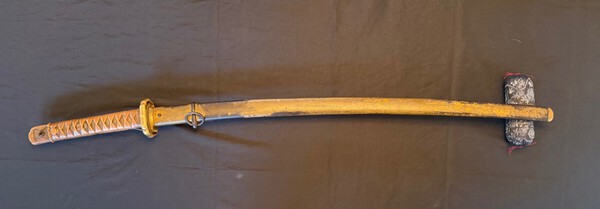
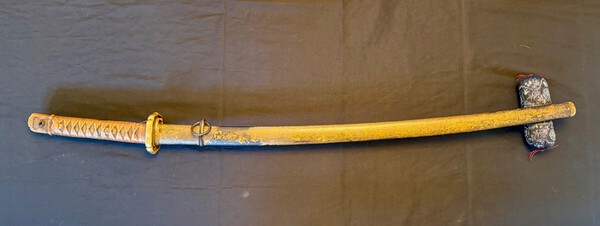
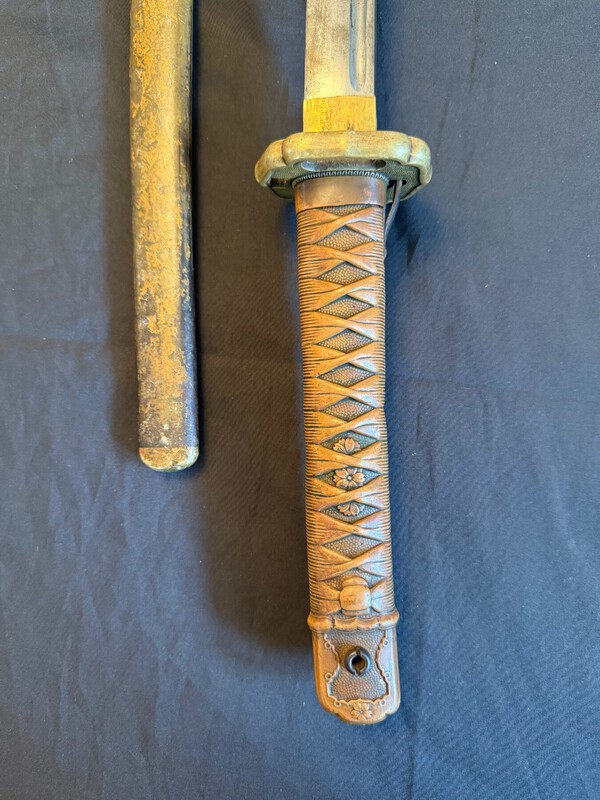
Very excited to have acquired my first Variation#1 Type 95. Serial number 3125 with matching scabbard number. @Bruce Pennington with remnants of thick gold paint on the scabbard. Im surprised to have found one of these so quickly. Fun stuff -Sam

-
Novel ‘oddity’ or painful to the eyes?
Scogg replied to Mark S.'s topic in General Nihonto Related Discussion
Suriage and osuriage has never really bothered me. I'm sure my collecting budget has something to do with that. Of course, I wish all swords were ubu. I also wish that I was taller I think it's interesting for what it is. That said, I'm not sure I would ever shop for, or buy something like this. -Sam -
Attention Mantetsu Owners: A Survey
Scogg replied to Bruce Pennington's topic in Military Swords of Japan
Awesome example in great looking fittings. I was drooling over that one, and other gunto on Mr. Singers Instagram recently Thank you for sharing, -Sam