16k
-
Posts
2,391 -
Joined
-
Last visited
-
Days Won
35
Content Type
Profiles
Forums
Events
Store
Downloads
Gallery
Everything posted by 16k
-
I would also think Koto, Mino, late Muromachi.
-
Shipping swords to Japan: COVID-19 update
16k replied to Ray Singer's topic in General Nihonto Related Discussion
Bryce, everything is slow worldwide at the moment. I don’t think that such a delay is Norman though. It doesn’t mean foul play or anything I think, but they have so much delay that it’s probably in a warehouse, forgotten somewhere. I have the same issue fortunately for just a seppa. Hopefully, when things clear up a little, your package and mine will be found but brace yourself for a very long wait and possible loss. -
Can you photograph both sides of the Hamon, please, Adrian?
-
I believe Shinto too.
-
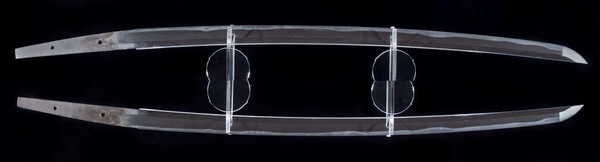
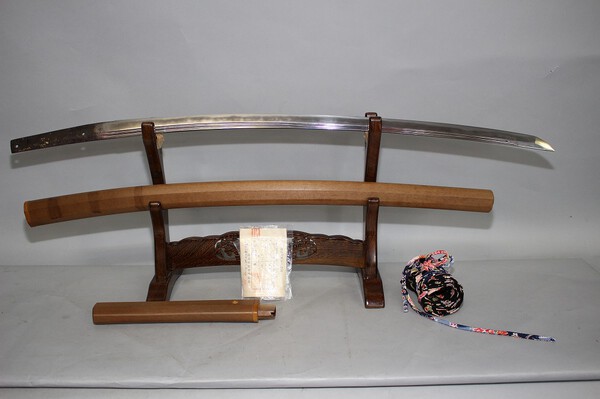
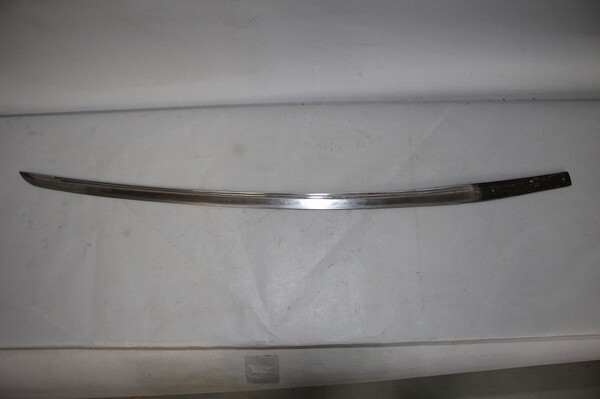
I guess the debate would be open between those two:
-
Sorry, but I highly doubt it is a Koto blade. Looks more like a kanbun Shinto wak to me.
-
Ray, I know they say not to remove rust, but I think it will need extensive repair before you can practice tameshigiri!
-
I have never seen one either, so it could indeed be the case. That said, it seems to be obvious on one side and not the other, so I’m leaning towards a nakago that was mangled by too tight or damaged Habaki. Then if it’s not soldered, it is a nice blade, with a nice hamon. If I had the money, I might have been tempted, but perhaps, with the doubts, you won’t get the price you want Krystian.
-
Mark!
-
Nice one!
-
Shipping swords to Japan: COVID-19 update
16k replied to Ray Singer's topic in General Nihonto Related Discussion
If I can help, pm me the tracking number and I’ll see what I come up with with my method. -
Shipping swords to Japan: COVID-19 update
16k replied to Ray Singer's topic in General Nihonto Related Discussion
What shipping service did they use? i often use 17track to track my packages. The latest info can be had there if you click the name of the shipping service (in blue hypertext) and select official website. Once there, track it again from here as they often include the final, local tracking number. If my post is hard to understand, let me know and I’ll provide an example with detailed pictures. -
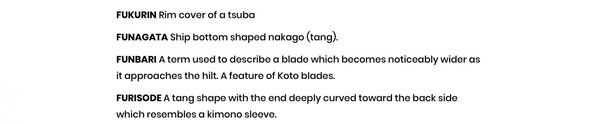
Funbari see,s to be a very complex and difficult to use word. It would seem that "real" funbari applies to older blades, pre Muromachi, where near the Habaki, the is a sudden enlargement of the blade. However, some people, and among them supposed scholars of nihontō, also use it even in books to speak of the general tapering of the blade from machi to kissaki. so maybe it is used because of a lack of specific word? A rare instance in Japanese nihontō study where an excess of Precise vocabulary seems to be the norm. Whatever, I personally use "funbari" in the first instance and just "tapering" in the second one to avoid confusion. But Ken, I understand your use of it. EDIT: for example, even in this book by an authority like Yoshindo Yoshihara, it is used in the machi/kissaki meaning. Then an excerpt from Nihontō.com where it refers to the first meaning. So a confusing term that can, I guess, be understood in both ways. Here is also a translation from a French source: Except in truly exceptional cases, all sword blades have a saki haba narrower than the moto haba. This difference can sometimes be quite significant and some authors call it funbari. In fact, the funbari 踏ん張り - which could be translated as "resistance" - is a marked increase in blade width a few centimeters from the machi. The ashi wofunbaru (bow on his legs) is a good illustration of the feeling of a man camped on his wide legs that the funbari gives. This is a feature on the end of Heian to early Kamakura blades which, of course, have not been shortened. I think this excerpt shows the confusion quite well.

-
It’s impressive how well it has survived to this day.
-
Attention Mantetsu Owners: A Survey
16k replied to Bruce Pennington's topic in Military Swords of Japan
That is very interesting. I don’t have an account at Warrelics so don’t often visit, and had missed this whole passage. I’ll be less stupid when I go to bed tonight. -
That one is beautiful. If only I had money...
-
Attention Mantetsu Owners: A Survey
16k replied to Bruce Pennington's topic in Military Swords of Japan
I know that, Bruce, but Mantetsu aside, wasn’t the W stamp used almost exclusively in the Tokyo arsenal? I personally think that (but can’t prove it) that the blades still showing Koa Isshin were made in finished in Manchuria while those made in Nanman with the W and plain Mantetsu were finished in Tokyo. This way, Koa Isshin was some sort of trademark while the plain Mantetsu absolved them of the final responsibility. Koa Isshin was in a way their equivalent of the W stamp. This is just speculation from me of course. I think the non Mantetsu don’t mean "Mantetsu made this" but "made the Mantetsu way" which would be different. EDIT: In 満鉄満鉄鍛造之 Mantetsu de kitaete kore wo tsukuru > Mantetsu Tanzō kore Mantetsu de kitaete kore wo tsukuru > Mantetsu Tanzō kore, there is the word "Kitae", which, I think means roughly steel. So in fact, I suppose that the right translation would be something like "made with Mantetsu steel" or "forged the Mantetsu way". A Japanese speaker translation would be welcome. -
Attention Mantetsu Owners: A Survey
16k replied to Bruce Pennington's topic in Military Swords of Japan
The W stamp and Nan stamp. Apparently those were blades "finished" in Tokyo, whatever that means. -
Another thing that comes to mind. Don’t knowing it is the case here (it is on one of mine) but if the saya has the same issue and feels to tight going to the top of the Habaki, don’t push it all the way. Push it just to the point where it feels secure and stop or you risk splitting the saya.
-
Yes, same thing for me in France. The very first time it happens. If there isn’t any emergency at stake, I would just wait. It’s what I’m doing. Otherwise, wrap some heavy cloth around the blade to hold it and use a wooden or rubber hammer gently on both sides of the tsuka near the Habaki. It should come off without damage.
-
Attention Mantetsu Owners: A Survey
16k replied to Bruce Pennington's topic in Military Swords of Japan
I have only two. One from 1940 and one from 1943, so that’s not enough sampleS to draw any conclusion, but it is true that the hada is mOre visible on my 43. This one was finished in Tokyo, so maybe it’s a question of polishing. Also, it could only mean that the later blades saw less action. -
You’re welcome Jeff. To be honest, books would be a good start. We all do the mistake of buying before knowing. Must have happened to almost all of us!
-
Seki blades came in all kinds, from just cut out to fully traditional. If the blade isn’t traditional, it means that at least one of the proceedings wasn’t traditional. Mostly, cutlery steel and oil quenched. For collectors of nihontō, they have little value. However there are also militaria collectors And they value them too. I, personally, love both as historical objects. Many people here do too. Generally, a water quenched blade will show what are called activities (not always the case though) like spots, lines and others in the Hamon. All of these have special names. An oil quenched blade very seldom shows these and looks more like a line. If there are peaks in the Hamon, at the top, you will often see dull dark spots that are telltale signs of oil quenching.
-
Why don’t you buy from the dealers of this site? Ray, Ed or Gray? Plus you can often find good deals in the sale section. At least, they can be trusted.. there are some good and honest dealers on EBay, but you have to know what you buy because lots of Gimei (not necessarily bad blades though) can be found on auction sites. As for the papers you mention, those are Torokusho. These are just registration papers required by Japanese laws. They do not mean the blade is shoshin, just that it was registered with the authorities. They send copies because when a blade is de registered, the paper goes back to the authorities. Of a dealer sends you the original, the blade was certainly smuggled out of Japan.
-
I have an undated stamped sword. With a Showa stamp, so we can roughly date it to 1940, but no other dates.