Bruce Pennington
-
Posts
14,654 -
Joined
-
Last visited
-
Days Won
176
Content Type
Profiles
Forums
Events
Store
Downloads
Gallery
Everything posted by Bruce Pennington
-
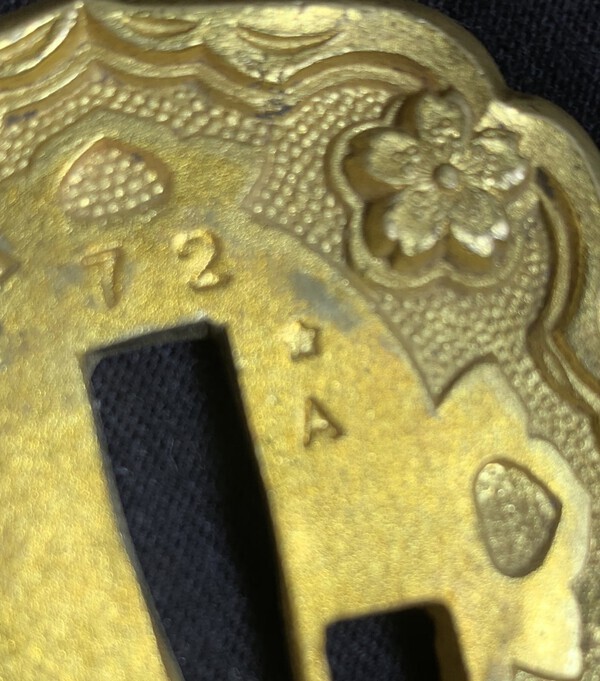
Yes, quite rare. I have a couple of single stars on seppa, and I want to say I've seen a double, but I cannot find it in my files, so this is the first on file now. Here are the 2 I have:

-
 There are no obvious signs that this was fitted out for the War. Do yourself a favor and take it over to the Nihonto forum. There are lots of guys there that can evaluate the blade and give you ideas on a date range.
 -
The one on the left is a stamp for private forges.
-
Yes, this was made by Suya Shoten Co., inspected by the Tokyo 1st inspectors, and approved by the Kokura Army Arsenal.
-
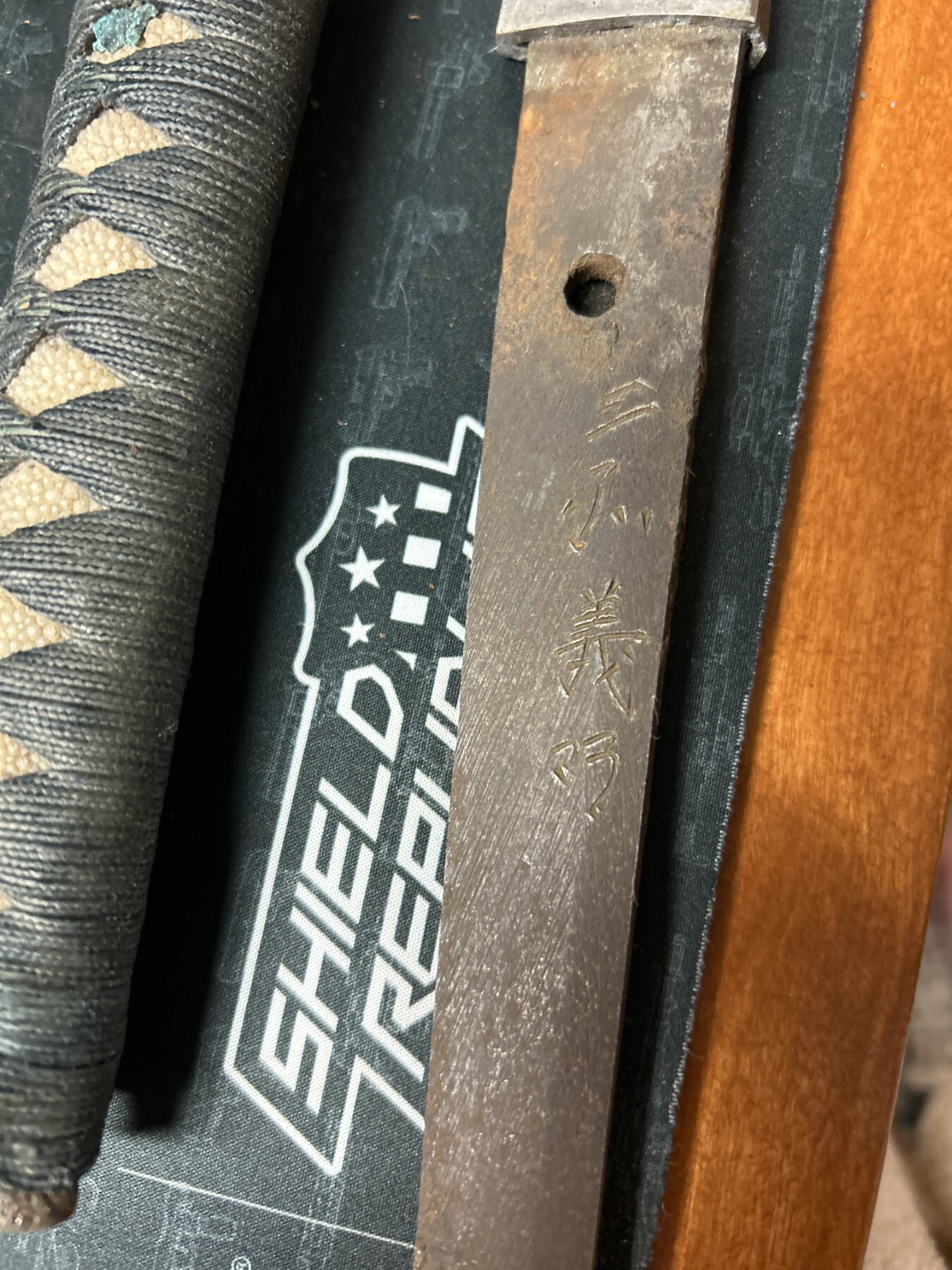
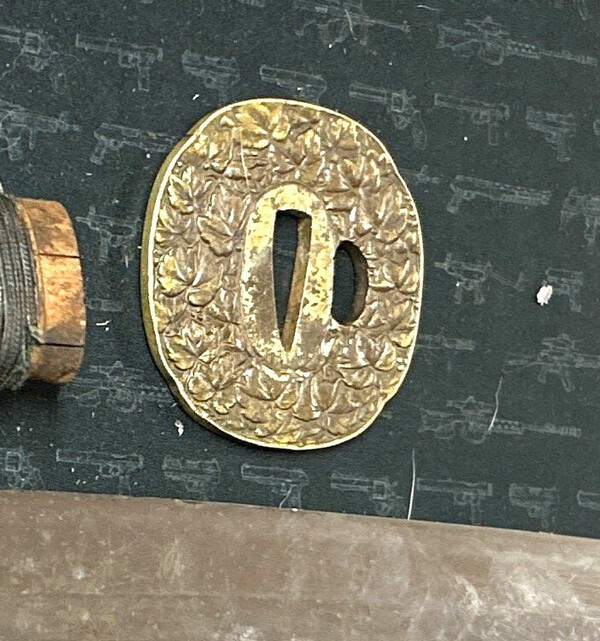
Another of the "grape leaf or Budo" style on this rig posted by LiLDJT on THIS GUNBOARDS THREAD. Haven't gotten the mei translated yet. Yoshi-something.


-
TV documentary about a bring back Shin Gunto
Bruce Pennington replied to Banton989's topic in Military Swords of Japan
Ha! Yes, you could see multiple finger prints along the blade. Ah So, finished the show. I liked it. So dang many stories could be told from that war, and every one moving, and emotional. I got a little chuckle at the end when she finished visiting with the Japanese family members and offered that if they wanted to see the sword, they were warmly invited to visit her in Ireland! Ha! That gal had no intentions of repatriating that sword! Her grandfather earned it. -
TV documentary about a bring back Shin Gunto
Bruce Pennington replied to Banton989's topic in Military Swords of Japan
Link works for me. Looks interesting, I'll check it out later today. -
SHOW US YOUR GUNTO HORIMONO
Bruce Pennington replied to IJASWORDS's topic in Military Swords of Japan
That is an incredible item, Volker! Wow. -
SHOW US YOUR GUNTO HORIMONO
Bruce Pennington replied to IJASWORDS's topic in Military Swords of Japan
Well, Michael, looks like you've been holding out on me! I don't have that Shigemasa kakihan (kao) on file! In fact this is the first time I've seen a Shigemasa kakihan. Thanks, though, now I do! -
Help identifying a sword
Bruce Pennington replied to Mountain Man's topic in Military Swords of Japan
@BANGBANGSAN -
Again, thanks guys! I was bothered by the small stroke at the left base of the second kanji, but after seeing Moriyama-sans post, I checked Sesko. He uses this, and it matches (wow, when I copy and paste, it changes the kanji to 行直) I'm taking a screenshot and posting it.

-
Yes. Whether actual or fake, I don't know.
-
Kane Something, Again!
Bruce Pennington replied to Bruce Pennington's topic in Translation Assistance
Dang, I thought about 'take', but just didn't seem the same. Thanks Steve! -
Would love some info on this mei and the smith.
Bruce Pennington replied to Hector_A's topic in Translation Assistance
TADAYOSHI (忠善), 1st gen., Shōwa (昭和, 1926-1989), Shimane – “Izumo no Kuni Minari-jū Kawashima Tadayoshji saku” (出雲国三成住川島忠善作), real name Kawashima Zenzaemon (川島善左衛門), kihin no retsu (Akihide), First Seat at the 6th Shinsaku Nihontō Denrankai (新作日本刀展覧会, 1941)- 1 reply
-
- 5
-

-
Yukimichi with the alternative michi! Thanks guys! Sorry, these are photos from an auction site, so the only one's available.
-
I know I've seen this one, but can't find that second kanji of the name:

-
For anyone tracking Kobe/Ichi serial numbers. Found on this Connecticut Firearms Auction.
-
Seki Inspection Tag On Combat Saya.
Bruce Pennington replied to mauser99's topic in Military Swords of Japan
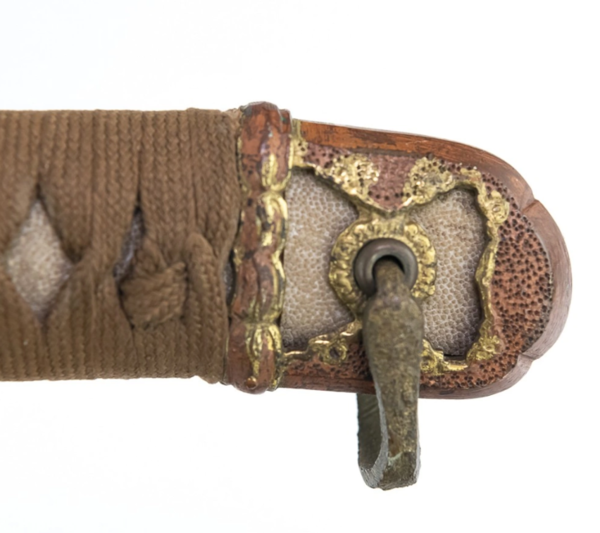
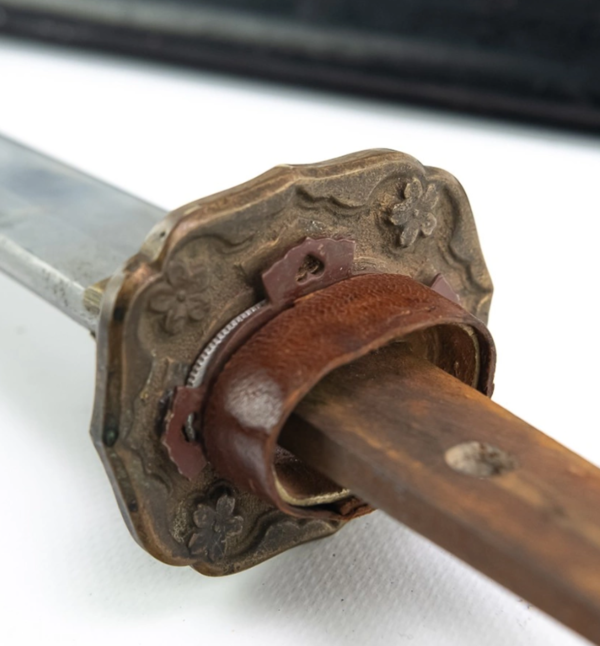
Hmmmm ..... Another, large Seki stamped blade, so likely 1942 although it's not dated (and large Seki stamps have been seen as late as 1944). Shocking to see the really poor quality of the fittings, both kabutogane and tsuba. I'm surprised that Seki Cutlery would agree to put their approval stickers on such work. At a Donely Auction HERE.

-
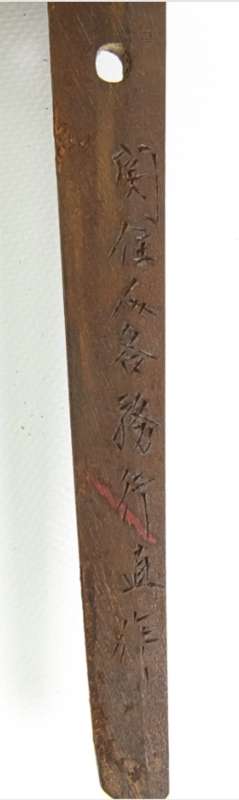
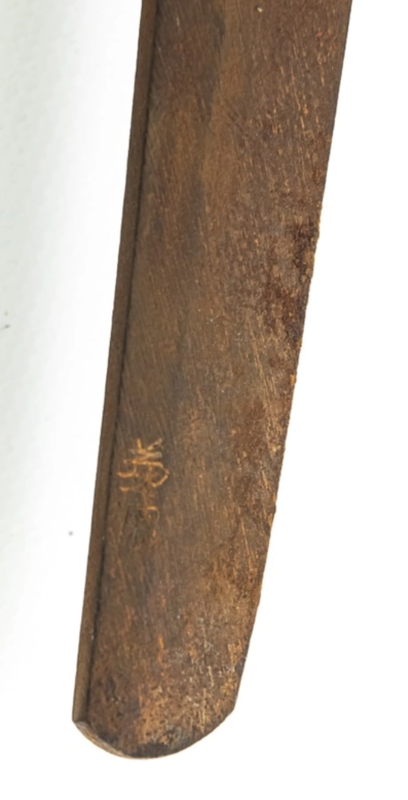
"Seki" is as far as I can get! And any chance this means something? Thanks guys!
-
The Mysterious "w" Stamp!
Bruce Pennington replied to Bruce Pennington's topic in Military Swords of Japan
You’re right, Tristan good eye my friend! -
Thanks, John! I only have one other blade with the stamp on it, so now I have two!
-
The Mysterious "w" Stamp!
Bruce Pennington replied to Bruce Pennington's topic in Military Swords of Japan
Wow, how strange. The "hisa" is missing from the mei! It fits the profile of a Takehisa blade. Thanks for posting it. -
Attention Mantetsu Owners: A Survey
Bruce Pennington replied to Bruce Pennington's topic in Military Swords of Japan
Thanks Mark, nice gunto! -
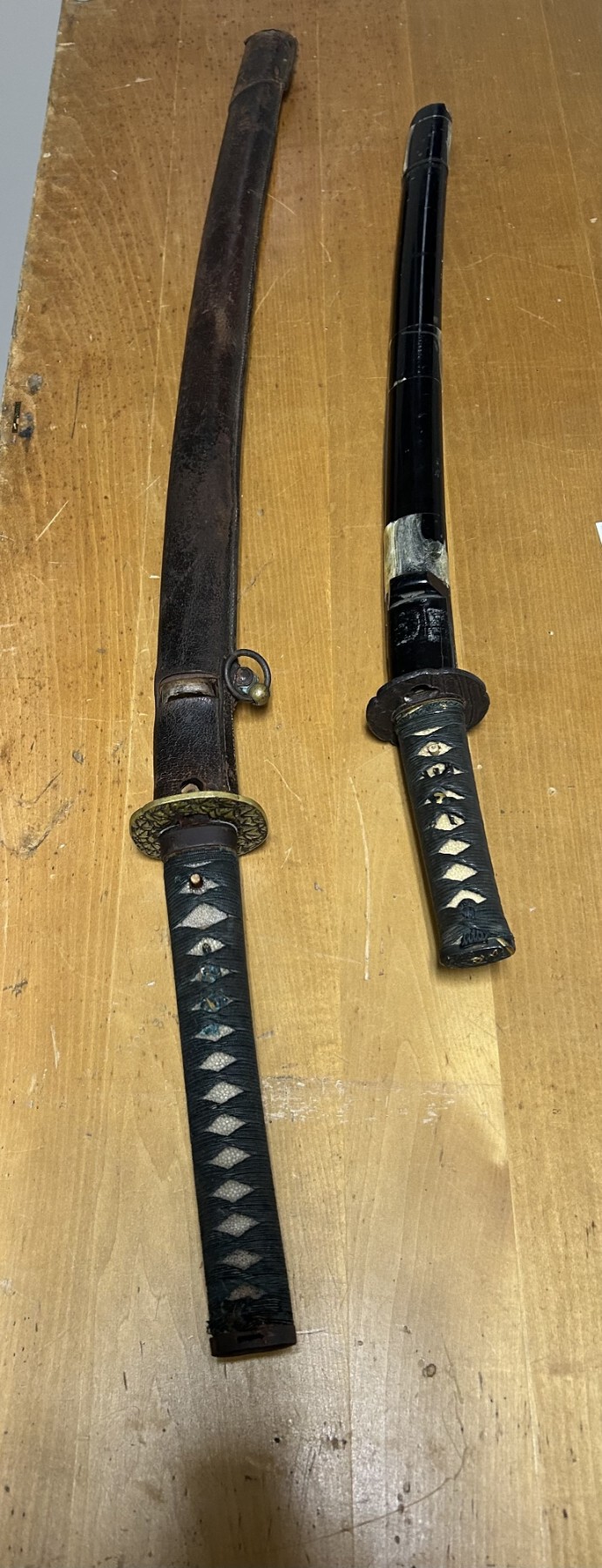
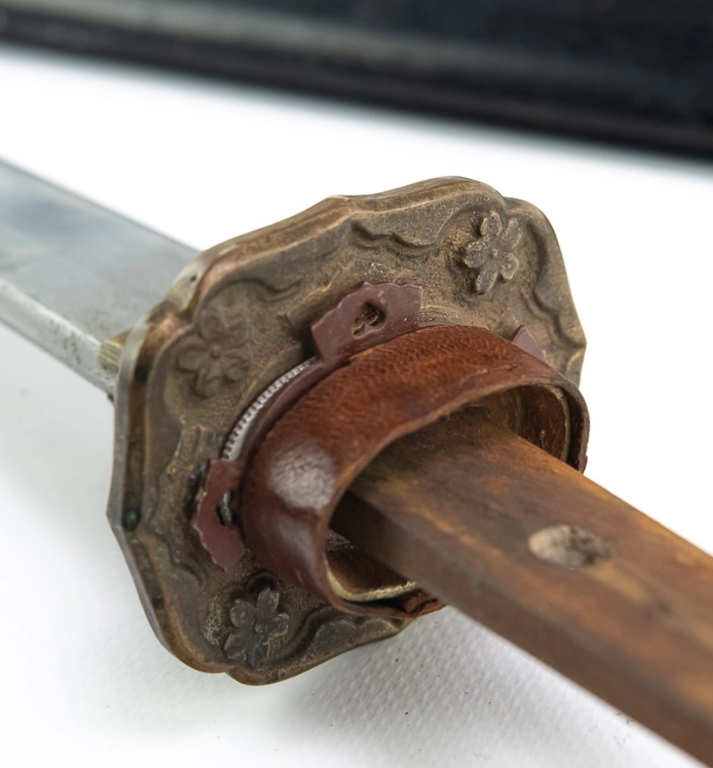
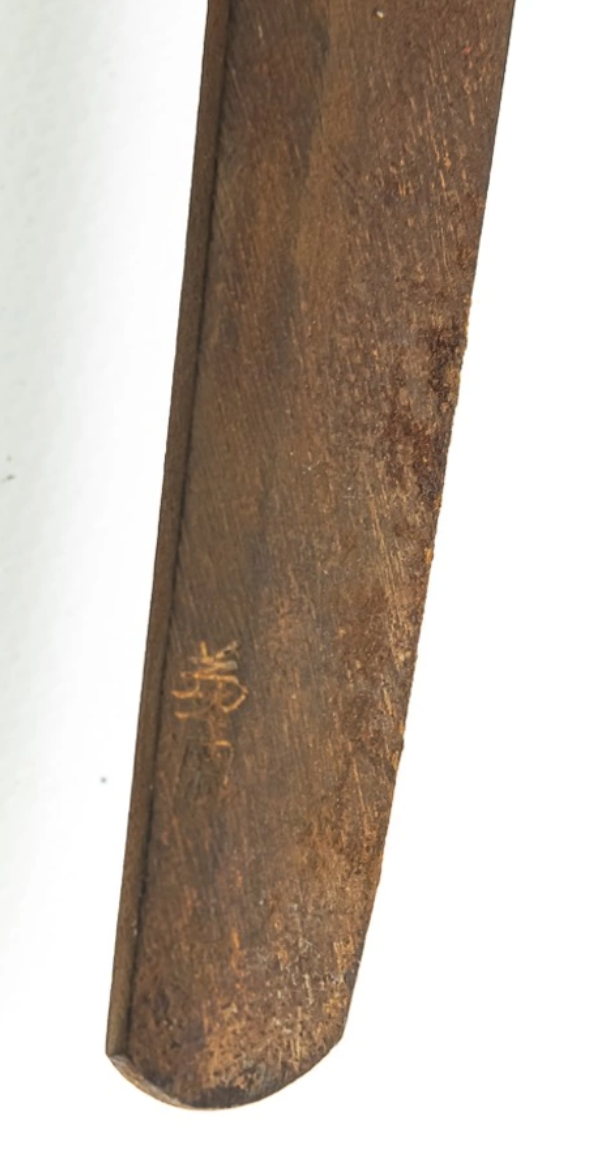
Mike, The wooden saya would have originally been covered in leather. The torn leather seppa would have had a tab with a snap. Swords in the "combat saya" or "informal saya", as Ohmura called them, usually come with a tsuba that has a larger side hole for the leather tab. Your tsuba looks like it was originally made for a metal chuso latch, then widened for the leather tab. The lower positioning of where the tab was on your seppa lines up with the widened hole.
-
Type 98 Translation/ID (Seki Toku?)
Bruce Pennington replied to CowboyVittles's topic in Military Swords of Japan
Thanks Brandon! You have the larger SEKI stamp to the right of the hole (ana) in that first photo. The rest are just metal flaws/pits. Seeing that, I would say your blade is nicely made showato, not traditional. I appreciate the update.