Bruce Pennington
-
Posts
14,652 -
Joined
-
Last visited
-
Days Won
176
Content Type
Profiles
Forums
Events
Store
Downloads
Gallery
Everything posted by Bruce Pennington
-
Eric, Are you finding that all Nagamitsu blades are marked with a serial number? Seems like I've seen this discussed on another thread somewhere.
-
Is that the original polish?
-

Help To Identify Officer's Sword
Bruce Pennington replied to bobbernard's topic in Military Swords of Japan
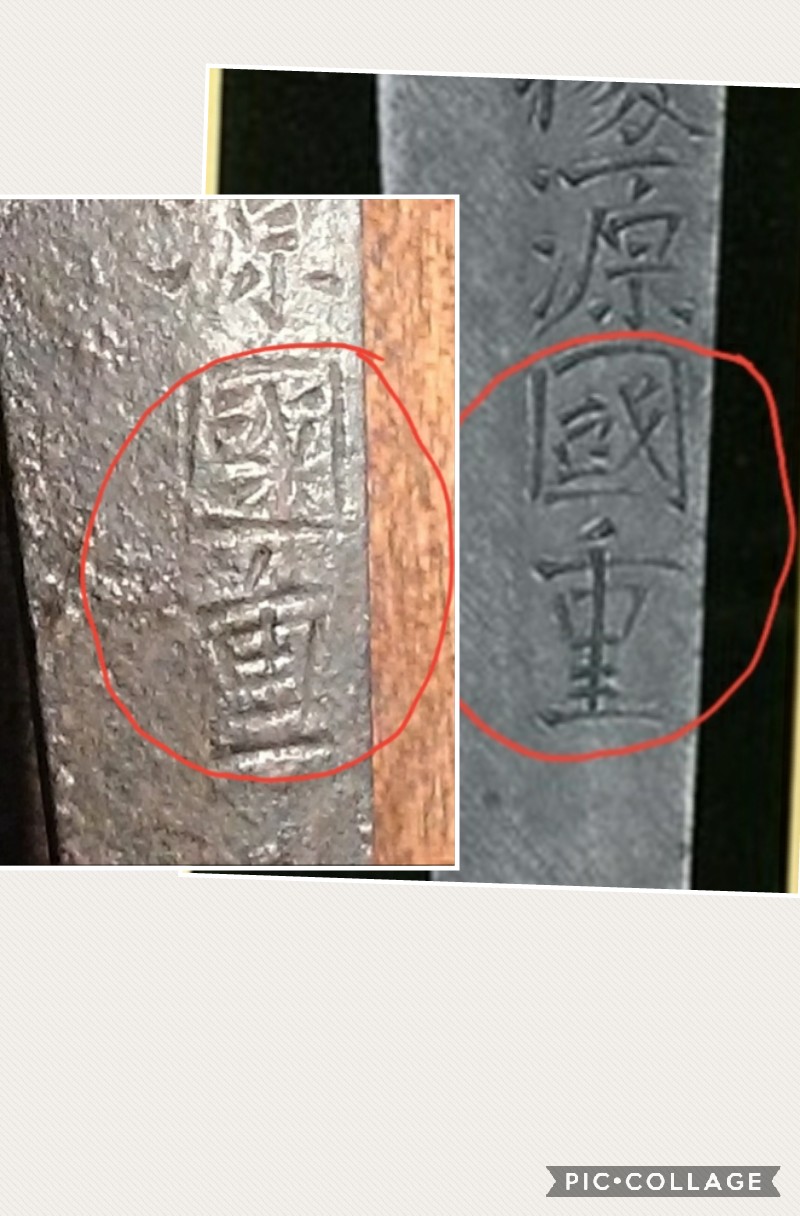
Bob, I am no expert on mei, so everyone please forgive me for trying! BUT, look at the two bottom kanji. You can see obvious differences on HOW they are written. As I am learning, this most likely means that the two were not the same smith. If it's a famous smith, it often means geimei, or a forged signature to enhance the selling price of the blade. I'm not saying this is geimei, though, I don't know near enough to make that call.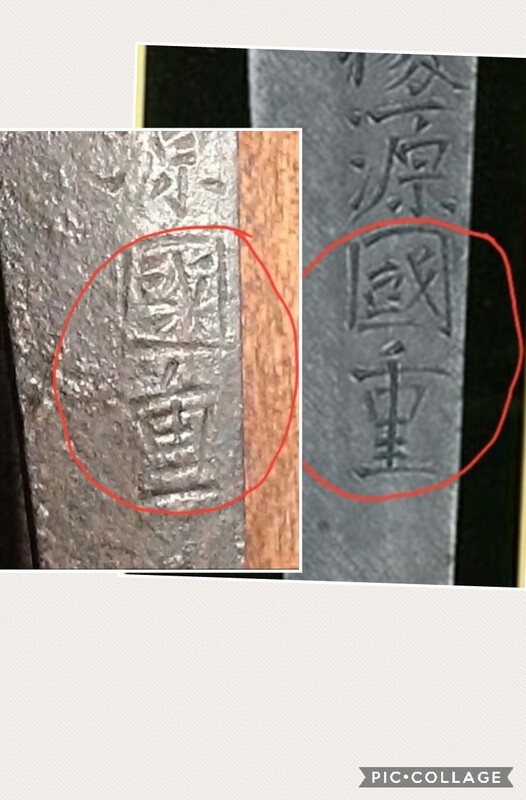
-
Ed, yes please! We collectors are learning as we go, over time. Every update is important! My gut is with Vajo on this - the fittings seem to have bee installed after the wrap. The ashi is not removable, as I understand them, so, it would seem to me that it was put on after the wrap was installed, making it original to the saya. Quite interesting piece!
-
Ed, I've seen these discussed before. Here's a thread at Wehrmacht-awards where Bob Coleman feels the one in question was wrapped in the Phillipines. If you're a member there, this would be a good one to add to the discussion. If not, I could post the pic for you. http://www.wehrmacht-awards.com/forums/showthread.php?t=327661&highlight=rattan+wrap&page=2 I know I've seen more, but this is the only thread I can find right now. And yes, this one is commonly called the Type 3, '44 model, Contingency model, Rinji model, etc.
-
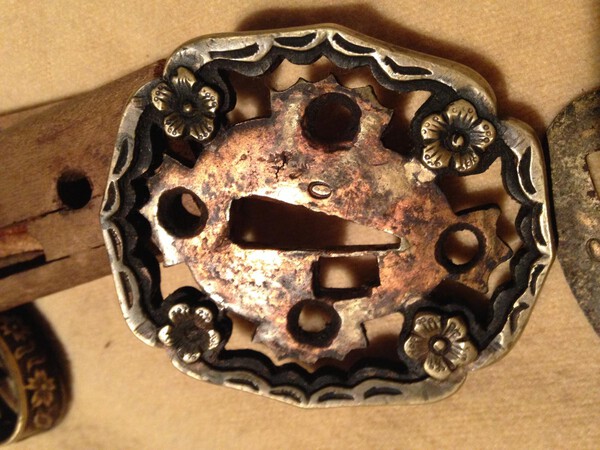
Yes, my kudos too, to David! I really have a hard time finding old posts like that! John, you're tsuba with the round holes is interesting. I can't say I've ever seen one that way, other than the one I have, and I've always thought mine was a poor fake. But yours looks quite legit. Mine must be the faker's attempt at copying the style you have there.
-
Tom, The pictures aren’t close enough to show enough detail of the white paint, but it does have the look of the original color used by the forces that invaded Alaska. Better pictures would be nice.
-
Pictures Of "tanker"
Bruce Pennington replied to Ontario_Archaeology's topic in Military Swords of Japan
I suspect the term caught on when Ohmura posted it on his website. To my knowledge, there are no photos showing pilots/sub'ers/tankers carrying waki's, while there are photos of pilots with full-length gunto. It's possible Ohmura-san was speculating when he labeled them as such. Doesn't mean he's wrong, of course, but the community is still awaiting evidence of their use this way. Very nice collection and display Matt! -
Show Us Your High Class Gunto
Bruce Pennington replied to lonely panet's topic in Military Swords of Japan
Bernard and Ray - both fabulous, thanks for sharing!!! -
Pictures Of "tanker"
Bruce Pennington replied to Ontario_Archaeology's topic in Military Swords of Japan
Ok, that fits better! "pilot" or "sub" would still fit the Type 97 Navy fittings. They all look original. -
Pictures Of "tanker"
Bruce Pennington replied to Ontario_Archaeology's topic in Military Swords of Japan
Gorgeous, Matt! Do you have the nakago translated? Also, I'm pretty sure the Navy didn't drive tanks. Do you mean that it's a waki? -
Attention Mantetsu Owners: A Survey
Bruce Pennington replied to Bruce Pennington's topic in Military Swords of Japan
Update: 37 Mantetsu blades with dates & serial number (4 more w/o date; 1 w/o katakana) Interesting development: 2 blades from 1938 used Alpha numeric serial numbers. Litterally C30 and N206, not katakana, and numbers are English. Appearantly the katakana and Japanese numbering began in 1939 (unless we discover a '38 blade marked in Japanese). While the sample is still extremely small compared to total production, so far, half the numbers fall in the "A" line of katakana. Yet, it seems all 50 kanji were started simultaneously as they are scattered throughout the years. For example you'll see a NA and a HO - both at far ends of the chart from each other - in '39. One mystery is the SA 520, made in '40 and the SA 459 made in '43 - meaning these blades were not made in sequential order, unless another explanation can be put forth. Only 2 blades have been found, so far, with 4 digit serial numbers: SE 2340 and HI 1155, both made in '44. No blades yet from '37, '38, or '45. Charts attached. Maybe someone who works with numbers and patterns may see something useful. If so, let us know! Mantetsu Serial Numbers.docx -
Another Sword Asking For Help Please
Bruce Pennington replied to bwanapete's topic in Military Swords of Japan
Dang, Steve, you’re right! I couldn’t see that 7 until now. I’m blaming bad lighting! Ha! -
If you don't get a translation of the tag here, you could take it over to the "Translation Assistance" forum where that's all they do. http://www.militaria.co.za/nmb/forum/15-translation-assistance/ There is at least one organization that specializes in repatriating war flags, but like the guys above, I have read several stories where the receiving family just turned around and sold the flags on ebay. There was a famously covered story of a sword that was returned. So special permissions are obviously possible to return war weapons such as this. Info on Japanese govt effort to return flags and 1000 stich belts: http://www.warrelics.eu/forum/Japanese-militaria/government-Japan-will-now-act-intermediary-case-you-wish-return-war-relics-families-679338/ If she goes through with this effort, she should just be realistic and know that the results are at best 50/50% on how it will be received on the other end.
-
What’s the second one from the right, Neil? Everything about it looks unusual !
-
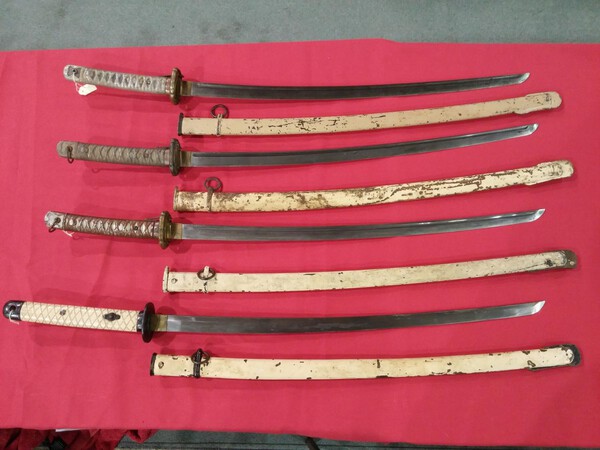
I see this was posted 5 years ago, and just moved to this forum, so comments to the original people invovled probably aren't necessary, but for the sake of new readers that might happen along, I'll add that the first gunto at the top is likely showato, as the guys already pointed out. While there is some debate about arsenal stamps simply being acceptance stamps, most evidence indicates that their presence also means "non-traditionally made."
-
Another Sword Asking For Help Please
Bruce Pennington replied to bwanapete's topic in Military Swords of Japan
A small update: I just saw this seppa on Warrelics, owned by Shamsy, on an old sword that was used during the war. It has the same edge-style like this one on this thread. Obviously older, where this one looks new. But might add some legitimacy to this one?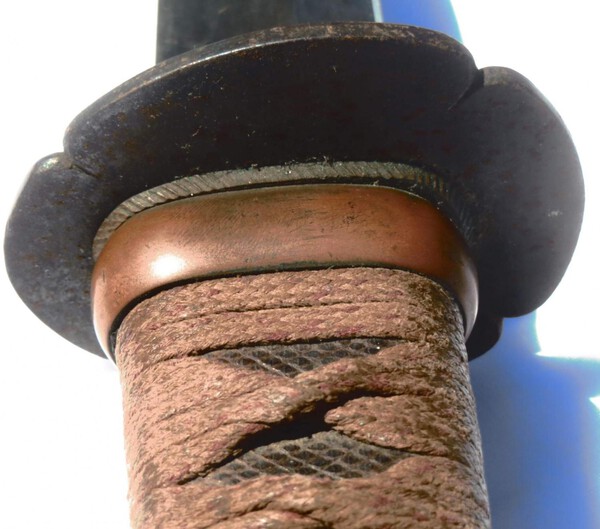
-
Bryce, I've never seen, nor heard of anyone who has seen, the official Army spec order delineating saya color. Ohmura, when discussing colors other than IJA green, calls them "special order..." http://ohmura-study.net/714.html
-
Another Sword Asking For Help Please
Bruce Pennington replied to bwanapete's topic in Military Swords of Japan
Dave, Well, Dave, now that you mention it, a closer look at the ito does show hand-oil staining/darkening. I'd say with the saya being standard IJA spec, it's not like any other PETA or Occupied Lands work I've seen. If it's all original, then I'd default to a custom-order arrangement. You see things like this on fittings for an old blade, I've just never seen such a customization on a showato. But, like we all know, the only thing certain about WWII Japanese showato that that there is almost nothing certain! Concerning the tassel, we were discussing tassel standards on the Warrelics forum, and some of us started taking measurements and comparisons. I feel like there must have been many contractors making those things too, which injected variations is style, length, and quality as well. Who knows?! -
Mark, I tried to slide them out, but they're in tight.
-
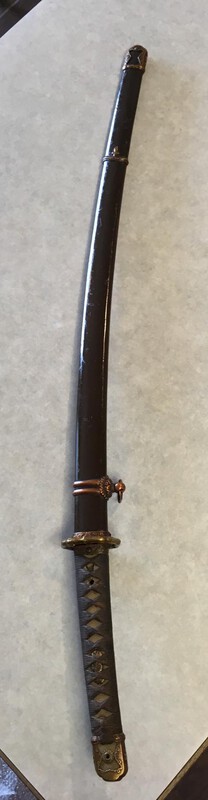
Just got my second Metetsu gunto! Decent blade, with some nicks in edge and a couple of gouges in the kissaki edge. Nice fittings, though missing all seppa, sarute, and mekugi. Also, the spring for the latch is broken off. Koa Isshin, Fall 1940, ser# Ru 199 Interesting saya liner! It's doubled. There is a thin liner within the outer liner.



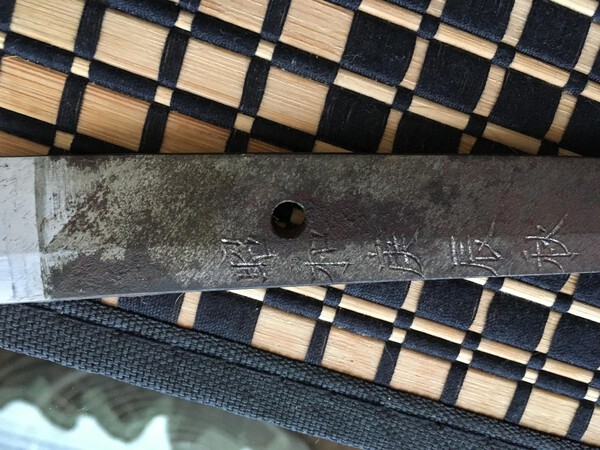

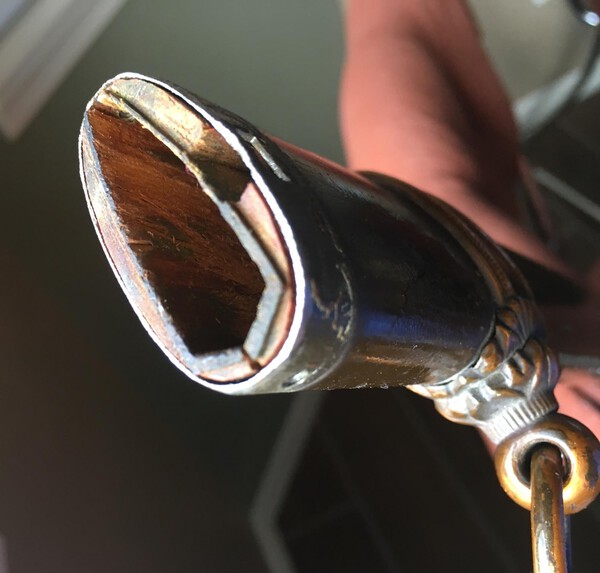


-
Another Sword Asking For Help Please
Bruce Pennington replied to bwanapete's topic in Military Swords of Japan
I don't know the smiths. Brian and Stephen have a better feel for that. Some famous smiths can garner those prices, and some Shrine swords. But if he's not one of those, then Showa gunto are currently selling from $800 to $1,200. I would personally wouldn't pay over $900-1,000 considering the non-original (though high quality) replacement parts. -
Another Sword Asking For Help Please
Bruce Pennington replied to bwanapete's topic in Military Swords of Japan
Stephen, kabutogane, menugi, habaki, and tsuba seem original, but the fuchi looks new. -
Another Sword Asking For Help Please
Bruce Pennington replied to bwanapete's topic in Military Swords of Japan
Pete, The year is 1945. The kanji look different because they written in the Japanese equivelant to our Script writing. The handle looks to have been recently re-wrapped, and the sarute (tassel loop) look new. Can't say if the rank tassel is original or a repro. Nice blade! -
Good catch Steve! Matches the oshigata now!