Bruce Pennington
-
Posts
14,501 -
Joined
-
Last visited
-
Days Won
175
Content Type
Profiles
Forums
Events
Store
Downloads
Gallery
Everything posted by Bruce Pennington
-

Mei and emblem on Old Blade
Bruce Pennington replied to Bruce Pennington's topic in Translation Assistance
Thanks guys! While browsing to find other examples of a 1-leaf Aoi Mon, I came across this web page showing the line from Ujifusa (1596) and it had 5 other examples of Masakiyo blades with the mon and a couple Yasuyo blades using it. Both were in the line of Ujifusa smiths. http://www.sho-shin.com/shinto-satsuma.html UJIFUSA KEI-CHO 1596 |_________ ___|_____ ___|_______ UJIFUSA MASAFUSA |___________ ___________ ___|_______ ___|_______ ___|_______ _______________ MASAFUSA YASUYUKI YASUSADA OKU TADAKIYO ___|____ ___|_______ ____|____ YASUYO MASAFUSA HIDEOKI ___|_____ |____________ ____________ YASUARI ___|_______ ___|______ ____|______ MASAKIYO KUNIHIRA MOTOSADA ___|________ ____|______ MASACHIKA MOTONAO ___|_______ | MASAHIRA | (MASAYOSHI) | ____________ ____________ _______________| ___|________ ___|________ ___|_______ MOTOYASU MOTOTAKE MOTOHIRA KAN-SEI 1789 |_____________ ___|_______ ____|______ (see SAIKAIDO The Eight Roads - SHINTO) MOTOHIRA MOTOOKI for SHIN-SHINTO SATSUMA lineage ___|_______ MOTOHIRA I don't understand the reason for the 1-leaf, but for now, I'll have to just assume it was a variation, as mon all have multiple variations, and list it as such in the Stamps Doc. -
Mei and emblem on Old Blade
Bruce Pennington replied to Bruce Pennington's topic in Translation Assistance
Thanks George! Maybe someone will recognize it. My first thought was something from Buddhist imagery. -
Thanks Steve. Appreciate the digging. Sounds like someone concocted a unique name for this blade, reasons unknown. I'll simply log it in, as is. Thanks again!
-
Any help? @george trotter @mecox @SteveM @Kiipu etc.
-
Mei and emblem on Old Blade
Bruce Pennington replied to Bruce Pennington's topic in Translation Assistance
George, Forgive my complete ignorance of these things, but I already have this mon filed for Tokugawa: Is there more than one? Or is there a difference between a crest and a mon?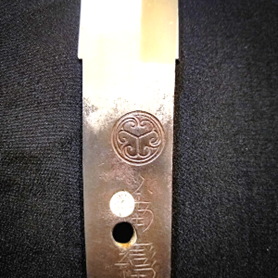
-
Arsenal Mark on RJT sword Fittings
Bruce Pennington replied to george trotter's topic in Military Swords of Japan
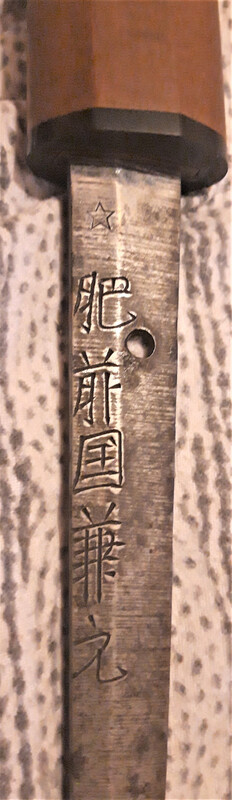
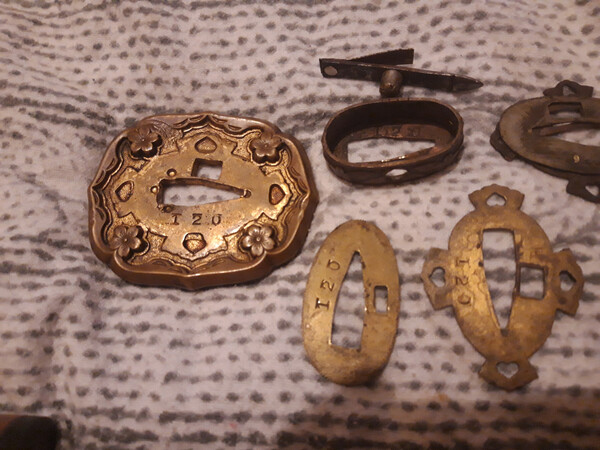
Here are the photos of Ian's blade - @zentsuji2 - It's actually September 1942, so 2 years earlier than the previously recorded blades.

-
Mei and emblem on Old Blade
Bruce Pennington replied to Bruce Pennington's topic in Translation Assistance
Thanks George, I'll pass it along. If he posts more pics, I'll update here. -
Emergency Late War Officer Gunto
Bruce Pennington replied to Bruce Pennington's topic in Military Swords of Japan
Yes. When you read their stories/book of WWII, it was an 8 year war for them! It's interesting that several changes started occurring in '42/'43 like manufacturing regulations, SMR changed their mei, and even inspector stamping procedures. I think the term is used mostly, in Sword-World, though to denote the dramatic changes we see in swords of the final year of the war. -
That's the most pristine Iijima stamp I've ever seen! That's going to replace the one I have in the Stamps doc, in the next revision.
-
I agree, Gilles. It's a fascinating idea, Noah, that the sakura might have been intentionally removed before surrendering it, like the defaced mums on rifles. Dawson's book costs more than Fullers, but it's all in color and has more stuff. Both are essential references. As to the 8 or 19, Dawson says this "Type 8 kyu-gunto scabbards have two suspension mounts. Both mounts are permanently fixed to the scabbard. Type 19s initially also had two suspension mounts, but the lower mount on those is removable. At some time after the introduction of the Type 19s, sword makers began making scabbards with just one suspension mount. As a matter of record, Army Uniform Regulations were amended in 1932 to include the provision that the lower mount be removable on swords produced with two suspension mounts." So, 19s produced before '32 could still have 2 permanent suspension mounts. Like Gilles said, though, the backstrap pattern on yours appears to be quite early, so it's likely an 8.
-
Arsenal Mark on RJT sword Fittings
Bruce Pennington replied to george trotter's topic in Military Swords of Japan
Sent a PM, Ian. I appreciate getting your blade info. I have some of his from Aug '44, so yours will be the first one from '43 on file. -
Just looked at a few Nagamitsu on file, and agree. The nakago and yasurime, or almost lack of it, is classic for his style.
-
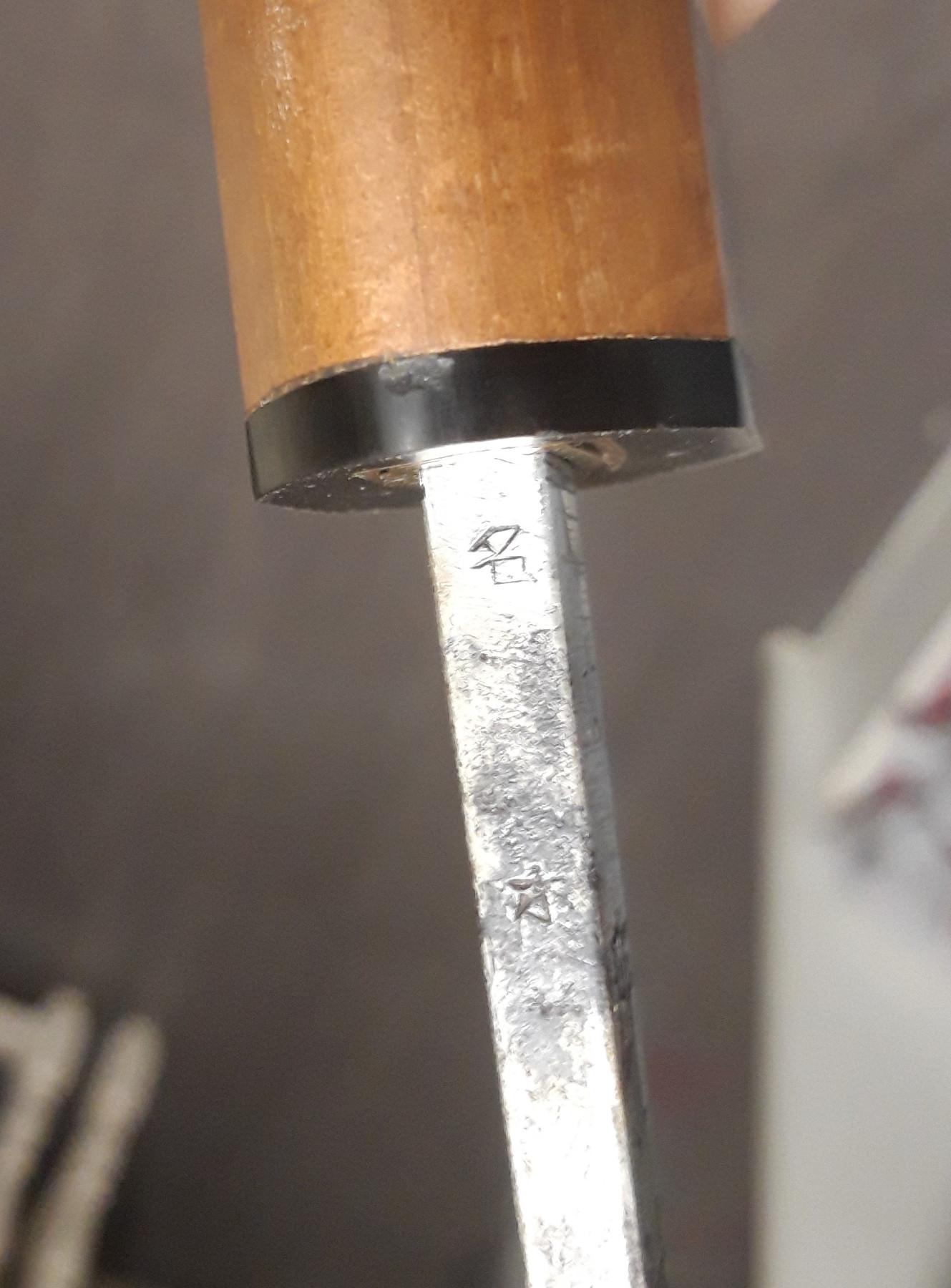
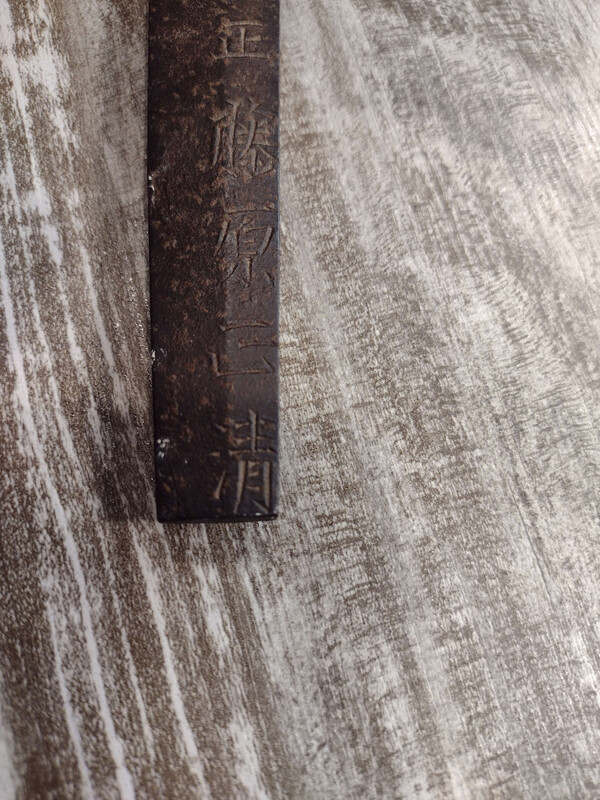
Hey guys. Someone on Gunbards posted this nakago, HERE, and is requesting a translation. Appreciate the help on it! Also, any insight on the emblem carved at the top? I've requested more photos of the whole blade for further analysis.

-
Request for Help Translating a Type 98 Mei
Bruce Pennington replied to CrossOfLorraine's topic in Translation Assistance
That's the best Kaneuji hotstamp I've ever seen! It'll be in the next revision of the Stamps of the Japanese Sword document. -
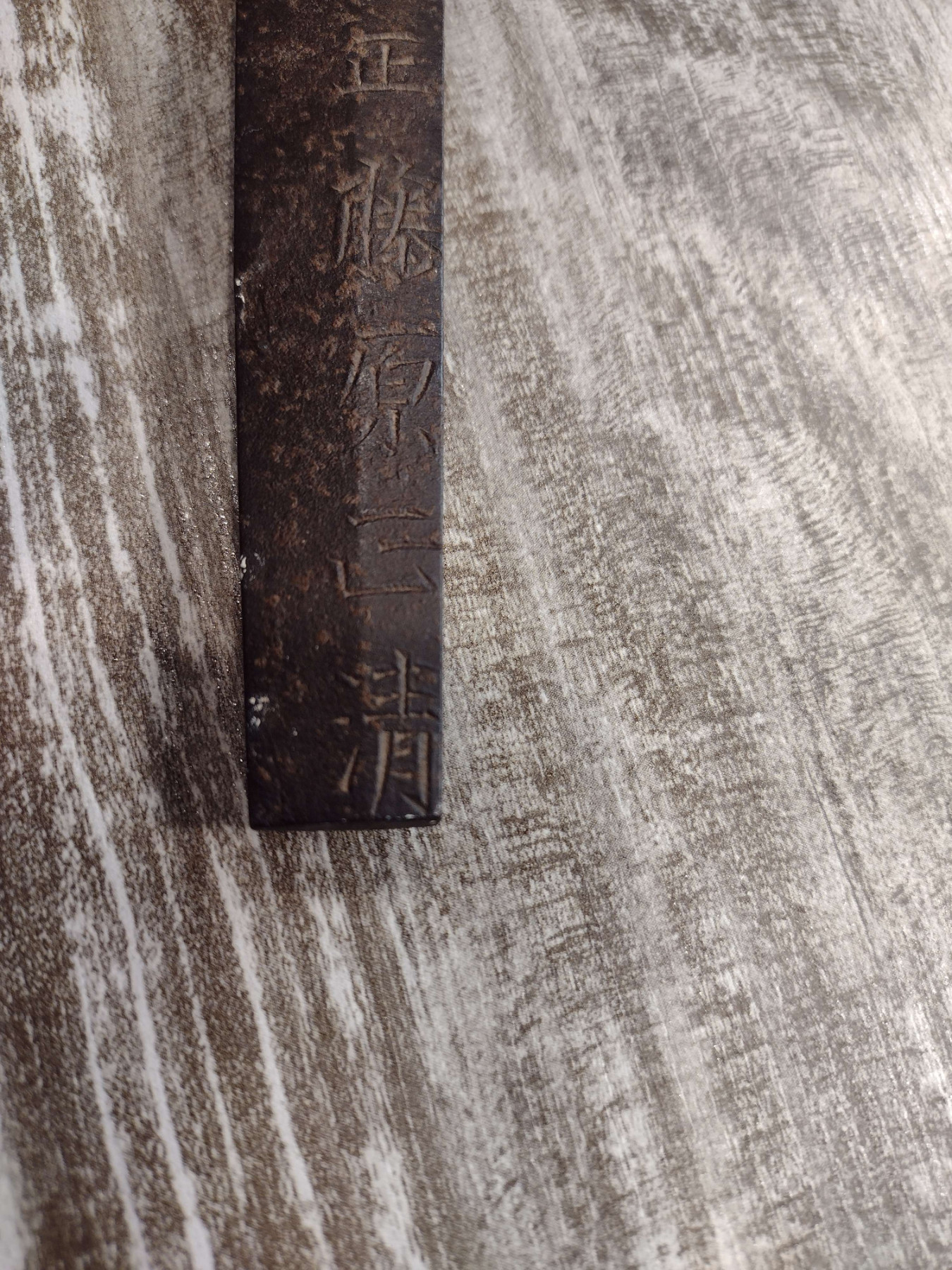
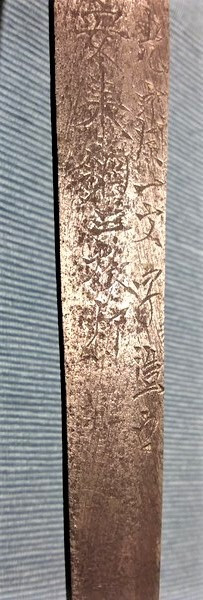
Could someone tell me what this mei means? @george trotter helped me understand the "ichimongi", on another blade, to mean the sword was commemorating the reign of an ancient ruler (think it was the 800 anniversary), but this one seems to say something else (I already understand the Yasuki steel part): Seikōsai Ichimonji kore o tsukuru (晴光斎一文字造之) Blade posted by @Michael 67 HERE.

-
Couldn't get the other photos in that single post:
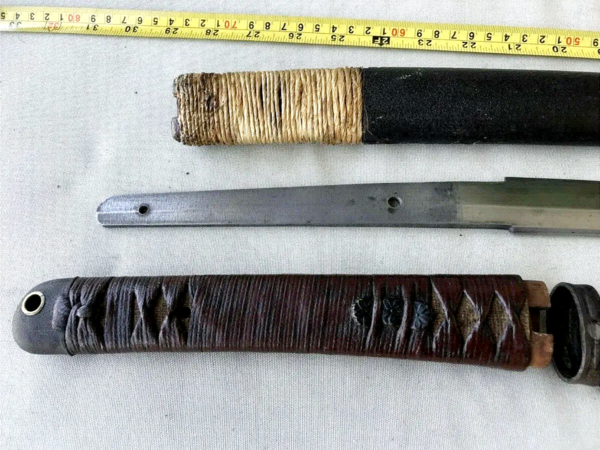
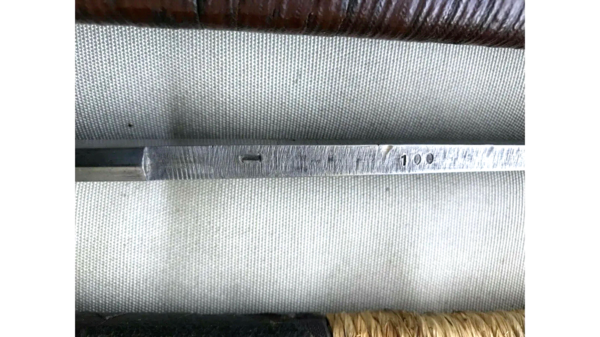
-
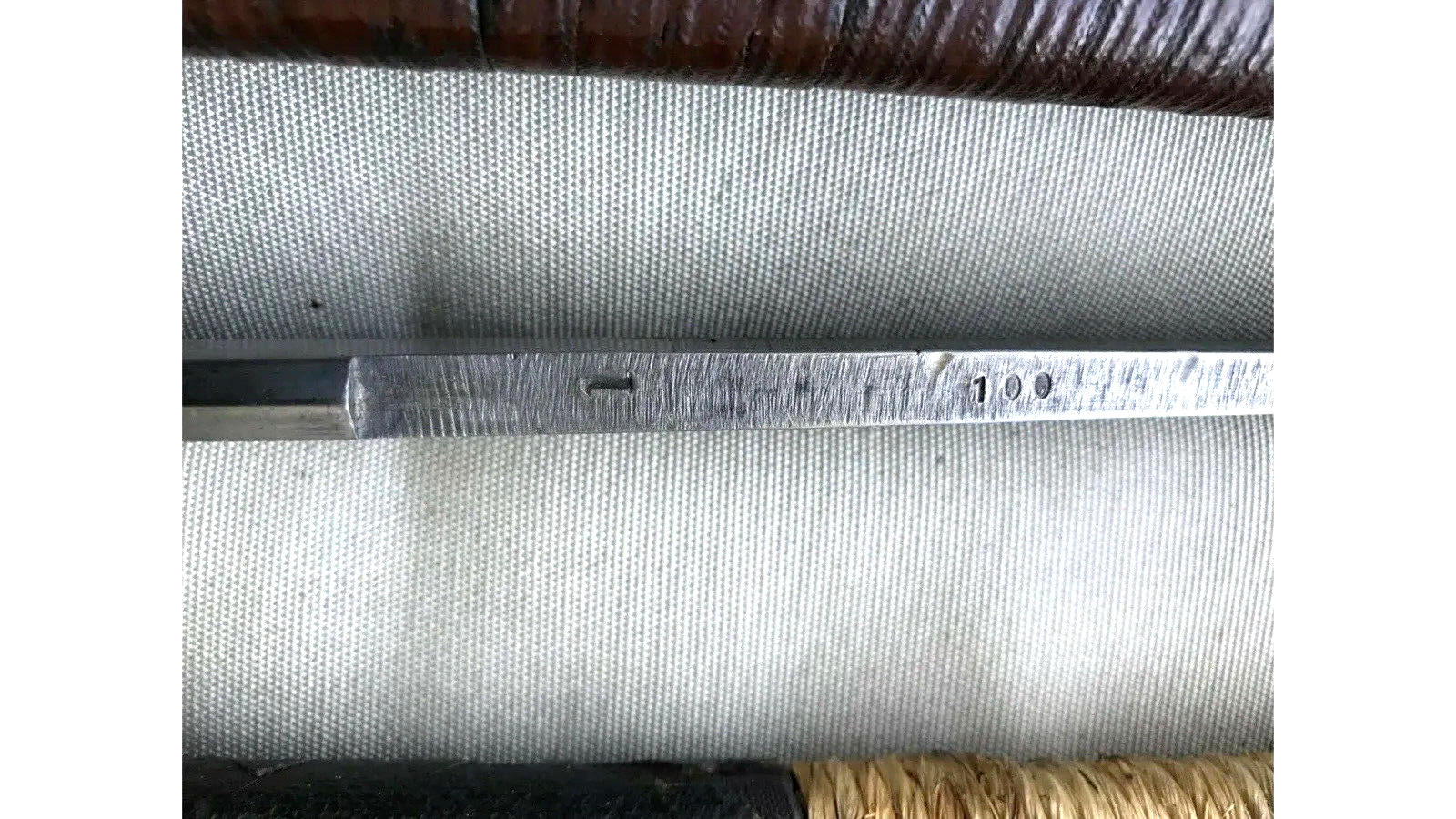
Thanks Dan, good one! The mune numbers are not rare. I have found them on blades of numerous smiths, almost all of them RJT, or pre-RJT, but this is the first one that was mumei. The large "1" seems, to me, to be some sort of inspector number, while the 100 is some sort of tracking, or serialization. The "1" stamps, and "2", and others often have arsenal stamps, too, like Osaka or Nagoya, even "Ho" of Kokura. So, it isn't exclusive to a single arsenal. Most of them are in RS mounts, like this one.
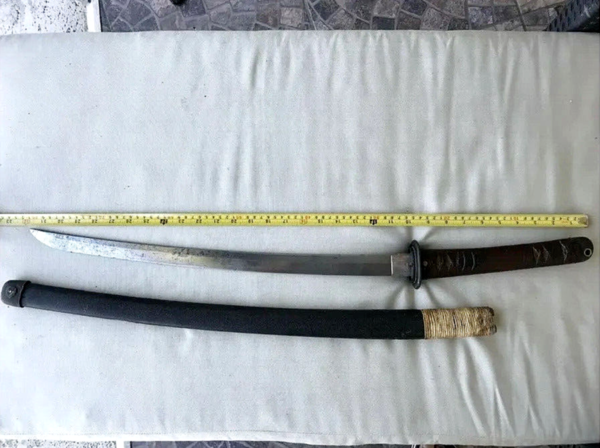
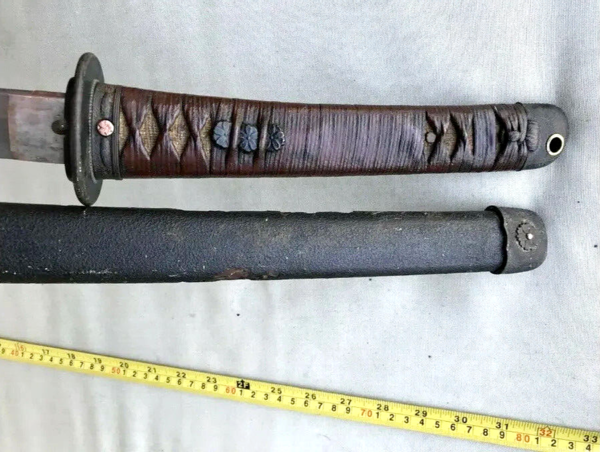
-
I don't see any on the other 2, however I found a Takamasa, Jan '44, posted by @markc with Na stamps, HERE. No mention of numbers, and not enough of the nakago shown to see.
-
Yes, good catch! First time I've actually seen marks from the second ashi.
-
@SteveM - could we get some help on the mei. I really tried, but coming up short.
-
The date is 1943. "Kai-gunto" really refers to the fittings. And "Showato" refers to any blade made during WWII that wasn't made in the fully traditional manner. There were blades made for the Navy arsenals, but many smiths made blades for both army and navy. Maybe you are asking if this blade is "Nihonto" or "Showato", if so, it's hard to say from just that one photo. (Nihonto, or some say "gendaito", are traditionally made).
-
Emergency Late War Officer Gunto
Bruce Pennington replied to Bruce Pennington's topic in Military Swords of Japan
We are starting to see a small collection of stamps on these collaborator swords. No way to know if they are each from a smith, or a shop/forge. In the old days, I would have said they are simply random Chinese kanji to imitate Japanese markings. But I think the forge idea is shaping up to be the case. -
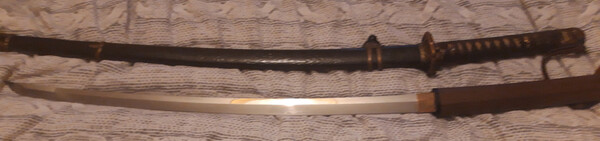
Type 98 Japanese Officer sword. I've enhanced the photos to make out the smith name a bit better. The painted marks are just assembly numbers "418".

-
Well, it's absolutely gorgeous. A little too pristine, maybe? Like the tsuka looks brand new. But then the tsuba and seppa do too. I've seen some of these on Aoi Japan. I don't know if they are refurbishing the fittings or if they have a supplier that is making them new. Either way, it's either a pristine closet gunto or a really good restoration. Are you asking about the mei?
-
Unusual naval kyugunto dress sword -possibly unique
Bruce Pennington replied to Beater's topic in Military Swords of Japan
An interesting observation! All evidence weighed, I'd lean toward your one-off theory. But it will certainly remain a definite "unknown" or a for sure "possible"!