Bruce Pennington
-
Posts
14,109 -
Joined
-
Last visited
-
Days Won
169
Content Type
Profiles
Forums
Events
Store
Downloads
Gallery
Everything posted by Bruce Pennington
-

Why i dislike this dealer
Bruce Pennington replied to lonely panet's topic in Auctions and Online Sales or Sellers
I have never dealt with that shop. They seem to sell some really high quality blades. Only once or twice have I heard complaints about various practices. I wouldn't rush to assume the fittings were done by the seller. These swords have often passed through many hands over the past 80 years. There is no way to know who did the match-up, except for the rare cases where we've got photos of a previous sale and compared to the current sale, there was obvious fittings changes (not this seller, but another one). -
Kevin, The large Seki stamp, and oil quenching simply means the blade was not made in the fully traditional way. Not good or bad. It just depends upon what your collecting goals are. If you want a WWII sword, good quality, then I have found the blades with the large Seki stamp are usually quite nice with attractive hamon. A polish would likely bring out it's beauty. As you say, with the condition of the fittings, it would be worth having a shirasaya made. All this would bring your expenses higher than the market value of the sword, though. So, if you plan to re-sell, it is not cost effective to do all this. If you are keeping the sword, and would just like to see it in it's full potential, and have the cash to spend, go for it. That's a personal choice. Some folks, though, like to keep the war swords in their 'as-is' condition since it depicts the life of the sword to this date.
-
Doug Austin "Guntoartswords"
Bruce Pennington replied to Volker62's topic in General Nihonto Related Discussion
I know his dealer activity has stopped some time ago. I think he's on NMB - @Austo1 -
Thanks Piers! Guess HB had it right from the start.
-
Let’s see if we can get a Japanese resident to ID these trees- @Bugyotsuji Piers, what do you think?
-
Dang!
-
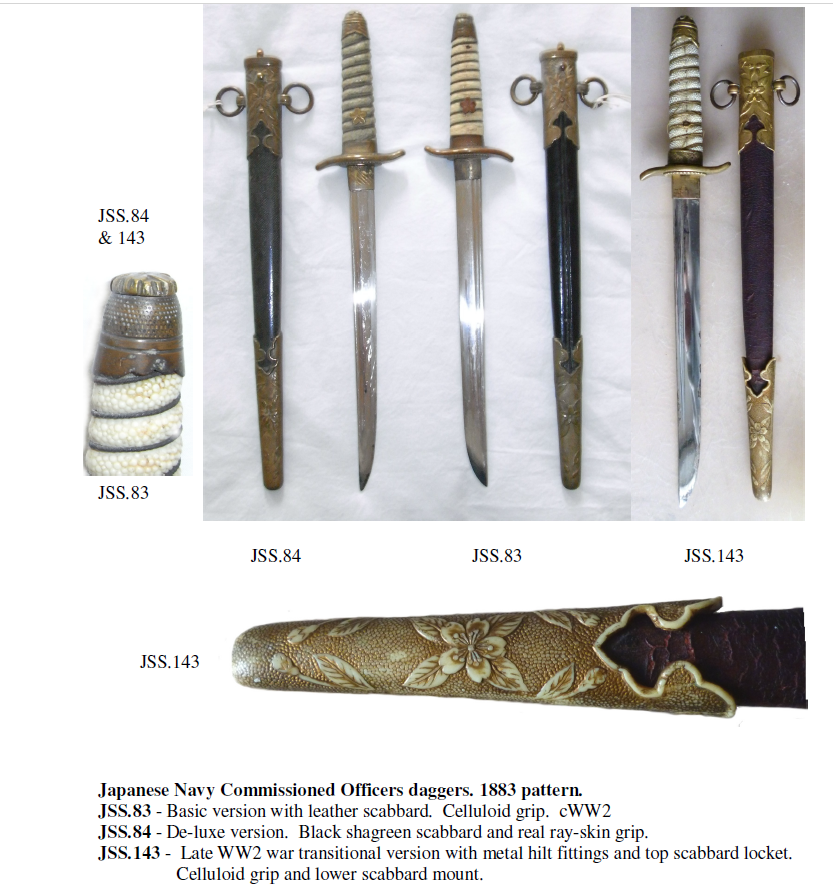
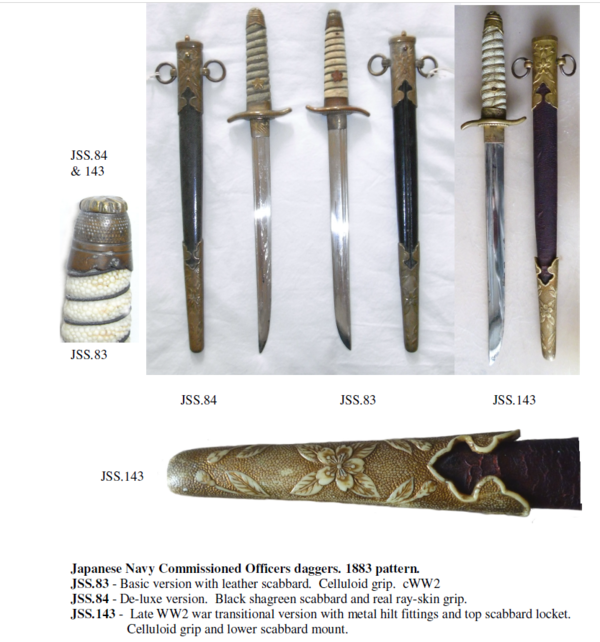
I sent the pictures to Richard Fuller, and here are his thoughts: ”Hi Bruce I think its late war. I have one where the scabbard chape is entirely celluloid although the upper mount is brass. The grip appears to be proper same. The navy had to make swords and daggers for the last officer draft so the shortage of materials may well have necessitated faux materials”
-
Hoping to hear from guys that collect these. Looks legit in age, but never seen one with fully molded celluloid tsuka. Richard Fuller has one that used celluloid for the fittings, but don't know if this is along those lines or not. Here's Richard's We also know that Tenshozan was making and selling souvenir dirks after the war, but have no idea what they looked like as we've never seen one with the Army PX sales certificate.
-
Bamboo Leaf pattern Tsuba on Gunto with old blade
Bruce Pennington replied to Baka Gaijin's topic in Military Swords of Japan
Seeing these on fully civil swords seems to support Thomas' ( @Kiipu) idea that these were mass produced fittings during the war that were being used by both civilian buyers and Gunzoku. -
I used to own this one, but I traded it to Ernie @Stegel. Pretty sure it's the thicker one. I'll see if I can get a measurement from him.
-
Oh, I see what you mean! Thanks for the added photo.
-
Yes, several things together can point to war fittings. Can’t see the kabutogane very well in your first photo. But if it’s plain, I certainly would agree with you. With the earlier date of the blade, then, it might have spent most of the war in a civilian home and later donated to the war. Or it might simply have just been re-fitted at some point due to damage.
-
I've never seen a nakago with that type of finish. Does anyone think the mei is legit? I don't see a "Kane" there, but I'm not great at mei reading.
-
That's a really good question, George, and one I don't know the answer to. Maybe John - @PNSSHOGUN - knows.
-
Here's a unique haikan, posted by @Marcel HERE.
-
Curious why you think the fittings are late war? I have 26 of his blades on file, and 4 of them were in civil fittings refitted for the war. It doesn't get talked about very often, but there were plenty of swords made during the war that were sold and fitted in the civilian market. Then, they found their way into the war effort and had the military refit, in varying degrees. I admit that haikan is really crude. Is that what seems late war?
-
And that is a Tenzoshan souvenir on the table. Can you get photos?
-
A record price for a Type 95 Copper ?
Bruce Pennington replied to robinalexander's topic in Military Swords of Japan
It’s like coming across a garage 1953 Corvette. From a mechanical and engineering perspective they were crap. But it’s the first of the series. Everyone wants the first of any series. I have mine! -
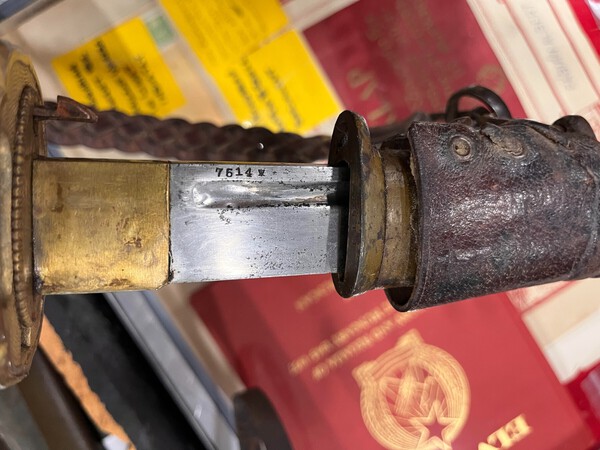
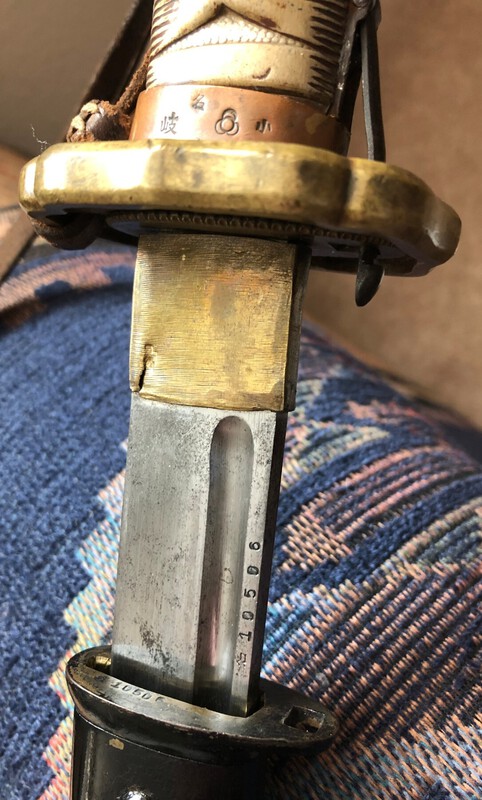
@PNSSHOGUN, John will step in and help with the 94 vs 98 question. From what I can see, with the offset chuso (latch button) and thinner tsuba, I'd guess this was made as a Type 98. The 94s had a thicker tsuba (handguard) and centered chuso. The second haikan (belt hanger) was removable and many were discarded by the owners, or lost over time by collectors, so that by itself isn't a great determiner, unless of course it is still present!
-
Just saw these on a screensaver. They are dragon blood trees, but they are found in Yemen. Wonder if Japan has anything similar?

-
Any idea what the images are? Dragons? Clouds?
-
Dual-signed Type 98 Officer’s Shingunto
Bruce Pennington replied to I_Kendo_It's topic in Military Swords of Japan
That's great, Leonidas! Following! -
Shame there's no date on the other side. But 3/4 of the blades with the Showa stamp are undated. Thanks Dee! Lance, this is a WWII Japanese officer sword, either a Type 94 or 98. Fittings shot might help tell the difference. If in Type 94 fittings, the blade could have been made between 1935 and 1938, as that is when this model came out. Most blades with the stamp, that have dates, were made in 1940-41.
-
Ah, just the lighting then.
-
Sam, Here's a really early aluminum handle 95. Found by @Bob in Ohio. Don't know if he got more shots or not: