Bruce Pennington
-
Posts
14,567 -
Joined
-
Last visited
-
Days Won
175
Content Type
Profiles
Forums
Events
Store
Downloads
Gallery
Everything posted by Bruce Pennington
-
Interesting Sword Hanger (warrelics.eu)
-
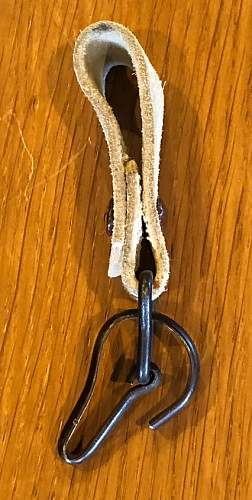
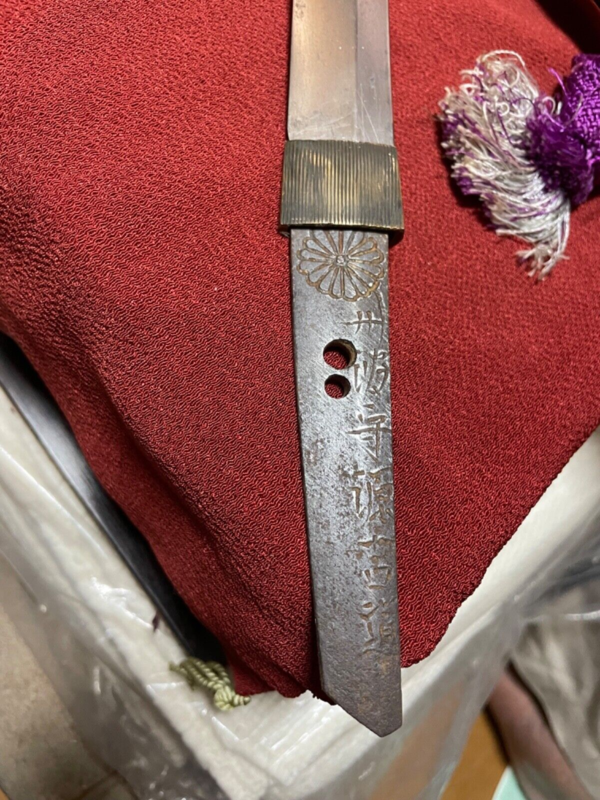
We sometimes get asked if there are kaigunto with family blades, or civil swords re-fitted for the navy. I've seen more kaigunto, full naval koshirae, with an old blade (I own one), but rare to see a civil sword re-fitted for Navy. Here is one. A 1600's Yoshimichi with Kiku, civil fittings, but obviously re-fitted for a naval officer. For sale HERE.
.thumb.jpg.9cc579cddf213175f6c6f6b716946ca1.jpg)
.thumb.jpg.4468a6759137e56209c145bb99364654.jpg)
.thumb.jpg.dadb4329f6833ee439a0443f653781db.jpg)
-

Information about WW2 Smith Ikeda Kunitada
Bruce Pennington replied to Itomagoi's topic in Military Swords of Japan
Ok, now I see it, thanks Peter! -
Information about WW2 Smith Ikeda Kunitada
Bruce Pennington replied to Itomagoi's topic in Military Swords of Japan
Can anyone make out the year on that nakago? It looks to me like "2608" but that would be 1948! -
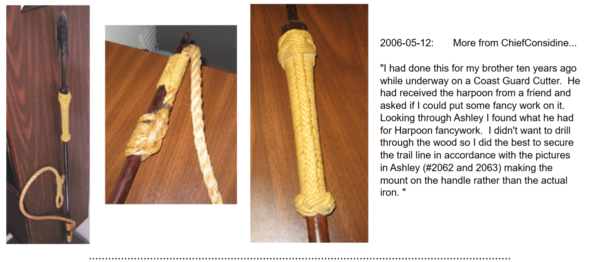
Now having ID'd the sailor 'fancywork', you made me curious - do you know of Japanese craftsmen do this kind of knot-work on saya?
-
Bingo! Exact same pattern as the OP
-
Stephen, That is the one he's re-shot with different lighting a focus: Appears to be corrosion.


-
WWII sword hilt translation
Bruce Pennington replied to WWII sword tang's topic in Translation Assistance
Interesting idea, Thomas. Might explain why the large stamp is seen all the way into 1945 (1). The guild seems to have replaced the stamp from 1943-'45 with the Gifu-in-sakura stamp after Nagoya hijacked the seki. My assumption was that the large Seki stamps were still lying around and got picked up randomly, or even a particular inspector, maybe in a more remote location, was still using his when the rest of the inspectors had transitioned to the Gifu. But your idea is worth throwing into the mix for sure! I have 5 1944 blades, and 1 '45, with the large Seki Stamp: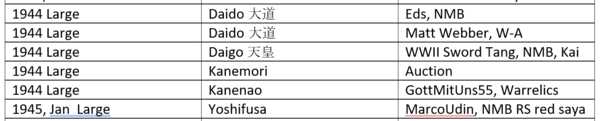

-
Ok, thanks for checking! One of the many undocumented smiths of the war.
-
Japanese Officer Sword- Iwo Jima
Bruce Pennington replied to montrealfan1986's topic in Military Swords of Japan
Hi Matthew, Japanese swords over the centuries have been intentionally made so the handles (tsuka) come off easily. Like John mentioned there are 2 wooden pegs (menuki) on yours By the looks of it, these are the fatter ends, so you would push them out from the other side. Then the whole set of handle, handguard, and spacers will simply slide off the tang (nakago). If you get resistance, no worries, it's usually just decades-old grime, sometimes a bit of rust. I wrap the blade tightly with a shop rag to hold, and tap the handguard (tsuba) with a rubber mallet to knock it all loose. To learn more about your sword, try these articles: Unveiling the Rinjiseishiki Sword in 1940, by Nick Komiya Army Type 3 (old terminology), by Ohmura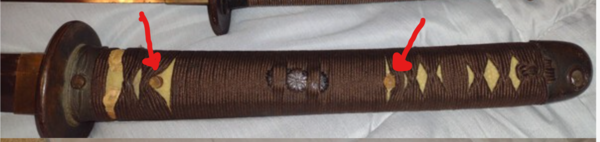
-
Are those names of Japanese workmanship? The word I'm looking for is for G.I. or Allied sailors who do such work to kill time on the ship going home.
-
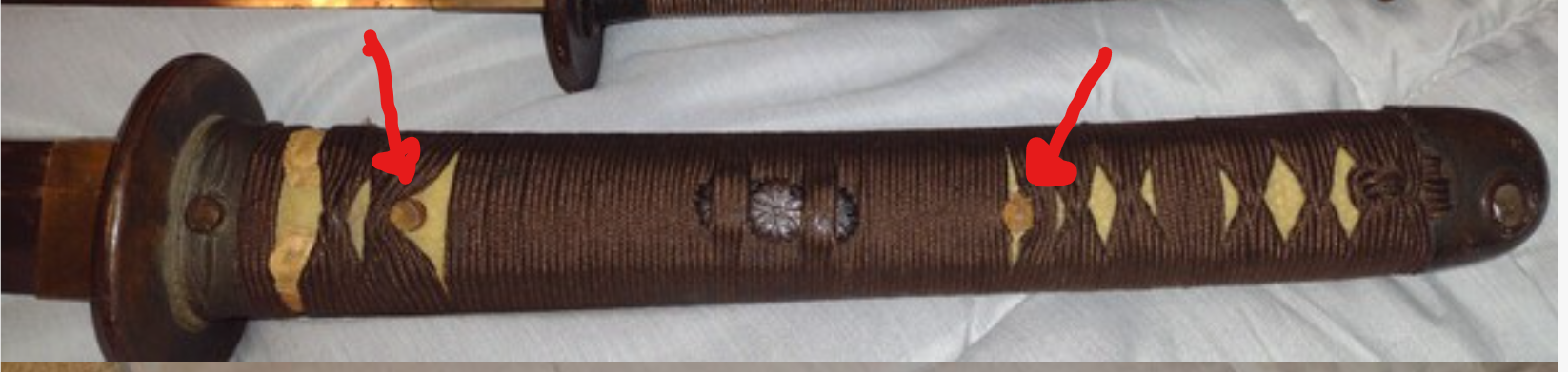
Not WWII Japanese fittings, but I couldn't locate a thread where this stuff was discussed: Great example of that woven cord work done on ships as troops and sailors were heading home. There's a word for that, but I cannot recall it. Found on a Sukenobu, showa-stamped blade, in civil fittings at this ebay sale.
.thumb.jpg.3f26d1a6d4930e3ef507f239787a434b.jpg)
.thumb.jpg.661b8cb5616f8cbf30c0dcbcd9dfee5e.jpg)
-
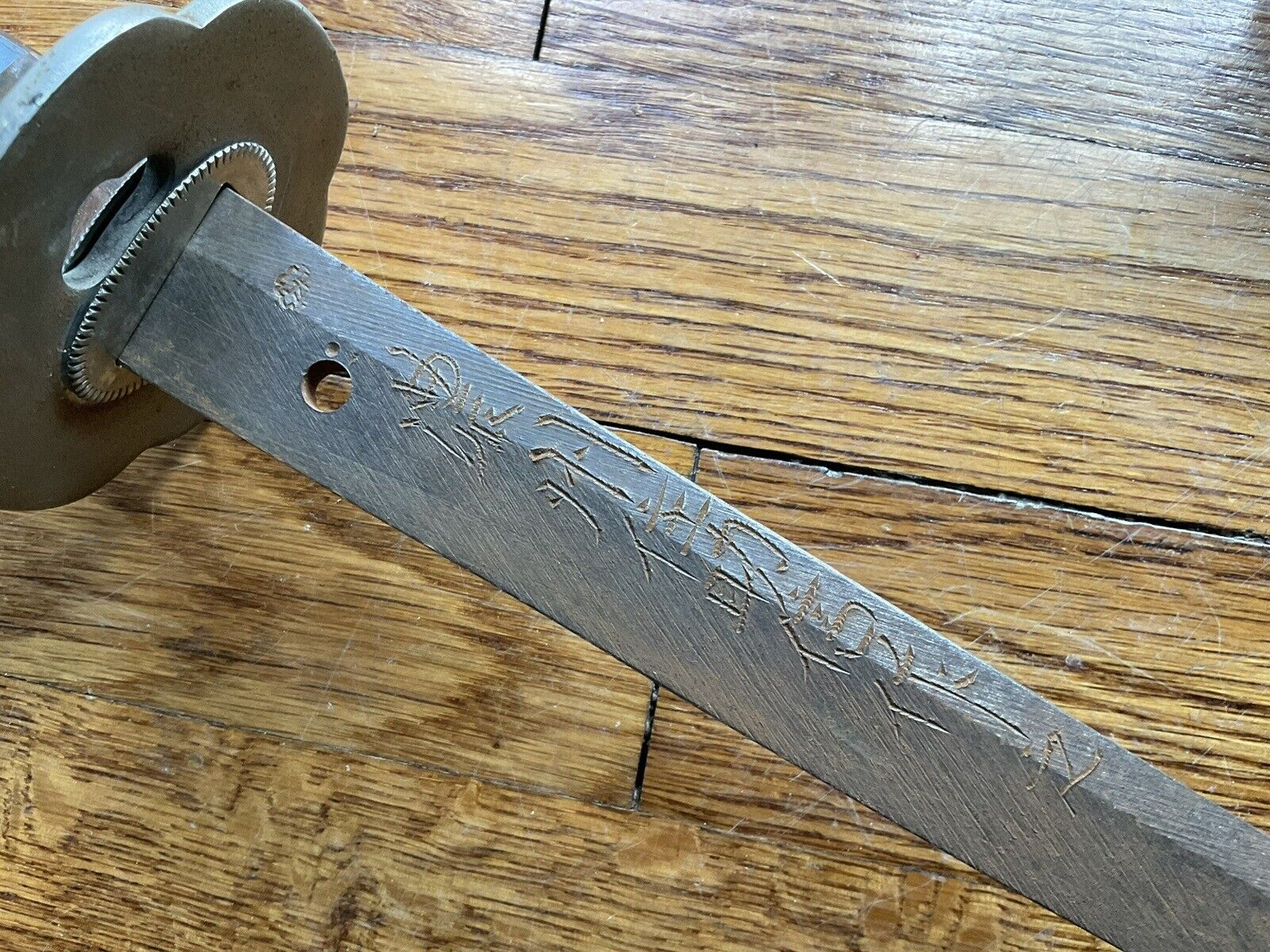
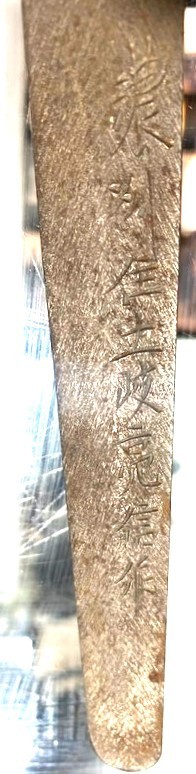
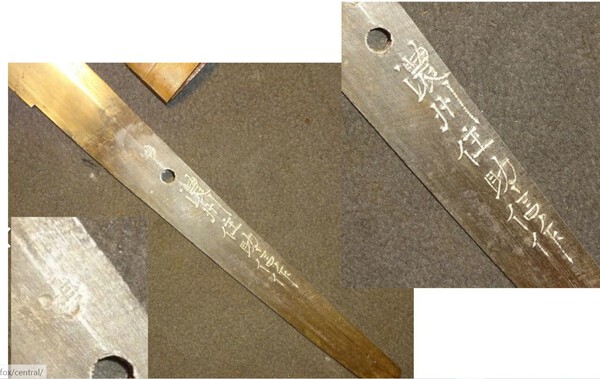
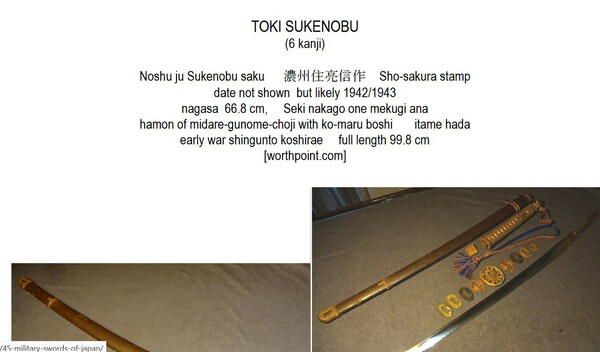
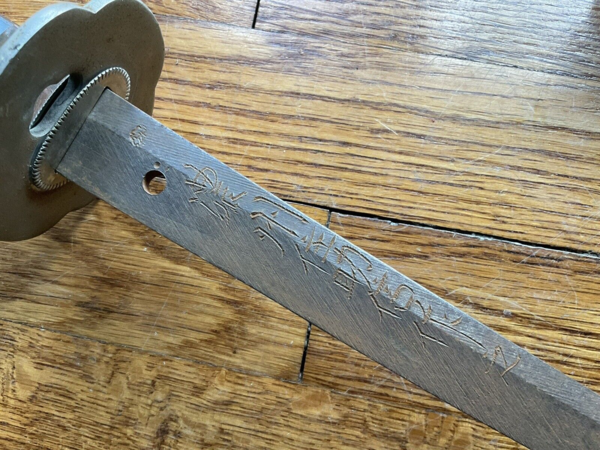
Thanks Ray. Makes sense with the 2 strokes down the left side. I considered it, but was thrown off by the smith's artistic omission of the middle 2 horizontal strokes. Thanks Mal, I checked, and I have 2 other undated Sukenobu with Showa stamps on file. One is like this one posted by @VoidedAbyss same kanji as your mentioned Toki Sukenobu The other, I got from one of your documents. You listed him as Toki, and typed the Toki Sukenobu kanji, but looking at the mei, I think it's the same guy as my OP:
-
My best shot at it:
-
Dad's Mantetsu Koa Issin
Bruce Pennington replied to Bruce Pennington's topic in Military Swords of Japan
Super! Thanks guys. It would have taken me quite a while to to figure that out. -
Ok, Jon. Amazing what lighting and angles can do to photos. You've got it in-hand, and with the added photos, I'll defer to your judgement on that.
-
Bingo! Good eye, Stephen! 99% that would be a Showa stamp. So the blade was made during World War II.
-
Dad's Mantetsu Koa Issin
Bruce Pennington replied to Bruce Pennington's topic in Military Swords of Japan
I’m sorry Shawn, I am a bit overwhelmed at home, taking care of two households, and may have rushed my search and maybe didn’t understand fully the point you were making. Also, I always have to relearn the language when guys are talking about which side the sword is named on. It will be a while before I can look into this again, maybe Thomas, or Trystan can enter this for you. @Kiipu @BANGBANGSAN -
Thanks for posting a photo of them side-by-side! Pretty impressive the differences when seen together. You don’t get any real concept of size and dimensions when someone is posting photos of a fake by itself.
-
If I thought I was looking at a WWII blade, I'd consider the possibility it is a really poorly struck Showa stamp. Better pics, or even a powder dusting might help. But I don't see any Tsunatoshi, in any of the sources I have access to, in WWII. So, considering the damage at the nakago jiri, my thinking is the marks at the top were done at the same time as the stuff at the bottom.
-
Dad's Mantetsu Koa Issin
Bruce Pennington replied to Bruce Pennington's topic in Military Swords of Japan
Shawn, I checked a sample in each of the years and they are all on the same side as this. -
discussion about rare Japanese dirk
Bruce Pennington replied to antiquegallery's topic in Military Swords of Japan
I'm away from my books. Have you researched to see what type dirk this is? I want to say Forestry or Railway Board. I know we have a dirk collector here at NMB, maybe we can get them to comment. I know there is a guy with a lot of info on dirks at Warrelics, but it seems to be down right now for maintenance or something. -
Japanese Sword Gassan Minamoto Sadakazu
Bruce Pennington replied to Swords's topic in General Nihonto Related Discussion
You guys are like a bunch of hens in a chicken coop. One hen gets a red sore spot and the other hens can’t stop themselves from pecking at it. I hate to say it, but the guys at Warrelics and Wehrmacht-awards treat each other more respectfully than you do here. We need a little more “Live and let live”, “To each his own”. And that goes for both sides. -
Dang! Conway got it! I saw those faint strokes below the Mitsu earlier, but then dismissed them. I think it is 'nobu' and the seller didn't powder it like the other 2 kanji.


-
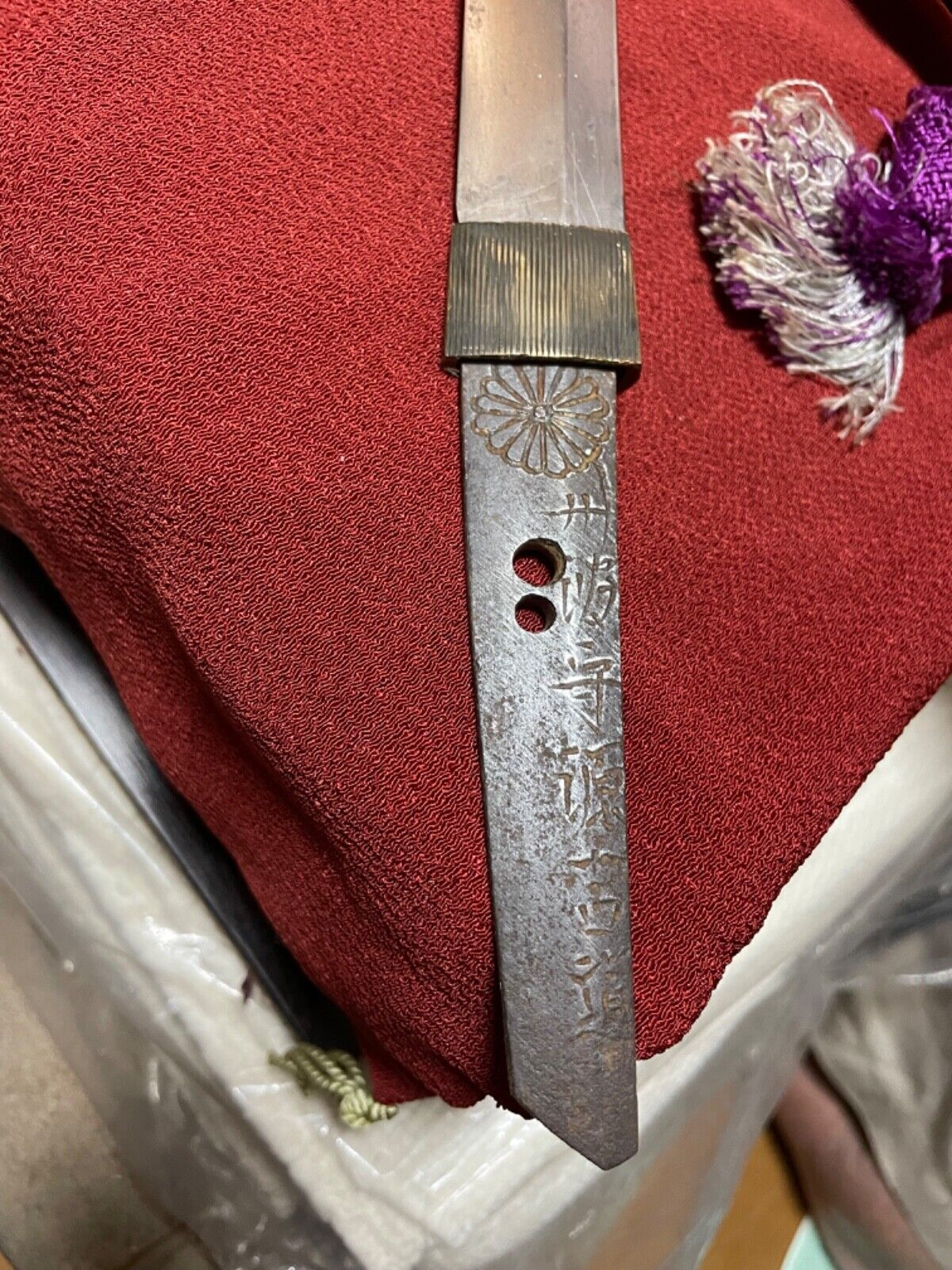
Yes, this is for sale by seller 'dinge79' on ebay for $1,337. So something fishy is going on. Japanese WW2 Koa Isshin Mantetsu Sword | eBay

.jpg.524116f3c25091170b50260b4ede9d48.jpg)
.jpg.99e6786b9a9ea5c9ff85a1247277e467.jpg)
.jpg.e484fcf39f42bf03d07cf9406ce07abf.jpg)


.jpg.faac077c4e2c8d6355b2de310183157c.jpg)
.jpg.75558b4bdc14ed7f803f8aa0205785e6.jpg)