Marius
-
Posts
3,212 -
Joined
-
Last visited
-
Days Won
26
Content Type
Profiles
Forums
Events
Store
Downloads
Gallery
Everything posted by Marius
-
Jean, my first impression was - yes, the tsuba is cast. The patina is nice, but cast iron does often have a nice patina. Picture T4 is where it really jumps at you. Menuki also looks suspicious.
-
Of course, Chris. A guess, and a very appreciated one.
-
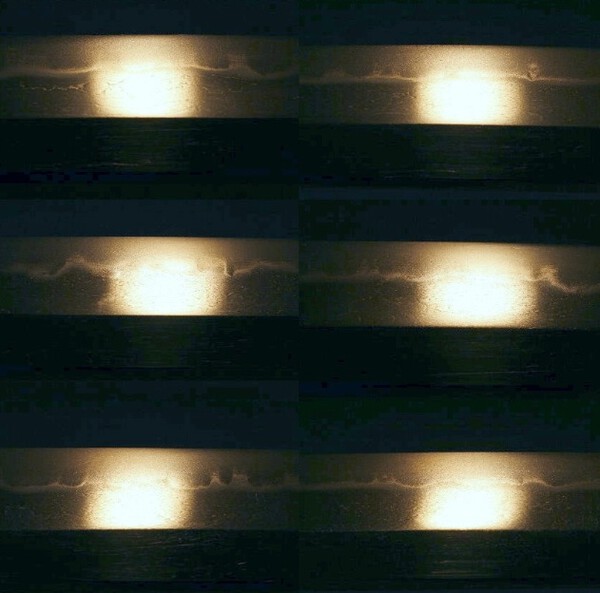
Thanks, Adam. I will ask the owner if the hamon is nie or nioi-deki. I cannot see it from those pics. Sugu-boshi? Not always so. Nakago? This seems to match. Here are a few Bizen Yokoyama swords - in some of them you will see that hada is not so tight and boshi is not sugu: http://www.aoi-art.com/kantei/kantei184.html http://www.japanesesword.de/?site=sword ... hqsfgfdpg5 http://www.nihontoantiques.com/fss439.htm http://yakiba.com/Wak_Sukenaga.htm http://www.nihontocraft.com/Bizen_Yokoy ... ekane.html http://www.samuraisword.com/nihontodisp ... /Sukenaga/
-
OK, gentlemen. Here is the mei (sorry for the pictures, but these are the most legible). The mei indicates that the sword was made by SENDAI YASUTOMO as a collaboration project with the daimyo DATE TSUNAMUNE, the 3rd lord of the SENDAI fief. Given that the sword has no papers and the patina does not look that old, I think it is safe to assume it is gimei. Chris's attribution to one of the Bizen Yokoyama smiths is very interesting - I used to own a Bizen Yokoyama sword, which had a very similar hamon and sugata. Thank you for very much your input

-
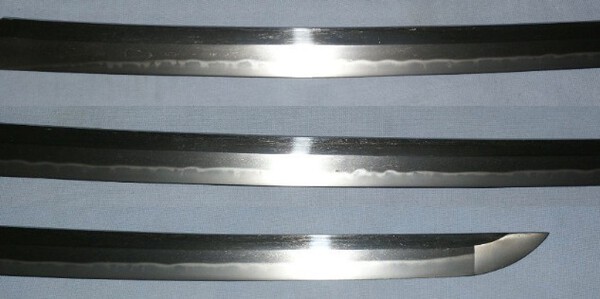
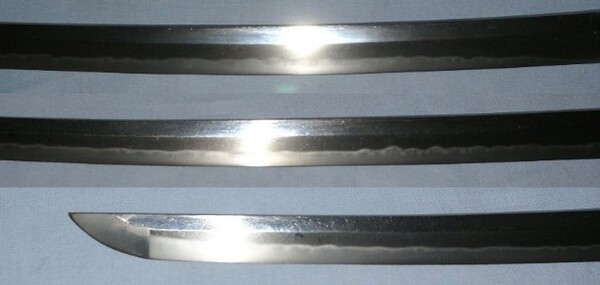
OK guys, sorry it took so long... Before I post the mei here, let me give you all dimensions: Nagasa - 74.6 cm Sori - 17 mm Motohaba - 32 mm Sakihaba - 24 mm Motogasane 0.8 cm Sakigasane 0.55 cm This is a beefy sword
-
Sorry about the mei. I just wanted to avoid a shoshin/gimei discussion at this stage. I will show the mei later, of course
-
Pete, I should have guessed, sorry
-
Pete, your advice is excellent, but I have already bought the Ito volumes form Grey. And, to be honest, they have allow me to see that those tsuba were not Jingo. Thanks to those books, I am increasingly interested in Higo. My main focus is on old soft metal and early Owari, but some Higo tsuba also seem to my taste :-) Too bad there are not many around. I have found some Jingo tsuba here: http://www.silk-road.us/higo.html but I am worried about the thin patina...
-
My my, and here is another one, snapped up from eBay. Let us see how they sell: http://www.nihonto.us/JINGO%20DRAGON%20TSUBA.htm
-
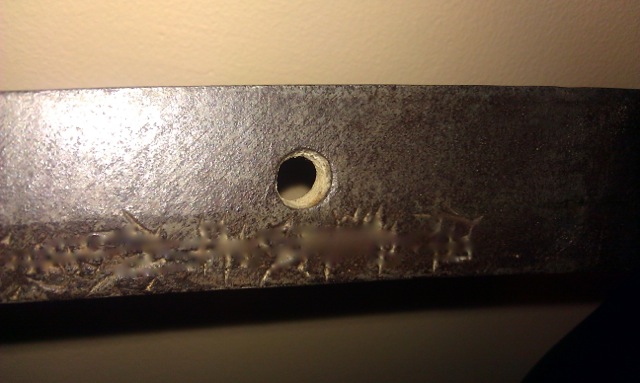
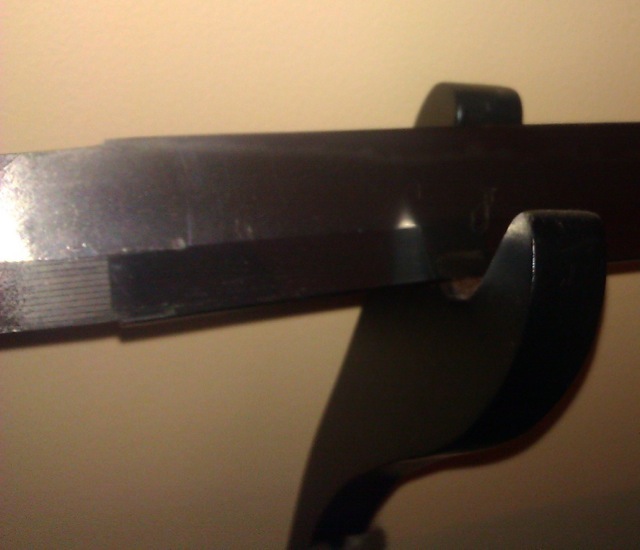
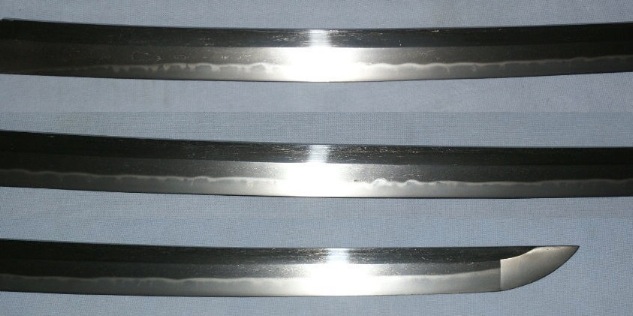
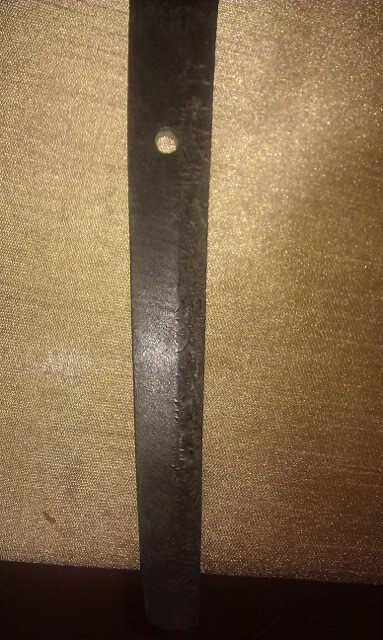
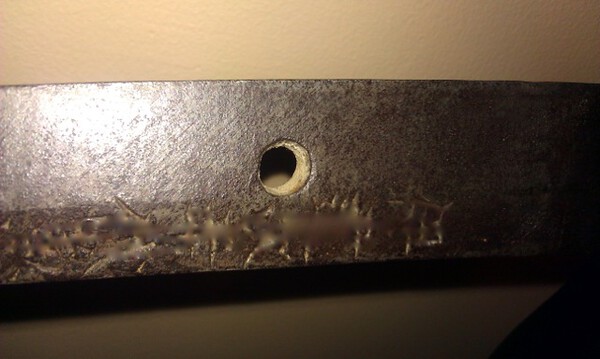
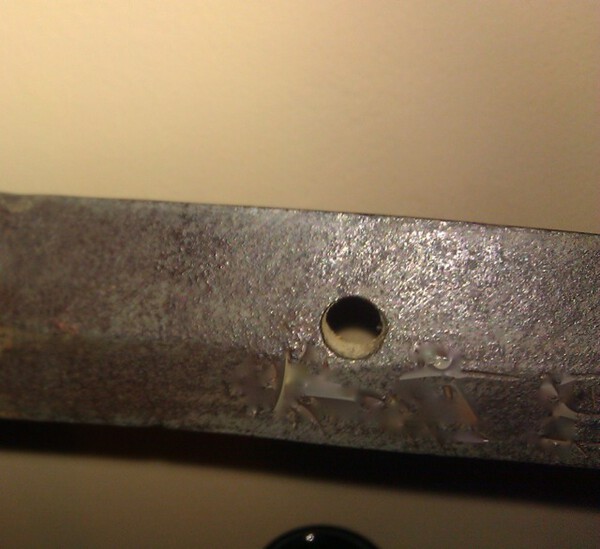
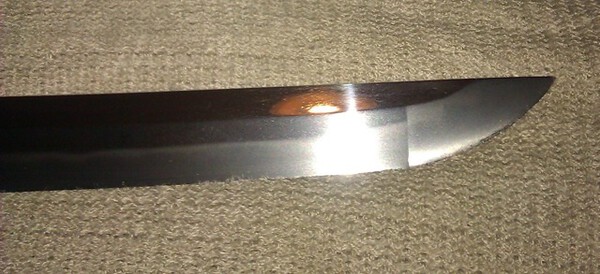
Here are some pictures of the nakago and a few more of the sword. Please forgive me, I have blurred the mei, I will show it later.


-
Gentlemen, on behalf of a friend I am asking for your opinion regarding the sword. It is a massive sword - the blade is wide (need to get the mihaba) and has a nagasa of 74.6 cm. It feels very heavy in hand. Any ideas on period and school? I have my own ideas, but I would be grateful for an opinion of far more knowledgeable members. Thank you for your time



-
I hope I have not made anyone uncomfortable :-) I just urge caution when it comes to judging workmanship. Dismissing an old tsuba inlay, just because it cannot match the preciseness of an Edo jeweller (sorry, tsubako) is simply not fair. It is this attitude that has robbed the world of many medieval marvels, just because they have looked "rustic", "primitive" or not "modern" to untrained eyes. Take the owl inlay on the famous tsuba by the first Jingo and compare it with any (real) Goto. Is the Goto inlay better workmanship because you can see every hair on the shishi or whatever animal ha cared to put on the plate? I don't think so. It is a more detailed workmanship. That is why I protest against unfounded statements.. I recommend a book that has been recommended here many times: "The unknown craftsman" by Yanagi Soetsu. It is not about tsuba but it is an eye opener for all those who have not learned to appreciate the simple. @ Justin I am glad you like it. May I ask why? The workmanship is so simple, just a bit hammer work How can that compare with realy good workmanship? I hope you are not offended by my mildly ironic reply to your first post and to your statement about the Yamakichi tsuba (you have meant the one without the lacquer chrystanthemum, right? ) I hope there is something to learn from this discussion.
-
Probably the fourteenth Jingo
-
Justin, You are issuing aesthetic opinions with an enviable easiness. You have certainly thoroughly studied Japanese art and craftsmanship. I will try to guess. Let us see if I am right... You like this (it is good workmanship, just look at that flower!): http://www.yamabushiantiques.com/BM%20C ... posite.jpg But you don't like this (it is too crude) http://www.tetsugendo.com/images/kodogu ... tsuba_1000:
-
Learning how to read fake, Chinese signatures? Interesting hobby, I dare say
-
The fact that it is on Andy's site does not necessarily confirm it is genuine. Caveat emptor Since it is listed now, we should refrain from comments, I guess.
-
Justin, your contrarian post is very welcome :D Now, let us try to learn. Would you show brass inlays that are NOT amateurish in your opinion? We could take the discussion from there.
-
Looks like the holes were made to fasten the tsuba to some object (a wooden table top perhaps?). They look out of place.
-
Thank you Ford I agree, it is a nice piece. The one on eBay has a bit more character to the iron plate.
-
I have been watching this auction here. I will not comment the price as it is the market which has decided. I can only say it stands out among that eBay trash. Do you think it is Jingo? And early? While I like the tsuba, this statement seems a bot bold to me. I might be wrong, I am just beginning to look into the vast topic of Higo tsuba. http://www.ebay.com/itm/Japanese-Sword- ... 7675.l2557
-
James, The photograph is bad, but before you spend time taking pics, let me tell you the following. It looks modern, but it is impossible to say its age. It could be pre WW2, it could be Meiji, who knows. It has no decoration, it has been stripped of its patina by some amateur at some point. Now it is just a piece of brass that used to be mounted on some sword as a tsuba.
-
Pete, a lovely tsuba. Are the layers thick? I can't see it n the pictures, sorry. Here is another example, three ko-kinko already discussed here, one of them used to belong to Thierry Bernard. The layers are very thick. It seems that early sanmai had thick layers and were not done in repoussé. http://yakiba.com/Tsuba_Ko-Kinko_Group.htm
-
Mino is a good guess. Too short for a shinogi zukuri blade to be Muromachi, unless o-suriage.
-
Of course it is nasu. I have adjusted the title of the thread accordingly. Sorry, I was seeing an eggplant, but saying "gourd"...
-
Thanks Tony :-) The thread is here, for all who would like to compare my friend's tsuba with your Oda school daisho: viewtopic.php?f=2&t=12995&start I see your tsuba as more refined, while this one is a bit on the "rustic" side.