Marius
-
Posts
3,200 -
Joined
-
Last visited
-
Days Won
26
Content Type
Profiles
Forums
Events
Store
Downloads
Gallery
Everything posted by Marius
-
that is an oxymoron. Besides - beware of sellers who cannot produce good pictures.
-
With a flavour of Hindu... IMHO.
-
Chris, I didn't say it was cast. But it is a low quality item, possibly a hamamono, not a Tanaka school tsuba. Sorry. You might want to train your eye and buy some books on tsuba, especially those with good photographs. I recommend the KTK catalogues - some really excellent tsuba there.
-
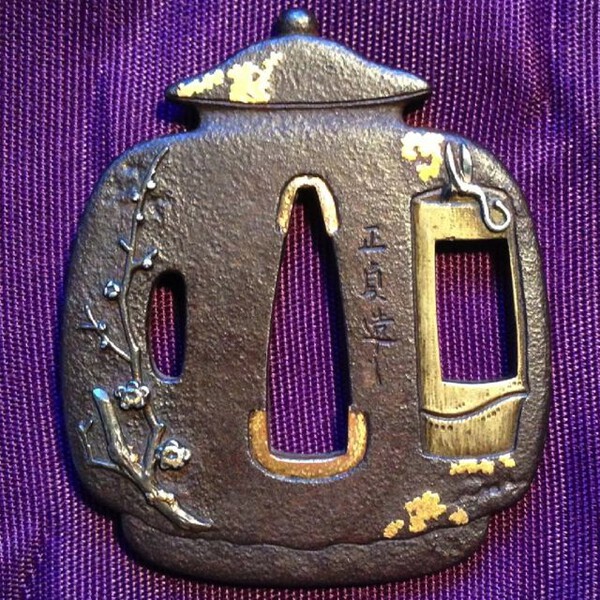
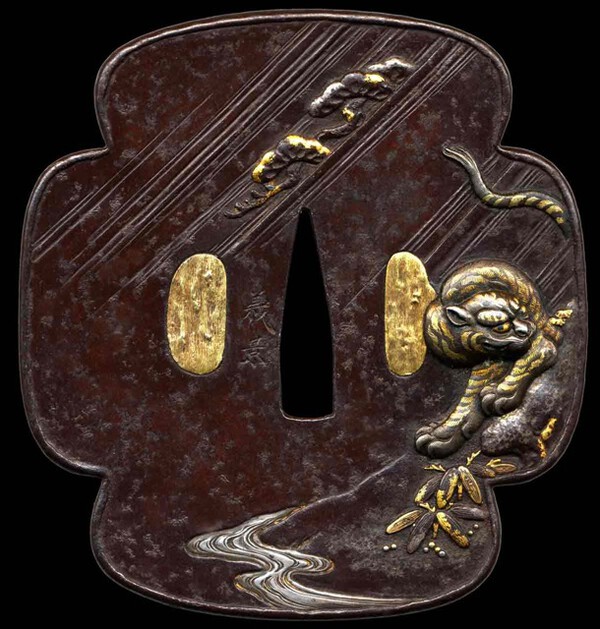
With pleasure :D Please compare the workmanship of both tsuba.
-
Well, it certainly tries to look like one Seriously, the quality of this tsuba is very low.
-
Those "sekigane" serve no purpose. Never seen sekigane painted gold. Looks like a Meiji tourist piece. At best.
-
Yes. WIth the right artisans, the right materials and a lot (and I mean a lot) of money. And it will most likely cost more than the sword. And even if it is perfect, it will still lack the patina of a real period koshirae.
-
Should? Why?
-
Martin Chris is one of the most experienced nihonto guys. If you want to look at the nioiguchi, try to look at it under a halogen lamp, or pointing towards alight source. You will see the real boshi (hamon in the kissaki) and not the hazuya finish. Here: http://www.ksky.ne.jp/~sumie99/appreciate.html
-
Denis, your needs are pretty common. Alas, they often boil down to assembling a "koshirae" which is an insult to a good sword. Of course, there are also examples of properly made koshirae, where the tsuka, tsukamaki and saya are newly made to fit the sword, and where tsuba, f/k and menuki are old but carefully selected. The result will be pleasing only if you deal with experts and if you have a very good understanding of koshirae styles, plus a solid knowledeg of Japanese culture, legends, symbolism, etc. Of course, some sense of aesthetics is needed, too :-)
-
OK, to get it back on track, away from emotions: uchigatana is (in most cases a single-handed) sword, which became very popular during the Muromachi period, as more and more battles required fighting on foot. Its predecessor is the shorter uchigatana from the Heian period. The uchigatana was a sashizoe (sword thrust through the belt, as opposed to a tachi, which hung from the belt). Uchigatana was longer than a koshigatana (hip sword), the latter being the forerunner of the tanto. Earlier uchigatana were hira zukuri. katate-uchi - I am not sure if this term has to be seen as another name for an uchigatana. Some would say katate-uchi is a shorter, single handed uchigatana. So, that's in a nut shell.
-
Calm down, Reuben.
-
You are talking about the old, good uchigatana.
-
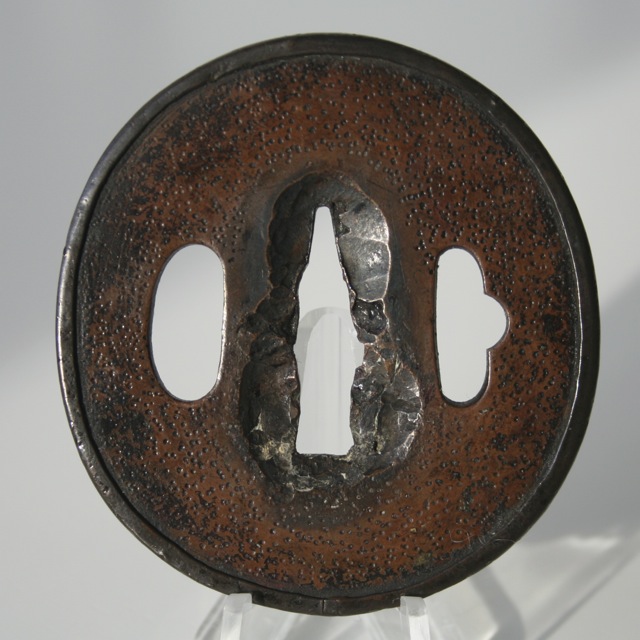
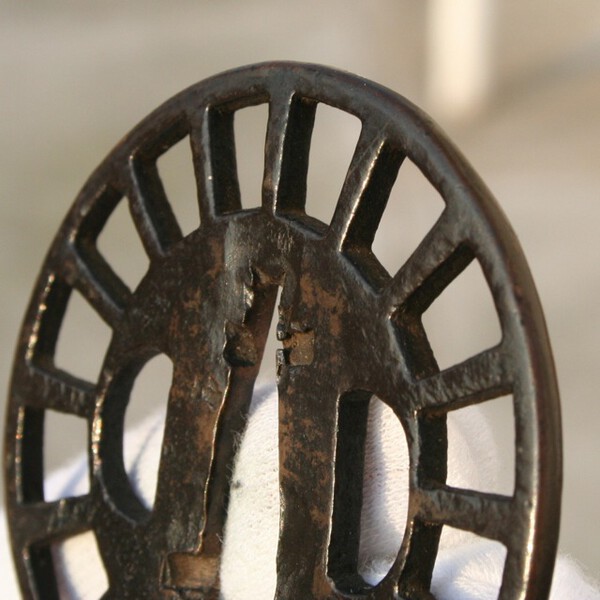
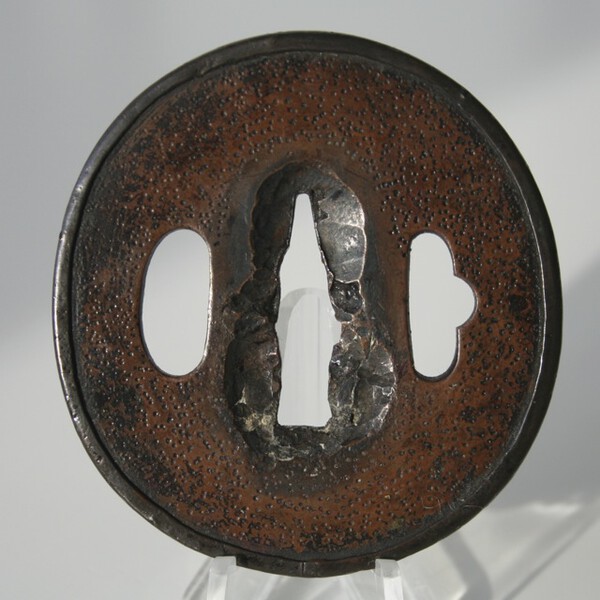
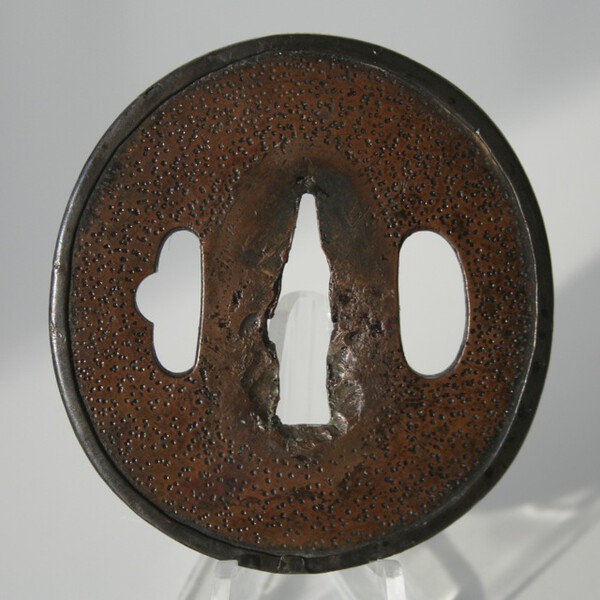
Alex, it is prety obvious that more expensive materials were used to make tsuba for higher ranking samurai. You might want to know that brass was also an expensive material in early/mid Muromachi (and in earlier times of course). I haven't seen many shakudo tsuba from the early and mid Muromachi period, to be honest. Most soft metal are yamagane, bronze and brass. The colour of shakudo could be produced by applying a coat of black lacquer. This was particularly nice looking when applied to nigurome (base alloy for shakudo). Mr. Haynes mentions this fact in his Gai So Shi. Of course black lacquer was applied also to yamagane tsuba. Attached is an example of yamagane (or bronze) tsuba with a particularly well preserved, thick coat of kuro urushi. Boris will certainly remember this little tsuba BTW, it was this humble object, that got me hooked on old soft metal tsuba.
-
Thanks for the kind words, gentlemen. I do like this tsuba and no, I am not trying to put it into any category. Those categories (ko-kinko, tachi-kanagushi, kagamishi) are constructs, as discussed a few times here on this forum. I am glad that there are people who like simple, old, utilitarian tsuba, made for the common samurai. Here is another one. One of my favourites, this one comes from Rich Turner as well (Rich has great taste, I have to say). Pics have been taken by your humble servant. Enjoy
-
Funny you should say that, Lorenzo :-) I was just discussing this with a friend. Of course in this case you are probably referring to the fukurin, which is not the classic Odawara fukurin, but close. But, as a matter of fact, Hirata Hikozo must have gotten a lot of inspiration from ko-kinko tsubako (this includes those orthodox categories like tachi kanagushi, kagamishi, etc). If we take his Okina-yasuri - they have been a motif on many a "kagamishi" tsuba (there are several in Sasano's booklet on kagamishi).
-
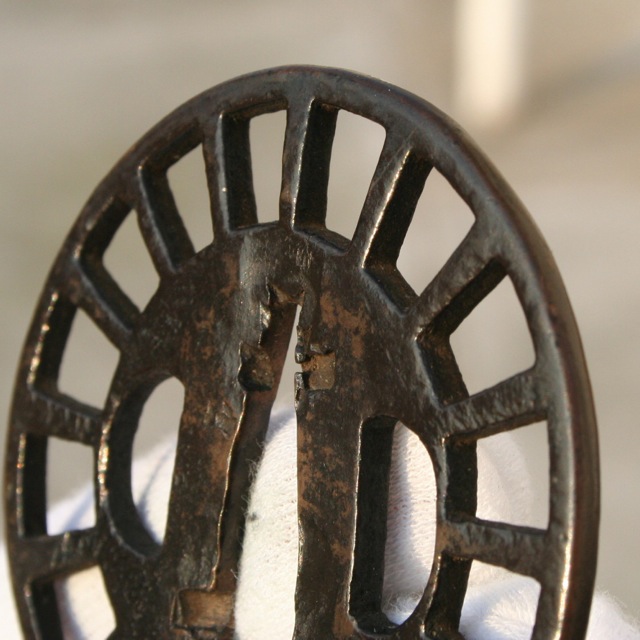
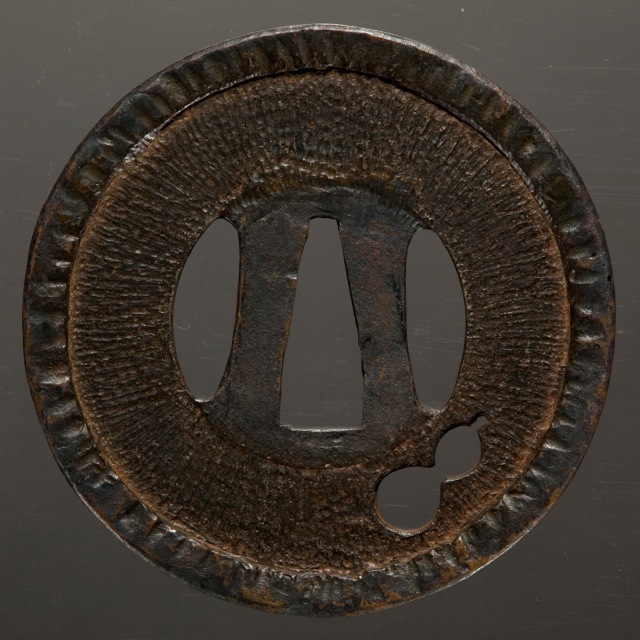
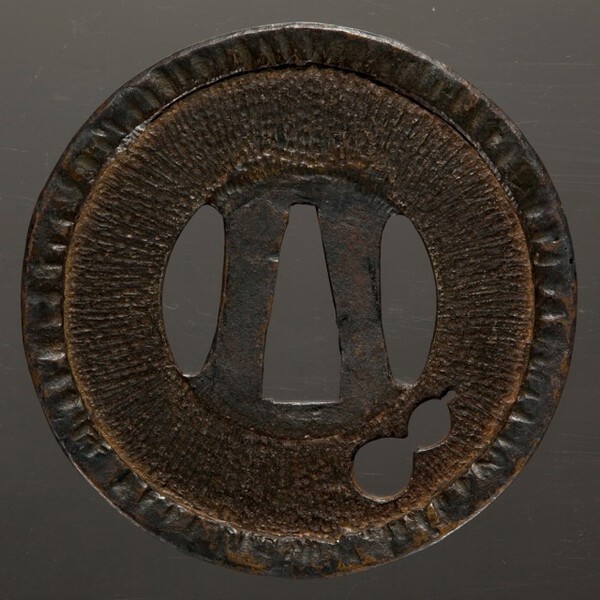
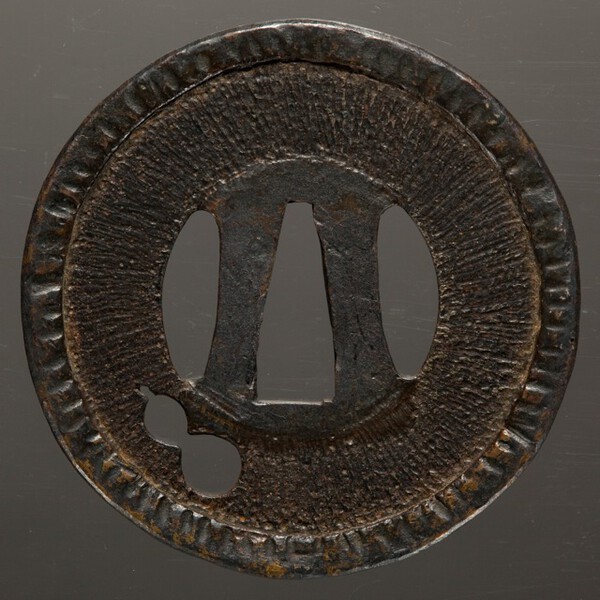
Here is a tsuba that I have bought recently from Rich Turner. It is an oddball tsuba, and while I could imagine attributing it to ko-kinko (Muromachi), it has some characteristics that make it interesting, if very irregular. The excellent photographs have been made by Richard George, who is THE MAN in kodogu photography - http://www.rkgphotos.com. I hope Richad does not mind posting them here. The tsuba is made up of a centre core, and outer ring and a fukurin. The centre core and fukurin are both raw Yamaganae. The outer ring iron. It has a Yasurime patter and the inner core and outer ring are joined by a method that resembles a dovetail effect. The dimensions are 65mm x 66mm x 2mm thick and the fukurin is 3mm thick. What do you think of this tsuba? Has anyone seen such an oddity before?
-
Gentlemen, many thanks for your opinions. The previous owner's attribution was
-
Judging by the rust (not patina) on the nakago, this is not an old sword. The rust looks like it has been artificially induced.
-
Adam, thanks for your opinion regarding the motif, but I was asking about an attribution :D
-
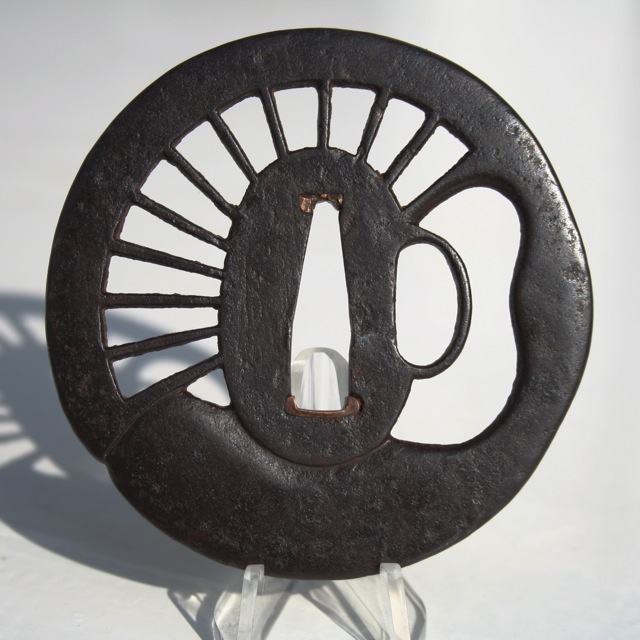
Gents, while I have the previous owner's attribution of this tsuba, including school and age, I would also like to hear your opinion. The tsuba is iron, of course, there is a nice, wet look to it, granular tekkotsu in the plate and rim. What is your take on it? Dimensions: 7.8cm x 7.9cm x 0.3 cm


-
Bad, reshaped kissaki. Any boshi there?
-
Here they are: http://new.uniquejapan.com/wp-content/u ... lution.jpg
-
Herman, I am sure there are bigger swords around in Australia At 76 cm, the nagasa is very long but not the longest. The nakago, though, that is really long. 30 cm. Not bad :-) For a long blade, look at this one. I wonder how long the nakago is on this sword: http://nihonto.us/YOSHIKAZU.htm
-
How to Display/storage of Nihonto?
Marius replied to NihontoSeeker's topic in General Nihonto Related Discussion
You should display them by your pillow