Grey Doffin
-
Posts
4,203 -
Joined
-
Last visited
-
Days Won
31
Content Type
Profiles
Forums
Events
Store
Downloads
Gallery
Everything posted by Grey Doffin
-
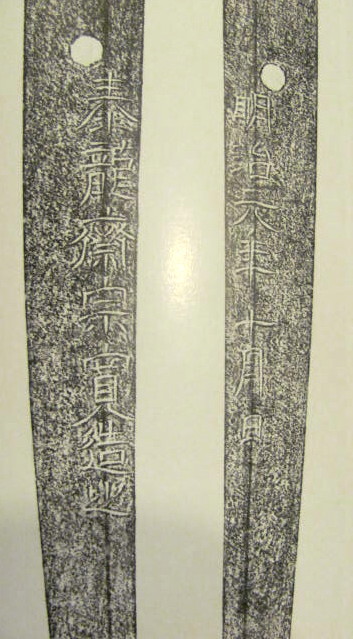
Josh, Pix below. Grey

-

Took a flyer on this sword - what did I get ?
Grey Doffin replied to grapppa's topic in Military Swords of Japan
Hi Paul, Looks like a late war, up against the wall, last ditch type of Japanese military sword. The nakago is poorly shaped and the habaki looks to be borrowed from a different blade and fitted with a spacer to fit this one. Spose there's also the possibility that this is some type of Chinese fake. Grey -
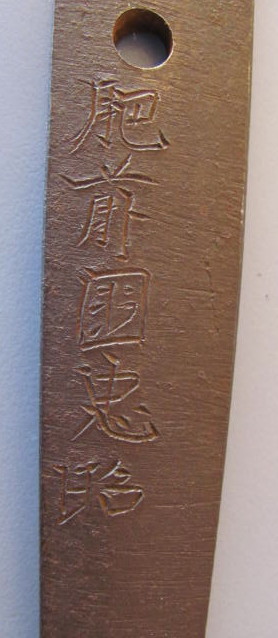
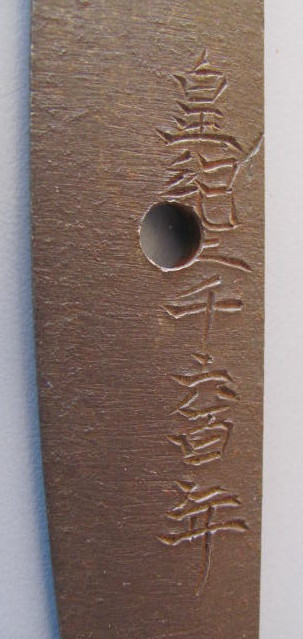
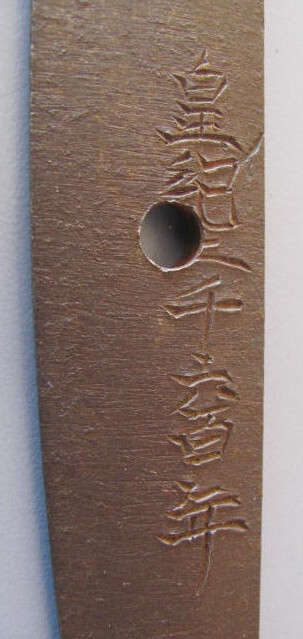
Hi guys, A little help, please, with this sword (which will be for sale). I read the mei as, "Hizen no Kuni Tadaaki", the date as the 2,600th year from the founding, and the last bit appears to be about making this sword but the actual reading has me stumped. Could one of you fill in the blanks and or correct me? Does anyone know anything about this smith? I've been unable to find anything online or in my books. This is a gendai, not just a Showato: very active hamon, tons of stuff happening, quite interesting. Thanks a bunch. Grey


-
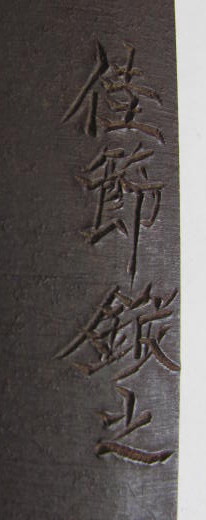
Hi Roy, The 3rd one is Yamato Daijo Fujiwara Masanori. Never mind; Mark got here 1st. Grey
-
Is this a safe way to display a nihonto?
Grey Doffin replied to Soten_Fan's topic in General Nihonto Related Discussion
Hi Dimitri, If you have to display a sword with the blade exposed, your latest solution should be fine. It would be best if the case was very heavy, unlikely to move if bumped. Locked is a good idea. As long as the climate inside the case is not overly damp it doesn't seem likely that rust will form on the blade. Inside mounts and sword bag is still a better idea, though. Grey -
Is this a safe way to display a nihonto?
Grey Doffin replied to Soten_Fan's topic in General Nihonto Related Discussion
Stuff hanging on a wall gets bumped into. The swords can get knocked loose and damaged. Nihonto are properly stored either in shira-saya or koshirae, and inside a sword bag. Any other method is inviting calamity. If you need to display a sword on the wall, buy a stainless knockoff. Keep the good swords well protected. Grey -
Yoshimichi. Showa Ju Kyu Nen Ju Ni Gatsu (December of 1944). Grey
-
Translation and opinion please
Grey Doffin replied to Richard Butters's topic in Military Swords of Japan
Hi Richard, Hawley's has smiths who signed like this up to mid 16th century. If your sword's signature is correct it is likely from that time: late Koto. Grey -
I was under the same impression. I can think of a couple logical explanations but since the sale is current maybe we aren't supposed to be bringing them up here? Grey
-
Hi guys, Interesting sale just came up on ebay: http://cgi.ebay.com/Katana-BEZEN-OSAFUNE-Celebrated-sword-NAGAMITSU-/260679920085?pt=LH_DefaultDomain_0&hash=item3cb1bbe9d5 I'm curious; do any of you know what the larger of the 2 papers is? Thanks, Grey
-
Didn't I just see this on ebay? Is there more going on here than what we're being told? I know I just looked this blade up in Hawley's; I'm sure I've seen it recently. Grey
-
Don't think sharpening with a steel could do that. Retemper, maybe? Retempering changes the curvature of a blade, but it is usually the opposite direction. Grey
-
Jason, Not an expert but I would start easy: hot water and a tooth brush. May be all that's required. Grey
-
Know your Noh. Weekend reading.
Grey Doffin replied to Henry Wilson's topic in General Nihonto Related Discussion
What? No mention of Bunraku? Grey -
Hi Mark, Odd piece, this. Looks like it has been terribly abused, way over polished, the nakago has been ground or beat on (can't imagine why), and the sugata (shape of the blade) is unnatural (the pronounced negative curvature is weird). Koshirae looks decent enough but I'd expect to find something nicer inside. Grey
-
Please Help with Mei Translation on sword
Grey Doffin replied to Edward G's topic in Translation Assistance
Yoshikane. 2,601 years from the founding of the Emperial line, I believe, on the other side. Grey -
Need help identifying ivory blades
Grey Doffin replied to tiarnol's topic in General Nihonto Related Discussion
Tiffany, The 1st pictured blade, THC 871, appears to have pretty decent carving on the mounts. The other one isn't so nice. These things were put together in Meiji period and later, to sell to western tourists. Sometimes the material is ivory (possibly on your 1st piece) but usually bone was used. The blades almost without exception are just pieces of steel, not true Nihonto. This appears to be the case here. Grey -
Hi Ken, Just so this is perfectly clear, always keep the blades in mounts (shirasaya or koshirae) and sword bag; never store the blade bare. A blade stored bare is a blade about to be damaged badly. Grey
-
Need Help Identifying part 2 of 2
Grey Doffin replied to tiarnol's topic in Military Swords of Japan
Hi Tiffany, Don't clean the swords; don't fix the swords; keep them in a dry environment so they won't corrode. Nihonto that get donated to museums that don't specialize in Nihonto often get damaged by well meaning but unknowing curators. If you don't know what you're supposed to do, don't do anything. Obvious, I know, and you probably didn't need to hear that, but strange stuff happens to Japanese swords sometimes in museums. The small silver tab on the handle of one of these is a mon: a family crest representing the family of the man who wore the sword to war. The time period for all 3 swords, the NCO and 2 parade sabres, is WWII. Grey -
Jason, There is a list of recommended books in the FAQ section linked above. Grey
-
My guess is genuine and made late 19th century to be sold to western tourists. Grey
-
Silver Mekugi & Silver Dragon Tsuka ?
Grey Doffin replied to takeda81's topic in Auctions and Online Sales or Sellers
The tsuka and mekugi are a post war alteration/addition by a westerner, not a Nihonto artist. Grey -
How about Kiyotaka for the smith's name? Grey
-
I see a catterpiggle and chrysallis, a.k.a. butterfly. Grey
-
Cas, Hitachi is a Province and Daijo is an honorary title. Something along the lines of "Junior Lord of Hitachi" (Hitachi no Kami would be "Senior Lord of Hitachi). Not actually the Lord of the province; only honorarily so. Grey