paulb
-
Posts
3,046 -
Joined
-
Last visited
-
Days Won
73
Content Type
Profiles
Forums
Events
Store
Downloads
Gallery
Everything posted by paulb
-
Assuming it hasnt moved since I was there 10 years ago it is not suspended from the tip, it is flat across the shelf.
-
 Dear Robert PM sent. Regards Paul
 -
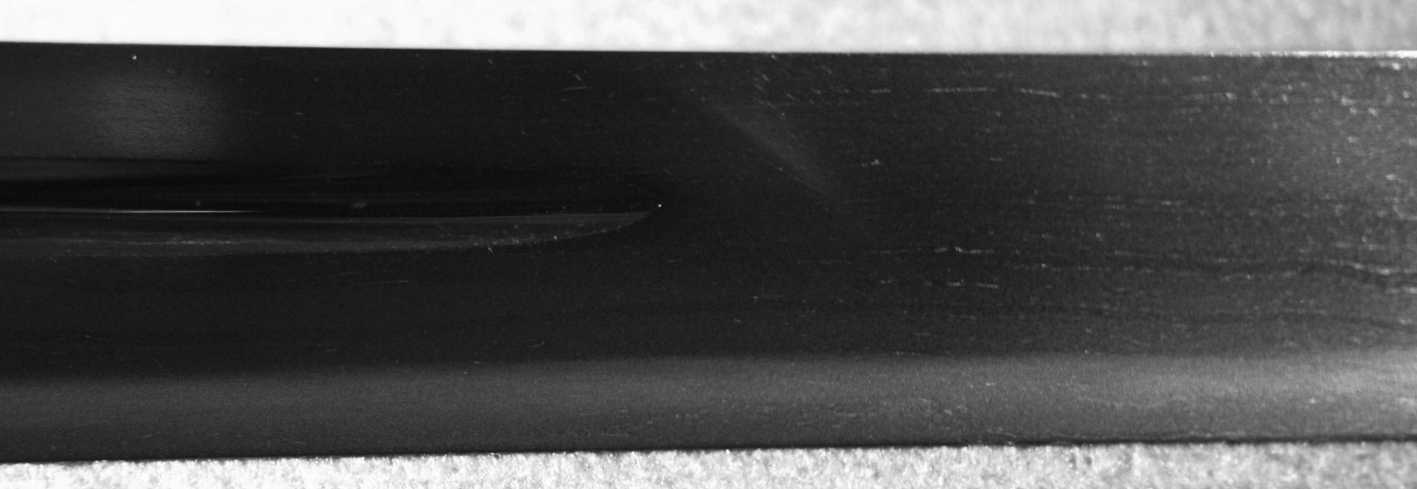
Sorry but the images don't show much of the hada , just a lot of dust on the blade. At risk of sounding patronising and telling you things you already know you need to remove the fine dust before putting the blade back in the shirasaya. Having said that it looks to be a good sword. The suriage nakago looks a little unusual for a Tadahiro in that there looks to be a lot of sori towards the end and original mekugi-ana. that may be a result of the nakago being re-shaped when shortened. What can be seen of hamon and hada looks classical Nidai Tadahiro konuka and suguha with thick and bright nioi-guchi. Regards Paul
-
It is a great shame when a meaningful and informative post has to end in side swipes and vitriolic comments. Some while ago I commented on this view and I have no wish to repeat myself BUT Not everyone is in a position, either through choice or circumstance, to spend a large part of their life studying in a foreign country. Certainly such opportunities were never available to me, nor I am sure many others. To suggest (or at least imply) this is the only way to learn and be in a position to offer a valid opinion or share research is demonstrably wrong. There are numerous examples of great research being done by non domicile and non native speaking people on all forms of art. Is it better to have these skills, yes of course it is, but not having them does not exclude one for learning and having an opinion. To suggest that unless you have spent time in a country and with artisans your opinion is invalid is a cop out in any debate. It would be great if at least some of these discussions/interactions could progress without the apparent bitchy comments. Enough, I am sure I am stoking the fires. I think I have been around here too long and its time to move on and leave you to your sarcasm and sniping.
-
Hi Jeffrey Kongo-Byoe was a Yamato offshoot school. Very active late kamakura and Nambokochu. I had a massive daito once which looked classically Yamato with running hada and a lot of nie. They fall in to this broad "country School"grouping which has meant in the past they have not been as highly rated or studied as they deserve. Certainly the ones I have seen have always been well made severely functional and powerful blades. I think you will find information on the in most of the English langauge references, but be aware there are several different spellings used Kongo-BI Kongo-Byoe Kongo-Hyoe (all from memory but you geet the point) Also there is a Kongo-byoe blade in Compton's 100 masterpiece books which contradicts the suggestion they were not good quality. Well done on your blade I would love to see some images when you get it back. Best Regards Paul
-
I assume this is a different Paul B to me? otherwise I have no idea what you are talking about
-
Hi Curtis If this were by Kaneuji it would be a fantastic find. As you say he was one of Masamune's 10 brilliant pupils, some argue the best, and the founder of the Mino school. I think it is an extremely long shot so please do not get too excited at this stage. I cant see enough on your sword to even hazzard a guess, but to receive an atribution to Kaneuji or even a broader Yamato-Shizu call would need it to be seen in a much better polish. May be of period (i.e 14th century) but trying to tie this down to a specific smith, especially so important a smith, is stretching optimism a bit far (however stranger things have happened!) good luck regards Paul
-
Hi Brian, Not my piece so I don't know anything more than you see but I am guessing the date refers to when the sayagaki was written rather than when the blade was made. Best Regards Paul
-
Many thanks Moriyama-san best regards Paul
-
Dear All Having trouble with the date on the attached can someone more capable than me help thanks in advance Paul

-
Hi George I think the traditional view goes along the lines that Bizen steel was relatively soft. Utsuri being, as mentioned above, a form of transitional phase between softer jigane and nioi was harder than the surrounding metal. therefore its presence hardened the surface. I assumed but dont know that it formed in the top levels of the jigane rather than penetrating through to the core. Therefore it would harden the surface without compromising the resilience or making the blade brittle. This opens a whole new can of worms as to why the core steel was there in the first place, to increase flexibility or to cut cost, but thats a whole different debate for another time and place.
-
Chris Bowen wrote Just to broaden the thinking and to try and see what influenced what, my understanding was that one of the major differences between koto and shinto work was the raw material. for the 5 koto traditions steel was produced locally and exhibited subtle differences, as a result of slight variations in the composition of the raw material. When during the shinto period steel manufacture became more centralised a much more uniform product was created and the variation in jigane greatly reduced. There is an argument that this is why more and more flambouyant hamon were produced as smiths tried to differentiate their work on a uniform carrier. If as you say the features of the steel are mainly the result of the smith's activity and this action can drastically change the appearance of the end result why did it become so uniform when the supply centralised? To be clear I agree that the way the smith assembles blocks, works the steel etc will have a major effect, if not the major effect, on the end result. However I think to achieve certain features the raw material must lend itself to particular traits, some did this more easily than others. Fro example is the prevalence of nie and Yamashiro and Yamato work just a result of them working at higher temperatures or did the raw material they were working with lend itself more readily to the creation of nie than that used by Bizen smiths? I am not sure there is a difinative answer but by asking the questions and trying to think through the naswers we might get a better understanding (especially us non metal workers!)
-
Hi Piers you may well be right, my comment was based on a description I read some while ago and paraphrased in an article written a few years ago: the inference from this was that from the earliest times these neighbouring provinces were fed raw material from the same source down different rivers. If raw material was being imported by sea to Bitchu then it certainly could produce a different product. I guess it depends when such imports began whether at the start or towards the end of the Aoe school's work.
-
wasn't the original idea behind polishing to improve the profile and cutting ability of the blade?. The finer the polisher the less friction/resistance. The resultant beauty and activity was a side effect which was rapidly appreciated and was an indicator of the construction and composition. I think from very early in the swords history it was recognised as more than a simple cutting weapon. This is true not only in Japan but throughout the world where swords were regarded as a representation of nobility, honour etc. This being the case it would make sense to enhance the aesthetic aspect of the surface through polishing.
-
Thank you Chris for the detailed post and information. I don't see any contradiction in the information and text you quoted and the views previously expressed. It comes back to the combination of form following function and action and consequence that has been discussed, pulled apart and argued over time and time again. In a crude summary and interpretation of what has been said: 1. Utsuri may have originally appeared as a bi-product of the hardening process on swords of a certain steel composition. 2. Either because it was found to enhance the blade or offered an added aesthetic dimension, or both, it became a recognised feature of particular schools work 3. By repeating the process which created the original feature with the same materials and conditions utsuri could be reproduced reasonably consistantly. Within this action utsuri goes from being an accidental bi-product to a technically created featue. i.e. if it is meant to be there and you deliberately create the conditions to achieve it it is no longer accidental. 4. experimentation in manufacture enabled variations to occur. 5. later schools did try to reproduce it for its own sake in attempting to recreate characterisitcs of earlier schools. Their difficulty in some cases may be due to the differences in later steel composition rather than defficiency of skill or technical knowhow.
-
Hi Veli What period do you think this is from? The reason I ask is the only examples I have seen of similar very dark nie ( I agree its large but not sure I would classify as ara-nie) are on Satsuma work of the late shinto and early shin-shinto periods Overall the blades had a strong Mino influence look to them with a very organic flowing midare hamon with nijuba and lots of activity (including very long potato vine kinsuji.) but they also had strong and very dark nie bursting out of the hamon up into the ji-hada. If you think it is earlier you might think of looking at Uda work whch again has the strong dark/bright nie as a characterisitc. probalby miles off but worth a thought
-
Thank you for the images Darcy they illustrate various forms of Utsuri beautifully. I think there is little doubt that to achieve any particular feature in the blade surface depends to some extent on the raw material. However if you consider neighbouring schools such as Bizen and Bitchu, they were producing very different products with raw material originating from the same source. While ko-Bizen and ko-Aoe had many common features by the time the Fukuoka Ichimonji and chu-Aoe schools were producing the characteristics were markedly different. If the raw material was the same the differences seen must be a result of technique. This does not answer the deliberate or accidental question but these schools were producing characteristics which became features of their work. If it were a chance occurrence then isn’t it reasonable to assume that there would be some cross over with midare utsuri regularly showing in Aoe pieces and jifu in Ichimonji? Moving into Soden Bizen and Sue Aoe the differences become muddied with both working in nioi and producing a weak shirrake utsuri (also dan utsuri in Aoe). This again points towards technique with smiths responding to market demands. The fact that Bizen swords were predominantly nioi based suggest that the steel composition was softer and they didn’t work at as high temperatures as their neighbours in Bitchu. If the resulting sword was softer than others it would seem reasonable to attempt to increase the hardness of the surface structure. Again this suggests (to me at least) that this was a deliberate act rather than chance occurance.
-
Hi Franco Something I heard but dont know as fact. The steel used for Bizen swords in particular was softer than some others. Therefore Utsuri offered a form of "case hardenning" which strengthed the blade. I wrote some while ago about utsuri (not in depth or great knowledge) but thought it yet another form of nioi based activity within the jigane. Also questioned whether it might be created in clayless hardening by a transition layer of steam above the water surface which would cool the surface more slowly than immersion but faster than air cooling. All hyperthetical but possilbe food for thought.
-
I am in danger of entering a philosophical debate about endings being new beginnings You are absolutely right the alternative view is to see what opinion comes back as and then try and understand why it has received the attribution it has. I do that with papered swords I buy. In this case I want to take it as far as I can before thinking of sending it anywhere. If a local (UK) event took place I might be tempted but otherwise I have further to go. thanks for your thoughts
-
Hi Chris, For what its worth I think this is equally challenging in hand. You raise an interesting point though. When should you send something for shinsa? Dont misunderstand me I normally rely heavily on something having been papered when buying, especially unseen. However this case is somewhat different and I have to ask what do I want to achieve by having it papered? True I will get a knowledgeable opinion (much more so than mine) but by keeping it unattributed it forces me to look at it, research and study. I am afraid if I had already had it papered my motivation would have fallen off dramatically (in other words I'm lazy!) I am gaining a great deal by the work I am doing on it and if and when I do submit it for appraisal I would hope that the attribution will confirm the conclusion my research realised (or not) I sometimes think we might be getting into the habit of seeking immediate confirmation of school and maker from someone else rather than taking the time to try and work it out for ourselves. This is a great shame as we can learn a huge amount more by trying to make our own attribution before rushing off to shinsa.
-
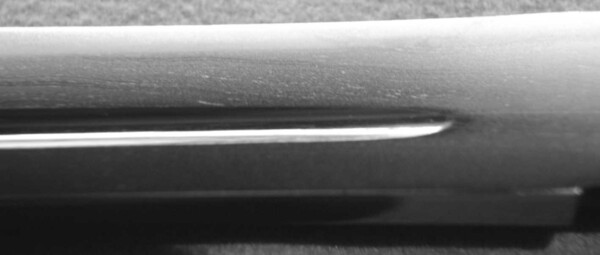
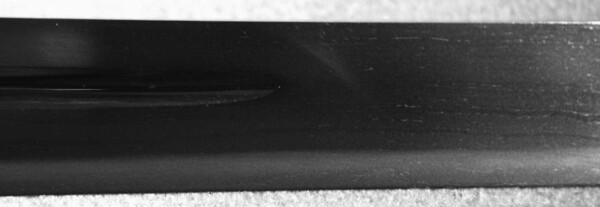
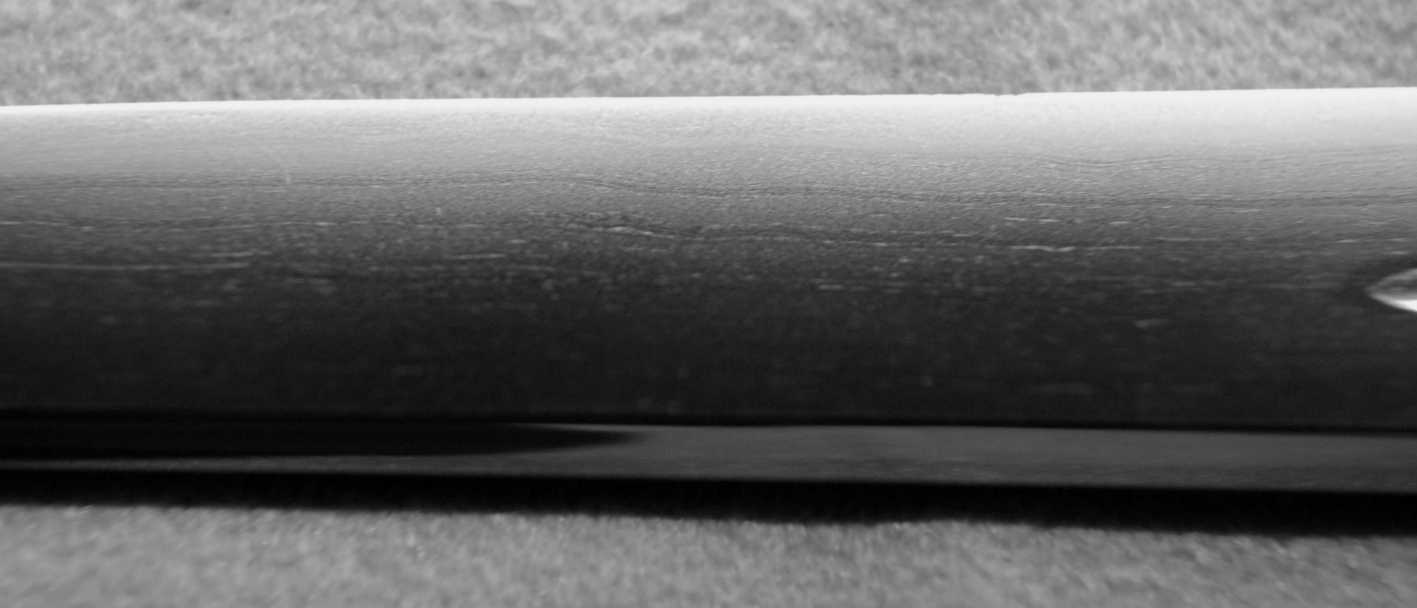
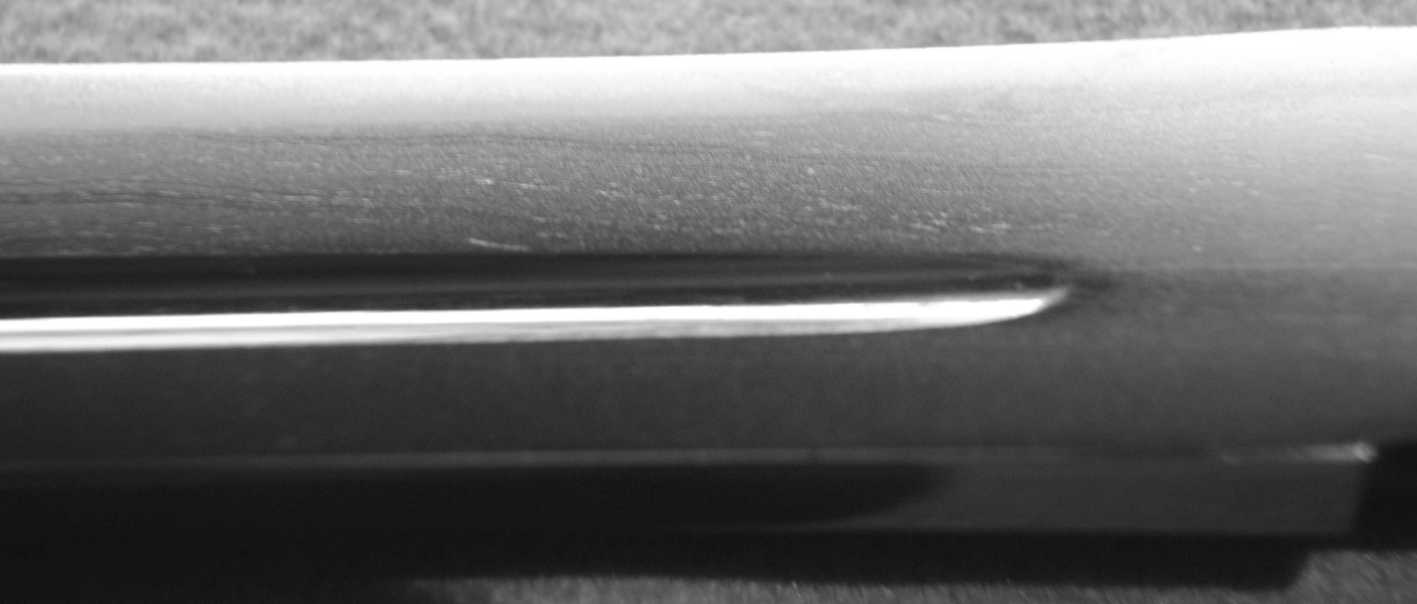
Hi Darcy Many thanks for your images which are a great help in comparison and study. I have attached below some more images of the tanto. I have played a lot with these to attempt to highlight some of the features. Because of this in some of them the contrast between the masame structures looks greater than they do in hand. One thing that did come to light while I was playing was the amount of fine ji-nie which covers the blade. I have no illusions about my photgraphic skill but hope the attached can show some of the features of the blade a little more clearly. As I think I have said before the more I look, the more I see, the more I see the more I like what I am looking at.