All Activity
- Past hour
-
You could change the time zone on Your computer when visiting a certain forums though.
-
 Harlekin2xs joined the community
 - Today
-
Dear John. I think that if you look closely at the top kuchibeni in the third picture you can see that they are solid inserts. All the best.
-
 My Senjuin blade. I've been looking for explanations how Norishige might have had an entre into the Shintogo Kunimitsu atelier. It appears the Saeki clan origins of Norishige could explain a connection. Historical texts say the Saeki served as senior retainers to the Otomo clan in Bungo during the Kamakura era. That gives us a link, at least geographically, to Bungo Yukihira who is said to be Yukimitsu's father and this association may have been the introduction Norishige needed to join Shintogo & Co. Furthermore, the Ko-Hoki smiths were Kyushu-based and this local Clan connection might explain why he was so fixated throughout, but especially early, in his career with their blades and style. Nice to consider the possibility his first sensei was one of these Ko-Hoki smiths. I doubt he would have acquired a taste for this 'rustic' style, nor the techniques, from the Kyoto Awataguchi tradition of Shintogo. This very unusual nagamei inscription on a TJ tanto has raised an interesting connection to Hoki Sanemori. Under what circumstances would Norishige have included a reference to another smith on one of his blades? Out of deference or acknowledgement? Markus S says there were several generations of Hoki-Sanemori so perhaps one of these was his first teacher or associated in some way with his early training. Worthy of further study. This is an extract from Soshuden Museum discussing the Mei. It is necessary to point out the existence of another tantō, which, unlike the previous ones, has survived up to modern times: Tokubetsu Jūyō No. 9. It was also signed by the master in a slightly unusual way. Above the signature, the 勝 (Shō, Katsu) kanji is located on top of the only mekugi-ana. It has the following meanings: “win,” “victory.” The large space between the smith’s signature and this kanji emphasizes that there is no connection between these two elements. This kanji was known to be used in signatures of Hōki Ōhara Sanemori (伯耆大原真守). However, he placed it on the tachi on the haki-ura side, where the date of manufacture had to be located (e.g., see Sanemori’s tachi classified as Tokubetsu Jūyō No. 19). The appearance of this kanji in Norishige’s signature seems strange, especially since it was written in smaller strokes than the signature itself. NBTHK experts conclude that it is part of the master’s signature. Consequently, Norishige explicitly denoted his relationship with Sanemori, as well as with the Ko-Hōki (古伯耆) School. This school’s strong influence has always been reflected in the works of many smiths connected with the Sagami School and especially in Masamune’s swords. However, we should note that this blade was dated 1314. This sword was forged before Norishige started his training with Masamune, whose artistic works were most directly associated with Ko-Hōki. Therefore, as a result, the meaning of this kanji has not yet been clarified.
 -
Hi Greg, If it helps any, the one on the left in the photo looks like it might be a Masonic sword: I think I can see the Star of David on the pommel.
-
 Norishige was also said to be the preferred smith of the Moimoi which makes sense if you are the best smith in the Province. I would love to go back in time to have tapped Albert Yamanaka's mind regarding all of this to get his thoughts or Homna Sensei's or even Darcy's. Man so much knowledge and thinking now lost to time. Of course much of what was not written down is because there is no historic proof and therefore it remains in the realm of theory or speculation but it would have been such a lovely conversation to have had just to hear their thoughts on historical events specific to the the various smiths. Best we can do is read what they left behind (these newsletters being a major asset) and hopefully we uncover a small nugget that helps us understand more. If for nothing else, this is why I love this forum - it is a treasure trove of knowledge and thought.
 -
.....I’ve had them in storage for over 20 years and just now pulling them out.... Hi Greg, if you put them back in storage for anther 500 years, they will possibly gain some value!
-
I have not come across the Kabuto-Giri Gō in my journey. Do you have a link to it with more information about it? Would be fascinated to learn more. Out of interest is this the Gō Tanto they have listed as Juyo Bunkazai? If so I did not realise it was a meito. For clarification are these images of the Kabuto-Giri Gō or your Senjuin sword? Thank you. With regard to his training as a Samurai, if he was from a Samurai family he would have started his training at the age of 5 and completed it at his Genpuku (12 years.) They were expected to be battle ready by 13-14 years old at the latest. Unreal. This gives him another 7-9 years to focus learning his craft of being a sword smith. Obviously this would be interrupted by any retainer duties but for all that was going with regard to the Samurai's discontent with the Shogunate there were no major skirmishes or battles where the Moimoi were involved during this time. In fact it appears that his life by enlarge was lived during a period of relative peace, if such a thing was possible. One major event that does happen in Gō's lifetime was the Shōchū Incident, which was the first, failed attempt by Emperor Go-Daigo to overthrow the Kamakura Shogunate and restore direct imperial rule. The plot was discovered and suppressed by the Shogunate's representatives in Kyoto, but it marked the beginning of serious, organised opposition to the Hōjō regency that ultimately lead to the collapse of the Kamakura Shogunate in 1333. Interesting the Shōchū Incident happened in 1324, the same year Norishige left Gō's forge and Gō died in 1325. Also interesting that the Moimoi were a branch of the Ashikaga clan who were active supporters of Go-Daigo and ultimately helped him overthrow the Kamakura Shogunate. You have to wonder - was Gō somehow involved? Especially when one consider's his supposed sudden death? One explanation I read stated that he committed Seppuku - it does make you wonder. Any way, it is very interesting.
-
This is why I believe Norishige already had a Sensei prior to Kunimitsu. It was normal for apprenticeships to start when the student was in their early teens (basically strong enough to swing a hammer with some accuracy and control). This would suggest he had several years swordsmithing experience under his belt before joining the Sagami atelier. And like Go he must have shown some considerable prodigy-like skill to be allowed to learn the techniques of, and be taught by the old grandmaster. Not long after he would sign his own blades. Earliest in oshigata dated 1309. This must have been quite meaningful in that Kamakura period context, suggesting less sensei/follower relationships (with Yukimitsu/Go/Masamune) and more like an equal, collegiate arrangement. Yes, Norishige is quite the enigma amongst the pantheon of early Soshuden masters.
-
Following this one.
-
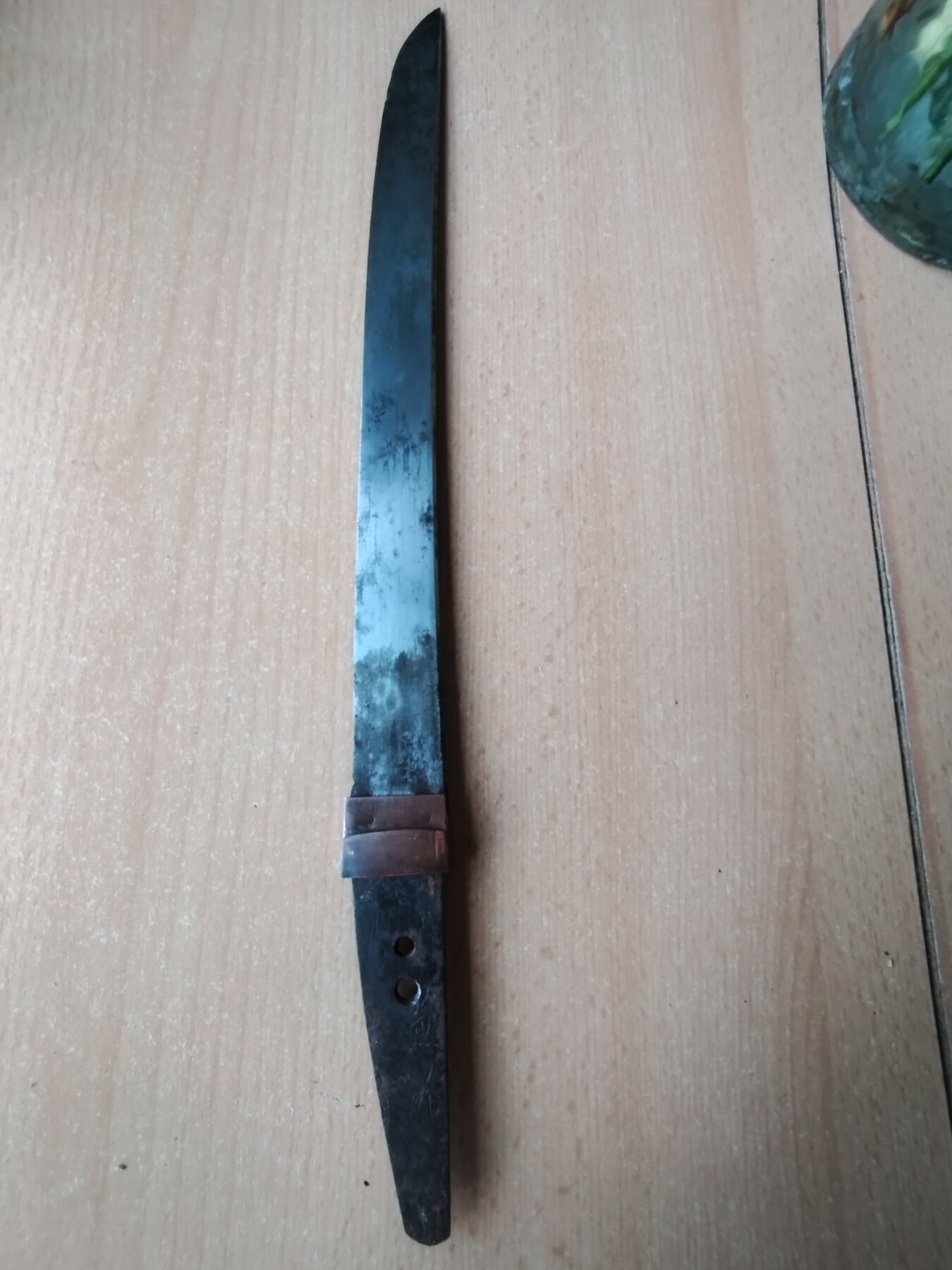
Richard, you need to focuse clearly, use a dark background for better contrast, and show the TANTO as cut-out so not much of the background is to be seen. Look at the results yourself. This also saves some data volume. You can try to push the HABAKI back with a piece of wood; don't use a metal tool to prevent damaging it. Do you see HAMON or HADA at all? MUROMACHI is not exciting per se, quality and condition is what counts!
-
大和守口口作 - Yamato kami blank blank saku. Looking down the list of smiths with the title "Yamato Kami" in Sesko's Compendium to try to fill in the blanks, a plausible option might be Ujinaga (氏命) based on the shapes I imagine I'm seeing but it's a bit of a guess. Do you have a better photo Peter or can you do anything to highlight the strokes in these kanji to make them a little clearer?
-
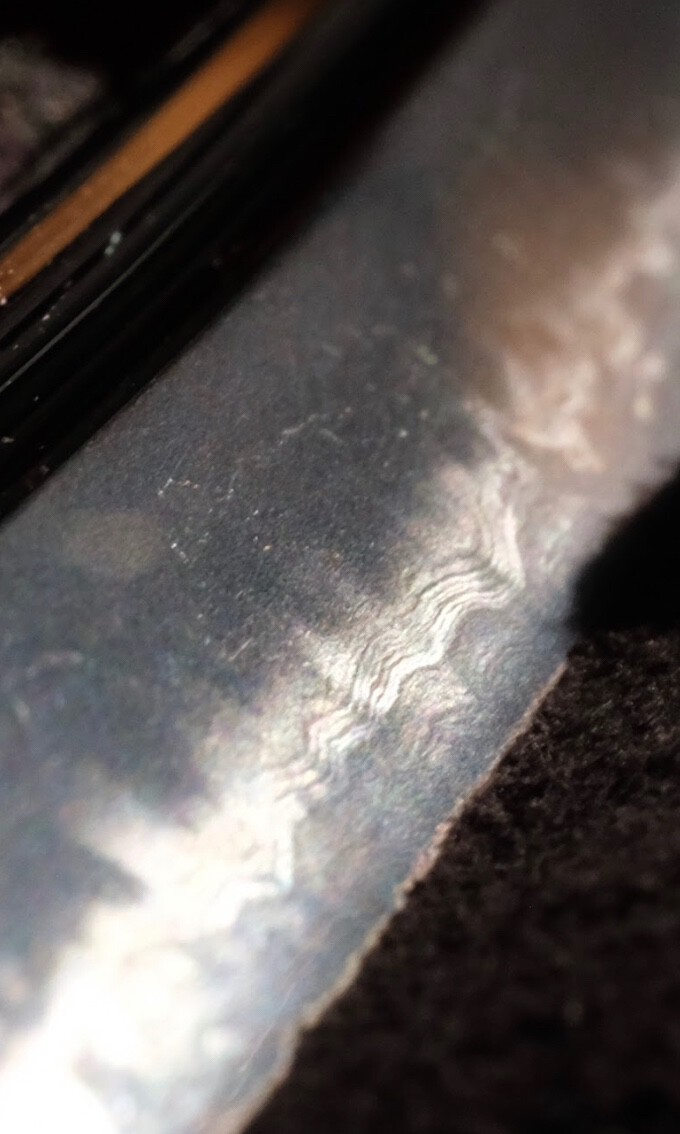
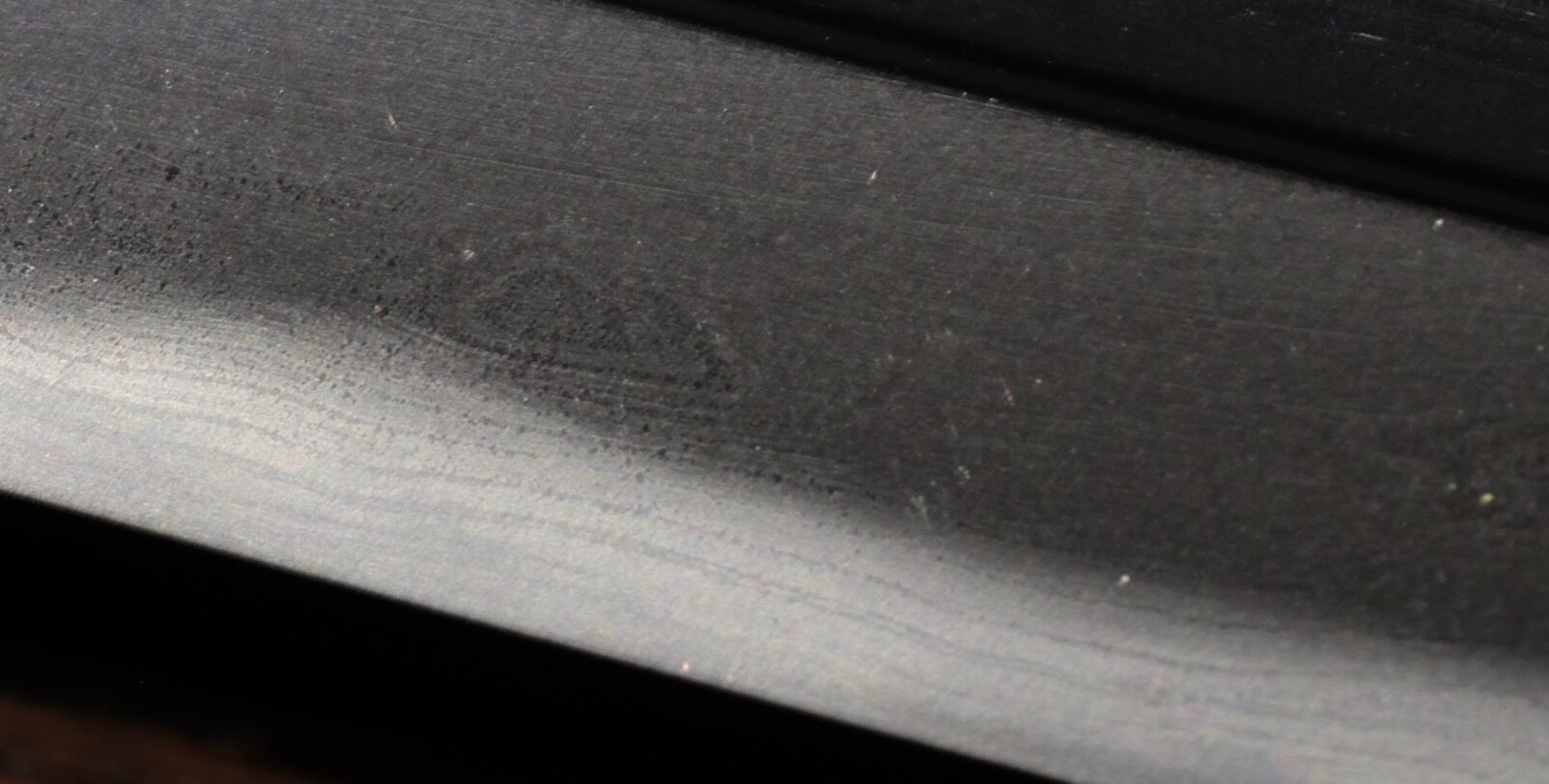
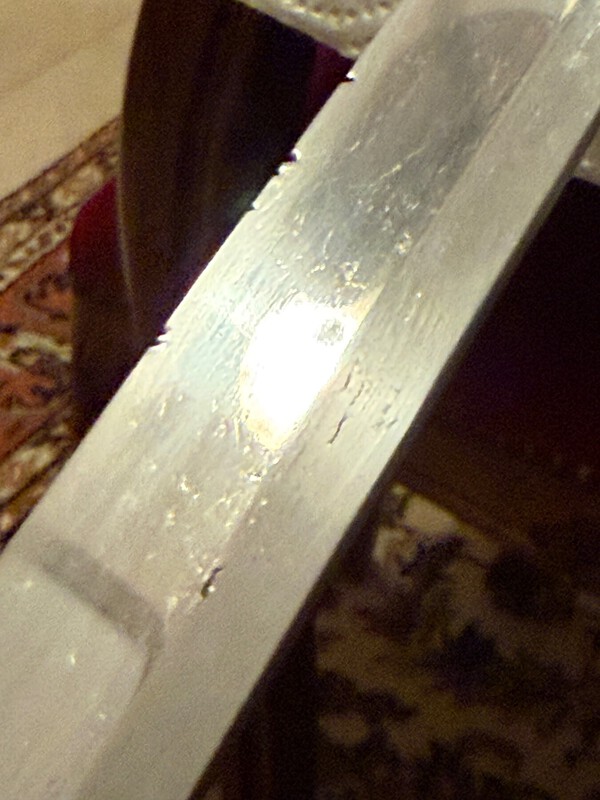
Have a nice day. I took a new picture of the hamon. I hope it's good enough. The hamon looks worn all along the edge. I can't get a better photo; I think the blade has suffered a lot over the years. It's a bit easier to see in person.The damage from the fighting hasn't penetrated the hardening process. The damage on the spine of the blade, for example, is a bit deeper, which is probably due to the softer steel.

-
There is definitely mention of Kaneharu but that is it
-
 Nice pics @Lewis B, always good to see some quality (and interesting) Yamato work. Also worth considering that another reason we see the similarities between these earlier schools and Soshu is that it wasn't just the Soshu luminaries who tried to reproduce the old Ko-Hoki masterpieces, which were also known for their lively hataraki and extant examples of ichimai boshi. We know that Masamune, in addition to his own inimitable style, also produced works that were very obviously inspired by Ko-Hoki; it's possible that this may be one of the things that drew Go and Norishige to Kamakura, but it may even be the case that they they were the ones who introduced these techniques and appreciation of Ko-Hoki to Masamune (or at least fanned the flames of his desire to do so).
 -
Is that actually seki gane though? From the photo above it doesn't look like metal inserted into the nakago ana but rather colour added to the metal to create the impression of seki gane. Perhaps a photo on the angle showing inside the nakago ana might clear it up?
-
Certain schools fitted kuchi-beni type sekigane as a standard feature [Tanaka - Nara]. "Kuchibeni were also used by masters of other schools - Akasaka, Hoan, Kinko". [ https://en.topwar.ru/152197-legenda-o-cuba-cube-chast-3.html#:~:text=Kuchibeni were also used by,of the kogai-hitsu-ana and kozuka-hitsu-ana. ] I guess it made fitting easier or was a decorative feature for those that collected tsuba without intending to mount them?
-
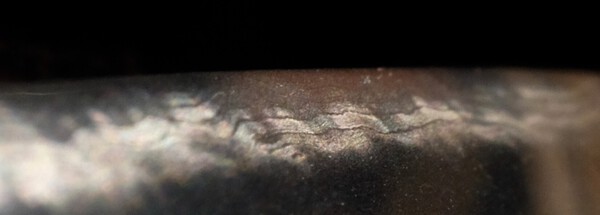
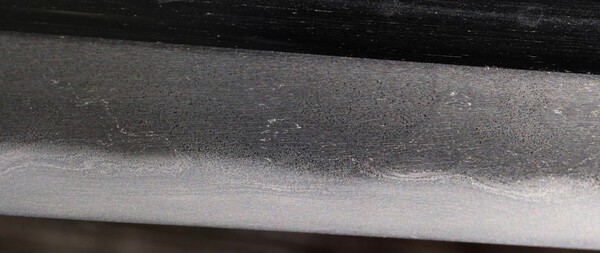
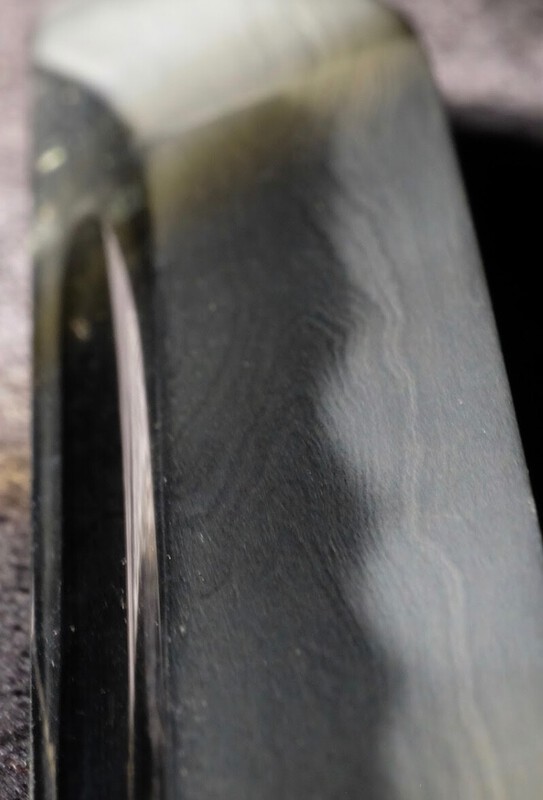
Thank you @MassiveMoonHeh for a very interesting and thought provoking op-ed. The analogy to the early days of Silicon Valley and how this brought together a critical mass of knowledge and advancement through experimentation and collaboration is just so apt. One can only imagine how Soshuden might have evolved had the Kamakura Bakafu stayed in power and these early Grandmasters remained in close proximity..... @eternal_newbie made a timely resurrection of the thread discussing historical connection between Go and Yamatoden. Only one extant blade attributed to Go exhibits a clear Yamato and Soshu influence but there are blades by other makers that blend the forging styles and deki of these two gokaden. I think old oshigata show blades by Go existed with Yamato influence. The obvious exponent of Yamato and Soshu styles is Shizu Saburo and his followers. But also Senjuin Yoshihiro can be added in the mix. Working back from his active dates and examples of blades with nengo, we arrive at a DOB ca. 1280, it's certainly within the realms of possibility he was Go's father. I'm curious how Go could have been smithing in Sagami and also be a retainer of the Momonoi family in Matsukura, given his young age. Whatever the truth given what he achieved in such a short time clearly establishes his prodigy status. The pact with the devil theory is a unique perspective Exploring the connection of Go with Senjuin Yoshihiro, we can see how the young Go might have been taught Yamato styles of sword making. I have a small, thin 62cm o-suriage kodachi (shortened approx 10cm) that has NBTHK attribution to Senjuin. However it has strong Soshu forging style influence, and thus is open to some interesting possibilities, such as being by Senjuin Yoshihiro. The hataraki, the ichimai boshi with hakkikake, chikei throughout some with an angular shape, yubashiri, sunagashi and ara-nie with tightly forged itame hada and surface nie throughout giving the blade a wet appearance. All that mixed with the Yamato features of masame with a high and wide shinogi. I need to spend time comparing the features on this sword with those of blades attributed to Go, especially the Kabuto-Giri Go This blade was originally part of the Tsukamoto museum collection and I can see how it would have appealed to a collector from an academic standpoint. The juxtaposition of characteristic features from two different gokaden in one blade is quite unusual.



-
I don't think there is a way, unfortunately. Maybe on the new software.
-
Hello, I would be grateful if someone could translate this signature for me.

-
Hi, Here is another shot of the possible Kaneyoshi tanto I'm researching. It looks like I can only upload one image at a time so I hope this doesn't make it too painful to comment on. I appreciate any and all information. Thanks Richard

-
Thank you for both responses. Muromachi era sounds exciting, I will attempt to upload some better photos today. I had trouble sliding the habaki all the way down but will give it another try. Cheers Richard
-
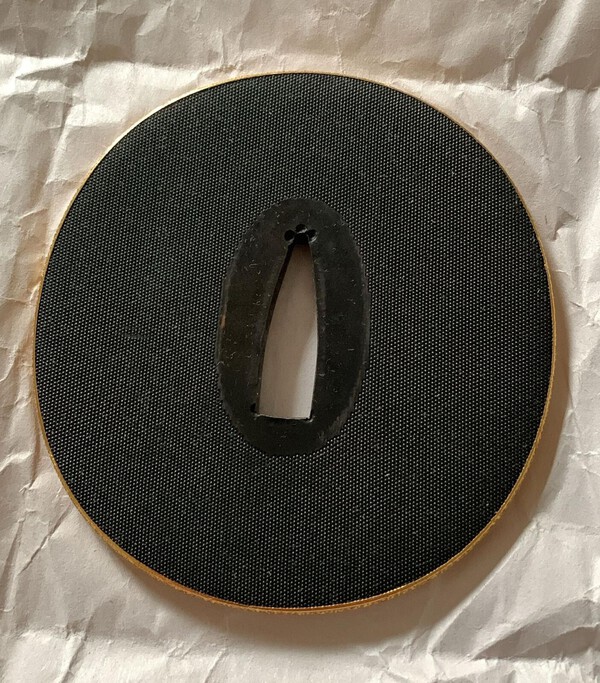
Dear all! I do not know how to classify this piece: it could be an investment (the total weight is around 217g which means that we are talking about a significant amount of gold) or a nice addition to your collection. The quality of the workmanship is fantastic, it is ubu (no hitsu-ana) and undamaged. Dimensions: Height: 8.08cm Width: 7.64cm Thickness: 0.55cm (becoming slightly thinner towards the Seppa-dai and Mimi) Nakago-ana (Height): 2.74cm Nakago-ana (Width max): 0.79cm Asking price: 1,400.00 EUR plus shipping costs Shipping costs: Germany EUR 13.99 EU EUR 28.99 Worldwide EUR 54.99 Best Chris


-
- 2
-

-

-
My guess is 4-6 years
-
weekend bump 1300 Euro (including shipping inside EU)
-
 FriskyFritos changed their profile photo
 -
Brian, I noticed the same thing but didn’t know what to make of it. It actually made me slightly nervous about the piece being gimei but the artistry fits his style so I figured I was pretty safe. Definitely a unique feature. Heck maybe the client brought it back and said, “Throw your John Hancock on there!” 😉 Cole