cabowen
-
Posts
6,786 -
Joined
-
Days Won
10
Content Type
Profiles
Forums
Events
Store
Downloads
Gallery
Everything posted by cabowen
-
 I bet you will get a "meikan more" (unrecorded) result...
 -
I agree that the shipping issue is a serious and major threat to all those who buy and sell from Japan, or need restoration services, kantei services, etc. I wonder if sending a letter to as many Japanese online dealers as possible, the NBTHK, togi-shi, etc., alerting them that they need to start petitioning their contacts in government to address this issue before they see their business impacted in a serious way would do any good? Many of these businesses/people have contacts high up in the government; I see no other way to instigate some sort of change. Comments?
-
A nice find. demons and a geisha? Fuchi and manuki.
cabowen replied to jason_mazzy's topic in Tosogu
Some sort of sage or Buddhist diety...the lotus is a hint... -
A nice find. demons and a geisha? Fuchi and manuki.
cabowen replied to jason_mazzy's topic in Tosogu
not geisha.... -
I never had any issues with EMS either, though it seems that now they will only accept swords for shipment out of Japan of the flight is direct...
-
Hayama Enshin worked in that grey area right after the Haito Rei. He was one of a few smiths that kept the craft going despite limited demand and very severe financial hardship. He is known for his use of western steel and his tight, almost awataguchi-like hada. He made mostly archaic shaped swords. These two are done in perhaps his most commonly made sugata. He had a few students, and there is a nidai I believe. His work is very distinctive, usually muji with suguha hamon done in an archaic sugata. He is said to have been from the Koyama Munetsugu Suzuki Masao group and his early work is similar to the work of that group, that is, Soden-Bizen. See here http://www.tsuruginoya.com/mn1_3/a00089.html for an example... edit: correction made....
-
Pretty sure it is Masatoshi saku... 正俊作
-
Can anyone provide information about this sword?
cabowen replied to Erevis's topic in Military Swords of Japan
The blade is mounted in iai fittings that have been adapted for military use....Blade appears to be typical mass produced, non-traditionally made. -
You have the correct translation of the sword's mei. The tag has an address and owner's name. Owner is Kurata Shotaro 倉田庄太郎. I can see enough of the address to add anything with certainty. One of our Japanese specialists may add something.... later war I would venture...
-
I spoke with a member of the NTHK-NPO shinsa team today about the gunto koshirae kantei-sho. First, it is indeed a legitimate NTHK-NPO kantei-sho. The explanation I was given as to why it passed shinsa was that in Japan, they are rare and thus they believed it has some historical value. They conceded that it has no value as art. They have always tended to stress the historical side; notice their journal is titled "Token to Rekishi" (The Sword and History), while the NBTHK's journal is called "Token Bijutsu" (Sword Arts). Their name is Nihon Token Hozon Kai, versus Nihon Bijutsu Token Hozon Kyokai - preserving swords versus preserving "art" swords. Hope that sheds some light on the issue....
-
You are most welcome....Please keep us in the loop as you gather further intel on this sword.... And, btw, "Chris" will do just fine.....
-
Again, these photos do not show the habuchi distinctly. And, as I have shown, it is possible for the hamon to run off the blade when suriage. As for process, there are several ways to shorten the blade. I mentioned several already. The fact that I have produced examples which clearly show the hamon continuing into the nakago is conclusive proof that it can be done-and that is the point. Talk to some swordsmiths, spend time in their forges if you wish to learn more about the mechanics. I do not have the link handy to my last example. I found it using google and searching Japanese sites. I have spent enough time already on this and have made my point. Knowing your predilection to grab at anything and everything as you go under, I won't be wasting any more time arguing the obvious with you. Your time might be better spent looking at swords in hand and furthering your own education. TIme to put you back on my ignore list....
-
I think you mean "umebachi" ● 梅鉢 ● うめばち ● UMEBACHI Nice tsuba!
-
What are you applying the oil with?
-
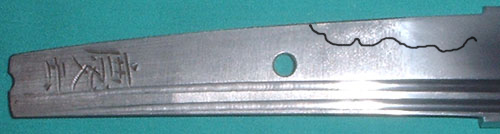
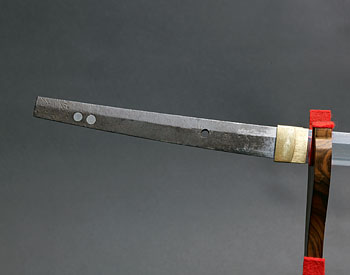
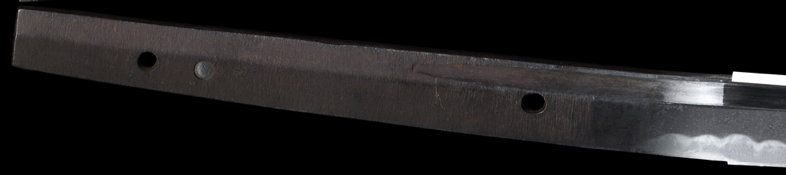
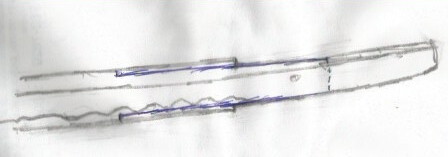
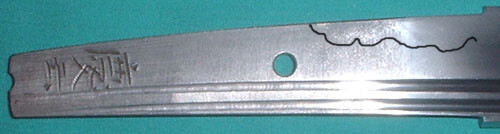
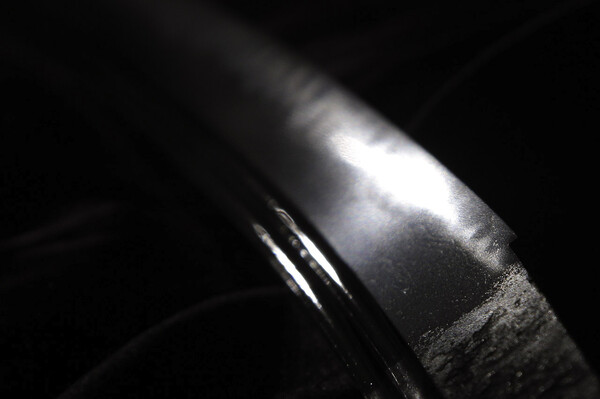
Like this: or this: If you read my initial comments, I said: Not all hamon are of the right shape for this to be possible. But some certainly are.... I also said: Meaning, I can't say for sure what the situation is with this blade. I am speaking of possibilities, which is about all you can do from the photos. I have seen suriage and o-suriage blades with the hamon continuing under the sabi into the nakago a fair distance and not fading away as yours does, which means the hamachi was cut into the hamon and the ha filed down without heat (or enough heat to remove the hamon), Perhaps you have never seen this in your books. It doesn't photo well....Another example of the importance of seeing many swords in hand. Here: And here: Here is an example where the photos would appear to show the hamon running off the blade as the op's blade seems to do, but when looking at the blade at the right angle, you can see the habuchi breaks just before the hamachi; the hamon does not appear to simply fade away... (http://www.nihonto.ca/shizu-3/): And here is an example (Juyo Nobuhide) with a rather symmetrical lower mekugi-ana that would be very similar in location to that on the op's blade if cut thru: And here is yet another example with a hamon continuing into the nakago and with a lower mekugi-ana that is symmetrical... I don't find your argument compelling.



-
I had a blade with a very similar hamon once by an Shinto Owari smith (Seki derivative), Yasumichi. Hard to say but the blade looks decent.
-
That's not Nobukuni, it looks like a gimei Izumi no Kami Kanesada....
-
I wouldn't buy Hawley's as there are no oshigata there to help you. Did you search using the smith signatures in Japanese? There is a lot more info on Japanese sites... I really doubt a shinsa team is going to find your smith in a few minutes if you can't in hours....
-
No, clearly no, but you are free to believe what you want. other side : Have you never seen a suriage sword with the hamon running down into the nakago? Clearly it is possible to cut the ha without losing the hamon. I have seen it done a few times so I know it is possible. It is easier with older koto blades as many have softer ha. A file at Rc 64-65 will cut the ha of a koto blade at Rc 55-58. Certain stones would also cut the ha, though they would take a lot longer than a file. These days smiths have access to diamond files and they work very well to cut through the ha....as does a diamond wheel on a dremel.... Many, maybe most, were shortened by first heating the ha a bit to soften it, then cutting it. Depending on the skill of the person doing it, they could reduce the hardness without losing all the martensite (this is called tempering) if not heated too long or too much. Many were simply heated without a lot of care, softened greatly, and then cut much easier. These will have the hamon simply fade away without the habuchi running off the edge. Not sure what you are trying to prove with your pictures but you still haven't said whether or not the half hole at the end of the nakago was purposely made to look like it was cut off or not.... If you have something of substance to add to the conversation, by all means speak your mind. Your little pictures and dodges aren't really contributing anything useful.
-
The poor detail, color, and line visible through the nakago ana scream cast copy....
-
Maybe but they aren't going to spend more than a few minutes with it and will likely not have all reference works necessary to check against. Your best bet is to do as I suggested and find reference signatures of all the smiths from Settsu with a Yamato no XX title. Seems there are only 6 or 7 possibilities...
-
So you are saying that the half mekugi-ana at the nakago-jiri was simply added to make it appear as if the blade is suriage? Personally, I don't think any of the photos shows the habuchi clear enough at the machi to form any opinions. One needs to see the blade in hand, at the right angle to the light to see the true habuchi and how it ends under the kesho. Given the right circumstances, is possible for a skilled craftsman to shorten a blade so that the hamon runs off the blade, rather than simply fades away. Thus, I don't think this is conclusive proof regardless...
-
I think the comments are saying that while it says "Osafune" on the nakago, this is not correct in their view, rather they believe the sword is from the Yoshii group.
-
Nice! Kamakura seems like a good bet...Yamato perhaps....One thing that puzzles me though is the color and the way the sabi on the nakago ends in a neat line...
-
And I always enjoy your sense of humor...Post some photos if you can and we'll see if we can figure out if it's a Chevette or a Corvette....