John C
-
Posts
3,410 -
Joined
-
Last visited
-
Days Won
21
Content Type
Profiles
Forums
Events
Store
Downloads
Gallery
Everything posted by John C
-
Being sold straight from China for 150 dollars. Must be fairly cheap to produce of they can make a profit at 150 dollars. Wonder how many scammers order it for resale. John C.
-
Raphael: I think it's dated showa 48 (1973) and looks a bit like the type of "authentication" you might get from the shop where it was originally purchased. Seems to have much of the same information as a torokusho. John C.
-
@Bruce Pennington Bruce: Not sure what to make of this mark/stamp. Maybe it's just a partial. On a sword with what looks like a souvenir tsuka and navy tsuba/seppa. https://www.ebay.com/itm/127778985142? John C.

-
When you say pheasant-leg, are you referring to the one labeled kijimomo? John C.

-
MILITARY books By Richard Fuller & Ron Gregory
John C replied to Marcin's topic in Military Swords of Japan
Marcin: I have both and now only use the more expensive civil swords and dirks version. They have much of the same info on military swords, however the more expensive book adds gunzoku and dirk information. So I guess it depends on what you are researching. But the if you are only going to buy one, I would buy the civil swords and dirks version for the extra info. John C. -
Seems the same was done to the tsuba. There are the remnants of something under the scratches. John C.
-
Thank you, Jan. I forgot the alternate pronunciation of ta as da. Much appreciated Chandler and Jan - and Sam for moving the thread. John C.
-
Oops. Just realized I put this in the wrong forum. Could this be moved please? John C. @Scogg
-
This is scratched in a commemorative paperweight. I'm pretty confident of the second kanji as 田 "ta", which is clearer in person, however the first kanji is only a guess 塩 (salt; sodium cloride). Seems odd for a name. Any guesses would be much appreciated. John C.

-
The bane of my existence...sharpening! John C.
-
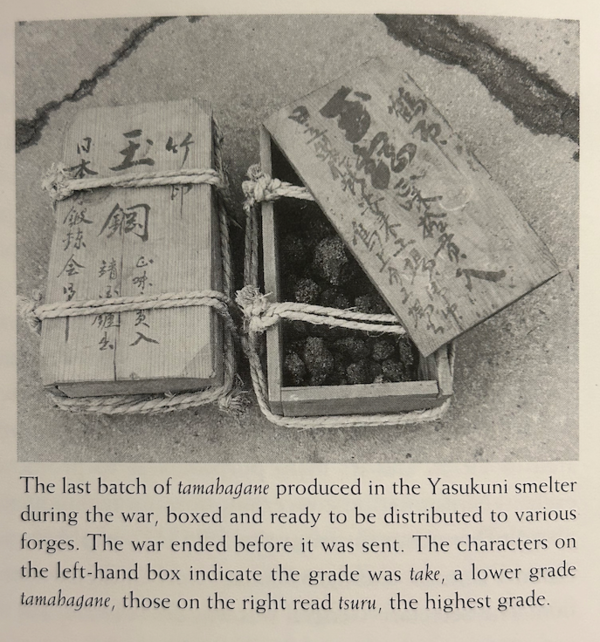
Mr. Ninja (given name?): I think the tamahagane coming from smelters is graded (5 I think) so it can be mixed in various amounts by the smith. Note in the pic below there are two grades coming from the Yasukuni smelter being sent to various arsenals. This adds to the variability. In addition, the smith has a lot of control over how the metal is heated, folded, pounded, etc. So I don't personally think blades are in danger of being too generic. I think about the example of two RJT smiths with vastly different values both using the same tamahagane from Yasukuni. Just my two cents (Oh wait, the US doesn't make pennies any more.) John C.
-
One of the title pages shows a date of 1938, for what it's worth. Not sure if that's early or not. My copies are 1960's reprints. John C.
-
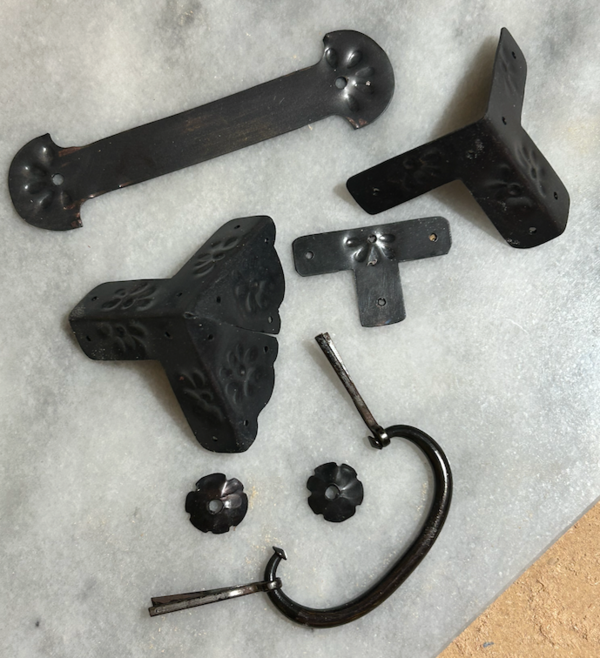
Update teaser number 2. The metal reinforcement pieces after patination. Captures the look of the iron pieces well enough, I think. John C.
-
Hello Jose: In general, kai gunto (referring to naval mounts) can have different kinds of blades. Some are a type of rust-free steel (anchor stamp), some are known as KJT (traditionally made swords), some use old family blades. I have also seen kai gunto with seki blades. So the direct answer to your question is no - not all have the anchor stamp on them. John C.
-
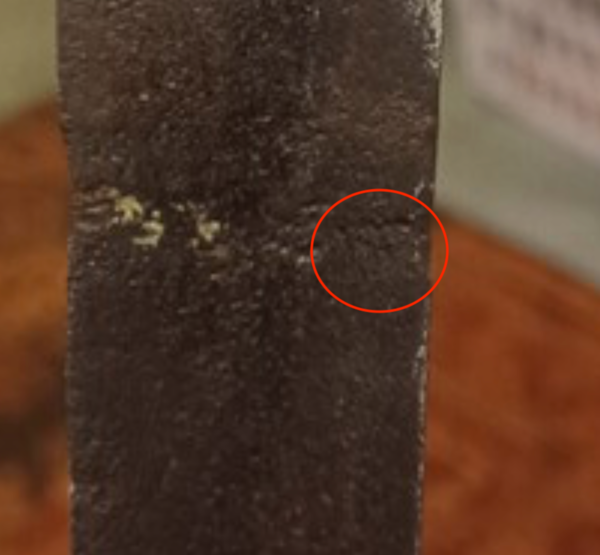
John: I think Ray is looking here. But I can't tell because it looks as if the nakago has been repaired (re-welded?) at that spot. John C.
-
Arsenal Mark on RJT sword Fittings
John C replied to george trotter's topic in Military Swords of Japan
Interesting placement of the star stamp - under the habaki. Later, they are mostly just above the mei. Early and still feeling out where the best spot would be? John C. -
Mei and Surrender Tag Translation Assistance
John C replied to Conway's topic in Translation Assistance
There is a large US naval base there. Perhaps the father was in the Navy. John C. -
No. I got it for 10 dollars, which is why I decided to buy it. At first I thought the medallion had been altered into a netsuke so I wasn't going to pony up too much. But for 10 bucks I thought it was interesting enough to get. John C.
-
Mei and Surrender Tag Translation Assistance
John C replied to Conway's topic in Translation Assistance
Conway: Was there anything above the first character? I've seen that kanji paired with field rank. John C.
-
Just picked this up. A 1934 paper weight commemorating the birthday of Crown Prince Akihito. John C.


-
Thanks again, Steve. Found a few online now that I know what I'm looking for. John C.
-
Thanks, Steve. Do you know if it started life that way or has it been altered? The location of the ring makes sense as a way to pick it up. John C.
-
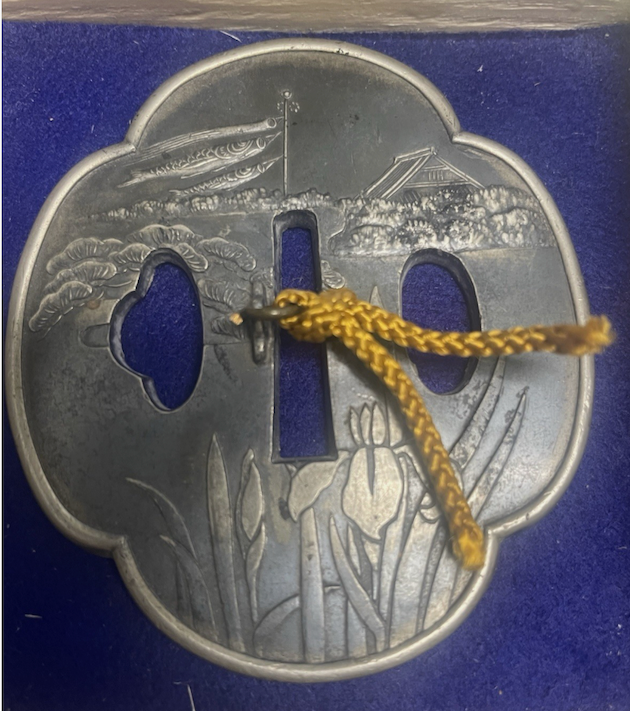
Agreed. The holes look hand cut through the decoration so probably not original (although I cannot find another example of this particular medallion to compare). And the loop is in a weird spot for a pendant or keychain so I think the most likely usage would be as a NLO. Overall size is 63mm X 71mm. John C.
-
Thank you very much, Piers-san and Kaito-san. This gives me some great info to research. John C.
-
Thank you, Piers. Here is the back side showing a loop that would have allowed it to be used as a NLO. John C.