thutson
-
Posts
100 -
Joined
-
Last visited
Content Type
Profiles
Forums
Events
Store
Downloads
Gallery
Everything posted by thutson
-
Translation help on possible Myochin Tsuba
thutson replied to thutson's topic in Translation Assistance
Thank you Calabrese for offering such a selfless and valuable public service... I will make sure to clense and contain its dark energy haha. -
Translation help on possible Myochin Tsuba
thutson replied to thutson's topic in Translation Assistance
Thank you Jean, I'm very fond of the sukashi cloud design as well. -
Translation help on possible Myochin Tsuba
thutson replied to thutson's topic in Translation Assistance
Dear both, Many thanks for the translation and the for the link for comparison. Best regards, Tom -
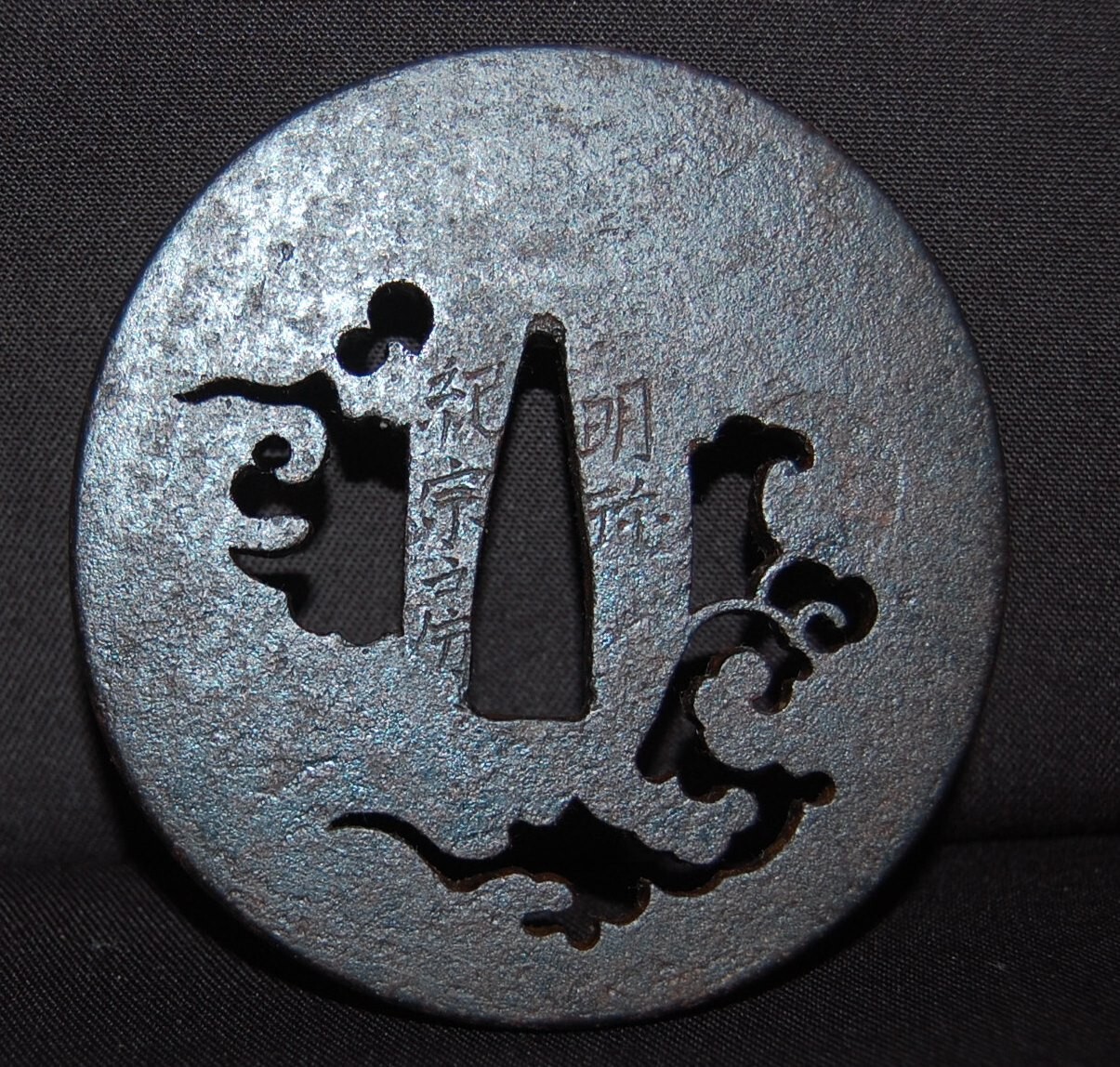
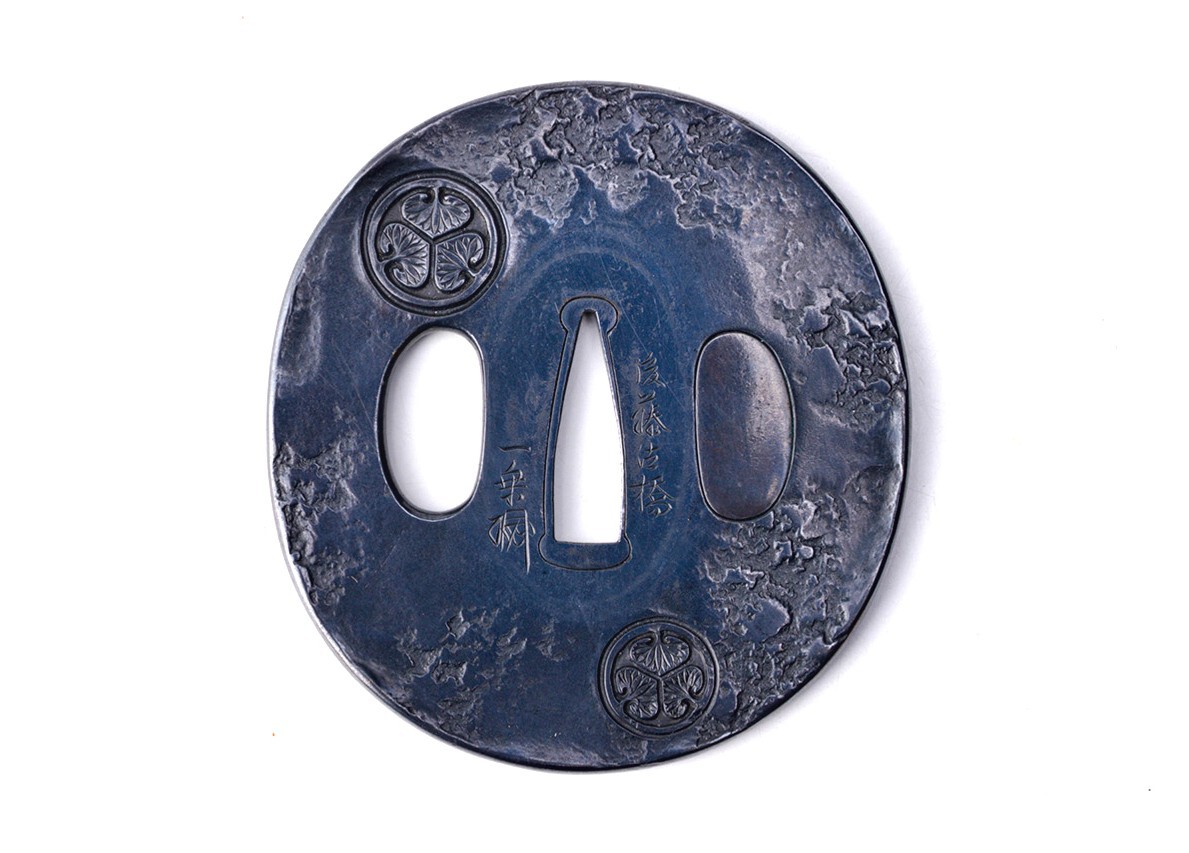
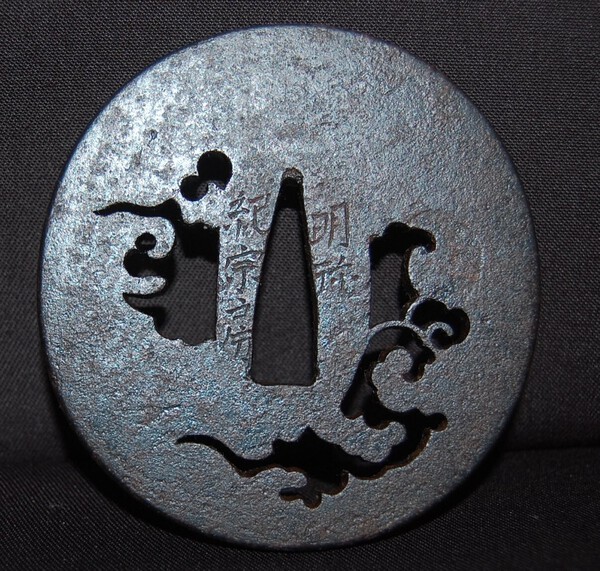
Hello, I would be very grateful for assistance with the translation of the mei on what I believe is a Myochin tsuba. Many thanks, Tom
-
Hi Will, Thanks for the extra pictures. I'm a fan of Musashino plains-themed tsuba portraying the desolate, poetic Musashi Plain covered in autumn grass (susuki) and featuring a lone stirrup (abumi) to symbolize fallen warriors. However, the small air bubbles and partial casting seam give me an uneasy feeling about your sukashi tsuba. I did an image search and found a website displaying an identical tsuba as cast so I'm inclined to think your tsuba is unfortuantly also cast. https://www.ksky.ne.jp/~sumie99/tsubacastiron.html That said, it could fool me, it's not your typical looking cast tsuba and does seem to have sharpe features and tool marks. It's difficult to be sure without seeing it in hand. Sorry I can't be more helpful. All the best, Tom
-
Hi Will, I think the 4 you marked definitely have potential to be genuine and I also like the look of the bottom right tsuba. If you can share some better photos of them tomorrow that would be helpful. Best, Tom
-
Congratulations, it looks like a impressive tsuba.
-
Congratulations! I love the design with the blossom and haiku, great work!
-
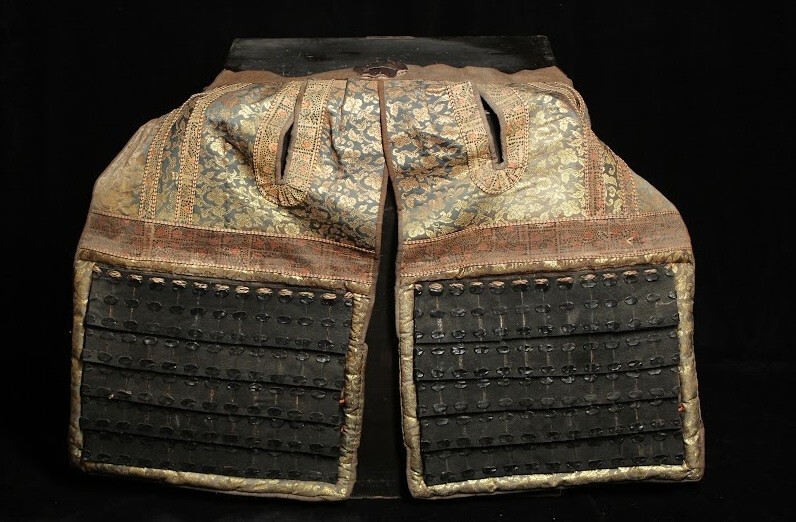
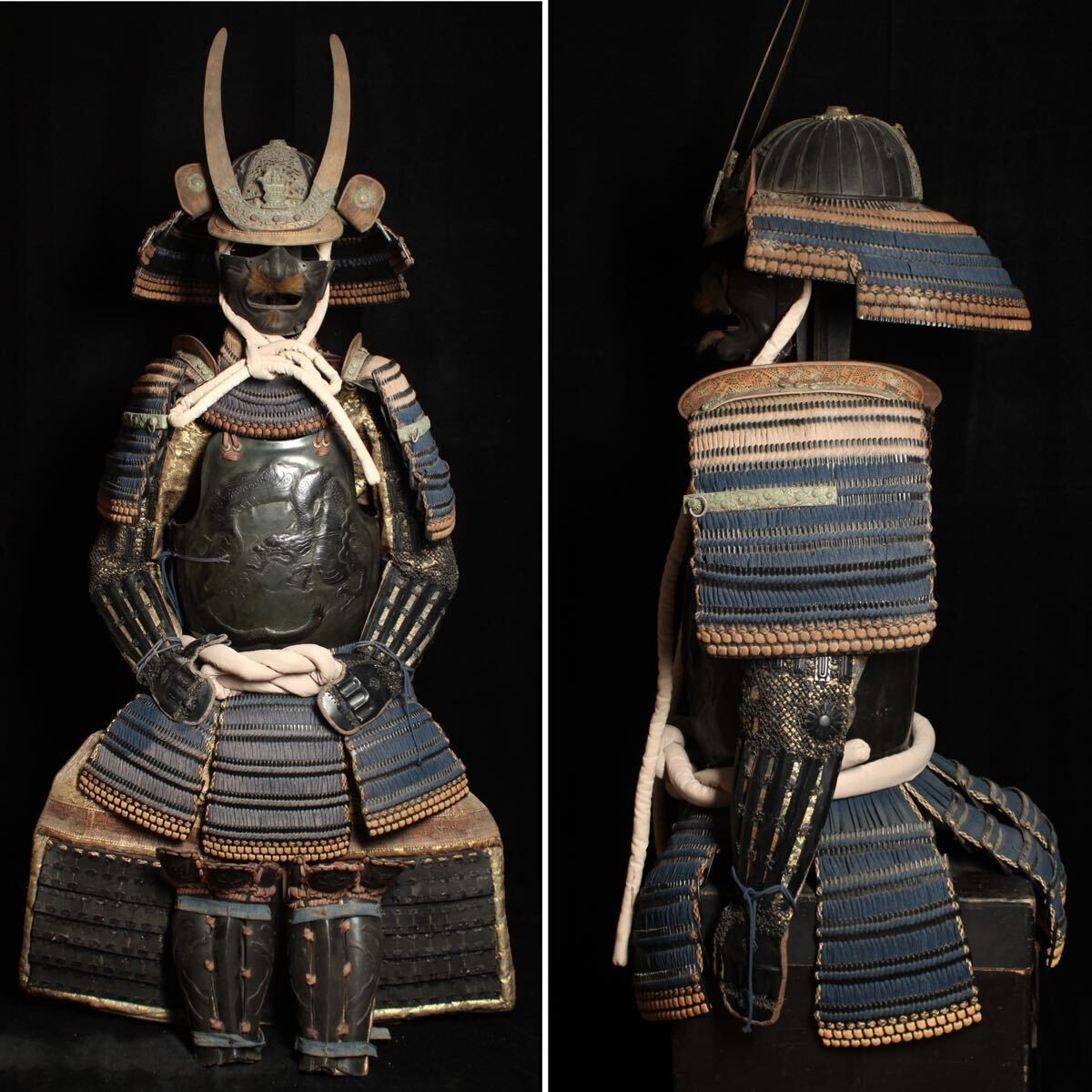
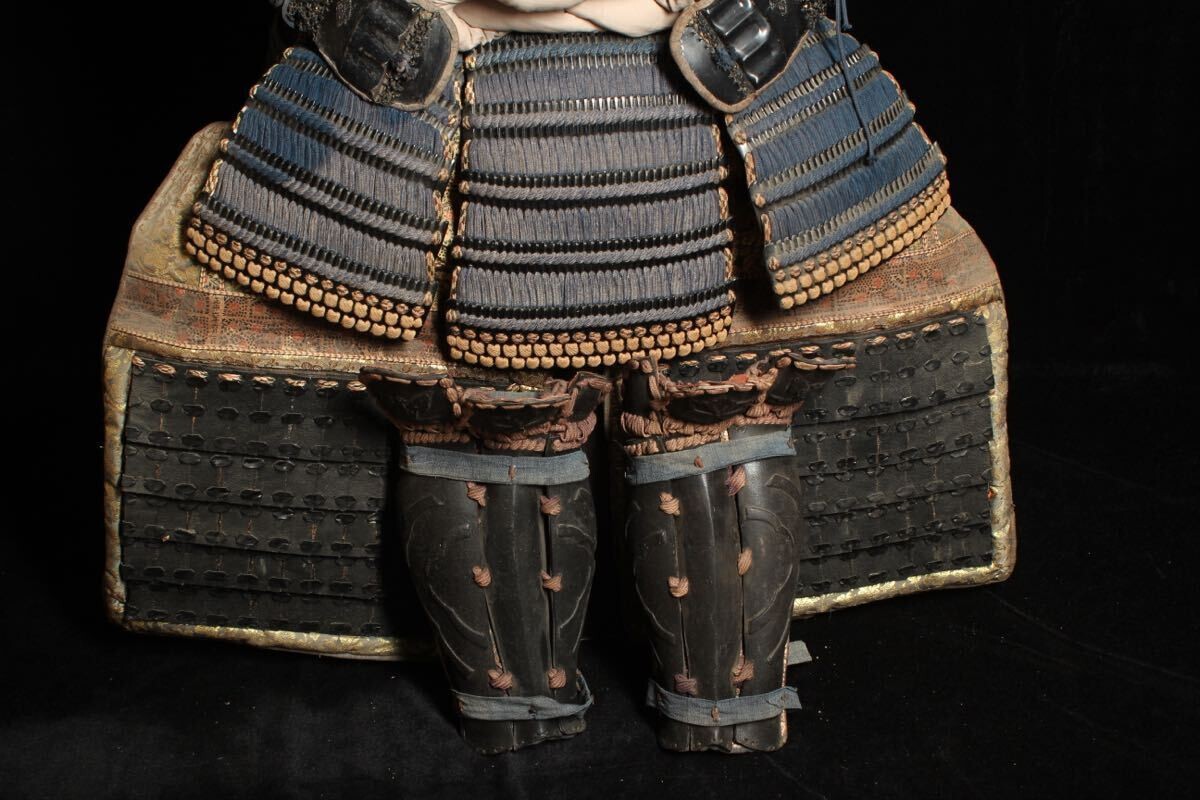
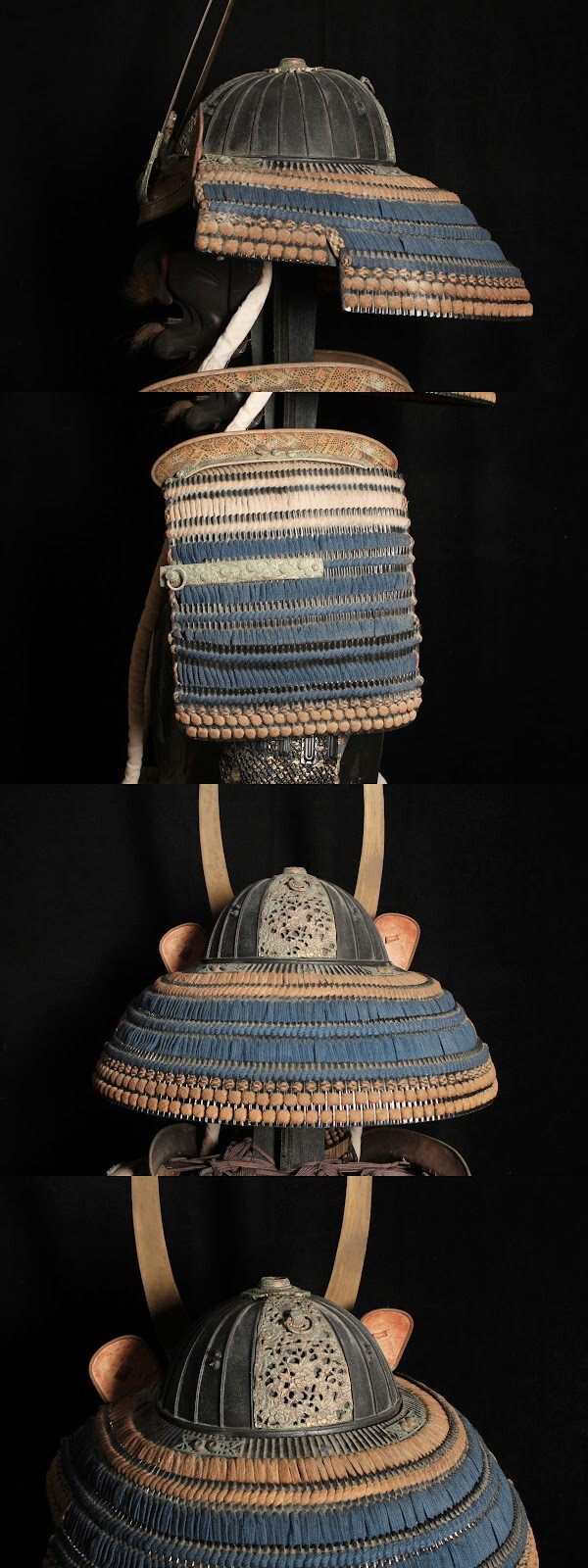
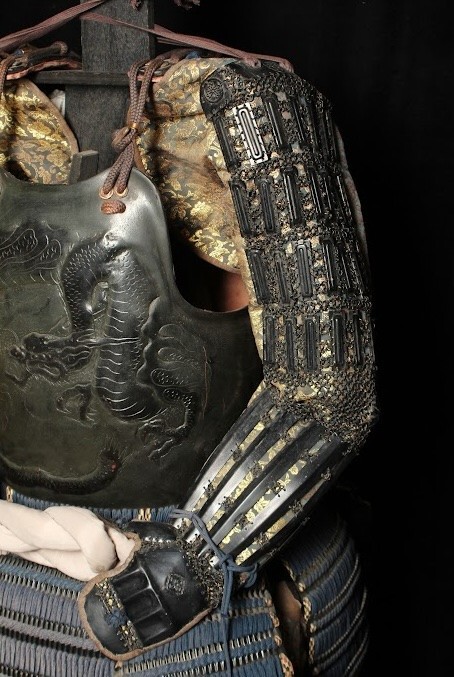
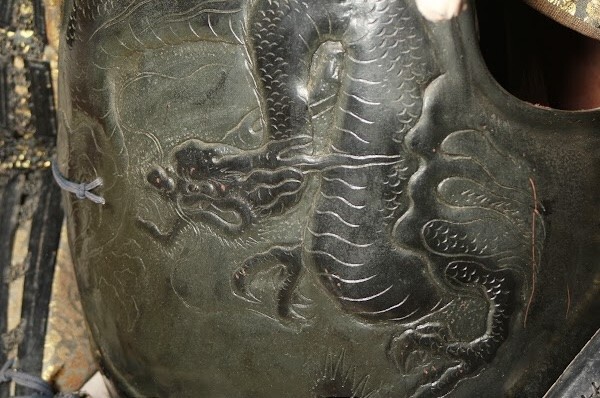
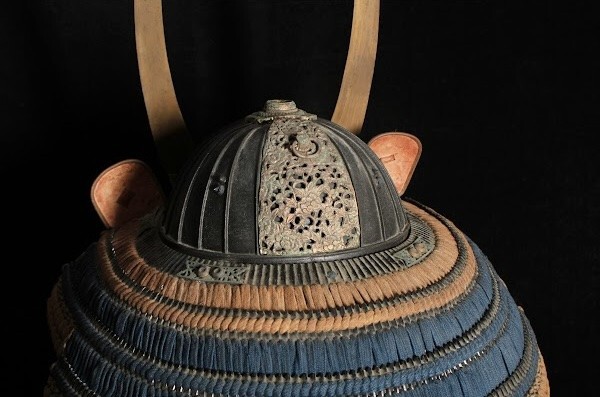
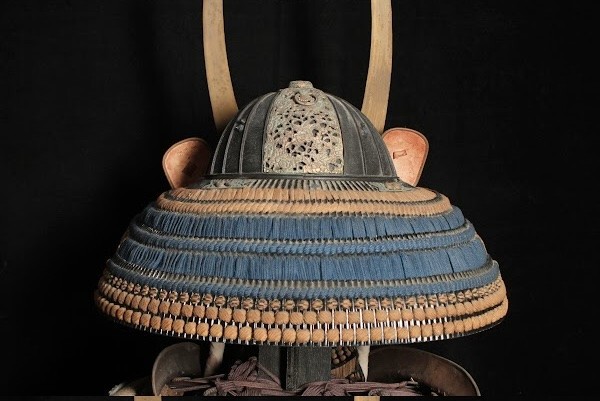
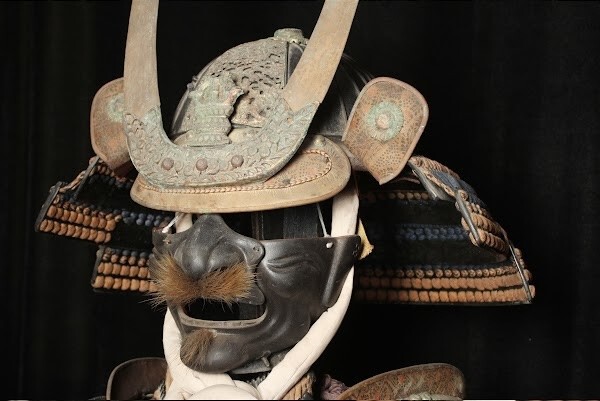
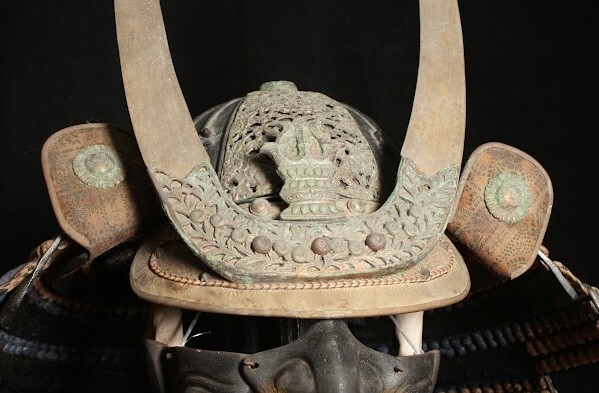
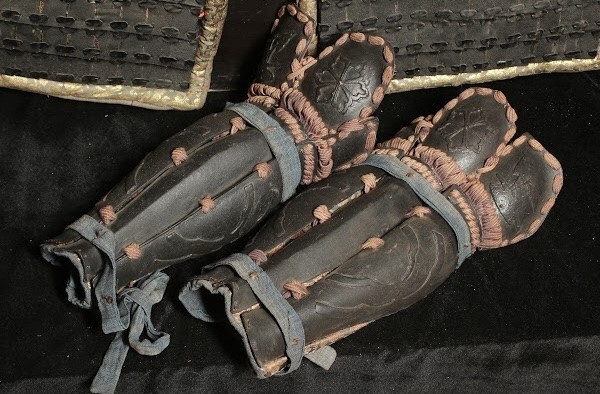
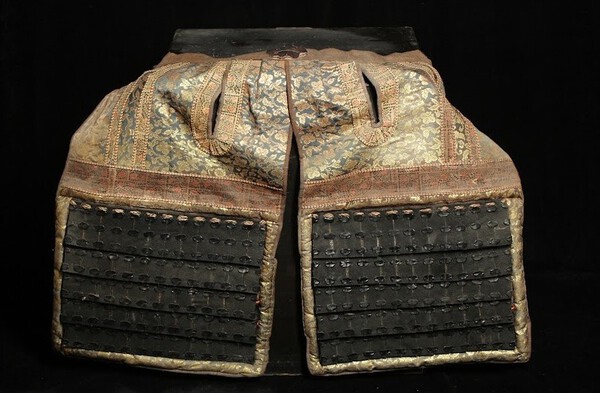
Dear all, Thank you for your comments and opinions. Unfortunately, I don’t currently have any high-resolution images, I have attached a few more and i will share better images when I can. I was told it was made in the Edo period fashioned in the thirteenth-century style. Kabuto: Iron hachi with 20 plates, 2 plates with gilt copper plaques fretwork with floral motifs, gilt copper tehen, mabizashi covered with gilt Kuwagata and imprinted leather. 3-lame shikoro ko-manju lacquered and laced in kebiki style with blue and red silk ribbons, fukigaeshi covered with imprinted leather featuring a large Mon. Mempo: Iron mempo with wrinkled face and mouth slightly ajar, detachable nose plate, red lacquer interior, four-tiered yodaregake laced in matching braid. Dō: The do hinged in two pieces and comprised of lacquered leather with an embossed dragon, seven tassets of five-tiered kusazuri, all components laced in matching braid. Sode, kote: Six-tiered sode, chainmail kote, silk brocade lining. Haidate, sune-ate: Black lacquer kawara haidate with silk brocade lining and imprinted leather, tsutsu form suneate. Accessories: Accompanied with armour storage box Any futher comments would be appreciated.



-
Dear all, I'm more of a Tosogu guy and still learning about Katchu. I have been looking for a yoroi to display and came across this set, I would grateful for any opinions on it and what period it dates from.
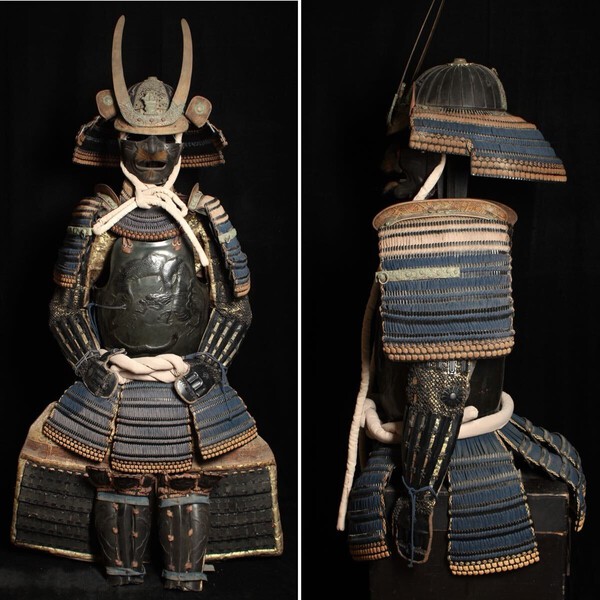
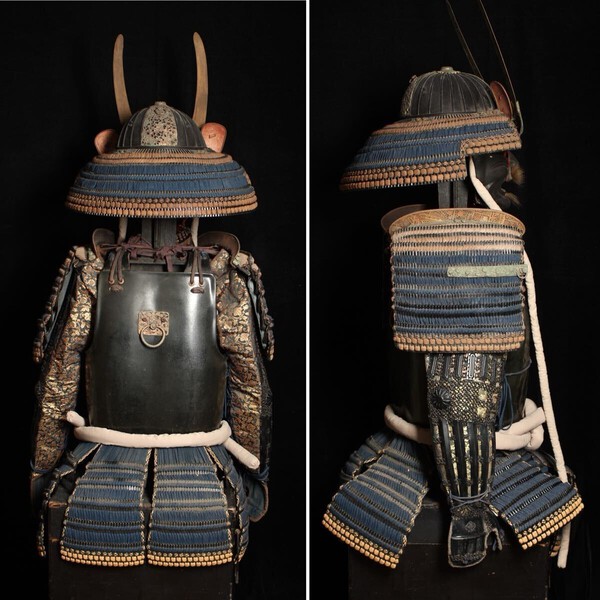


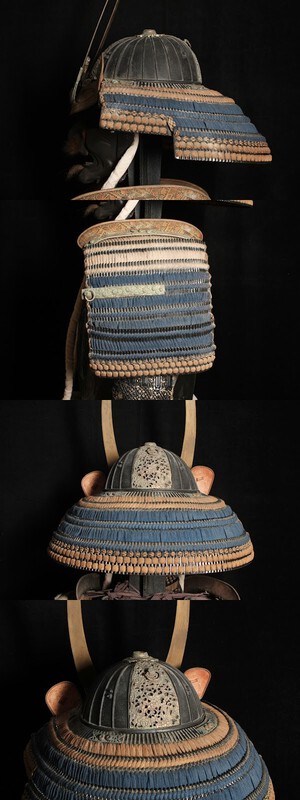

-
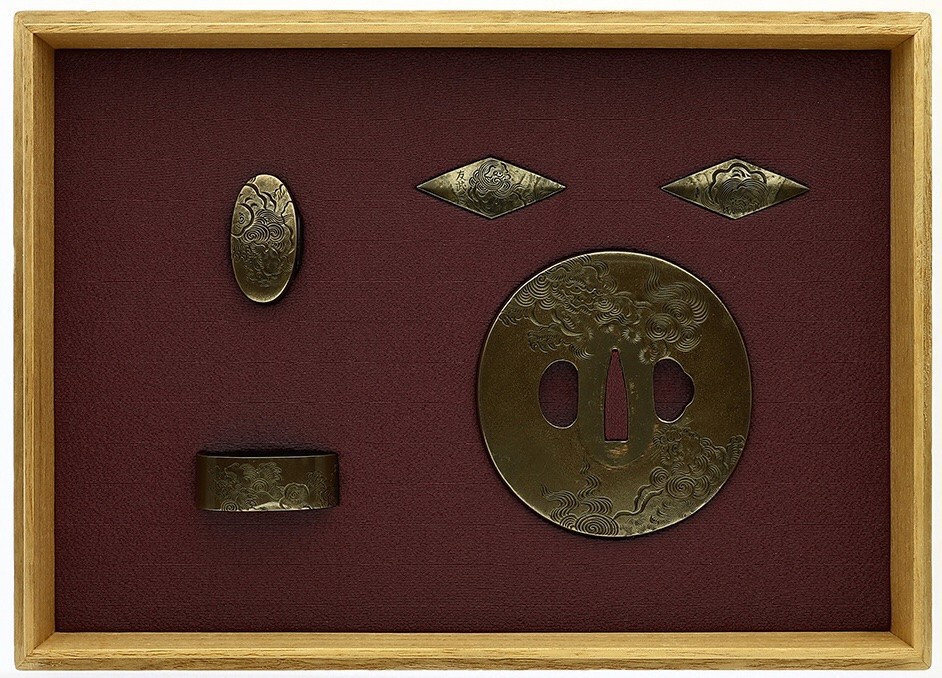
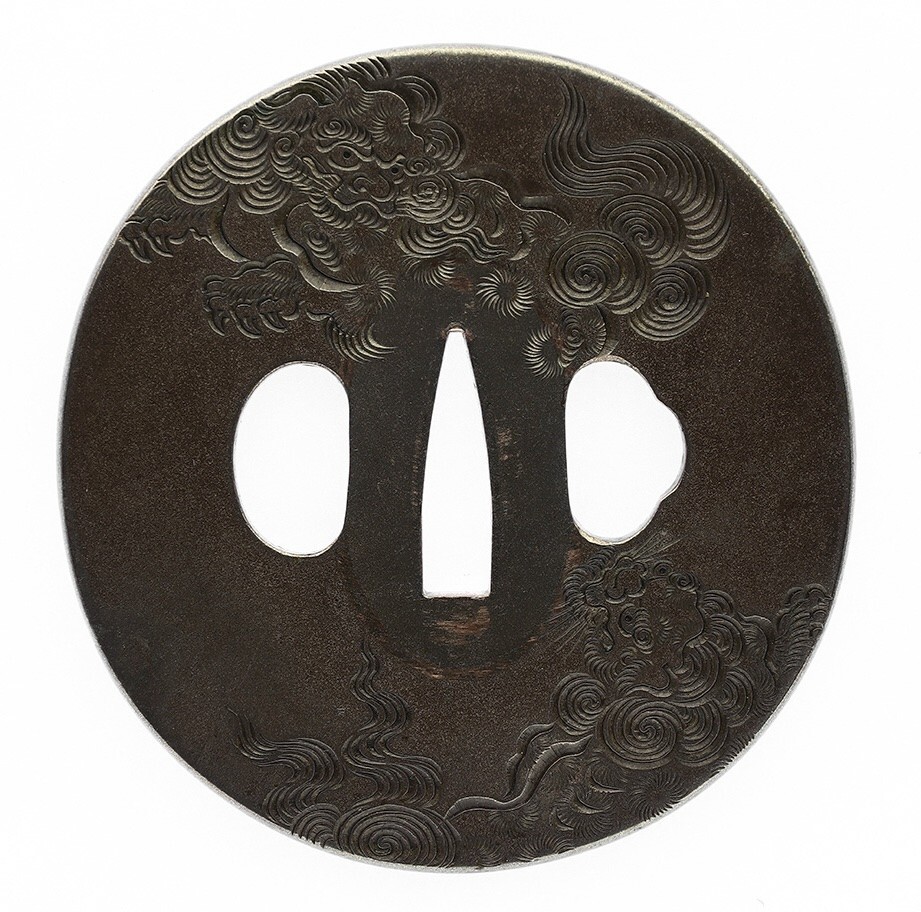
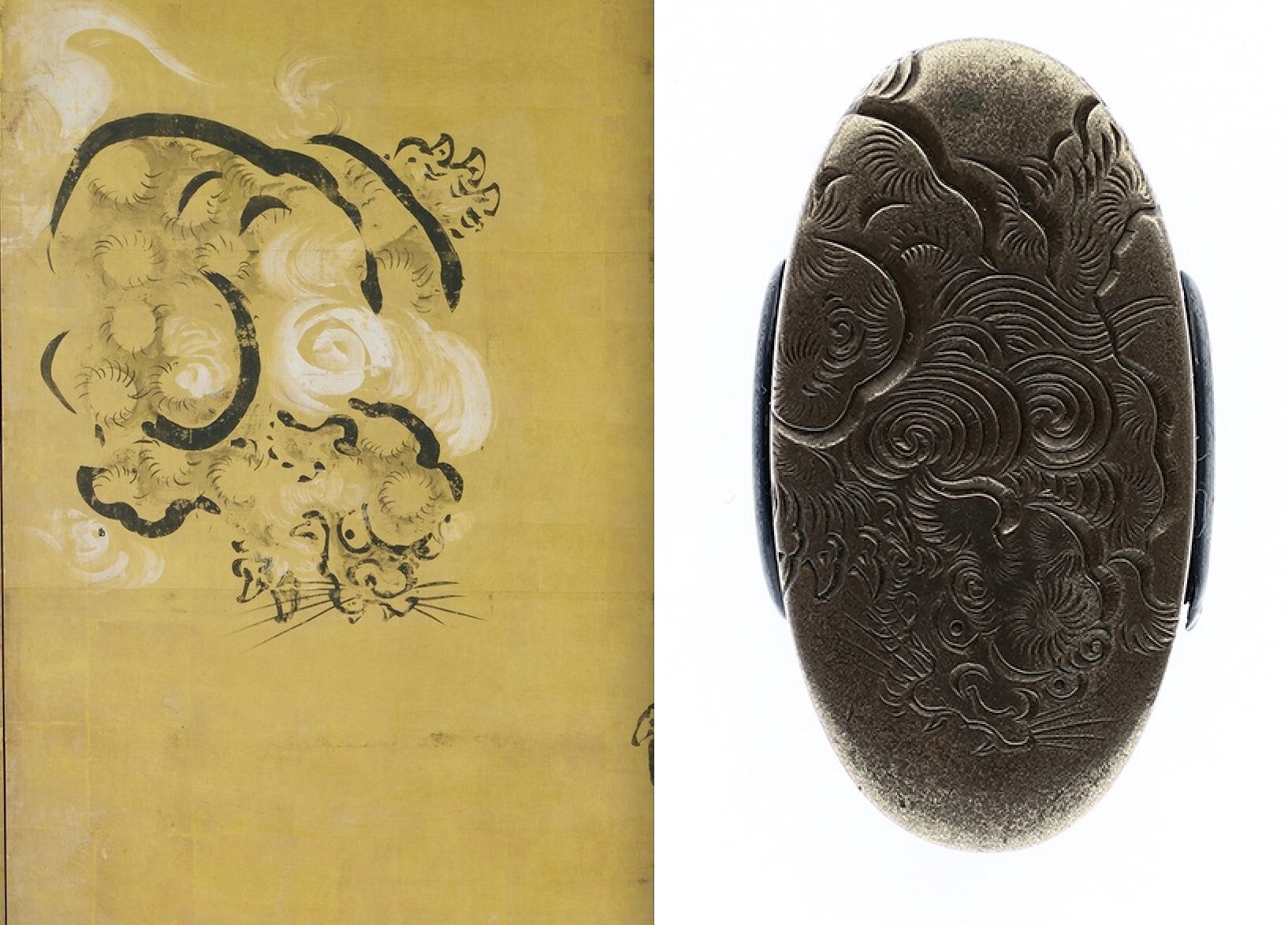
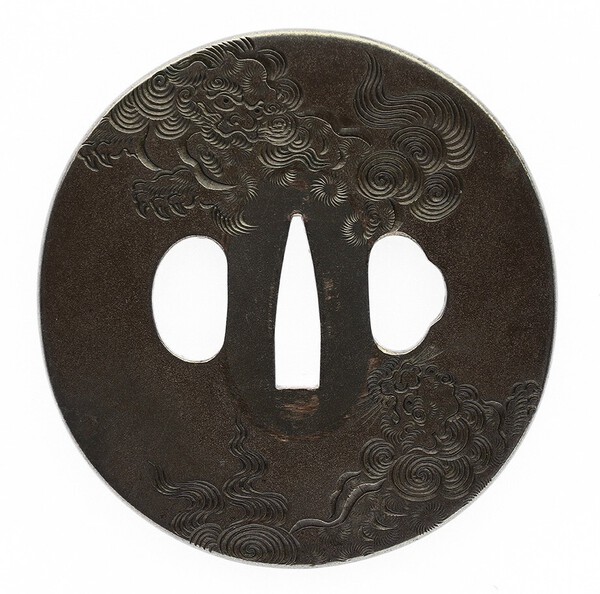
I would like to share a lovelyset of tosogu by Yokoya Tomotake featuring Shishi play fighting. It’s a great example of katakiribori workmanship, which is done to a high level. One intriguing thing I have noticed while studying the set is that the carvings of the Chinese Lions resemble the paintings from a pair of screens by Hanabusa Itcho, which is in The Met collection, I’ve attached some comparison photos. I have read that Hanabusa Itcho was a close friend of Somin Yokotani. I wonder if the screens were used by Yokoya Tomotake when composing this set of tosogu.

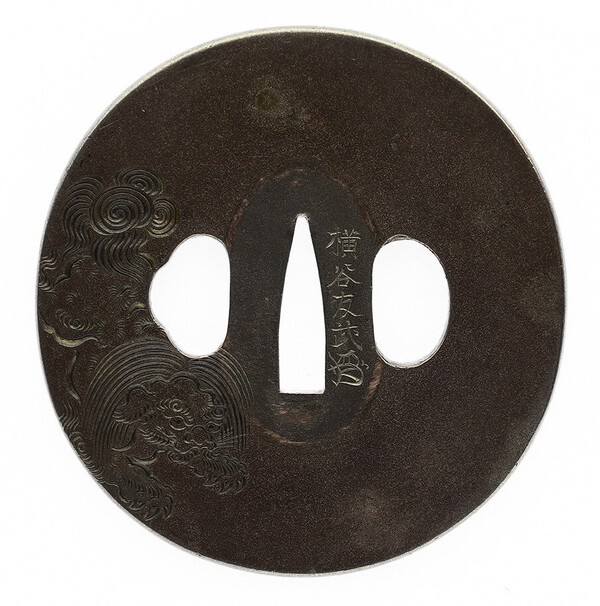


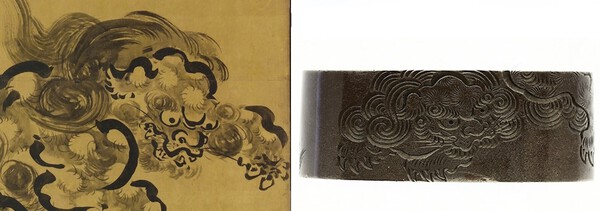
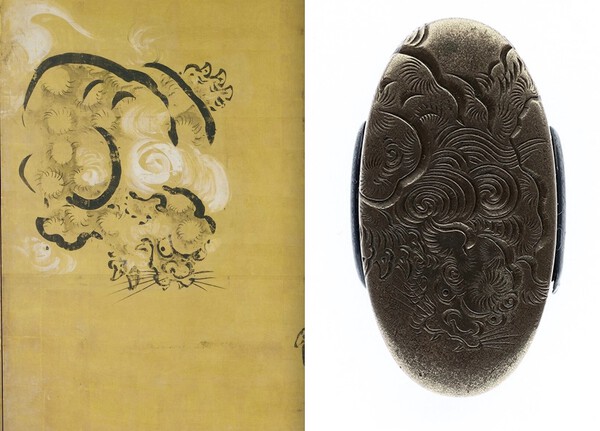


- 41 replies
-
- 14
-

-

-

-
Translation help: tsuba mei and calligraphy
thutson replied to thutson's topic in Translation Assistance
Dear Mauro, thank you for sharing the records of the two tsuba by Bamen Tsunemasa, very interesting that they have the same theme. I'm looking forward to seeing how your Sato Kanzan hakohgaki project progresses, you have certainly taken on quite the task, but well worth the effort. -
Very unusual and surprising, thanks for sharing Piers.
-
Translation help: tsuba mei and calligraphy
thutson replied to thutson's topic in Translation Assistance
@MauroP please find some pictures of the hakogaki attached, apologies in the delay.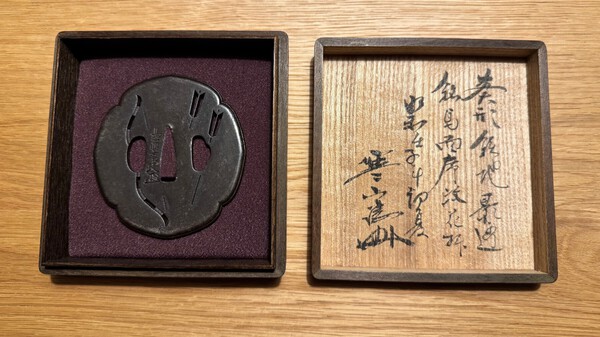

-
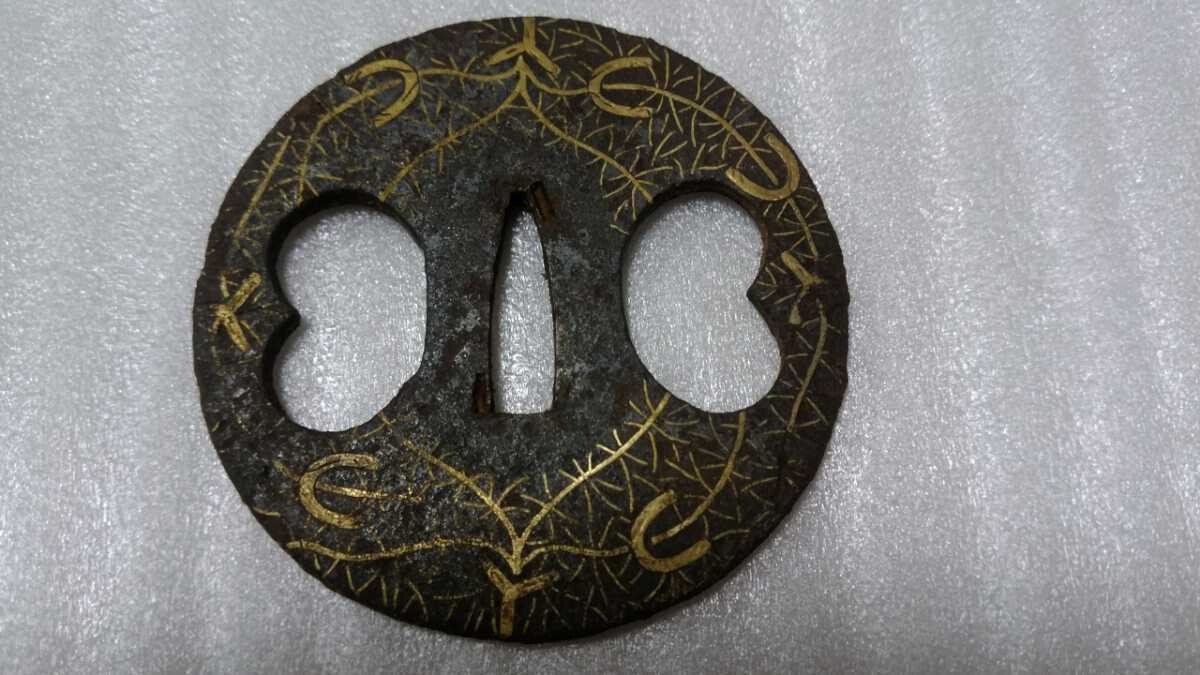
Nice tsuba Bruno, I haven't seen a Namban tsuba with this design before but I agree it does look like a rim of Buddist juzu beads
-
Many thanks Jan, I apprecate your assistance.
-
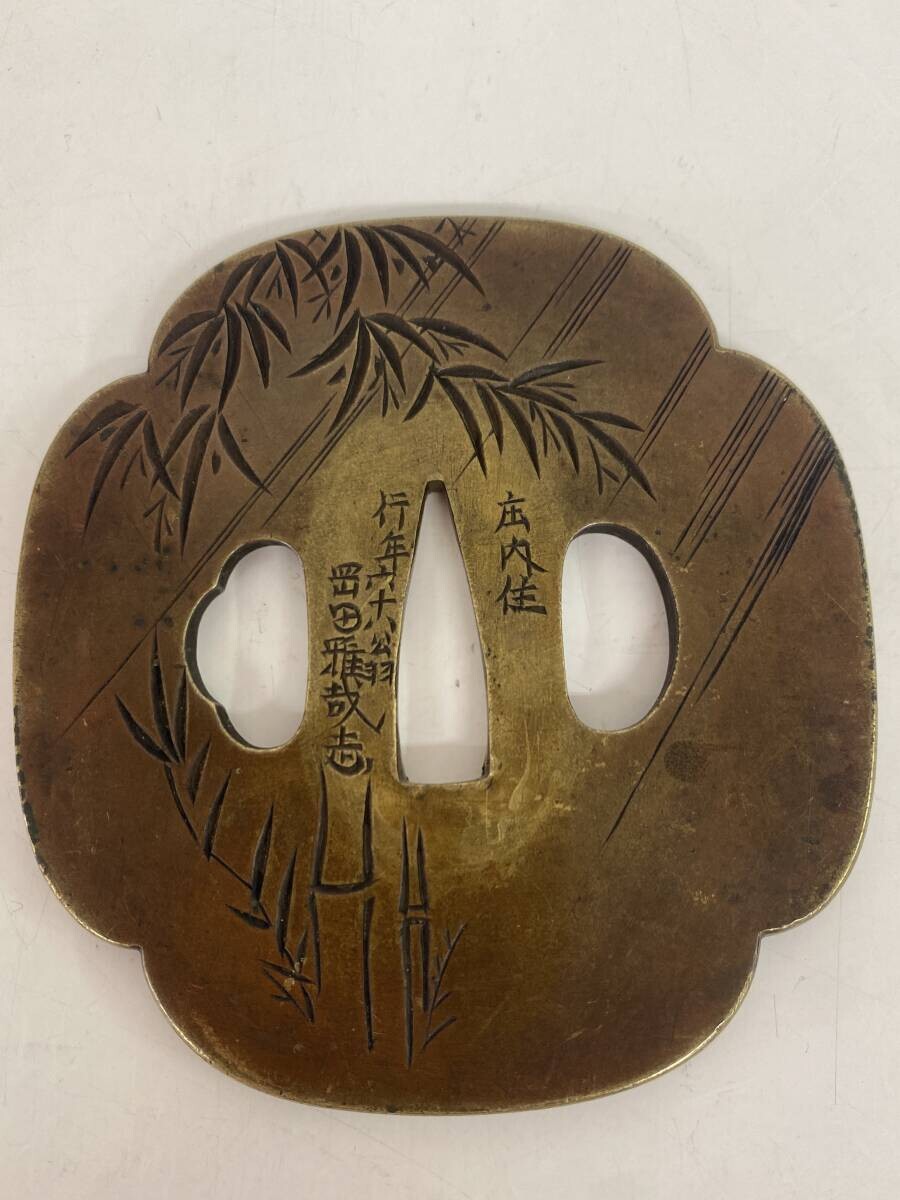
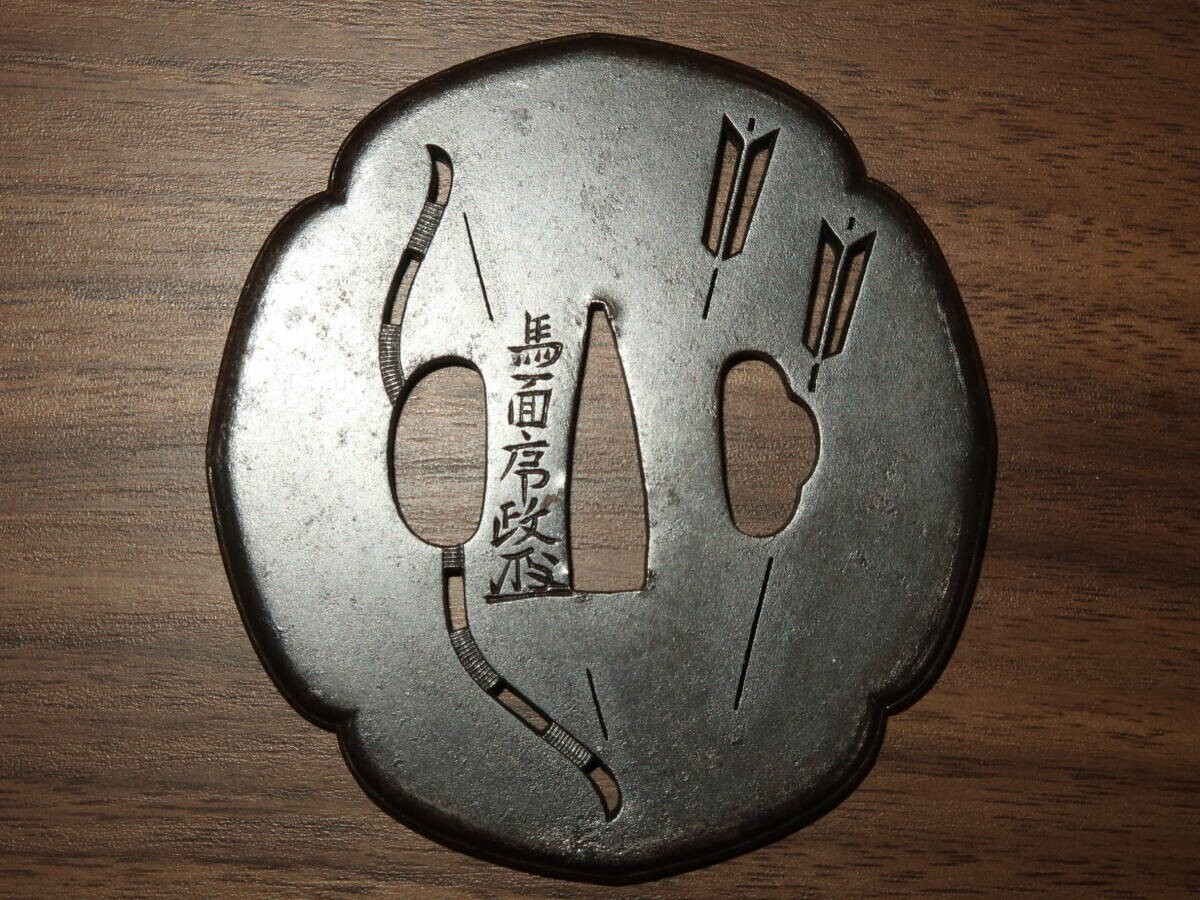
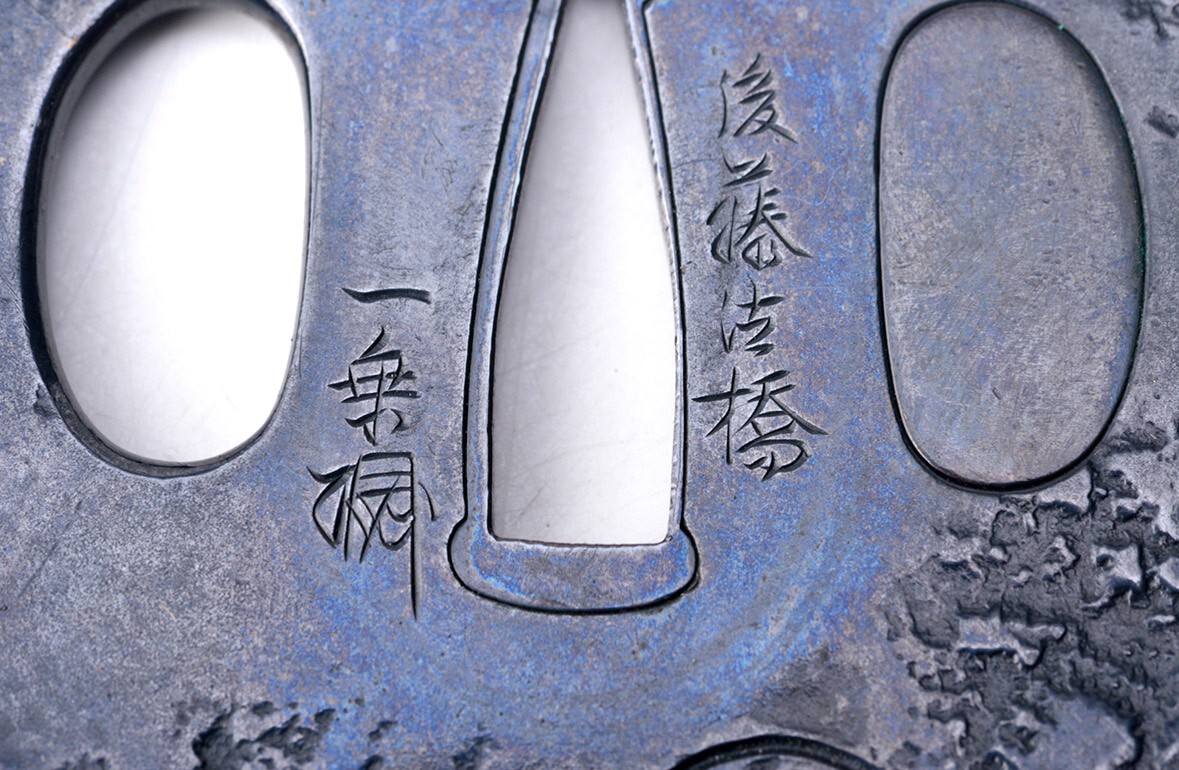
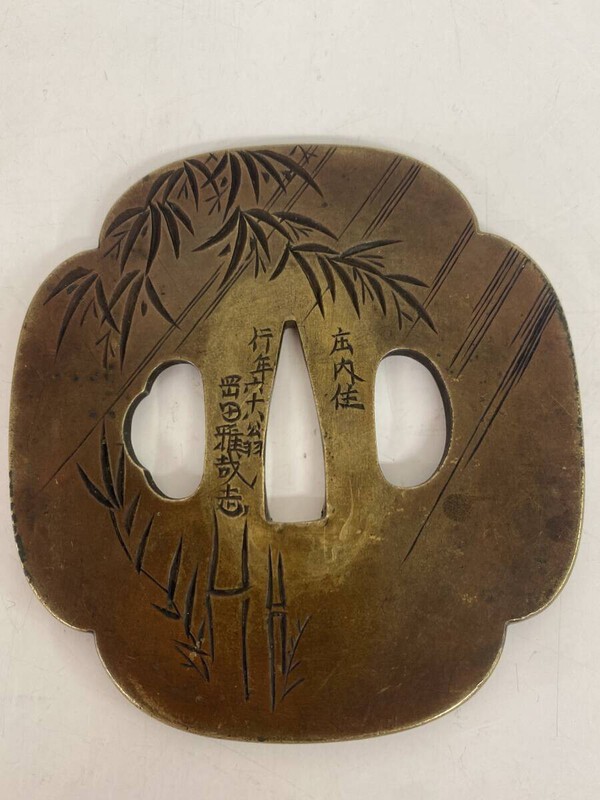
Dear all, I would be most grateful for some assistance in translating the mei on this tsuba. Best regards, Tom

-
Three very nice tsuba Brian. I especially like the Ginkgo leaf tsuba, I believe it's by Ito Jinemon Masakata Andy sold a similar Daisho set, which you can see here: http://nihonto.us/DAI SHO TSUBA LD.htm Best, Tom
-
Translation help: tsuba mei and calligraphy
thutson replied to thutson's topic in Translation Assistance
Thank you gentlemen, I appreciate your help. Mauro, here's the only picture of the other side of the hakogaki I currently have. I will post a better one when I have the piece in hand. Best, Tom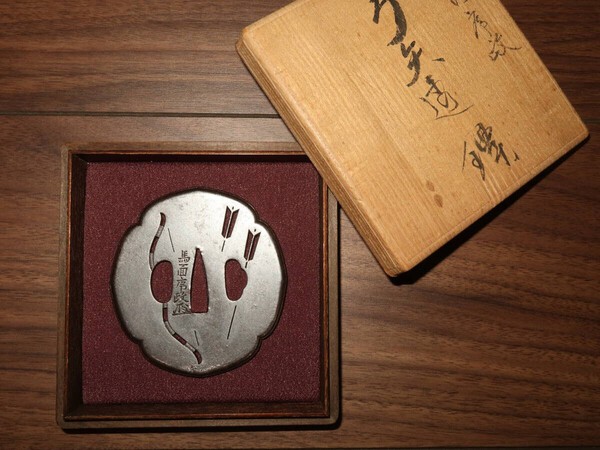
-
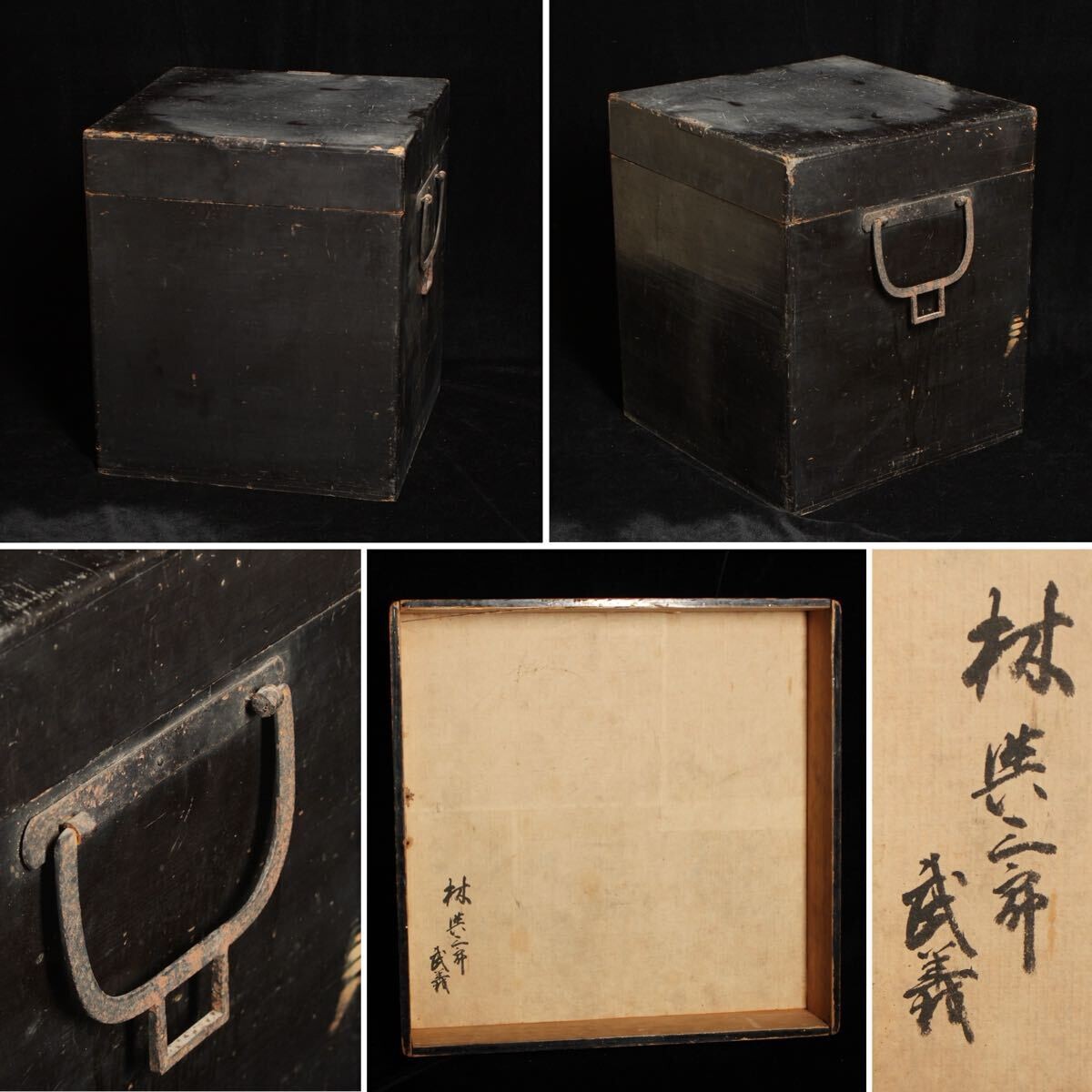
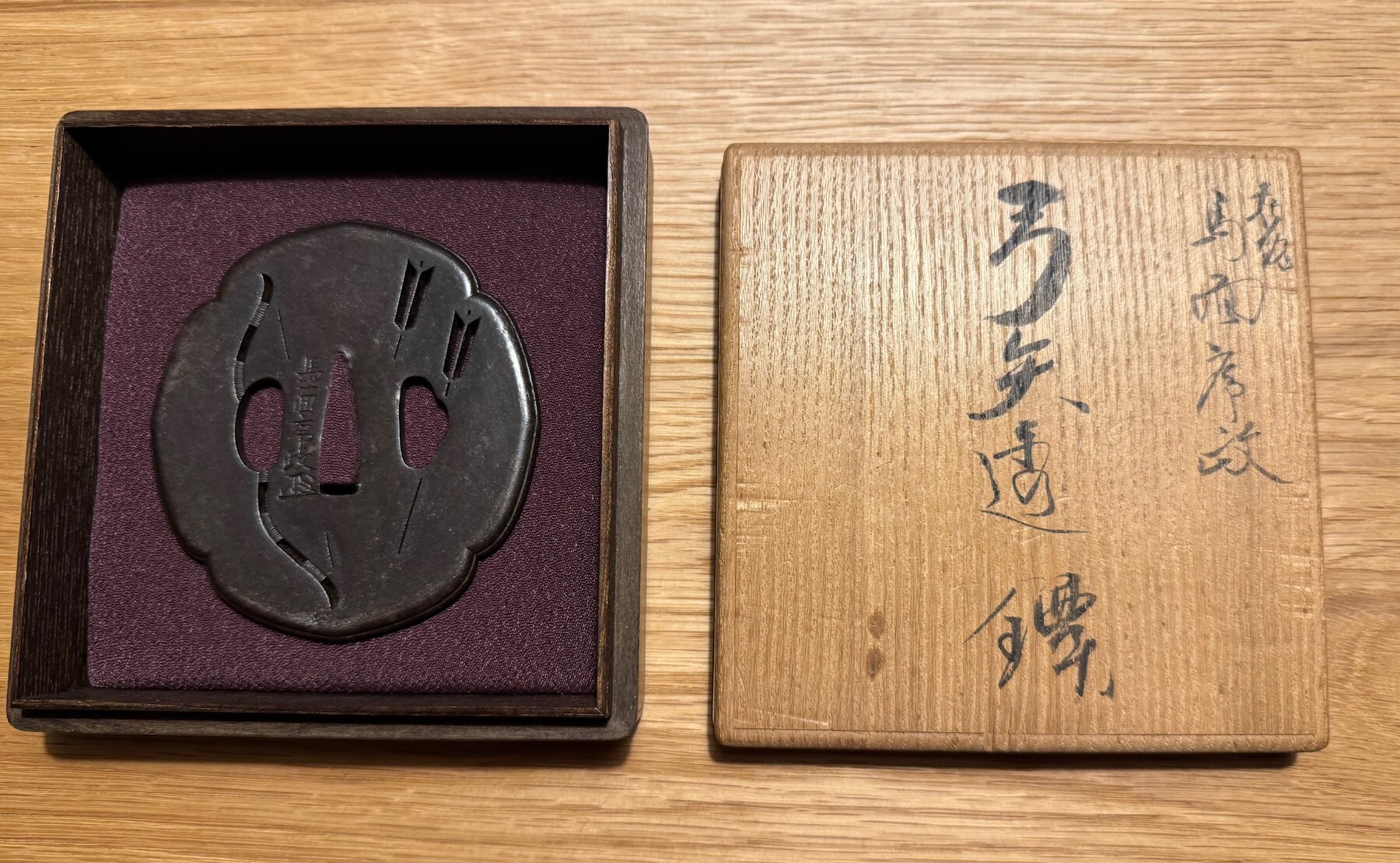
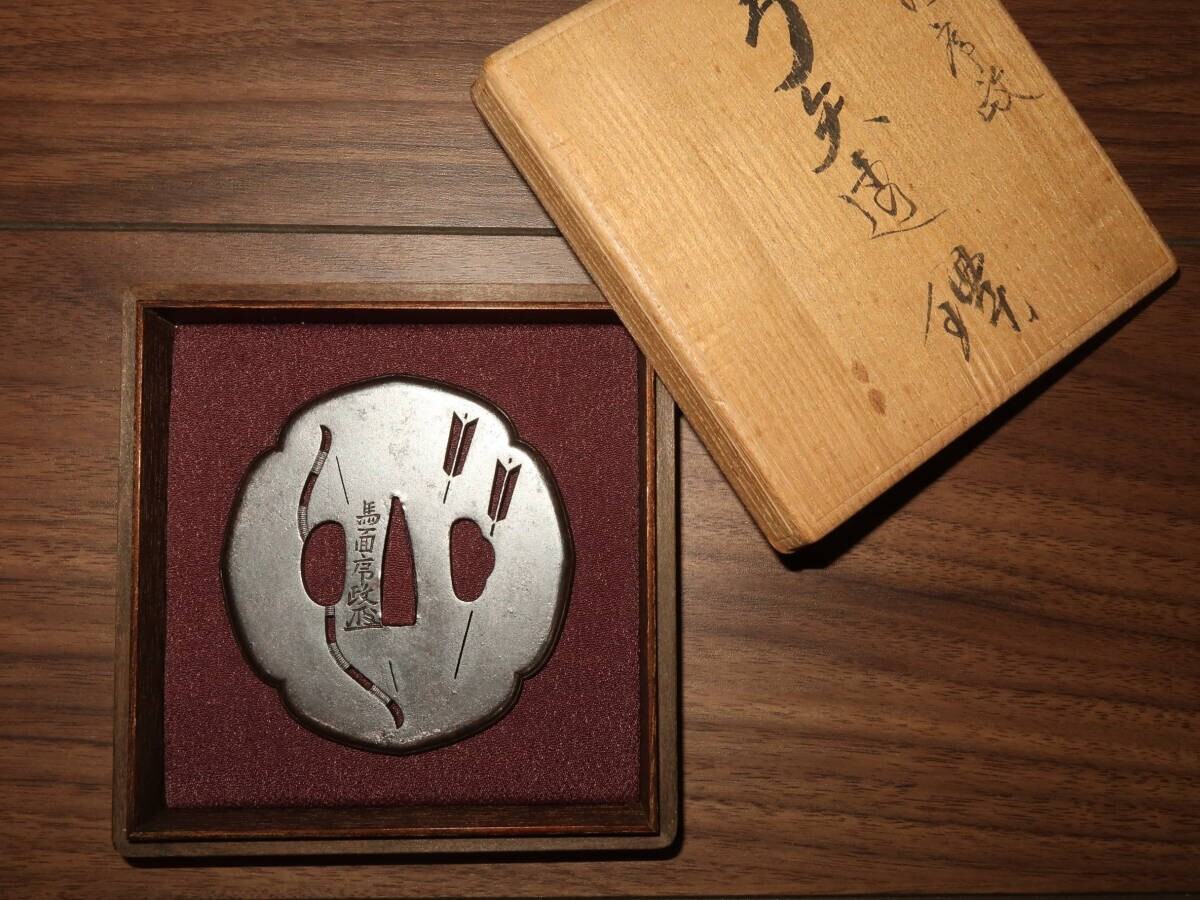
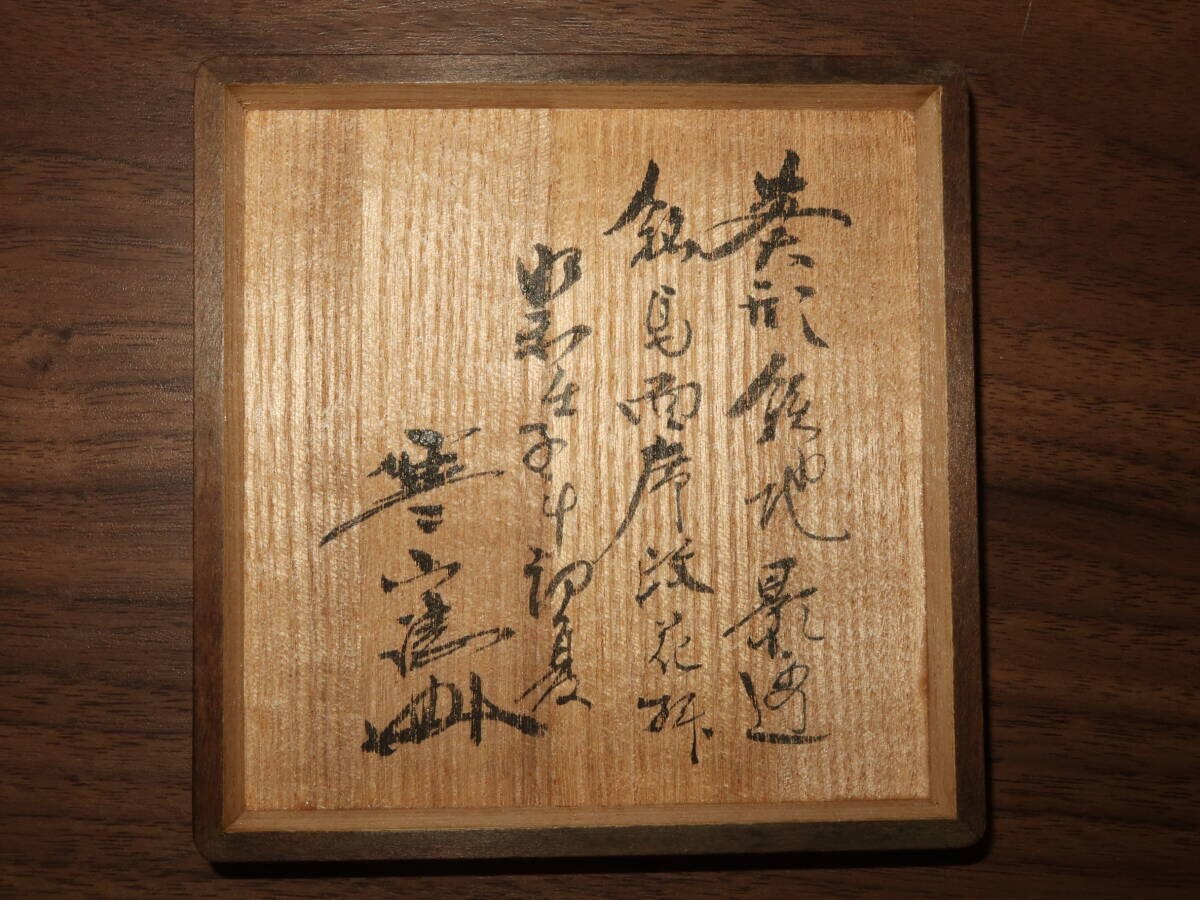
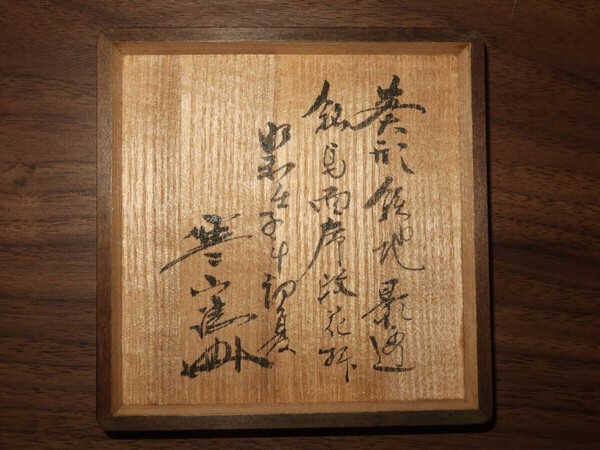
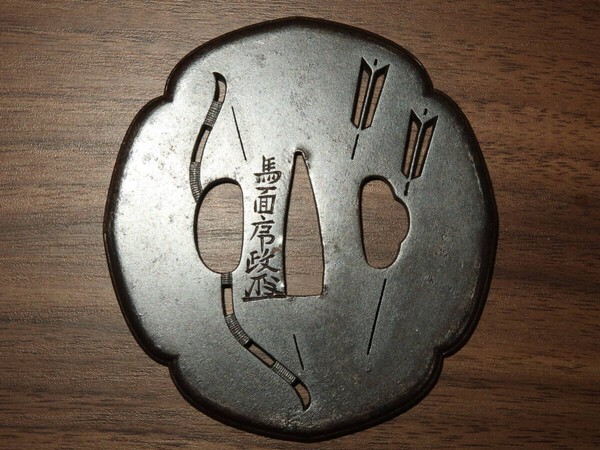
Dear all, I would be most grateful if someone could help translate the mei on this tsuba and the calligraphy on the box lid. Regards, Tom
-
It also looks modern in my opinion, but a nice and well executed piece.
-
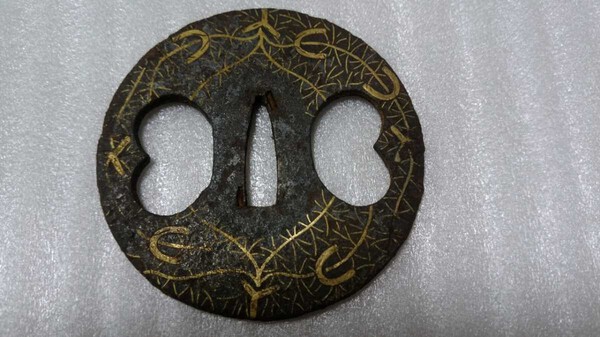
I have a brass-inlaid Heianjo tsuba with very similar shaped hitsu.
-
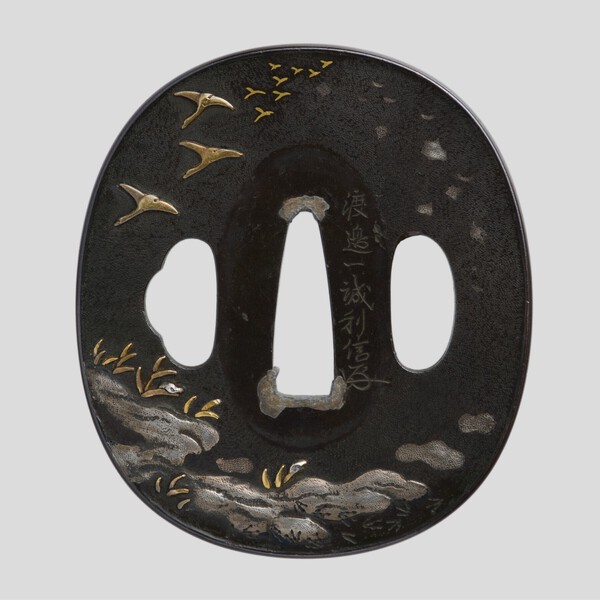
Here is the favourite bird-themed tosogu from my collection: a tsuba by Watanaba Issei. It depicts the southward migration of geese in the autumn months and their return to Japan in the eighth lunar month known as “Kanaraigetsu”. As the geese migrate south from their summer visit to Siberia they inspire thoughts of the coming winter, but also give a strong feeling towards the Japanese spirit. I fully appreciate how especially during times of change and uncertainly that this yearly event brings a sense of unity and national pride. The importance of geese in Japanese art was further secured by stories of several military heroes who had achieved victory in battle when a sudden breaking of ranks by flying geese signaled an ambush. This protective role of the birds led to their frequent use in decorating tosogu. I particularly like the detailed carving of the geese on the omote and the snow on the reeds; you can see them buckle under the weight. On the ura the imprints of the geese's feet in the snow are very charming, as well as the sekigane which is made to look like snowfall, a lovely touch.

-
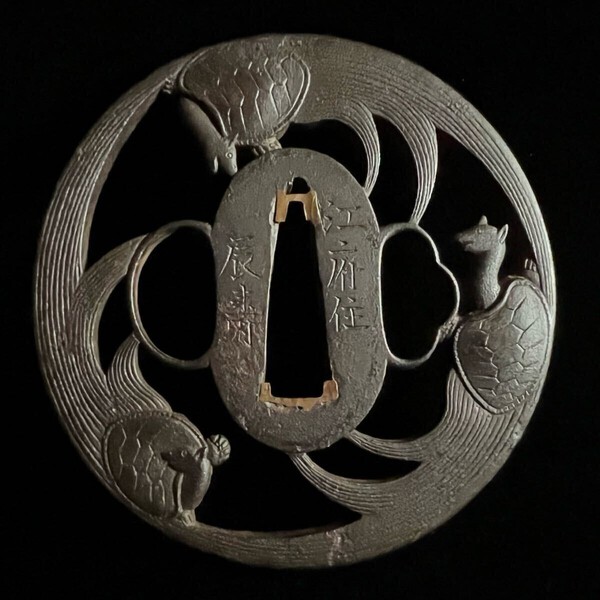
I recently picked up this lovely tsuba signed Tatsutoshi. Three Minogame are carved with beautiful detail, these are turtles from Japanese folklore that are said to live up to 10,000 years old and have long strands of algae growing from their shells, which resembles a straw raincoat—or mino—from which they get their name. Best, Tom

-
I have an Ichijo shakudo tsuba where the nakago-ana has been completely retro-fitted, probably some time after initial manufacture. You can see in the angled pictures that the alloy used is a slightly different colour than the black/blue of the tsuba. It's an extreme conversion and shows that the piece was important to someone but as to why it was done, your guess is as good as mine. Best, Tom