Kiipu
-
Posts
2,375 -
Joined
-
Last visited
-
Days Won
11
Content Type
Profiles
Forums
Events
Store
Downloads
Gallery
Everything posted by Kiipu
-
Please help me to identify this sword
Kiipu replied to tawatchai_s's topic in Military Swords of Japan
Another one for your records @BANGBANGSAN. 義治 =Yoshiharu. 昭和甲申春 = 1944 Spring. -
@lambo35 Hōten “Mukden” Zōhei-sho KK 奉天造兵所株式會社 did use an encircled katakana HE character that looked like this ㋬. This marking does not show up in the army regulations so it could have been a marking that was used internally for inspections. Hōten never manufactured swords; however, they did make a large quantity of 30th Year Type Bayonets 三十年式銃剣. As already indicated by @Bruce Pennington, the Heijō Factory of Jinsen Army Arsenal 仁川陸軍造兵廠平城製造所 did manufacture [officer and enlisted] swords starting in fiscal year 1945. The factory inspection mark used is a standalone ヘ.
-
Found this one at Grey's website. B886. Nippon Toh
-
I think Yoshichika worked for Suya or did contract work for them? Last year @mdiddy sold a hybrid sword using a Yoshichika blade, Type 98 fittings, with a Type 95 hilt. The Type 95 fittings were parts only made by Suya. Matt has posted several pictures of this hybrid sword in the thread below. Hand forged blade in 95 mounts on eBay Of special note. 皇紀二千六百年 = Kōki 2600 = 1940. 源良近作之 = Minamoto Yoshichika saku kore. The tang only has the one hole suggesting the blade was specially made for these Type 95 parts. The two-piece hilt construction. This would possibly require the use of 2 hilts so as to make the one? Hilt has no cutout for the top mounted release latch. Hilt not drilled for a mekugi. Possibly a custom made wood liner for the hilt. Crossguard made from aluminium? And there is probably more details that I am missing! @Stegel & @Shamsy
-
@Endrass was that Suya logo on page 73 by chance on a Yoshichika 良近 blade? Back in March 2021, @PNSSHOGUN found one with a similar style marking. Murata Swords 村田刀
-
Maybe a unit number? The Evolution of Japanese Army Dog Tags (1894-1945)
-
I seem to recall seeing this logo before. Nick depicts this logo in his Suya missive. The logo could be based upon the simplified character 寿? Check the blade to make sure it has a steel blade versus the postwar alloy reproductions. The Untold Story of Suya Shoten
-
Hand forged blade in 95 mounts on eBay
Kiipu replied to drb 1643's topic in Military Swords of Japan
I have known Edokko for about 20 years and I can vouch for his statement about Dawson's book as I was involved as well. I can even remember calling Edokko about what the correct rōmaji ローマ字 spelling was for 九五式軍刀, as it was misspelled in the Type 95 chapter, which was initially one chapter but was later split into two chapters. His forum name of Edokko 江戸っ子 means someone born and raised in Tōkyō, usually going back for a few generations as well. 江戸っ子 Edokko -
Help identify writing and info on sword
Kiipu replied to jamesbranagan's topic in Military Swords of Japan
Nagoya Arsenal switched to wooden scabbards along with simplified fittings starting in 1944. The Atsuta Factory & Military Swords -
津田越前守助廣 = Tsuda Echizen no Kami Sukehiro There was a gendaitō swordsmith by the last name of Saitō 斎藤 in Iwate Prefecture 岩手縣 that used the 助廣 mei. Not sure if this is him or not. Good luck with the search and keep us posted.
-
Hand forged blade in 95 mounts on eBay
Kiipu replied to drb 1643's topic in Military Swords of Japan
Cross-Reference This sword was discussed on another forum besides this one. As this thread was mentioned repeatedly, I will likewise cross-reference to the other discussions. While some interesting observations were made, the lack of moderation in the end soured the discussion. Put together Type 95 NCO sword with Gendaito blade on ebay Put Together Type 95 NCO Sword Thread Removed?? -
Concur with the above and can add that these came from China some time back. I can spot these based upon the ferrule inspection mark which is in the shape of an undefined blob!
-
Hand forged blade in 95 mounts on eBay
Kiipu replied to drb 1643's topic in Military Swords of Japan
Besides the hybrids, the Japanese built from scratch a Type 95 lookalike parade sword version that was sold on the commercial market. Several exist and one is depicted on pages 192-193 of Dawson's book. Oddly enough Trystan, both lack a habaki so they will be in good company with your Type 32! Very Rare Prototype NCO Sword A Very Rare Prototype Imperial Japanese NCO Sword @Stegel also ran into one of these and posted some pictures in a related thread back in 2017. Puzzling Type 95 Nco, Post #22 -
It is coming from microfilm that I purchased back in the summer of 1988. I am fairly confident that I have the Japanese language version somewhere, I know how you love those characters, and will see about finding it.
-
Great find John and keep them coming. Those two characters on the scabbard release latch are for Iida 飯田. This is the last name, technically incorrect as it is the name that comes first in Japanese, of the shop owner which of course you already know but others may not.
-
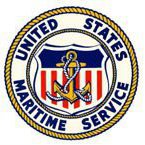
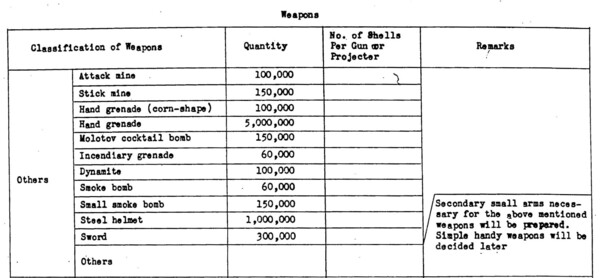
A little-known fact is that the Imperial Japanese Navy planned on acquiring 300,000 swords over a period of six months starting in April 1945. This comes to about 50,000 swords per month. In my opinion, a plan of this scale was simply impossible to achieve. Could the swords mentioned in this thread be the attempt at achieving this production goal?
-
Hand forged blade in 95 mounts on eBay
Kiipu replied to drb 1643's topic in Military Swords of Japan
Tōkyō stopped all sword production in March 1945 due to bomb damage. Interestingly, right before this, Tōkyō started using civilian parts to keep production going. This cessation of production would have caused a ripple effect on all swords assembled from this point forward. The burden was now on other existing locales to assemble swords. Seki was one such area that starting in 1944 resorted to using wood scabbards and iron component parts. Short Development History of Type 95 Gunto, Post #82 The Atsuta Factory & Military Swords Several of these hybrid swords are using Type 95 replacement parts that would be available to the divisional ordnance unit and above, such as the army and area army ordnance units. There are several indications that these parts were used such as the undrilled handles and the unserialized scabbards. These hybrid swords could have been assembled just about anywhere in Japan toward the end. However, several of these hybrids are using blades coming from Kyushu which did not have a large scale sword assembling center like Seki, Ōsaka, Jinsen, or Nan-Man. It does not surprise me that spare parts that were readily available were used to fit these swords out. An invasion was literally months away and the Japanese just wanted things put together and in the hands of the troops. -
Hand forged blade in 95 mounts on eBay
Kiipu replied to drb 1643's topic in Military Swords of Japan
There have been several discussions about these but maybe this is the one. This one was started by Tom and is mentioned later in this thread. Type 95 with a hand forged blade -
Hand forged blade in 95 mounts on eBay
Kiipu replied to drb 1643's topic in Military Swords of Japan
福 = fuku. It starts to show up in 1945 on sword blades made on Kyushu 九州. So far, it has only been found on the nakago mune in the same location as final inspection marks. Mune Stamp Name On Nakago Mune! -
Hand forged blade in 95 mounts on eBay
Kiipu replied to drb 1643's topic in Military Swords of Japan
I am familiar with that sword via private messaging. It is known that Minamoto Yoshichika 源良近 was associated with Suya or at the least did contract work for them. This is based upon a discovery by PNSSHOGUN via the link below. I was of the opinion then and now that this sword was custom made by Suya. An interesting sword to say the least. Murata Swords 村田刀, Page 2 -
Hand forged blade in 95 mounts on eBay
Kiipu replied to drb 1643's topic in Military Swords of Japan
Are you referring to this sword or to some other? The blade was made by 紀政次 in April 1945. *MINTY AND RARE* WWII Japanese Samurai Sword SHIN GUNTO WW2 KATANA GENDAITO NCO -
@drac2k Measurements please! Sword Blade Measurement
-
@drac2k Did the sword come with a scabbard?
-
These swords frequently had damage prior to acquisition and hence the various "repairs." Keep in mind a battle field is not an optimum environment for finding a mint condition example of anything. This is all part and parcel of the history of this sword. The obverse side is as Bruce mentioned Keichō 慶長 (1596 to 1615). Keichō The visible characters on the reverse side are for a location. 肥州菊池住 = Hishū Kikuchi-jū. Hizen Province Hopefully, the Nihontō collectors will be able to shed more light about the history of this sword and it's engravings.
-
Cross-Reference Very odd gunto tsuba Obverse: 昭和十七年 = 1942. Reverse: 秀俊 = Hidetoshi.