Kiipu
-
Posts
2,340 -
Joined
-
Last visited
-
Days Won
11
Content Type
Profiles
Forums
Events
Store
Downloads
Gallery
Everything posted by Kiipu
-
No, not based upon configuration but by the serial number range. In answer to Paul's question, the year of manufacture would be 1942.
-
This could be one of the more uncommon variants. @Stegel & @Shamsy
-
The characters on the mon are 林利. I do not recognize this combination as being a Japanese last name.
-
濃州関之住 = Nōshū Seki kore jū ... or 相模守藤原兼守 = Sagami no Kami Fujiwara Kanemori. Need Help With Signature On WW2 Japanese Katana Sword, Check the Photos! I'll let the pictures do the talking!
-
It seems the kendō club has been around for awhile. 剣道部の歴史 There is a character superimposed on top of the sakura and it looks similar to 高? The numbers at the bottom, reading from right to left, is the year 1926. 二五八六 = 1926.
-
A kendō 剣道 club medallion? Need help to identify this medal
-
@Ray Singer Can you help with this one? Not my area of expertise. It has a chrysanthemum followed by 一. 山城守藤原國X Bought this Japanese Sword, have questions about it.
-
 Yes, by serial ranges. The Type 95s above and below were made by Suya. The arsenal logo, which is amiss, would have been Kokura.
 -
How do the measurements compare to the drawing below? Tang length: 206 mm. Tang hole distance from top & bottom notches: 60 mm. Width at notches: 28.5 mm. Nakago mune width at top notch: 8 mm.
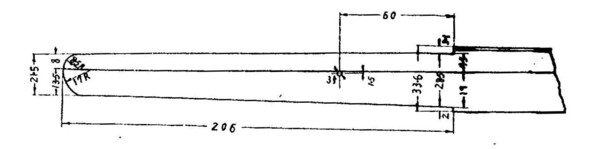
-
A bit of a technical question for the metal workers amongst us. I note the bottom of the tang on most of the souvenir swords shows evidence of being heated up. They then seem to have sheared/bent off the bottom portion of the tang. Why was this done? Were the tangs too long? Has this practice been seen on wartime production? Does anyone have a side-by-side picture of a souvenir tang next to a wartime stainless kaiguntō 海軍刀 tang?
-
The scabbards left the factory in the white. It was not until much later that they started blueing them during overhauls. The sword in the OP was made during the Meiji era by Tōkyō Artillery Arsenal. Grady, is the scabbard bare metal or is it chromed/nickeled?
-
Japanese WW2 Brass Dogtag / Help with description / Unit Info
Kiipu replied to AlphaRaider's topic in Translation Assistance
I would suggest posting the question and pictures over at War Relics Forum (WRF). There are several collectors that could answer your inquiry. To get you started in the right direction, I would suggest this evolution article by the late Nick Komiya. The Evolution of Japanese Army Dog Tags (1894-1945) -
One can find more information about the design evolution at the link below. The Evolution of the Japanese Imperial Army Sun Helmet (1915-1945)
-
And one more Type 98 for the record. Something different..., Post #1344
-
The date is 18 March 1946. The document needs to be downloaded though to read it.
-
I find your arguments compelling and now agree that these "police shin guntō" should be placed in the World War 2 category. It is interesting that this particular scabbard maker was a wartime supplier and continued making scabbards after the war for Tenshozan (or possibly Tenshozan made them all along?). As an aside, Nagoya Arsenal switched to wooden scabbards for officer swords in 1944 and I have a little missive about the matter over at WRF. The Tōkyō 1st on the other hand was reluctant to downgrade the quality of the fittings. However, in March 1945 all such production ceased in this location courtesy of the B-29. The Atsuta Factory & Military Swords Tenshozan seems to have used a 1 or 2 digit black painted subassembly number on these souvenir swords and I have used this little tidbit to help identify some of them. In contrast, the late war naval swords will frequently have a 4 digit black painted subassembly number. The second F&G book has a rather good summary of the naval sword supply chain, think Minatogawa & Tenshozan, that is repeatedly overlooked by many researchers.
-
I transcribed the document at the link below. Nlf Gunto Discussion
-
@Conway S I ran across another one in a GBF post back in 2014. Need help with a Japanese Sword., Post #9
-
Matt, I find your observations about the scabbard intriguing. Based upon your observations, I am thinking that these "police shin guntō" could be postwar in origin. It is interesting that the police were specifically mentioned in 1948 as a possible purchaser of these swords. Maybe Tenshozan outfitted some of these souvenir swords with the police fittings in an attempt to sell them to the police agency? When the attempt failed, maybe they ended up going to the Army PX along with the other remaining souvenir swords. I would like to add that these swords could only have been sold to a government agency, either Japanese or American, as Japanese citizens were not allowed to own modern swords. I would like your learned opinion on this matter as you have had some of these swords in hand. 27 December 1948 4. Recommend the following action be taken to dispose of this stock of swords: a. Dockside sale of souvenir swords to personnel departing for the Z.I. or, b. Require the Japanese Government to purchase the swords for use as side arms or emblems of authority for the Japanese police officials. These emblems of authority would be similar to those worn by French or other European officials. 13 OCT 1949 3. The Tenshozan Works twice requested that this investigation be suspended for periods of three months each in order that they might endeavor to dispose of the completed swords through other channels. The efforts of the manufacturer, however, were unsuccessful.
-
That is odd as the pictures look more like those of the eBay seller "smallsword". Do you have a link?
-
That Japanese had examples of all the various rifles used by other countries during the Meiji era. Sometimes just a solitary example and in other cases thousands of them. For example, the Enfield bayonets were still in use by the army as late as 1884. In answer to your question about socket bayonet usage by the Japanese, I have not really looked into the matter. In regards to the markings, one character is 大 which means large. As for the other marking(s), maybe @BANGBANGSAN or @SteveM can help?
-
良重 = Yoshishige. 昭和十九年= 1944. He is listed in Part 2 of the naval swords monograph authored by @mecox. Japanese NAVAL SWORDS Swordsmiths & Workshops Part 2
-
Thoughts on this possibly Type 95 NCO Sword -Spurious characters
Kiipu replied to Eds's topic in Translation Assistance
Ed, listen to John & Rob. 天皇 = Tennō = emperor. 昭和十七年 = 1942. @Shamsy -
Morita san, is the romanji ローマ字 below incorrect? Ōno Tadashi 大野・正. Gendai tōkō・kinkō・shokkata sōran 現代刀工・金工・職方総覧. [A General Survey of Modern Swordsmiths, Metalworkers, and Artisans]. Seiun shoin 青雲書院, 1977. 247 pages.
-
Thanks Joe! I note a masukotto doll in the collection as well, nice. I actually have a little story about those dolls I mentioned over at WRF. Just ran across another picture of one mounted on the dashboard of an airplane of all places. Masukotto dolls