
Dan tsuba
-
Posts
865 -
Joined
Content Type
Profiles
Forums
Events
Store
Downloads
Gallery
Everything posted by Dan tsuba
-
Hi Sam! A little off topic here but you stated- "Maybe my sword was made with cast steel, and an alternative hardening method. It has features that I am unable to describe and identify, so it could be RARE, and an example of SECRET KNOWLEDGE." Well isn't that funny, it so happens I have another thread on that very subject in the Nihonto section! https://www.militaria.co.za/nmb/topic/42617-2000-year-old-sword/
-
Well just as it has been shown that there are triangular tsuba out there, I would like to respond to this part of one of the previous posts above. It was stated that- “And you can bet your life that if any unusual manufacture method or style was done more than a handful of times..there would be records of that. Books and manuscripts. The Japanese were fastidious in keeping tradition alive and recording everything.” Well here is an interesting article that is available on the internet- “Keeping Knowledge Secret in Edo-Period Japan” (1600–1868) Peter Kornicki (I believe the article was written in 2021) The article can be found at this link- https://www.jstor.or...table/48647105?seq=1 Below is from p. 7 of that article- “This tension between secrecy, trans-mission and financial gain can be seen in such disparate fields of vernacular knowledge as the theatrical arts, flower arrangement, the tea ceremony, landscape gardening, gunnery, and so on. In essence, if you, as an outsider, wished (and in some cases this is still true today) to acquire any one of these accomplishments, you had to choose which particular “school” of swordsmanship, gunnery or flower arrangement you wished to follow. Once you had joined, then you had access to oral and practical instruction and ultimately to the manuscript texts which embodied the “secret” knowledge. All this came at a financial cost, of course: the knowledge had not been privatised and professionalised for nothing. If we were to construct a typology of “secrecy” in Edo-period Japan, what would be included? Secrecy meant any one or more of the following: out of sight of the authorities; out of sight of the common people; out of sight of rivals in the same line of business; protection of family traditions; protection of economic interests; protection of intellectual property; and monopoly of political information.” The article was written at the University of Cambridge and of course includes stated references. Well, isn’t that interesting! Onward!
-
A little off topic here. But I just happened to look at a link that Alex posted about The Lanes Armoury. This is the link- https://www.thelanes.../shop.php?code=25439 The tsuka on that tanto is similar to the small tsuka I posted above. I think that is too cool!
-
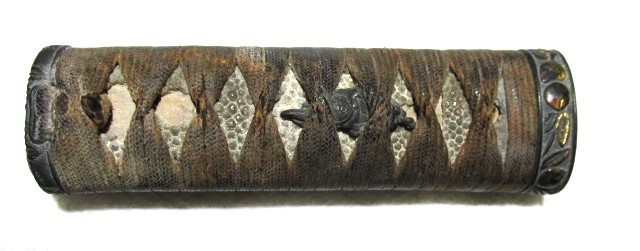
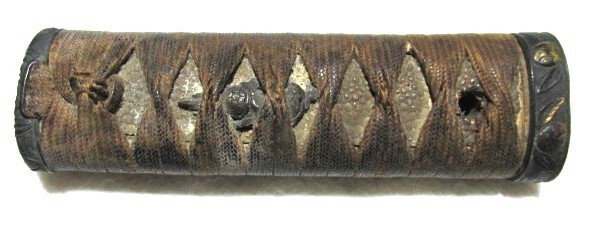
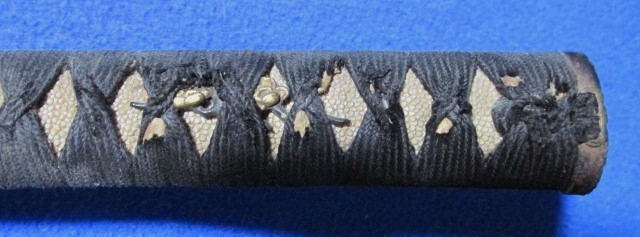
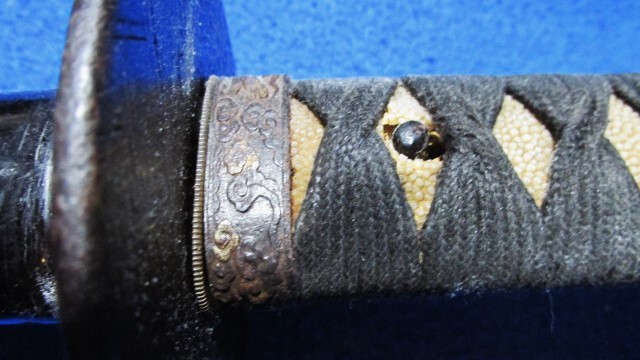
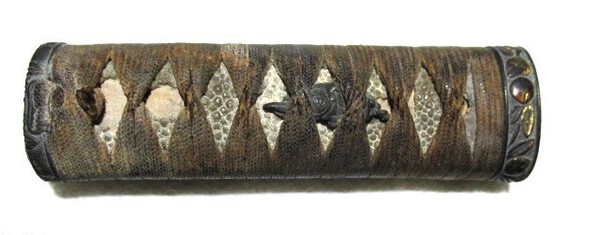
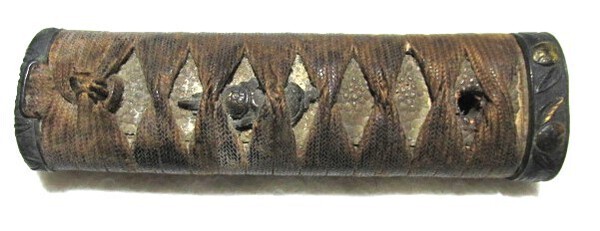
So an old tsuka that I have. It is small at about 5 inches in length.


-
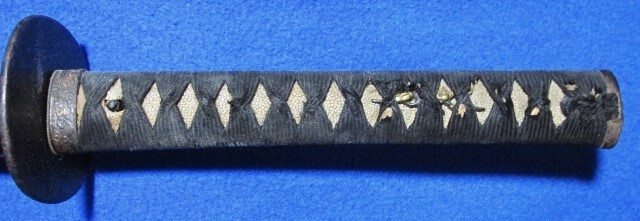
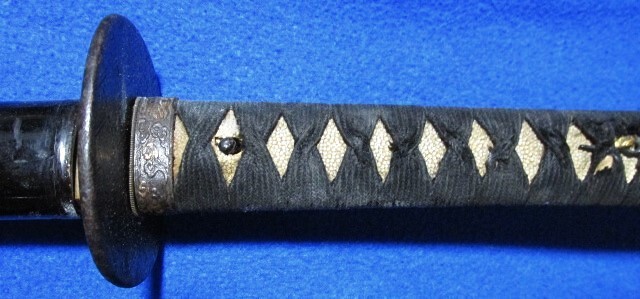
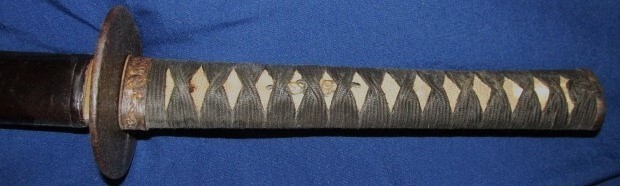
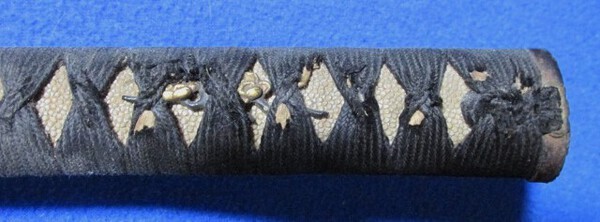
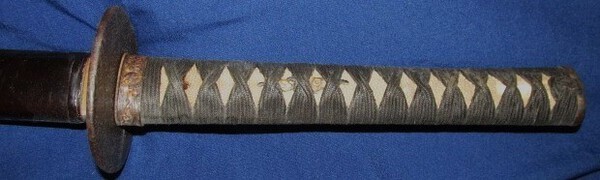
Hey Alex, I think this qualifies for what you are looking for. The katana of my daisho.




-
Hi Alex! I kind of get what you mean. But maybe someone with experience in metallurgy can uncomplicate that article for me and dumb it down for my simple mind! I don't know, maybe it is time to throw in the towel or maybe not!
-
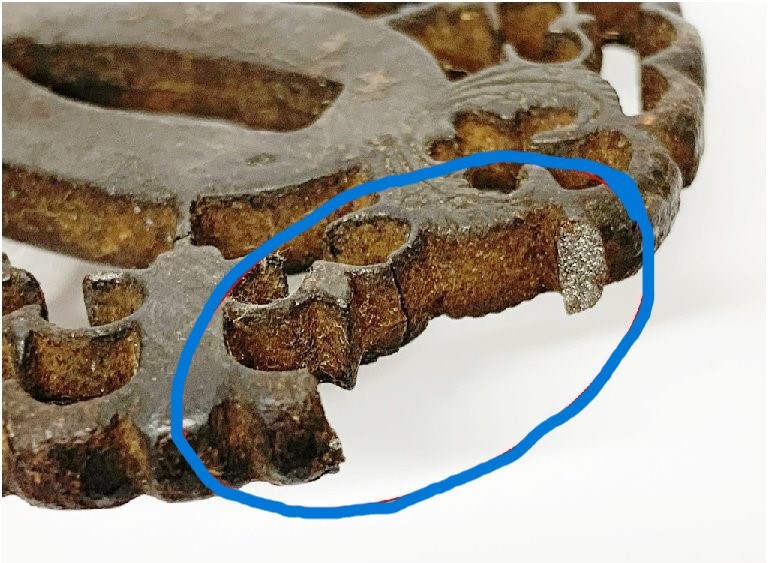
Hey boss, So, you said- “Dan...care to share with us ONE valid reason why any tsuba maker would make a tsuba by covering a metal core with a metal outer shell? Especially on what are essentially low class tsuba made to be cheap and fast?” I don’t know boss; I can’t speak for the tsuba craftsmen. Maybe some of them just wanted to experiment with different techniques? Anyway, I could be mistaken about what I believe was an outer metal shell on the tsuba (yes, you read that correctly, I could be mistaken – ha, ha, ha, etc!). I found a scientific article with that link shown below- https://www.academia...work_card=view-paper But it is too complicated for me! What I think part of the article is stating is that the patina on some tsuba could have been very thick. So, maybe what I thought was a metal covering on the tsuba just could have been a very thick patina type covering. But then again, on my tsuba with that possible type of outer covering layer I could not cut it, remove it, or even chip a piece off of it with a sharp knife. And how did the craftsman mold some motifs into that covering?
-
Stephen, My friend, I know you are not a dumb-ass! You have assisted me before and I look forward to your assistance in the future. And thank you for your advice about researching cast tsuba in the known examples in all museum collections, versus the date of donator acquisition. But (and there is always that!) I feel the only way to determine anything about a tsuba that I have brought up questions about (whether that be cast iron tsuba made in the Edo period, or tsuba made with a metal inner core and a metal outer shell) is to subject them to non-invasive metallurgical testing. Otherwise, it is my opinion, everything is just everybody's best guess on what they think they know (me included!) With respect, Dan
-
Oh well, Maybe we will see what others think about these tsuba. As always Derek, I thank you for your opinions and posts. But alternative thoughts about tsuba construction are always a gamble (whether that be cast iron tsuba made in the Edo period or tsuba made with an inner metal core and an outer metal shell). But it is a gamble I am more than willing to take! Best.
-
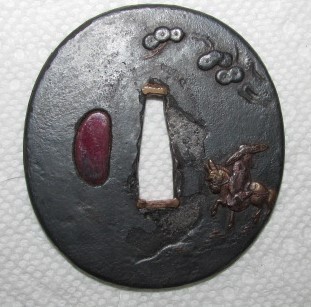
Hey Derek. Good information, thanks. You stated- "The other one, with the missing shi shi, is completely different." So how do you think that tsuba was made? Do these tsuba look hand forged to you?

-
Thanks Derek. But it is my opinion that I think you are incorrect. You stated "upper crust". A forged iron tsuba has no upper crust. It is the same metal throughout the tsuba. As I stated before, what about the other pictures of the missing zogan I posted? Comment on them. Best.
-
O.K. Derek. The gloves are off! I tried being nice. But you won't have anything to do with that! Do you really want to go there with me? Can't you see that the picture you posted are tagane-ato punch marks made in the tsuba that have been further corroded. There are none so blind as those that will not see. Your sarcasm is immature. Why don't you refer to the other pictures I posted? Comment on them. Best.
-
Derek, Please stop thinking.
-
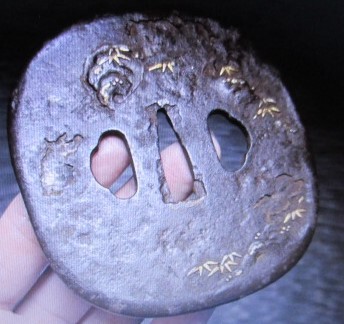
So, I was thinking again! And Derek (from his post above) can’t stop me from doing that, although he did ask nicely- ha, ha, ha, ha, etc (I crack myself up!). I have included pictures below of 3 of my hand forged tsuba that have missing zogan. The area of the missing zogan on those hand forged tsuba does not look anything like the missing zogan area on the tsuba that I believe has a metal core and a metal shell covering that core (picture of that tsuba again shown in the last picture below). Onward (yes, and I am still thinking!).


-
So, Stephen made a good point when he stated- “Guys, that is clearly missing inlay... they are in the shape of shi shi !! There is no alternate construction there, just Suemon-zogan that has been lost” So, that got me thinking. If that tsuba (first picture shown below) is not showing an alternate construction and it is just missing inlay, then what is the explanation for the possible alternate construction shown of the other tsuba (second picture shown) where there could not have been any inlay placed around the nakago-ana? Onward!


-
Hey Dee, thanks for the link. But as has been stated before (somewhere on this thread) just because something is labeled by the seller as cast iron it does not mean that it is actually cast iron. I don't know if that information for that tsuba was translated from the Japanese language. Something could have been wrongly translated or the seller may have put down the incorrect infomation. Maybe it is cast iron or maybe not. And the elusive unicorns are probably hanging on the walls of my (and others) tsuba collection! Once again, only the development of a cheap non-invasisve metallurgical test will ever determine that! Ha, ha, ha, ha, ha, etc!
-
Hi Alex! Thanks for your thoughts about the piece and that picture of the dumbbell. You said- "No outer construction coating method as far as im aware, just one of those things." Now, I am only saying this to try and figure out if there actually was an outer shell applied over an inner metal core and what that possible outer metal shell could be constructed of. Is that dumbbell of yours made of steel or cast iron? I know. You are probably saying "oh no, here he goes again"! But I do find this possible alternative way of constructing a tsuba very interesting! Thanks!
-
So, I was just searching through eBay and found another tsuba that appears to be constructed the same way as my tsuba. It appears to have an inner core of metal and then an outer shell of metal (I don't think it is lacquer). I wonder how many other tsuba may have been constructed in this way? Pictures are attached. Onward!


-
Hey Mark. Are you trying to be sarcastic? Walk in my shoes. How many threads have you started that have garnered 33.9 thousand views on a controversial subject. How much crap have you had to put up with from those members that really seem to dislike you and the subject that you are presenting? Don't make me go KMA on you! Ha, ha, ha, ha, ha, ha, etc1
-
O.K. guys. I just read the post from Michael (Gakusee) above where he stated I was a "Tsuba Iconoclast Dan". Well that was a big word and I had to look it up! But thanks for the compliment Michael! With respect, Dan
-
Hello Calabrese! What do you mean by "having a window cut"? I have never heard of that before. I have no idea what you are saying. Do you? You stated "simple issue, simple answer". What are you talking about? And I have no idea how to get rid of that "Quote" box below! That is how computer ignorant I am!
-
Hello George. Well stated and well written! Thanks!
-
Jean, Close your parentheses marks. I noticed that you just changed it to a slash (/), much better! I have edited about eight novels, four to seven hundred pages in each novel. Believe it or not, I am not all about tosogu or nihonto as my primary interests!
-
Hi Franco! I don't understand what you are saying. Maybe because of my lack of intelligence! I have never stated that someone should try and polish there own sword (amateur polishing). With my $100 dollar wakizashi blade that I bought on eBay I only tried to take off the rust. There was no way of telling the "school/age/smith etc involved. …..or did you just set about it in total ignorance?" (as Colin stated, and he was correct). How can you ascertain something like that from a rusted blade that has no mei? I am actually tired of all the negativity that I have encountered on this forum. In my own way, I am just trying to present alternative suggestions or different ways of looking at a piece. Whether that piece is a tosogu or nihonto. Maybe it is time for me just to stay off of this forum for awhile. We will see! Time for another beer! Ha, ha, ha, ha, ha, etc!
-
Hello Joe. Yes, you stated- “The owner does what he wants with his object. Not all swords deserve to be religiously preserved.” But I have to agree with what the boss of this forum (Brian) and what others have stated. Our job as collectors of antique and genuine nihonto and tosogu is to take good care of them. We are just temporary custodians of the object. We don’t want to ruin them or possibly destroy them. Now, in my case, I described in a previous post about a very rusty blade I purchased on eBay. I took off the rust (the best I knew how at the time). I did not (and never would) attempt to polish the blade. I have just inquired and asked a much more knowledgeable member than I am how he would have taken off the rust of that blade. This forum is the perfect place to find out how to correctly handle and possibly clean (not polish) nihonto and tosogu to preserve them for the future custodians of what we have collected. All you have to do is ask!